

Pink Goni
Goniopora sp
Pink Goni is a pink form of Goniopora, listed as Goniopora sp and kept as a flowerpot coral for the shape of its extended polyps. A round, porous skeleton sits low in the colony, and each polyp extends on a long stalk topped with a ring of tentacles, like a small flower on a stem. Goniopora polyps carry twenty-four tentacles around the tip, a count that separates the genus from Alveopora, which carries twelve. The pink form shows its color through the stalks and tips, and a settled colony in gentle flow reads as a bouquet in constant slow motion.
The entry lists intermediate care, medium light, medium to gentle flow, bottom placement, moderate aggression, and moderate growth. Intermediate reflects how much steadier Goniopora wants its conditions than most LPS. Place the colony low, on the sand bed or on low rock with the skeleton stable and the polyps free to extend in every direction. Medium light at that level supports full extension. Strong light can shorten the polyps through the day, and a colony that reaches and thins may want a small step up, always in stages, with extension length as the guide.
Flow should keep the polyps swaying gently and changing direction. Long polyps pressed flat to one side, rattled by a jet, or kept retracted through the day mark a spot with too much direct movement. Still water lets waste settle on the skeleton between the polyps. A broad, indirect pattern at the gentle end of medium is the balance most colonies open fully under, and extension usually answers a flow change within a day or two.
Feeding carries real weight in this genus. Goniopora polyps respond to fine foods in the water, including powdered coral foods and small plankton, and regular gentle offerings support extension and growth. Broadcast feeding with flow running, or a brief target offering with flow lowered, both appear in keeper practice. Light supplies part of the energy, and colonies in very clean water often shorten over time, so steady nutrient presence matters alongside the food itself.
The aggression is listed as moderate. Extended polyps can sting a neighbor they rest against, and the reach of a settled colony is far longer than the skeleton suggests. Give the colony generous clear space on all sides, well beyond the skeleton, and recheck that space once the polyps reach their full settled length. Keep the colony clear of stronger LPS in return, because retracted, stressed Goniopora tissue recovers slowly from a sting.
Growth is moderate in a settled colony. The skeleton expands slowly beneath the polyps, new polyps form around the margin, and daily extension length is the clearest health read. Polyps that shorten week by week, tissue pulling back from the skeleton edge, or a colony that stops opening while neighbors look normal call for a check of flow, feeding, nutrient levels, and recent moves before anything else changes.
Common pitfalls include placing the colony in strong flow for the swaying look, which shortens the polyps instead, setting it where falling sand or detritus collects on the skeleton, and moving it repeatedly while extension is being judged. Give a new colony one calm, well-fed spot and a full week of observation before any adjustment.
Field notes — what keepers report
- Feeding reports divide, and both sides are well represented. Keepers who offer fine food regularly describe colonies holding full extension and growing over long periods, while other keepers describe colonies doing well on light and broadcast feeding alone in nutrient-steady tanks. Reports agree that colonies in very clean, heavily skimmed systems shorten more often.
- Flow reports track extension closely. Keepers describe long, relaxed polyps drifting under gentle, changing flow, and short, stubby polyps under a direct stream or in dead-still water. A calmer, indirect spot is the first change described when extension shrinks.
- Longevity reports are mixed for the genus overall. Some keepers describe pink colonies thriving and expanding for years, while others describe a slow fade after several good months despite attentive care. Stable conditions, steady nutrients, and regular fine feeding are the threads that appear most often in the long-running success reports.
Field Notes
Related species

Citrus Orange Short Polyp Goniopora

Confetti Grafted Goniopora

Lava lamp goniopora
Goniopora sp

Red goniopora
Goniopora sp

Elegance coral
Catalaphyllia jardinei
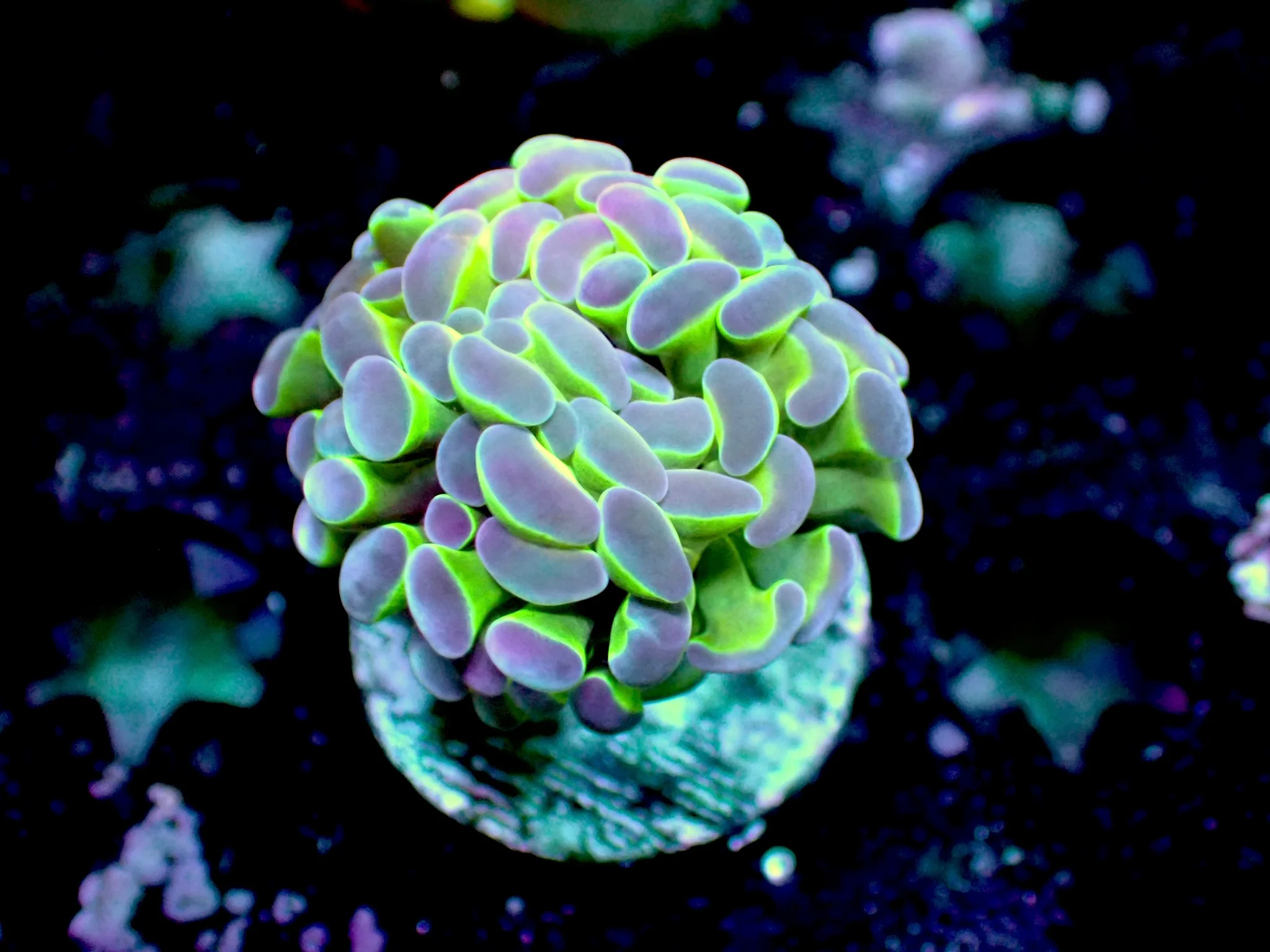
Hologram hammer
Fimbriaphyllia paraancora

Avatar chalice
Echinophyllia aspera

Bulbasaur goniopora
Goniopora sp
Recommended from the shop


Love this species? No tank needed.
Reef art from the shop — for the wall, not the tank.


Get notified when Reef To Go has Pink Goni in stock or up for auction. One email when it's in — no spam.