

Lava lamp goniopora
Goniopora sp
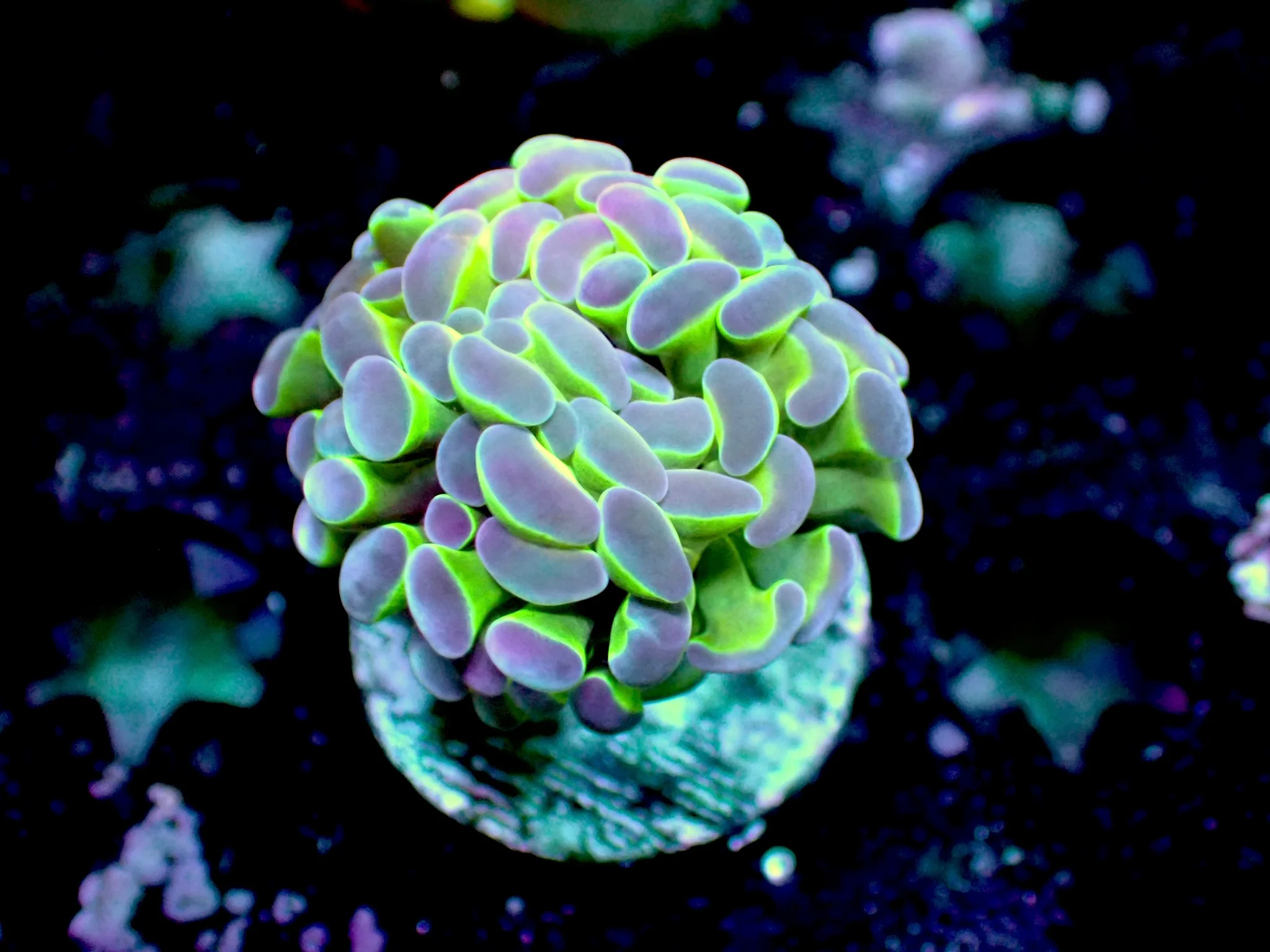
Lava lamp goniopora is a flowerpot coral listed as Goniopora sp. Each polyp carries twenty-four tentacles around its mouth, a count that separates Goniopora from its Alveopora relatives, which carry twelve. A settled colony extends long, fleshy polyps that move slowly and continuously in gentle current, rising and drifting like the slow blobs in the lamp the morph is named for. The polyps extend well beyond the round skeleton, so a settled colony reads as a soft, animated dome at the bottom of the tank.
The entry lists intermediate care, medium light, medium flow, bottom placement, moderate aggression, and moderate growth. Intermediate reflects a genus with a real settling period and a strong response to feeding and steadiness. Place the frag low, on a flat stable base or low rock, with room for the polyps to extend in every direction. Medium light at a bottom placement holds color and full extension. Strong light can keep polyps short, and deep shade can leave them stretched and pale.
Medium flow should arrive gently and from changing directions. The long polyps want to sway and lift, and a direct stream pins them to one side and can wear tissue where it rubs the skeleton rim. Still corners let waste settle into the colony. A broad, soft pattern that moves every polyp a little is the balance a goniopora opens fullest under.
Feeding is central to long-term success with this genus. The polyps take fine foods from the water, including phytoplankton and fine particulate coral foods, and many keepers broadcast feed regularly rather than aiming large pieces at the mouths. Light supplies part of the energy, and colonies in fed tanks with present, steady nutrients hold extension and tissue far better than colonies in stripped, ultra-clean water. Small, regular offerings beat occasional heavy ones, and leftovers should never sit on the colony.
Aggression is listed as moderate. Extended polyps can sting and irritate a neighbor they rest against, and the colony itself is easily damaged by a stronger coral's sweepers. Leave clear space on all sides, judged by the fully extended colony rather than the skeleton, and keep other LPS and their nighttime reach outside that space.
Growth is listed as moderate. The skeleton expands at the margin, new polyps form around the edge, and a settled colony gains size over seasons. Stable alkalinity, calcium, and magnesium support that skeleton, and trace element steadiness matters to this genus over long runs. Polyps shortening week by week, a colony that stops extending, or tissue receding at the base usually trace back to feeding, flow, or a slow drift in chemistry.
Common pitfalls include placing the frag in a stripped, very clean tank and offering no fine food, pinning the polyps with a direct jet, and judging the colony by its first closed days after a move. Start low with soft, changing flow, feed fine foods on a routine, and give the colony weeks in one spot before judging it.
Field notes — what keepers report
- Longevity reports divide the genus sharply. Keepers in fed, stable tanks describe colonies held and growing over long runs, while keepers in very clean systems describe a slow shortening of polyps over months despite good color early on. Feeding and nutrient steadiness are the factors both sides name most.
- Flow reports agree on softness. Keepers describe the fullest, longest extension under gentle movement that changes direction, and pinned, shortened polyps under a steady stream, with recovery after the flow was softened. Reports treat polyp length as a daily read on whether the spot suits the colony.
- Feeding reports split on method rather than value. Keepers who broadcast fine foods describe steady extension and growth, while keepers who target-feed describe equal results with more waste to manage. Both sides describe regular fine food as part of keeping this genus well.
Field Notes
Related species

Citrus Orange Short Polyp Goniopora

Confetti Grafted Goniopora

Pink Goni
Goniopora sp

Red goniopora
Goniopora sp

Elegance coral
Catalaphyllia jardinei
Hologram hammer
Fimbriaphyllia paraancora

Avatar chalice
Echinophyllia aspera

Bulbasaur goniopora
Goniopora sp
Love this species? No tank needed.
Reef art from the shop — for the wall, not the tank.


Get notified when Reef To Go has Lava lamp goniopora in stock or up for auction. One email when it's in — no spam.