Candy Cane Coral
Caulastraea echinulata
 ▶ Video
Care facts
- Care
- Beginner
- Light
- Low-Medium
- Flow
- Low
- Place
- Bottom
- Space
- Peaceful
- Origin
- Indo-Pacific
- Growth Rate
- Moderate
Gallery
Videos
Candy for your eyes, not your mouth! Candy Cane Coral is a small colony of living mouths on a hard skeleton. Give those fleshy heads soft light, gentle movement and room to grow. A settled spot beats constant rearranging.

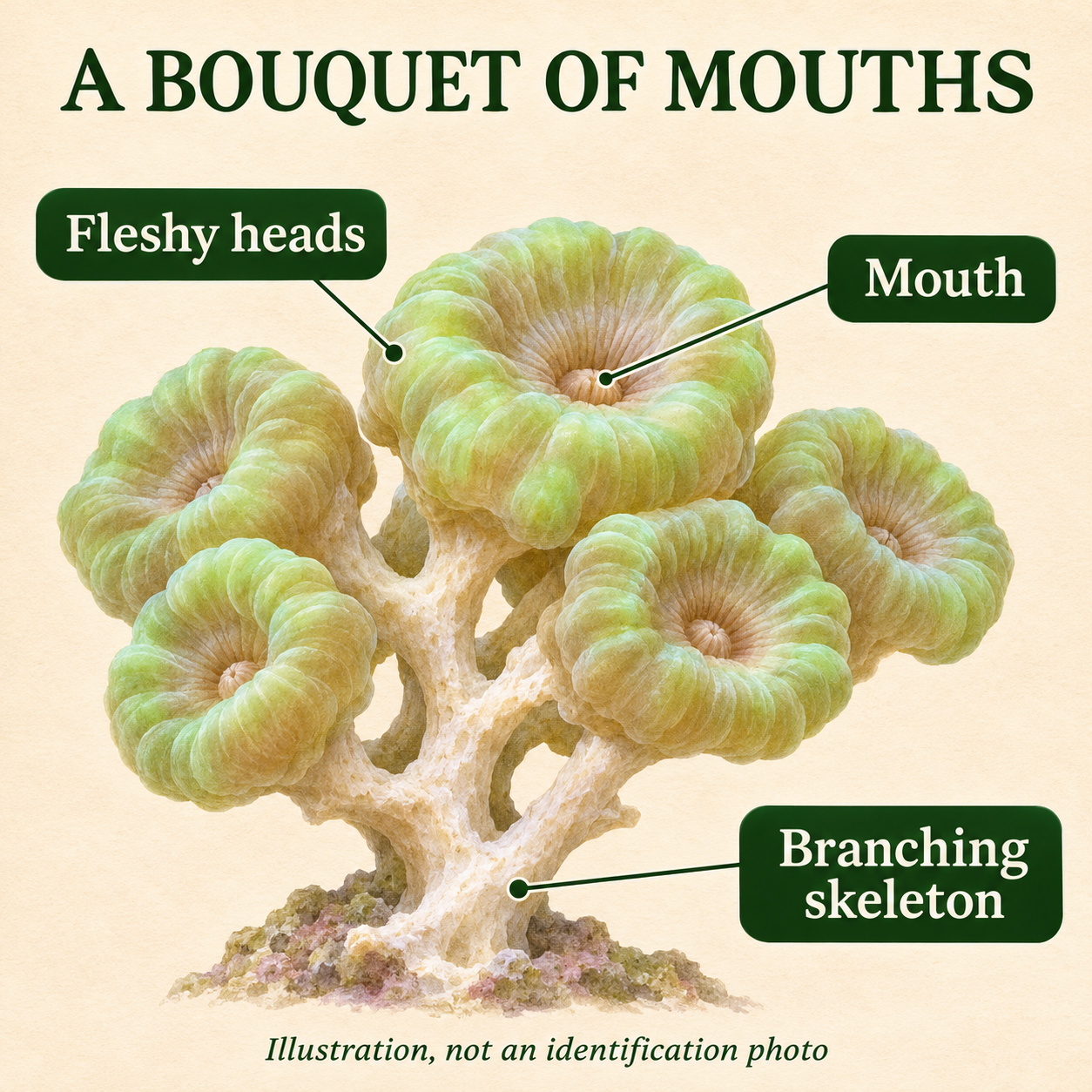
A bouquet of mouths
1. A whole bunch of hungry heads! Candy Cane Coral builds a branching skeleton topped with fleshy polyps. Each head has a mouth. The living tissue needs gentle handling, so lift the rock or plug instead of squeezing the heads.

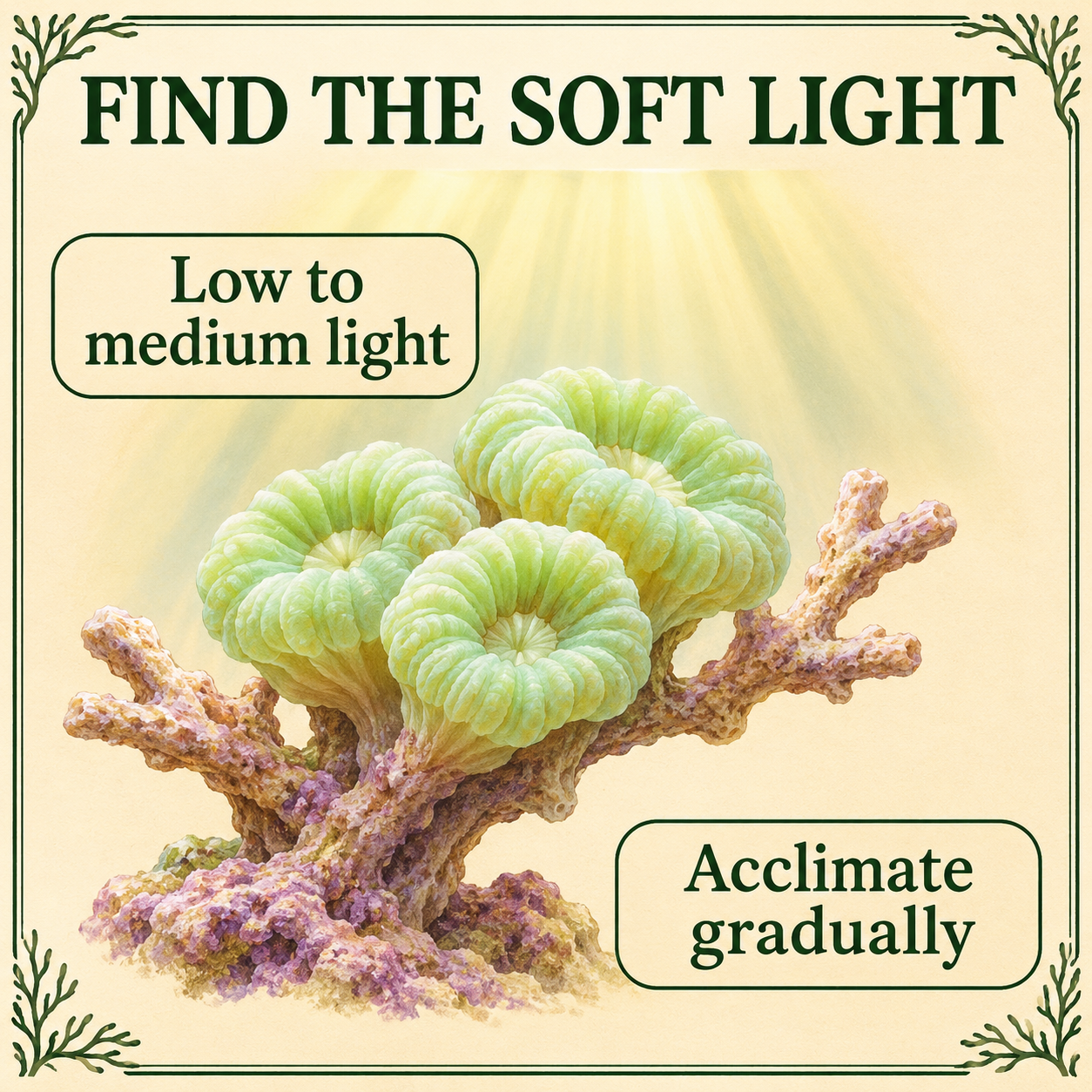
Find the soft light
2. Bright is not always better. Start with low-to-medium light and acclimate gradually. A secure lower position makes a useful starting point. Judge the light reaching the coral, not height alone. Keep sand from settling over the flesh.

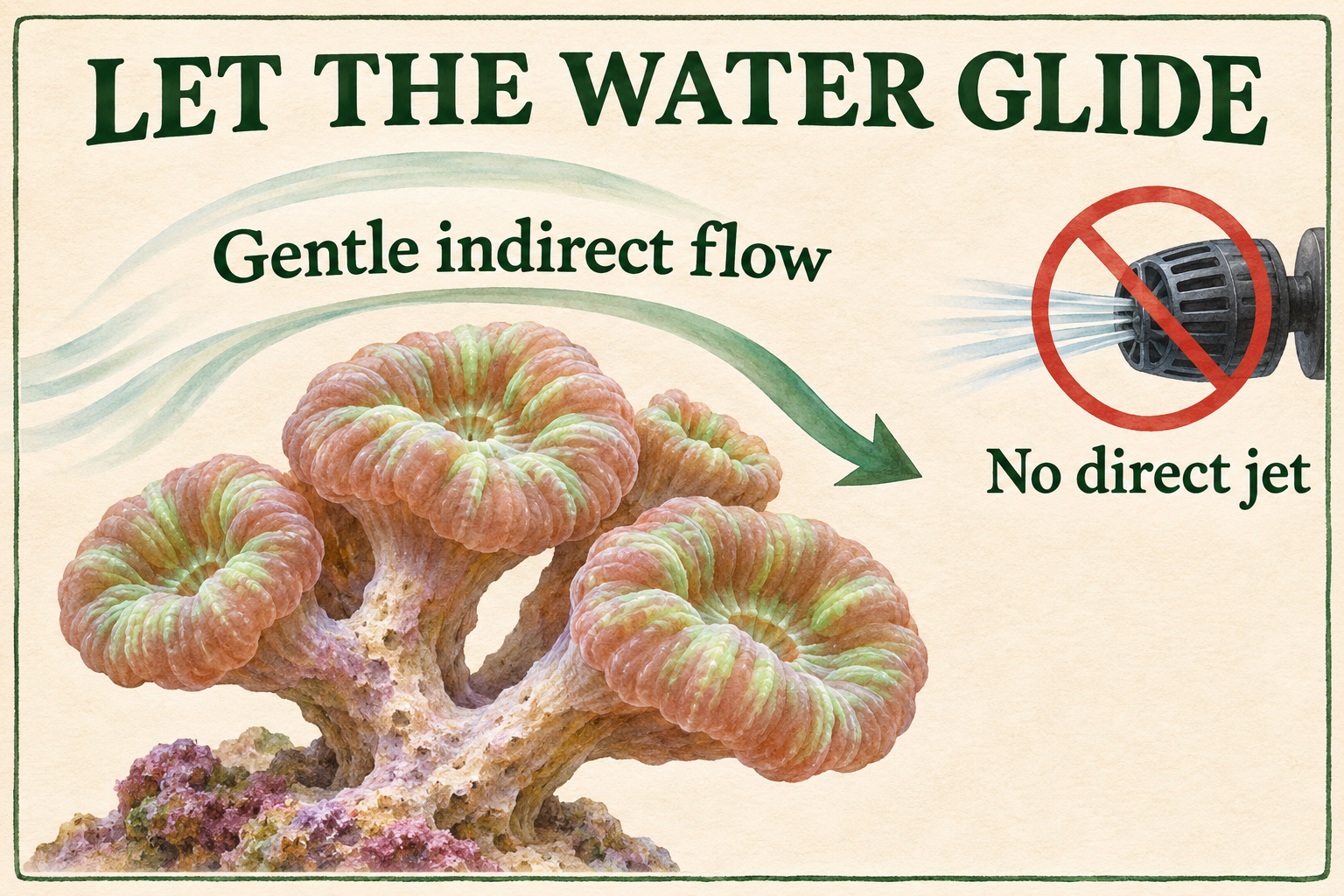
Let the water glide
3. A breeze, not a blast. Use gentle, indirect water movement. Keep waste from settling between the heads without aiming a pump straight at the tissue. Low flow means moving water, not a stagnant corner. Recheck the current as nearby colonies grow.
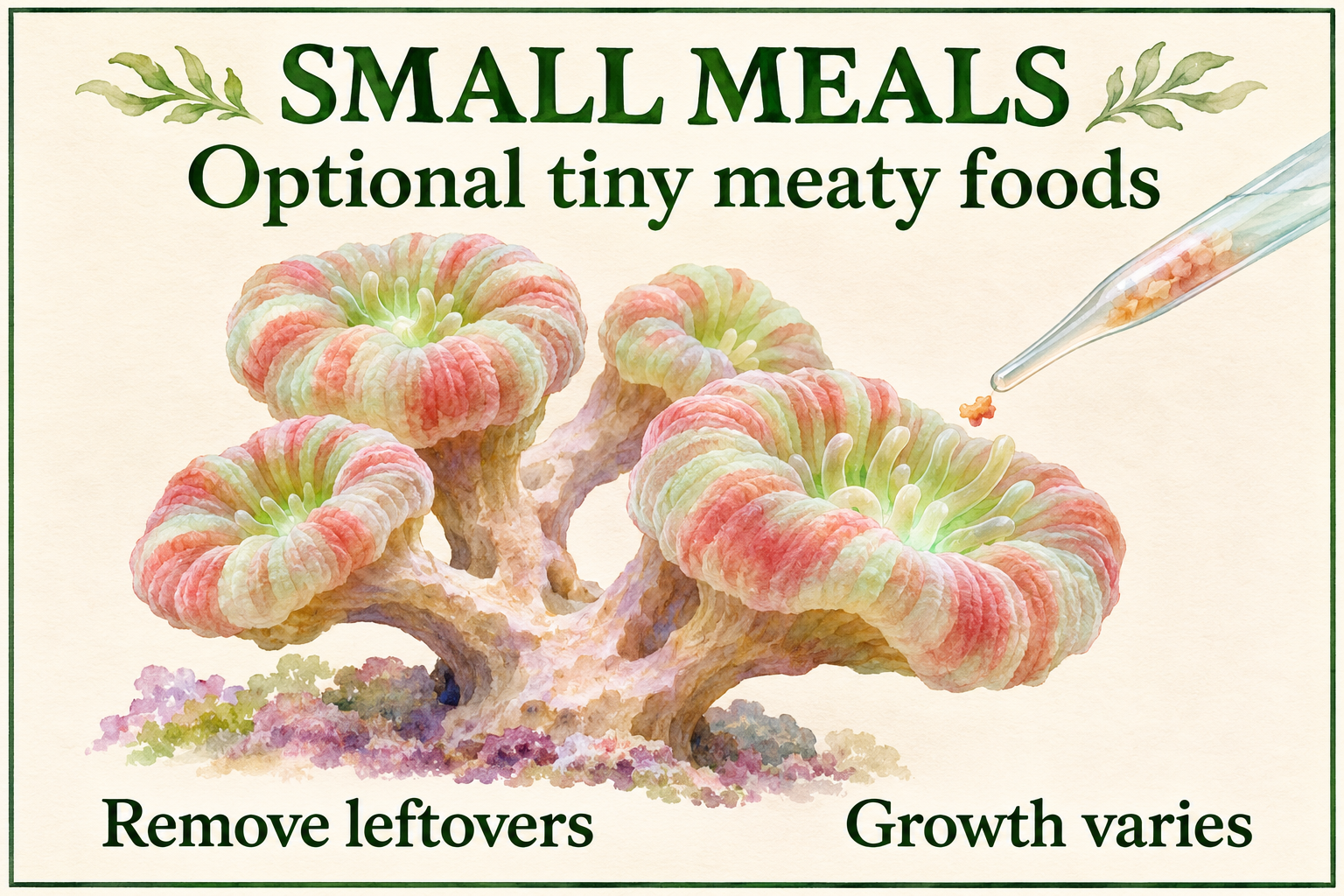
Small meals, no growth promises
4. Tiny mouths need tiny portions. Offer a small meaty meal when the feeding tentacles are out. Let the coral catch it rather than pressing food into the mouth. Remove leftovers and keep portions modest. Feeding is optional support, not a promise of faster head division.
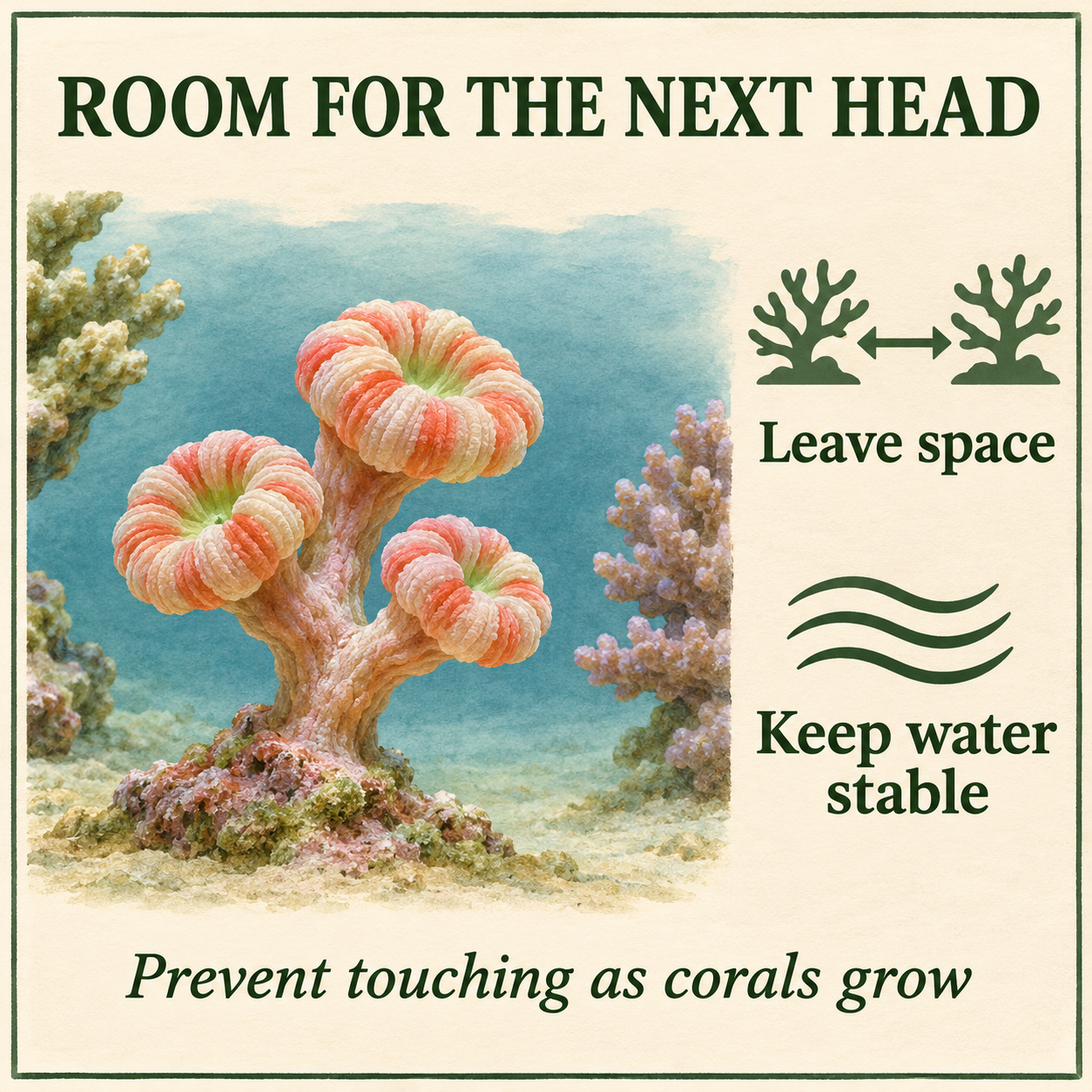
Room for the next head
5. Leave the candy some elbow room. Keep neighboring corals from touching the fleshy heads or extended tentacles. Leave space for the colony to expand. Keep salinity and alkalinity steady, and test calcium and magnesium as the skeleton grows. Change conditions gradually.
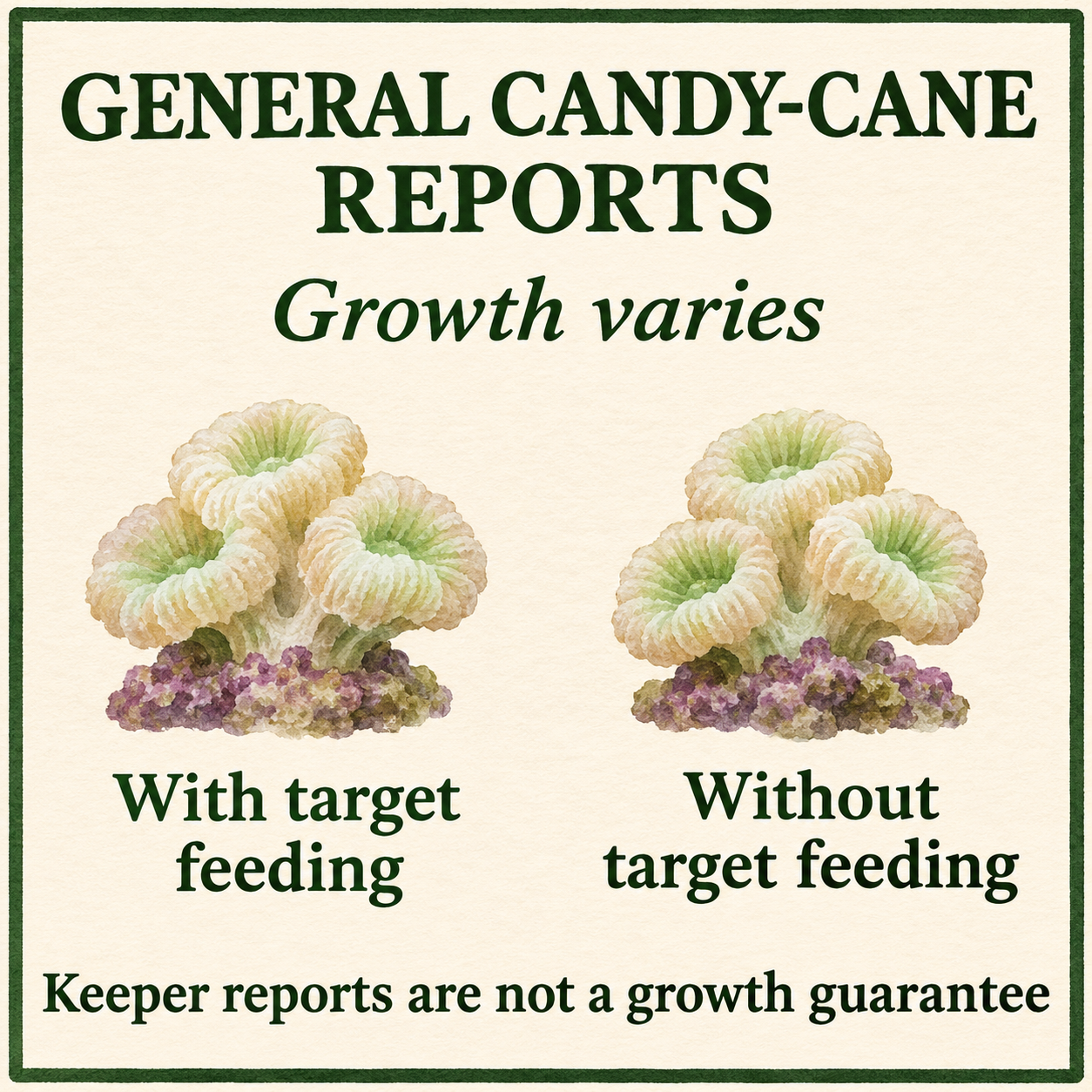
Field notes — what keepers report
6. General candy-cane reports, different results. One keeper describes a single head after about a year. Another reports growth from two or three heads to eight or ten without target feeding. A third describes two heads becoming eight while target feeding. These are general candy-cane reports, not verified reports of this exact species. Compare your coral with its own past, not somebody else’s growth clock.
Let the heads do their thing. Start gently, keep the water steady and watch the tissue each day. Small, thoughtful changes beat big meals and a race for more heads.
Field Notes
Related species

Blastomussa Merleti
Blastomussa merleti
Similar care · LPS

Blastomussa Wellsi
Blastomussa wellsi
Similar care · LPS

Blue mouth Duncan
Duncanopsammia axifuga
Similar care · LPS
Bulls eye acan lord
Micromussa lordhowensis
Similar care · LPS

Cynarina Button Coral
Cynarina lacrymalis
Similar care · LPS
Lordhowensis Acan
Micromussa lordhowensis
Similar care · LPS
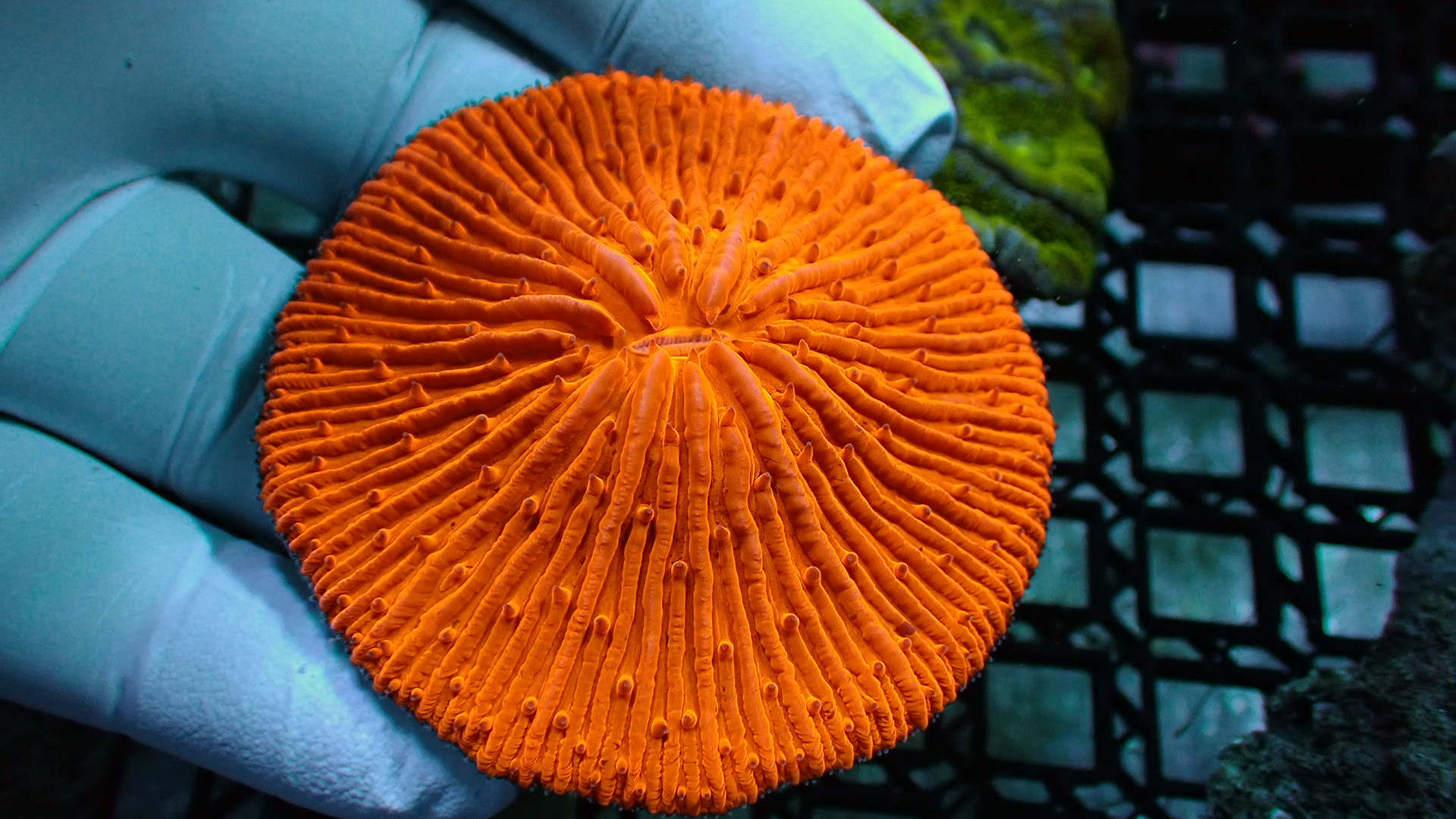
Orange plate coral
Fungia sp.
Similar care · LPS
Pineapple Coral
Blastomussa merleti
Similar care · LPS