 ▶ Video
Gallery
Videos
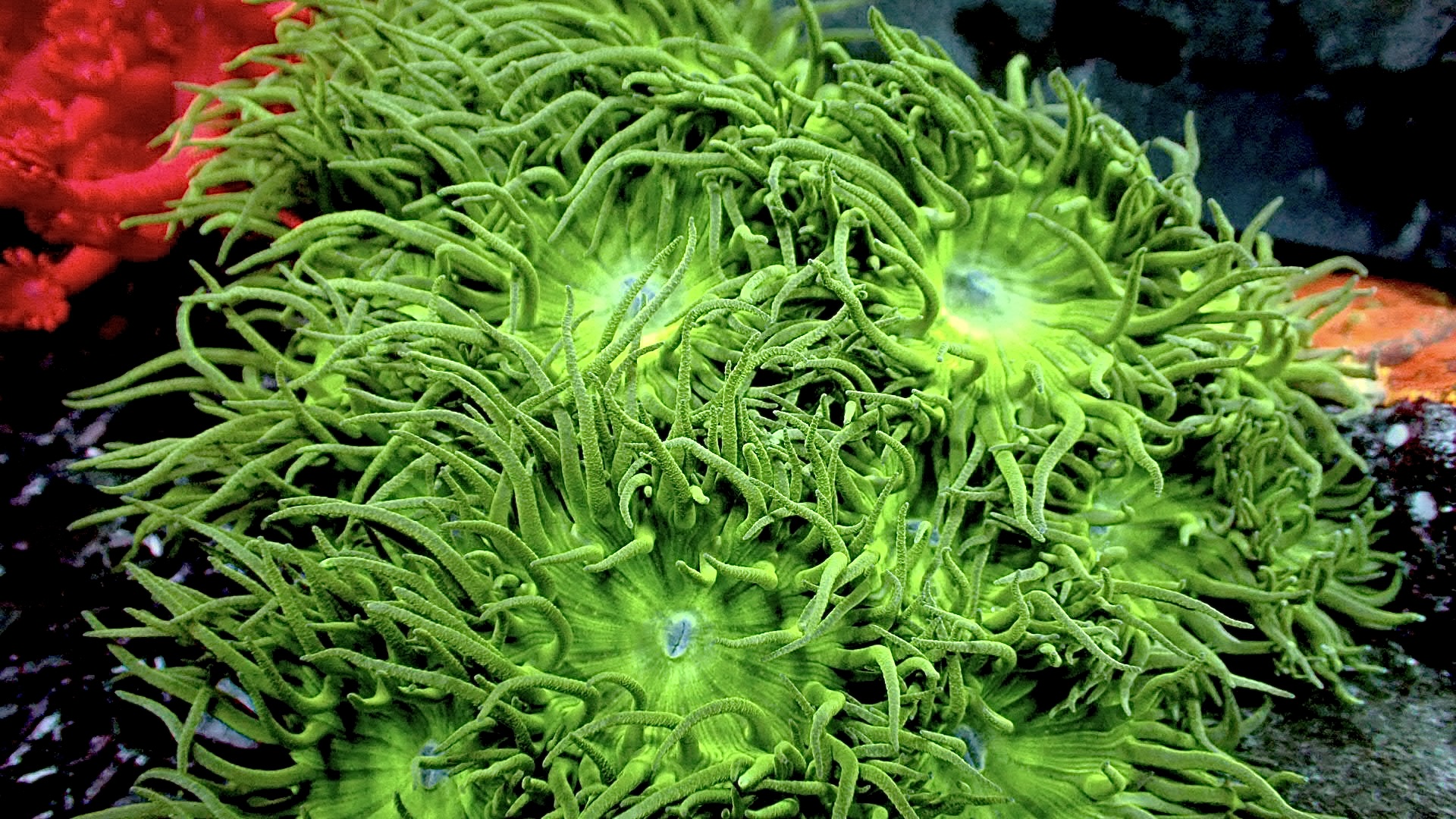
Duncan coral, Duncanopsammia axifuga, is a branching LPS coral with large, fleshy polyps that open like small anemones from tubular branches. Polyps are usually green to soft purple-grey, with a clear mouth at the center of each disc, and a settled colony opens wide through the light period and closes down at night. New heads bud from the sides of existing branches, so a small frag becomes a rounded cluster over time.
The entry lists beginner-level difficulty, medium light, medium flow, mid placement, peaceful behavior, and moderate growth. This is one of the more forgiving LPS corals, and it makes a good early LPS choice because it communicates clearly: open and fleshy means conditions suit it, while closed polyps for several days point to a water, light, or flow problem to check.
Place it low to middle in the tank on secure rockwork. Medium flow should move the polyps gently without folding them flat. Strong flow keeps polyps retracted and can wear tissue where it rubs the skeleton rim. Medium light suits it well, and it adapts to a range of brightness when moves are gradual. Keep the base clear of sand buildup, since buried tissue at the branch base can recede.
Duncans respond to feeding more visibly than most LPS. Offer each polyp a small piece of meaty food, mysis, or an LPS pellet once or twice a week, with pumps off, and the polyp will close around the food in a slow curl. Fed colonies bud new heads faster in most tanks. Keep portions modest, because a polyp that takes food too large will often release it later and foul the water nearby.
Spacing is easy with a peaceful rating, though the colony still needs physical room. Branches grow outward and upward, and new heads need light and flow at the rim of the cluster. Keep it clear of stinging neighbors, since the Duncan has no real defense, and leave room for the colony to double in width without pressing into other corals.
Growth is moderate and steady in a fed tank. The most common pitfalls are burying the base in sand, placing the frag in strong SPS flow, and ignoring closed polyps that stay closed for a week or more. Check for pests or tissue irritation at the base if a colony that was open suddenly stays shut. Given a stable spot and regular small feedings, a Duncan usually becomes one of the most active, responsive corals in the tank.
Field notes — what keepers report
- Keepers describe the Duncan as a hunger indicator for the whole tank. Reports say polyps open wider and new heads appear faster in tanks with regular feeding, while colonies in very lean tanks stay healthy but grow slowly. Both experiences point to feeding rate as the main growth dial for this coral.
- Closed-polyp scares come up often. Keepers report colonies staying shut for several days after a move, a water change, or attention from a shrimp or fish, then opening fully again with no change in care. The shared advice is to check the basics, confirm nothing is picking at the polyps, and give the coral a week before making changes.
- Placement reports vary more than expected for a beginner coral. Some keepers grow Duncans high under strong light with great color, while others report the best extension low in gentle flow. Reports agree on gradual moves: a Duncan moved in small steps adapts to a wide range, while a sudden jump in light or flow can keep it closed for days.
Field Notes
Related species

Blue mouth Duncan
Duncanopsammia axifuga
Same genus
Gold Coast acans
Micromussa lordhowensis
Similar care · LPS

Honeycomb Coral
Diploastrea heliopora
Similar care · LPS
Hologram hammer
Fimbriaphyllia paraancora
Similar care · LPS

Bling bling cyphastrea
Cyphastrea sp
Similar care · LPS

Brain Coral
Platygyra daedalea
Similar care · LPS

Candygram hammer
Fimbriaphyllia paraancora
Similar care · LPS
Circuit Breaker Cyphastrea
Similar care · LPS