Cloud spark octospawn
Clavularia sp
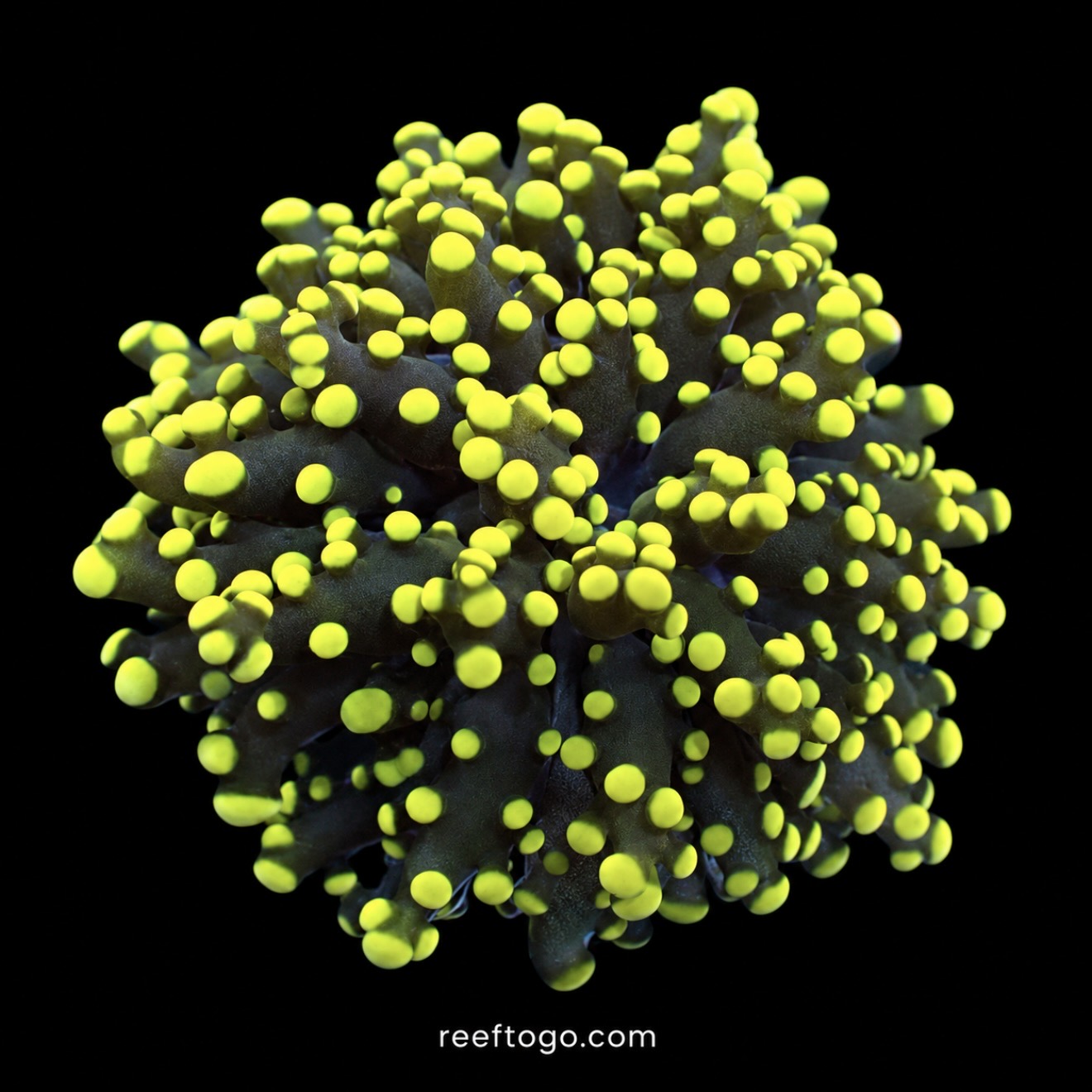
Gallery
Cloud spark octospawn is a soft coral morph listed as Clavularia sp. Individual polyps rise from a thin, spreading base, and each polyp carries eight tentacles, the eight-part pattern that marks the octocorals. Open polyps form a low, even carpet that moves as one in the current. The cloud spark name follows the pale, cloudy body tone broken by small bright points across the polyps, so a settled patch reads soft and light from a distance and sparkled up close.
The entry lists beginner care, medium light, medium flow, middle placement, moderate aggression, and fast growth. Place the frag in the middle of the rockwork on a rock surface the base can spread across. Medium light holds the pale tone and the bright points together. Deep shade can thin the patch and slow new polyps, while a sudden jump into strong light can keep polyps closed through the day. Small moves with a week of watching work better than one large change.
Medium flow should pass across the whole patch and lift waste off the base. The spreading mat traps detritus along its edge and between polyps when flow runs weak, and a dirty base invites algae that competes for the same rock. Flow aimed straight at the patch from close range can keep polyps retracted on that side. Broad, changing movement that reaches the whole colony is the pattern to aim for.
Feeding is indirect. The polyps take fine particulate food from regular broadcast feeding, and light supplies much of the energy. Stable, present nutrients suit this soft coral well. Very clean water can slow spread and keep polyps smaller, while heavy nutrient swings invite film algae across the rock the colony wants to claim. Regular reef feeding in a stable tank covers its needs without a target routine.
Aggression is listed as moderate, and spread explains the rating. The coral carries no long sweepers to plan around. A fast-spreading mat can grow over the base of a slower neighbor, shade tissue at the contact line, and claim rock that was meant for another frag. Leave a clear border of rock around the patch, keep it off a rock face shared with prized slow growers, and trim or redirect the edge before contact happens.
Growth is listed as fast. A settled base extends at the margin, new polyps fill in behind the growth edge, and a small frag can become a broad patch over a season. Full daytime extension across the whole patch, a clean advancing edge, and new polyps at the margin mark a settled colony. Polyps closed across the whole patch for days, an edge that recedes, or algae gaining ground inside the patch call for a check of flow, light, and recent changes.
Common pitfalls include placing the frag on a main display rock without planning where the spread will go, letting detritus collect along the mat edge, and moving the piece repeatedly while it tries to settle. Choose the rock with the adult patch in mind, keep the edge clean, and leave the colony alone once polyps open fully each day.
Field notes — what keepers report
- Spread reports agree on speed once the coral settles. Keepers describe a slow first patch followed by a margin that advances steadily across nearby rock. Some keepers welcome that cover on a bare rock face, while others describe isolating the rock so the mat stays contained. Both sides advise deciding on containment before the patch reaches a shared rock.
- Extension reports track steadiness. Keepers describe polyps open evenly through the day in a settled spot, and a patch that closes in sections after a move, a flow change, or a large water change, then reopens over following days. Reports treat a full day of even extension as the sign the spot suits the colony.
- Placement reports split on light. Keepers in medium light describe the pale body and bright points held together, while keepers who kept a patch lower describe duller color and thinner cover that improved after a slow move up. Keepers who raised light quickly describe closed polyps until the level came back down.
Field Notes
Related species

Neon green octospawn
Clavularia sp
Same genus
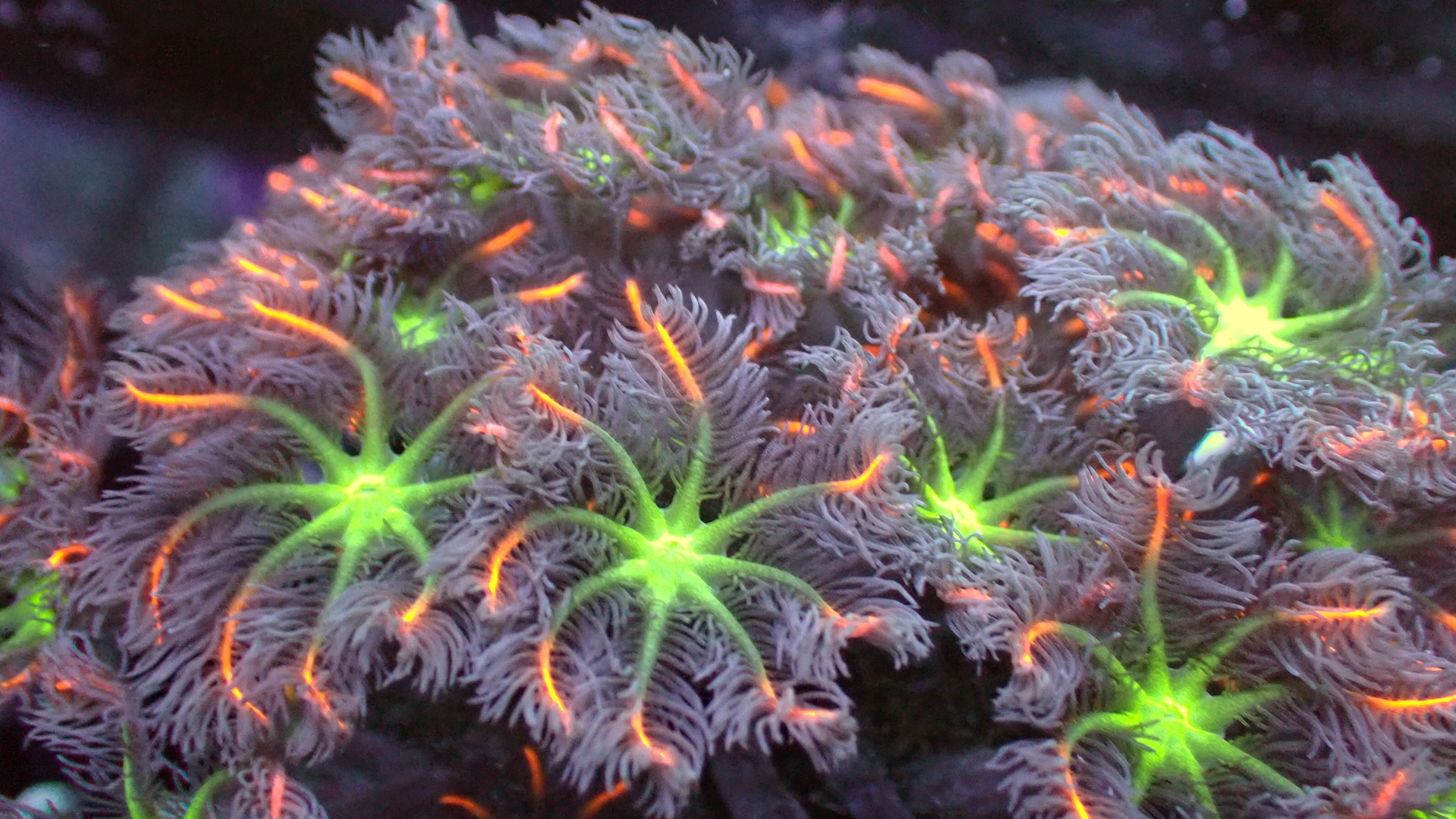
Firework cloves polyps
Clavularia sp.
Same genus
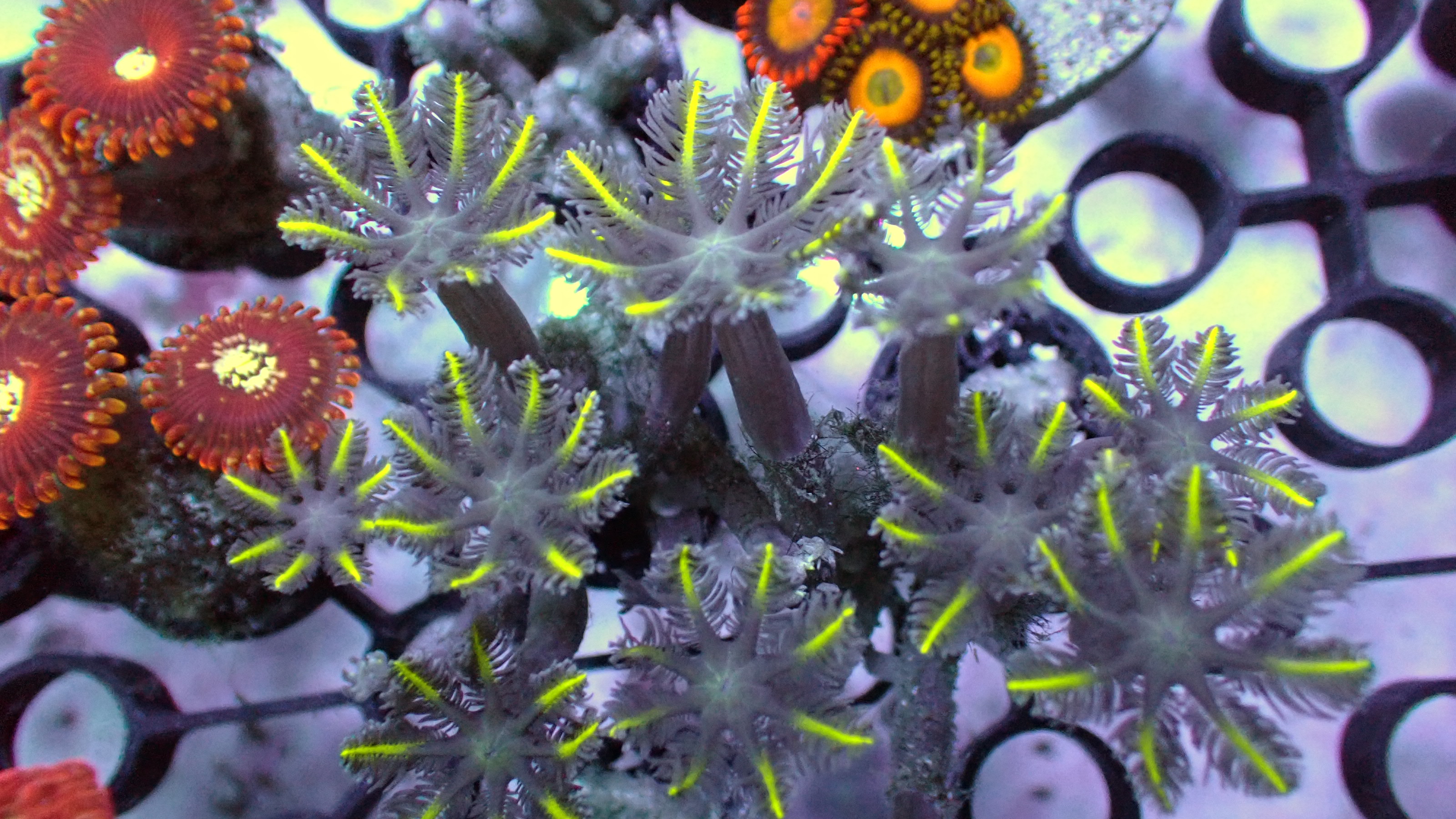
Laser lemon cloves
Clavularia sp.
Same genus
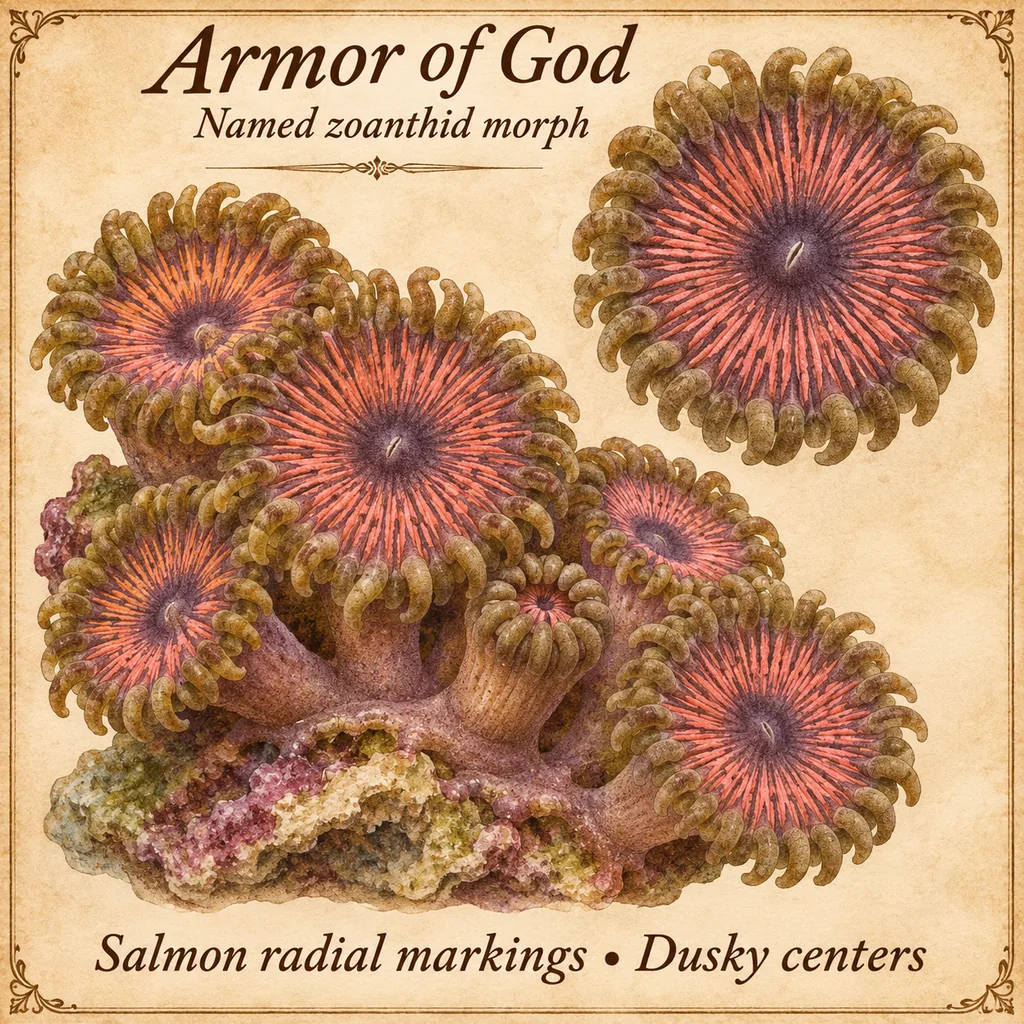
Armor of God
Palythoa sp.
Similar care · Soft
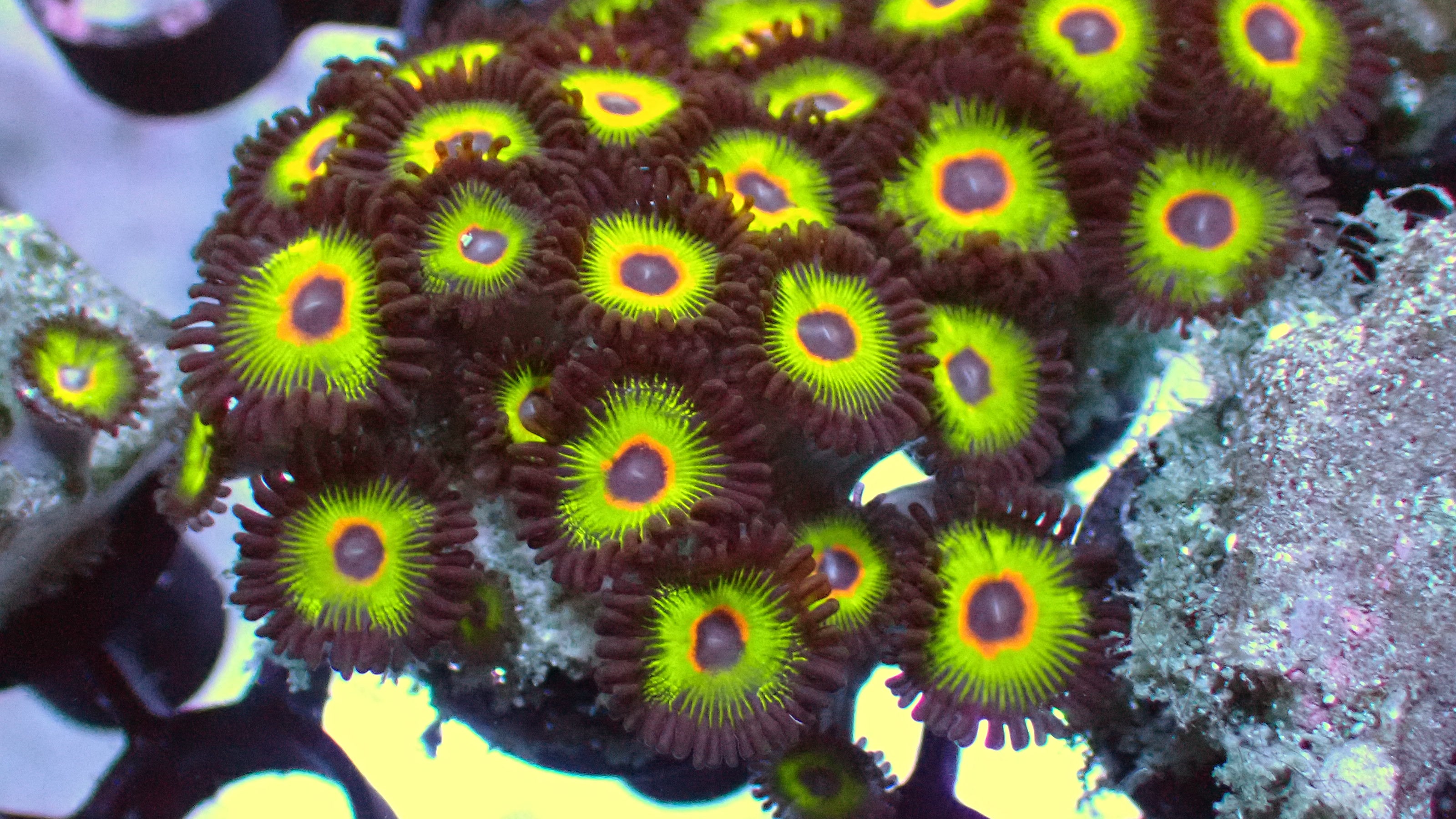
Bob Marley zoas
Zoanthus sp
Similar care · Soft

Cabbage Leather Coral
Sinularia brassica
Similar care · Soft

Compactum Leather Coral
Lobophytum compactum
Similar care · Soft

Corky Sea Finger
Briareum asbestinum
Similar care · Soft