Column Flowerpot Coral
Goniopora columna

Gallery
One flowerpot coral can look like a whole bouquet. Each flower is a living polyp with 24 tentacles. When the polyps pull in, the shape underneath takes over: short, rounded pillars packed together like a miniature skyline. Meet the Column Flowerpot Coral, Goniopora columna.
History of the coral
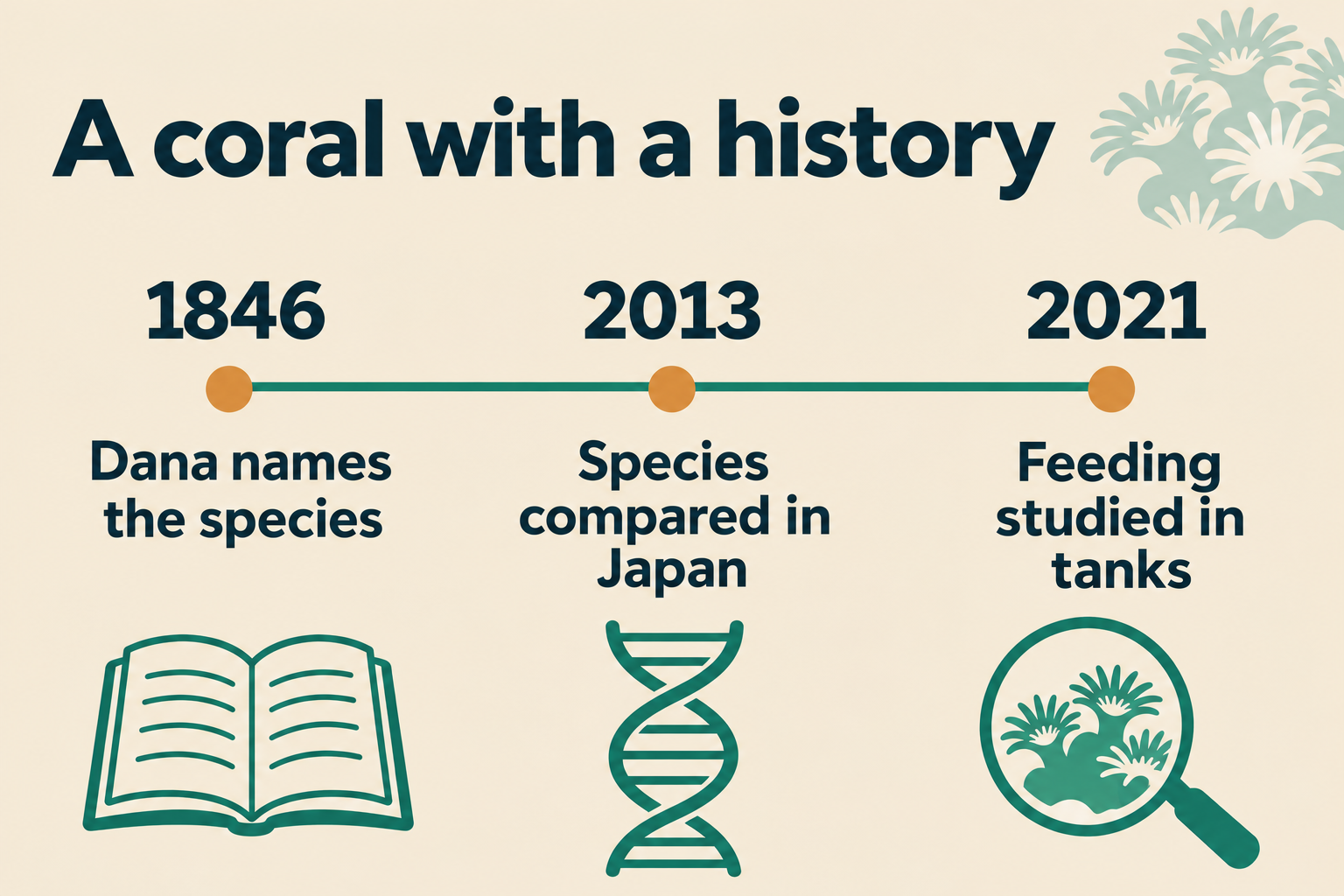
1. The name fits the shape. Naturalist James Dwight Dana named Goniopora columna in 1846. The short, club-tipped columns are part of the hard skeleton. The long, soft flowers above them are the living polyps.
2. Count petals, then look deeper. A Goniopora polyp has 24 tentacles. That helps separate it from 12-tentacled Alveopora, but it won't tell you which Goniopora you have. To sort out close relatives, look at the whole colony and the tiny cups in its skeleton. Scientists also use DNA to compare species.
How they live in the wild
3. A garden on the reef floor. Find this coral from the Red Sea across the Indian Ocean to the western Pacific. In Hong Kong, colonies form beds on sandy ground in sheltered reef communities. This species also grows in cloudy water, where the view can look more like a sand garden than a postcard reef.
4. Flowers after dark. The polyps can stay open by day and by night. Tiny algae living in the coral's tissues use light to make sugars. Open polyps also catch food from the water. That's two ways to put energy into building and repairing the colony.

Light, flow and placement
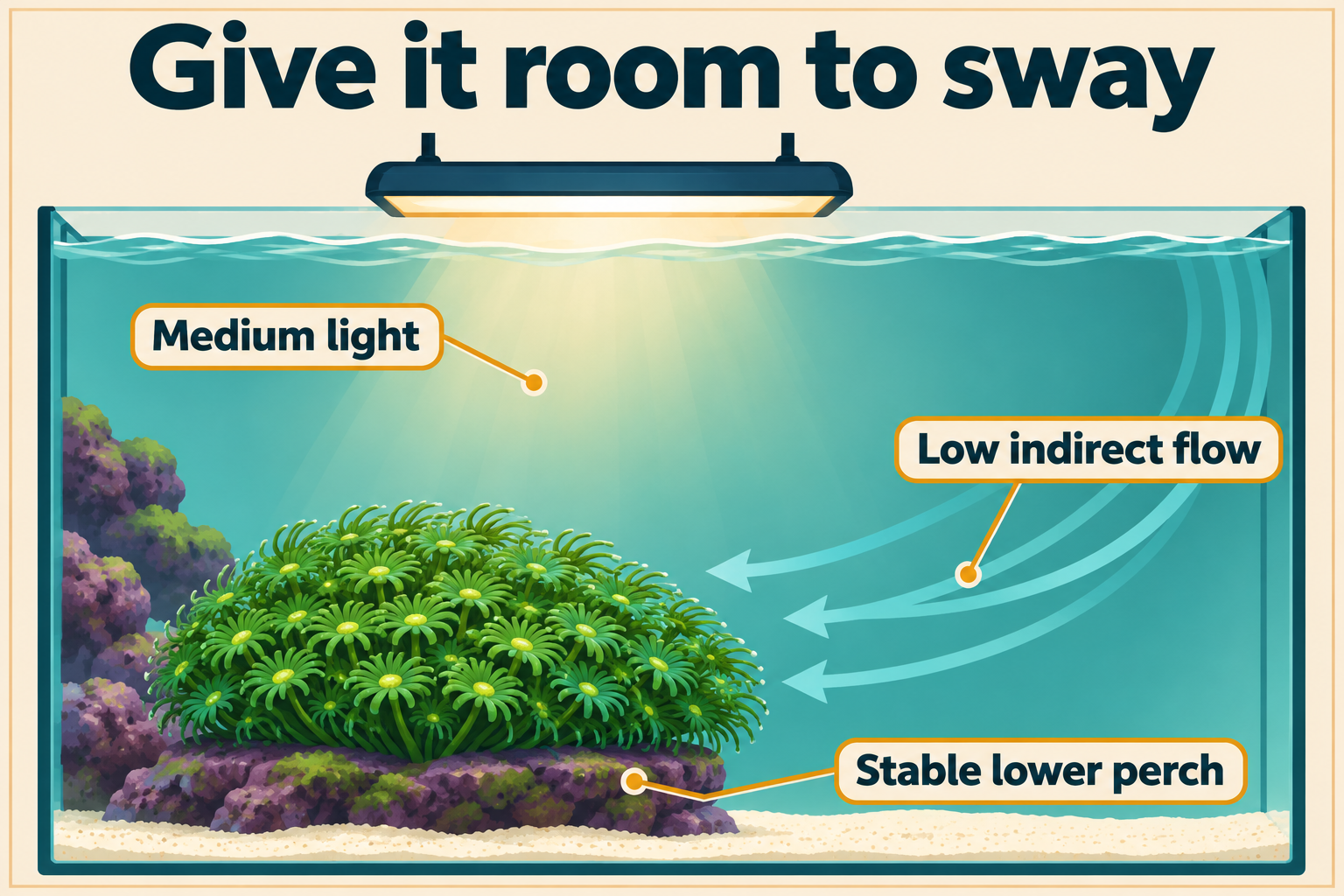
5. Give it a steady perch. Start at the bottom of an established reef, under medium light. Use a stable spot on the lower rockwork or a broad base above shifting sand. Keep the living tissue clear of grit, and acclimate slowly when moving from dimmer light.
6. Look for a gentle sway. Aim for low, indirect flow. The flowers should move gently without folding flat or flicking hard in one direction. If grit settles between the columns, adjust the angle of the flow so it reaches the colony without pointing a pump at it.
Feeding and water
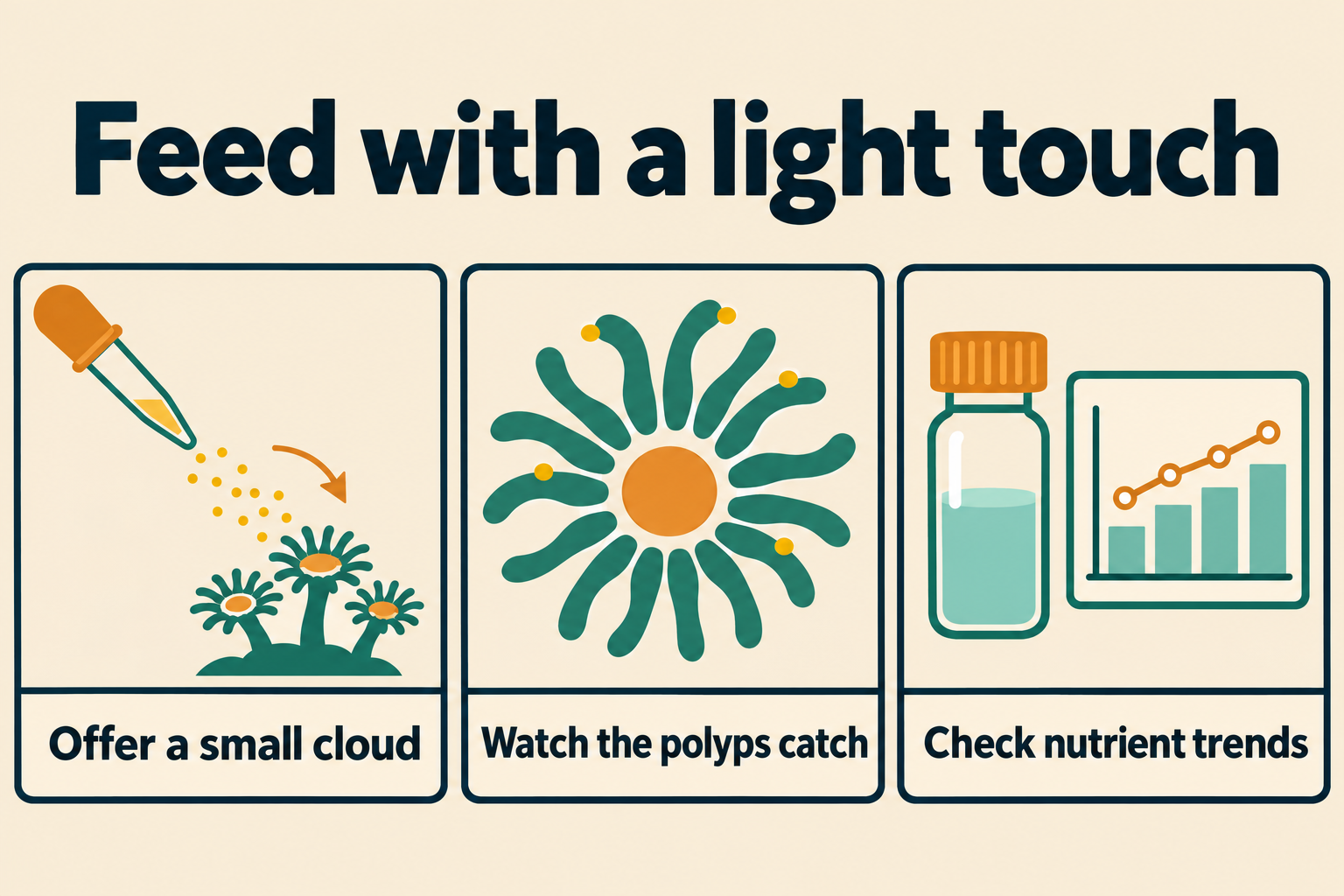
7. Feed the flowers, not the whole tank. Offer a small cloud of fine, protein-rich coral food when the polyps are open. Release it just upstream and watch the tentacles gather it. Start with small portions. Add more only when the coral is catching it and the tank can handle the extra food.
8. Keep the reef steady. Track temperature, salinity, alkalinity, calcium, nitrate and phosphate. Avoid sharp changes and watch the trend, especially after adding a new food. Don't use phytoplankton as the whole feeding plan or chase a nutrient reading of zero.
Growth and neighbors
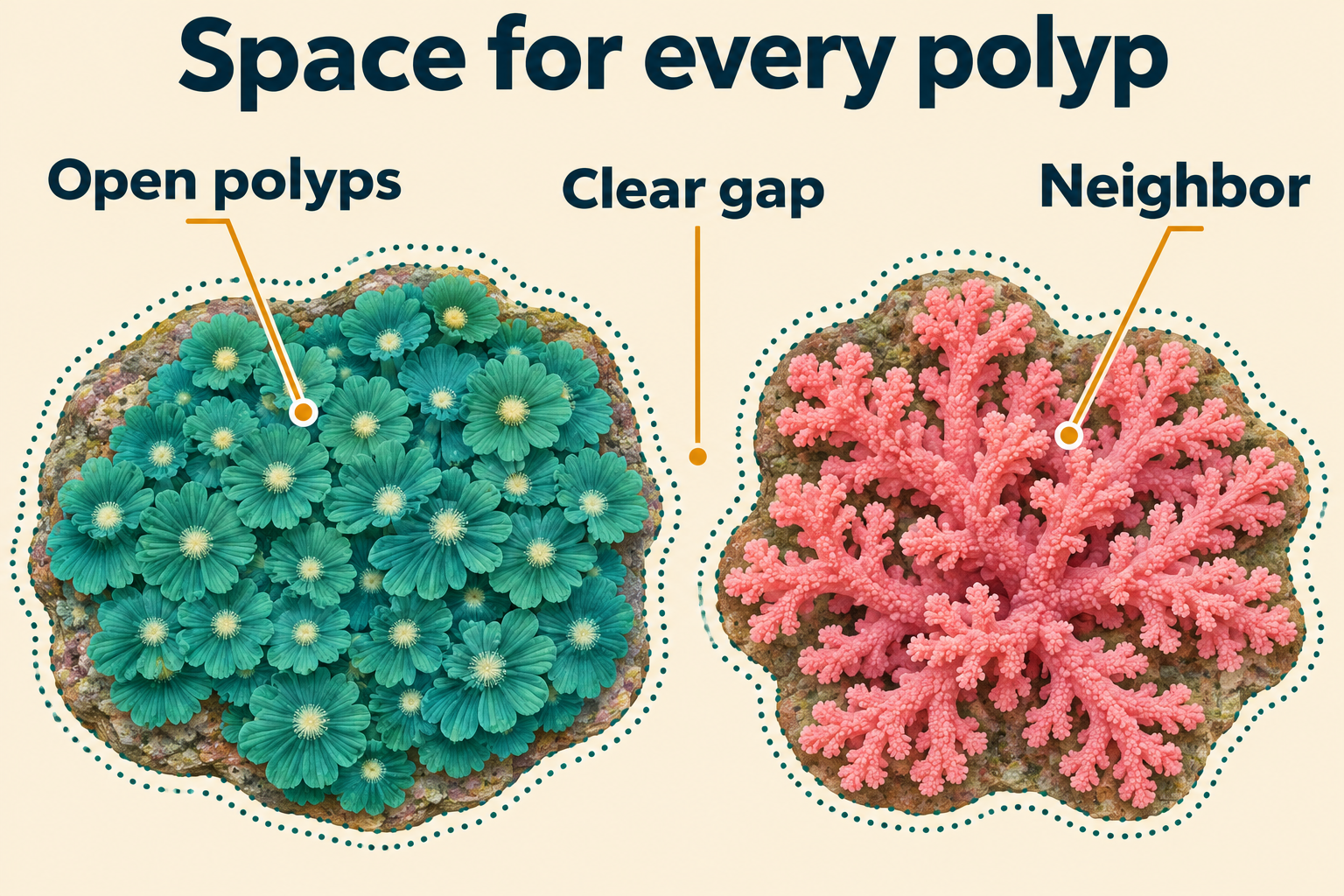
9. Leave space for the full bouquet. Judge the gap when the polyps are fully open. Give them room to sway without brushing their neighbors, and put extra distance between them and corals with long sweepers. Check again after either colony puts on growth.
10. Watch the base, not just the flowers. Give the skeleton time to grow. A big stretch of the tentacles makes the colony look bigger without adding a single new polyp. Take a photo from the same angle each month to track new buds and the edge of living tissue.
Field notes
11. A closed flower is a clue. If the colony stays tucked in, check for a direct jet, a recent light change, a nipping fish or a neighbor within reach. Compare water tests with your usual readings. Change one thing at a time so you can tell what helped.
12. Know when to look closer. A brief tuck after a disturbance is different from tissue pulling back and exposing fresh skeleton. If loss is spreading, inspect the base and the gaps between columns. Look for damage or loose mucus, and get an experienced keeper's eyes on it before treating the tank.
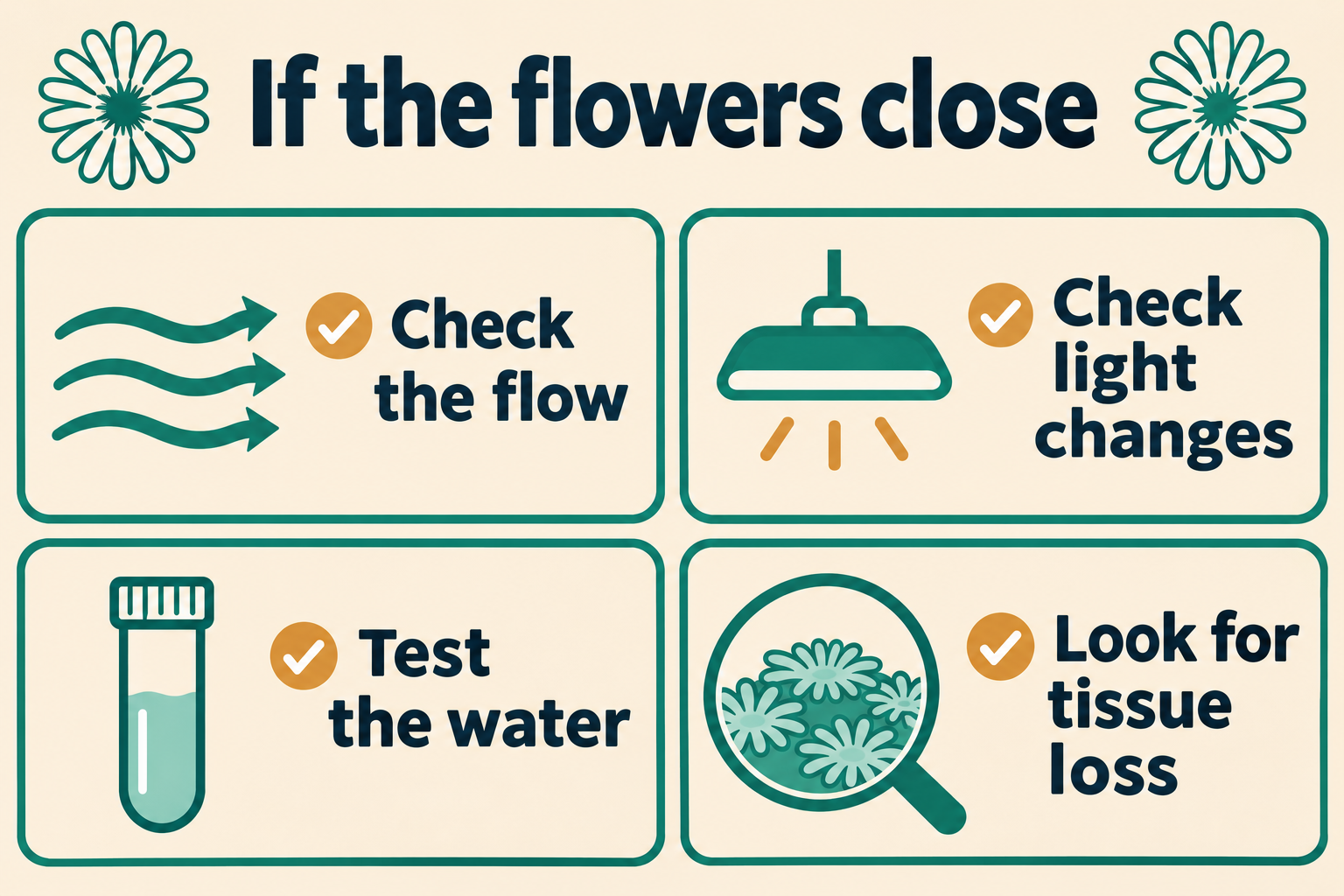
Give the Column Flowerpot a steady home and space to open. Watch how it moves and how it eats. The real reward is seeing a tiny new flower where there wasn't one last month.
Field Notes
Related species

Flowerpot Coral
Goniopora djiboutiensis
Same genus
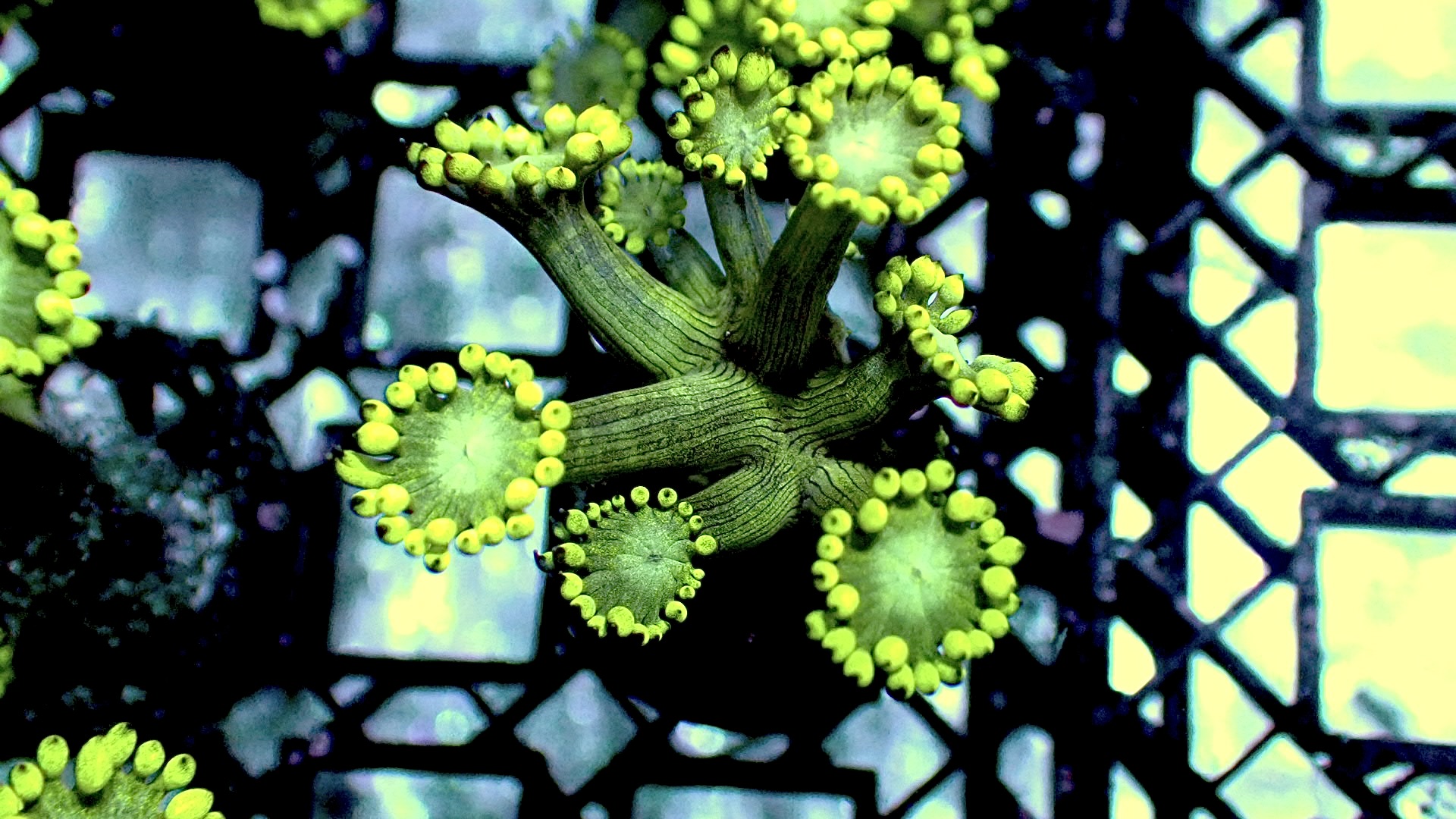
Bulbasaur goniopora
Goniopora sp
Same genus
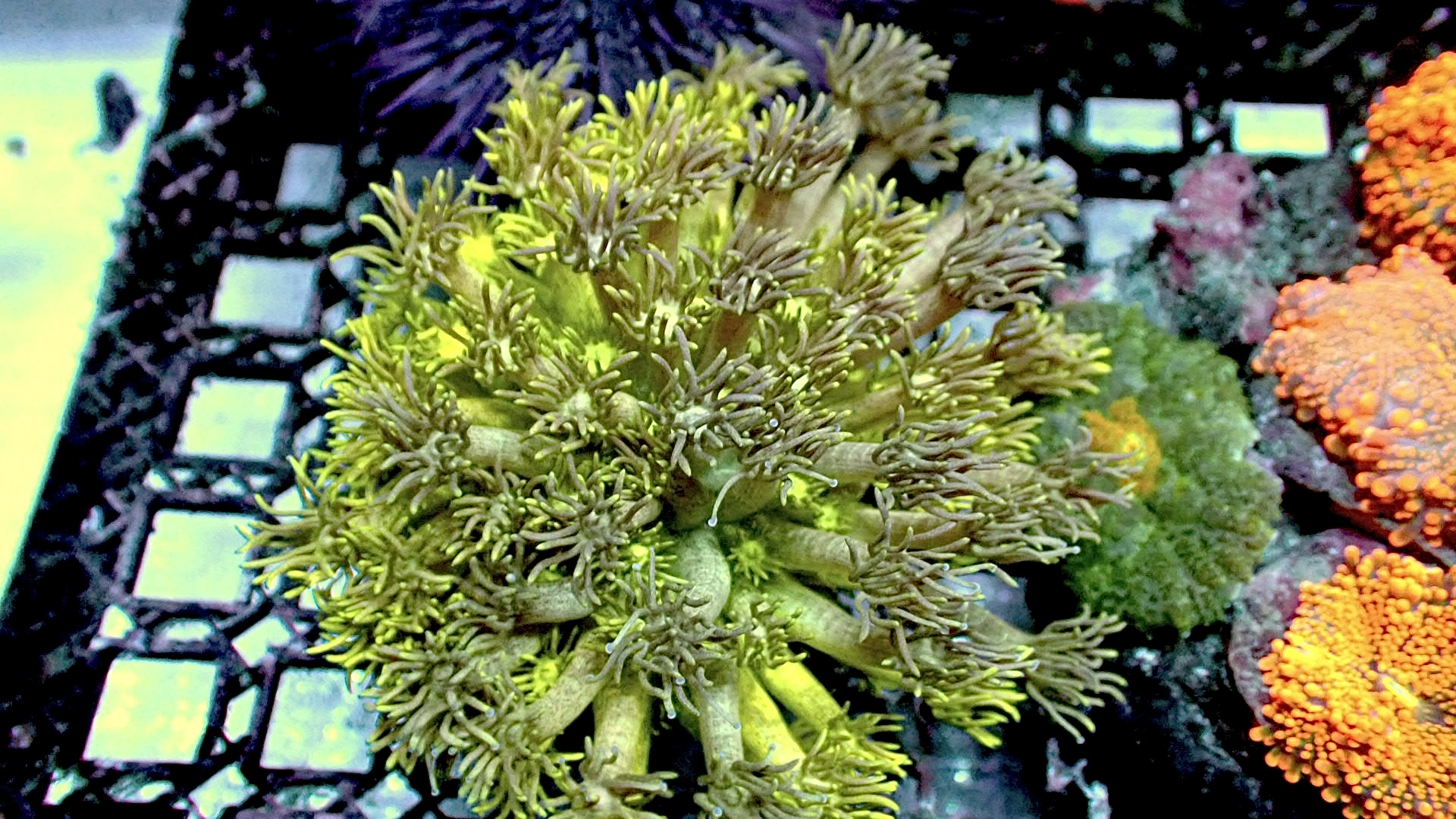
Citrus goniopora
Goniopora sp
Same genus
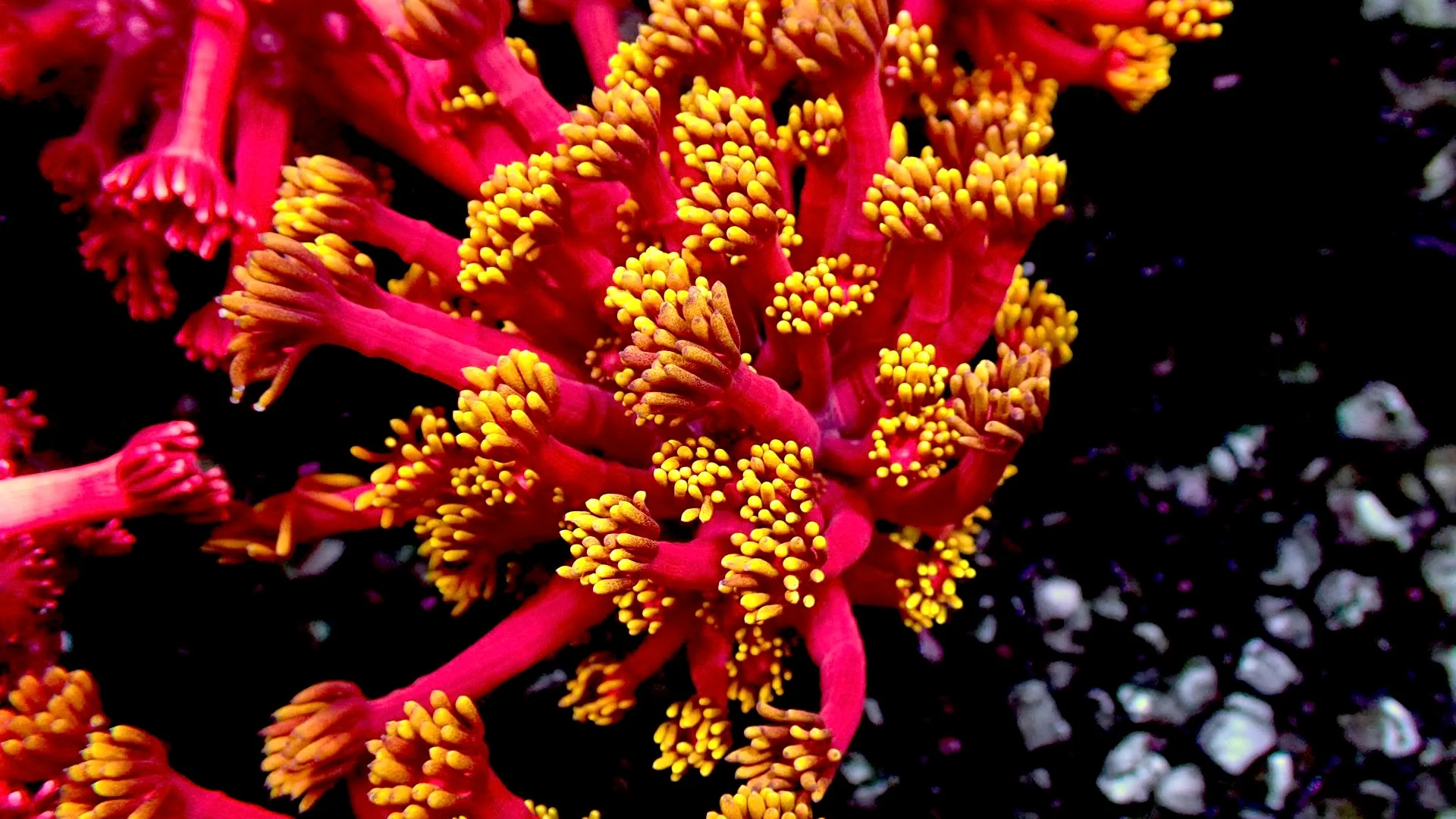
Iron Man Goni
Goniopora sp
Same genus
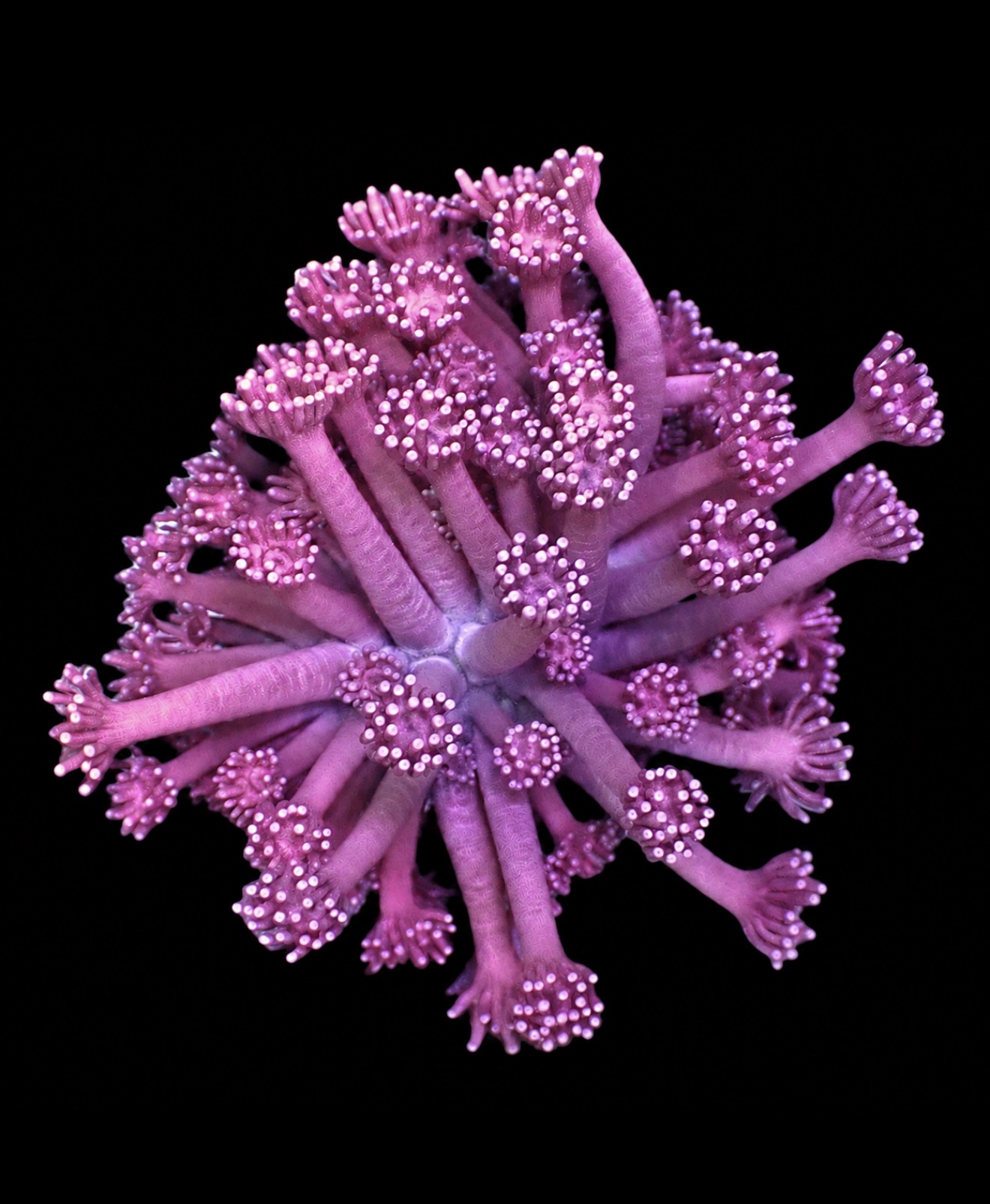
Barney the dinosaur Goni
Goniopora sp.
Same genus
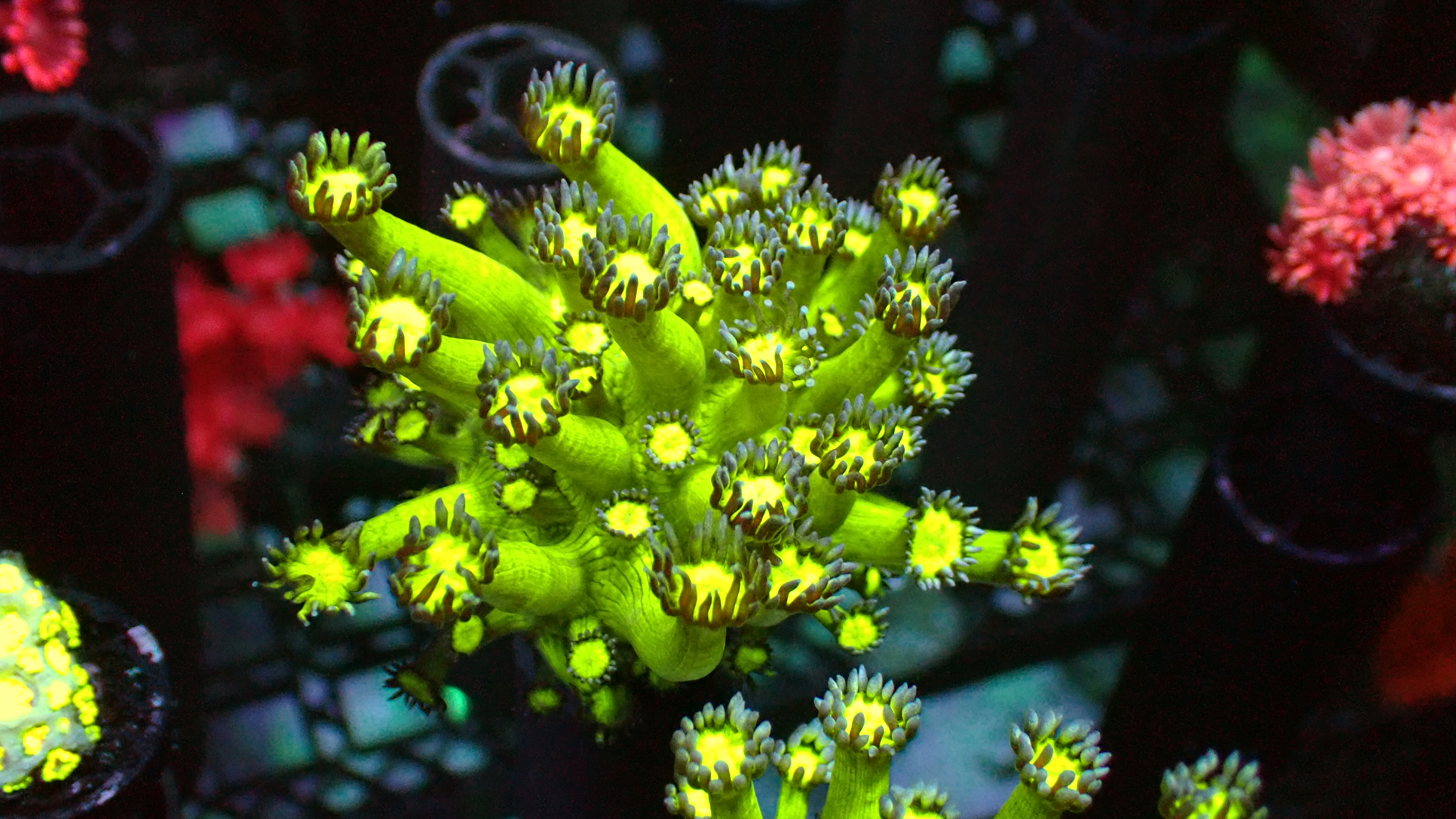
Bootleg glitter Goni
Goniopora sp
Same genus

Lava lamp goniopora
Goniopora sp
Same genus

Lavender Goni
Goniopora sp
Same genus