Gallery
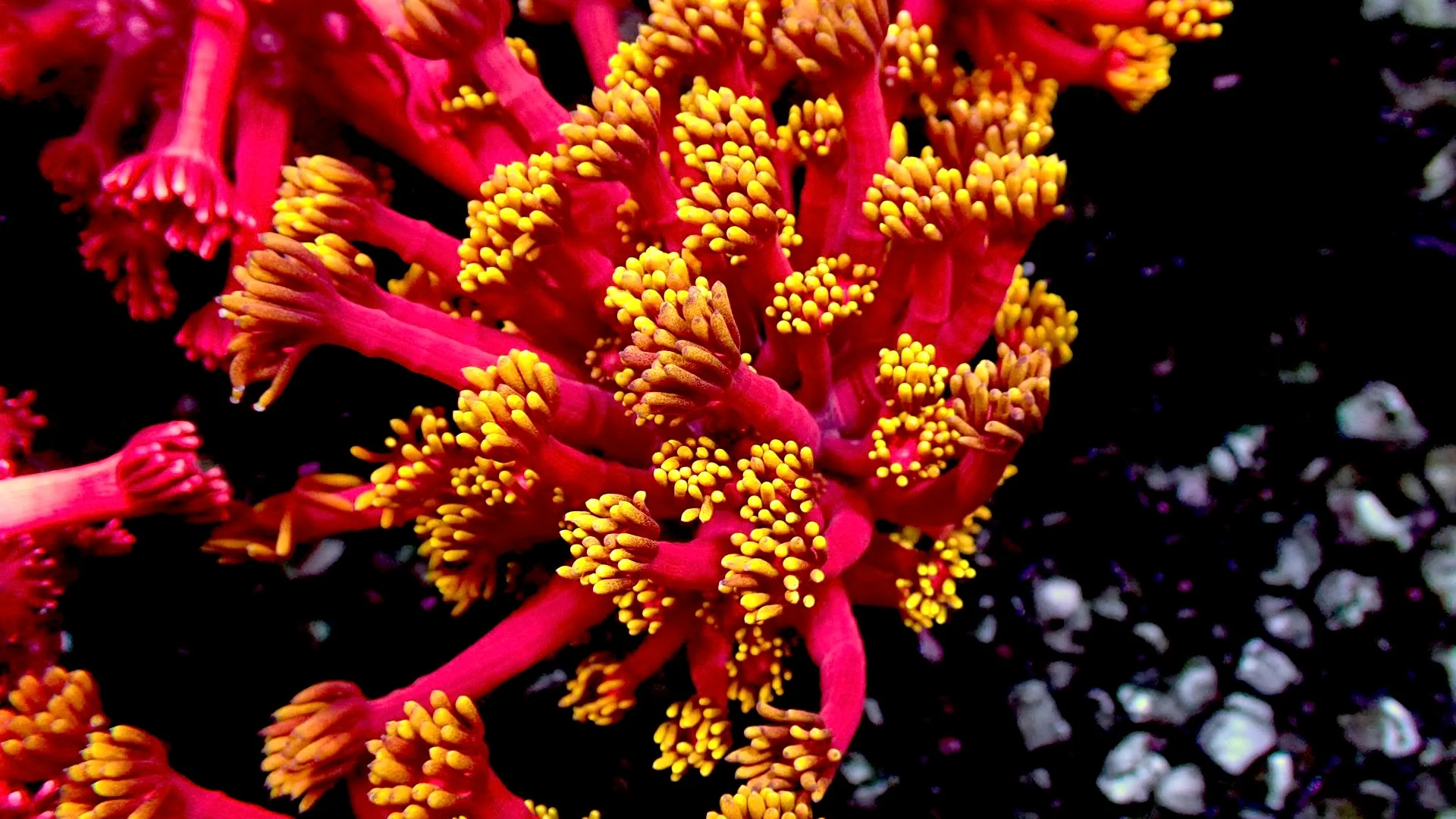
Iron Man Goni is a named Goniopora, listed as Goniopora sp. Goniopora grow round, flower-like polyps on long stalks that extend well beyond the skeleton. Each polyp carries more tentacles than the similar Alveopora, which is a quick identification check up close. The Iron Man name comes from the rich red and gold tones the polyps can show under reef light, with color that deepens when extension is full and the colony is settled.

The entry lists advanced care, medium light, medium flow, middle placement, moderate aggression, and slow growth. Advanced is the right warning. Goniopora have a long record of opening well for months and then declining when food, flow, or trace balance drifts. Place it in the middle of the rockwork with room for the stalks to extend in every direction. Start new pieces a little lower and shade the move upward over time, because sudden high light shortens extension.
Flow should keep the polyps swaying in changing directions. Medium, random flow lifts food toward the polyps and clears waste from the base. Constant flow from one side bends all stalks one way and can keep that side retracted. Still water is also a problem, leaving polyps drooping and detritus settled among the stalks.
Feeding is central for this coral. Goniopora benefit from regular small offerings of fine planktonic coral food, offered several times a week when polyps are extended. Broadcast feeding in moderate flow reaches a healthy colony well. Target feeding with pumps lowered can help a new or thin piece, as long as food is fine enough for the polyps to take in. Large meaty chunks are wasted on this genus.
Spacing deserves care. Extended stalks reach farther than the base suggests, and the moderate aggression rating means contact with neighbors can damage both sides. Leave several inches around the colony, and check reach again after it has settled and extension grows longer. Keep it clear of stinging LPS sweepers and away from corals that may topple onto it.
Growth is slow and shows as new polyps around the edge and a gradual widening of the skeleton. Daily extension is the best health read. Polyps that shorten week by week, a base that starts to recede, or algae growing on exposed skeleton all call for early action on flow, feeding, and placement. Stability in alkalinity, calcium, and magnesium supports the skeleton under the tissue, and many keepers watch manganese and iron discussions closely for this genus while avoiding dosing without testing.
Common pitfalls are buying on first-week extension alone, placing the coral in a high-traffic feeding spot where fish steal every offering, and moving it repeatedly while chasing a perfect look. Settle it once, feed it on a routine, and judge changes over weeks.
Field notes — what keepers report
- Keeper experience with Goniopora divides sharply. Some keepers report colonies thriving for years with routine plankton feeding and random flow, while others report steady decline after an early period of strong extension despite similar light. The difference most often discussed is consistency of feeding and placement rather than any single water value.
- Extension reports vary by flow pattern. Keepers describe long, even stalks under alternating flow and shortened, uneven stalks under a steady stream from one direction. Reports agree that a placement change should be given weeks, because stalks adjust slowly after a move.
- Feeding reports also conflict in detail. Some keepers credit frequent fine-food offerings for new edge growth, while others describe colonies holding well on broadcast feeding alone. Both sides warn against heavy feeding that clouds the water or leaves food rotting at the base, which keepers link to retraction rather than growth.
Field Notes
Related species
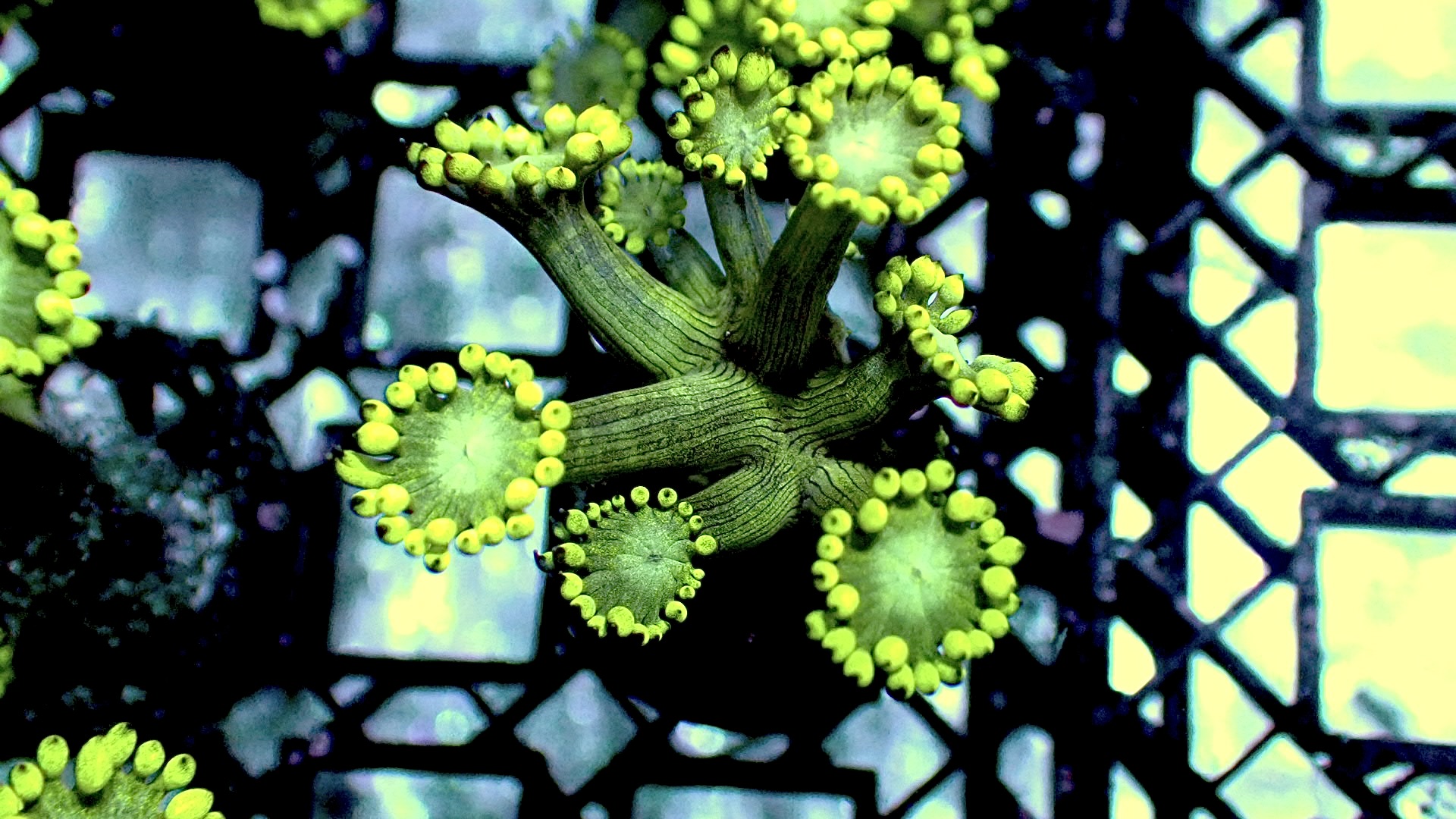
Bulbasaur goniopora
Goniopora sp
Same genus
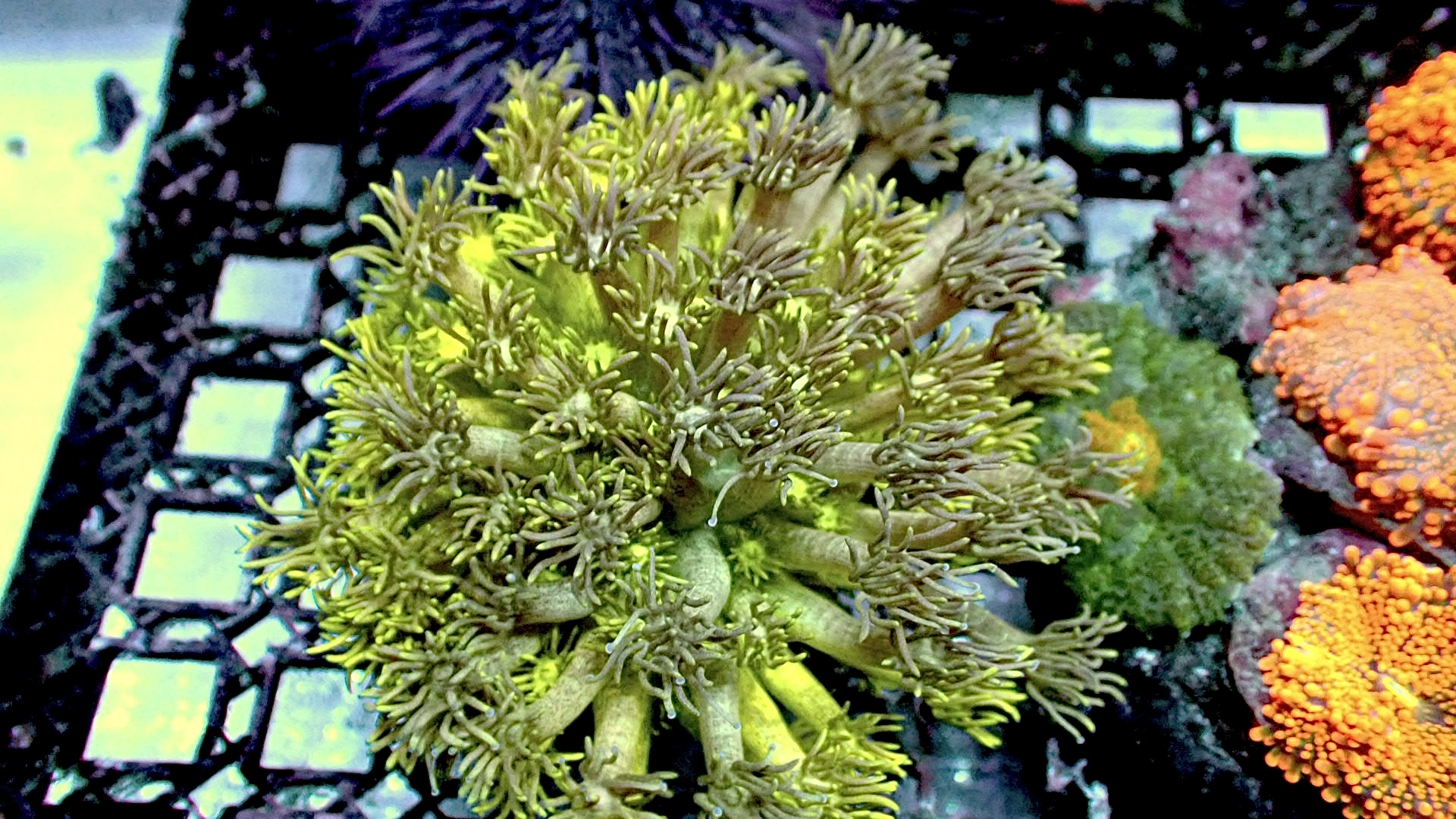
Citrus goniopora
Goniopora sp
Same genus
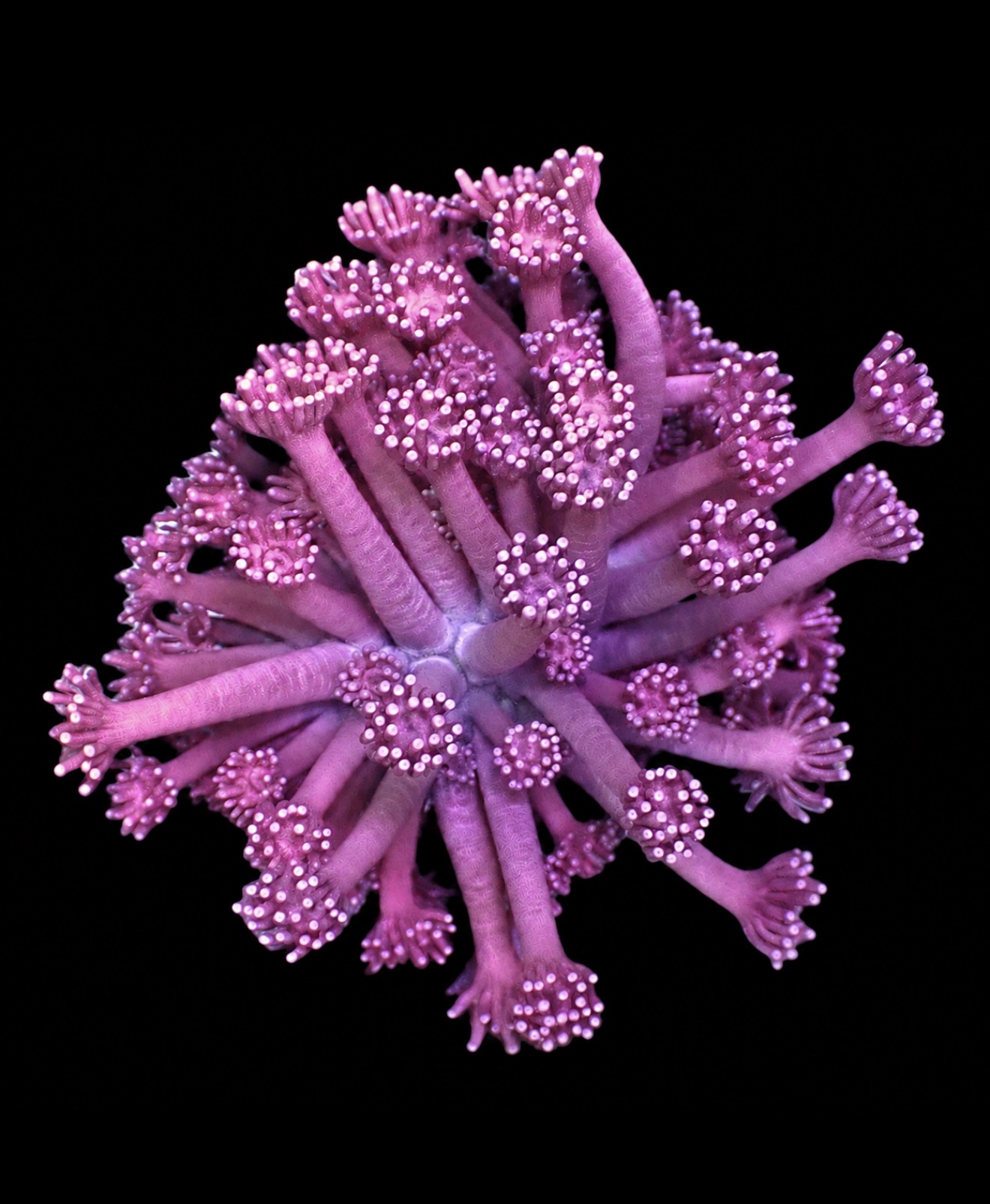
Barney the dinosaur Goni
Goniopora sp.
Same genus
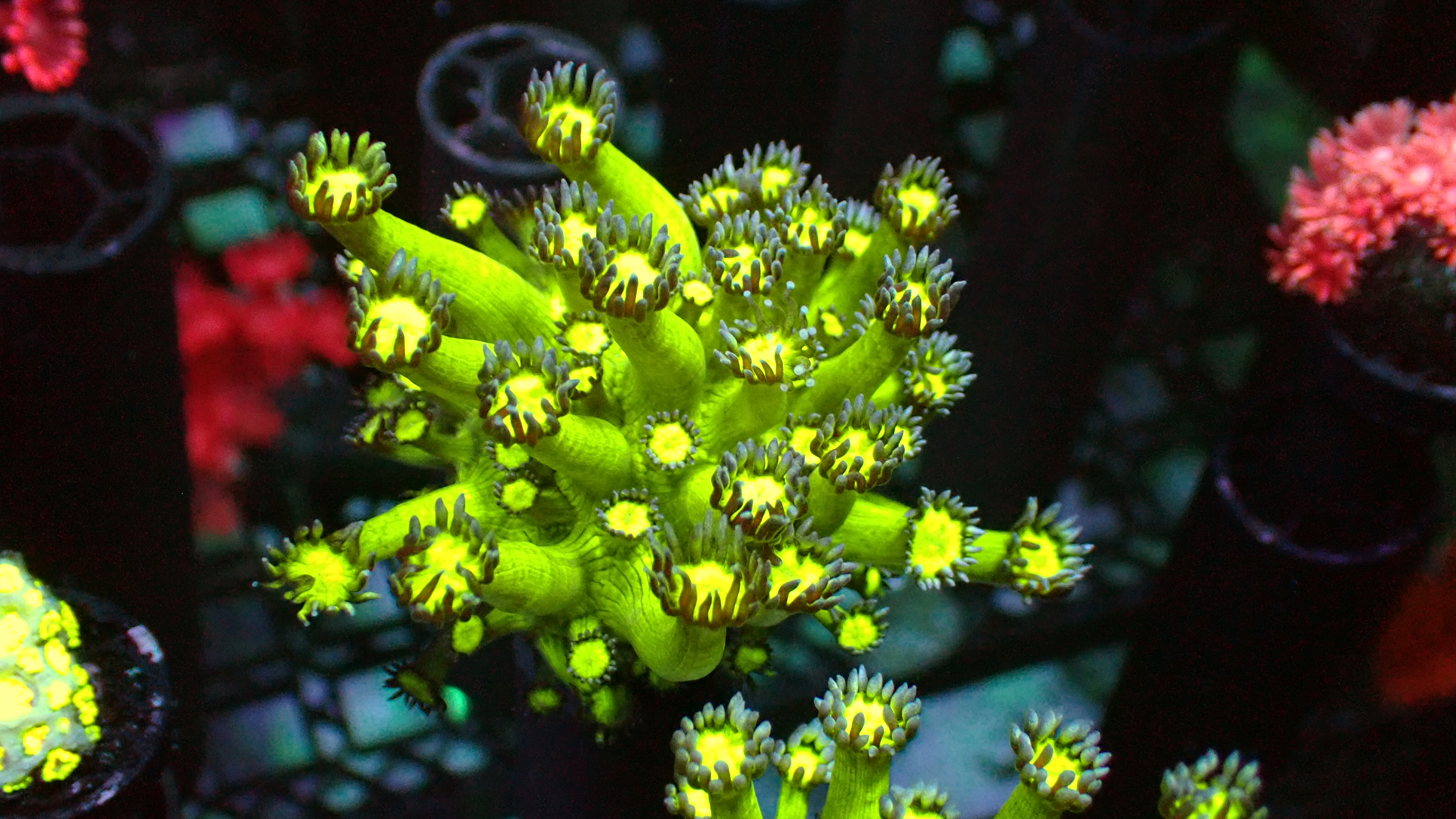
Bootleg glitter Goni
Goniopora sp
Same genus

Column Flowerpot Coral
Goniopora columna
Same genus

Flowerpot Coral
Goniopora djiboutiensis
Same genus

Lava lamp goniopora
Goniopora sp
Same genus

Lavender Goni
Goniopora sp
Same genus