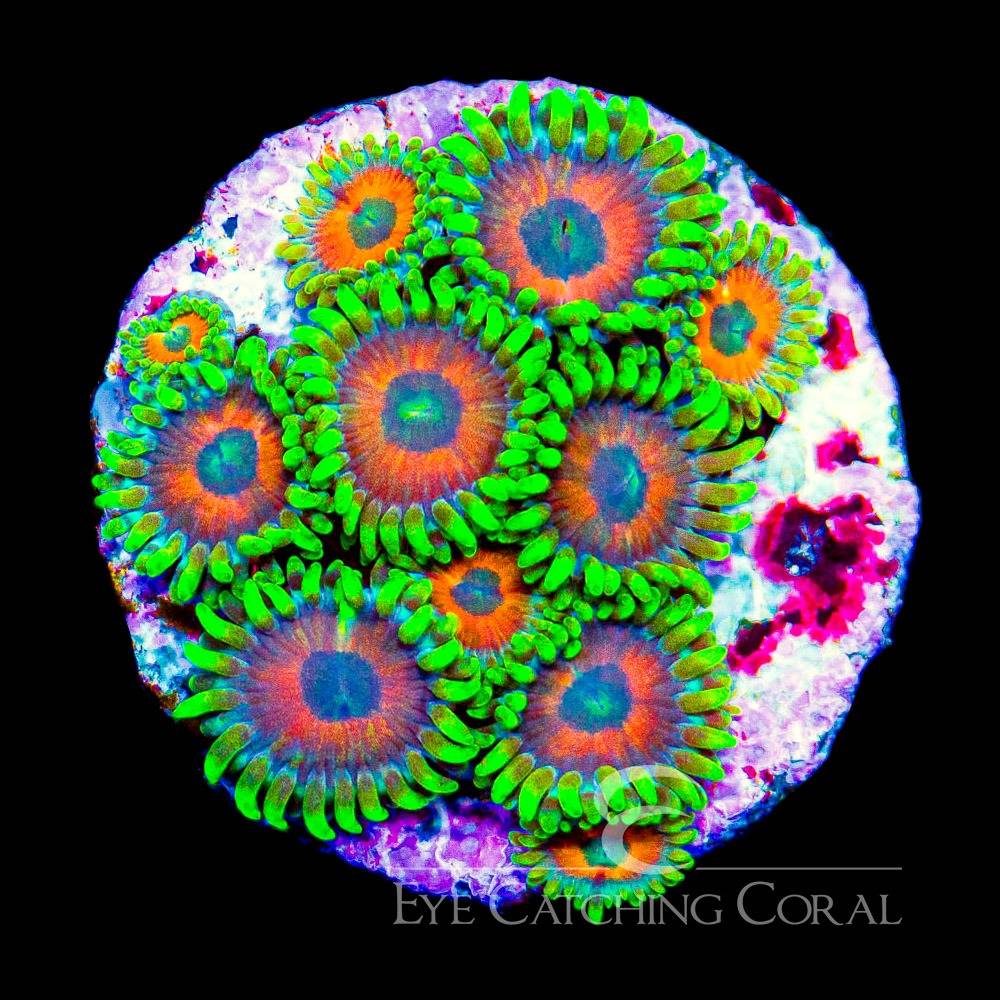
Eagle Eye 2.0 zoas
Zoanthus sp
Palytoxin safety
Some zoanthids and palythoas can contain a potent toxin. Wear sturdy waterproof gloves and eye protection, minimize handling, and keep colonies submerged when possible. Never boil, steam, pressure-wash or scrub colonized rock under running water. Keep other people and pets away during handling. If exposure is suspected, seek urgent medical advice and tell the clinician about possible palytoxin exposure.
Sources: CDC: palytoxin exposure · OATA: avoiding palytoxin poisoning
Gallery
# Eagle Eye 2.0 zoas
Care at a glance: CARE Beginner · LIGHT Low-Med · FLOW Med · PLACE Mid · SPACE Moderate · GROWTH Fast
A practical guide for a small colony with room to grow. Scientific-name field: “Zoanthus sp”. The care advice below combines named-seller guidance with clearly labeled general zoanthid experience.
Meet the name, keep the record
A few button-like polyps can become a busy little garden. Eagle Eye 2.0 is a hobby trade name for zoanthids, and the label deserves its own record.
This entry stays separate from Eagle Eye. The extra “2.0” does not prove a new species, an upgrade or a family connection. Keep the scientific-name field exactly as “Zoanthus sp”. A sales name or a photograph cannot fill in the missing species name.
There is one useful breadcrumb. Eye Catching Coral says it acquired its Eagle Eye 2.0 from LEAR in 2022. That is the seller's account of its own stock, not a verified history of this Reef To Go colony. Corals.com also uses the 2.0 name, but its written color description differs. We cannot use those descriptions to join the two sellers' colonies into one lineage.
Keep the seller, purchase date and any parent-colony record together. Enjoy the coral you have without asking its name to prove more than it can.

Sources: S1, S2, S3.
Light: ease into the sunshine
Think of a new frag as a visitor arriving from a different climate. A bright spot that suits its old tank may feel very different under your lights.
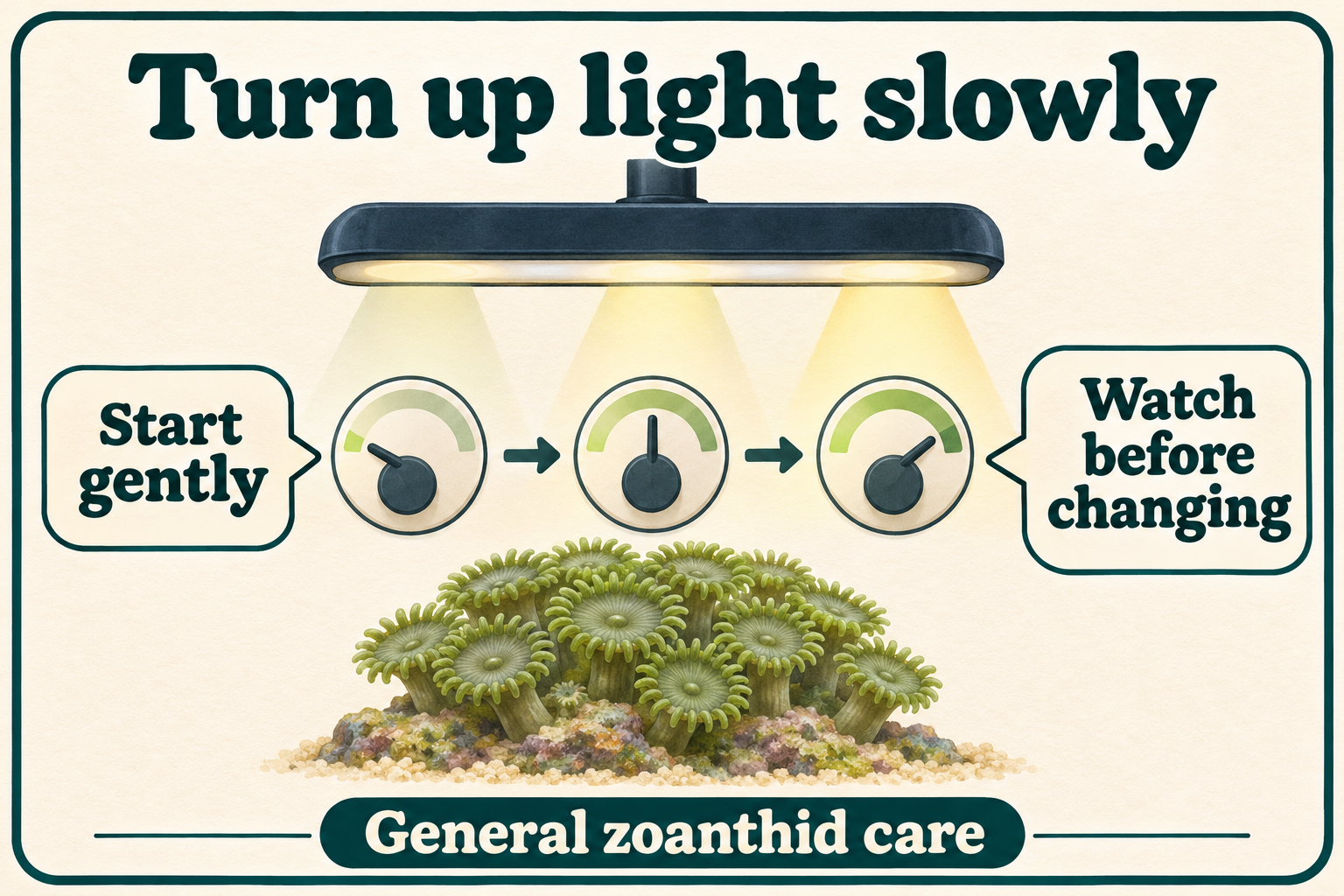
Keep Low-Med as the starting category. Begin with modest light and increase it gradually only if the colony needs it. Ask the seller what the coral was used to. A PAR meter helps describe the light actually reaching the frag; “middle of the tank” cannot do that on its own.
Watch how the colony opens and whether its tissue stays healthy. Paling or continued closure after a lighting change is a reason to investigate. Long stalks can be a clue about light, but one clue is not a diagnosis. Check water and flow too.
Take comparison photos under the same lighting. Do not chase the brightest online photograph by moving the frag every day. Blue-heavy lighting can change how colors look, so a photo is a poor substitute for a care record.
Sources: S2, S4, S5, S6.
Flow: a wash, not a blast
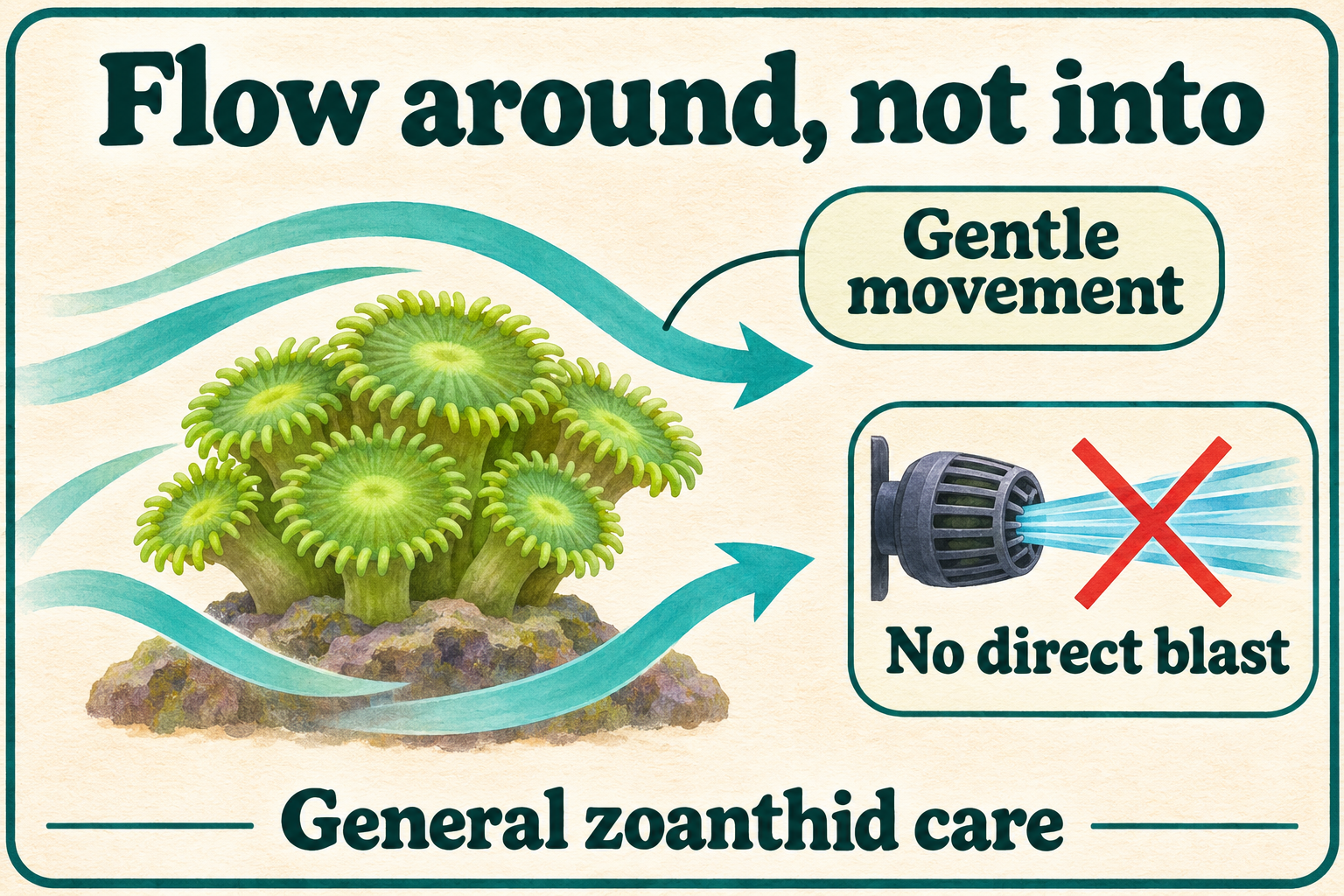
Water should visit the whole colony, not punch one spot. Aim for circulation that carries loose debris away while letting the polyps open normally.
The published advice disagrees. Eye Catching Coral lists high flow for its Eagle Eye 2.0. BRS lists moderate or medium flow for the ECC coral, and Corals.com lists medium flow for its offering. Those labels describe different systems and are not measurements at your frag.
Keep the Med field and begin with indirect flow. If debris collects between the polyps, adjust the water's path. If a narrow pump jet pins the polyps over or keeps them shut, redirect it. Change the direction before turning every pump higher.
An open, clean colony is a better goal than copying a pump percentage from another tank. Avoid repeated moves while you work out the local flow.
Sources: S1, S2, S3, S4, S6.
Water and food: keep it steady
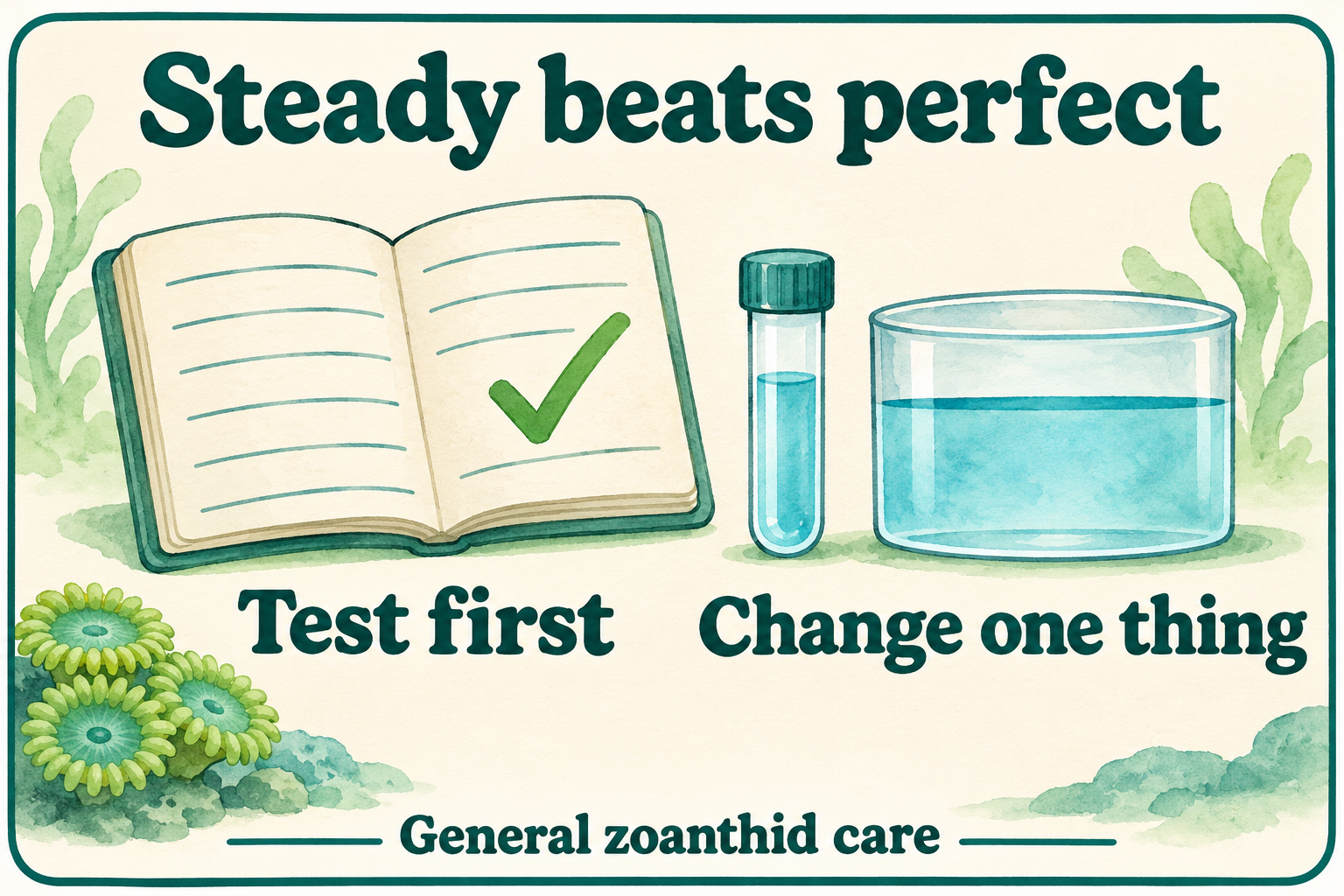
The best care routine is often the boring one that works. Test regularly, keep temperature and salinity steady, and avoid sudden chemistry corrections.
Zoas get much of their energy from tiny photosynthetic partners inside their tissue. Supplemental food can help in some systems, but it is not a shortcut around suitable light and clean water. If you try it, offer a small amount of suitable fine coral food and watch the response. Do not pile food over closed polyps.
Nitrate and phosphate belong in the picture too. Driving both to zero can leave a reef short of nutrients. Letting excess food and waste build up can cause a different set of problems. Follow trends rather than trying to copy every number from a grower's tank.
Before adding a supplement, test and identify the need. Record one change at a time. That simple habit makes it much easier to spot what helped and what did not.
Sources: S4, S5, S6.
Growth: watch the garden edge
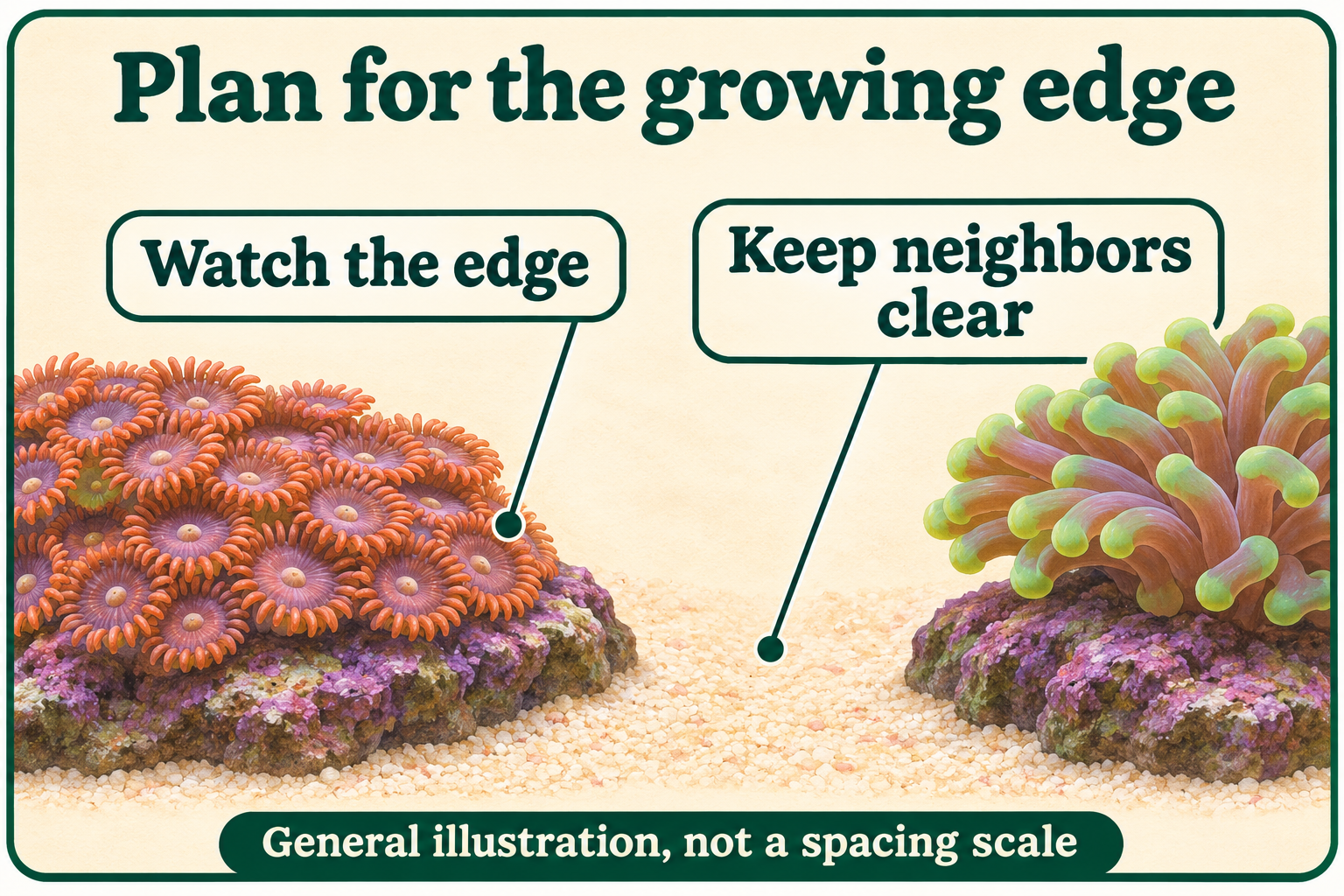
A zoa garden does not stay inside the outline you imagined. New polyps can carry the colony across nearby surfaces.
Keep Fast as a broad growth label, not a promised number of polyps each month. The BRS Eagle Eye 2.0 listing uses that category. Settling time, feeding, light and each aquarium's conditions still matter.
A separate, removable rock can make the edge easier to watch. Leave room for growth and for neighboring corals' own reach. An empty gap today can disappear as animals grow. No fixed one- or two-inch gap is a lasting guarantee of safety.
Keep the care card's SPACE value at Moderate. That tile describes aggression and competition, not inches. Even a colony without long sweeper tentacles can spread into another coral's space. Watch both neighbors, including after dark when some corals extend farther.
Plan boundaries before they become a problem. Cutting or removing zoanthids is adult work with palytoxin precautions, not a casual garden-trimming job.
Sources: S2, S4, S5, S6, S10.
Closed polyps: be a detective
A shut polyp is a clue. It does not come with a label saying “too much light” or “needs a dip.”
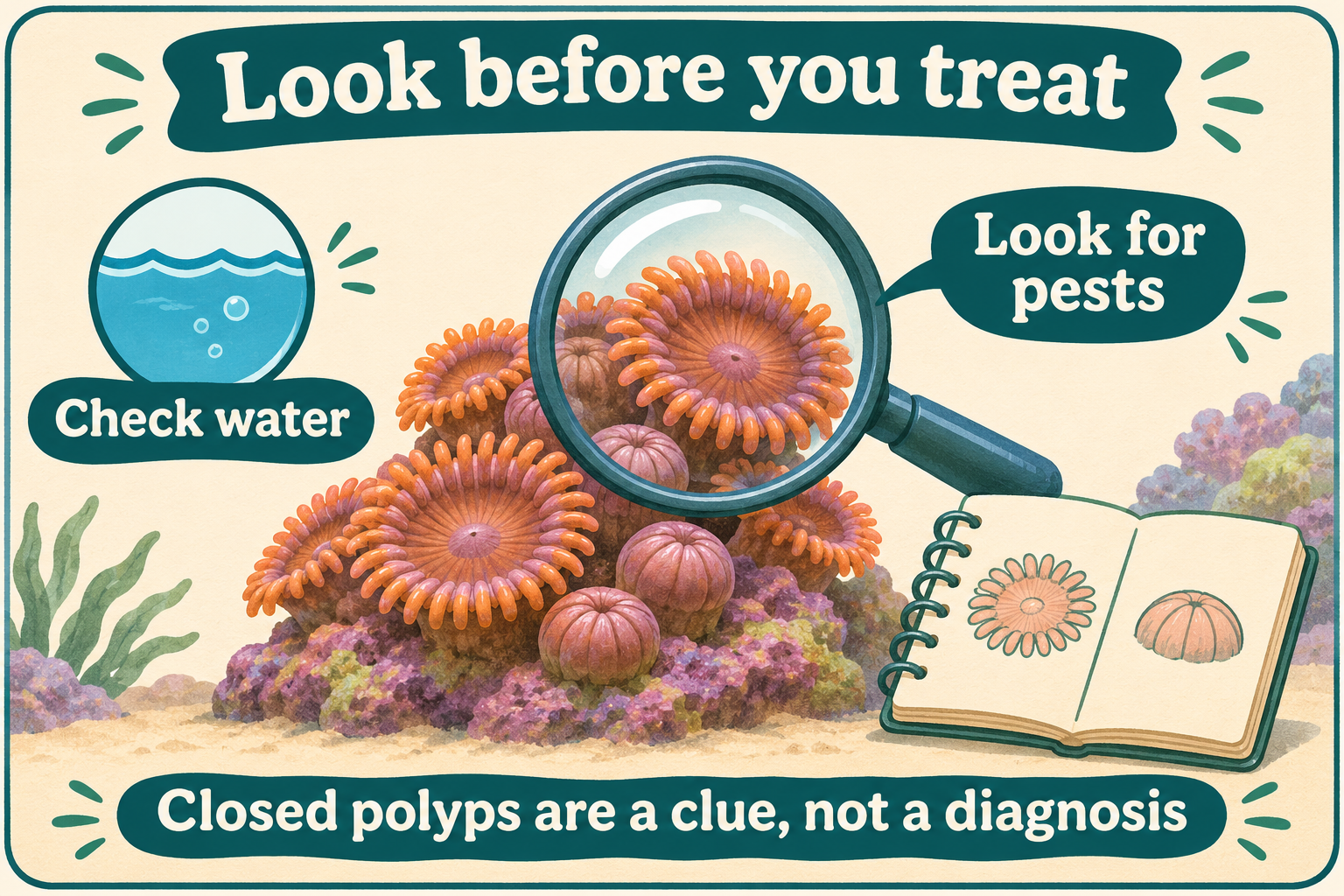
Start with what changed. Check temperature, salinity and recent test results. Look for a direct jet, fresh shade, loose sediment or a neighbor touching the colony. Then inspect the mat and plug under neutral light. A magnifier can help you see small visitors.
Zoanthid-eating nudibranchs, sundial snails and sea spiders are known pests. Do not assume every tiny animal is guilty. Seek a reliable identification before choosing a treatment. Persistent closure or shrinking tissue deserves prompt attention rather than endless lighting experiments.
Inspect and quarantine new arrivals when possible. A dip is not a magic shield: some eggs may survive. Use only a coral-appropriate product and follow its current label. Do not combine treatments or use random household chemicals.
Keep the coral submerged where practical and follow the safety section whenever handling is needed. Watching carefully is useful. Poking the colony every hour is not.
Sources: S5, S6, S10.
Field notes — what keepers report
These are general zoanthid reports, not verified Eagle Eye 2.0 experiences. Both come from the actual Reef2Reef discussion “Zoas, why such variation in recommended light/flow rate?” on December 7, 2021.
- fryman, post 5, favored stronger flow and described different lighting responses among their own zoas. A setting that suited one colony did not suit all of them.
- Nano_Tuners, post 9, reported that their zoas preferred medium-low to low flow. Their experience points in the opposite direction on flow.
These are useful observations, not controlled tests or a vote that settles the question. Tank layout, previous conditions and the animals themselves differ. Neither report justifies giving Eagle Eye 2.0 an extreme light or flow target.
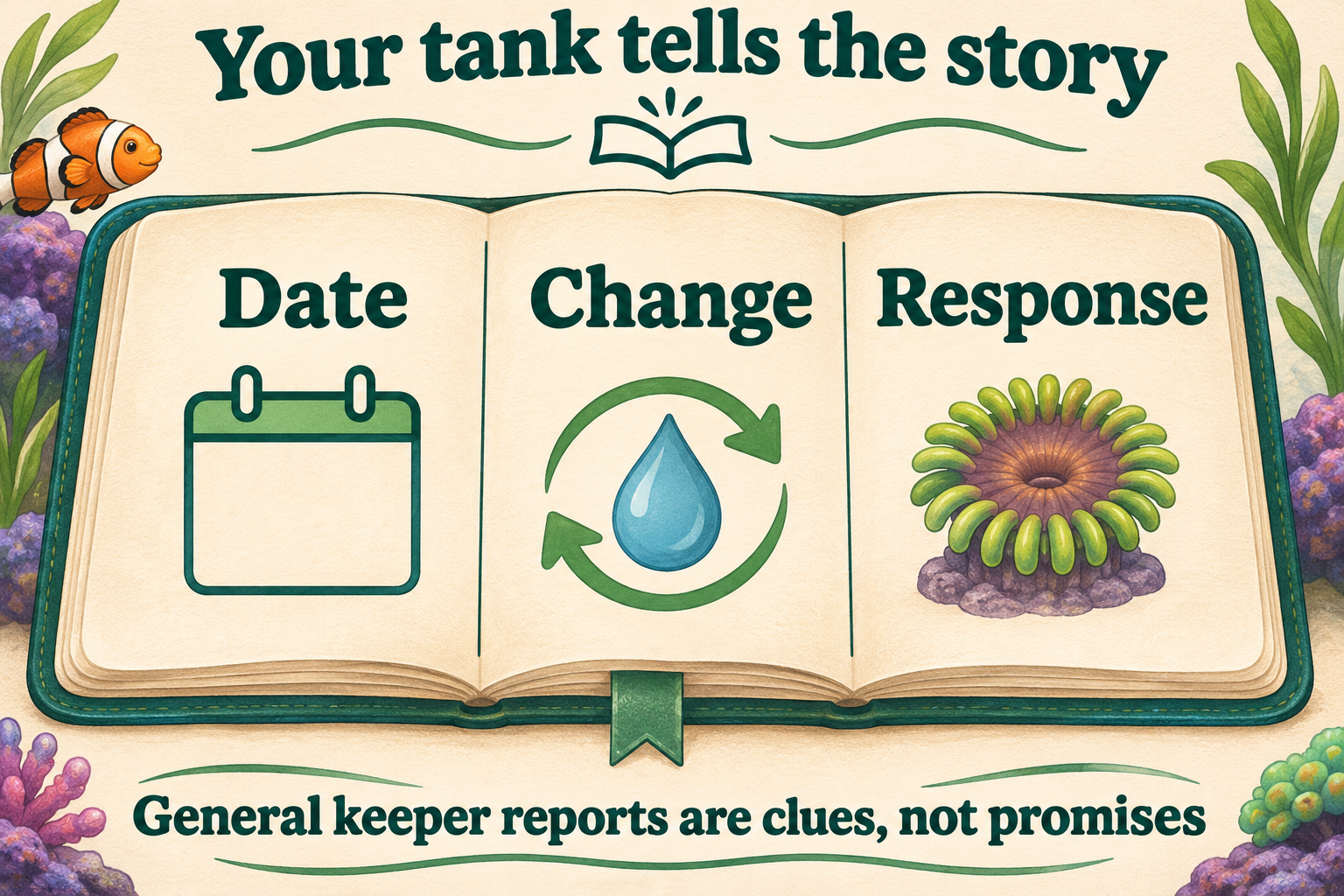
Make your own little field notebook: date, change, response. Use the same camera lighting, note whether the colony opens, and watch its edge. Give a sensible adjustment time to show a result instead of changing food, light and flow together.
Sources: S7, S8.
Palytoxin safety: grown-ups only
This is a look-and-learn coral for children, not a touch-and-try one. Some zoanthids and palythoas can contain palytoxin, a powerful poison. No toxin-test result for this colony is available here, and a name or photograph cannot establish that it is safe.
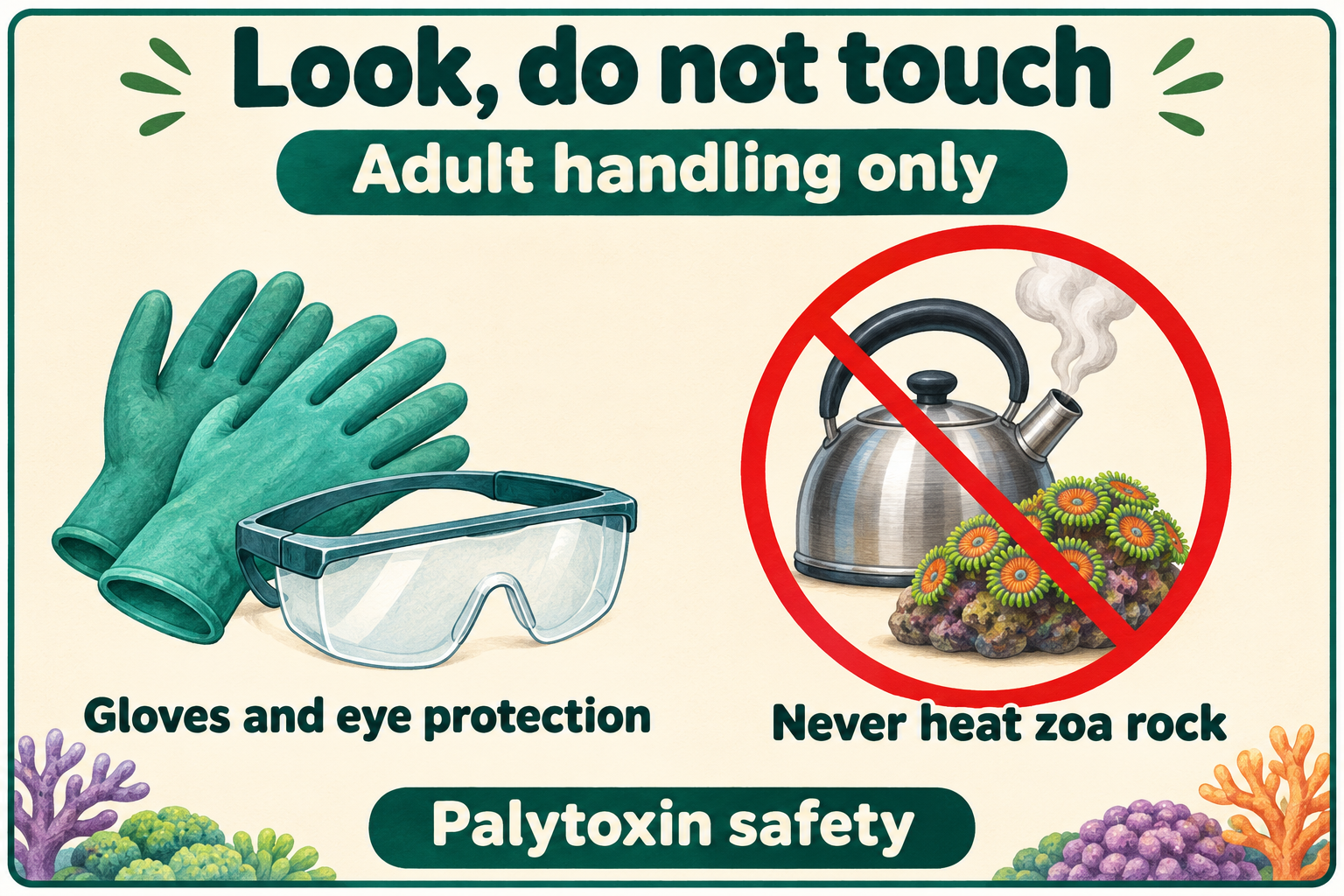
Leave handling to a careful, informed adult. Wear sturdy waterproof gloves and eye protection, cover cuts, and keep hands away from your face. Minimize handling and keep colonies submerged when possible. Keep children, pets and bystanders away from the work area.
Never boil, steam, microwave, pressure-wash or pour hot water over zoa-covered rock. Never scrub it under running water or use a sprayer. These activities can spread contaminated droplets. Protective gear does not turn them into safe methods.
If exposure is suspected, stop and seek urgent medical advice. Tell the clinician that aquarium coral and possible palytoxin are involved. In the United States, Poison Help is 1-800-222-1222. Breathing difficulty or other severe symptoms require emergency services immediately.
Enjoy the little garden through the glass. Safe habits belong beside beginner care, not after it.
Sources: S9, S10, S11.
Source references, checked November 11, 2026. Seller guides are husbandry advice; S7 and S8 are general keeper anecdotes.
S1. Eye Catching Coral. ECC Eagle Eye 2.0 Zoanthid Frag. Undated. https://eyecatchingcoral.com/aquaculture/coral?c=6eb8c1e5
S2. Bulk Reef Supply / Eye Catching Coral. ECC Eagle Eye 2.0 Zoanthid. Undated. https://www.bulkreefsupply.com/ecc-eagle-eye-2-0-zoanthid-eye-catching-coral.html
S3. Corals.com. EAGLE EYE 2.0 Zoanthid Frag Aquacultured. Undated. https://www.corals.com/product/eagle-eye-2-0-zoanthid-frag-aquacultured/
S4. Adam Monte / Bulk Reef Supply. Zoanthid Coral Care Guide. Updated May 7, 2026. https://www.bulkreefsupply.com/content/post/coral-care-guide-zoanthids
S5. Tidal Gardens. How to Care for Your Zoanthus Coral. Undated. https://tidalgardens.com/articles/coral-care-articles/zoanthus-coral-care.html
S6. Reef Culture Co.. Zoanthid Coral Care Guide. Undated. https://reefcultureco.com/pages/zoanthid-coral-care-guide
S7. fryman / Reef2Reef. Zoas, why such variation in recommended light/flow rate? Post 5. December 7, 2021. https://www.reef2reef.com/threads/zoas-why-such-variation-in-recommended-light-flow-rate.877402/
S8. Nano_Tuners / Reef2Reef. Zoas, why such variation in recommended light/flow rate? Post 9. December 7, 2021. https://www.reef2reef.com/threads/zoas-why-such-variation-in-recommended-light-flow-rate.877402/
S9. Ali K. Hamade, Sandrine E. Deglin, Joe B. McLaughlin, Jonathan R. Deeds, Sara M. Handy and Ann M. Knolhoff / CDC. Suspected Palytoxin Inhalation Exposures Associated with Zoanthid Corals in Aquarium Shops and Homes, Alaska, 2012–2014. August 14, 2015. https://www.cdc.gov/MMWR/preview/mmwrhtml/mm6431a4.htm
S10. Ornamental Aquatic Trade Association (OATA). How to prevent palytoxin poisoning. Document dated September 2022; URL filename October 2023. https://ornamentalfish.org/wp-content/uploads/How-to-avoid-palytoxin-poisoning-Oct-2023.pdf
S11. Scott Muir, RN, CSPI / Tennessee Poison Center. What is Palytoxin?. August 23, 2018. https://www.vumc.org/poison-control/node/769
Field Notes
Related species
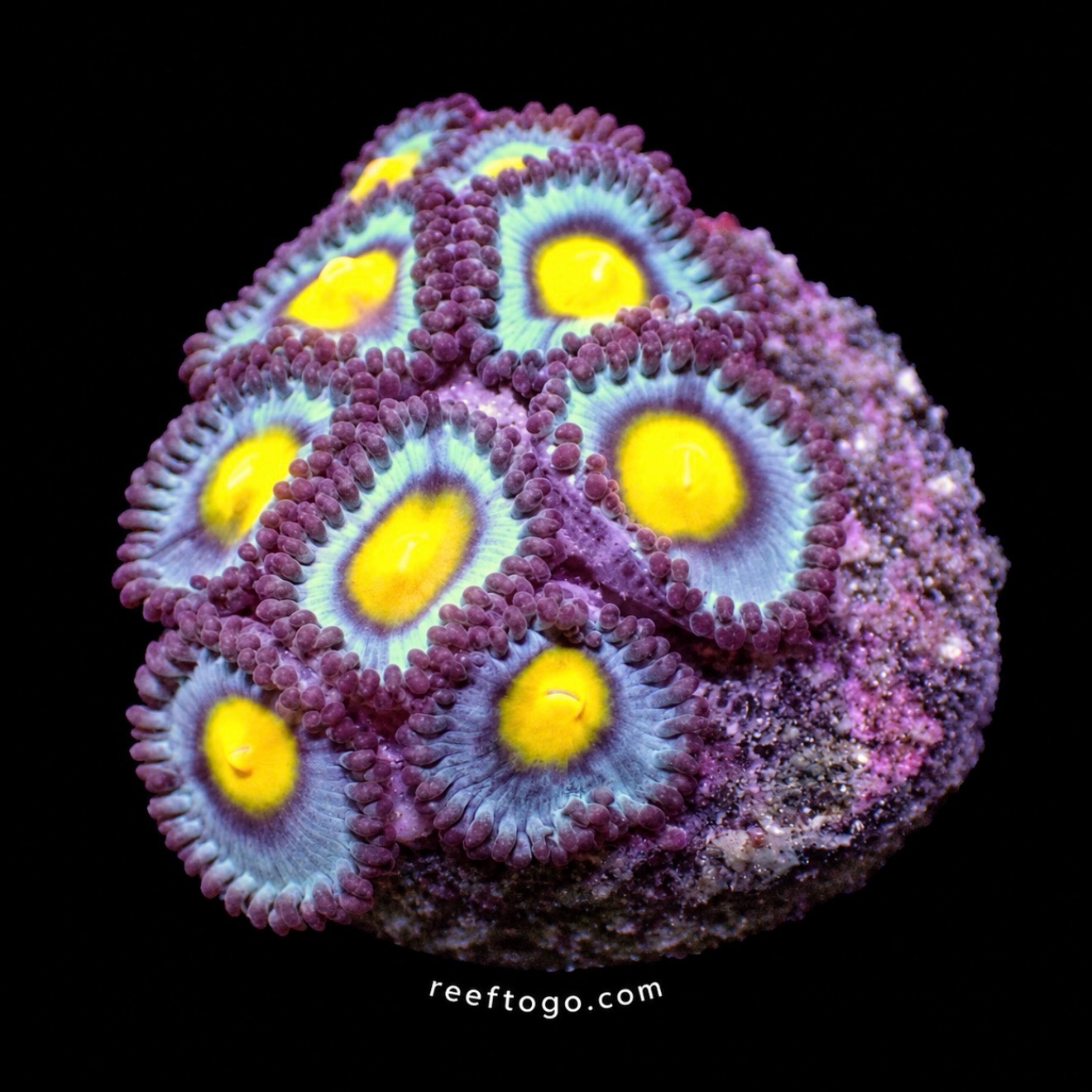
Alien Eye zoas
Zoanthus sp
Same genus
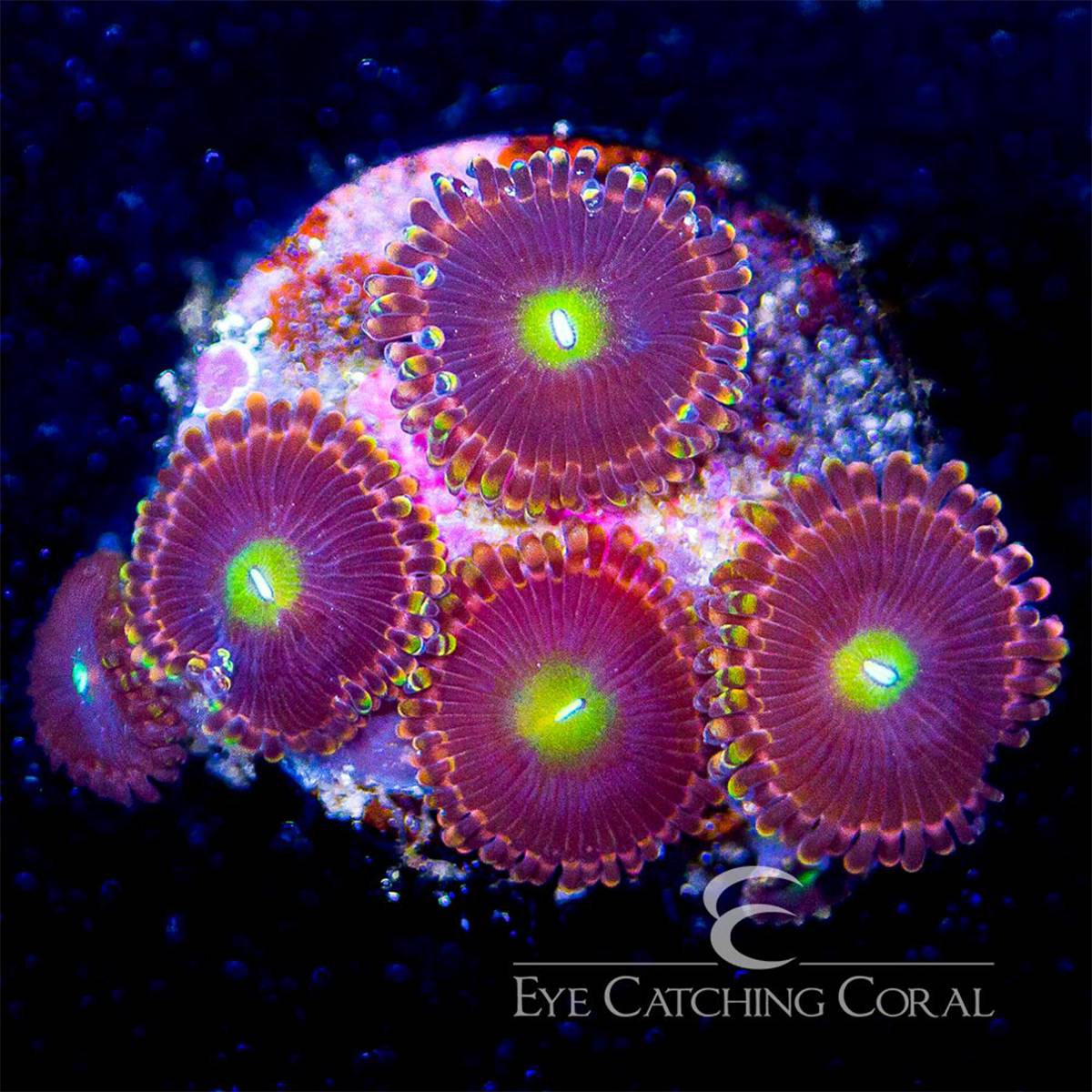
Antimatter zoas
Zoanthus sp
Same genus
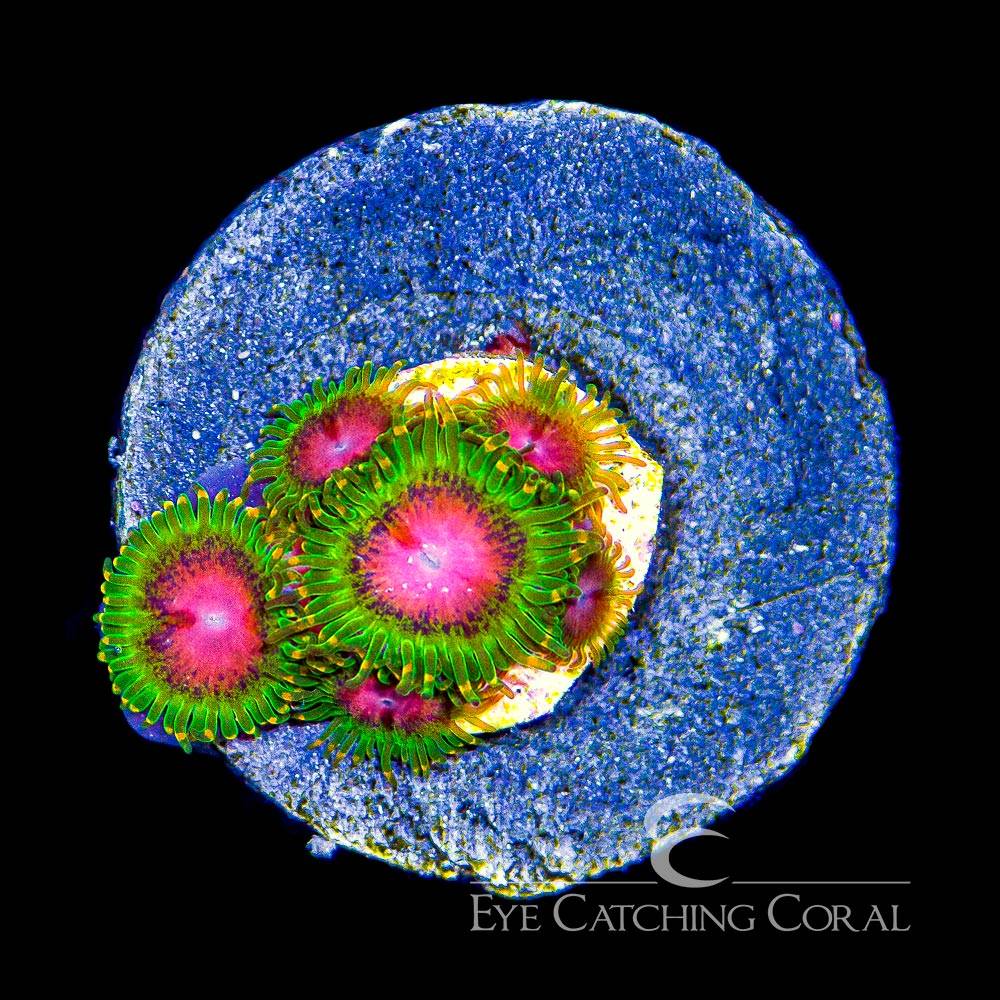
Awesome Blossom zoas
Zoanthus sp
Same genus
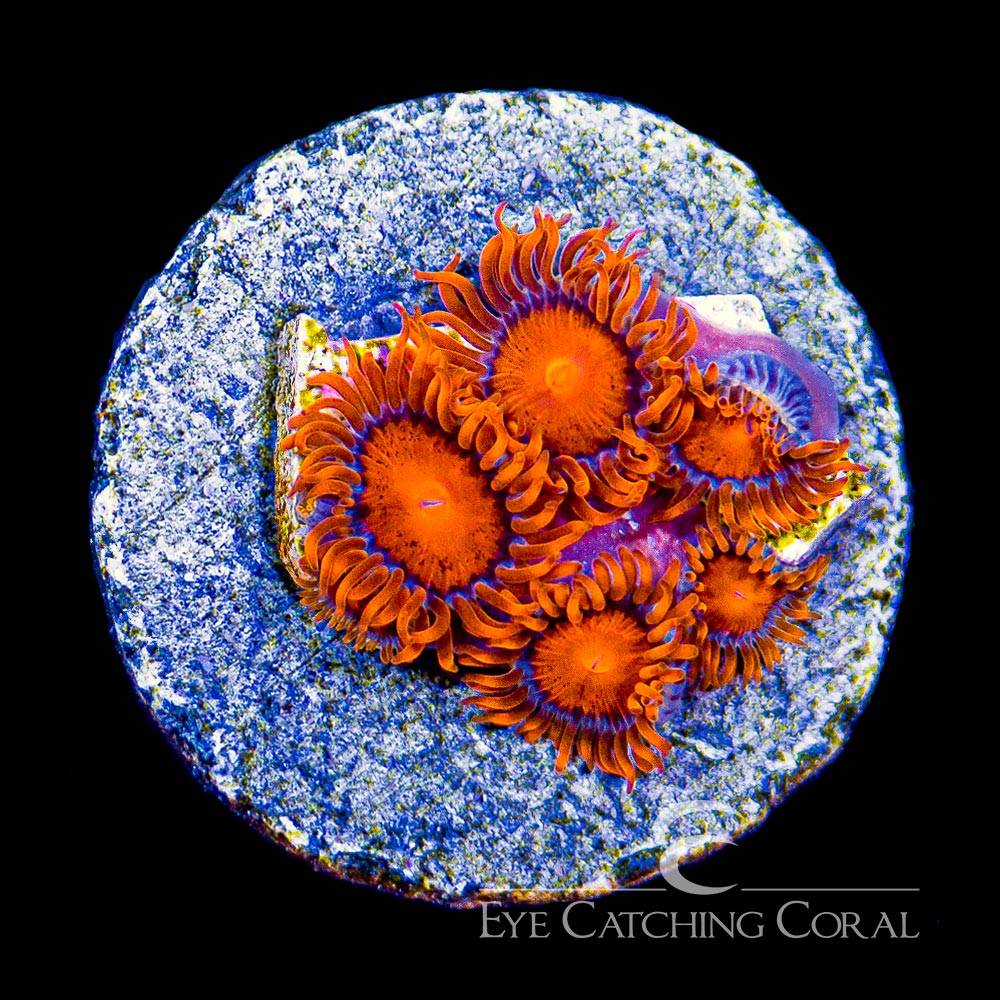
Bam Bam zoas
Zoanthus sp
Same genus
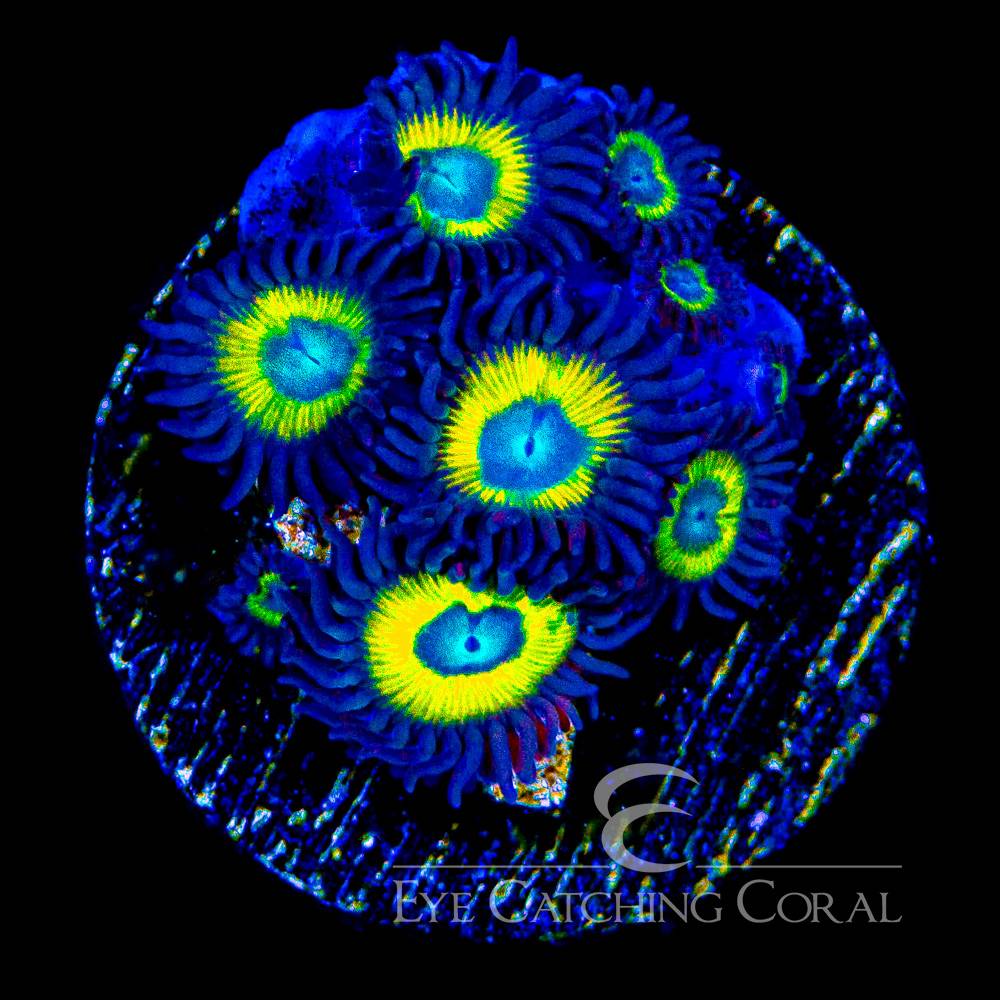
Black Bella zoas
Zoanthus sp
Same genus
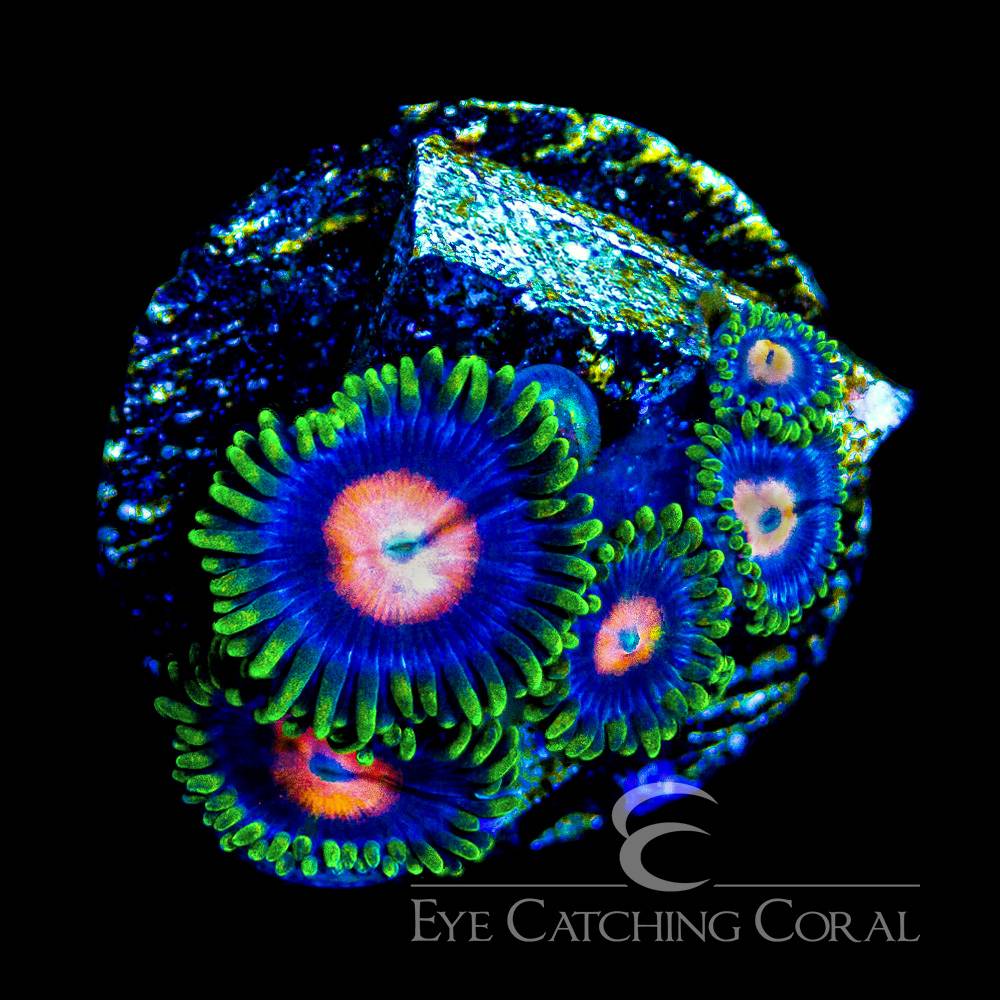
Blow Pops zoas
Zoanthus sp
Same genus
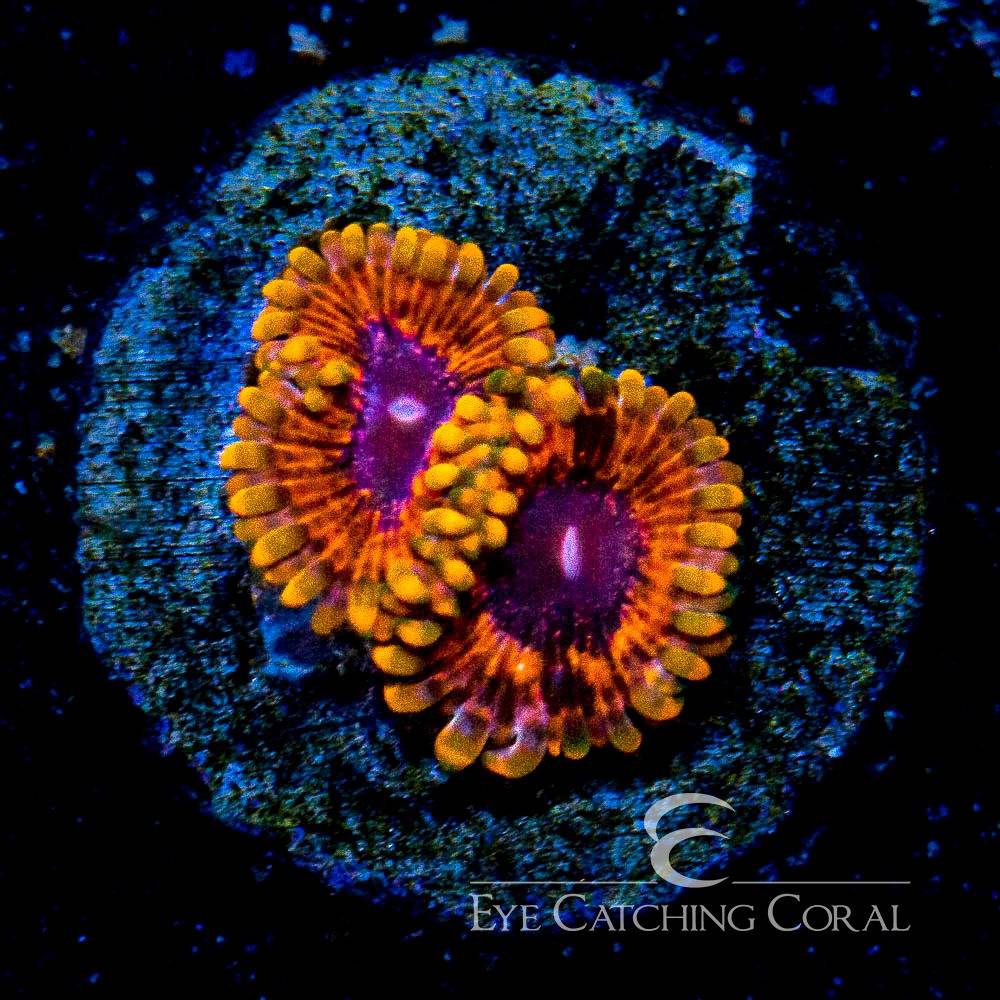
Burning Ember zoas
Zoanthus sp
Same genus
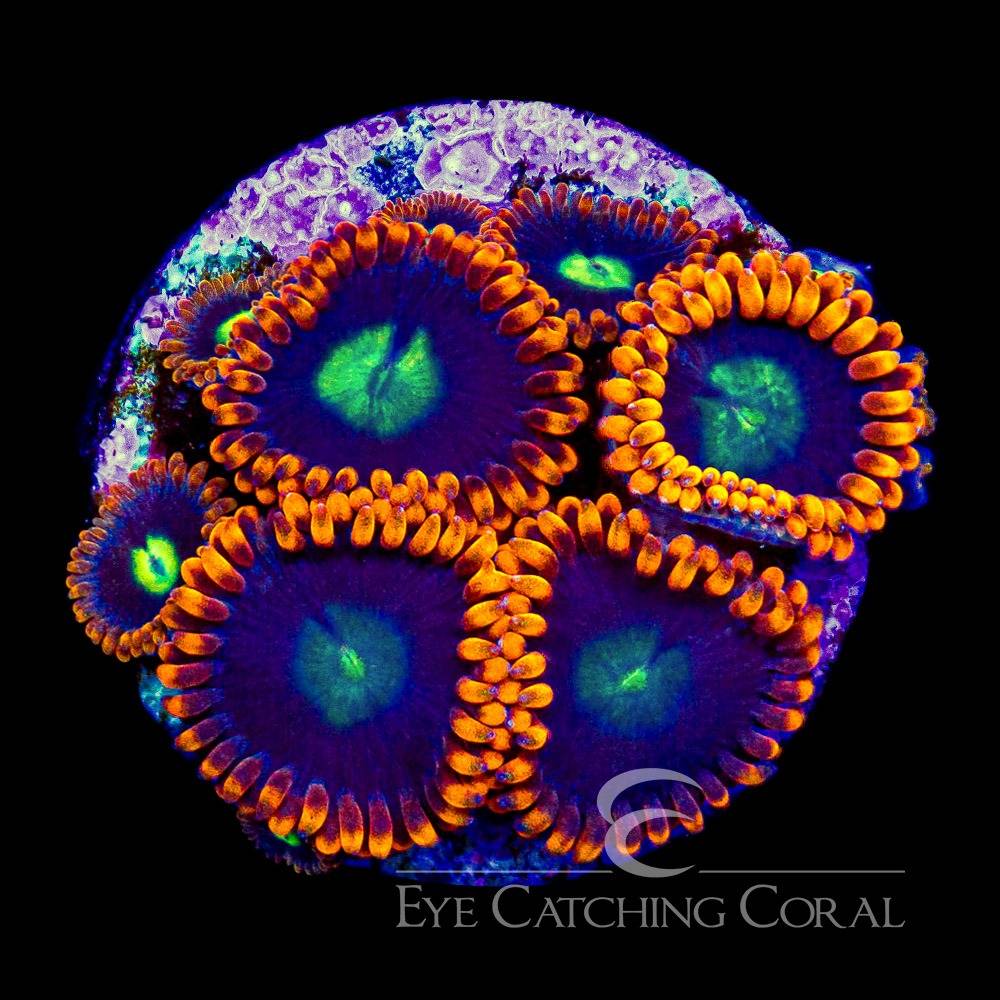
Burning Suns zoas
Zoanthus sp
Same genus