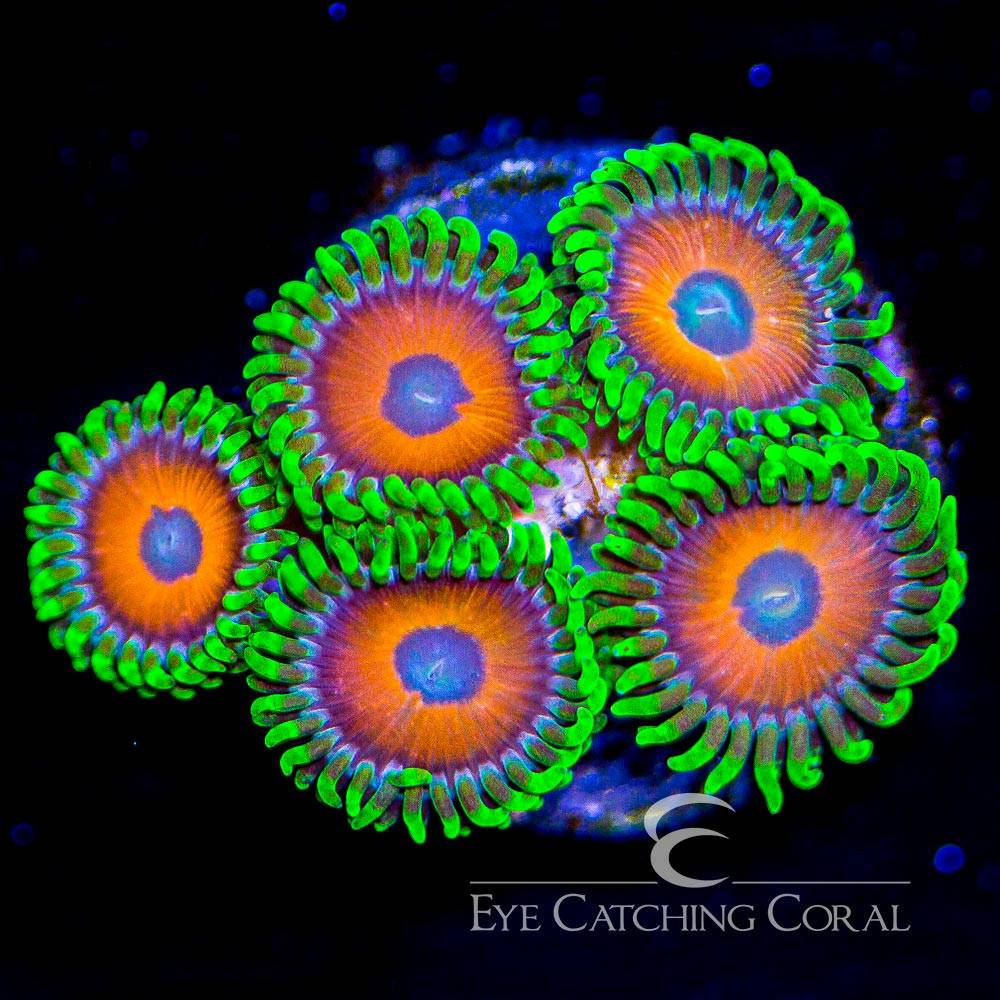
Eagle Eye zoas
Zoanthus sp
Palytoxin safety
Some zoanthids and palythoas can contain a potent toxin. Wear sturdy waterproof gloves and eye protection, minimize handling, and keep colonies submerged when possible. Never boil, steam, pressure-wash or scrub colonized rock under running water. Keep other people and pets away during handling. If exposure is suspected, seek urgent medical advice and tell the clinician about possible palytoxin exposure.
Sources: CDC: palytoxin exposure · OATA: avoiding palytoxin poisoning
Gallery
# Eagle Eye zoas
A little patch of Eagle Eyes can become one of the busiest corners of a zoa garden. The trick is giving it a place to settle, then resisting the urge to move it every time a polyp closes. Start with manageable light, water moving through the colony, and room to spread.
1. Know what the name tells you
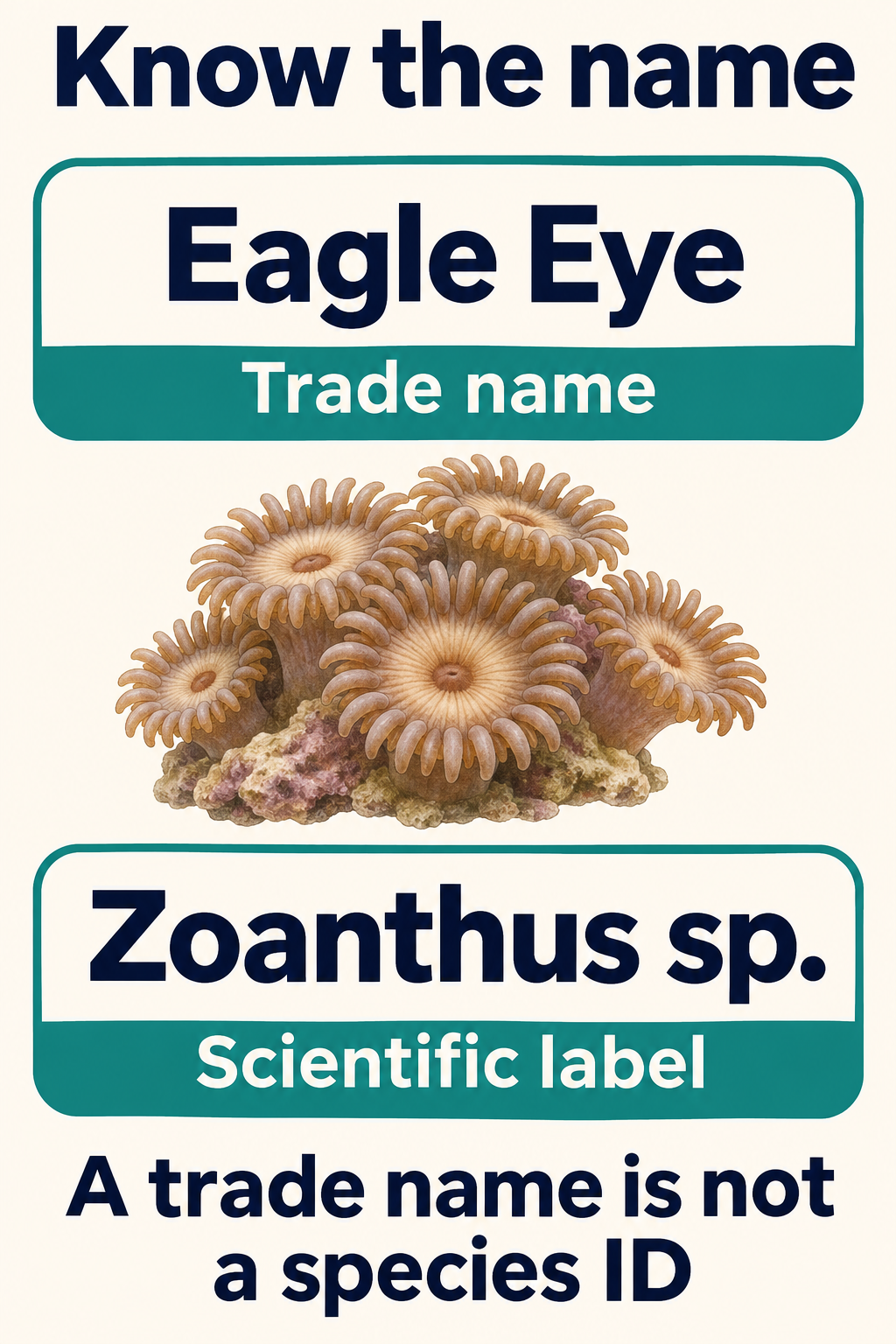
Eagle Eye is a hobby name for a zoanthid morph. Keep the scientific label at Zoanthus sp. The name does not establish an exact species, collection location or toxin level.
The long-running Reef2Reef Eagle Eyes spotlight describes a pale center, orange disc and green skirt. Keepers in that thread also describe changes in appearance under different lighting. That is a description used in the hobby, not a checklist for identifying an unknown frag from a photo. Blue-heavy lighting, camera settings and filters can change what you see.
For this entry, the existing Reef To Go name and photo stay together. No new identity claim has been made from its appearance.
Before buying or placing a frag, ask about its history. How long has the seller grown it? Where was it sitting? A useful care history tells you more than a dramatic photograph.
Sources: Reef2Reef Eagle Eyes spotlight [1]; BRS/ECC product identification [2].
2. Give them a steady spot
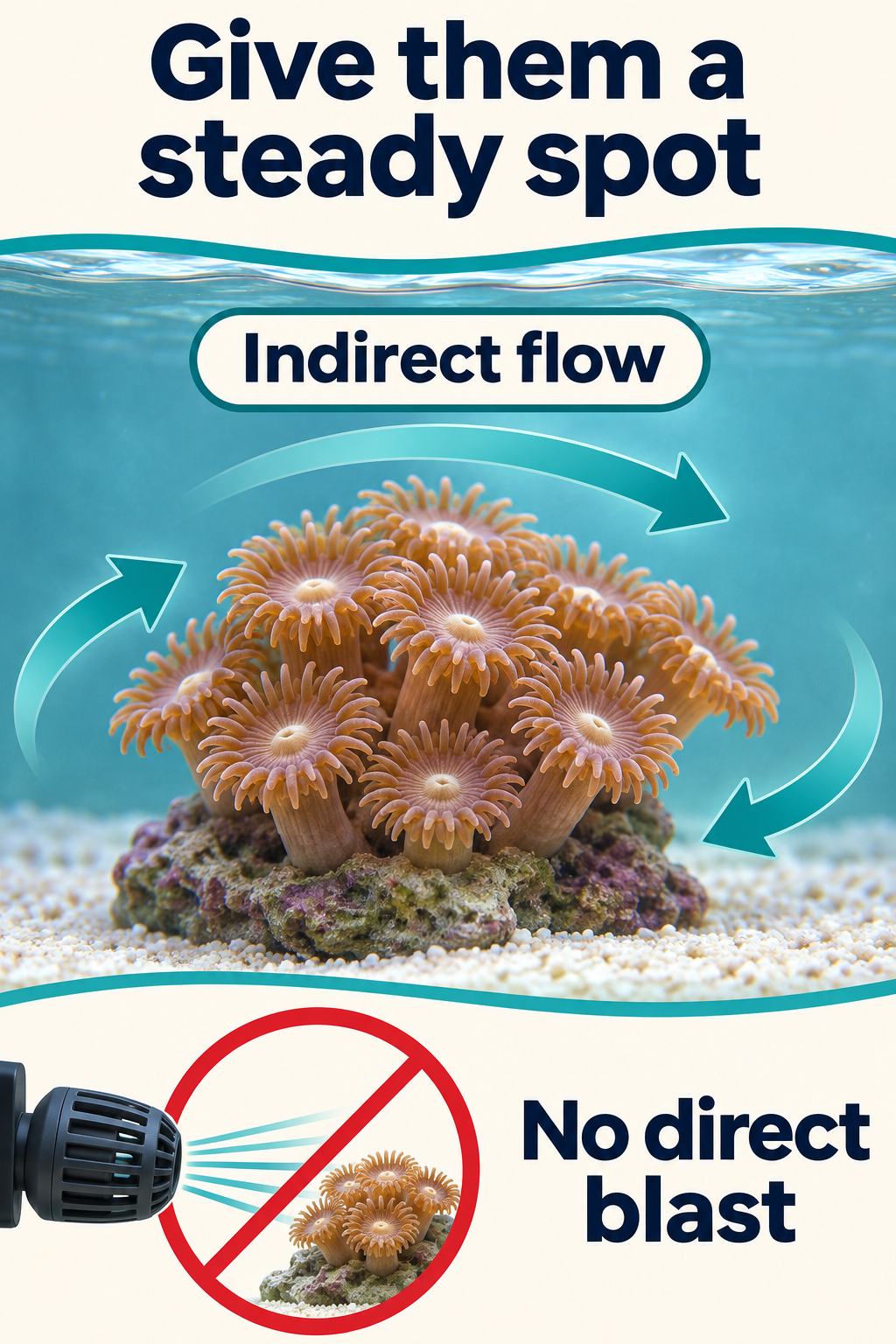
Start with low to moderate light and moderate, indirect flow. Mid rockwork is the current care-card starting point, but height alone does not tell you how much light reaches the coral. A bright ledge can be harsher than a more exposed spot lower down.
BRS recommends starting zoanthids lower or in some shade, then judging their response. It also warns that a sudden move into intense light can bleach them. There is no need to chase a single Eagle Eye PAR number here. Published care ranges differ, and the seller’s previous conditions matter.
Watch the water, not just the pump setting. The colony needs enough movement to stop waste settling between the polyps. A jet that keeps them folded shut is too much for that position. Move the flow across the colony rather than aiming a narrow blast at it.
Choose a rock you are happy for them to cover. A removable island makes future growth easier to manage. Keep the mat away from slower neighbors and outside the reach of nearby LPS sweeper tentacles. The old “1–2 inches” note was not a permanent safe boundary: growth and neighboring corals decide how much room is needed.
Sources: BRS/ECC [2]; Reef Stable [3]; New Dawn Aquaculture [4].
3. Keep the water steady and food modest
Zoas get much of their energy from their light-powered algae partners. You do not need to turn every feeding into a coral buffet.
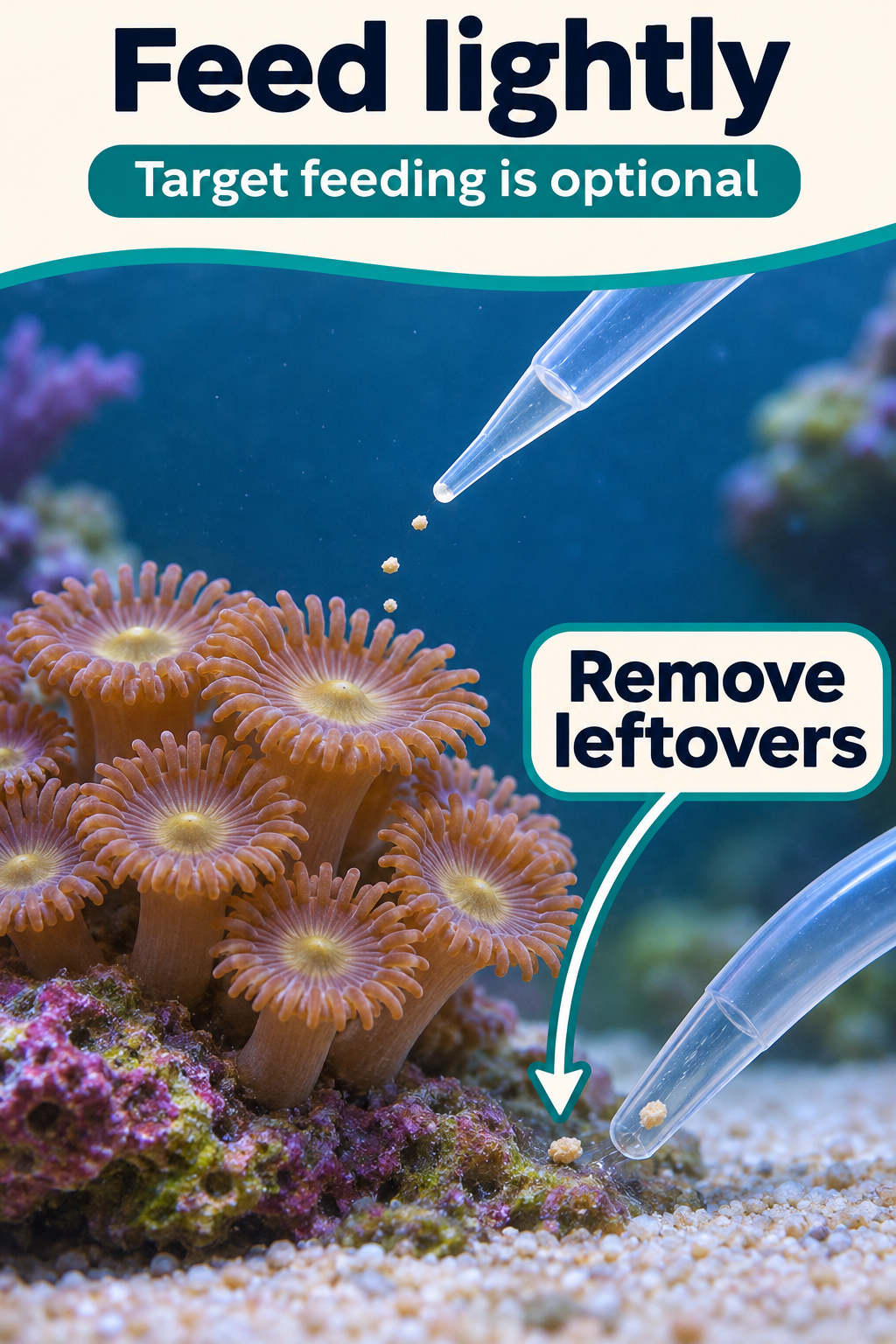
Vivid Aquariums recommends supplemental food for Eagle Eyes. Other keeper reports describe no obvious feeding response. If you try a fine coral food, offer a little and watch. Food landing on a closed polyp does not prove it was eaten. Remove leftovers rather than letting them collect in the mat.
Keep a routine you can maintain. Stable salinity and temperature are more useful than a new supplement every week. Test the reef’s water and make corrections based on measurements. Zoanthids do not build a stony skeleton, so buying a zoa frag is not a reason to start dosing calcium or alkalinity without a measured need.
Do not chase zero nitrate and phosphate. Tidal Gardens reports that starved zoas can shrink and open poorly. That does not mean dirty water is the goal: waste piling up around the colony and excess food feeding algae are different problems from having nutrients available in the water.
Sources: Vivid Aquariums [5]; Reef2Reef [1]; New Dawn Aquaculture [4]; Tidal Gardens [6]; Reef Stable [3].
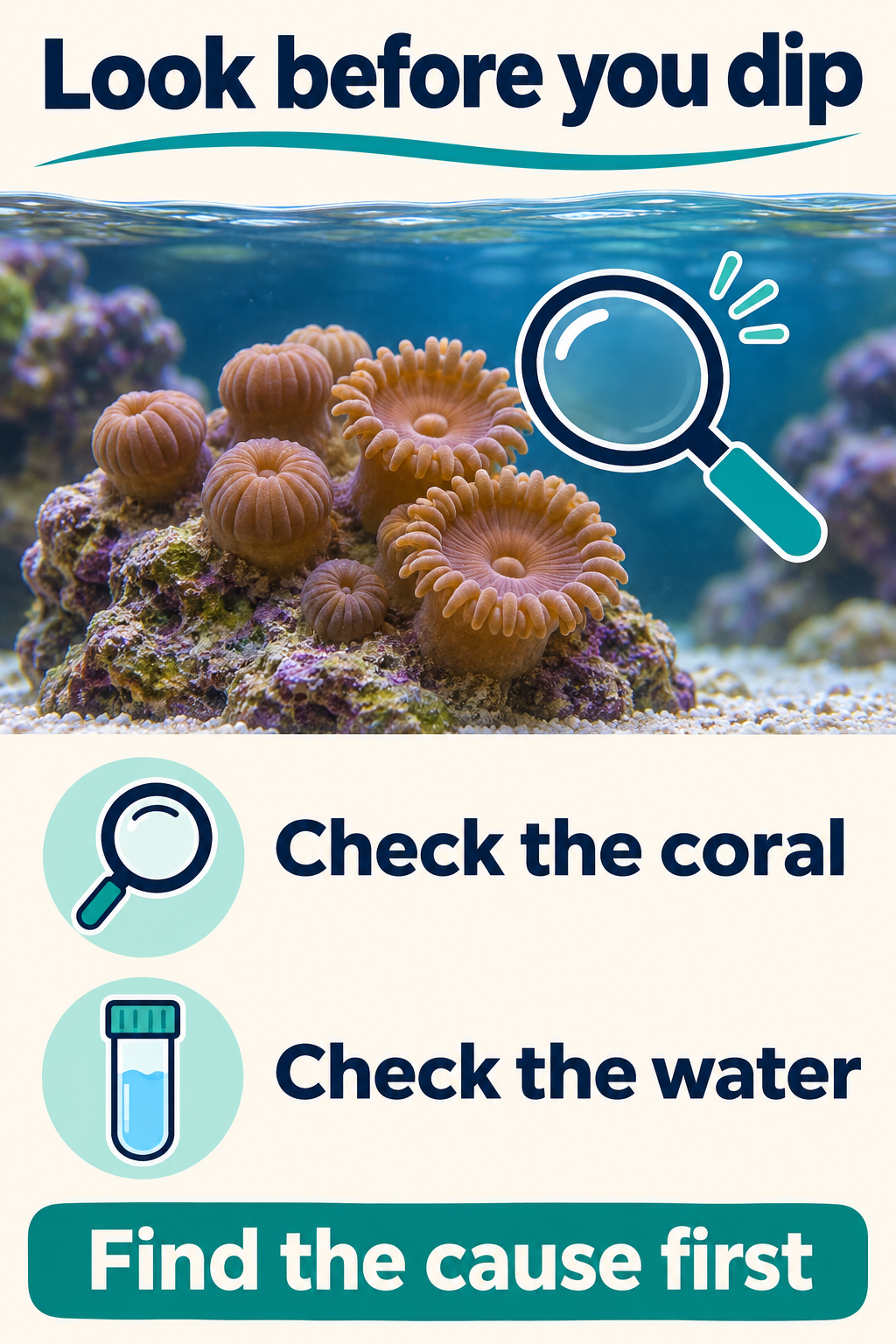
4. Look before you dip
One closed polyp is a clue, not a diagnosis. A new frag may stay shut after the trip. Persistent closure, shrinking tissue or a spreading bare patch deserves a closer look.
Start with a few simple questions:
- Is only this colony affected, or are other corals reacting too?
- Did the light, flow or water conditions change recently?
- Is sand or waste collecting around the base?
- Is a fish, crab or hitchhiker bothering the polyps?
Zoanthid-eating nudibranchs and sea spiders are among the pests reported on zoas. White bumps are sometimes described as “zoa pox,” but a white mark alone is not a reliable diagnosis. Get a clear view of the affected tissue and the colony’s base before deciding what to treat.
Do not stack repeated dips simply because the first one did not make the colony open. Different problems need different responses. If a coral dip is appropriate, follow its own directions and rinse in separate clean tank water. A treatment is not a replacement for finding the cause.
Sources: Tidal Gardens [6]; Reef Stable [3]; New Dawn Aquaculture [4].
5. Handle zoas as a safety job
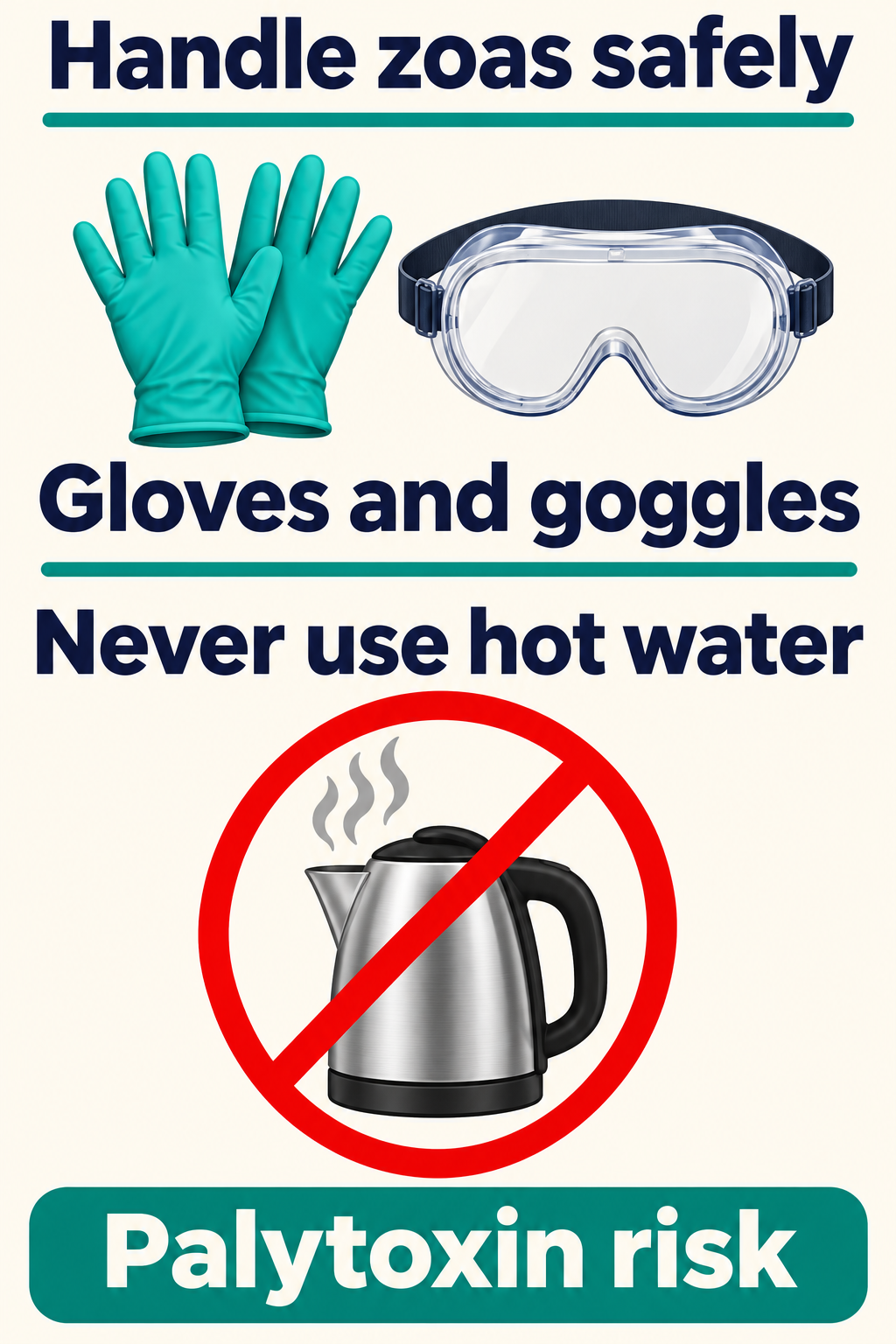
Some zoanthids contain palytoxin. A trade name or reassuring color cannot establish that a colony is toxin-free. Keep the existing palytoxin warning on this entry.
CDC reports document illness after handling zoanthids and after being near someone working with them. Exposure can involve eyes, damaged skin, ingestion or breathing contaminated droplets. Serious breathing effects may require hospital care.
Never boil, steam or use hot water on zoa-covered rock. Avoid scrubbing or power-cleaning it in ways that make spray. Keep children, pets and other people away from the work area.
Wear protective gloves and eye protection. OATA recommends moving the colony into a container while it is still underwater, rather than lifting it out first. Its guidance also calls for suitable respiratory protection when removal work is necessary. Ordinary caution is not a guarantee against exposure, and a casual face covering is not a substitute for appropriate protection.
If you are not equipped for safe fragging, have an experienced coral grower do it. Letting the colony grow onto removable rubble is easier to plan than trying to remove an established mat from the display later.
If exposure is suspected, stop work and contact poison control or urgent medical care. Tell them a marine aquarium coral and possible palytoxin were involved. In the United States, Poison Control is 1-800-222-1222. Call 911 for trouble breathing. For an eye splash, begin rinsing with room-temperature water for 15–20 minutes and get poison-control advice. Severe eye symptoms need urgent medical attention.
Sources: CDC aquarium exposure report [7]; CDC clinical guidance [8]; OATA handling guidance [9]; Poison Control [10].
6. Field notes — what keepers report
Eagle Eyes have a long hobby history, but the reports do not all agree. They are useful observations, not controlled experiments.
Light changes the look. The 2006 Reef2Reef spotlight favored stronger light for color, while a keeper in the same thread described brighter orange and yellow tones lower down and redder tones nearer the light. That is a reason to acclimate carefully, not to raise intensity until a frag matches a photograph.
Feeding is not a settled promise. Several participants saw no feeding response. Vivid recommends supplemental feeding. Neither establishes that your colony needs target feeding or that it will grow faster if you do it.
Fast is potential, not a timetable. BRS labels Eagle Eye growth fast. New Dawn notes that growth varies between systems. Keep the current Fast care field, but judge your own colony by new polyps and its expanding edge rather than a promised number of heads per month.
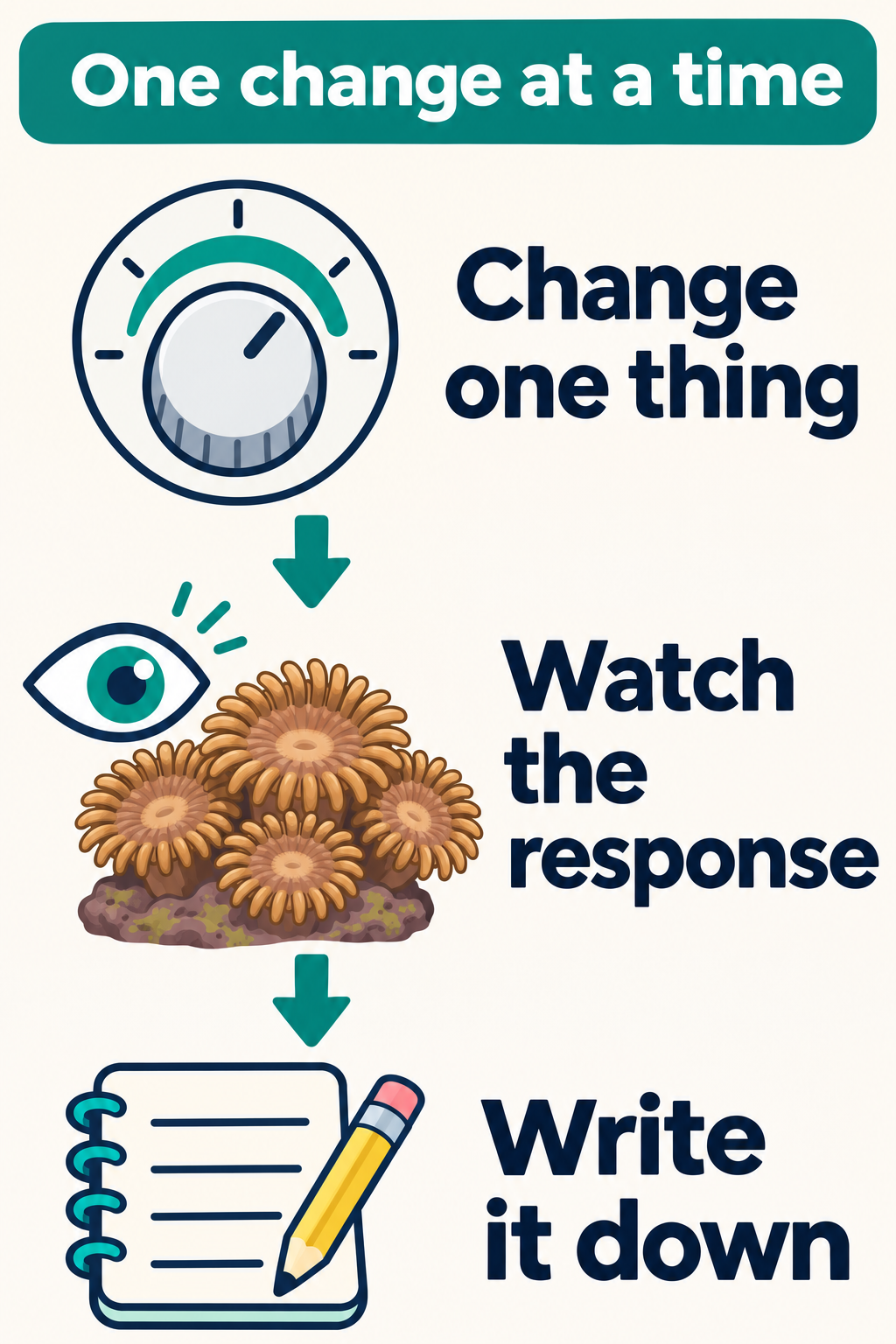
Take comparison photos under the same lighting. Note what changed, then give the coral time to respond instead of changing light, food and flow together. A simple record helps you tell improvement from wishful thinking.
Sources: Reef2Reef [1]; Vivid Aquariums [5]; BRS/ECC [2]; New Dawn Aquaculture [4].
Sources and limits
Read for this handover on November 9, 2026. Commercial care pages describe husbandry experience, not controlled Eagle Eye experiments. Forum reports are anecdotal. No photo was used to establish identity, no geographic origin was assigned, and no supplier’s images were copied into this package.
1. Reef2Reef, A R2R Spotlight: Eagle Eyes. Named-morph history and keeper reports, beginning August 2006. https://www.reef2reef.com/threads/a-r2r-spotlight-eagle-eyes.487/ 2. Bulk Reef Supply / Eye Catching Coral, ECC Eagle Eye Zoanthid. Species label, beginner care, low-to-moderate light, medium flow, growth and acclimation. https://www.bulkreefsupply.com/ecc-eagle-eye-zoanthid-eye-catching-coral.html 3. Reef Stable, Zoanthid Care Guide. General flow signs, stability, nutrients and troubleshooting. https://www.reefstable.com/coral-care-guides/zoanthid-care-guide/ 4. New Dawn Aquaculture, Eagle Eye Zoanthids. Indirect flow, growth management, stability, optional feeding and arrival care. https://ndaquaculture.ca/collections/zoas-and-mushrooms/products/eagle-eye-zoanthids 5. Vivid Aquariums, Eagle Eye Zoanthids, Dave Burr. Named-morph placement, budding and supplemental-feeding recommendation. Its magnesium-as-algae-treatment advice was not adopted. https://vividaquariums.com/collections/10-25/products/eagle-eye-zoanthids 6. Tidal Gardens, Zoanthus Coral Care. Flow, debris, nutrient starvation and pests. https://tidalgardens.com/articles/coral-care-articles/zoanthus-coral-care.html 7. CDC, Suspected Palytoxin Inhalation Exposures Associated with Zoanthid Corals in Aquarium Shops and Homes, Alaska, 2012–2014. Exposure routes and documented illness. https://www.cdc.gov/MMWR/preview/mmwrhtml/mm6431a4.htm 8. CDC, Clinical Signs and Symptoms Caused by Saltwater Harmful Algal Blooms. Palytoxin respiratory effects. https://www.cdc.gov/harmful-algal-blooms/hcp/clinical-signs/symptoms-saltwater-harmful-algal-blooms.html 9. OATA, How to avoid palytoxin poisoning if you keep corals. Handling, protective equipment and submerged transfer. https://ornamentalfish.org/what-we-do/advice-information/care-sheets/caresheets-marine-fish/how-to-avoid-palytoxin-poisoning-if-you-keep-corals/
10. National Capital Poison Center, First aid: Act fast. Poison help contact and emergency breathing advice. https://www.poison.org/first-aid-for-poisonings
Field Notes
Related species
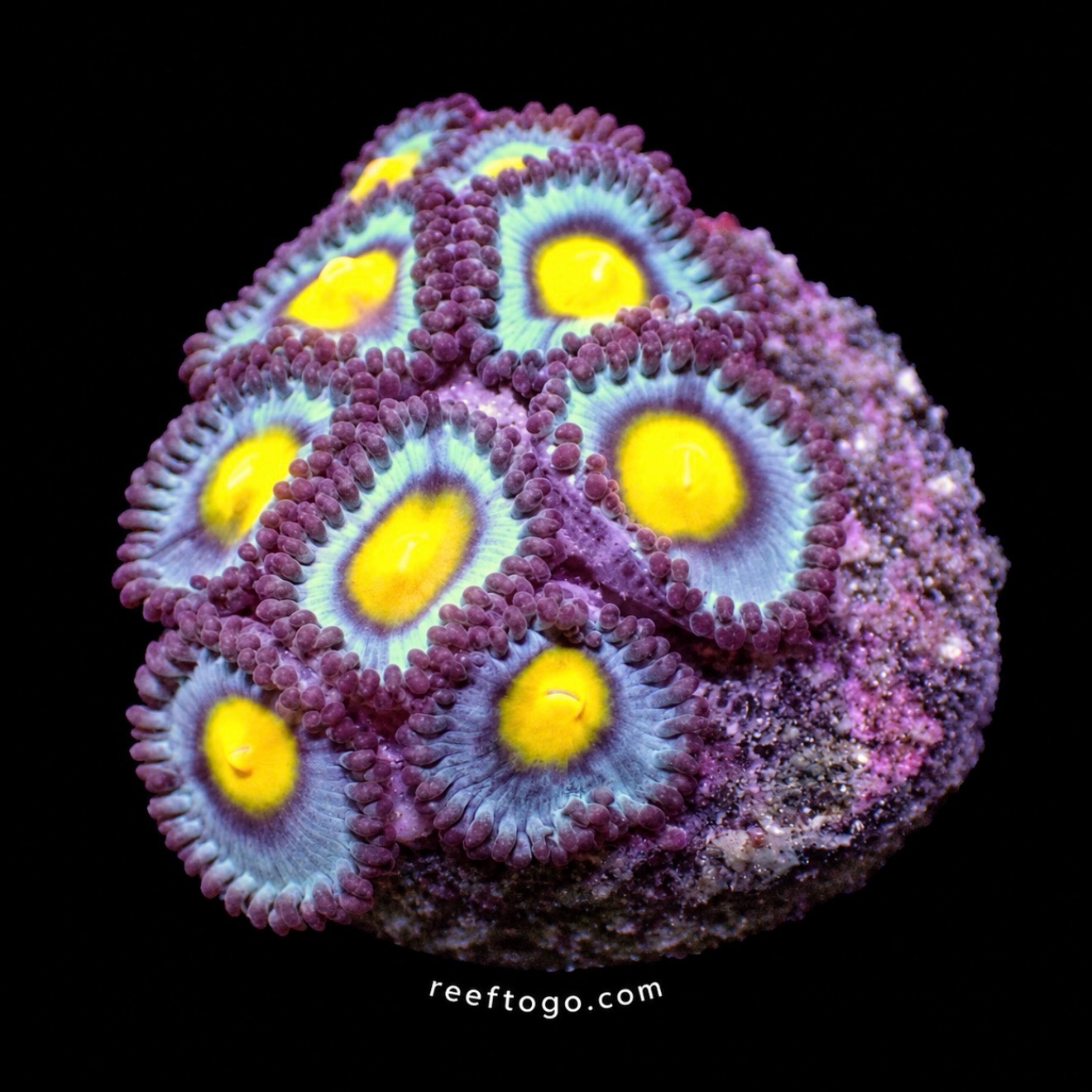
Alien Eye zoas
Zoanthus sp
Same genus
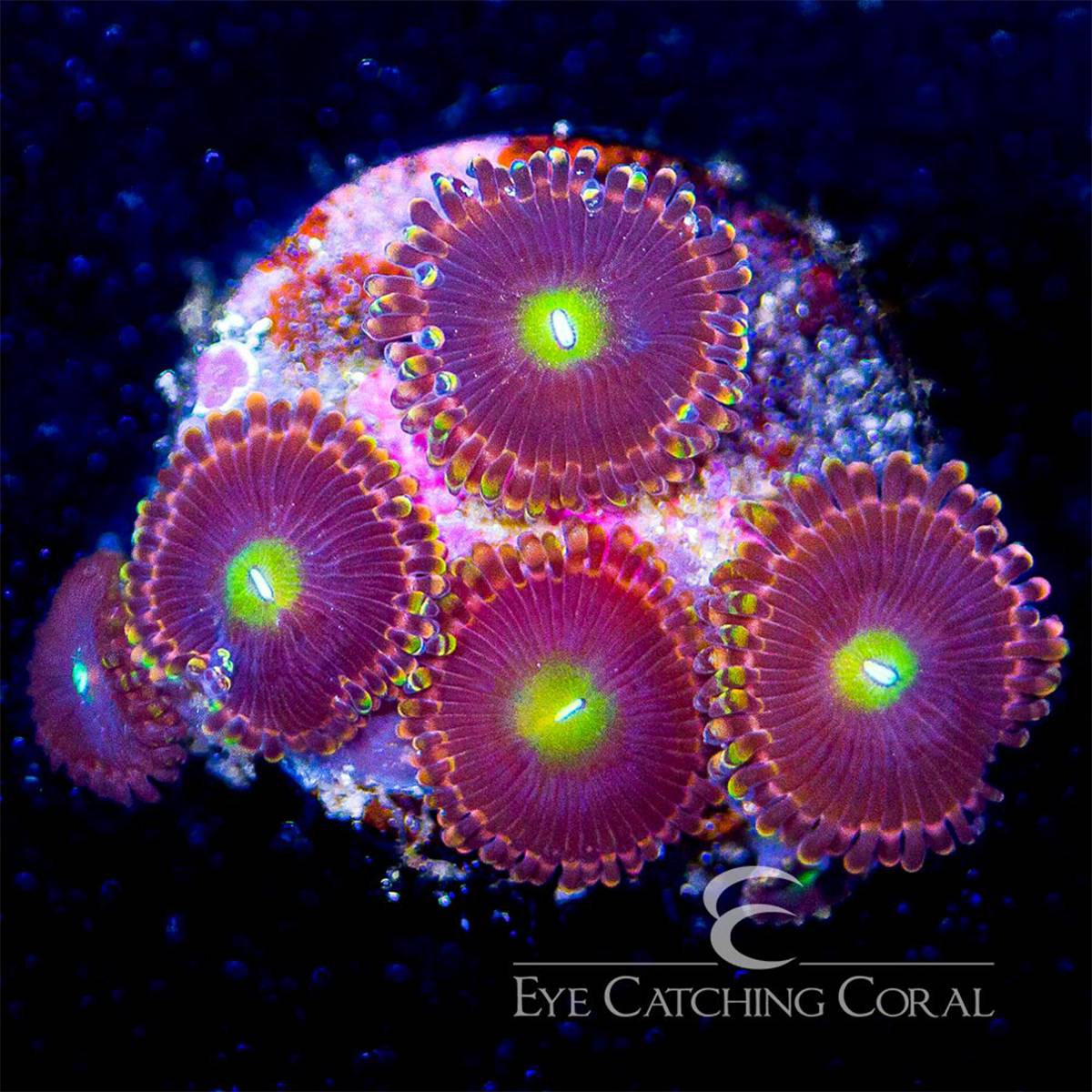
Antimatter zoas
Zoanthus sp
Same genus
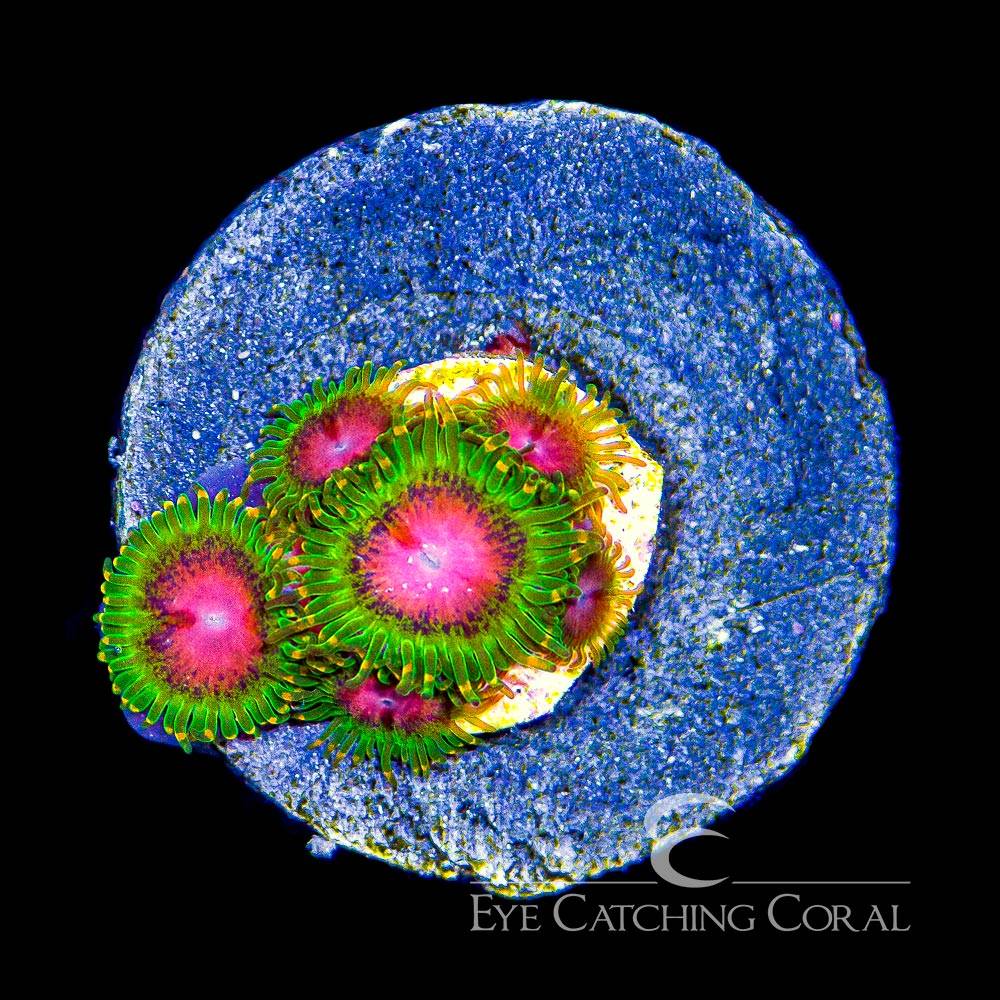
Awesome Blossom zoas
Zoanthus sp
Same genus
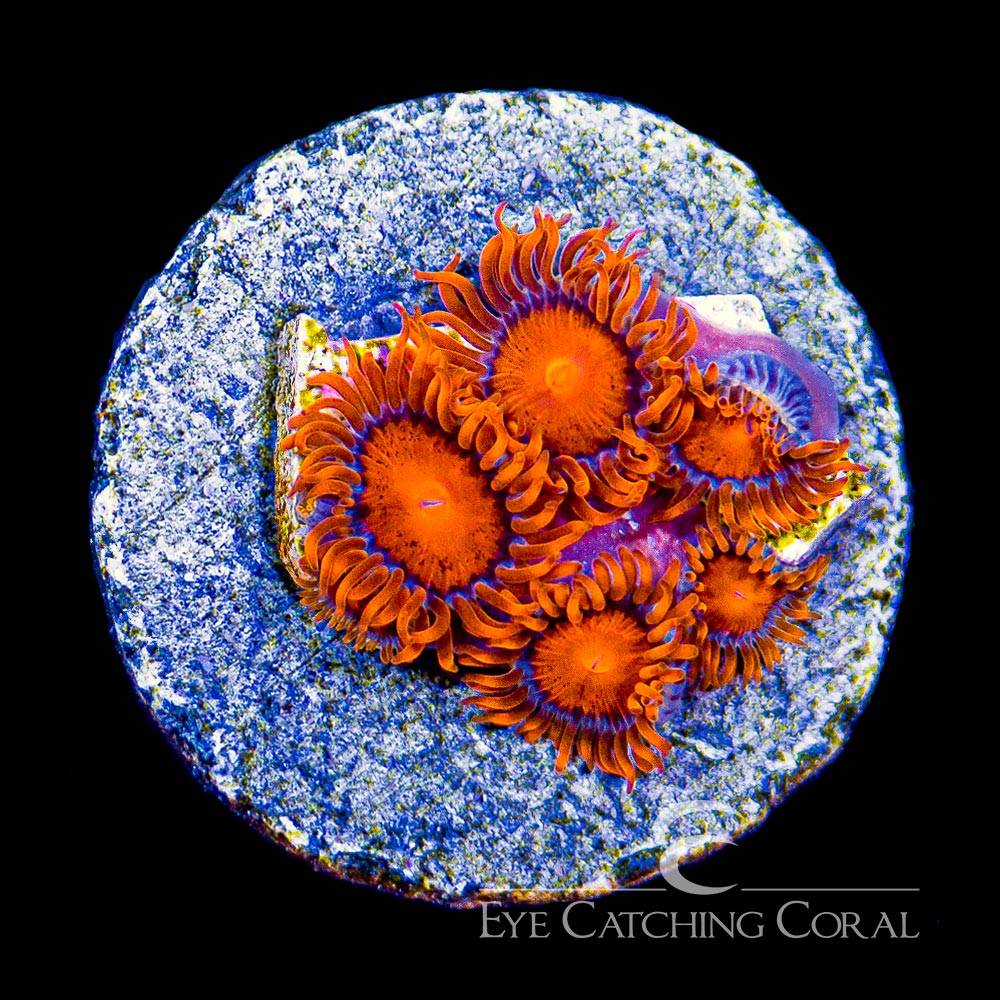
Bam Bam zoas
Zoanthus sp
Same genus
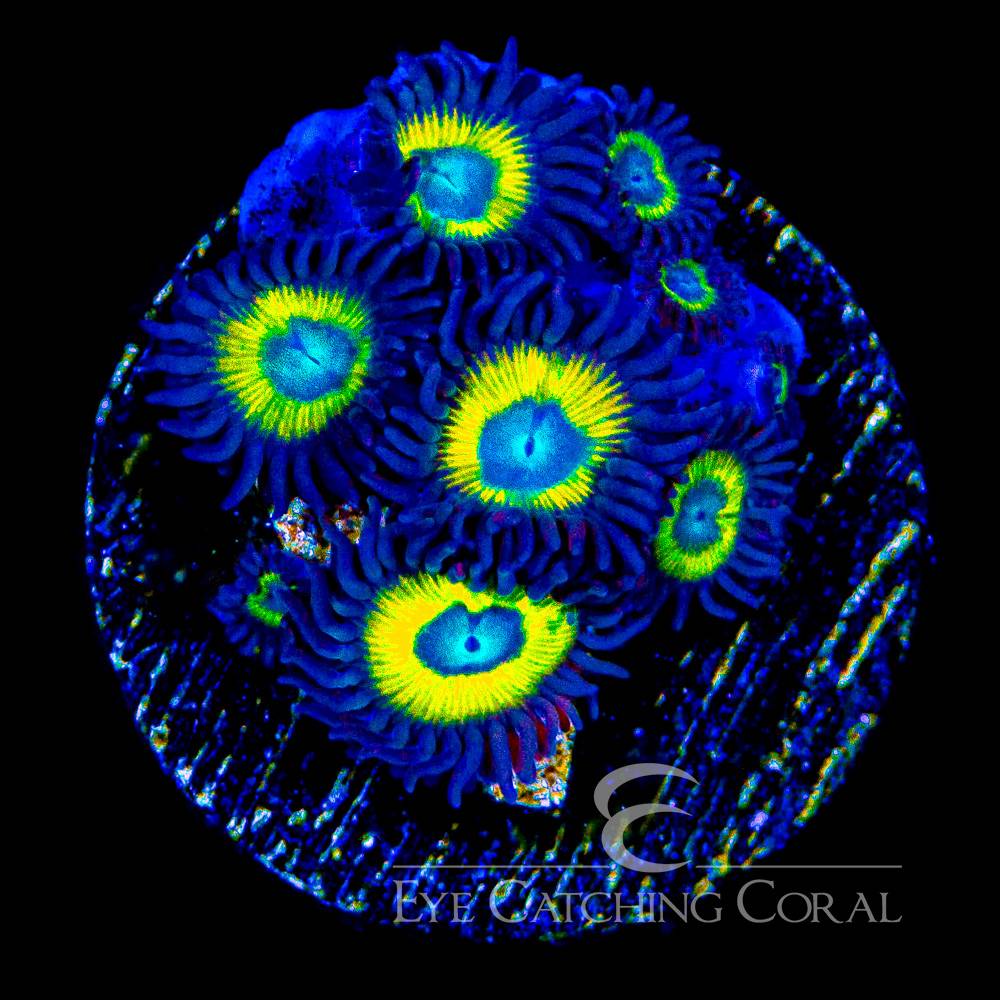
Black Bella zoas
Zoanthus sp
Same genus
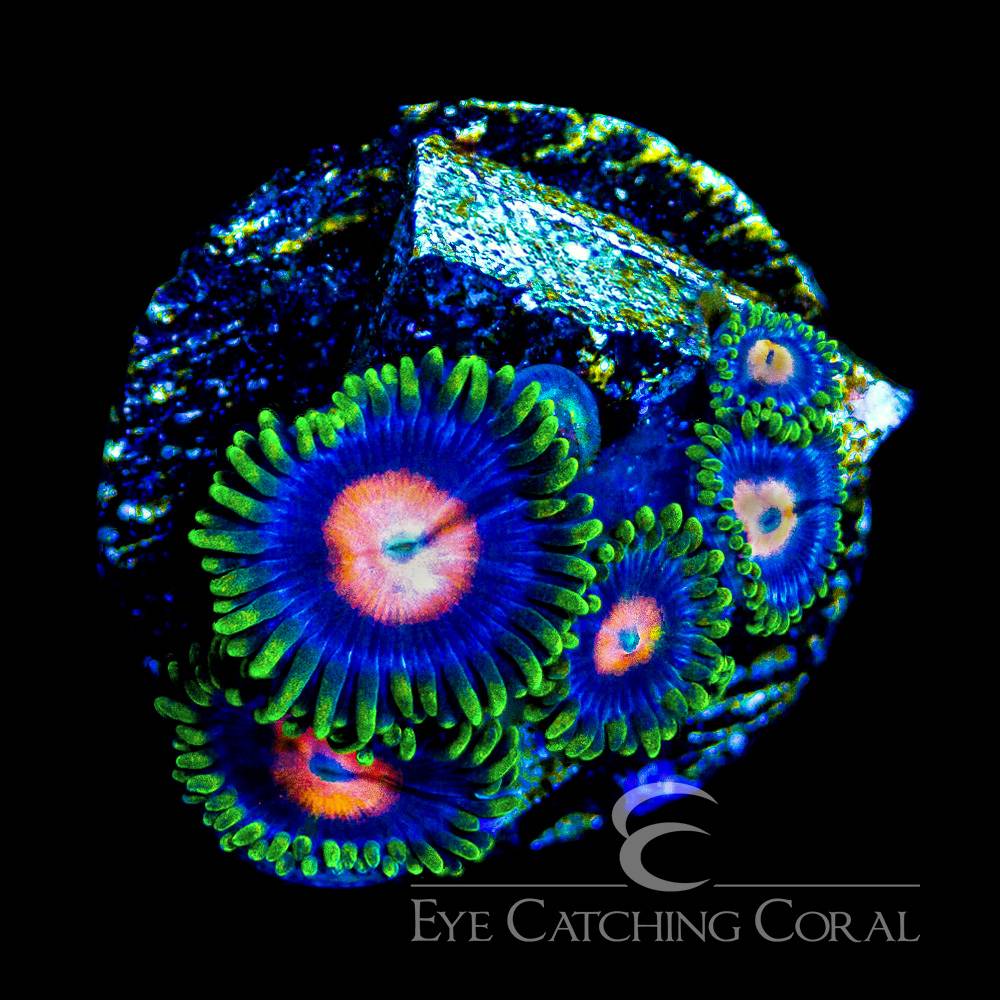
Blow Pops zoas
Zoanthus sp
Same genus
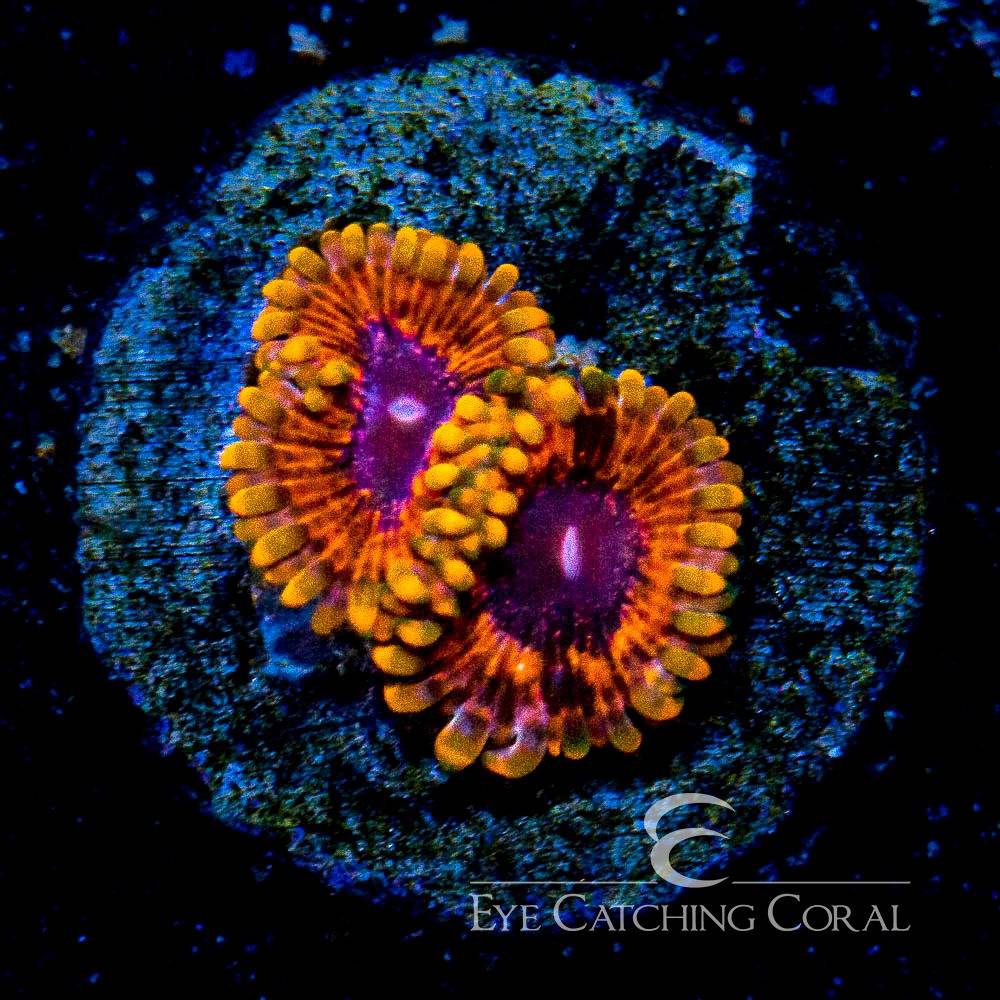
Burning Ember zoas
Zoanthus sp
Same genus
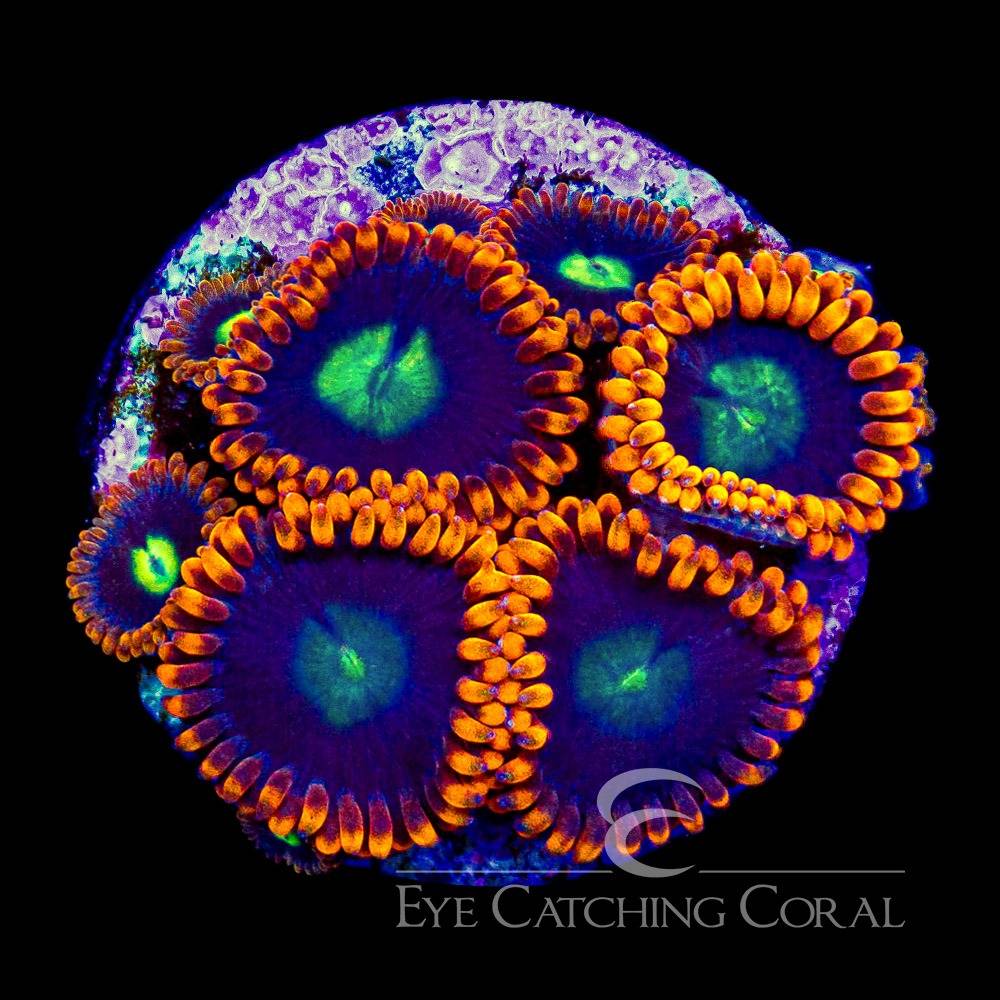
Burning Suns zoas
Zoanthus sp
Same genus