Galaxea Astreata
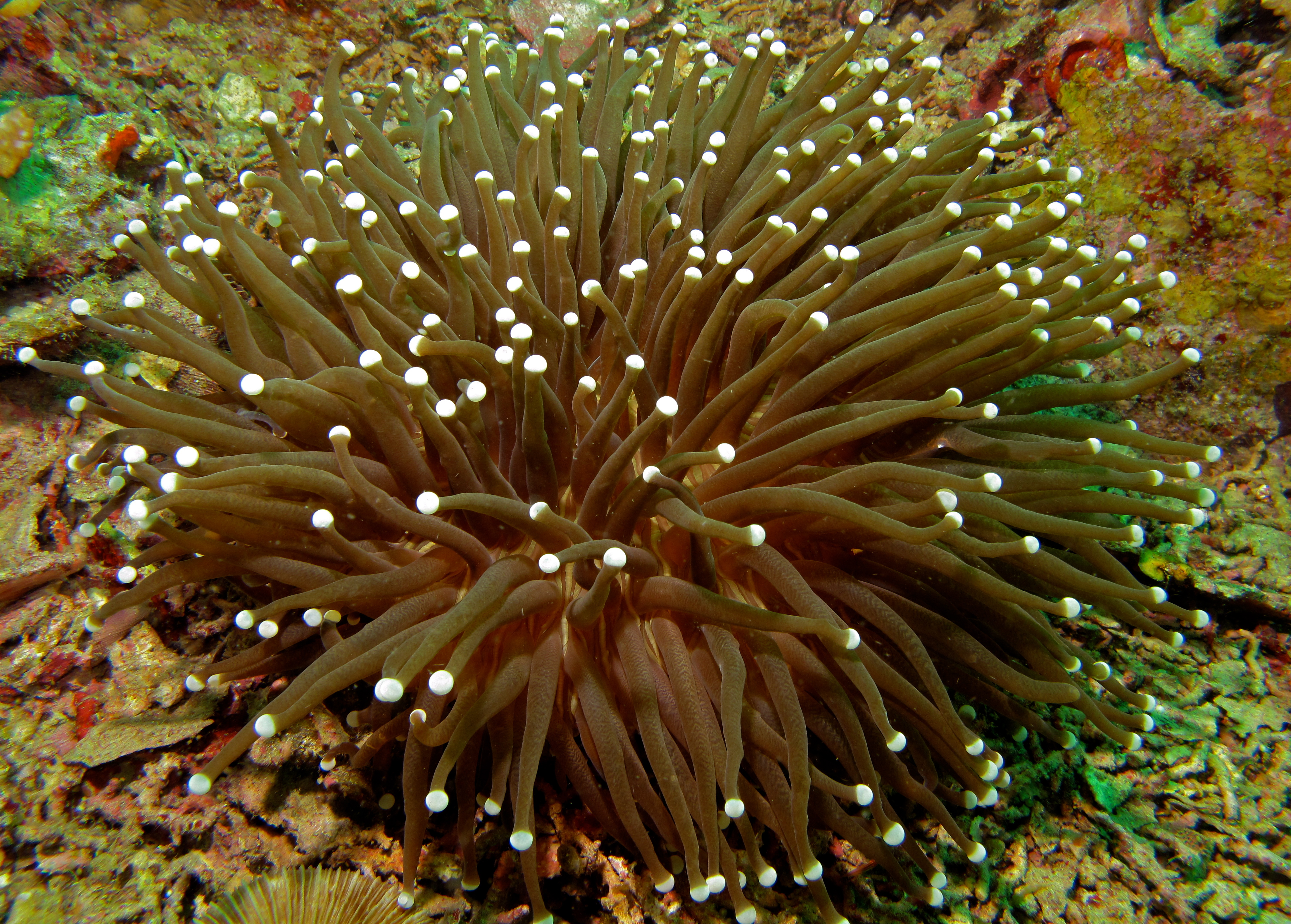
Galaxea astreata

Chaloklum Diving · CC BY-SA 4.0 · source
Photo: Chaloklum Diving, CC BY-SA 4.0, via Wikimedia Commons.
Care facts
- Care
- Intermediate
- Light
- Medium-High
- Flow
- Medium
- Place
- Low
- Space
- Aggressive
- Origin
- Indo-Pacific
- Growth Rate
- Moderate
Gallery
Imagine a field of tiny stars growing on a rock. That’s Galaxea astreata. On sheltered Indo-Pacific reefs, colonies can grow wider than a tall person. In your tank, start by giving this little patch of stars a lot of empty space.
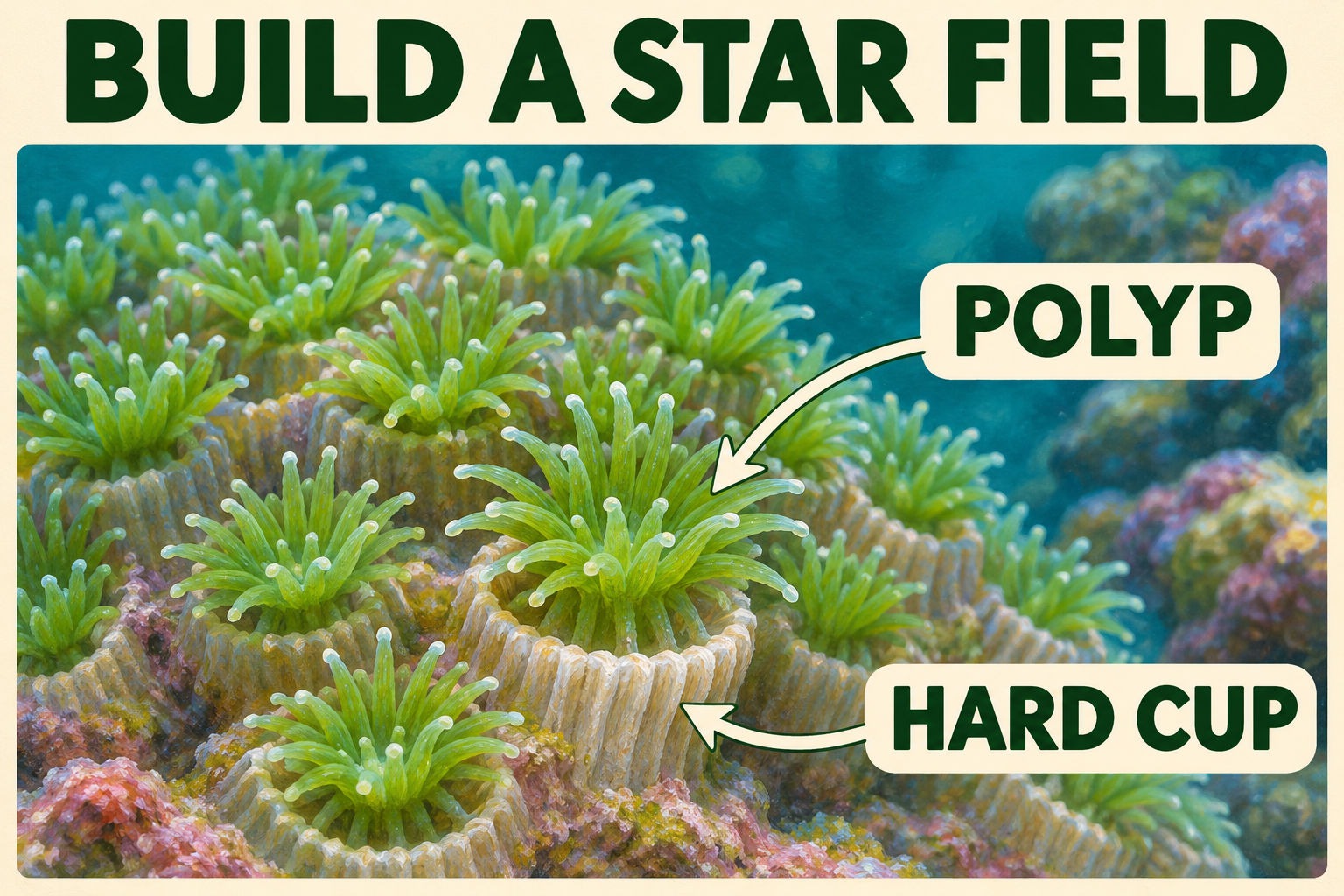
A field of tiny stars
1. One star, one animal. Each star is a polyp. It sits in a little hard cup called a corallite. Add more cups and the colony turns into a whole field of stars.
2. Big things start small. This coral can spread flat across rock or build up into chunky mounds and columns. Give the frag its own rock so it has somewhere to grow.
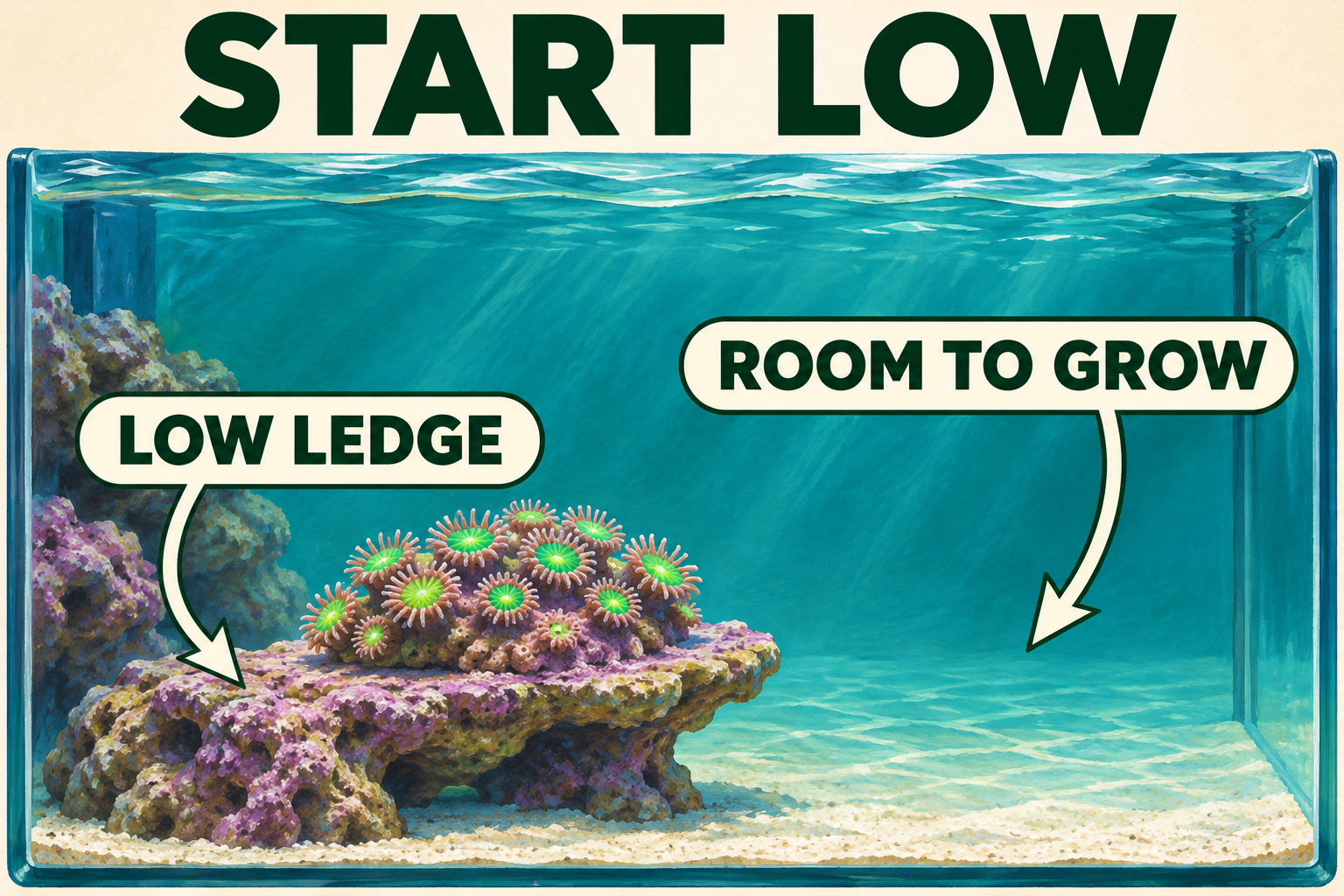
Find a low ledge
3. Start low, then go slow. Set the frag on a stable ledge in the lower part of the tank. Start with moderate light. Make any move into brighter light in small steps rather than jumping straight into a hot spot.
4. Leave a landing zone. Pick a spot where the base can spread without joining the main rock pile. Make sure you can move the whole rock if the coral outgrows its space.
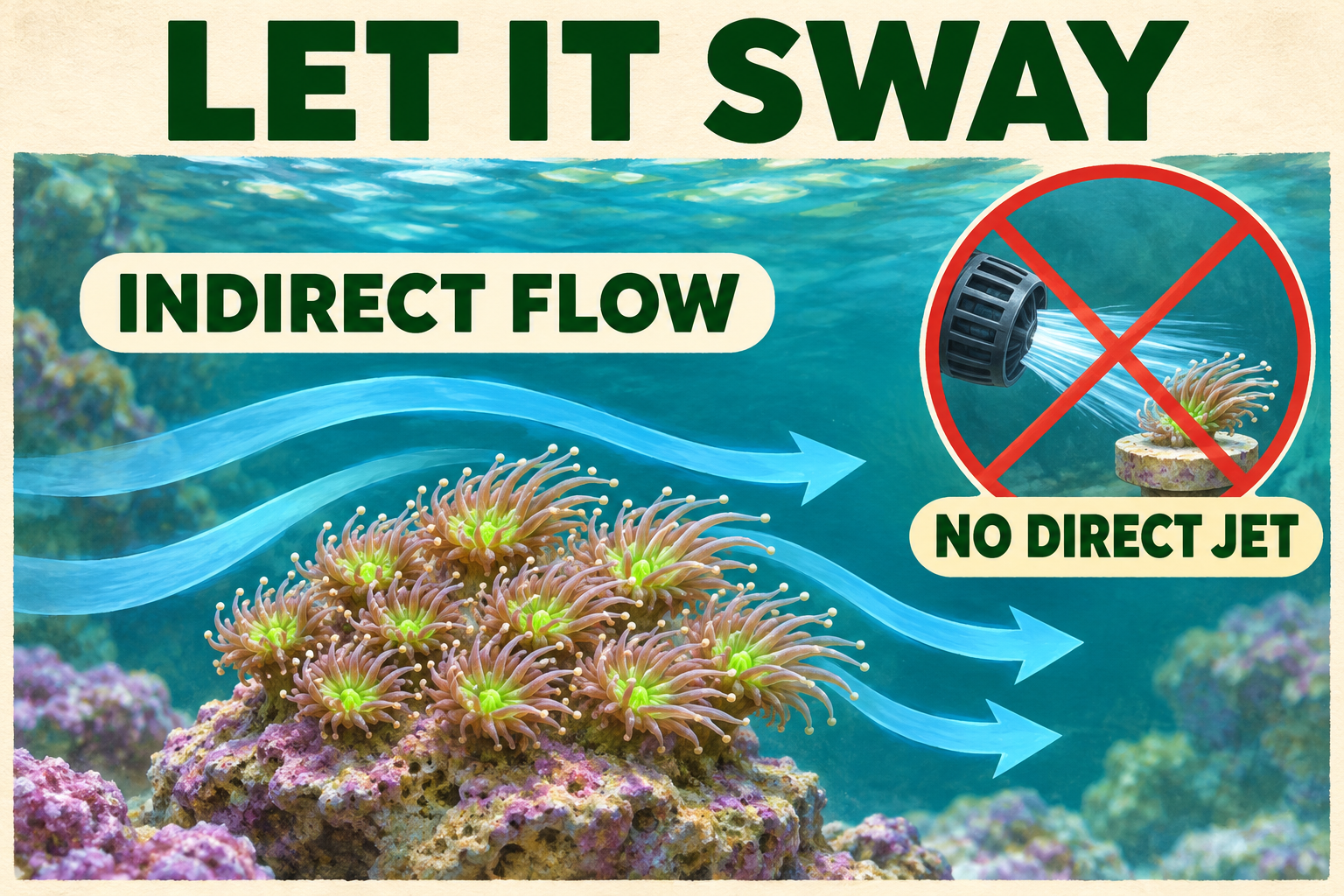
Give it a gentle sway
5. Send the current past it. Use moderate, indirect flow. Aim for short tentacles that sway, with water moving past the base. Point the pump away if it pins the polyps to one side.
6. Keep the cups clear. Check for grit collecting between the polyps. Adjust the current a little if debris keeps settling. After any pump change, check where the long sweepers now drift.
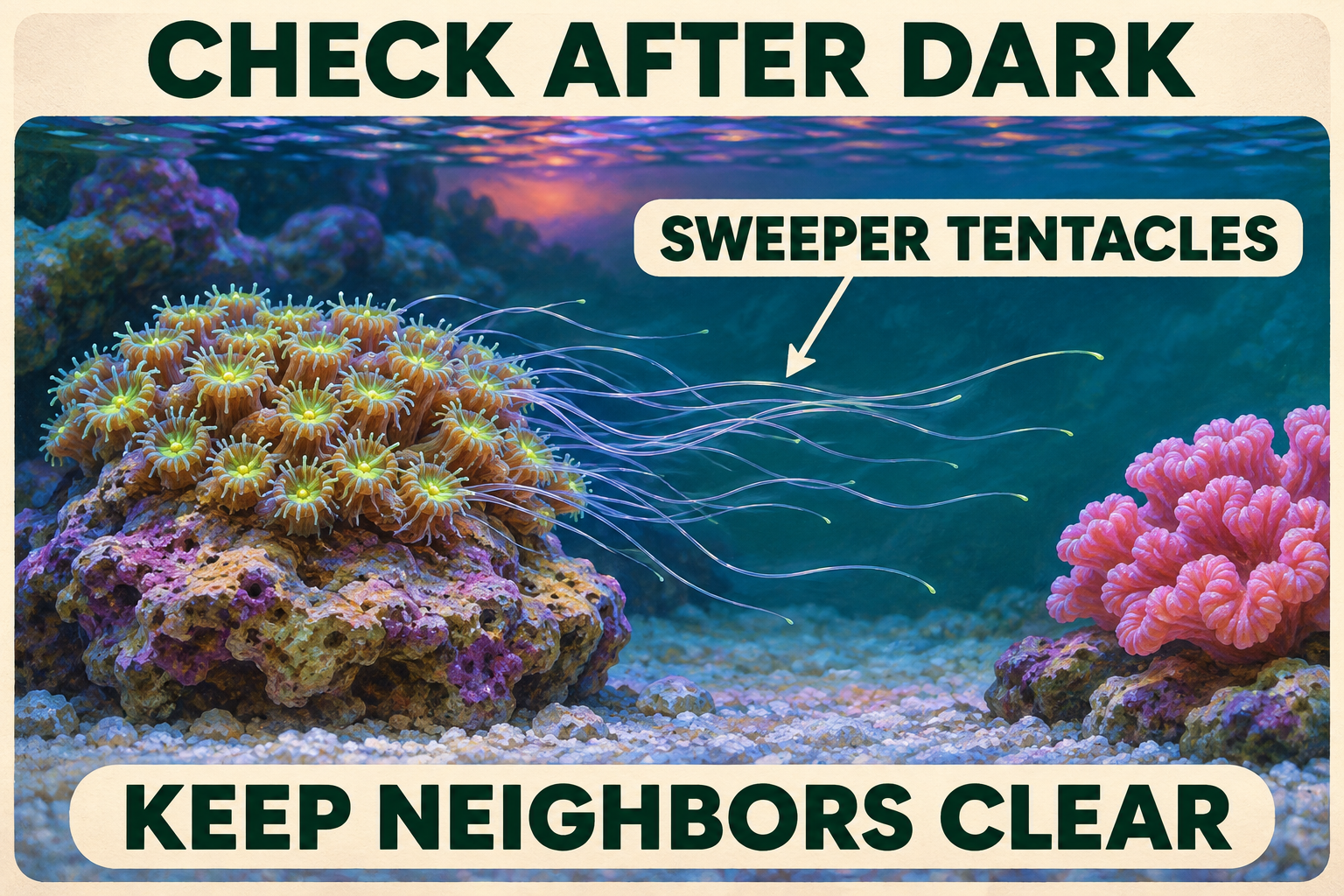
The after-dark reach
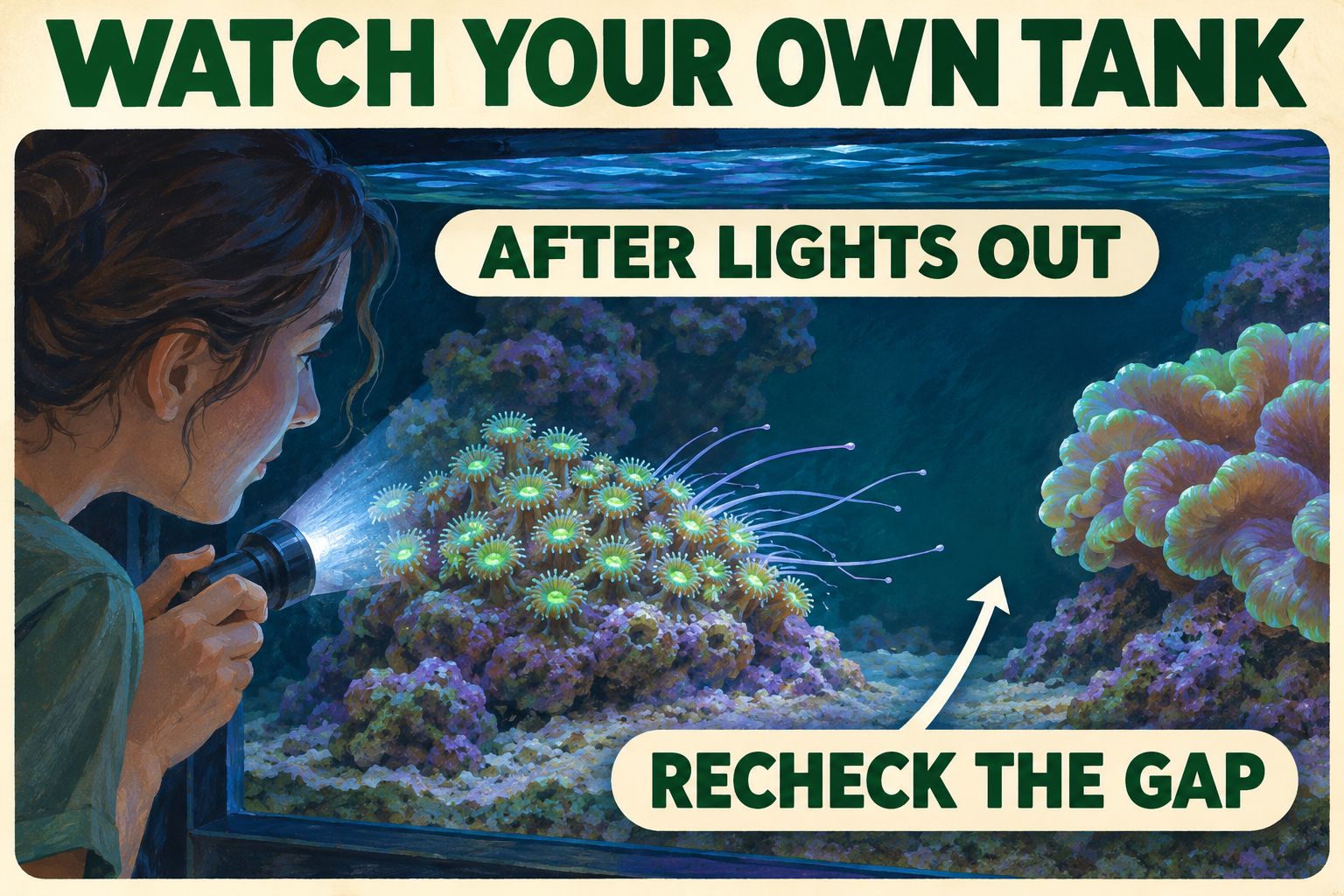
7. Short by day, long after dark. Long sweeper tentacles sting other corals. Check your colony after lights-out. Look especially far down-current, where the water carries the sweepers.
8. Measure from the living edge. Leave a wide gap beyond the farthest tip you see. Check it again as the colony grows. If the tank doesn’t have that much room, pick a different coral.
Small bites and steady water
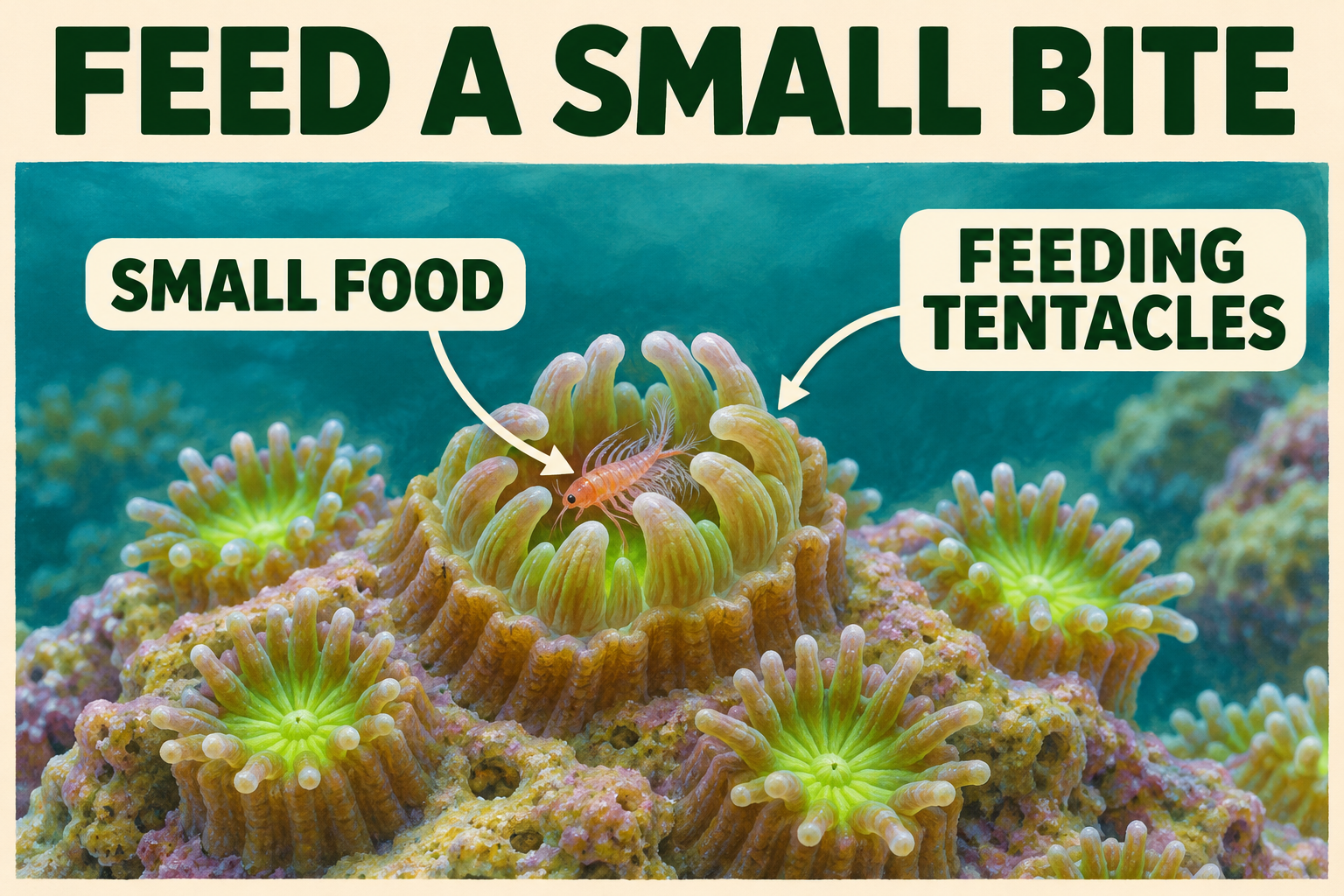
9. Serve a tiny snack. Use a pipette to offer a little thawed brine shrimp to open feeding polyps. Start with a tiny portion. Add more another time only if the coral catches and holds the food.
10. Keep the numbers steady. Light feeds the algae living in the coral. Food is a bonus. Keep salinity and alkalinity steady, and test calcium as the skeleton grows.
Field notes — what keepers report
11. The short-reach tank. In general Galaxea reports, one keeper with a colony low in a high-flow tank never saw a sweeper longer than about three inches.
12. The long-reach tank. Another Galaxea keeper saw sweepers around ten inches long. A keeper in the same discussion moved a colony out of a crowded tank because it kept reaching its neighbors. Set the gap by what your own colony does.
Give this star field a rock of its own, a steady current, and space to stretch after dark. The empty water around it is part of the display.
Field Notes
Related species

Crystal Coral
Galaxea fascicularis
Same genus

Starburst galaxea
Galaxea fascicularis
Same genus
Evergreen galaxea
Galaxea fascicularis
Same genus
Galaxy Coral
Galaxea fascicularis
Same genus

Tomato Torch Euphyllia
Euphyllia glabrescens
Similar care · LPS
Elegance coral
Catalaphyllia jardinei
Similar care · LPS

Acanthastrea Echinata
Acanthastrea echinata
Similar care · LPS
Anemone Coral
Heliofungia actiniformis
Similar care · LPS