Starburst galaxea
Galaxea fascicularis

Care facts
- Care
- Intermediate
- Light
- Medium-High
- Flow
- Medium
- Place
- Mid
- Space
- Aggressive
- Growth Rate
- Moderate
Gallery
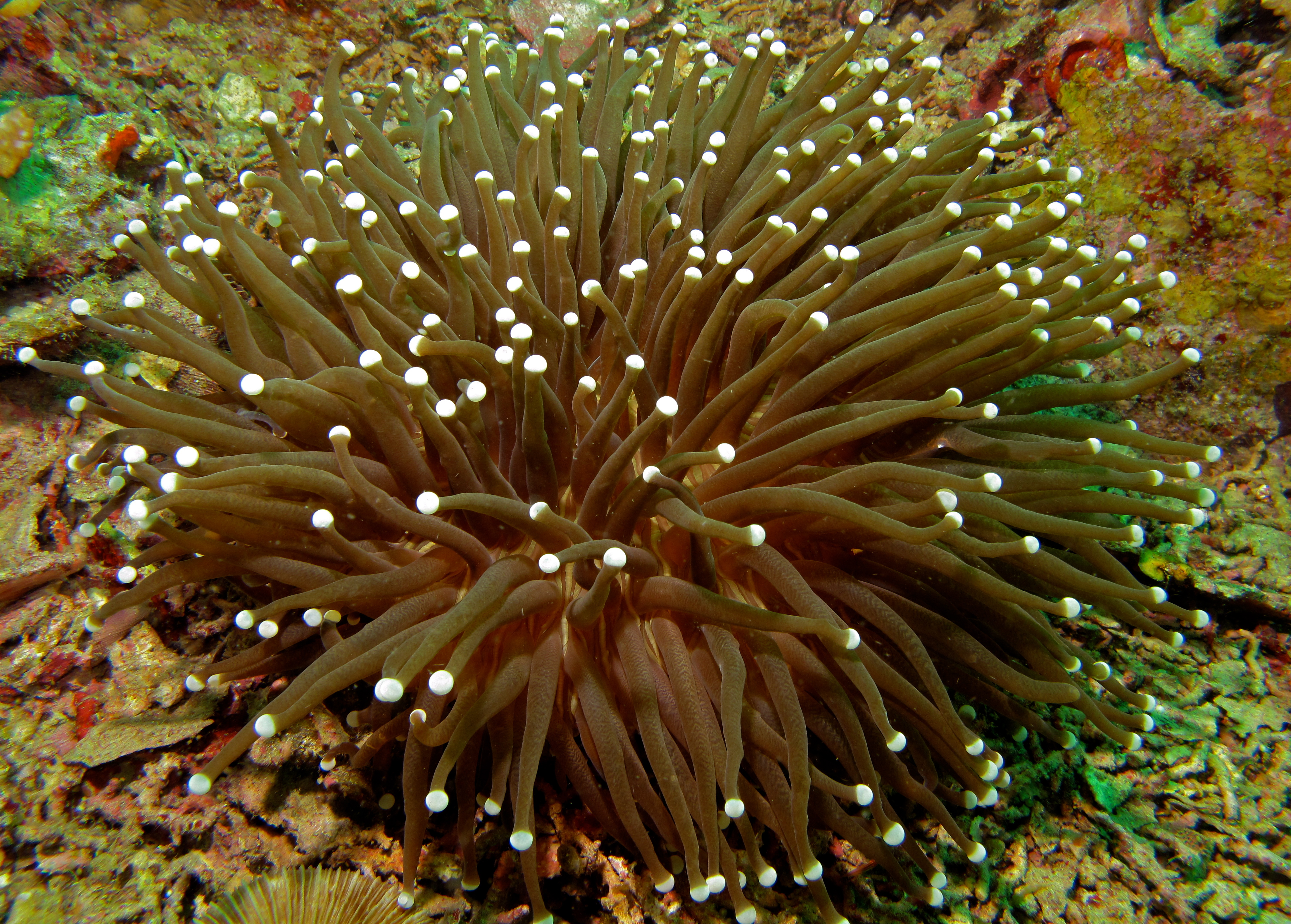
The white tips on Starburst Galaxea flicker like tiny sparks. Come back after lights out and you might catch its biggest trick: long, thin sweepers reaching far past the little stars you saw by day.
History
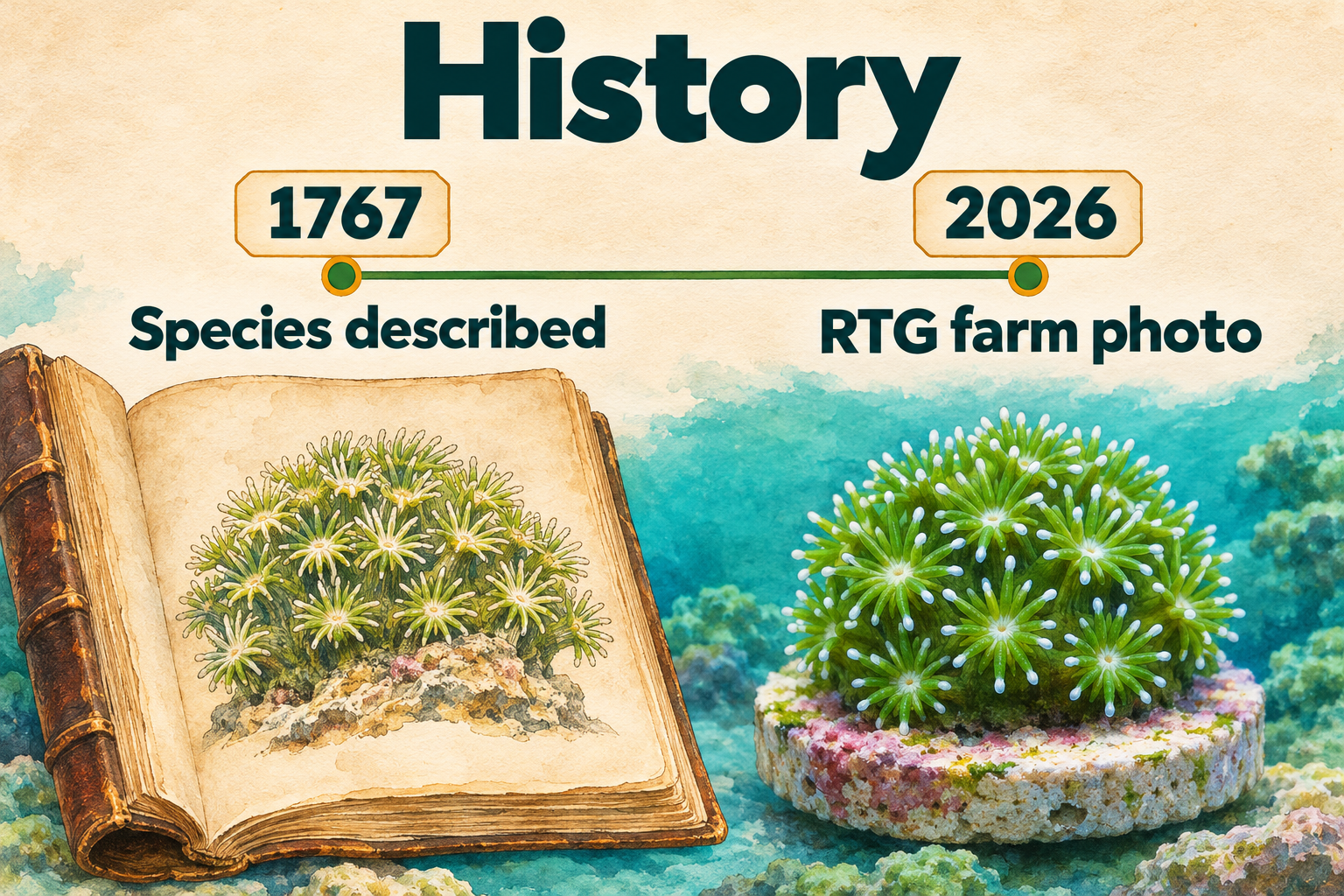
1. Two names, two jobs. Linnaeus described the species in 1767. Today it goes by Galaxea fascicularis. Reefers call it galaxy, tooth or starburst coral.
2. Meet this farm line. Reef To Go photographed this Starburst stock in October 2026. Look for bright green tentacles, brown-orange accents and white tips. Each cluster is one polyp with its own mouth.
In the wild
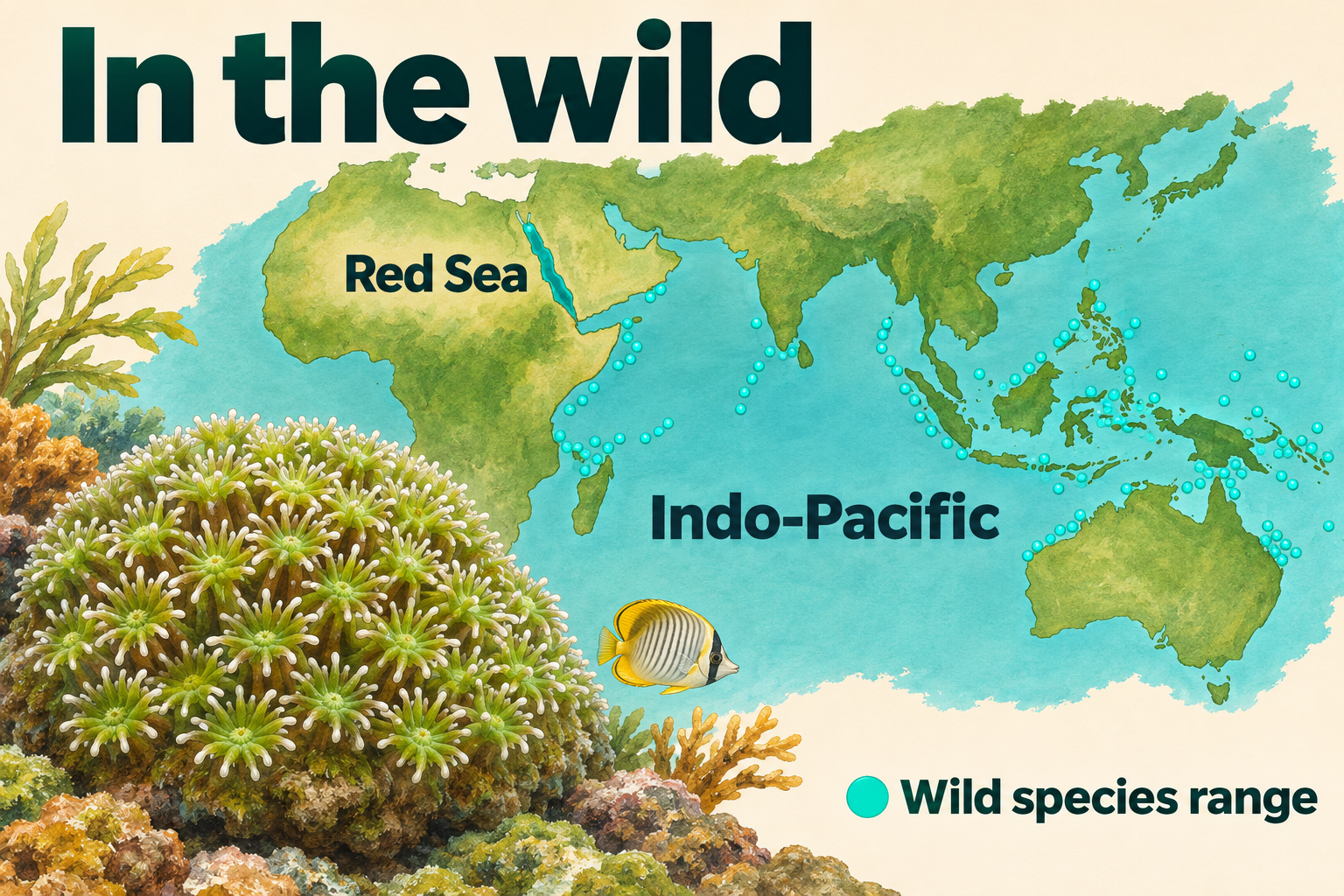
3. Follow the warm reefs. Wild colonies grow from the Red Sea through the tropical Indo-Pacific. Look for them on inshore fringing reefs and reef slopes. On Indonesian reefs, they grow from the crest down the slope, where deeper water dims the light. In the Red Sea, the species also grows on slopes deeper than 15 meters.
4. A reef full of little cups. Each polyp sits in a hard cup called a corallite. Most cups are narrower than a centimeter. Tiny algae inside the tissue use daylight, while moving water brings food. The species grows on sheltered reefs and current-washed slopes.
Light, flow and water
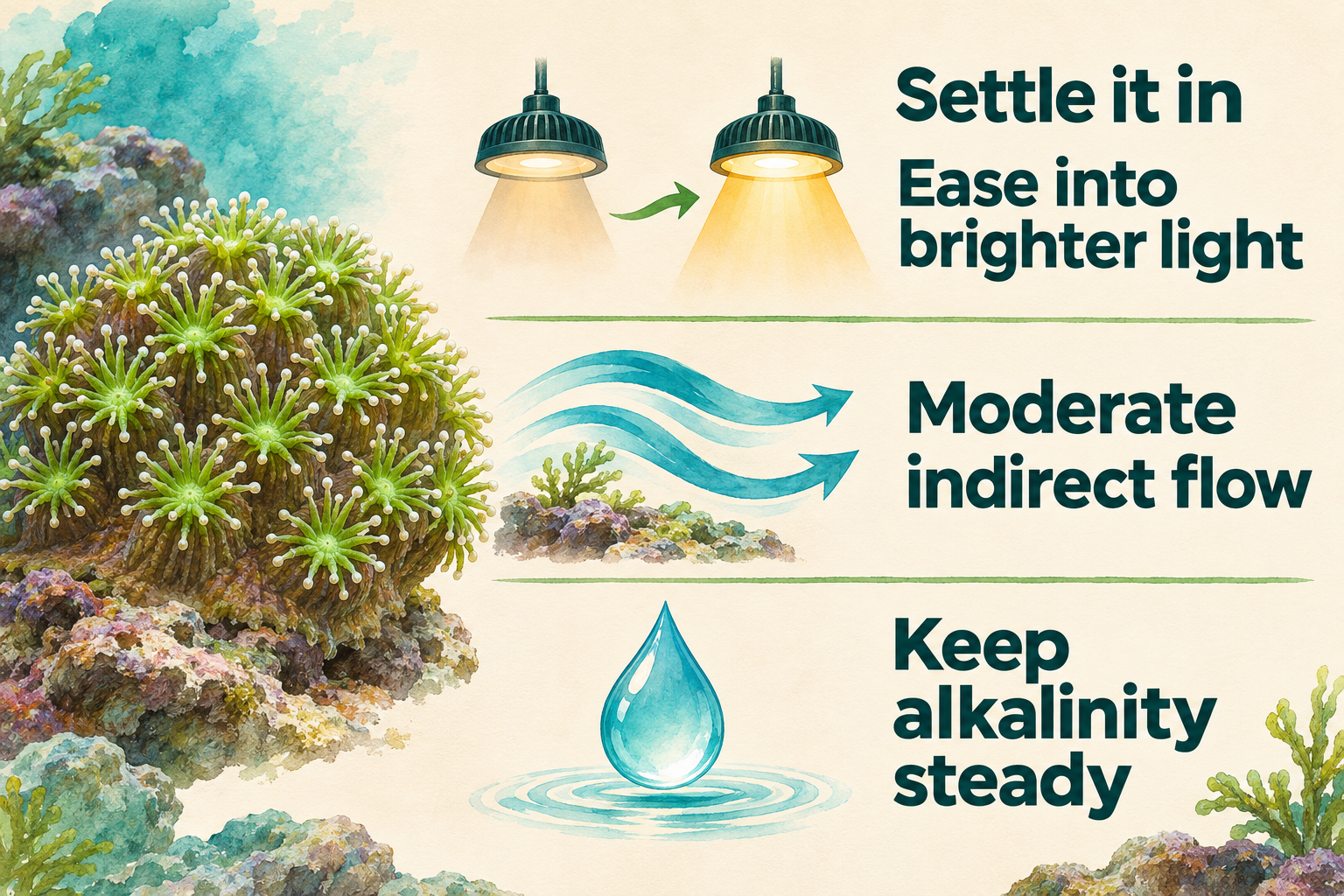
5. Start on a middle ledge. Pick stable rock with room on every side. Start with moderate light and raise it slowly if you move the colony to a brighter spot. Give it time to open regularly before making another change.
6. Let the polyps sway. Aim for moderate, changing flow that skims past the colony. Turn the pump if it pins the tentacles or leaves debris between heads. Keep salinity, temperature, alkalinity and calcium steady.
Room for sweepers
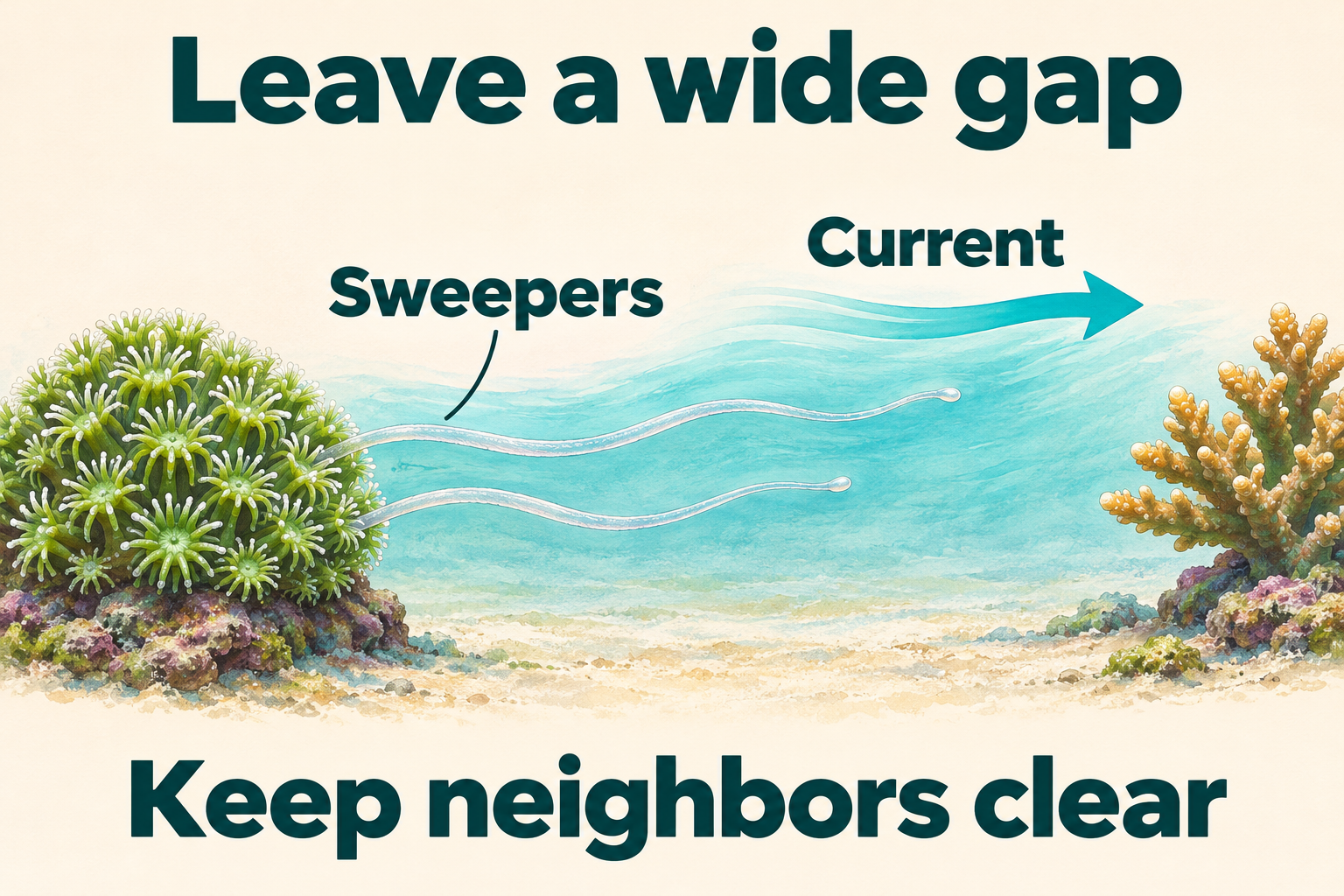
7. Leave more than six inches. Sweepers can reach about a foot, and some reach farther. Start with at least a foot of open space from the colony edge. Leave extra room downcurrent and move any neighbor a sweeper can reach.
8. Look past the short tentacles. A long sweeper is easy to miss in daytime. Check after dark and again as the colony grows. A separate rock gives it room to spread. It still needs clear water between it and its neighbors.
Food and growth
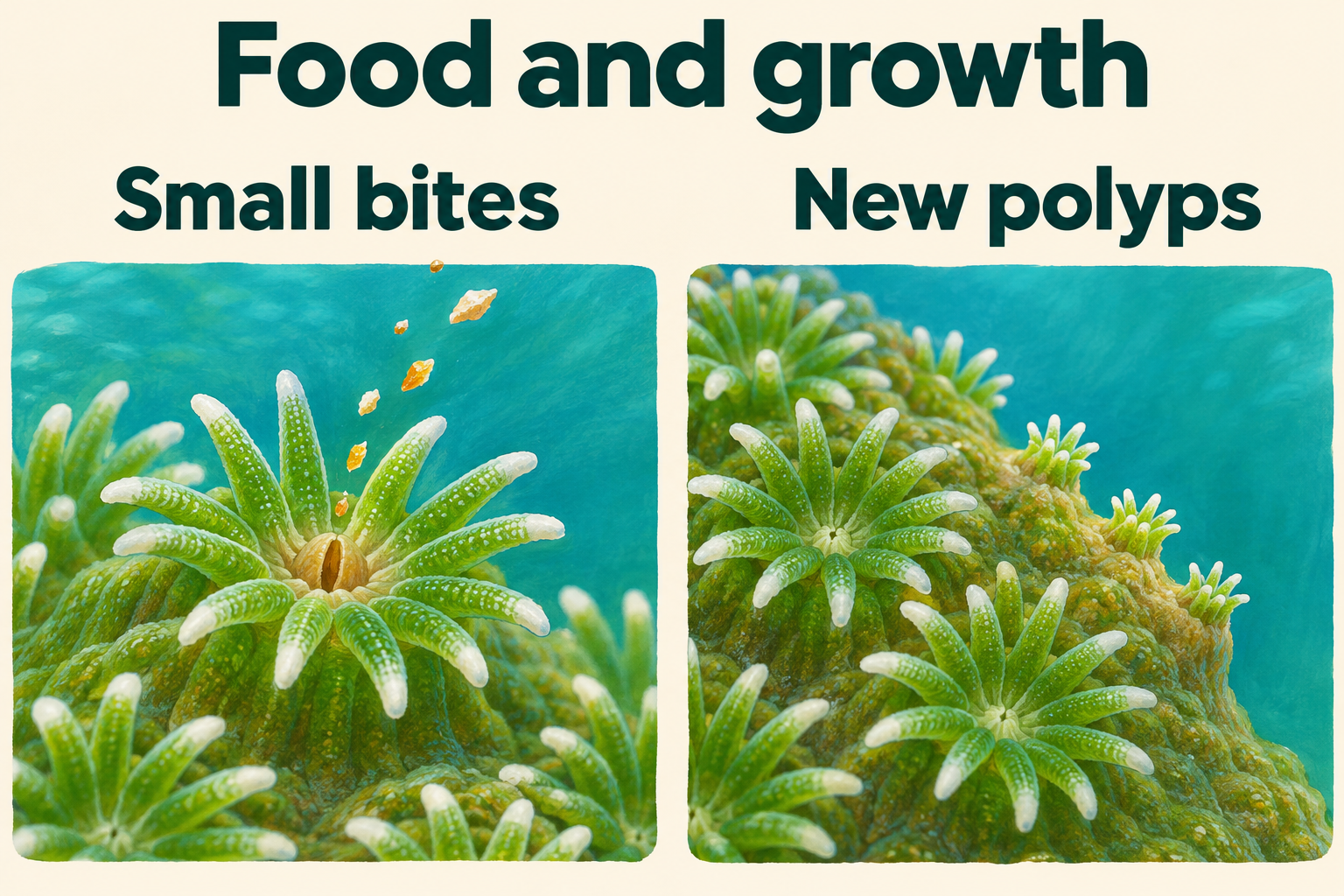
9. Offer a tiny bite. The short feeding tentacles catch food particles. When the polyps are open, try an occasional small bit of thawed mysis. Let the coral take it on its own and remove anything it drops.
10. Count mouths, not fluff. New polyps add to the colony as it grows over the rock. Take a photo from the same angle each month. New mouths and a wider living edge tell you more than how far the tentacles open today.
Field notes — what keepers report
11. Long enough to surprise you. One keeper saw about ten sweepers reaching out at once. At least one stretched six inches or more. Make the night check before you fill the empty rock near your frag.
12. Short in another tank. Another keeper watched two colonies day and night and never saw a sweeper longer than half an inch. Check your own colony over several nights. Keep the open gap even on nights when it looks quiet.
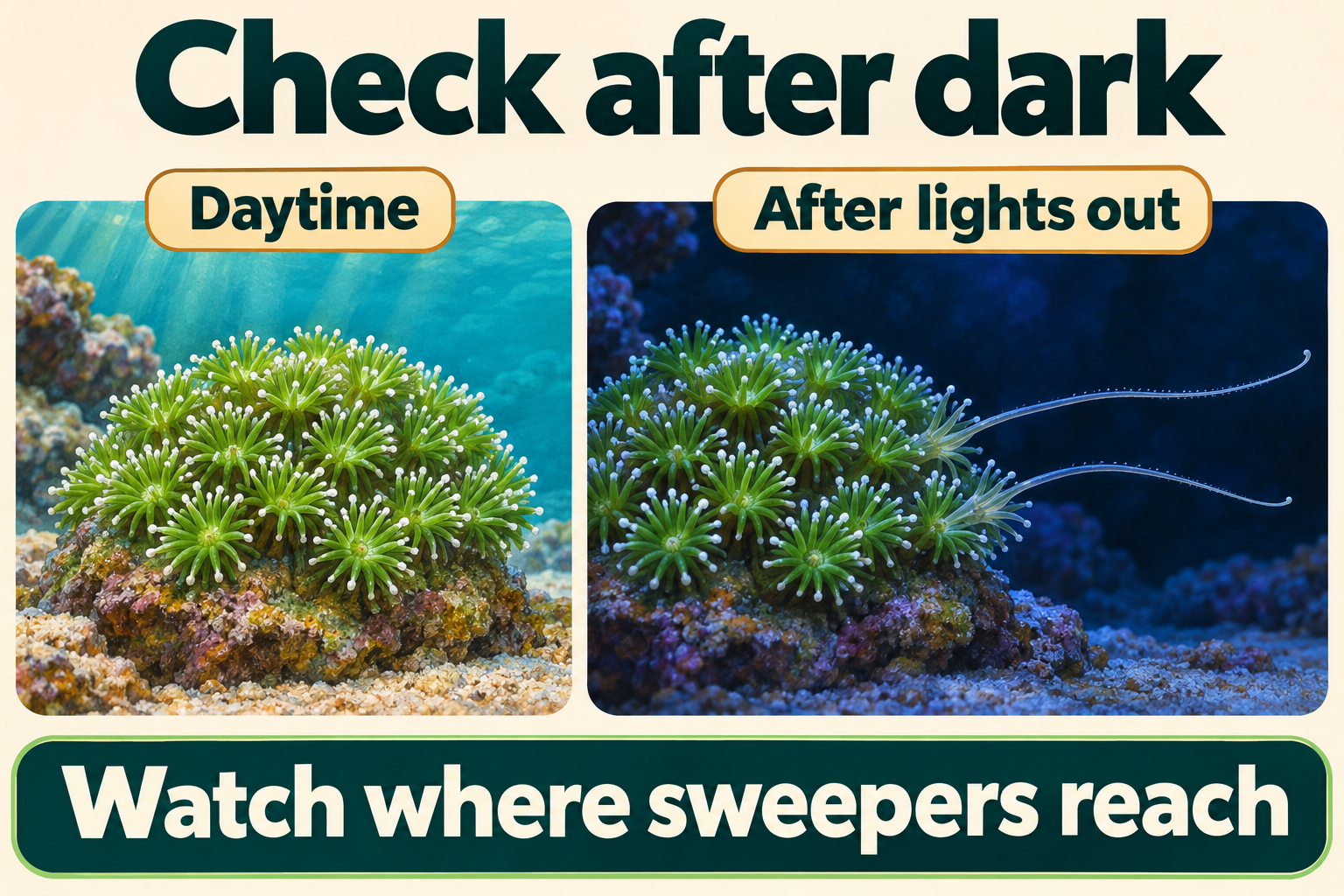
Give those little green stars their own patch of reef. Watch them open by day, then come back after dark and see how much space they really use.
Photo: Reef To Go aquaculture, Starburst Galaxea (October 2026).
Field Notes
Related species

Crystal Coral
Galaxea fascicularis
Same genus

Galaxea Astreata
Galaxea astreata
Same genus
Evergreen galaxea
Galaxea fascicularis
Same genus
Galaxy Coral
Galaxea fascicularis
Same genus

Tomato Torch Euphyllia
Euphyllia glabrescens
Similar care · LPS
Elegance coral
Catalaphyllia jardinei
Similar care · LPS

Acanthastrea Echinata
Acanthastrea echinata
Similar care · LPS
Anemone Coral
Heliofungia actiniformis
Similar care · LPS