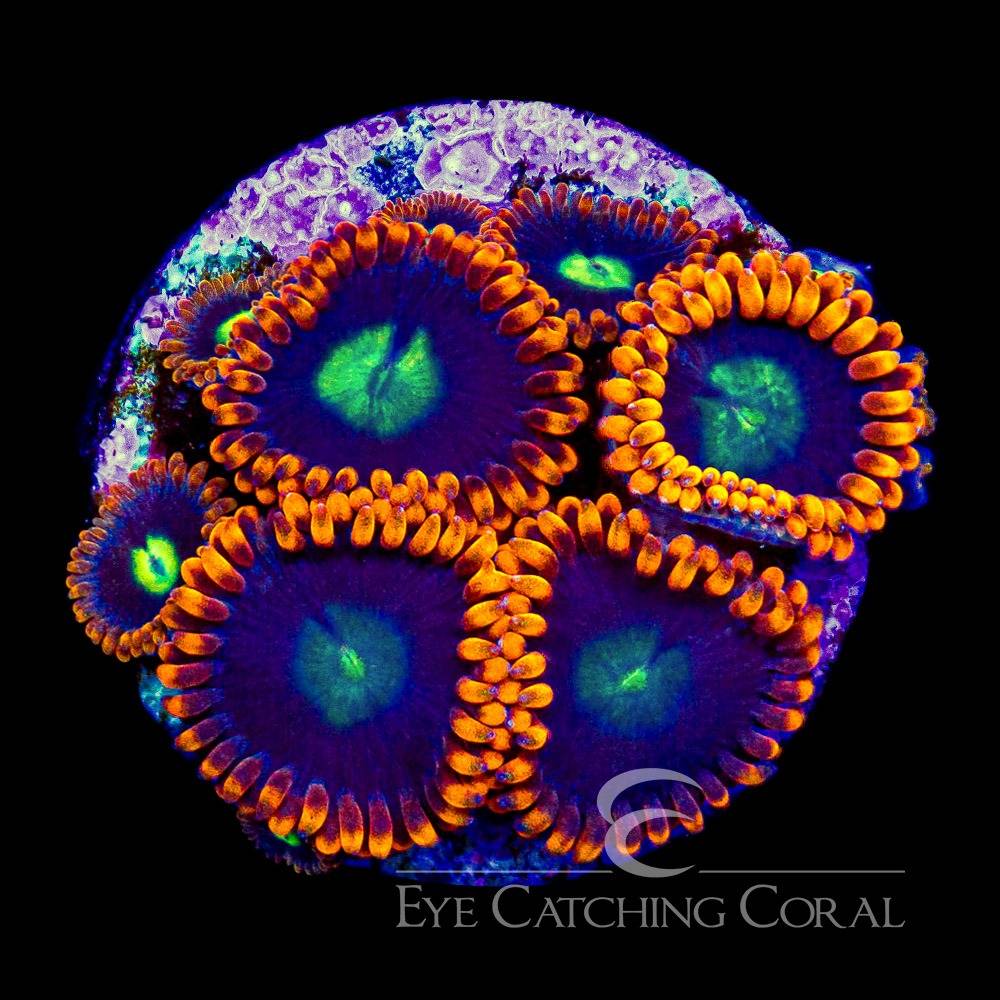
Gatorade zoas
Zoanthus sp
Palytoxin safety
Some zoanthids and palythoas can contain a potent toxin. Wear sturdy waterproof gloves and eye protection, minimize handling, and keep colonies submerged when possible. Never boil, steam, pressure-wash or scrub colonized rock under running water. Keep other people and pets away during handling. If exposure is suspected, seek urgent medical advice and tell the clinician about possible palytoxin exposure.
Sources: CDC: palytoxin exposure · OATA: avoiding palytoxin poisoning
Gallery
Gatorade zoas care guide
A few little buttons can become a bright patch of reef. Gatorade zoas bring that slow reveal: a tiny bud appears beside an older polyp, opens its skirt, and joins the crowd. Give the colony a steady home, room to spread, and time to settle. The name helps you shop for a look. Your actual frag tells you how it is doing.
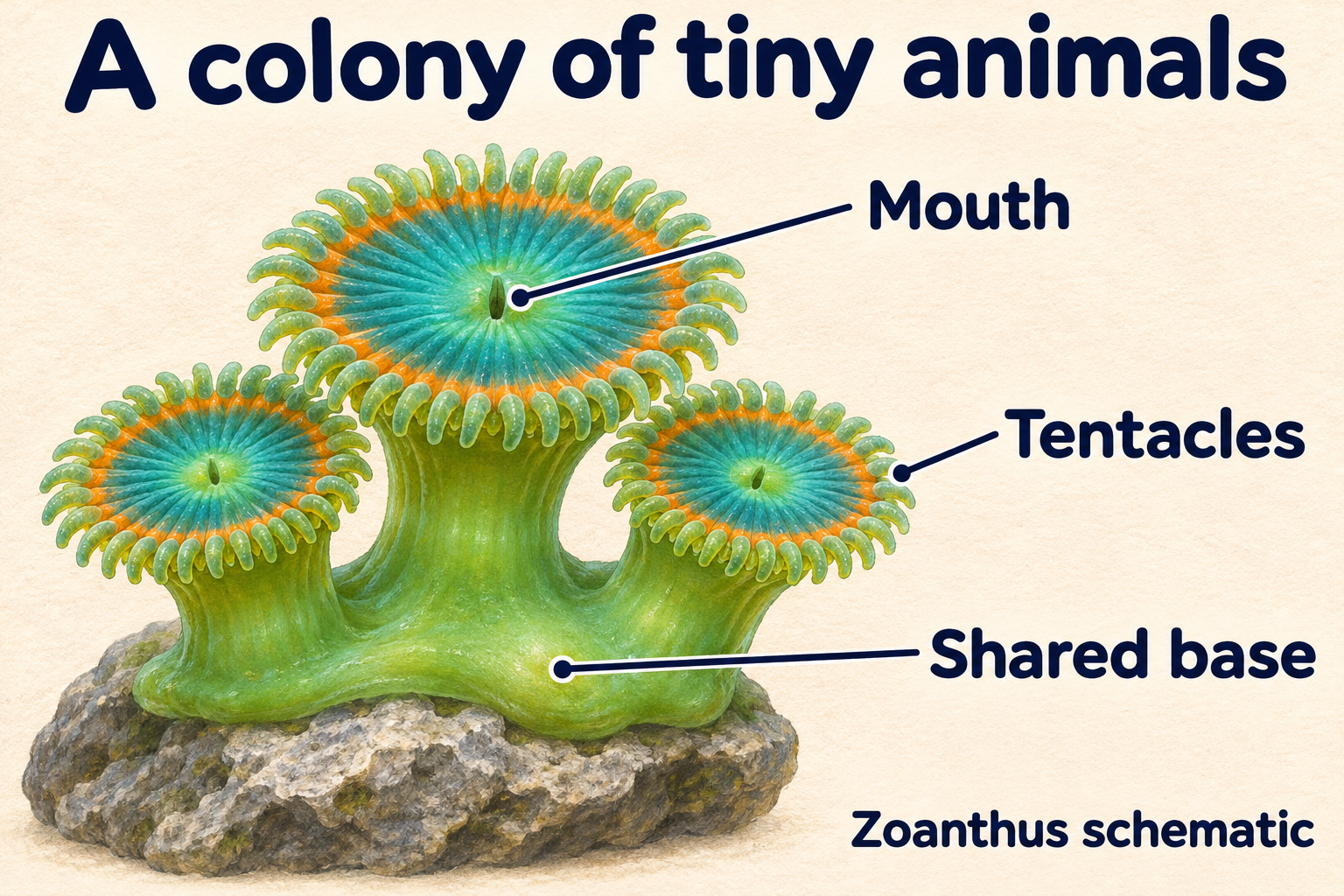
A colony of tiny animals
Each button is a living animal called a polyp. Its mouth sits in the center, with short tentacles around the edge. The polyps share a living base that spreads over rock. Look closely and the colony becomes a little neighborhood, not one big flower.
Keep the identification at Zoanthus sp. Gatorade is an aquarium trade morph name. A matching label or photograph does not establish a species, collection site, or shared family history. This guide does not claim those details for Reef To Go's colony.
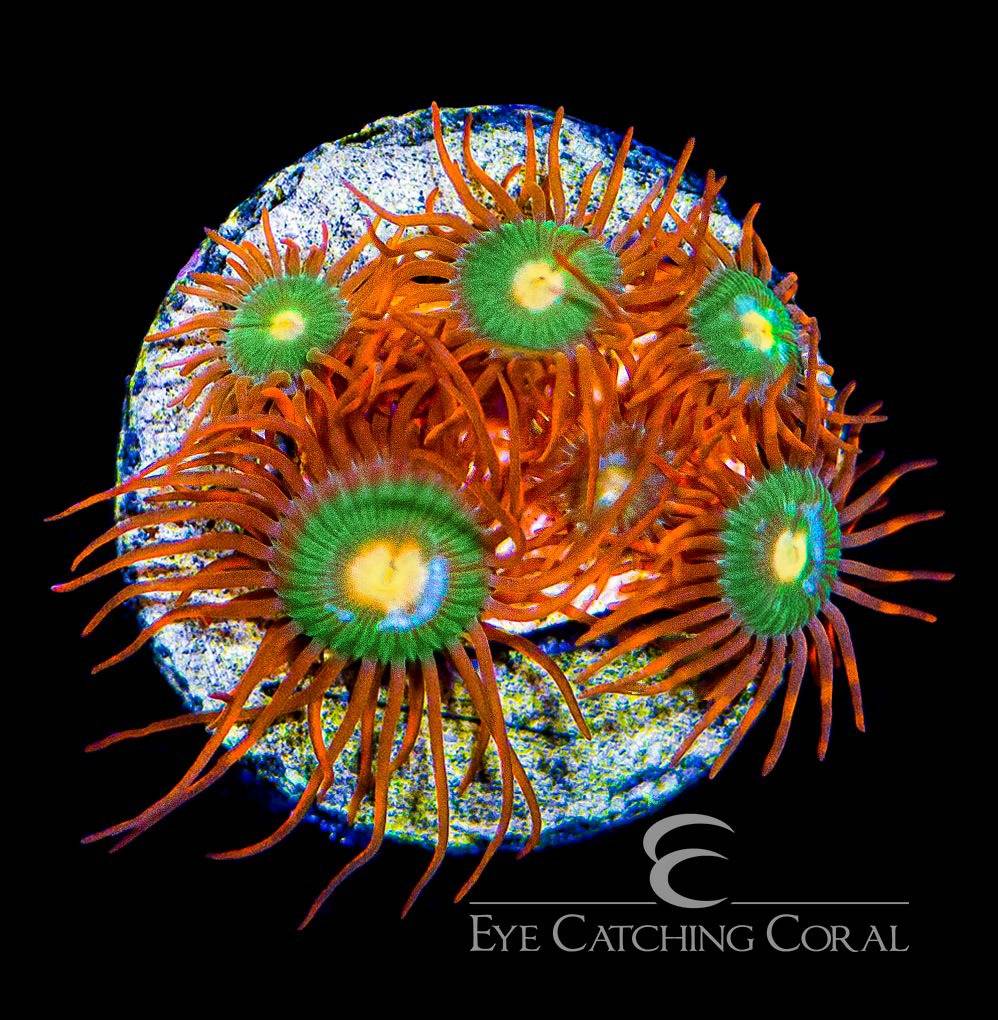
Lighting and cameras can change how a frag looks. Use the entry's real main photograph as its visual reference. The drawings here explain care; they are not identification pictures.
Sources: [Reef To Go, Gatorade zoas live entry](https://database.reeftogo.com/coral/gatorade-zoas-44fc4d52) · [Vivid Aquariums, Gatorade Zoanthids, by Dave Burr](https://vividaquariums.com/collections/corals-and-inverts/products/gatorade-zoanthids) · [Eastwood Aquarium, Zoanthids & Palys care profile](https://eastwoodaquarium.com.au/coral-profiles/zoanthids-palys)
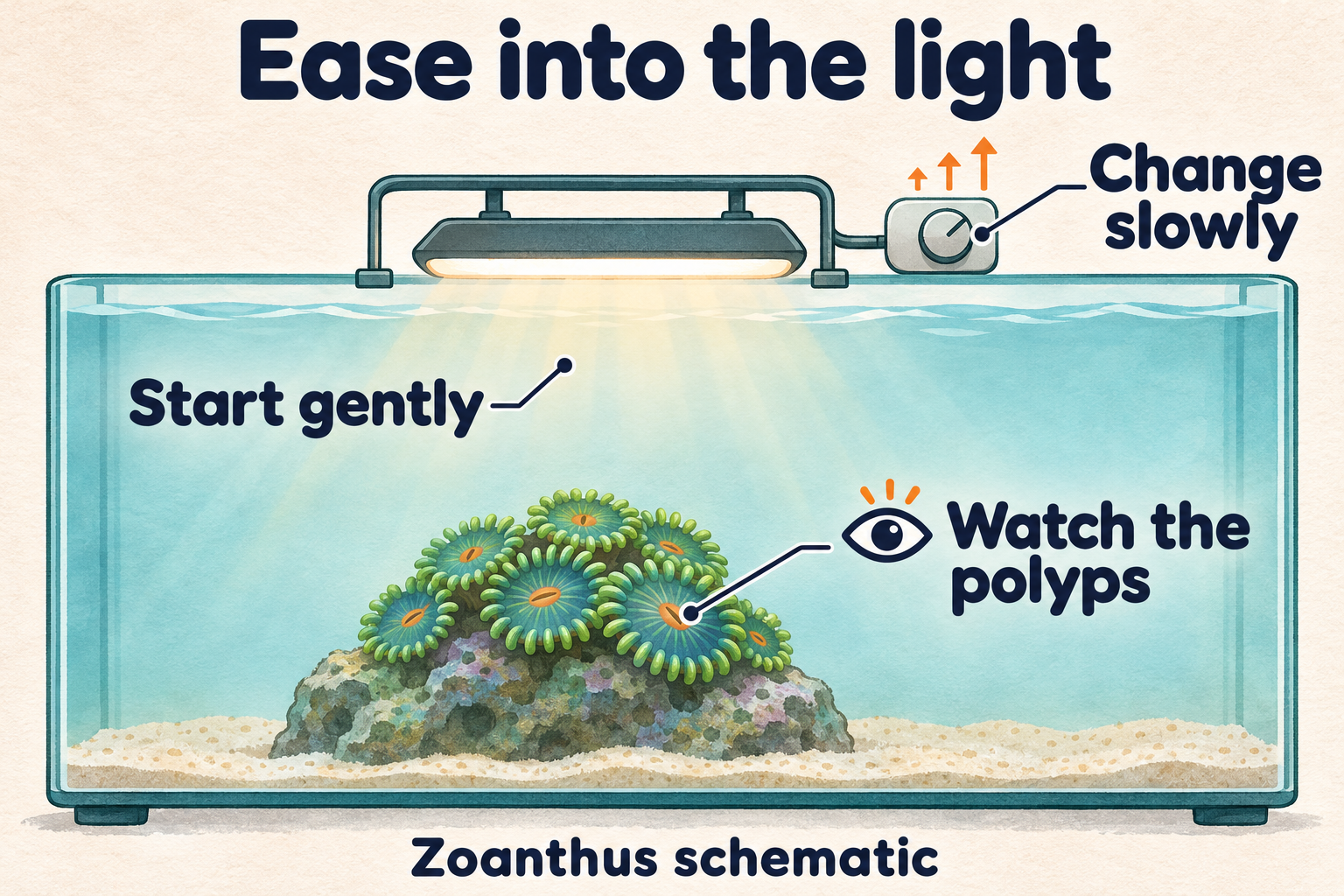
Ease into the light
A new frag does not need the brightest seat in the tank. Ask the seller about its previous lighting. If that is unknown, choose a lower or middle rock with gentler light and indirect flow. Keep the polyps above drifting sand. The best spot depends on the light reaching the coral, not the shelf's height alone.
The published numbers differ. Tidal Gardens usually keeps zoas around 75–125 PAR. Vivid lists 100–250 PAR for Gatorade. PAR measures usable light; neither range is a proven requirement for every Gatorade frag. A cautious starting point around 75–100 PAR is an editorial suggestion within the gentler guidance, not a tested optimum. Match known source conditions when you can.
Let the frag settle, then make small changes over days to weeks. A bleaching colony needs attention, not another jump in brightness. Long stalks or closed polyps can have several causes. Check flow, water and pests too, rather than diagnosing the tank from one pose.
Sources: [Vivid Aquariums, Gatorade Zoanthids, by Dave Burr](https://vividaquariums.com/collections/corals-and-inverts/products/gatorade-zoanthids) · [Tidal Gardens, How to care for your Zoanthus coral, by Than Thein](https://tidalgardens.com/articles/coral-care-articles/zoanthus-coral-care.html) · [Bulk Reef Supply, Zoanthid Coral Care Guide, Adam Monte, updated May 7, 2026](https://www.bulkreefsupply.com/content/post/coral-care-guide-zoanthids) · [Top Shelf Aquatics, Acclimation Center](https://topshelfaquatics.com/pages/acclimation-center)
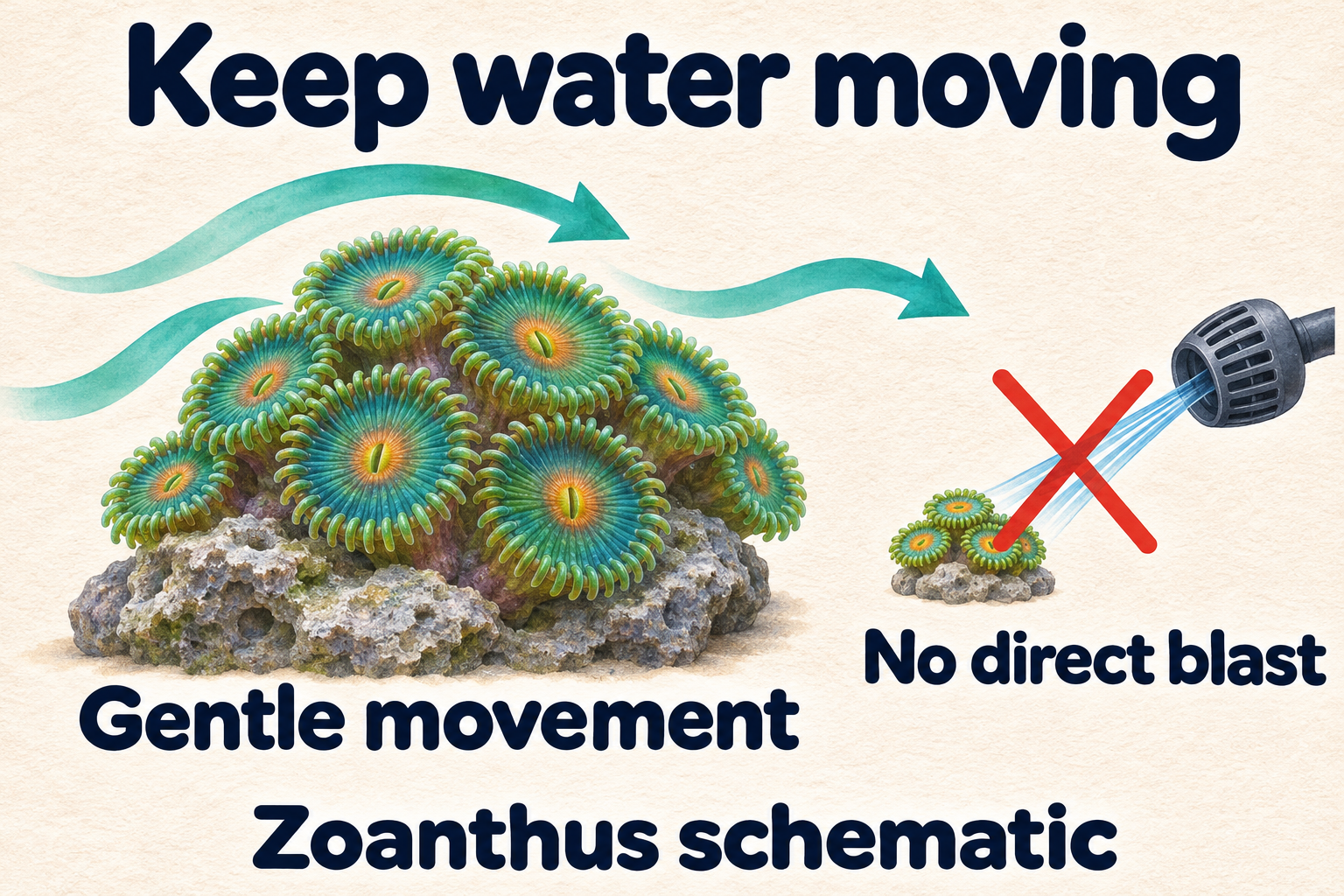
Clean movement, steady water
Aim for moving water that carries loose debris away while the polyps can stay open. A broad, changing current is a good starting point. A narrow pump jet that folds the colony over is not. If dirt collects between the buttons, adjust circulation instead of blasting delicate tissue.
Flow advice varies too. Vivid recommends moderate flow, while Tidal Gardens uses stronger flow on established colonies. That difference supports watching the animal rather than chasing a pump percentage.
For a simple starting routine, keep temperature near 77–78°F (25–26°C), specific gravity near 1.025–1.026, and alkalinity steady within your established reef range. These are general husbandry targets, not Gatorade-only limits. Test rather than guess before dosing.
Do not aim for nutrient-free water. Tidal Gardens reports 10–20 ppm nitrate; Vivid suggests below 10 ppm. That disagreement is real. Keep nitrate and phosphate measurable, watch their trend, and make small corrections that suit the whole reef. More waste is not a growth shortcut.
Sources: [Vivid Aquariums, Gatorade Zoanthids, by Dave Burr](https://vividaquariums.com/collections/corals-and-inverts/products/gatorade-zoanthids) · [Tidal Gardens, How to care for your Zoanthus coral, by Than Thein](https://tidalgardens.com/articles/coral-care-articles/zoanthus-coral-care.html) · [Bulk Reef Supply, Zoanthid Coral Care Guide, Adam Monte, updated May 7, 2026](https://www.bulkreefsupply.com/content/post/coral-care-guide-zoanthids) · [Top Shelf Aquatics, Zoanthids collection care guidance](https://topshelfaquatics.com/collections/zoanthids)
A little food goes a long way
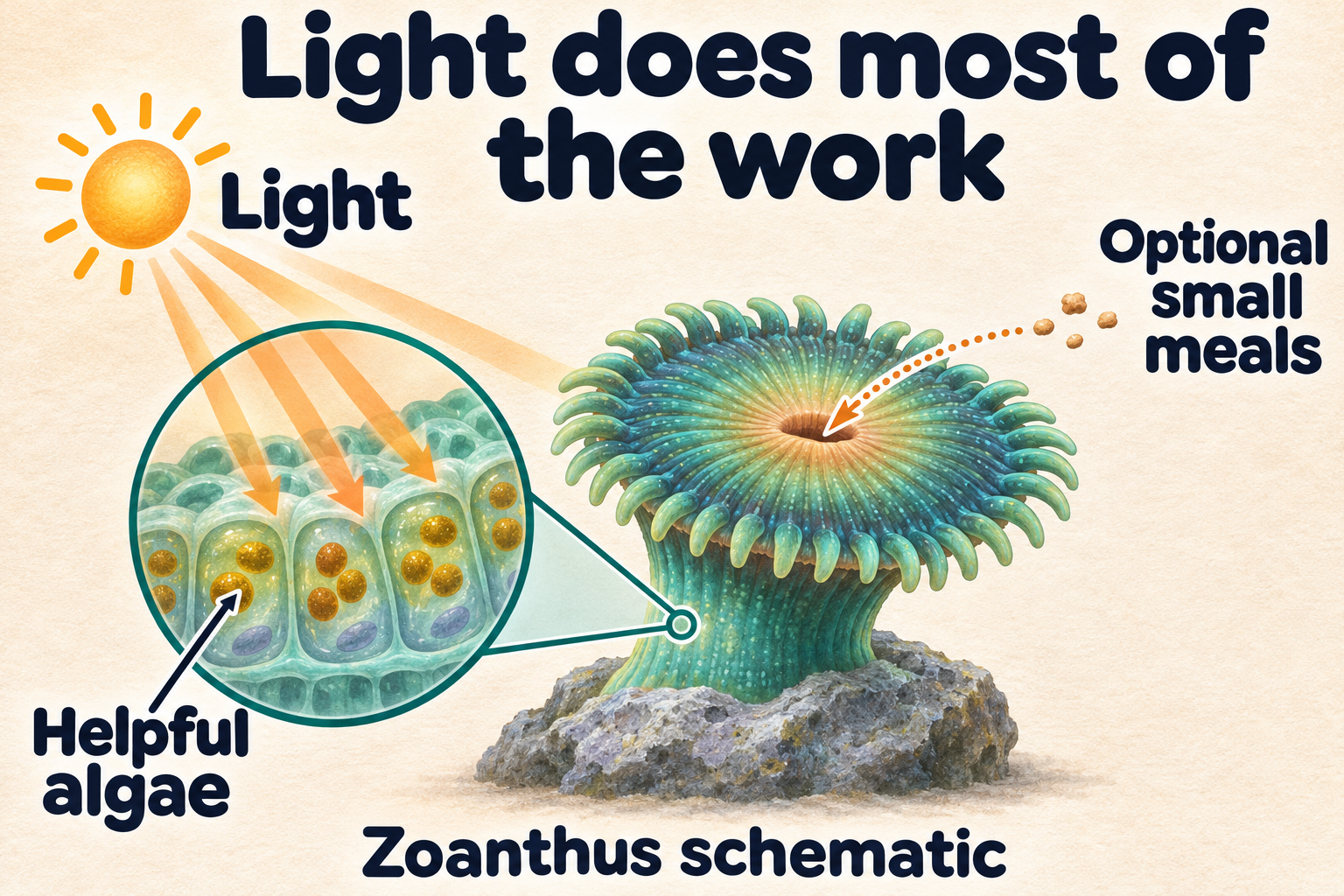
Zoas have tiny algae partners inside their tissue. Those partners use light to make food that helps power the coral. This is why a sensible reef light matters so much.
Extra feeding is optional. You can try a small amount of fine coral food and watch whether the polyps capture it. A heavy dusting that sits on the colony is wasted food, not extra care. Watch nitrate, phosphate and algae as well as the coral.
There is no proven Gatorade feeding schedule to copy here. Keep ordinary tank feeding and maintenance consistent first. If you try direct feeding, change one thing at a time so your notes mean something.
Sources: [Tidal Gardens, How to care for your Zoanthus coral, by Than Thein](https://tidalgardens.com/articles/coral-care-articles/zoanthus-coral-care.html) · [Top Shelf Aquatics, Zoanthids collection care guidance](https://topshelfaquatics.com/collections/zoanthids) · [Reef2Reef, What do you feed zoas?, April 29, 2019](https://www.reef2reef.com/threads/what-do-you-feed-zoas.591872/)
Give the colony its own rock
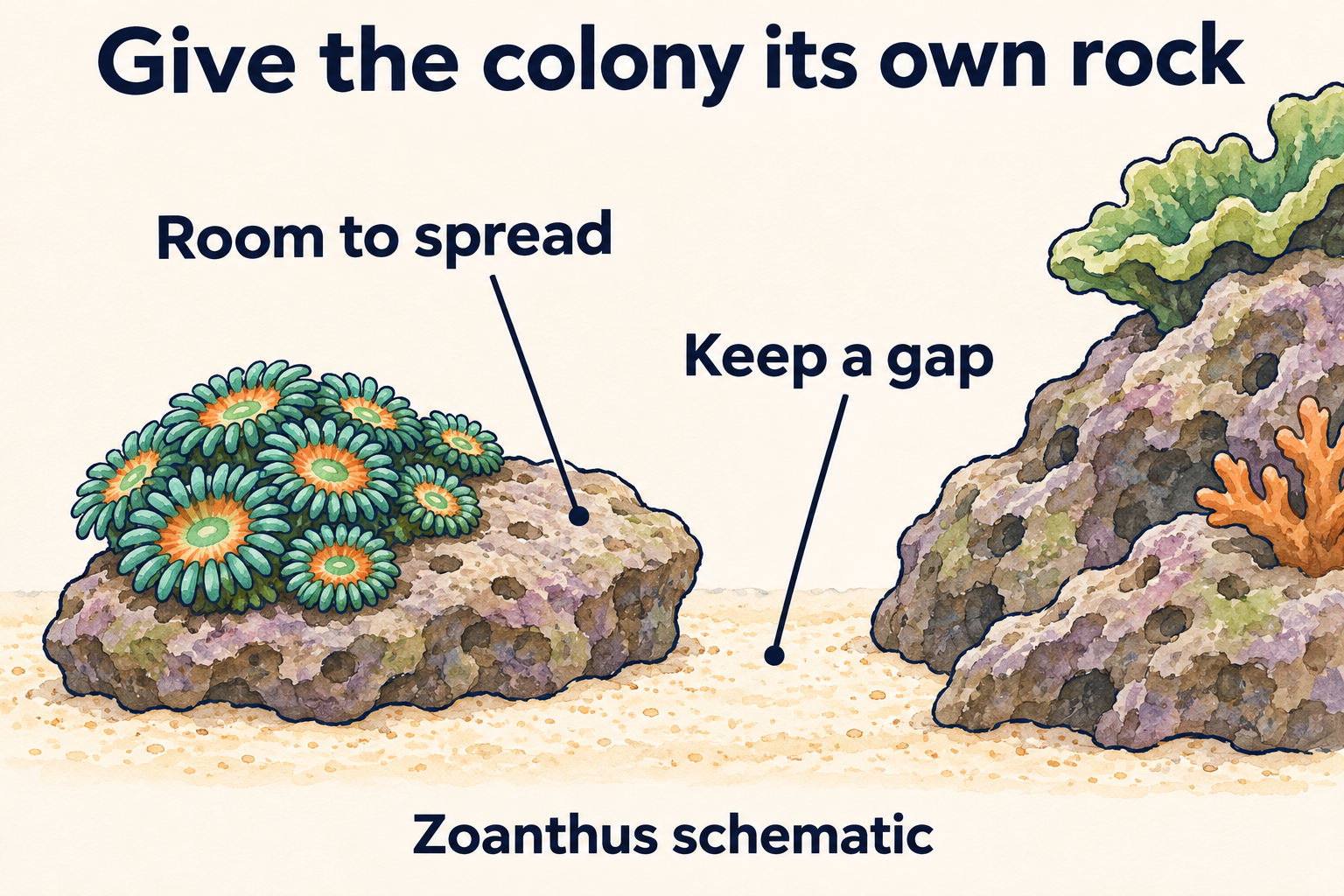
Plan for the patch you hope to have, not just the plug you bought. A small removable rock makes it easier to watch the growing edge and keep it away from other corals. Leave a gap between that rock and the main reef, then check that new growth or shifting rubble has not built a bridge.
A one-to-two-inch gap is not a universal safety distance. A nearby hammer or other long-reaching stinging coral can need much more room. Check neighbors when their tentacles are fully extended.
Gatorade has some encouraging growth reports, but a new polyp is a bonus, not a deadline. Photograph your colony from the same angle now and then. Compare healthy tissue and new buds over weeks, without expecting every frag to follow the same timetable.
Sources: [Bulk Reef Supply, Zoanthid Coral Care Guide, Adam Monte, updated May 7, 2026](https://www.bulkreefsupply.com/content/post/coral-care-guide-zoanthids) · [Reef Central, rogersb, January 22, 2019, The most difficult for you to grow, post 3](https://forums.reefcentral.com/threads/the-most-difficult-for-you-to-grow.2016488/post-28962054) · [Reef2Reef, AtlantiCat, Micro pico: Itti bitti small-in-one, December 2022](https://www.reef2reef.com/threads/micro-pico-itti-bitti-small-in-one.953323/post-10893101) · [Eastwood Aquarium, Zoanthids & Palys care profile](https://eastwoodaquarium.com.au/coral-profiles/zoanthids-palys)
Look before you treat
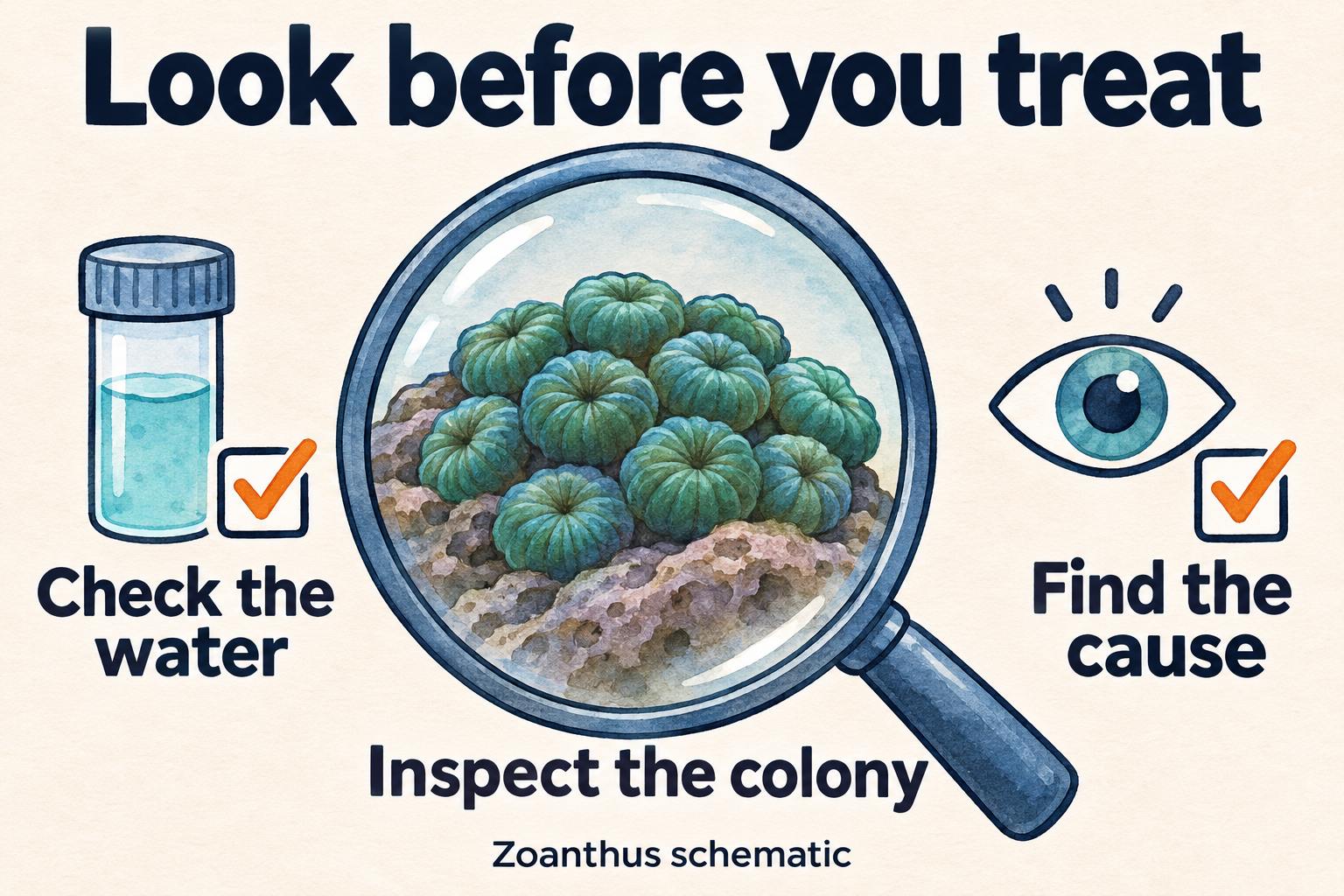
Closed buttons are a clue, not a diagnosis. A freshly moved frag may need time. A settled colony that stays shut, loses tissue, or keeps shrinking deserves a closer look.
Start with temperature, salinity and recent changes. Check whether a pump is hitting the frag or another animal keeps bothering it. Inspect the polyps, their base and the underside of the plug under good light. Zoa-eating nudibranchs, sundial snails and other hitchhikers can cause trouble, but not every tiny animal is a pest.
Read the handling rules below before moving or dipping the colony. Quarantine new arrivals when possible. A coral dip can remove some pests without removing every egg. Use only a product labeled for the job, follow its exact instructions, and rinse as directed in separate clean saltwater. Keep treatment water out of the aquarium. Do not invent a stronger dose or mix remedies.
If tissue is breaking down or you cannot identify the cause, ask an experienced coral professional for help. Repeated blind treatments can add stress while missing the problem.
Sources: [Top Shelf Aquatics, Acclimation Center](https://topshelfaquatics.com/pages/acclimation-center) · [Coral Rx, Effectively Dip Corals in Coral Rx](https://coralrx.com/effectively-dip-corals-in-coral-rx/) · [Eastwood Aquarium, Zoanthids & Palys care profile](https://eastwoodaquarium.com.au/coral-profiles/zoanthids-palys)
Small coral, serious handling rules
Some zoanthids can contain palytoxin, a dangerous toxin. A trade name, bright color or small frag does not tell you whether it is present. Treat this colony cautiously. Beginner care means the aquarium care is approachable; it does not mean bare hands are safe.
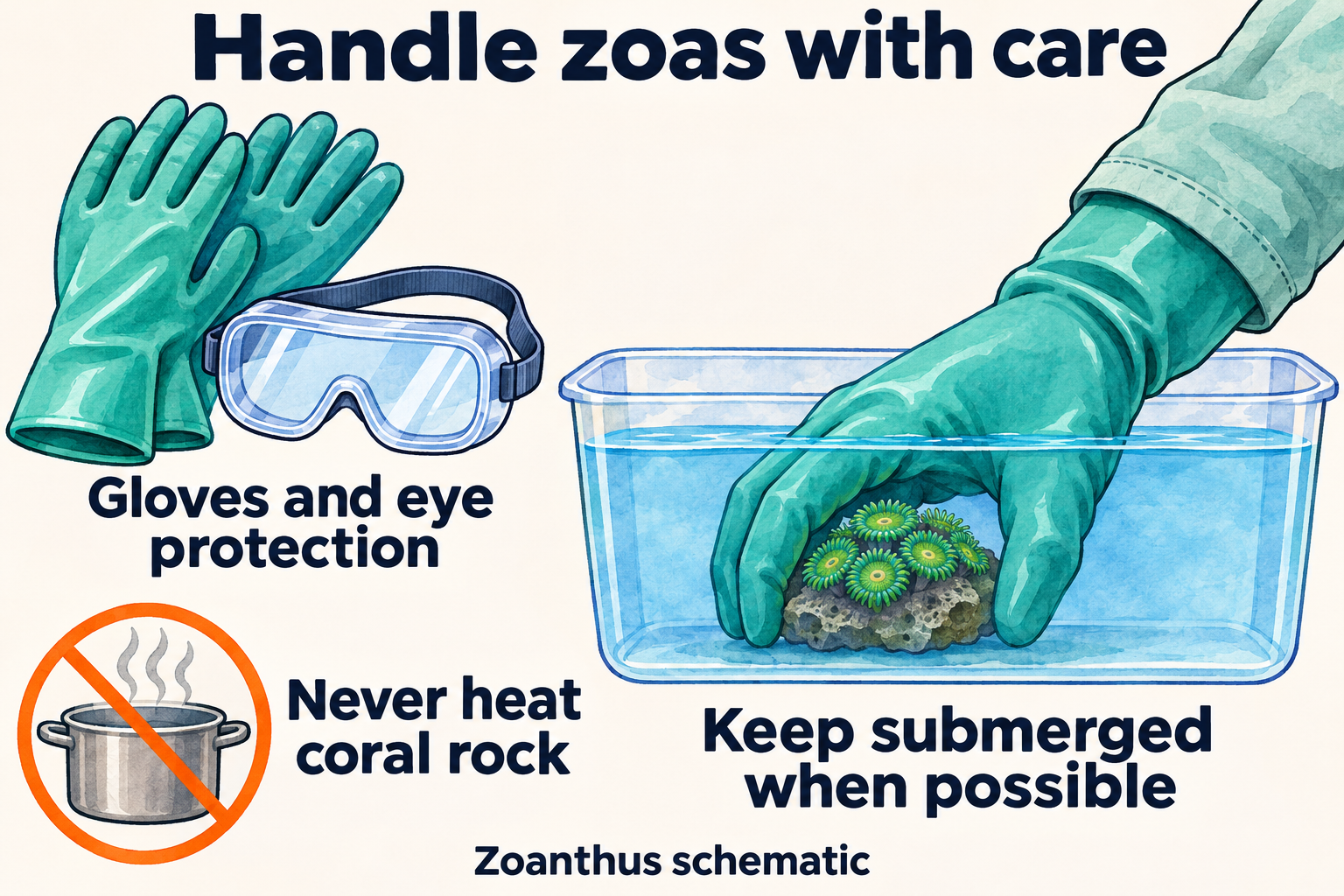
Wear sturdy waterproof gloves and eye protection. Minimize handling, keep the colony submerged when possible, and avoid splashes. Keep children, other bystanders and pets away from handling work. Wash your hands afterward and do not touch your face while working.
Never boil, steam, microwave or pressure-wash coral-bearing rock. Do not scrub it under running water. Cutting and removal can spread contaminated material, so this beginner guide is not a fragging tutorial. Get experienced help rather than improvising.
If exposure is suspected, stop work and seek urgent medical advice. Tell the clinician about possible palytoxin exposure. Trouble breathing needs emergency help. Protective gear reduces risk; it does not make dangerous removal methods safe.
Sources: [CDC MMWR, Hamade et al., August 14, 2015](https://www.cdc.gov/mmwr/preview/mmwrhtml/mm6431a4.htm) · [OATA, How to avoid palytoxin poisoning if you keep corals](https://ornamentalfish.org/what-we-do/advice-information/care-sheets/caresheets-marine-fish/how-to-avoid-palytoxin-poisoning-if-you-keep-corals/)
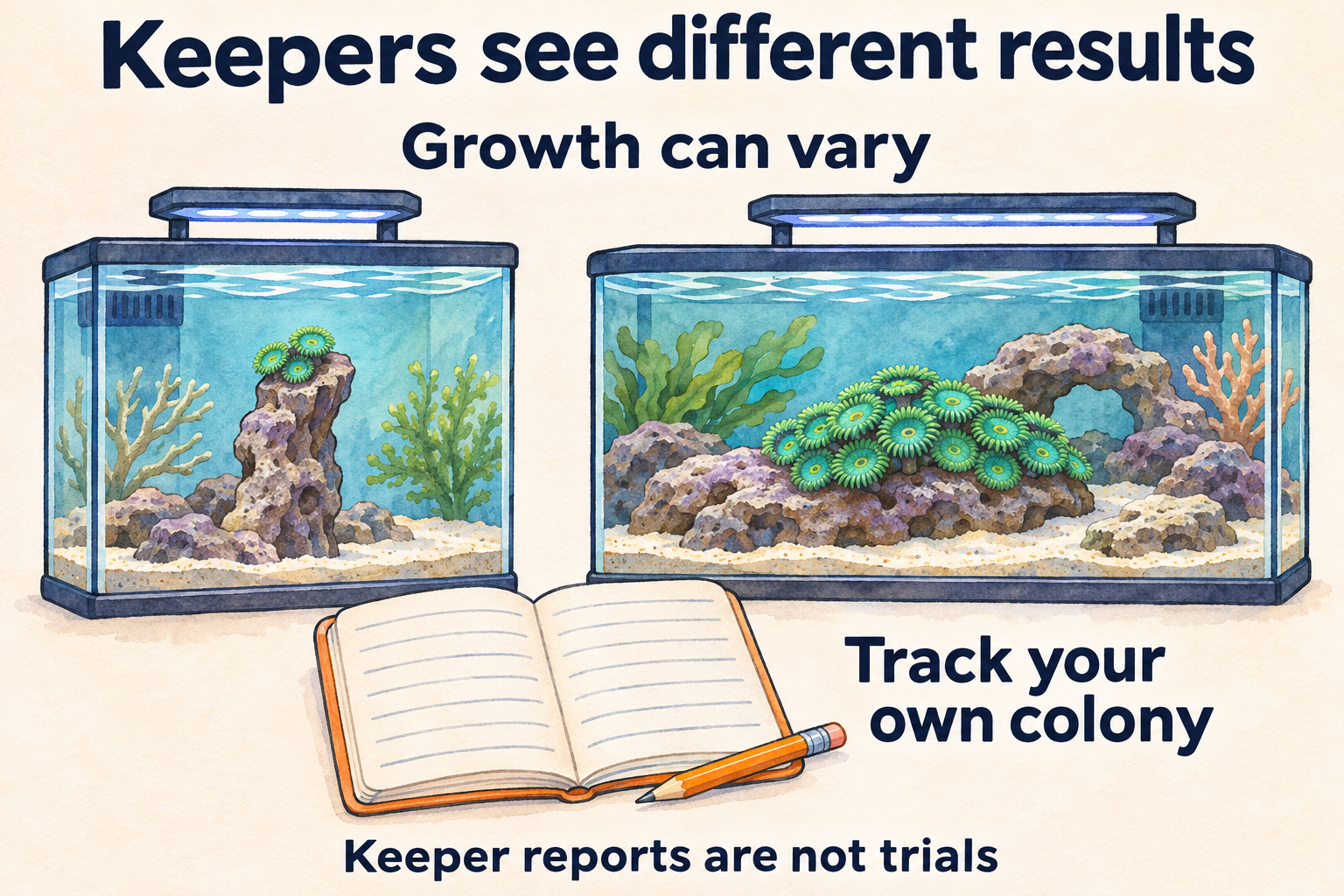
Field notes — what keepers report
These are real aquarium reports, not controlled trials. The names come from the keepers, and their tanks were not identical.
Gatorade growth: in January 2019, rogersb on Reef Central included Gatorade among the fast growers in their tank. They supplied no measured rate. In December 2022, AtlantiCat's Reef2Reef build began with five Gatorade polyps and later reported two new ones. That is an encouraging snapshot, not a promise of two new polyps every fortnight.
Light and flow: in December 2021, Gatorade buyer ebranger described opposite advice from sellers. One recommended medium light and high flow, another low light and low flow. In the same thread, fryman reported success with some unnamed zoas above 400 PAR. ebranger reported losing Eagle Eyes after moving them higher. Those latter reports concern other or unspecified zoas, and they do not prove that light caused the loss. They are a reason to acclimate carefully, not to copy an extreme setting.
Feeding: in an April 2019 Reef2Reef discussion, robocop1906 reported good growth without extra food. Steven Garland liked the results from a mix of coral foods, while the thread starter reported stalled budding despite feeding. None identified Gatorade. Both fed and unfed tanks can succeed, and feeding alone cannot explain every result.
The useful habit is simple: record your changes, watch your own colony, and give it time to answer.
Sources: [Reef Central, rogersb, January 22, 2019, The most difficult for you to grow, post 3](https://forums.reefcentral.com/threads/the-most-difficult-for-you-to-grow.2016488/post-28962054) · [Reef2Reef, AtlantiCat, Micro pico: Itti bitti small-in-one, December 2022](https://www.reef2reef.com/threads/micro-pico-itti-bitti-small-in-one.953323/post-10893101) · [Reef2Reef, ebranger and fryman, Zoas: why such variation in recommended light/flow rate?, December 7, 2021](https://www.reef2reef.com/threads/zoas-why-such-variation-in-recommended-light-flow-rate.877402/) · [Reef2Reef, What do you feed zoas?, April 29, 2019](https://www.reef2reef.com/threads/what-do-you-feed-zoas.591872/)
Field Notes
Related species
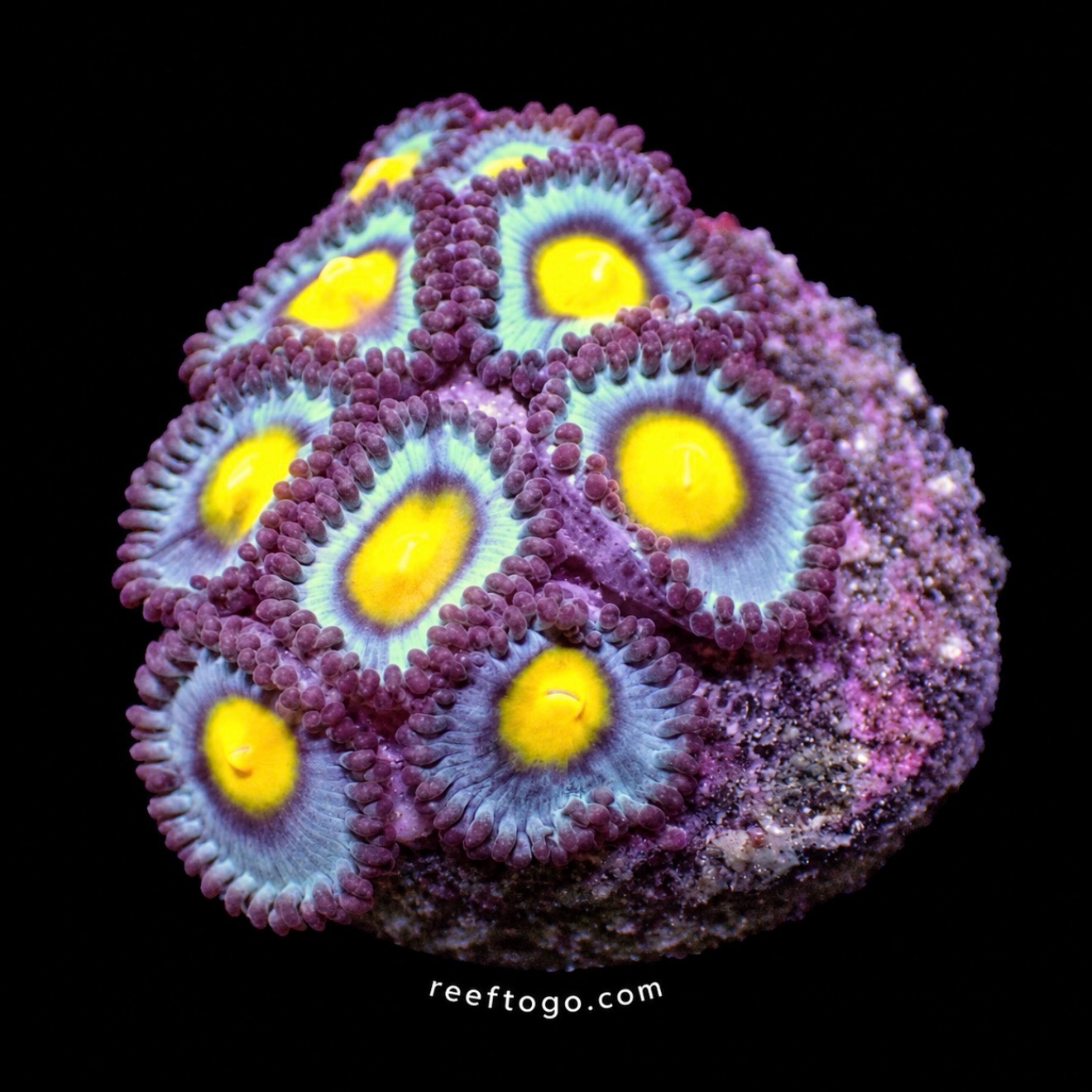
Alien Eye zoas
Zoanthus sp
Same genus
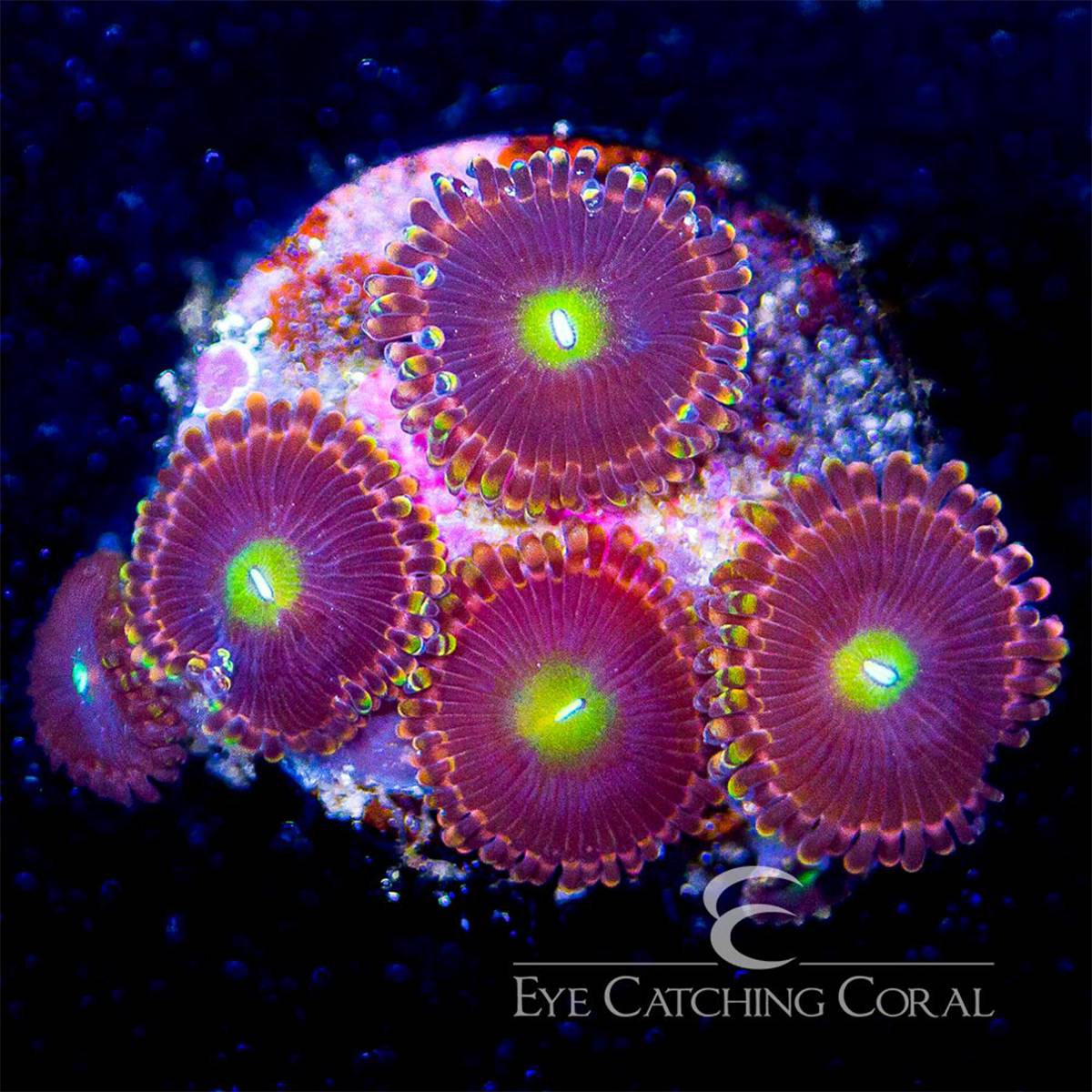
Antimatter zoas
Zoanthus sp
Same genus
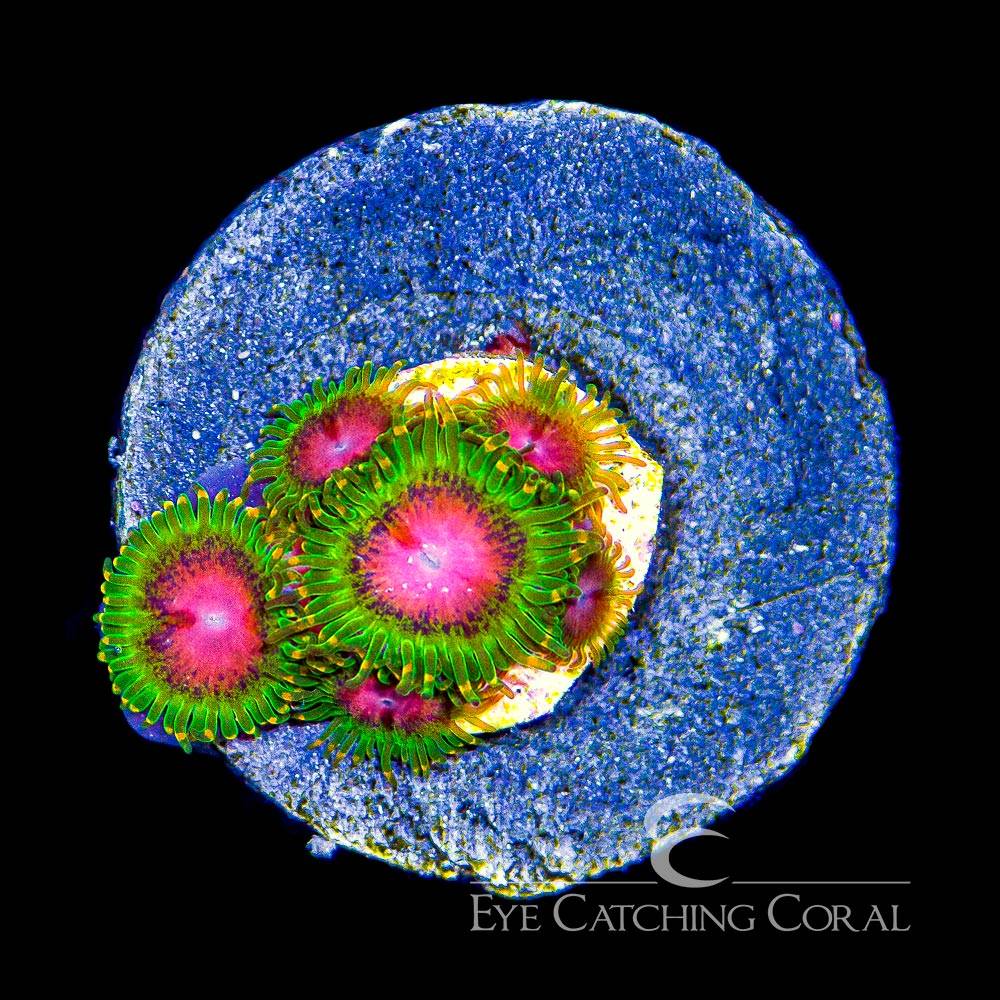
Awesome Blossom zoas
Zoanthus sp
Same genus
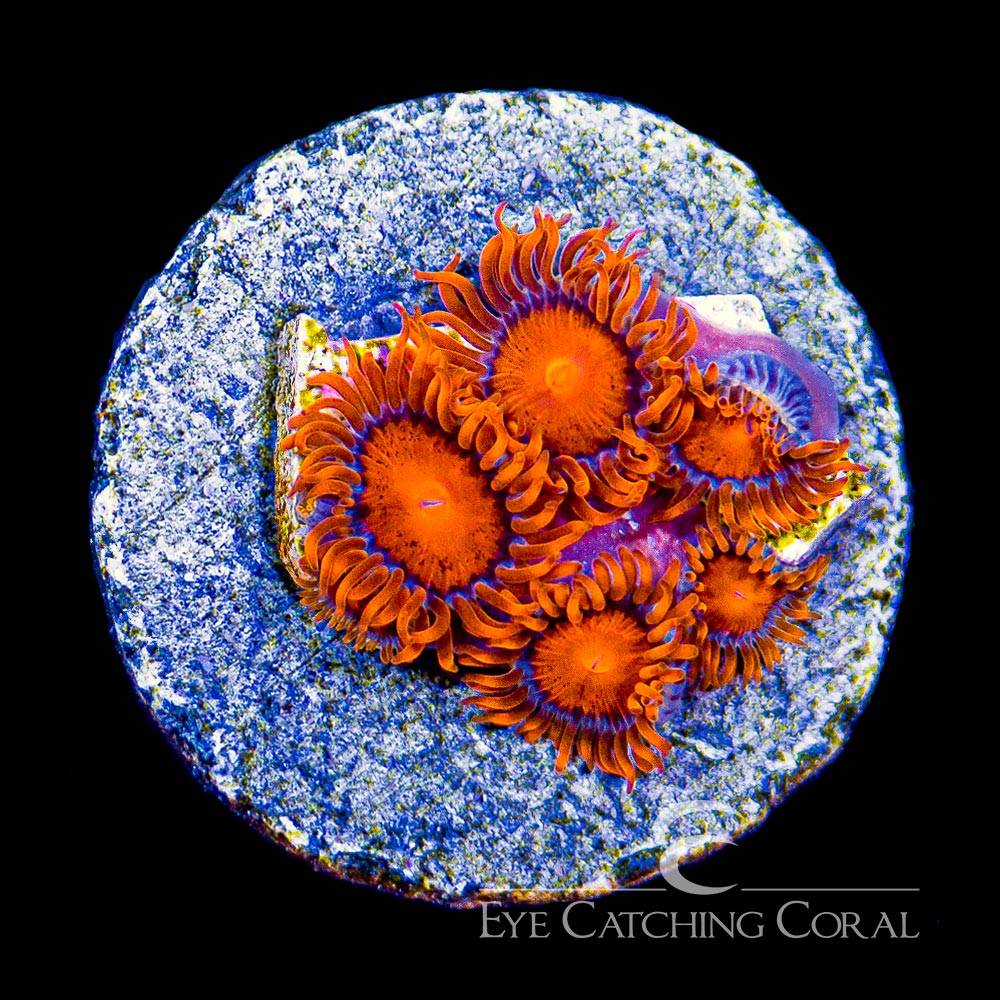
Bam Bam zoas
Zoanthus sp
Same genus
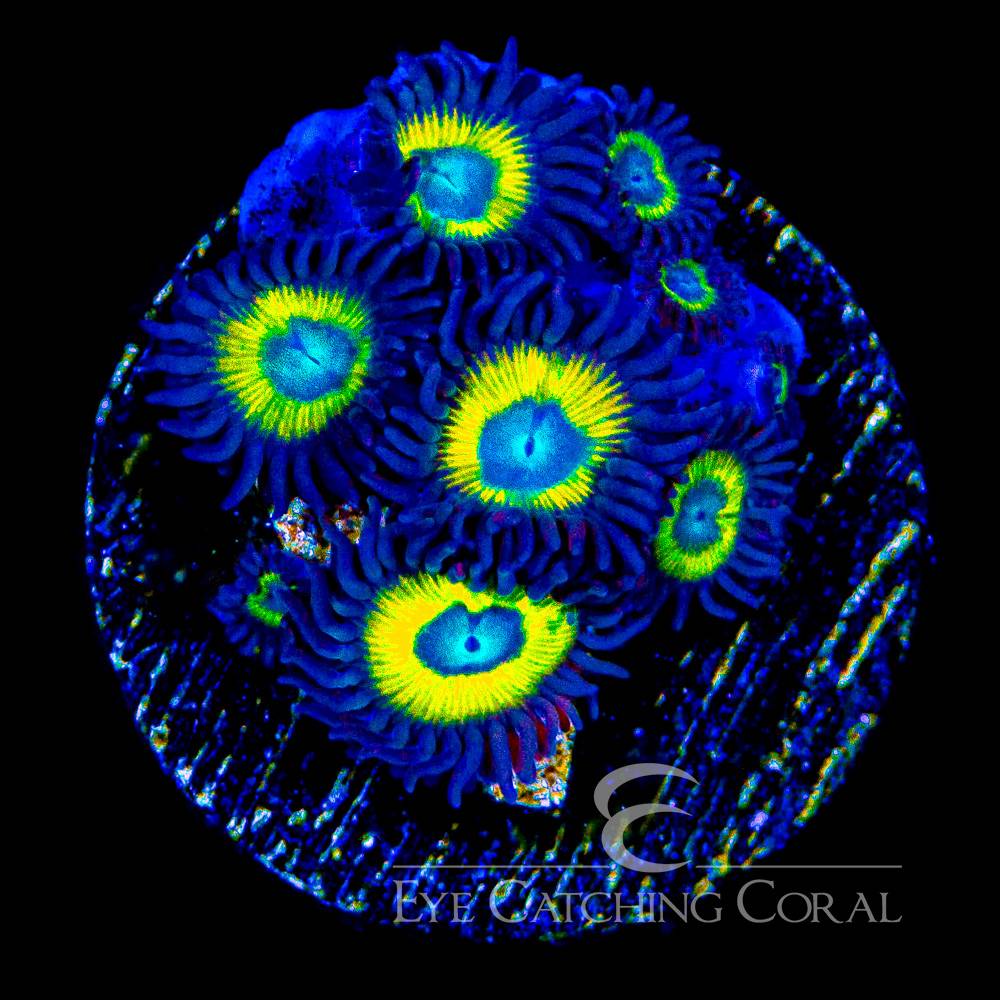
Black Bella zoas
Zoanthus sp
Same genus
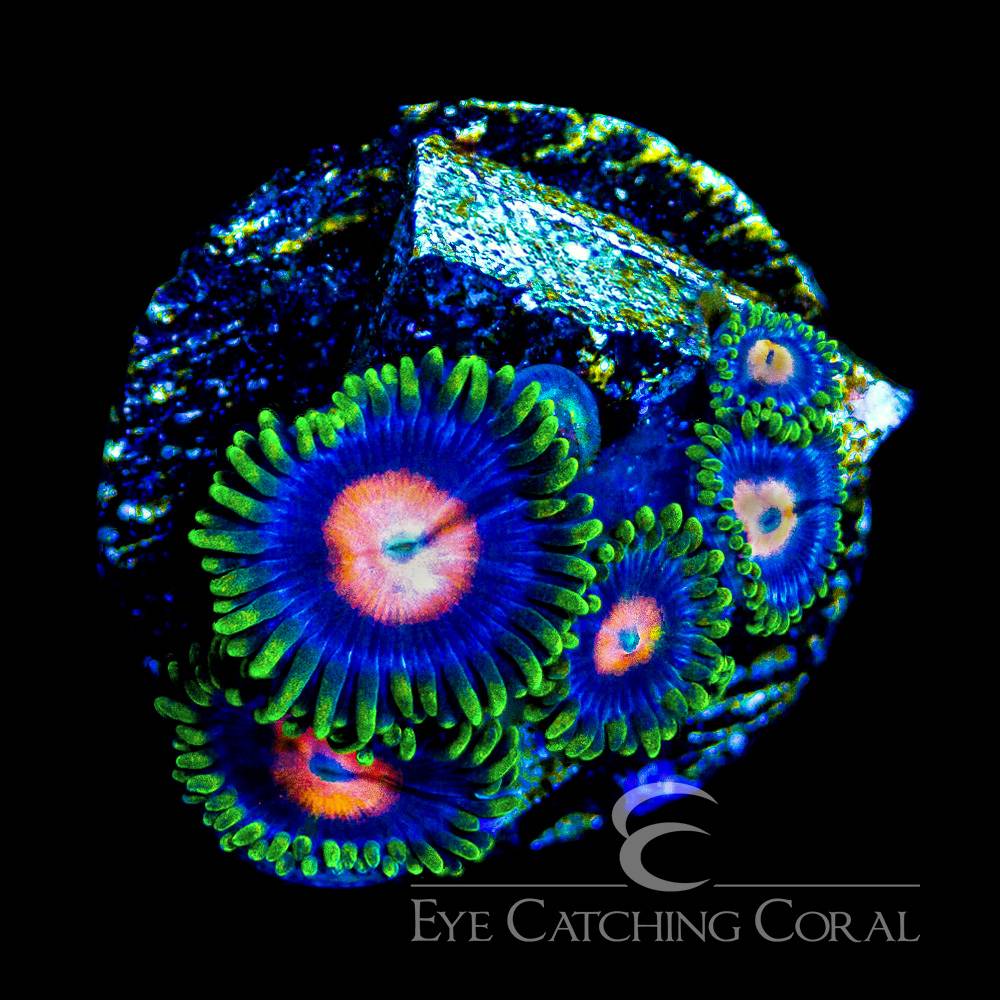
Blow Pops zoas
Zoanthus sp
Same genus
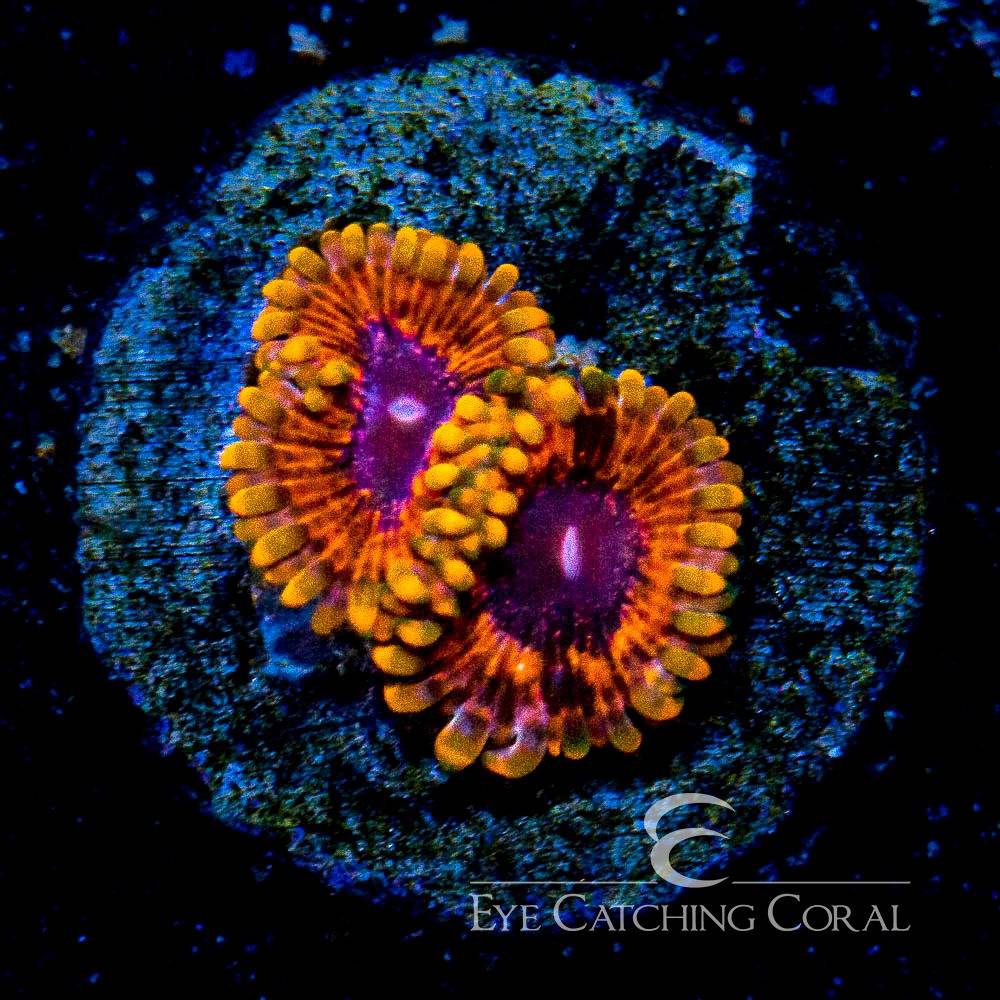
Burning Ember zoas
Zoanthus sp
Same genus
Burning Suns zoas
Zoanthus sp
Same genus