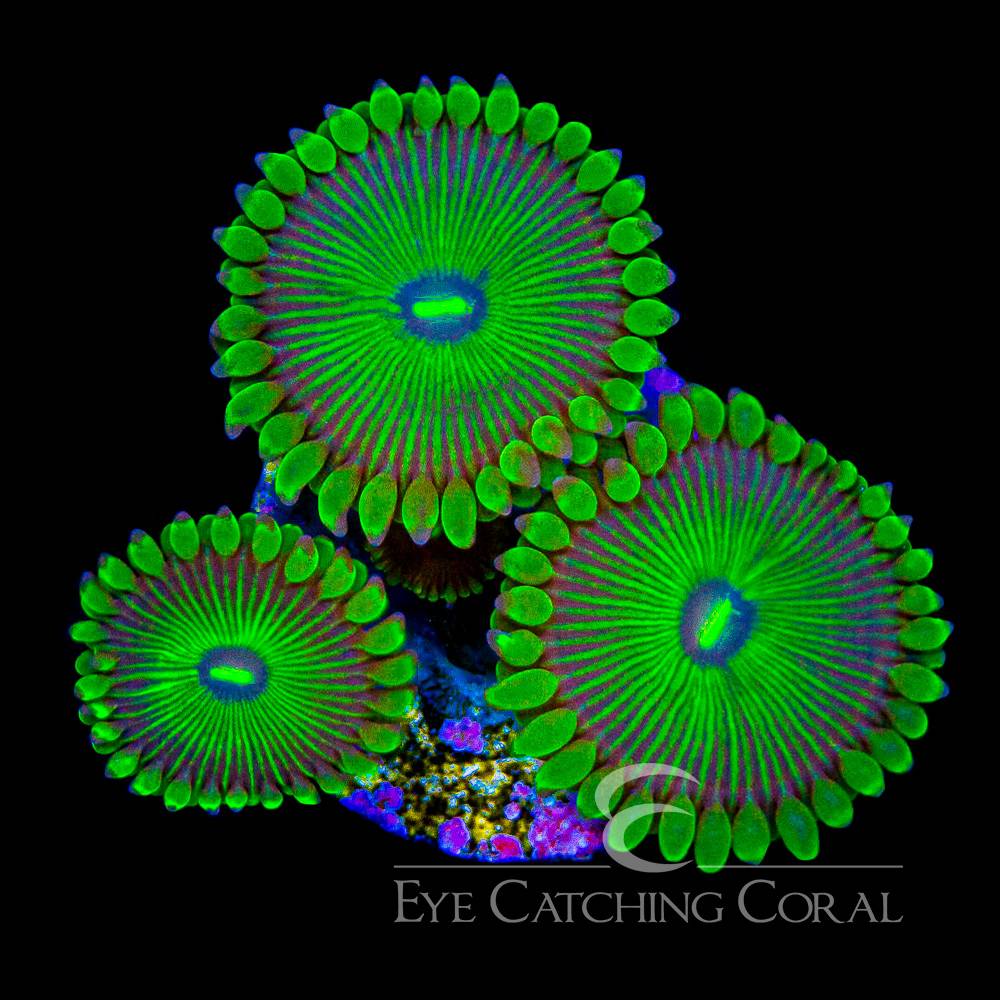
Grouchy Green zoas
Zoanthus sp
Palytoxin safety
Some zoanthids and palythoas can contain a potent toxin. Wear sturdy waterproof gloves and eye protection, minimize handling, and keep colonies submerged when possible. Never boil, steam, pressure-wash or scrub colonized rock under running water. Keep other people and pets away during handling. If exposure is suspected, seek urgent medical advice and tell the clinician about possible palytoxin exposure.
Sources: CDC: palytoxin exposure · OATA: avoiding palytoxin poisoning
Gallery
Meet Grouchy Green
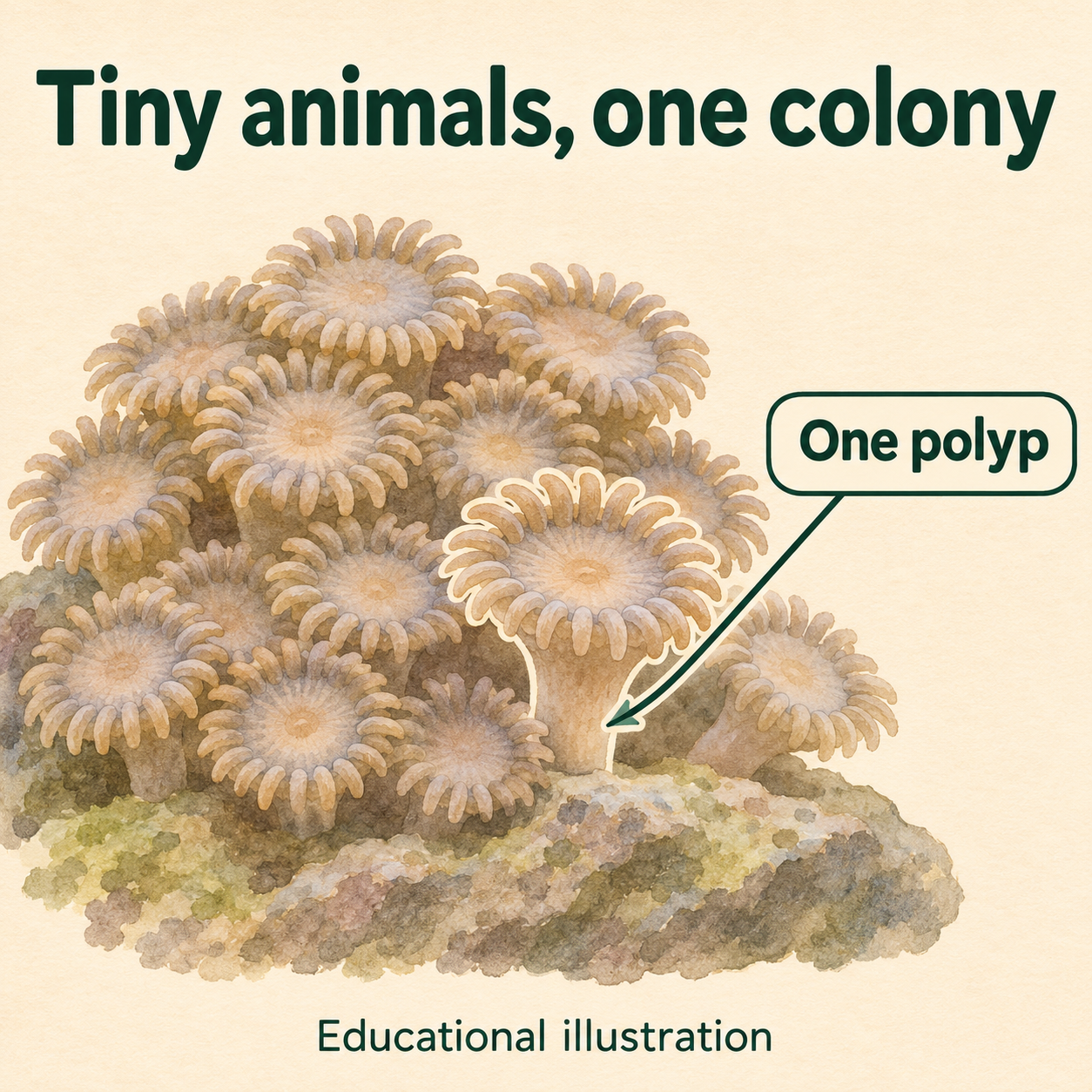
A grouchy name. A busy little neighborhood. A zoa colony is made of many small animals called polyps. Each has a mouth and a ring of tentacles. New polyps can bud beside older ones, slowly turning a small patch into a living carpet. [Colony polyp basics](https://www.liveaquaria.com/products/colony-polyp)
Grouchy Green is this entry's trade name, not a scientific species name. Reef To Go records it as Zoanthus sp. That means the genus is recorded, but the species is not settled here. The record does not establish a breeder's lineage. A photograph cannot settle those questions here. [Reef To Go record](https://database.reeftogo.com/coral/grouchy-green-zoas-3c36c449)
Even sellers disagree on the label. BRS lists ECC Grouchy Green as Zoanthus sp.; Eye Catching Coral's own catalog labels its Grouchy Green item Palythoa sp. A shared trade name cannot resolve that mismatch. We keep Reef To Go's recorded name and the full safety precautions. [BRS listing](https://www.bulkreefsupply.com/ecc-grouchy-green-zoanthid-eye-catching-coral.html) [ECC catalog](https://order.eyecatchingcoral.com/dashboard/catalog/frags)
Enjoy the real colony in front of you. Its name is not a promise of one exact shade under every light. The drawings in this guide explain care. They are not pictures of a verified Grouchy Green specimen.
The care card reads Beginner, Low-Med light, Med flow, Mid placement, Moderate space and Fast growth. Beginner means approachable reef care, not safe to handle with bare hands. Read the safety section before moving the frag.
Ease into the light
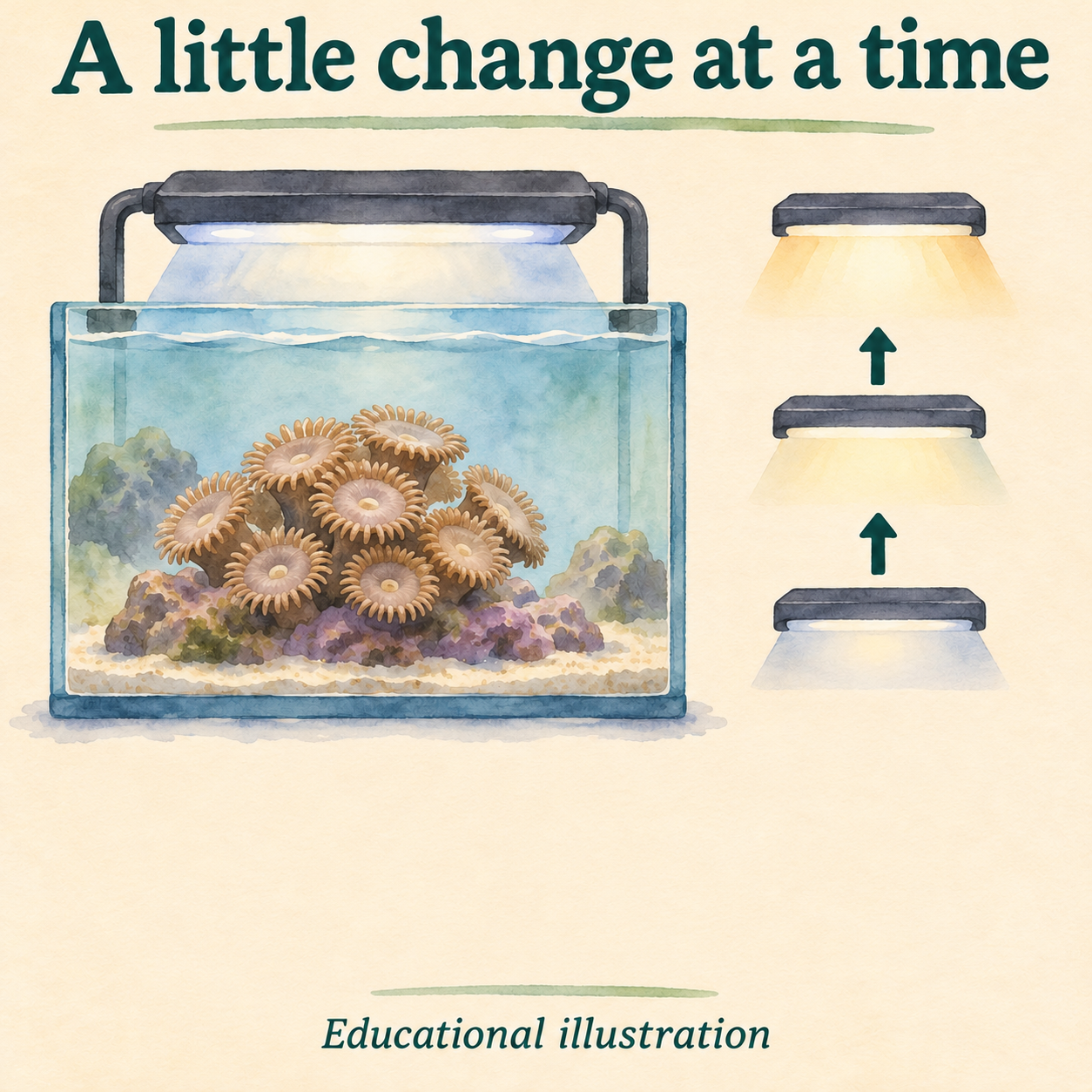
Think of a light change as a dimmer, not a switch. Tiny algae living inside zoas use light to make food that helps feed the coral. But turning the lamp up suddenly can do harm. [How zoas use light](https://tidalgardens.com/articles/coral-care-articles/zoanthus-coral-care.html)
Keep Low-Med as the starting category. Ask what light the frag came from, then adjust gradually. A spot halfway up the rockwork can be bright in one tank and shaded in another. Height is not a light reading. A PAR meter helps compare spots. Sellers give broad light ranges, but those are starting guides, not a measurement of what your frag needs. [Lighting and placement](https://www.bulkreefsupply.com/content/post/coral-care-guide-zoanthids)
Watch the colony over time. Is it opening? Is it becoming paler? Has anything else changed? One closed polyp does not tell you the whole story. Take comparison photos under the same lamp settings. That makes it easier to spot a real change instead of a change in the photograph.
Make room for a growing carpet
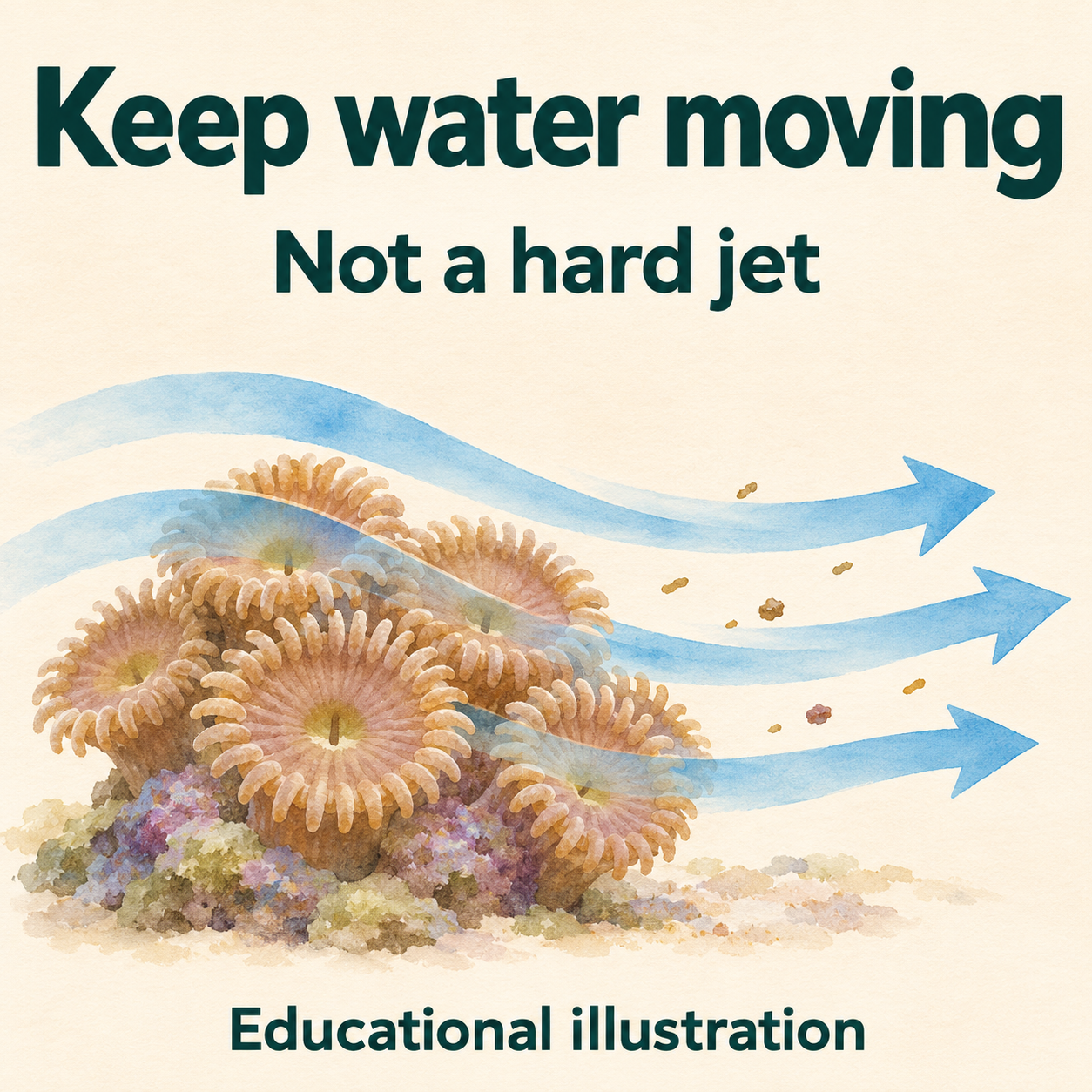
Water should move around the polyps and carry loose waste away. The card's Med flow is a sensible starting point. Avoid a narrow jet that keeps hammering the same patch. Check whether debris sits between the polyps rather than judging flow only by the pump setting. [Water movement](https://www.bulkreefsupply.com/content/post/coral-care-guide-zoanthids)
Mid means a starting zone, not a rule to glue the frag halfway up every tank. Choose a secure spot with suitable light and circulation. A separate rock can make a spreading colony easier to watch and manage. It is not an escape-proof fence. [Zoa placement and spreading growth](https://tidalgardens.com/articles/coral-care-articles/zoanthus-coral-care.html)
Give the edges room. These polyps can crowd nearby corals, and a neighbor may sting them. The old one-to-two-inch note is not a safe distance for every pairing. Plan around the neighbor's reach and both colonies' growth. Check the gap again as they expand. [Compatibility](https://www.liveaquaria.com/products/colony-polyp)
The SPACE card's Moderate label describes a care category, not an inch measurement. Fast describes growth potential, not a timetable for new heads.
Keep the routine steady

A new polyp is exciting. A stable routine is what helps you notice it.
Test the water regularly and keep a record. Pay attention to temperature, salinity and the reef's water chemistry. Use results and the needs of the whole tank to guide changes. Adding a bottle because one frag looks unhappy can make the puzzle harder. [Stable water conditions](https://www.bulkreefsupply.com/content/post/coral-care-guide-zoanthids)
Zoas get much of their energy through their light-using partners. Extra food is an option, not a race. If you try a suitable fine coral food, start modestly and watch the response. Do not force a large meal onto small polyps. Some respond to feeding better than others. [Feeding zoas](https://tidalgardens.com/articles/coral-care-articles/zoanthus-coral-care.html)
Food also affects the water. Watch nitrate and phosphate trends rather than assuming more food always means more growth. Do not make stripping both to zero your goal. This guide gives no special Grouchy Green dosing recipe or feeding calendar.
Keep the experiment simple. Write down what you changed before changing something else. The keeper reports below show why the same food can lead to very different stories.
Check the newcomer, then watch
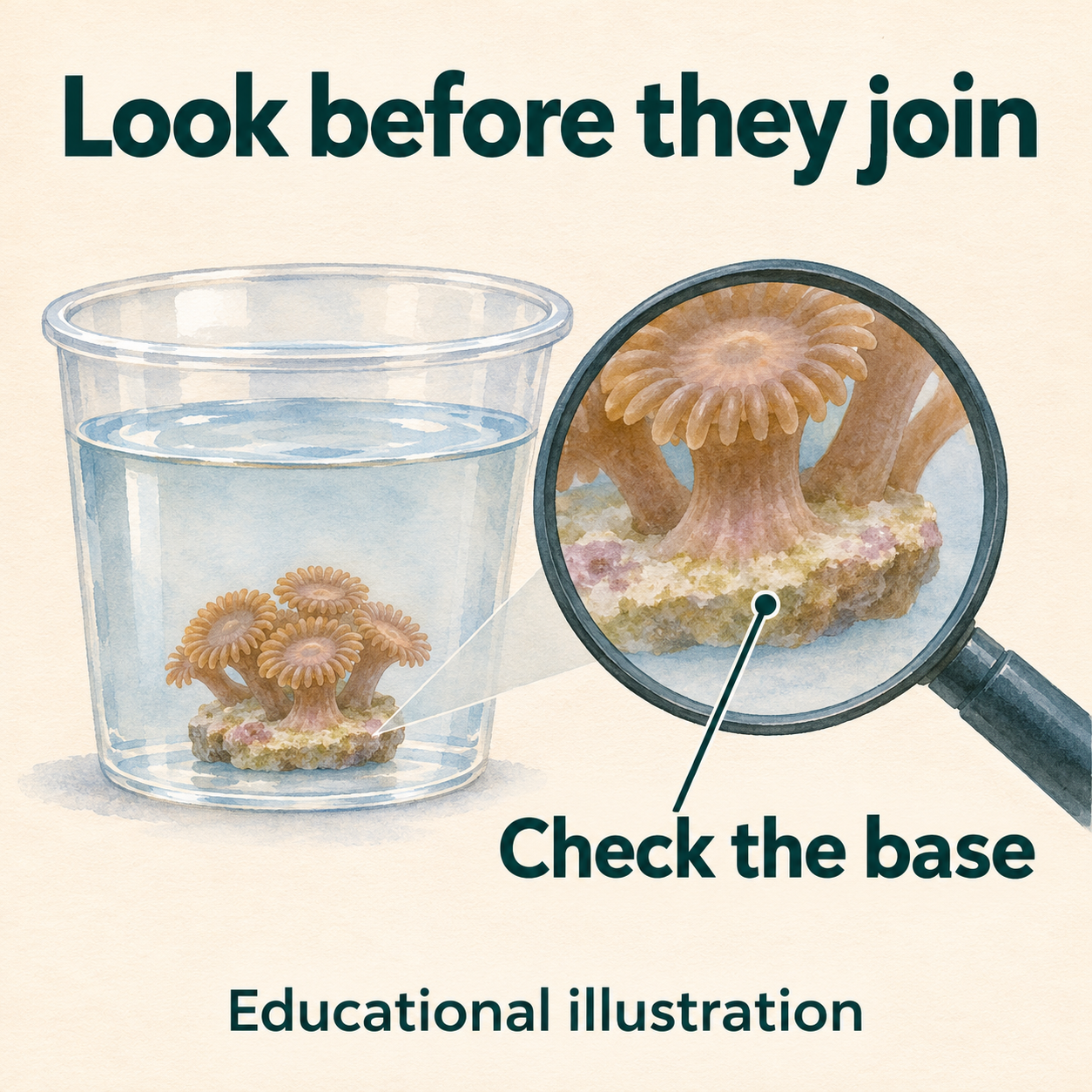
Before the frag joins your display, inspect the plug, underside and spaces around the polyps. Tiny hitchhikers can hide there. Zoanthid-eating nudibranchs are one reason to look closely, but not every small creature is a pest. Identify a problem before choosing a treatment. [Coral pest guide](https://www.bulkreefsupply.com/content/post/md-2021-02-reef-tank-pest-and-remedy-guide)
A dip is one tool, not a clean bill of health. Eggs and hidden pests may survive. A separate, suitable, established quarantine system gives you time to observe the coral without introducing it straight to the reef. [Why quarantine helps](https://www.bulkreefsupply.com/content/post/md-2016-02-how-to-build-a-coral-quarantine-tank)
Use a dip whose current label includes zoanthids. ReVive is one example; different products have different instructions. Follow your own product's mixing, timing and rinse directions. Do not guess a stronger dose. [Manufacturer information](https://twolittlefishies.com/products/revive%C2%AE-coral-cleaner-500-ml)
Shipping stress matters too. Growers differ on when to dip, so ask the seller about a badly stressed arrival. Do not solve that uncertainty by adding an uninspected frag to the display. [Shipping and dipping cautions](https://www.bulkreefsupply.com/wwc-acclimate)
If trouble continues, compare today's photo with yesterday's. Check recent changes and water tests. Shrinking tissue, spreading damage or several declining polyps deserve prompt help from an experienced keeper or aquatic vet. A photo alone does not prove the cause. Avoid stacking treatments while guessing.
Look closely, handle less
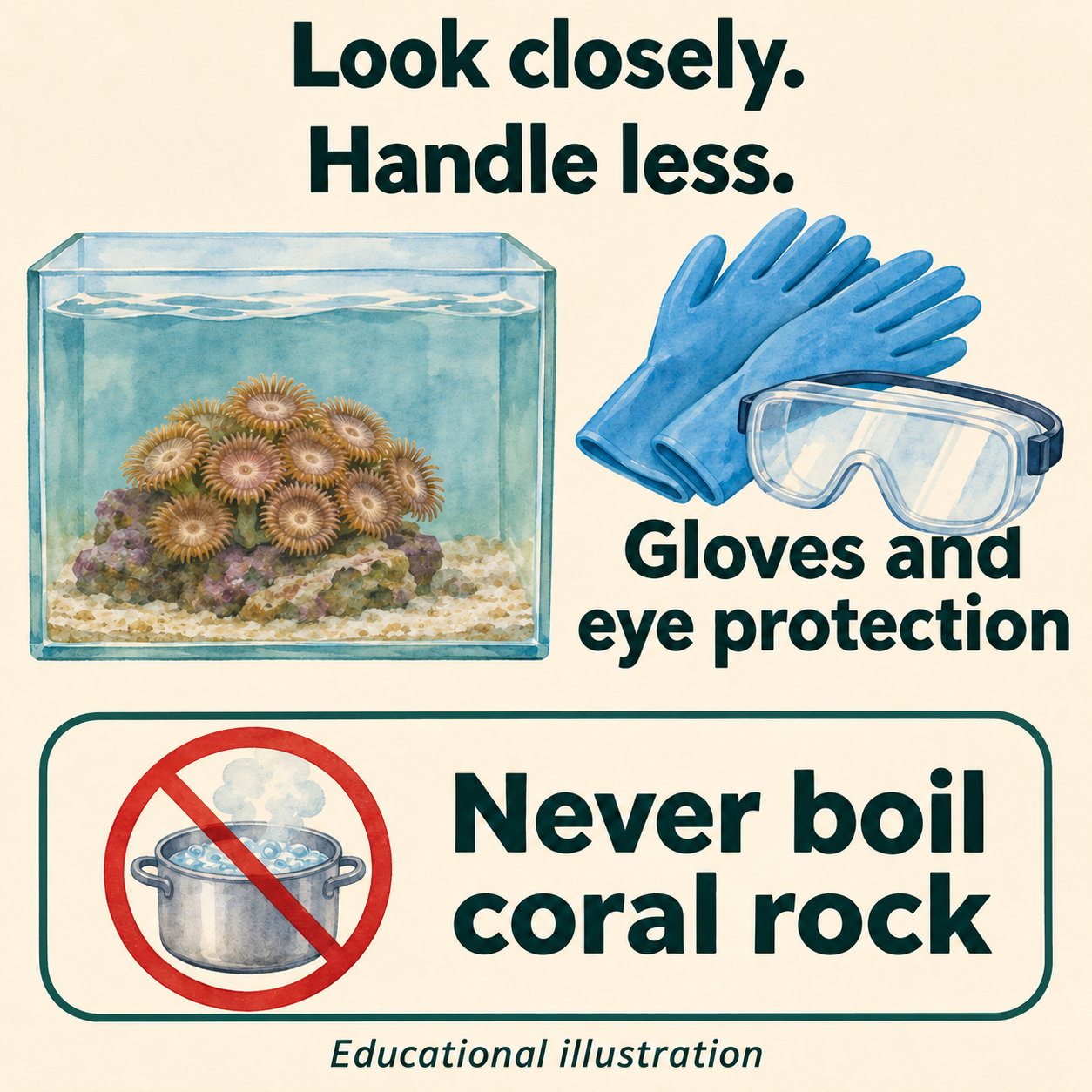
This is a look-and-learn coral, not a touch-and-play animal. Children can help watch and record it. A prepared adult should handle it.
Some zoanthids and palythoas contain palytoxin, a dangerous poison. A trade name, color or small frag does not establish safety. No toxin-test result was found for this entry. Treat it as potentially toxic. Serious aquarium exposures have affected people nearby as well as the person doing the work. [CDC investigation](https://www.cdc.gov/mmwr/preview/mmwrhtml/mm6431a4.htm)
Keep handling to a minimum. Wear sturdy waterproof gloves and eye protection. Keep the colony submerged when possible. Keep other people and pets away from the work. Wash your hands afterward, and do not touch your face while working. [OATA safety guidance](https://ornamentalfish.org/what-we-do/advice-information/care-sheets/caresheets-marine-fish/how-to-avoid-palytoxin-poisoning-if-you-keep-corals/)
Never boil, steam, microwave or pour hot water over colonized rock. Never pressure-wash it or scrub it under running water. Gloves and goggles do not make those jobs safe. Cutting, removing and disposing of a colony need a separate safety plan, not an improvised kitchen project.
If exposure is suspected, seek urgent medical advice and say that palytoxin may be involved. Trouble breathing needs emergency help. Read the Palytoxin safety box on this page too. This short section and illustration do not cover every risky job.
Field notes — what keepers report
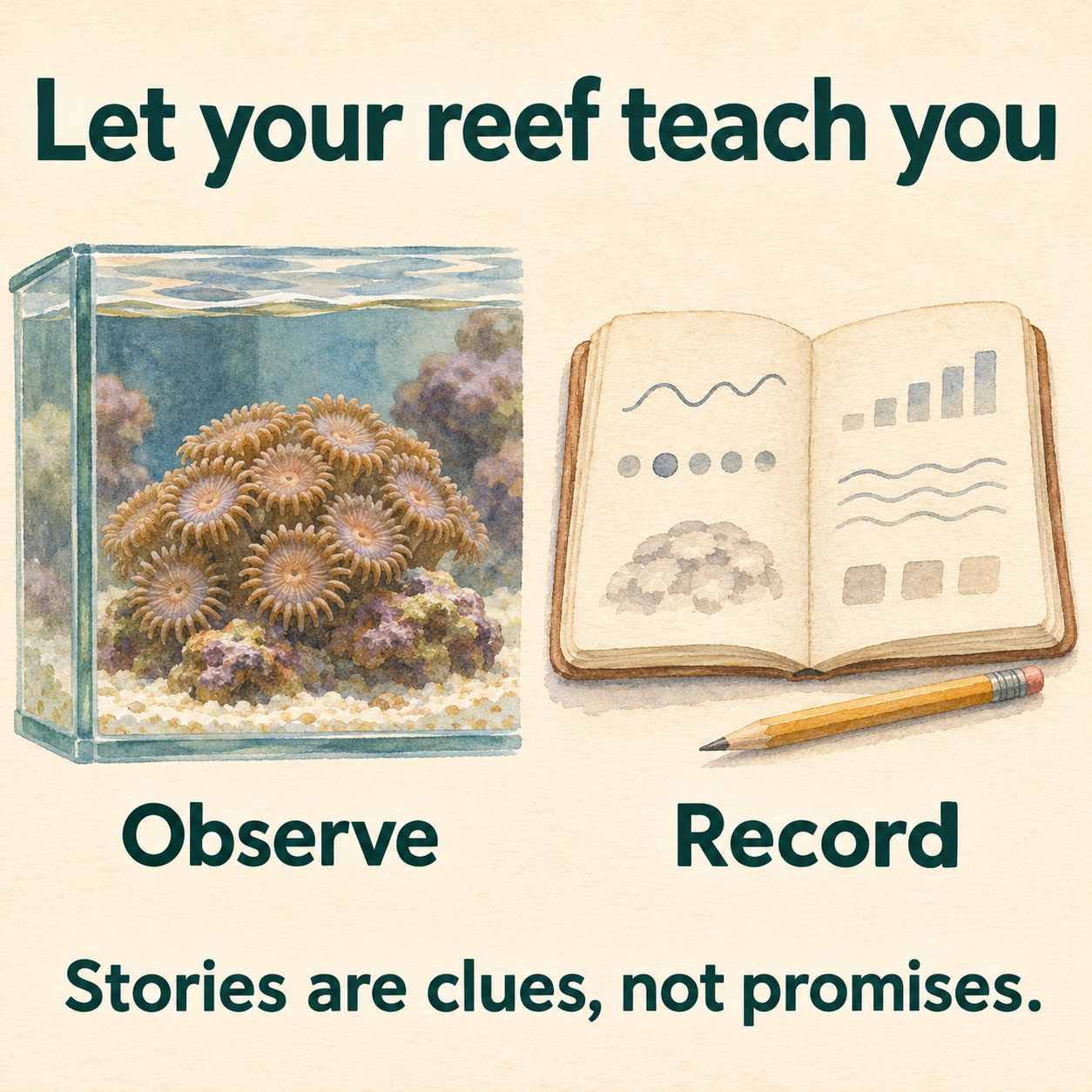
Can feeding help a zoa garden? Real keepers do not all tell the same story.
On July 29, 2020, Hillerd86 posted in Reef2Reef's Zoa growth thread. After about two weeks of feeding, some zoas were opening well and making new heads. But phosphate was creeping up, so feeding was reduced. Two frags still looked less settled. The post does not prove that food caused the improvement. [Read Hillerd86's report](https://www.reef2reef.com/threads/zoa-growth.736172/#post-7777751)
On December 12, 2020, blasterman reported a different split in Reef2Reef's Reef roids thread. Larger palys appeared to benefit from target feeding. Smaller zoas closed in irritation, and the keeper had not noticed a growth improvement in those smaller polyps. That is one person's experience, not a rule that small zoas never feed. [Read blasterman's report](https://www.reef2reef.com/threads/reef-roids.783871/#post-8317674)
These are aquarium reports, not controlled trials. They concern zoas and palys generally, not verified Grouchy Green colonies. Different animals, lamps, water and feeding amounts can lead to different results. Stories are clues, not promises.
Make your own tiny field notebook. Photograph the same patch under the same lighting. Note the date, your test results and anything you changed. When it is safe to wait and observe, change one thing at a time. Your colony's next chapter is worth watching.
Field Notes
Related species
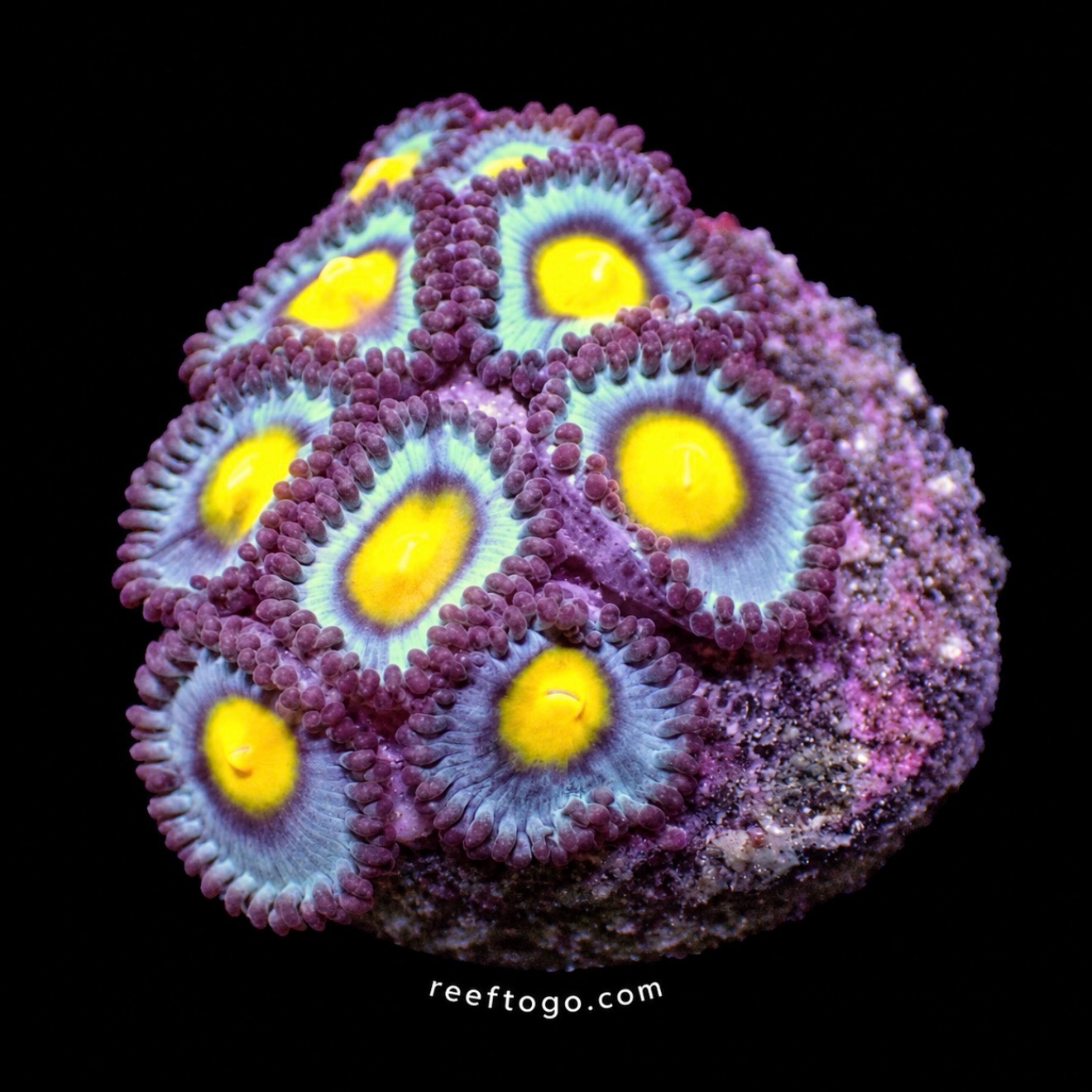
Alien Eye zoas
Zoanthus sp
Same genus
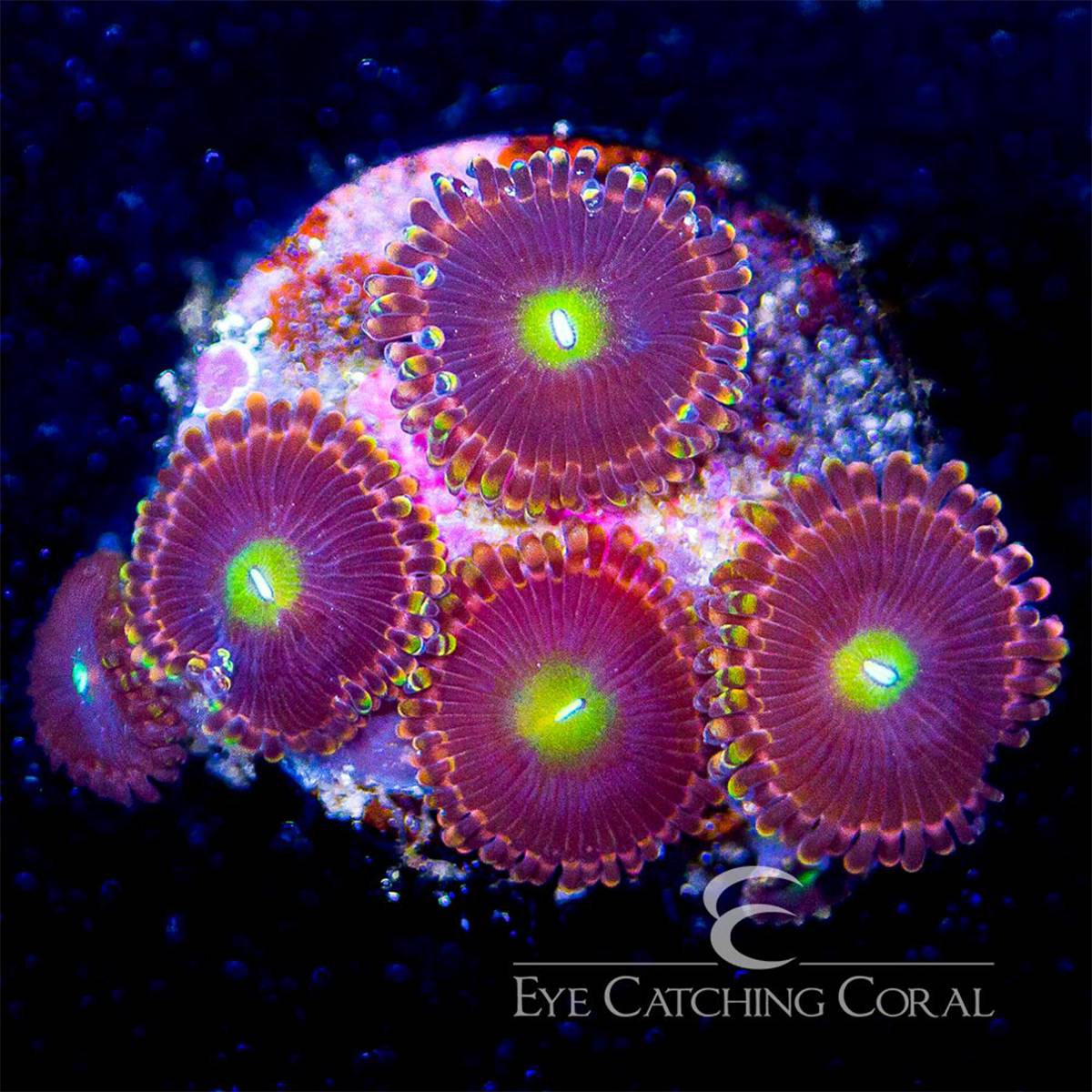
Antimatter zoas
Zoanthus sp
Same genus
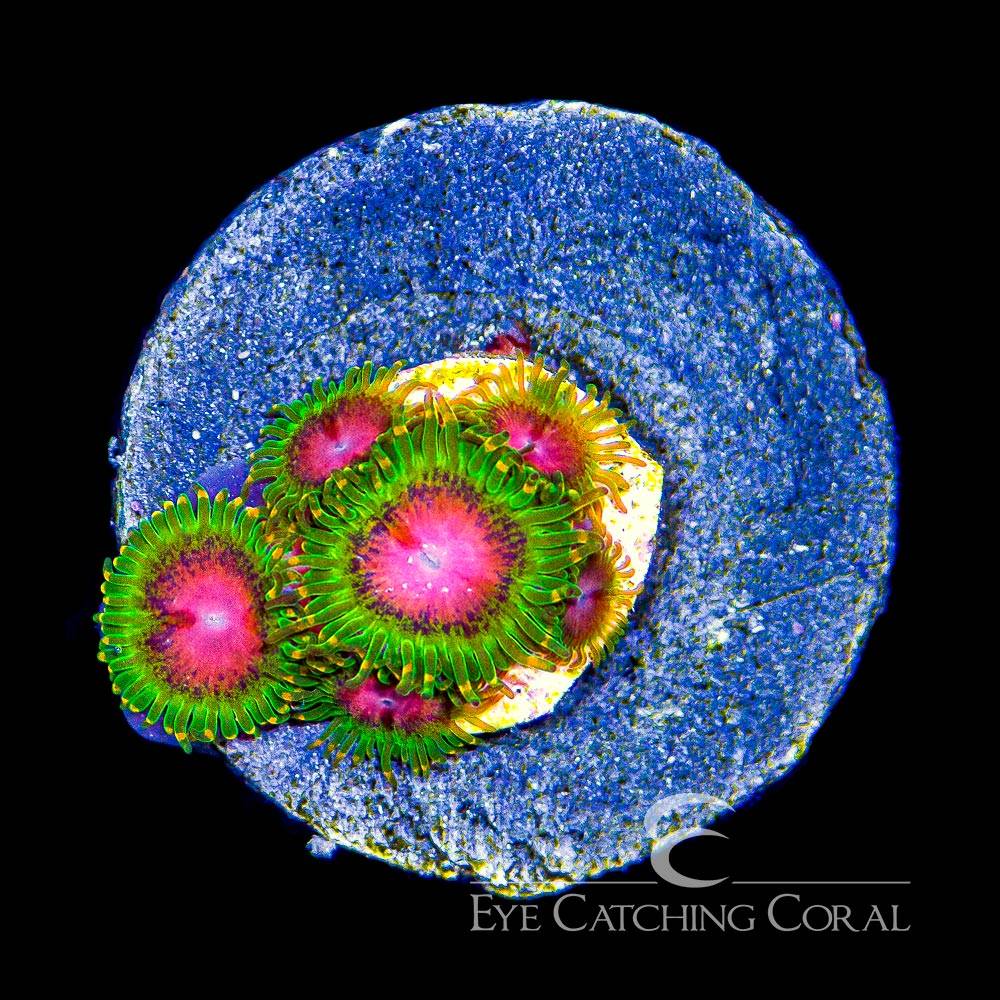
Awesome Blossom zoas
Zoanthus sp
Same genus
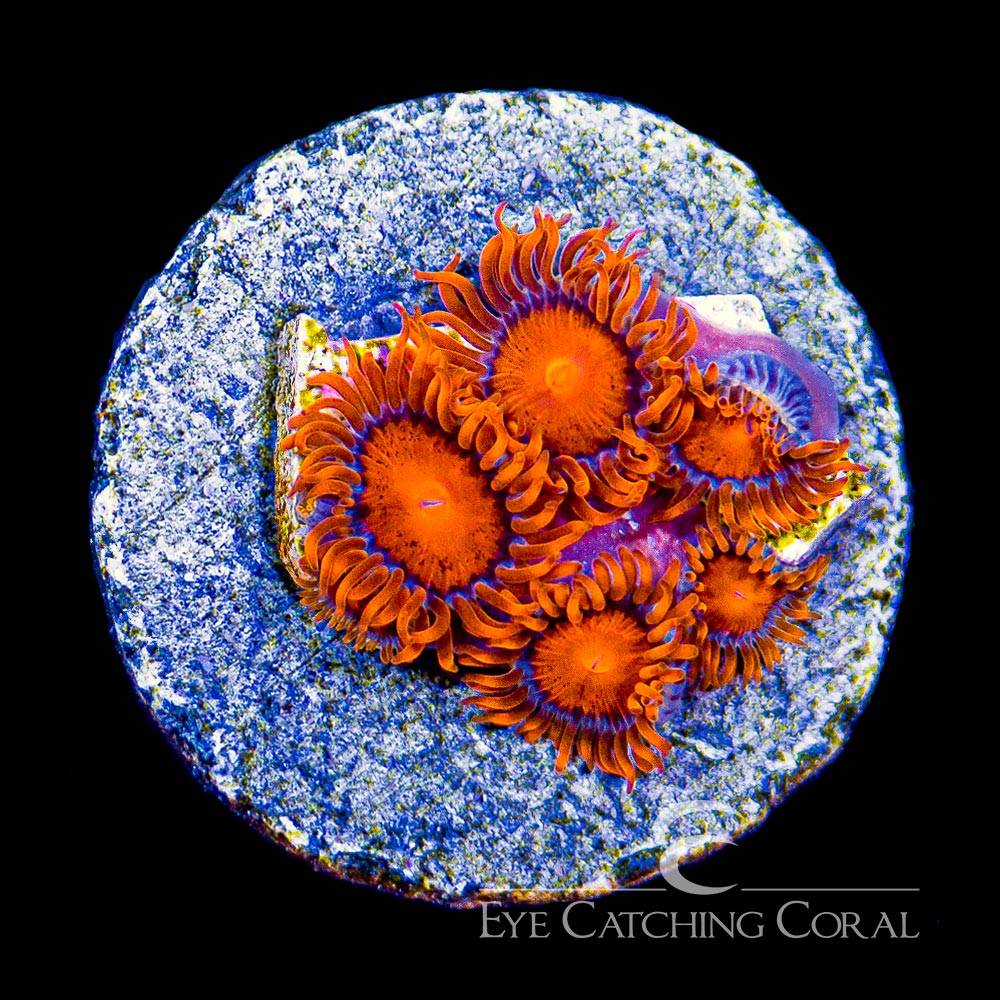
Bam Bam zoas
Zoanthus sp
Same genus
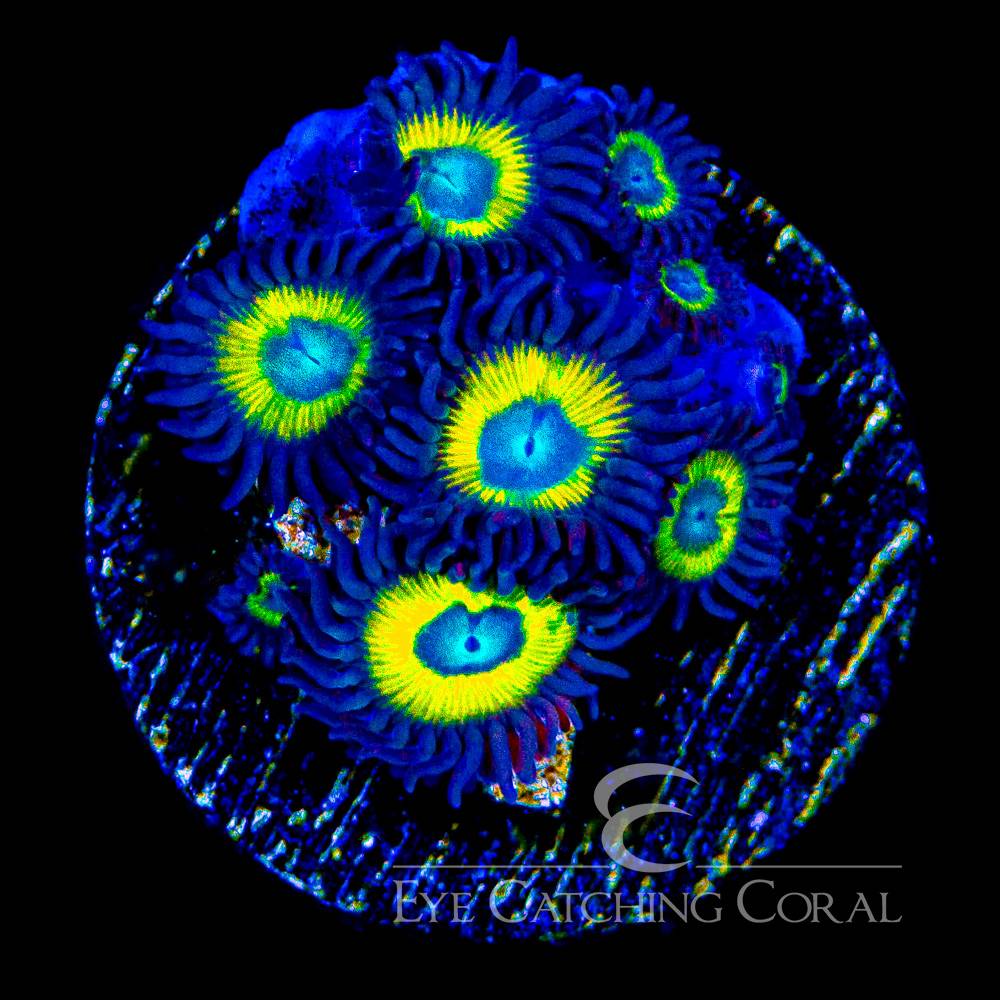
Black Bella zoas
Zoanthus sp
Same genus
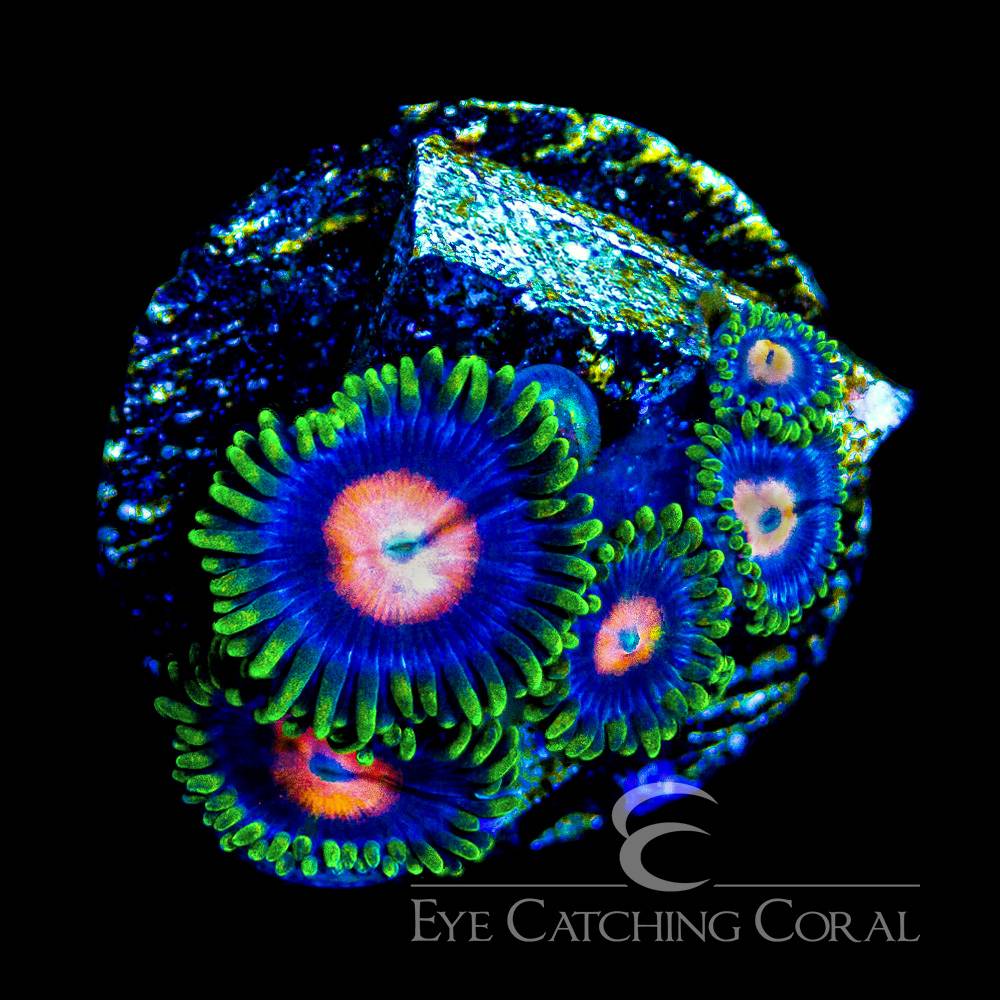
Blow Pops zoas
Zoanthus sp
Same genus
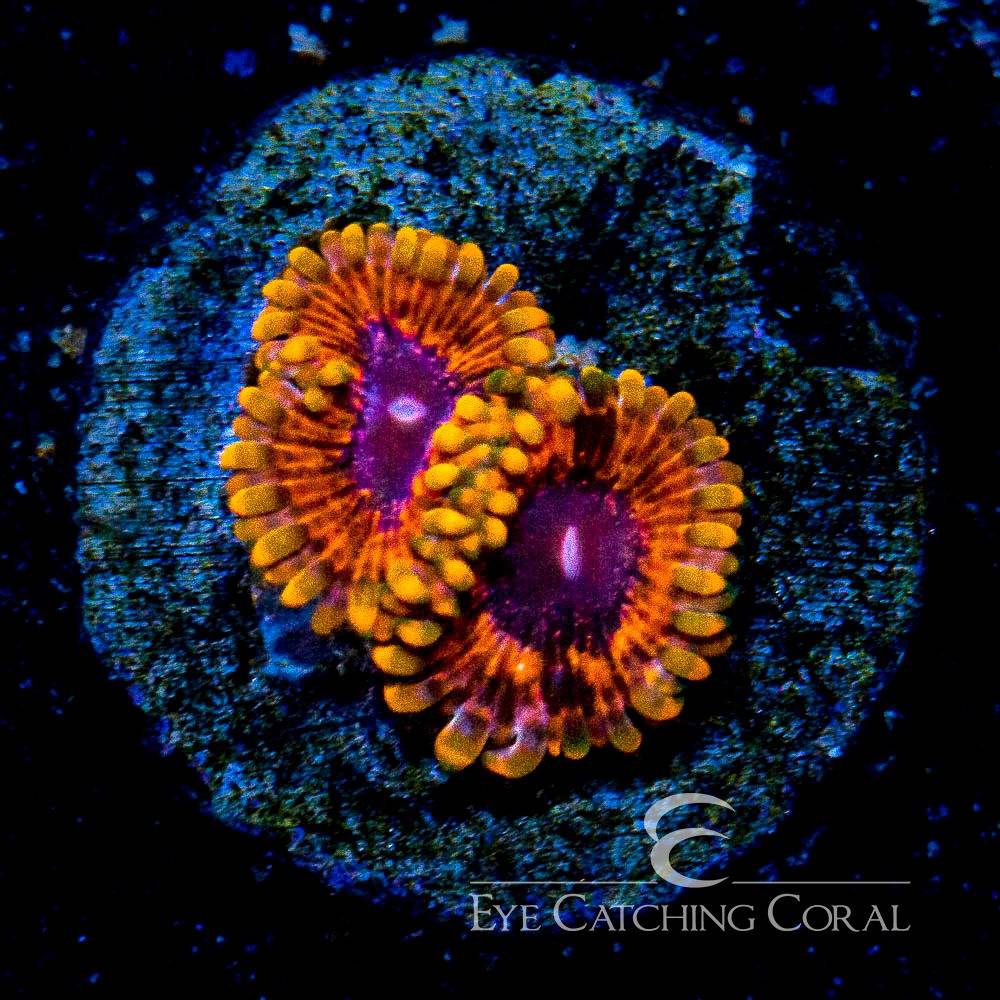
Burning Ember zoas
Zoanthus sp
Same genus
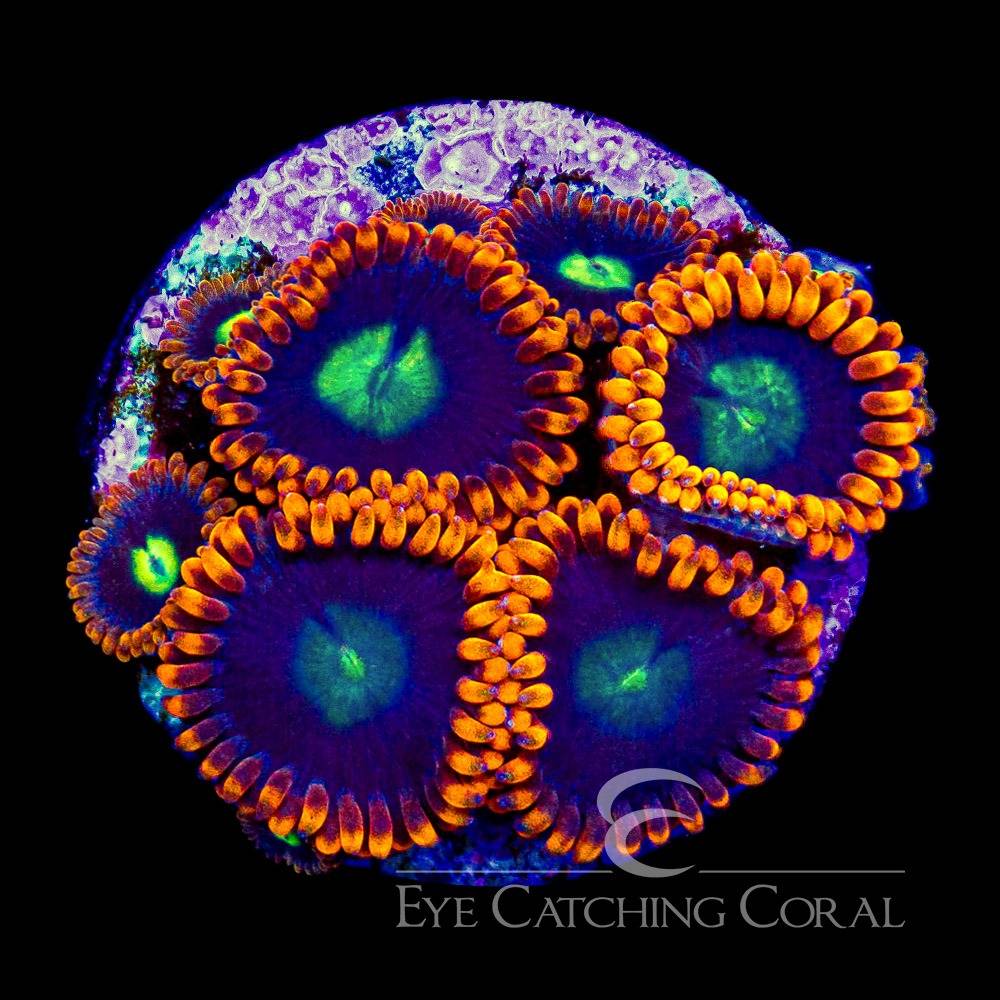
Burning Suns zoas
Zoanthus sp
Same genus