Hibiscus Coral
Pectinia paeonia

Bernard DUPONT from FRANCE · CC BY-SA 2.0 · source
Care facts
- Care
- Advanced
- Light
- Low-Medium
- Flow
- Low-Medium
- Place
- Low
- Space
- Semi-Aggressive
- Origin
- Indo-Pacific
- Growth Rate
- Slow
Gallery
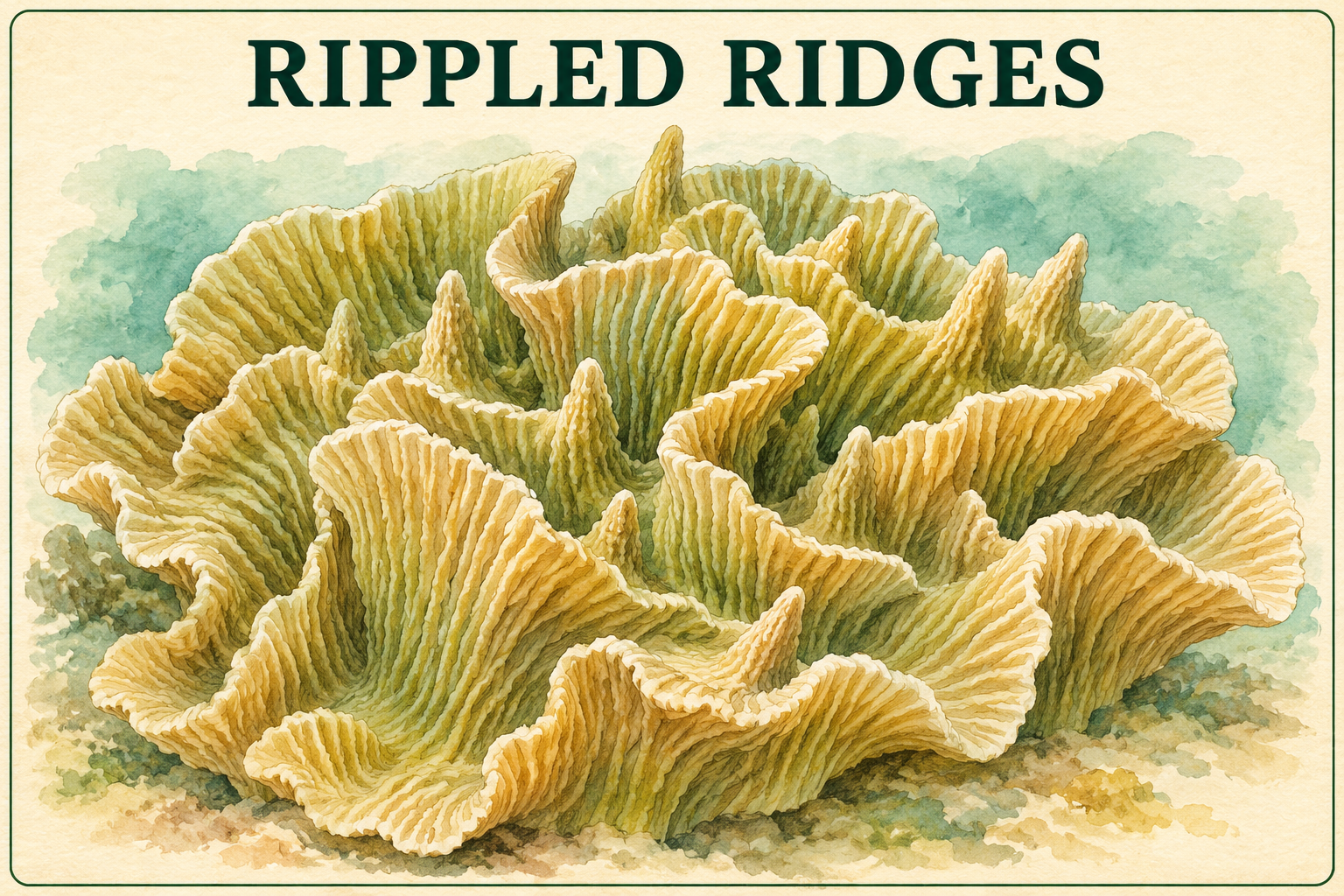
This reef flower never grew from a seed. Hibiscus coral builds thin stone folds that rise like a ruffled crown. The best view is from the side, where you can see the little peaks sticking up.
Stone petals and spires
1. A crown built by animals. Tiny coral polyps build a hard skeleton beneath their living tissue. The folds bunch together and shoot upward into short spires.
2. Take a closer look. Follow the ridges with your eyes, not your fingers. Pick up the coral by its plug or base when you need to move it. Leave the thin edges alone.
Start low and settle in
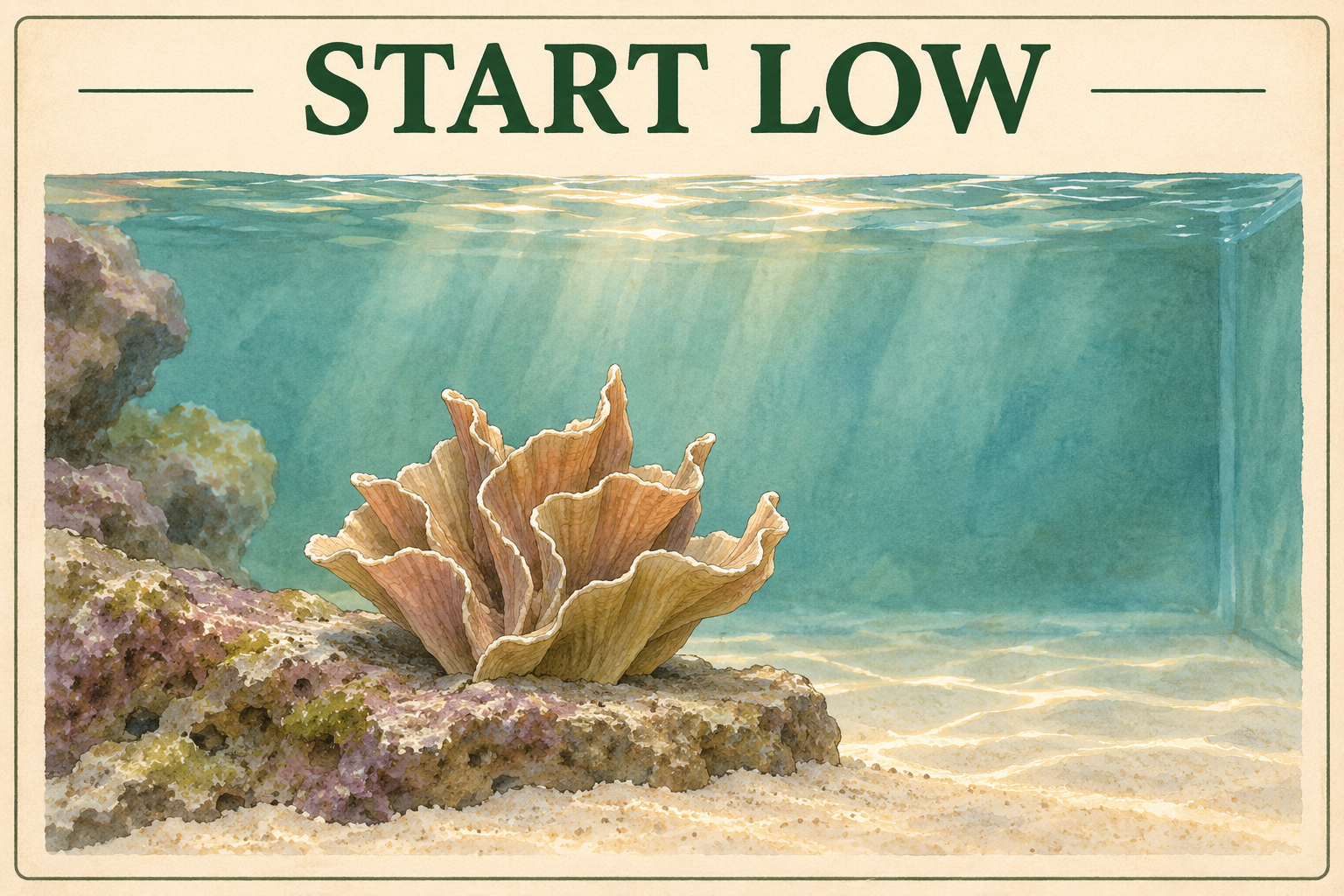
3. Skip the spotlight. Start under low to moderate light on sturdy lower rockwork. The algae inside the tissue use light, but a new frag doesn't need your brightest shelf.
4. Keep it above the sand. Set it where the base won't rock or slide. Leave enough height above the sand that a passing fish won't bury the living edge in a cloud of grit.
Wash between the folds
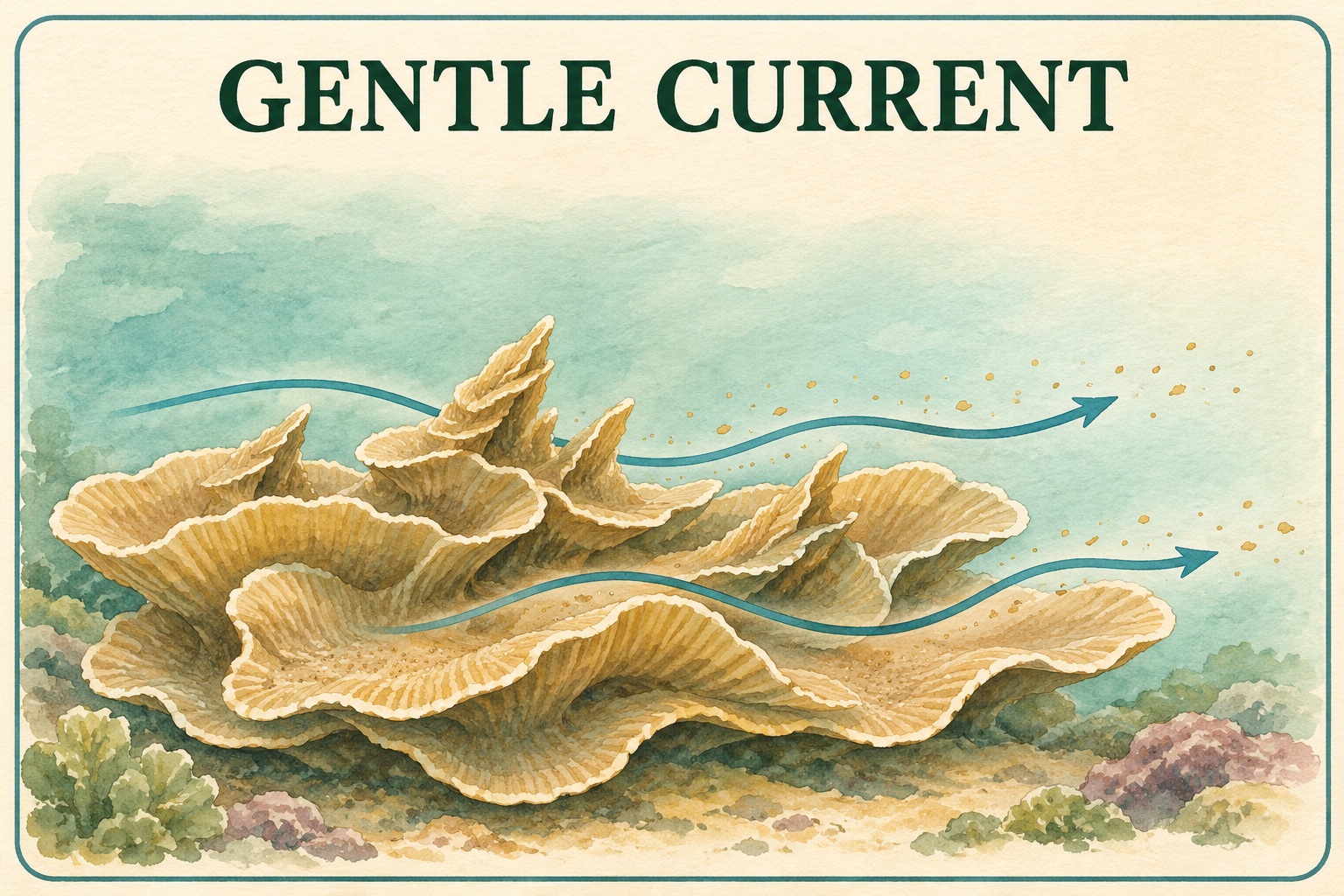
5. Use a soft, indirect current. Let water wash around the ridges. If a narrow pump jet pushes the tissue hard against the skeleton, turn the jet away.
6. Watch where grit settles. Look between the folds when you check the tank. If crumbs keep collecting there, adjust the current a little and check again.
Give it room after dark
7. The reach changes at night. Pectinia can send out stinging tentacles after lights-out. Check the colony in the dark before putting another coral close by.
8. Leave a buffer that can grow. Give both colonies open space. Check again as they get bigger, and move a neighbor if it sits within reach of the sweepers.

Keep the water steady
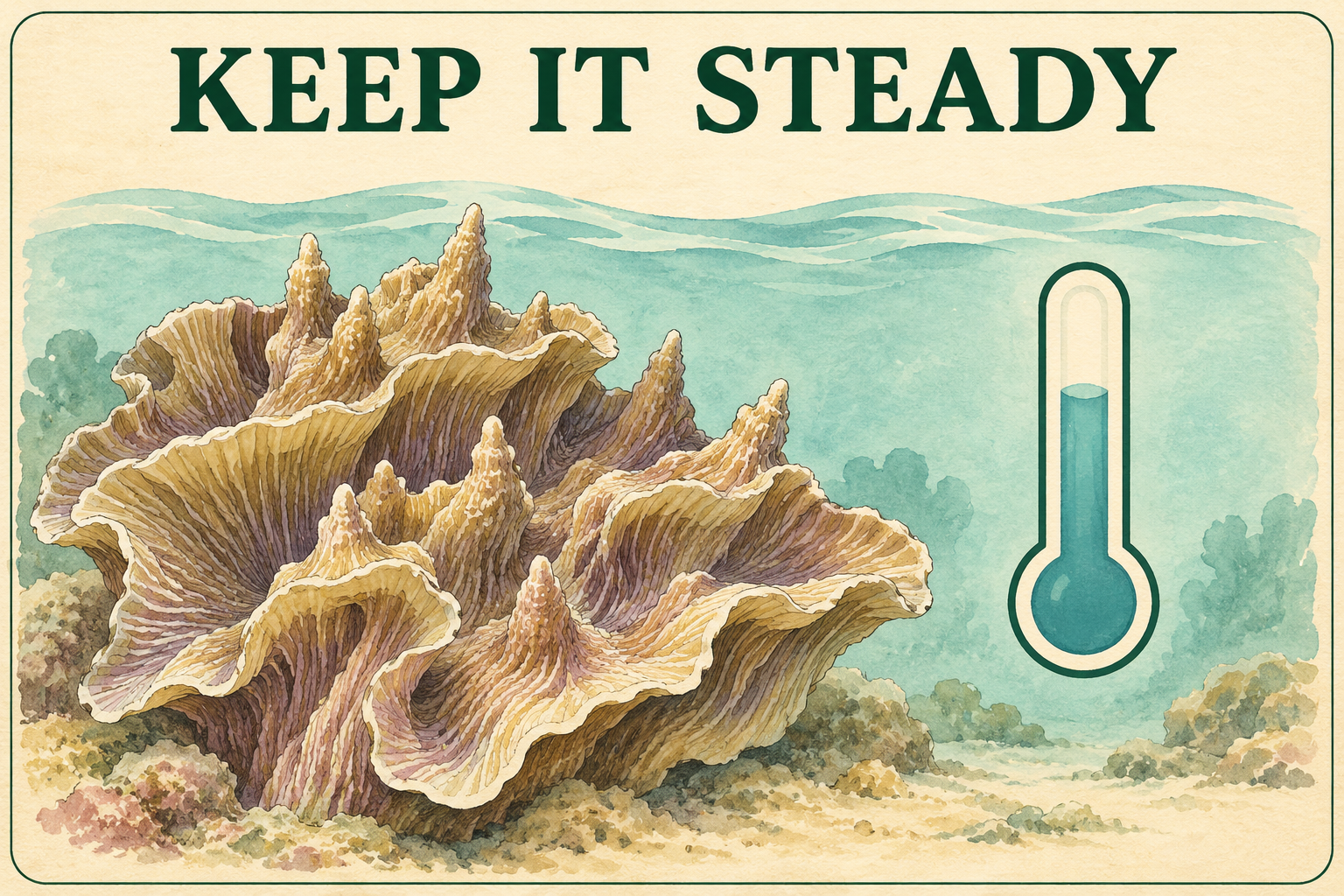
9. Test before you dose. Keep temperature and salinity steady. Track alkalinity and calcium so the coral has what it needs to build its skeleton without big swings.
10. Start with one small bite. When the feeding tentacles open, offer a tiny piece of meaty coral food. Watch it take the bite, and remove leftovers rather than burying the folds in food.
Field notes — what keepers report
11. Two setups worked. A rainbow Pectinia keeper saw the coral puff up in low light and low flow near the bottom. A Space Invader keeper reported strong growth in moderate light and low flow. These are reports about trade Pectinia, not verified Hibiscus Coral specimens.
12. Growth and reach vary. One Space Invader keeper saw growth take off once the colony got bigger. Another described a piece that had done well, then started to decline. The rainbow keeper also saw long night sweepers, so check the gap in your own tank.
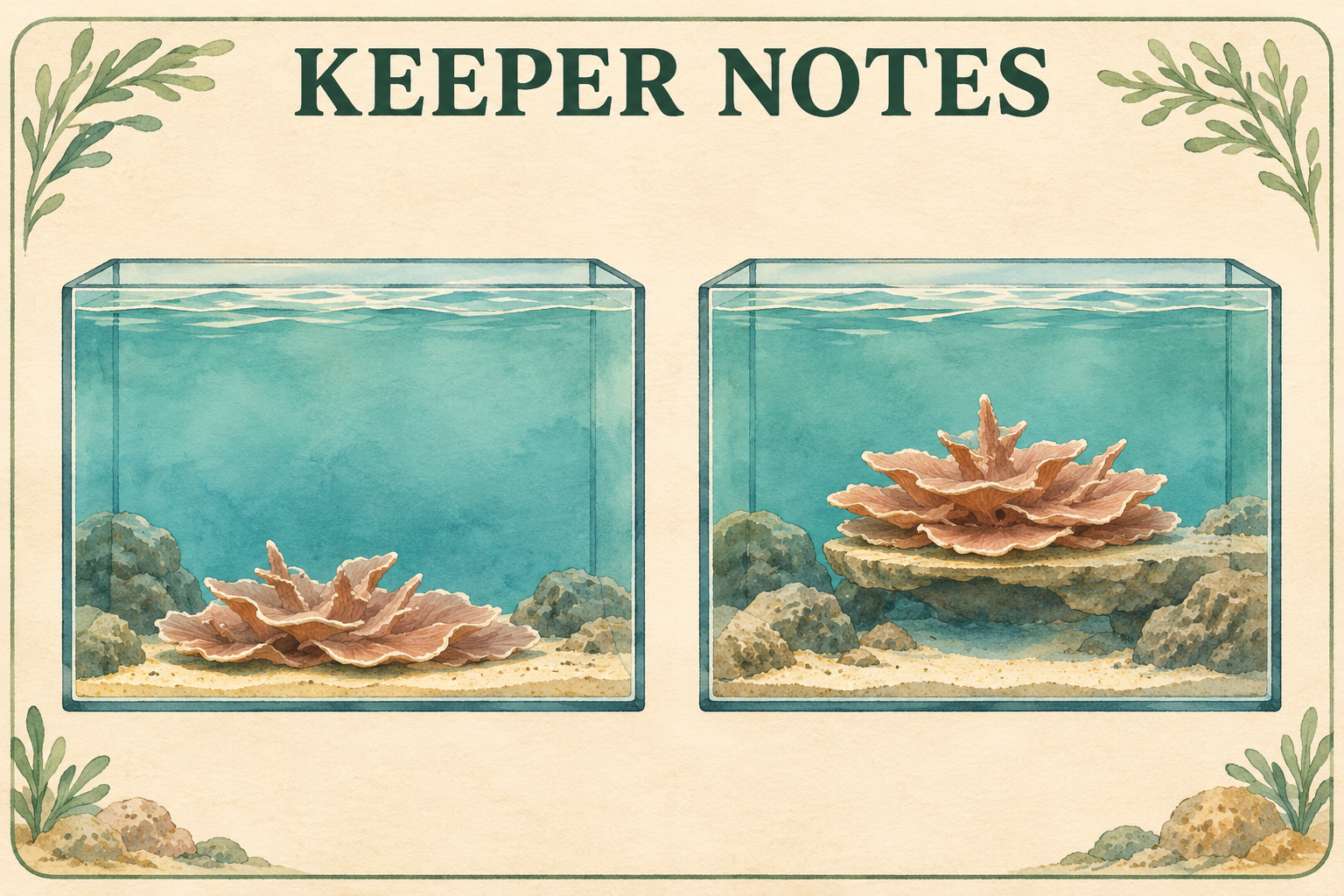
Give this crown a steady spot, a current that clears the folds, and room after dark. Take a photo today and another in a month. The new little ridges are easy to miss when you see the coral every day.
Field Notes
Related species
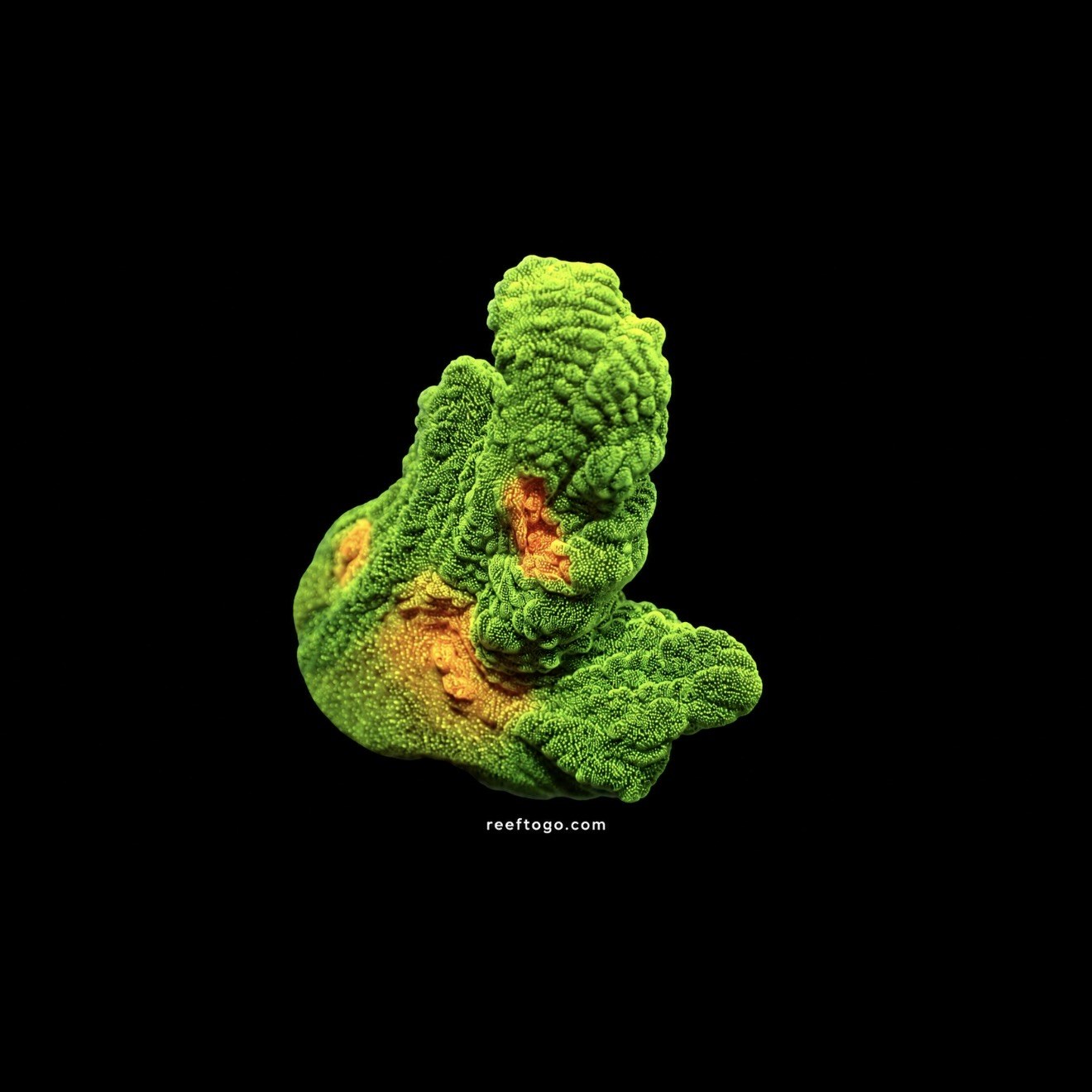
Space invader pectinia
Pectinia sp
Same genus
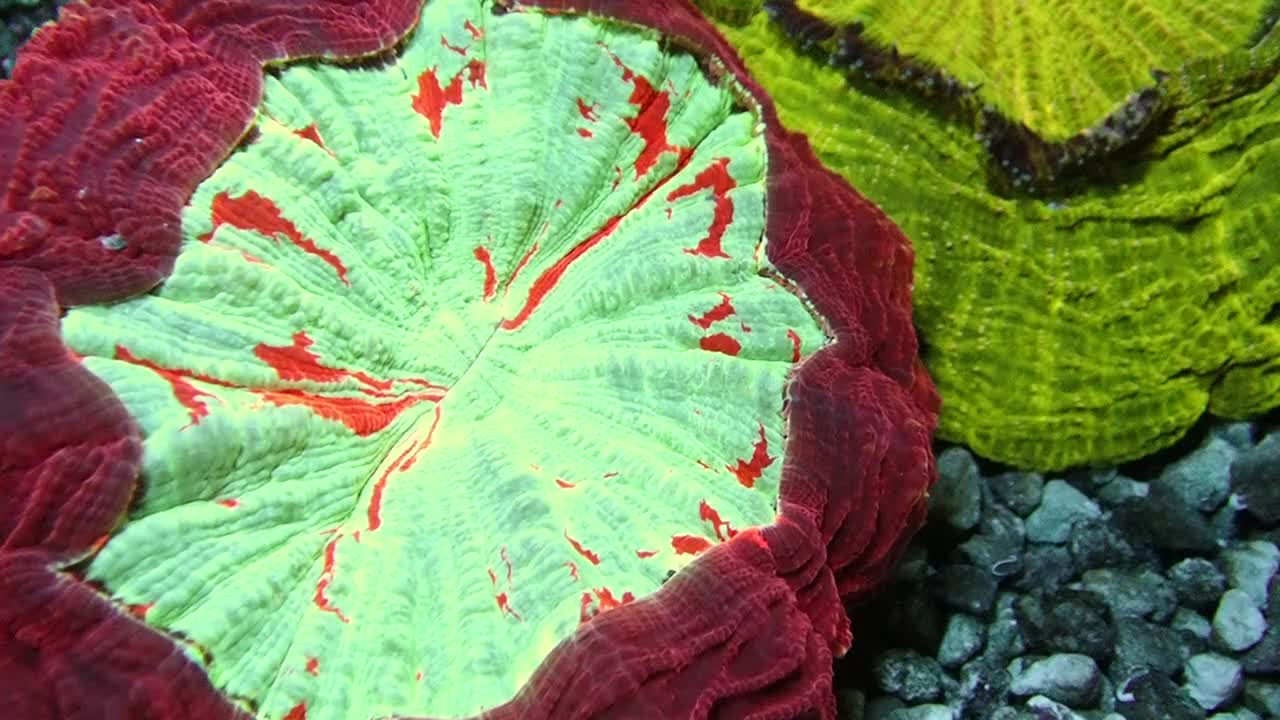
Acanthophyllia
Acanthophyllia sp.
Similar care · LPS

Alveopora Coral
Alveopora spongiosa
Similar care · LPS
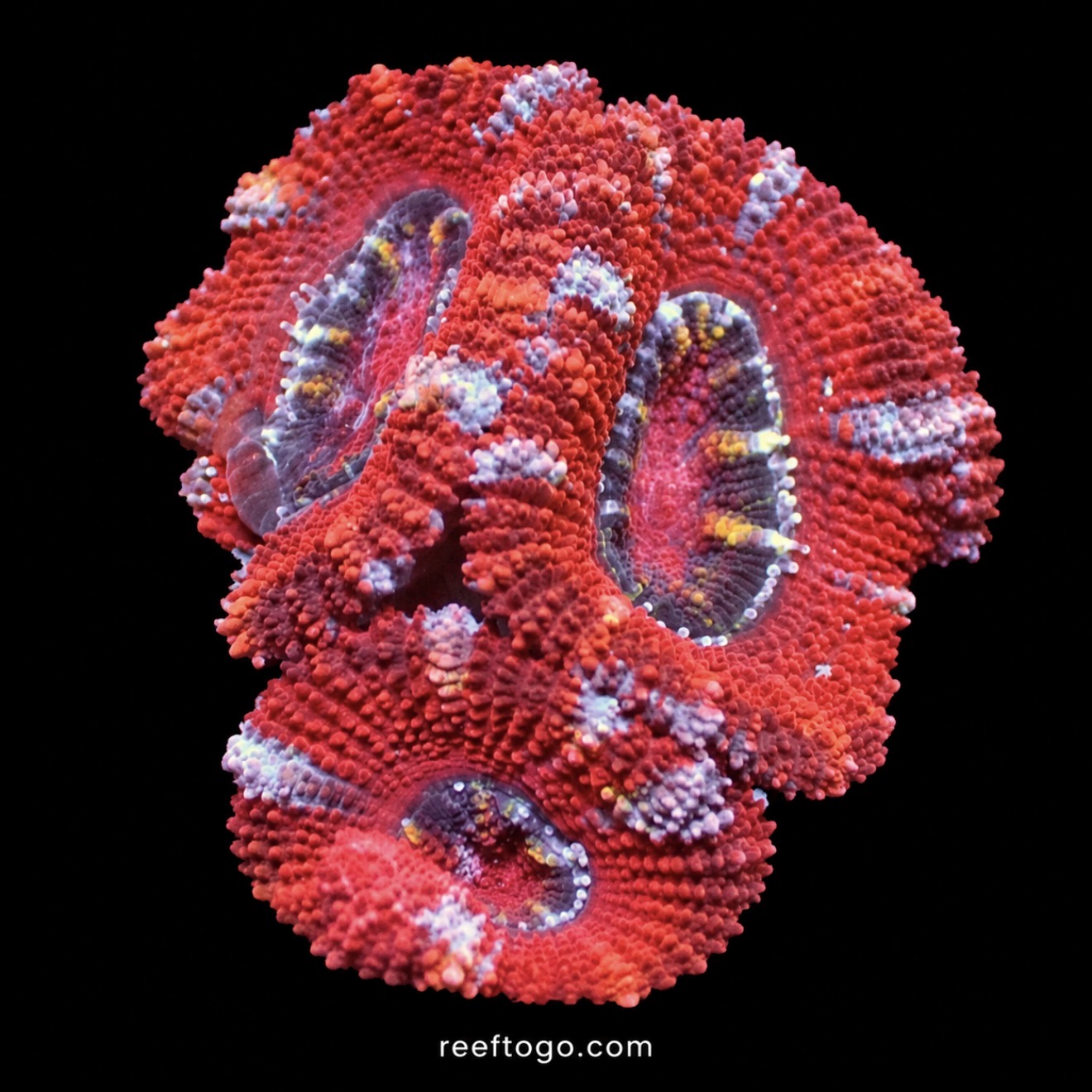
Bulls eye acan lord
Micromussa lordhowensis
Similar care · LPS
Flowerpot Goniopora
Goniopora stokesi
Similar care · LPS

Goniopora Coral
Goniopora lobata
Similar care · LPS
Indophyllia
Similar care · LPS
Lordhowensis Acan
Micromussa lordhowensis
Similar care · LPS