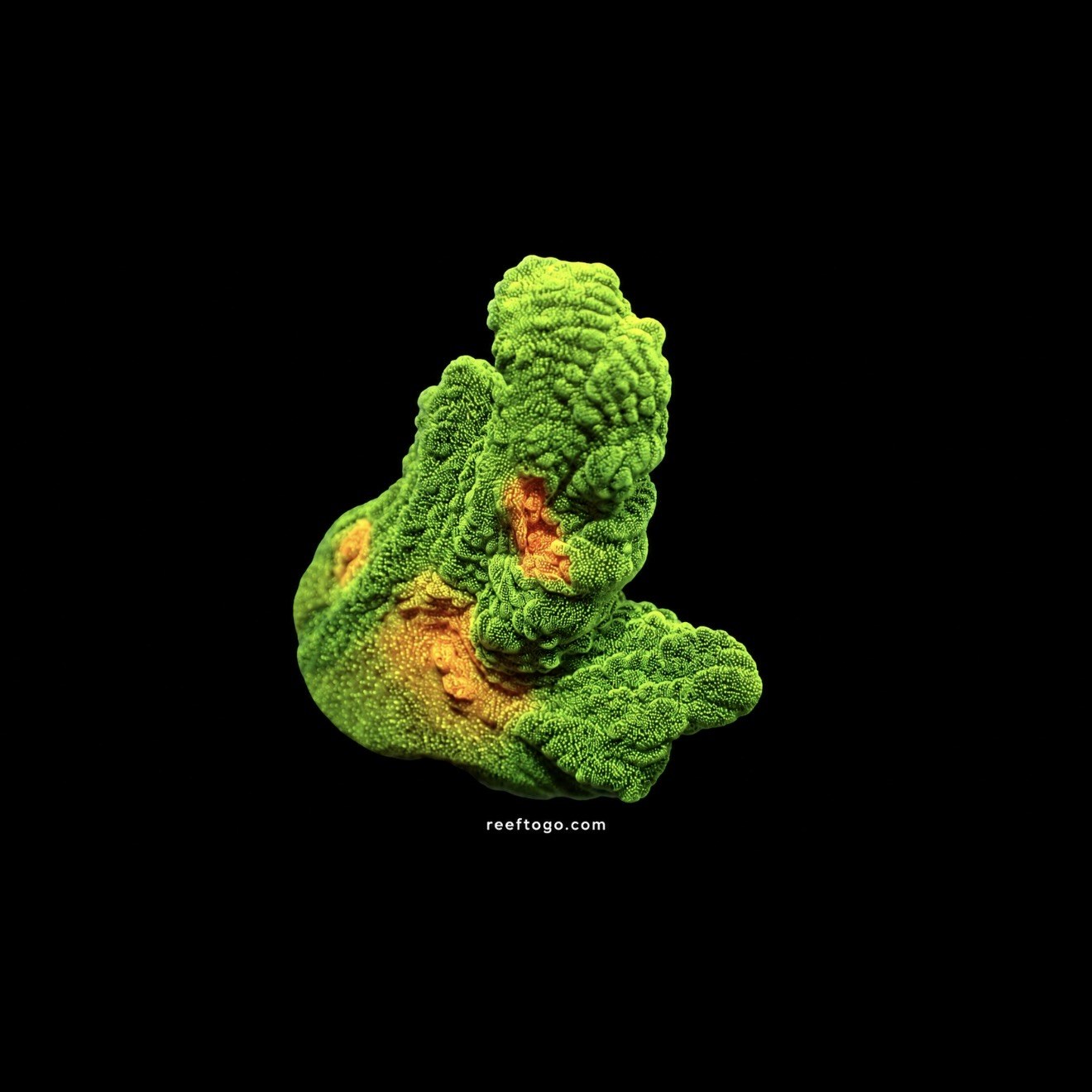
Care facts
- Care
- Intermediate
- Light
- Medium
- Flow
- Medium
- Place
- Mid
- Space
- Aggressive
- Growth Rate
- Slow
Gallery
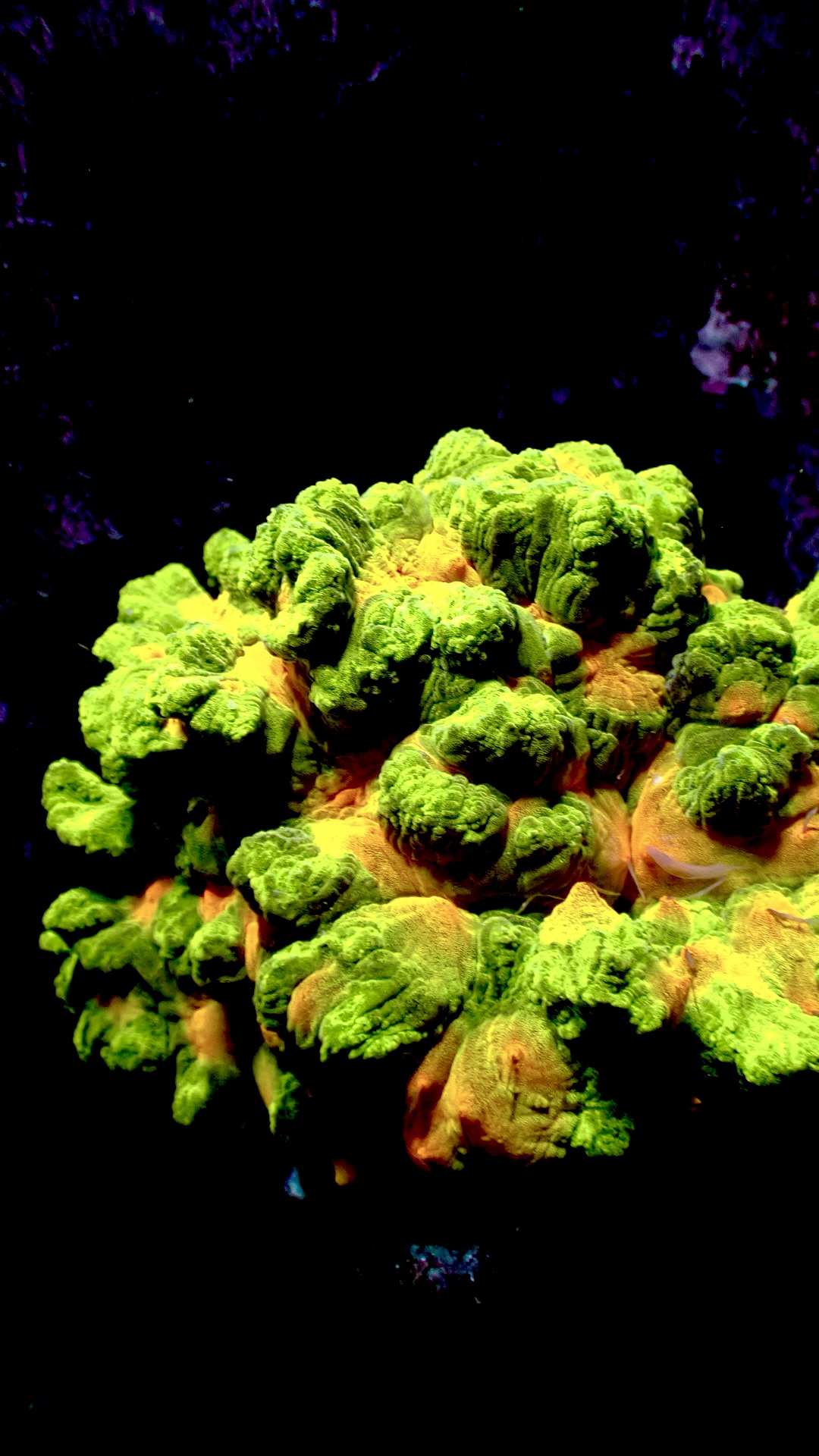
Space Invader is the colorway that carried Pectinia into the modern hobby. The skeleton grows in irregular plates and ridges studded with tall, spiky corallites, and the tissue over it glows a saturated neon green with contrasting purple-to-pink tips at the corallite crowns. Under blue light the green fluoresces at a level few LPS corals reach, and a colony in full color reads from across the room.
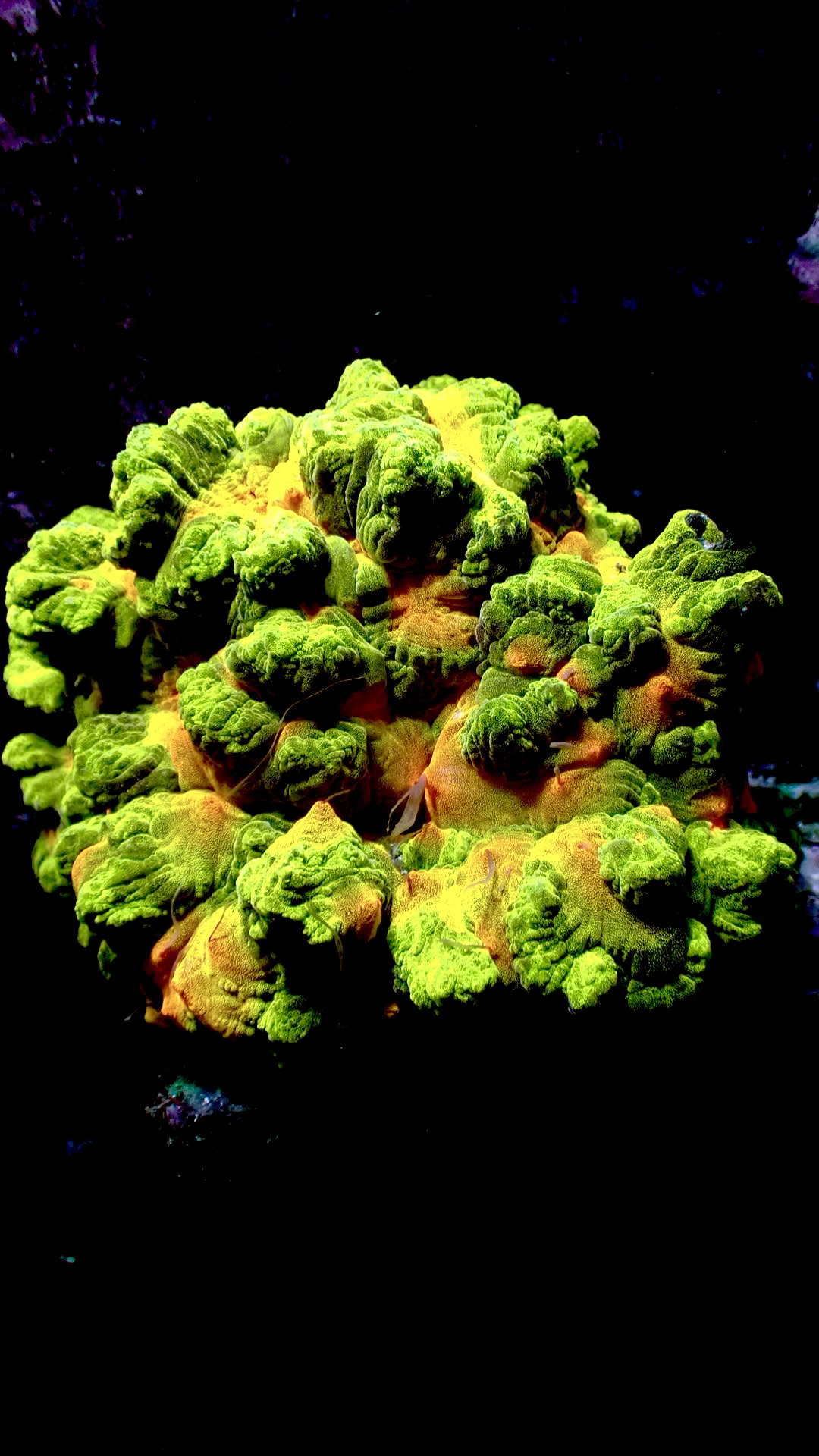
Pectinia species come from Indo-Pacific reef slopes, where they grow out of shaded walls and beneath overhangs, spreading sideways to catch light and passing plankton. Colonies extend long sweeper tentacles at night — several inches of reach — and use them to clear the space around the colony. That wild behavior sets the terms in a tank: the sting is potent, this entry rates the coral aggressive, and neighbors planted inside sweeper range will lose tissue.
Keep it at mid-level in medium light and medium, indirect flow. The tissue should sit plump over the ridges; flow that lifts the flesh at the edges, or light strong enough to pale the green, both call for a move to a shadier, calmer spot. Acclimate new pieces to brighter positions over weeks. Like the other large-polyp stony corals, it builds skeleton steadily on standard reef chemistry: 77–79°F, salinity near 35 ppt, alkalinity 8–10 dKH, calcium 400–450 ppm, with stability prized over any single number.
Leave a clear ring of three inches or more around the colony, and widen it as the plate grows — growth is slow but relentless, and the sweepers lengthen with the colony. Space Invader feeds after lights-out, when the small feeding tentacles come out around the mouths; a weekly target feeding of fine meaty coral food or mysis supports color and rim growth. Handled this way — room to sting, gentle water, regular food — a frag turns into a glowing, spined plate that anchors a mid-tank scape.
Field notes — what keepers report
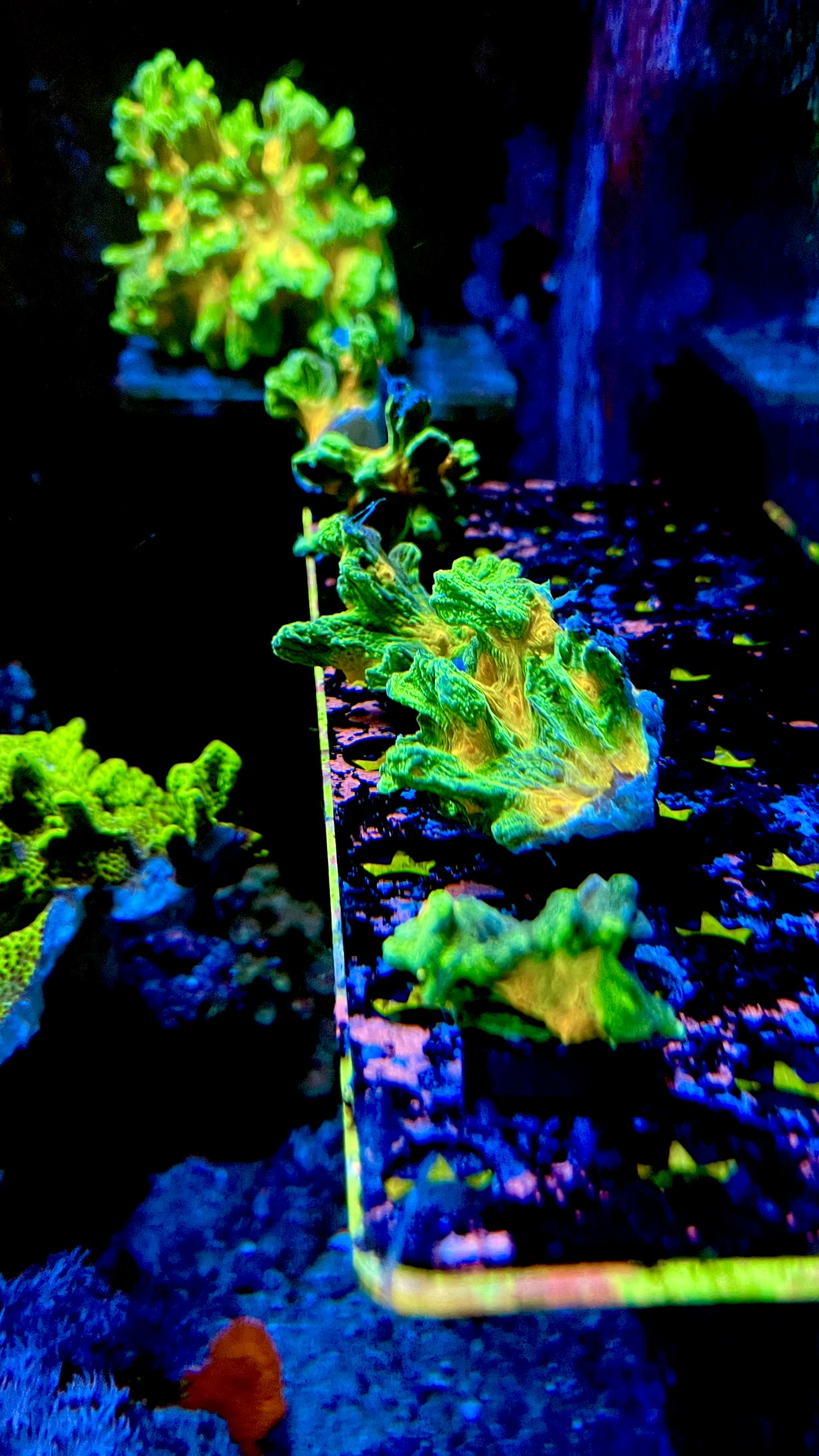
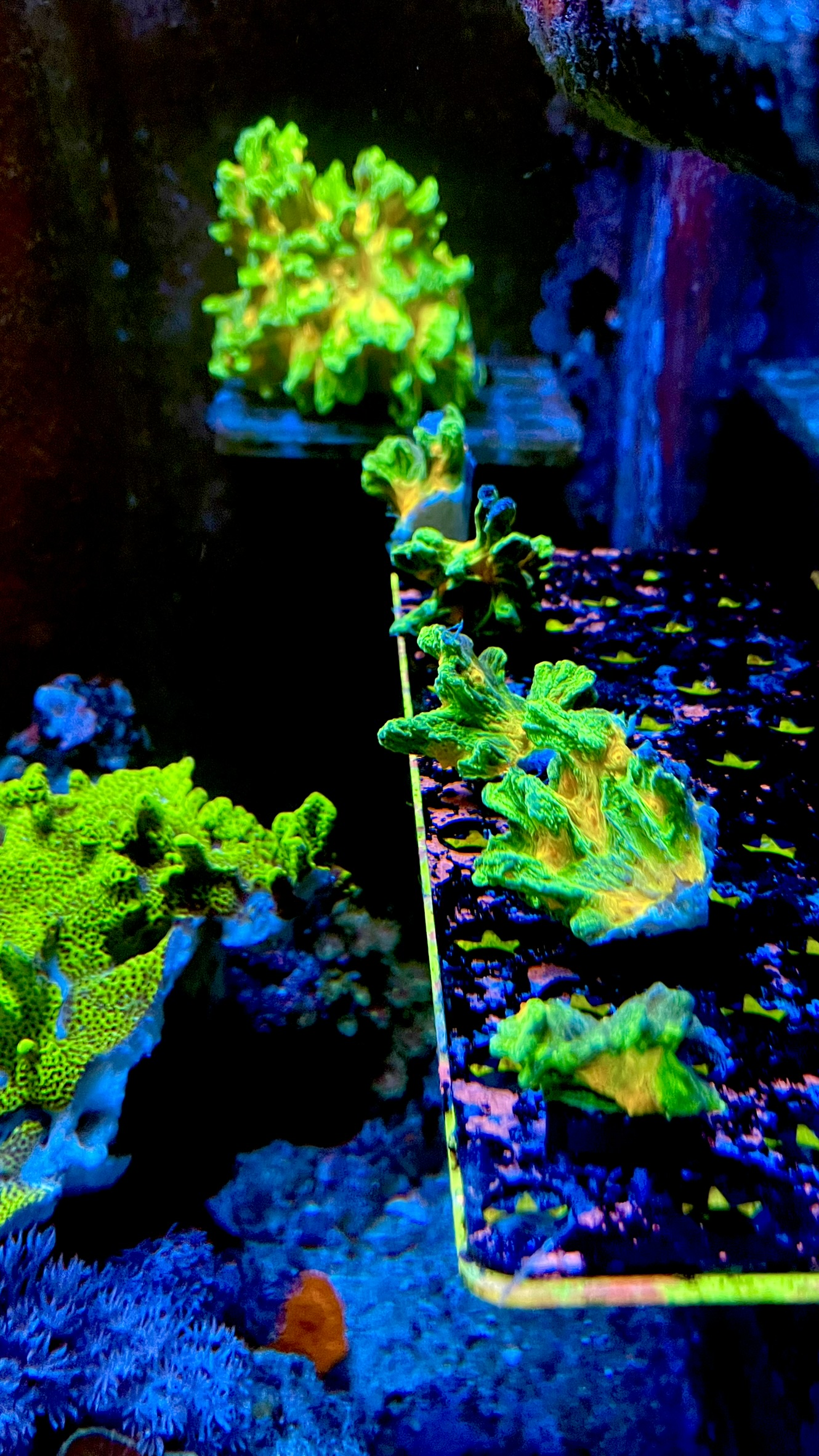
- The sweeper tentacles carry the reputation, and keeper reports add a wrinkle: they are long and potent, yet many colonies hold them in for long stretches. One keeper running four pectinia colonies, two of them Space Invaders, reports sweepers that come out only sometimes, and keeps one colony right beside a large octospawn with no incidents at all. Other keepers describe contact damage to nearly anything a sweeper reaches, so the reports split between "always armed" and "armed but usually calm."
- A placement trick makes the rounds among pectinia keepers: seat the colony under a powerhead so the current lifts the sweepers upward instead of letting them stream sideways into neighbors. Keepers also debate whether calmer flow shortens sweeper reach, with no settled answer.
- For an LPS with this reputation, keepers rate the Space Invader as forgiving. Reports describe colonies doing well high in the tank and at mid level, in modest light around 125 PAR and moderate flow, with no special feeding routine. One aquaculture facility grew its colony from a three-quarter-inch frag acquired in 2009, mounted on the back wall of an 800-gallon reef to keep it clear of prized corals.
- Growth gets a middle rating from keepers: steady and visible, quicker than some pectinias, and slower than famously fast growers like the Hollywood Stunner chalice.



Field Notes
Related species

Hibiscus Coral
Pectinia paeonia
Same genus
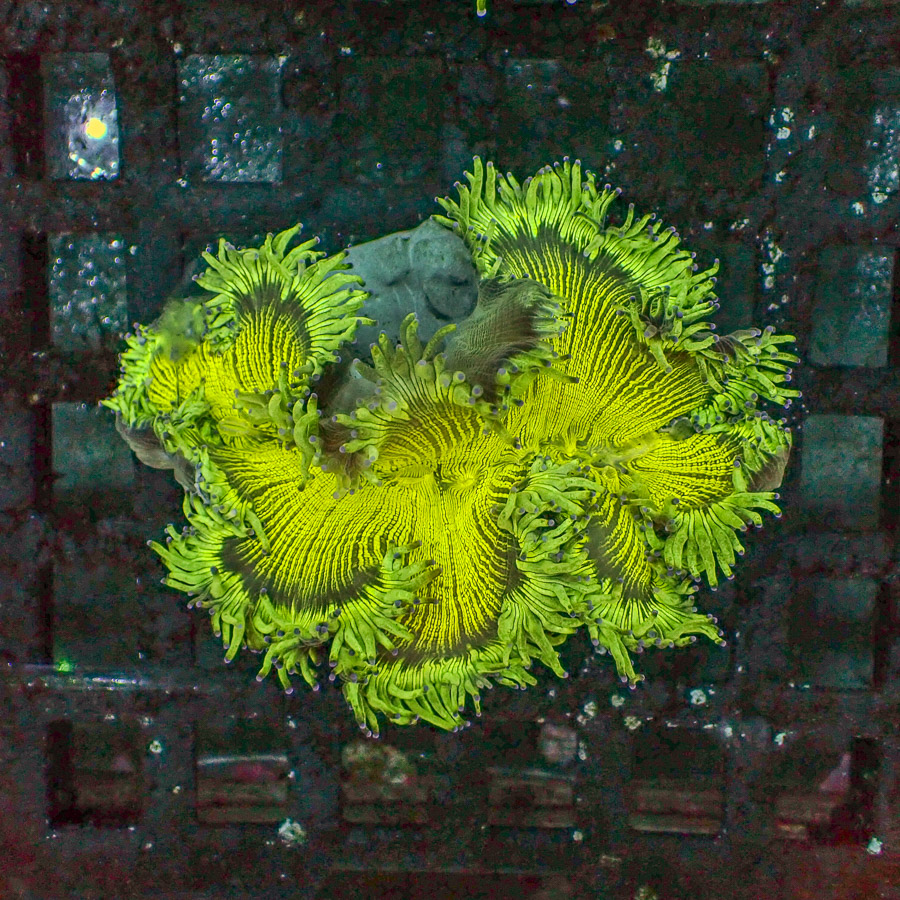
Elegance coral
Catalaphyllia jardinei
Similar care · LPS
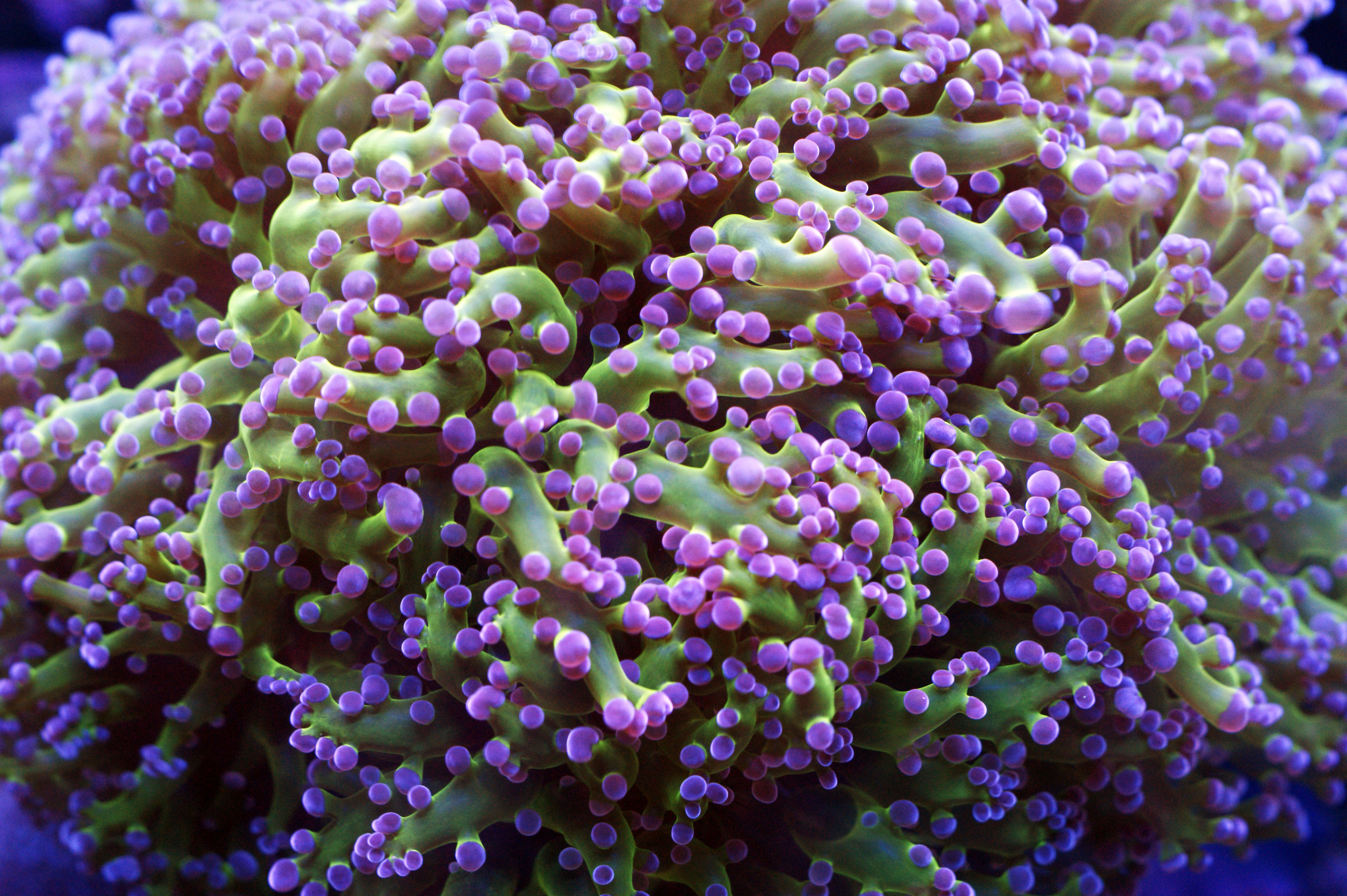
Branching Frogspawn
Fimbriaphyllia paradivisa
Similar care · LPS
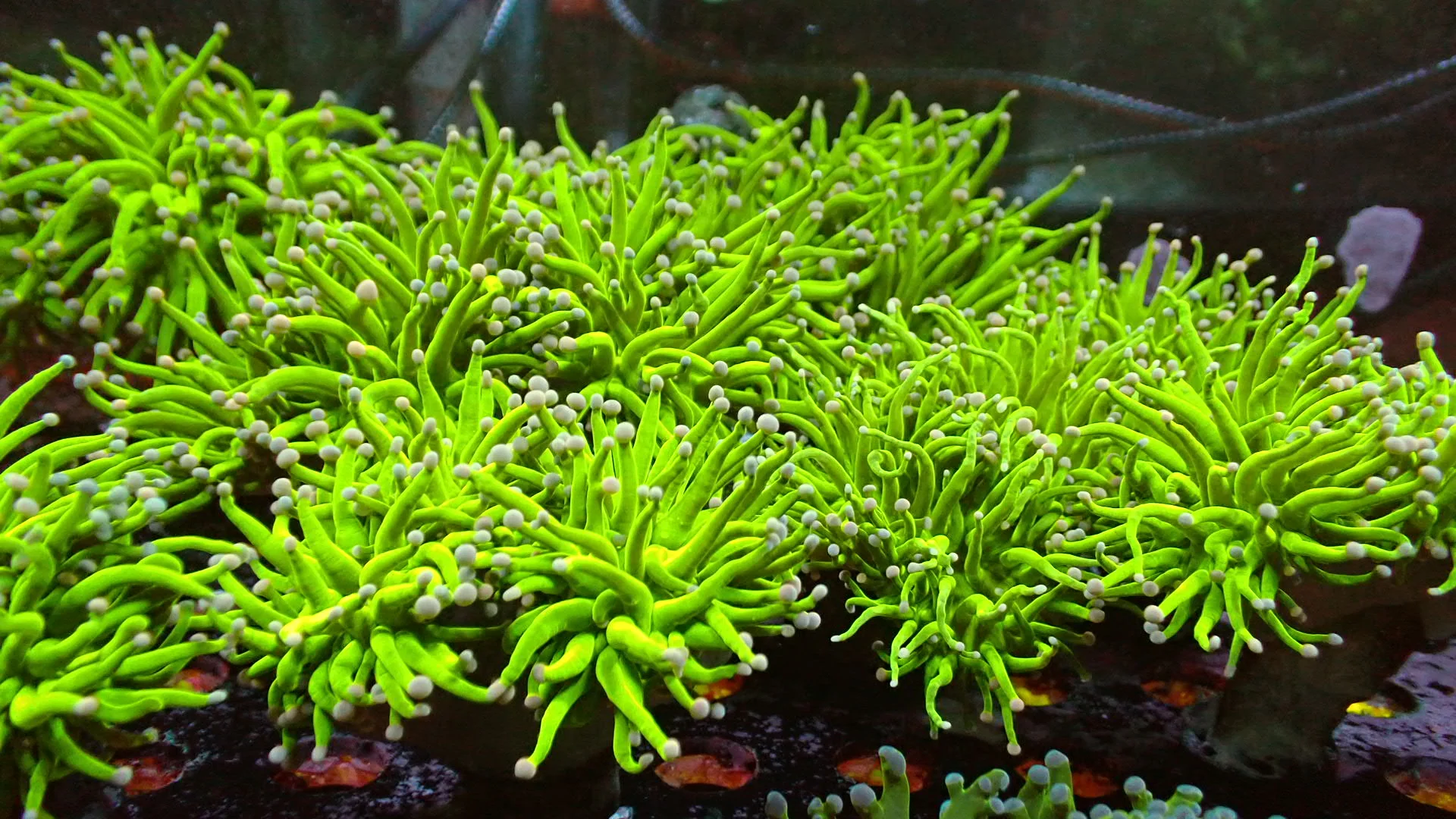
Cotton candy torch
Similar care · LPS
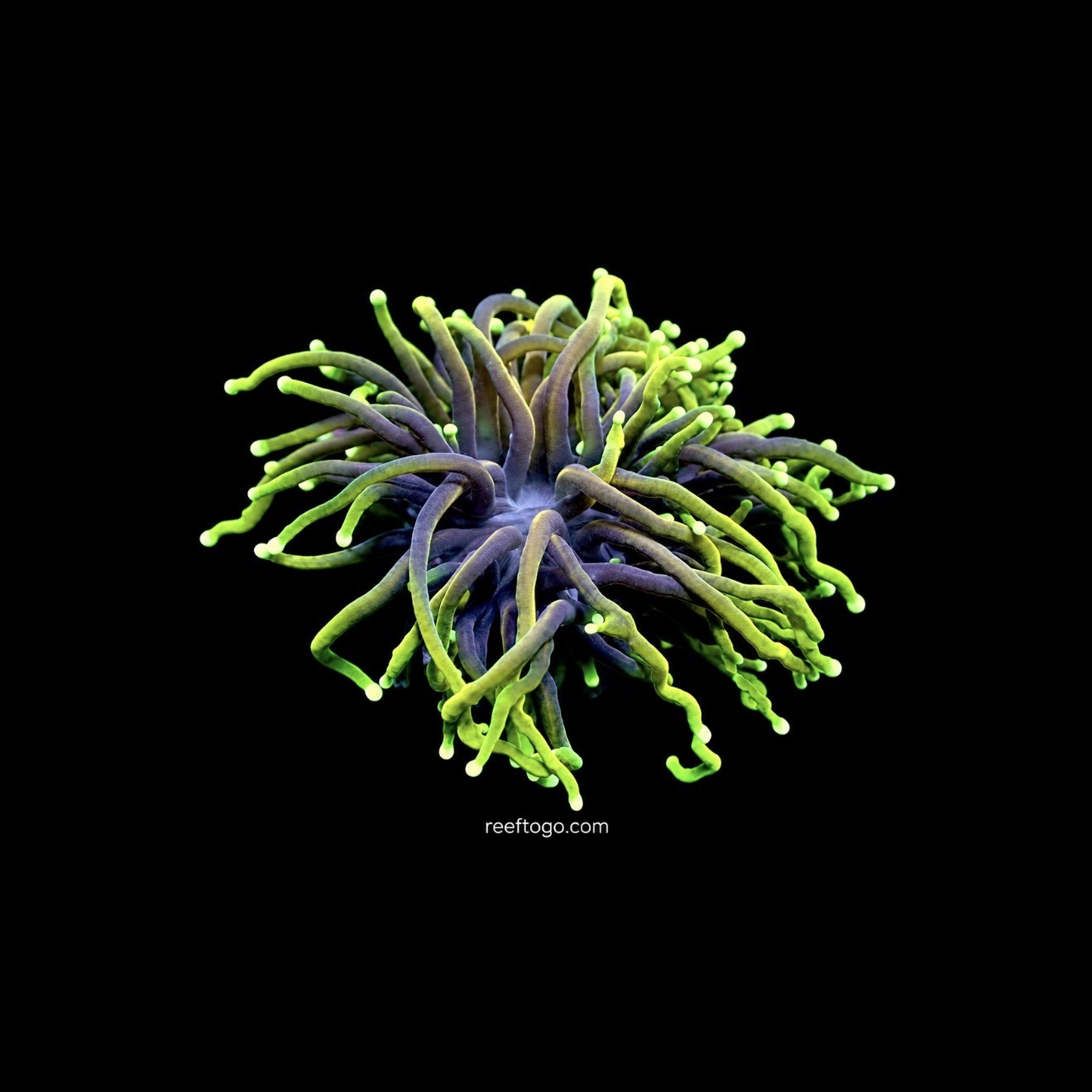
Dragon soul torch
Euphyllia glabrescens
Similar care · LPS
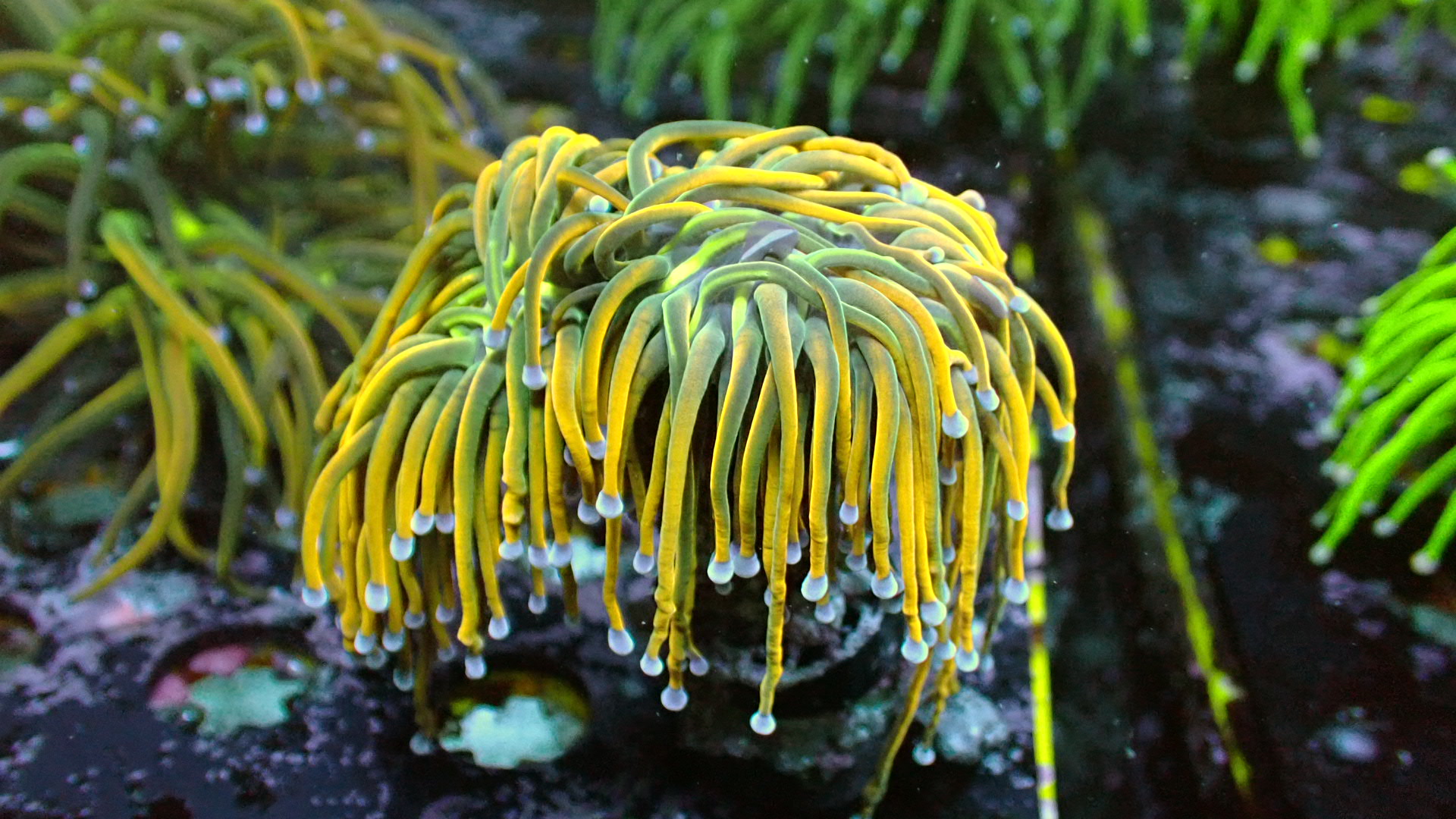
Dragon tamer torch
Similar care · LPS
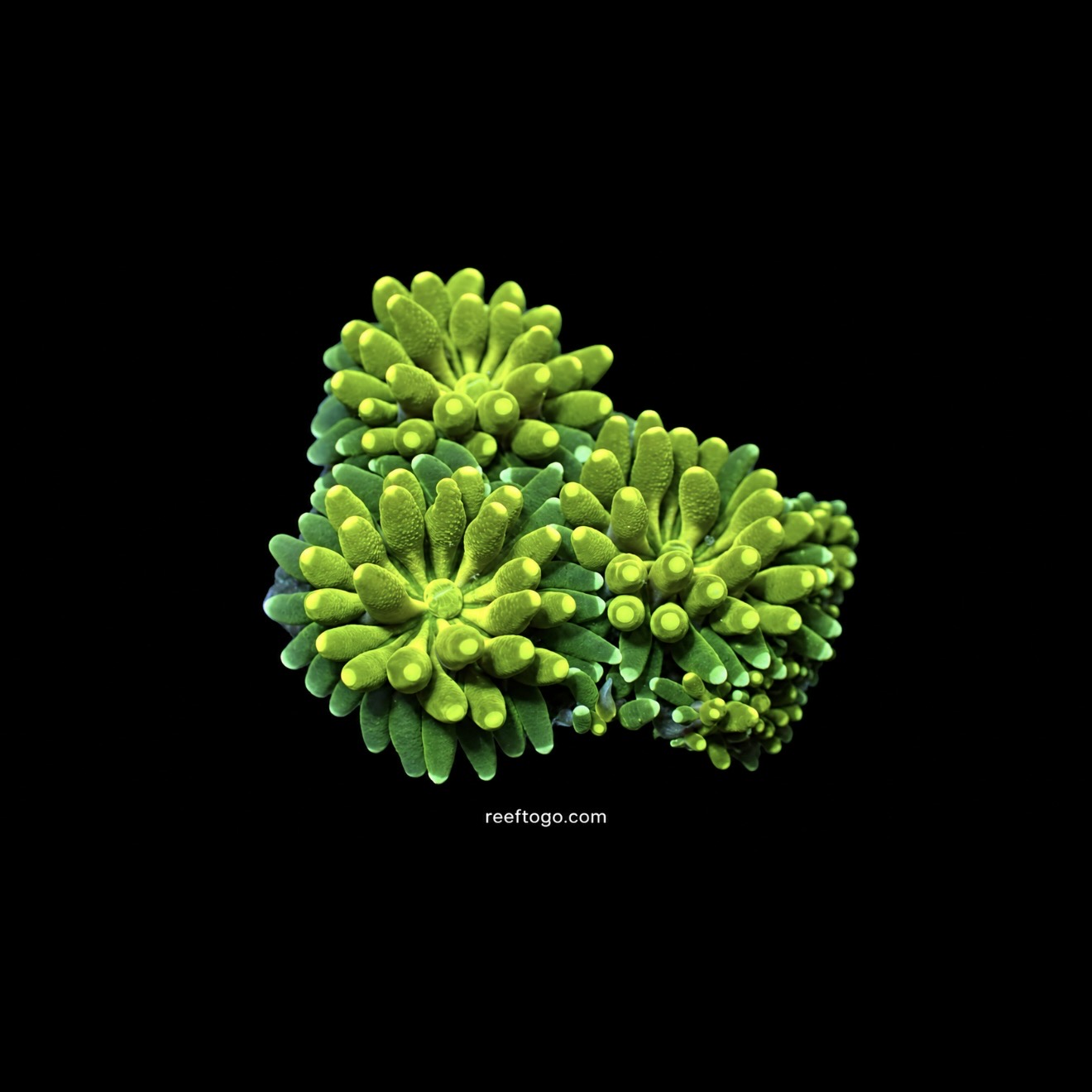
Evergreen galaxea
Galaxea fascicularis
Similar care · LPS

Galaxy Coral
Galaxea fascicularis
Similar care · LPS