Hood Coral
Stylophora pistillata

User:Haplochromis · CC BY-SA 3.0 · source
Care facts
- Care
- Intermediate
- Light
- High
- Flow
- High
- Place
- Top
- Space
- Peaceful
- Growth Rate
- Moderate
Gallery
A fuzzy coral built from stone! Hood Coral grows sturdy branches with rounded ends, like a miniature paw. Look closer and the surface comes alive with tiny polyps. Give Stylophora pistillata bright light, moving water and a steady reef, then watch its little builders get to work.
A stone-built paw
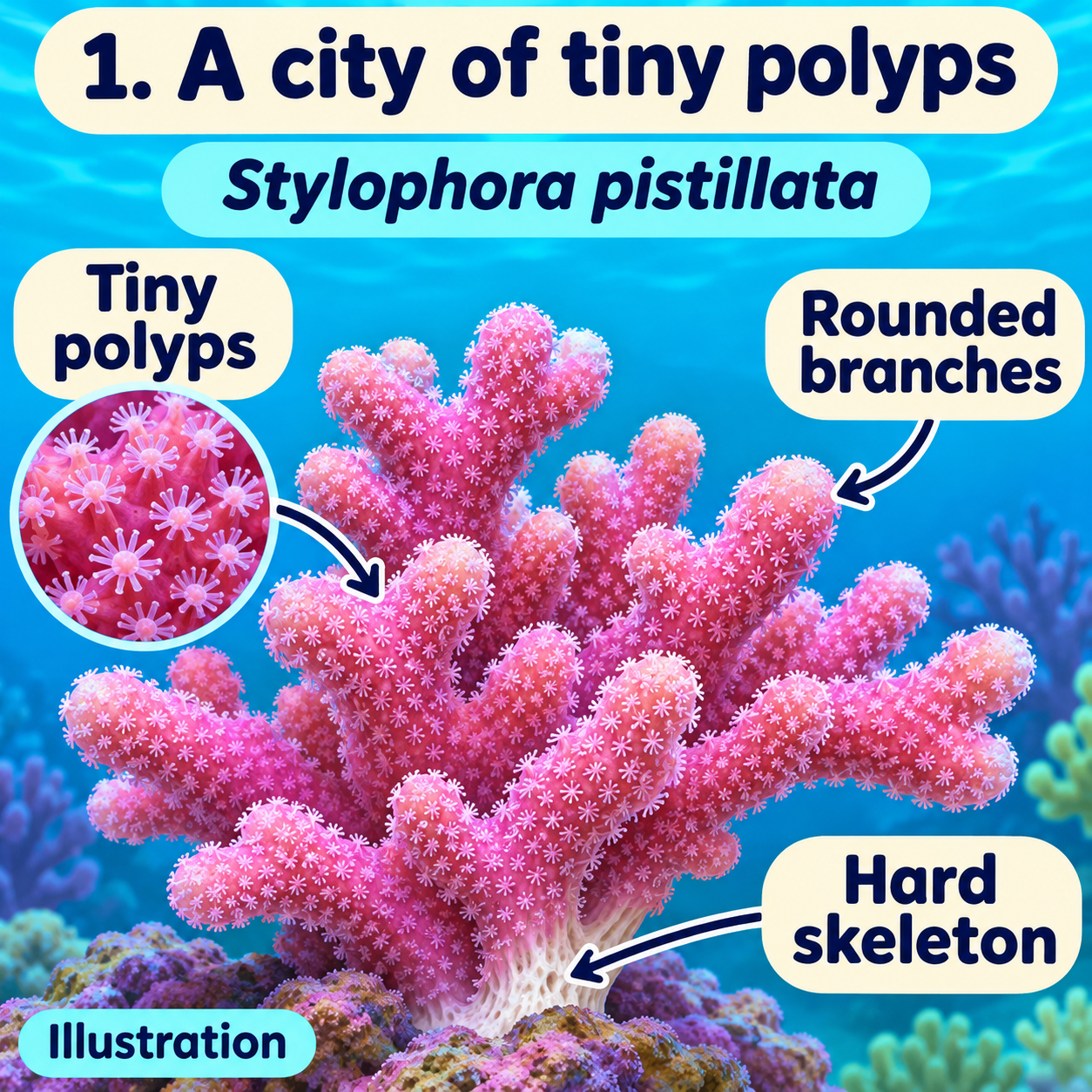
1. Tiny builders, chunky branches. Hood Coral is also called cat’s paw or club finger coral. Its blunt branches are covered with small living polyps, each sitting in a tiny skeletal cup. Some cups have a little hood over them. Cream, pink and green colonies all belong in this colorful group.
Find a bright perch
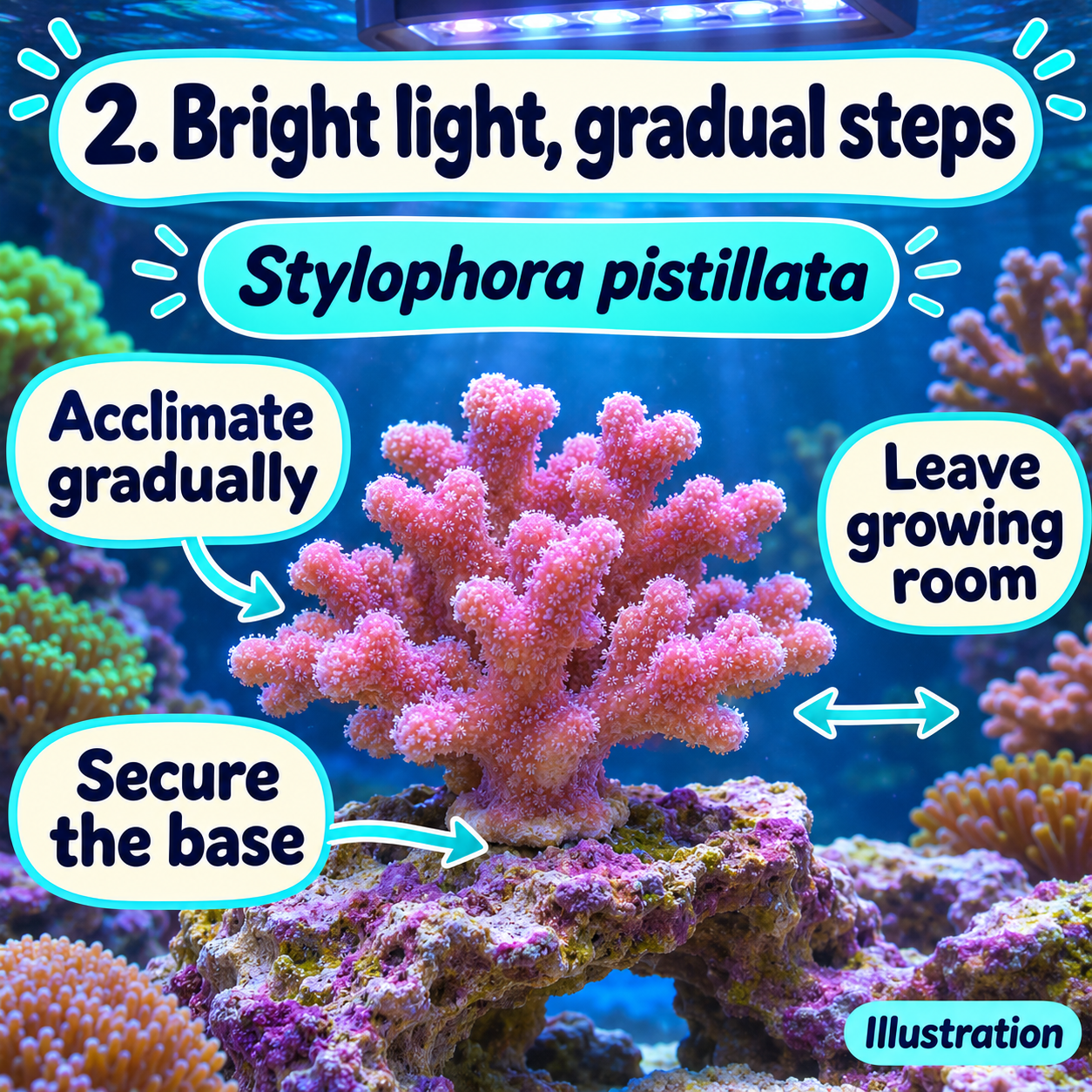
2. Turn up the light slowly. Choose a secure spot on the upper rockwork with strong reef lighting. Start below the final intensity and acclimate gradually. Keep room above the branches for growth. A top position is useful only when the actual light suits the coral.
Send water through the branches
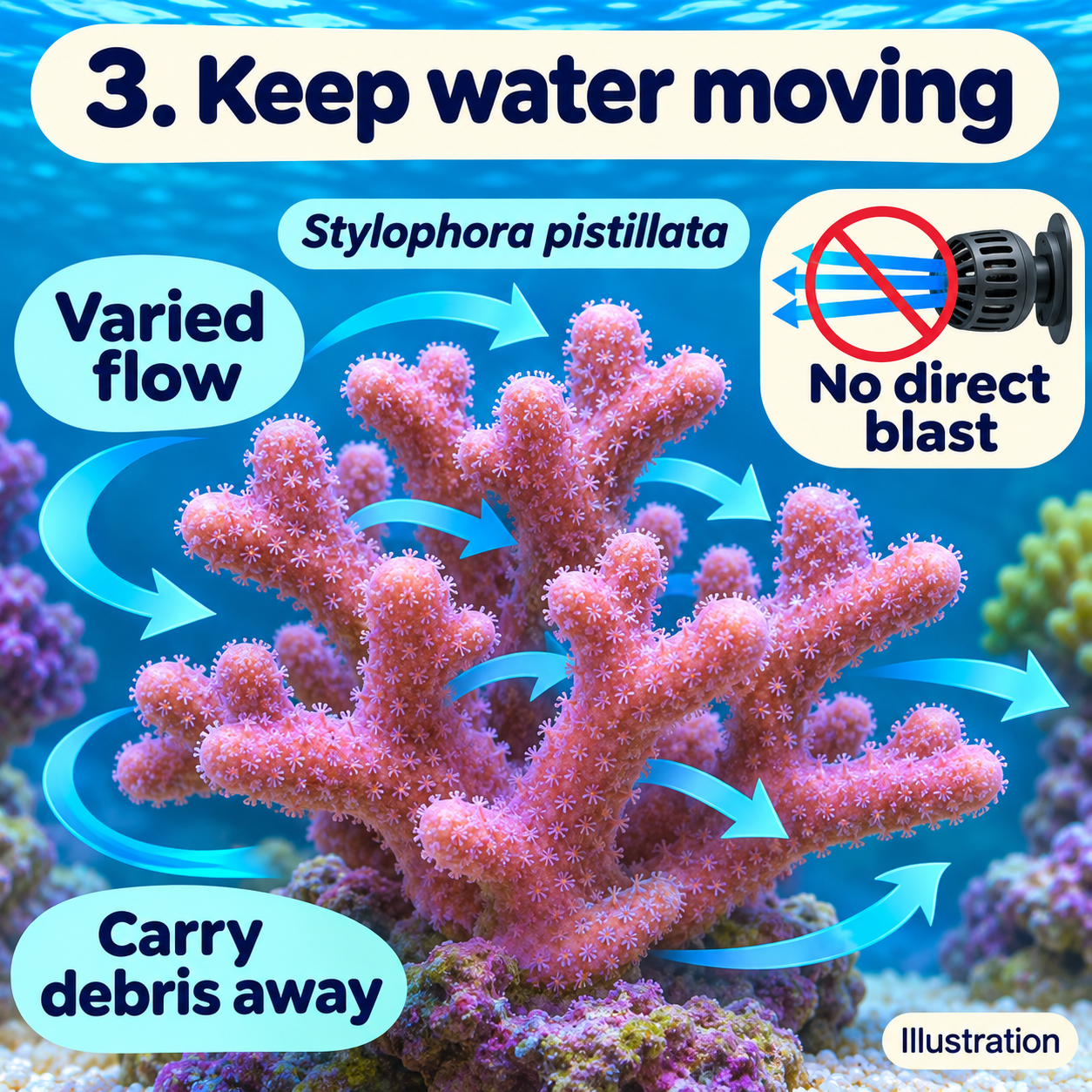
3. Keep the whole colony breathing. Use strong, changing flow that reaches the center of the colony. Aim pumps past the branches rather than blasting one patch continuously. Check again as the coral thickens: a small frag needs less room than a bushy colony. Keep detritus from settling inside.
Light plus little meals
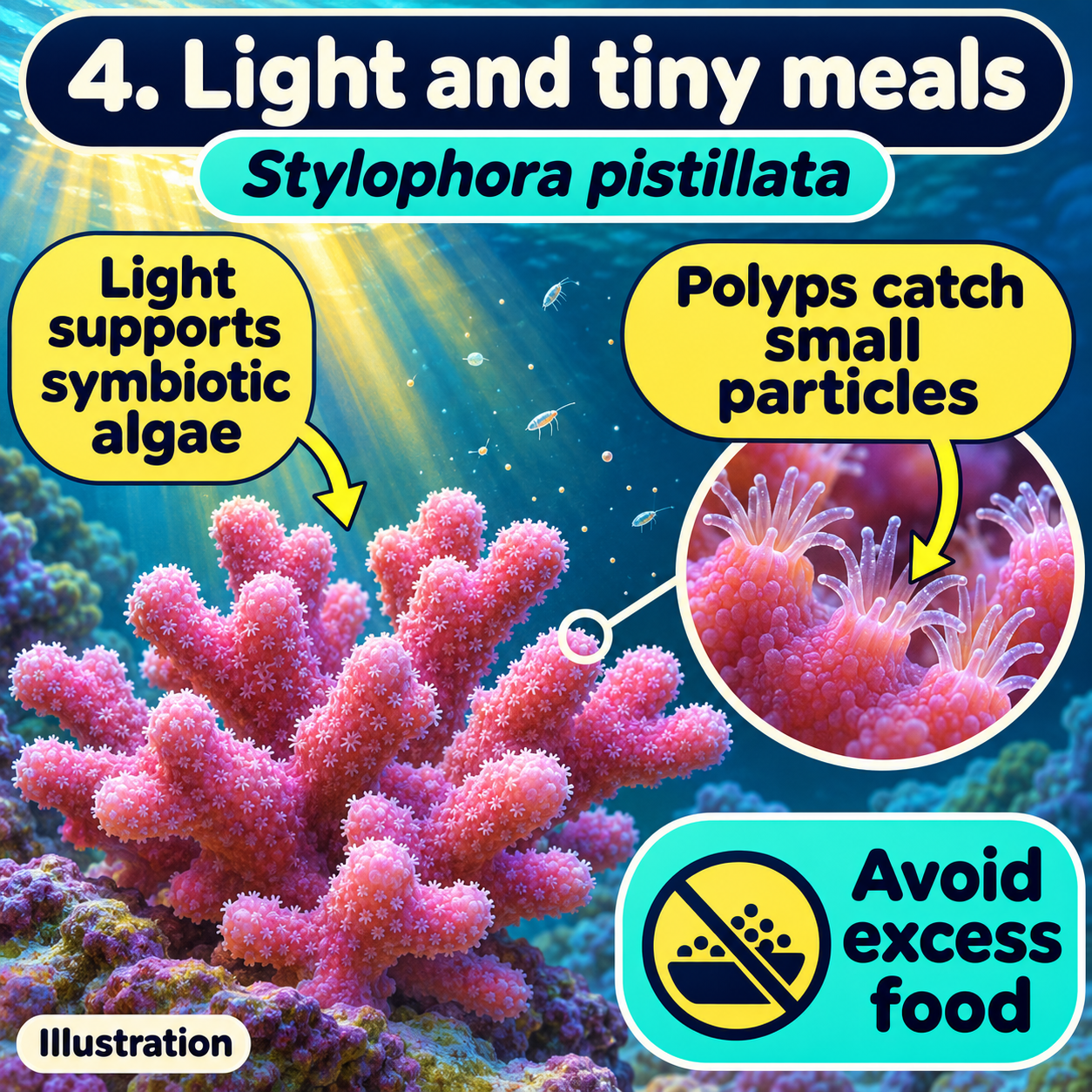
4. Feed a forest of mouths. Algae inside the tissue share energy made with light. The polyps also catch tiny drifting prey. Offer small amounts of suitable fine coral food and keep excess food from building up. Test alkalinity, calcium and salinity regularly, and make adjustments gradually.
Leave room for the next branch
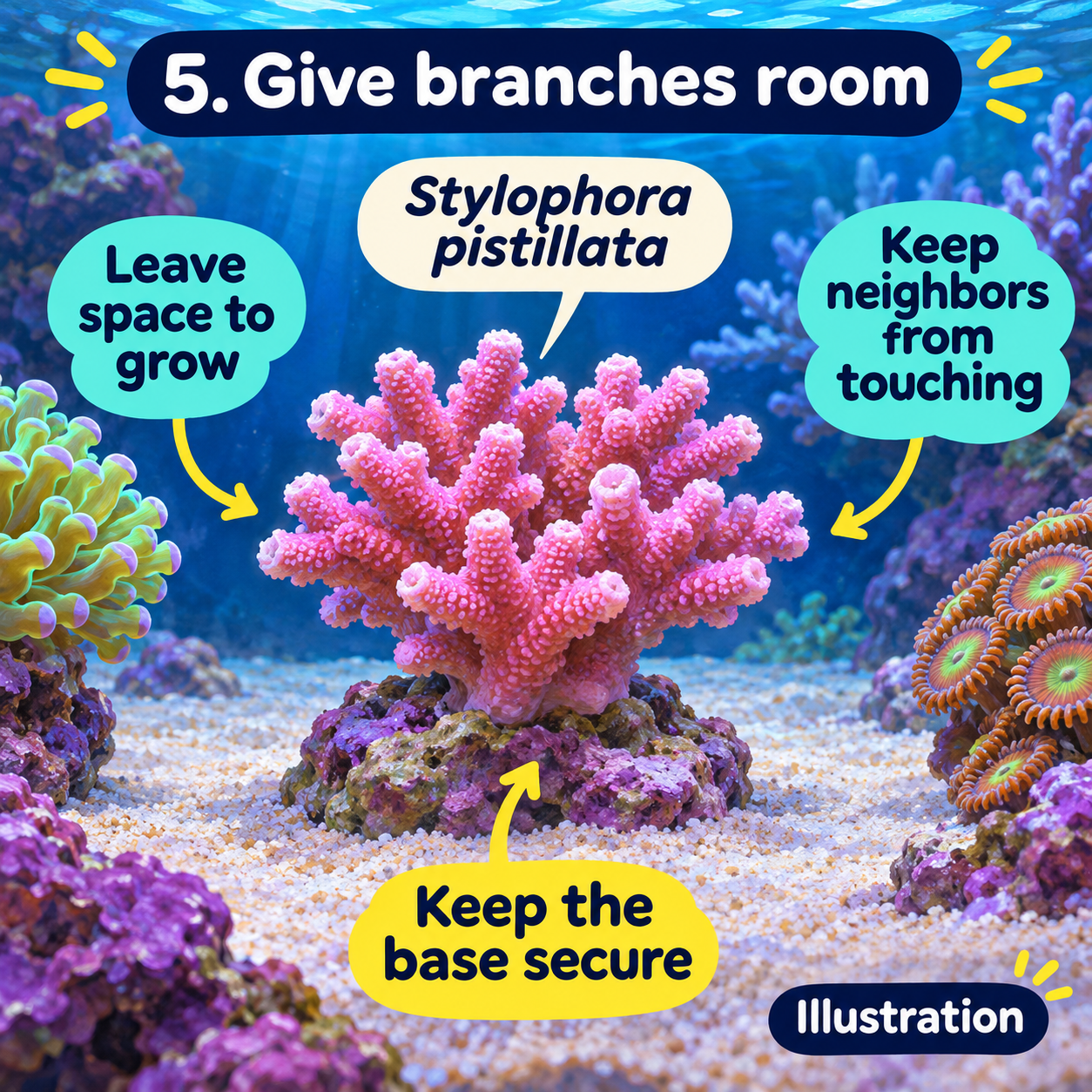
5. Plan for the grown-up coral. Leave an open gap between Hood Coral and neighboring colonies, including their extended stinging tentacles. Keep its branches from rubbing other corals. Watch the tips and base for new growth, paling or exposed skeleton. Frag a healthy colony when space calls for it, not because a calendar says so.
Field notes — what keepers report
6. Every colony has its own pace. An RTG keeper’s pink Stylophora grew quickly, encrusting its plug and reaching the rock. In general Stylophora reports, another keeper found green and pink colonies slower than purple ones, while a small purple frag eventually filled its rock. Keep these different experiences in mind: color is not a growth timetable.
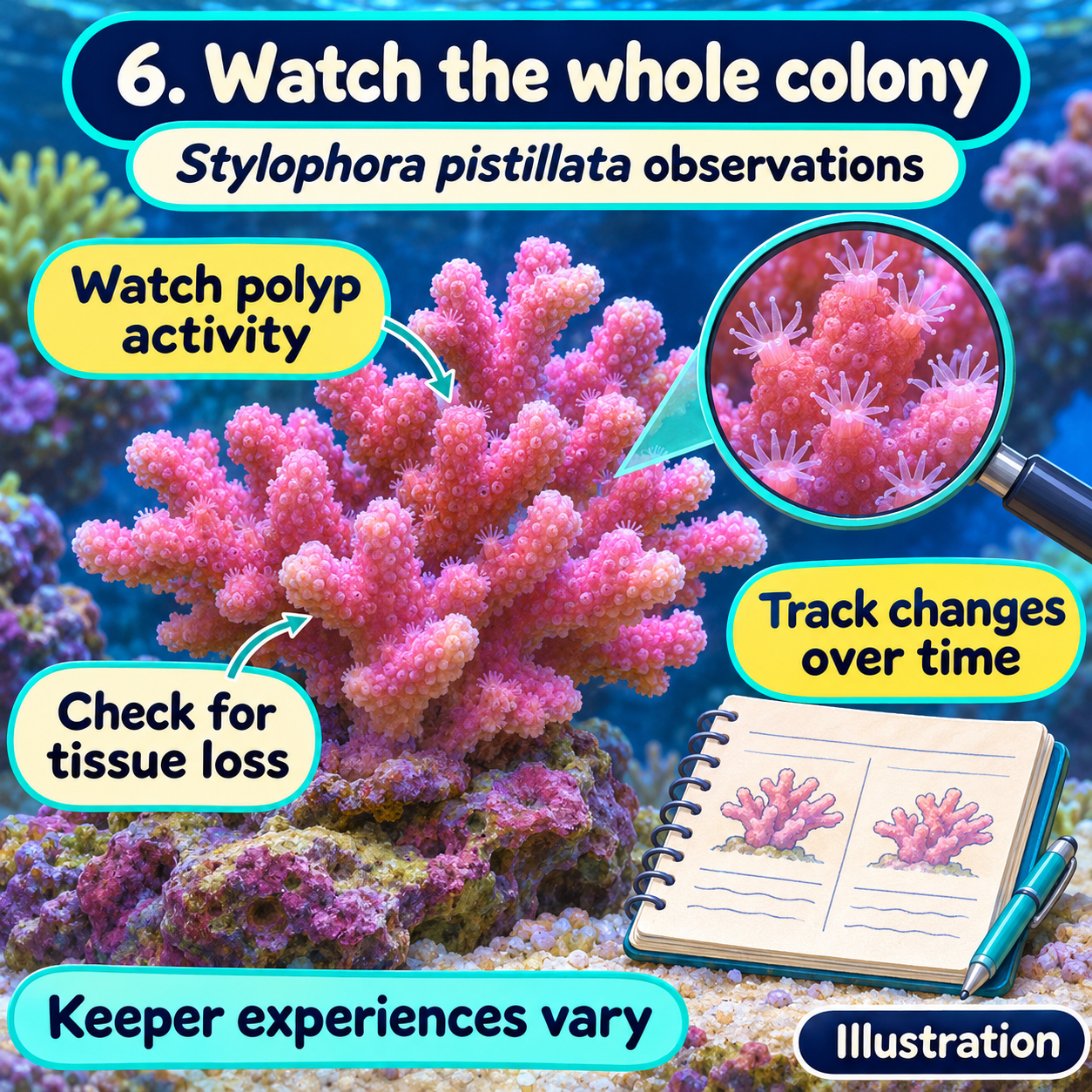
Strong branches start with steady care. Keep the water moving through the colony, give it growing room and resist sudden changes. A thriving Hood Coral rewards consistent care, not constant tinkering.
Field Notes
Related species

Milka stylo
Stylophora sp
Same genus
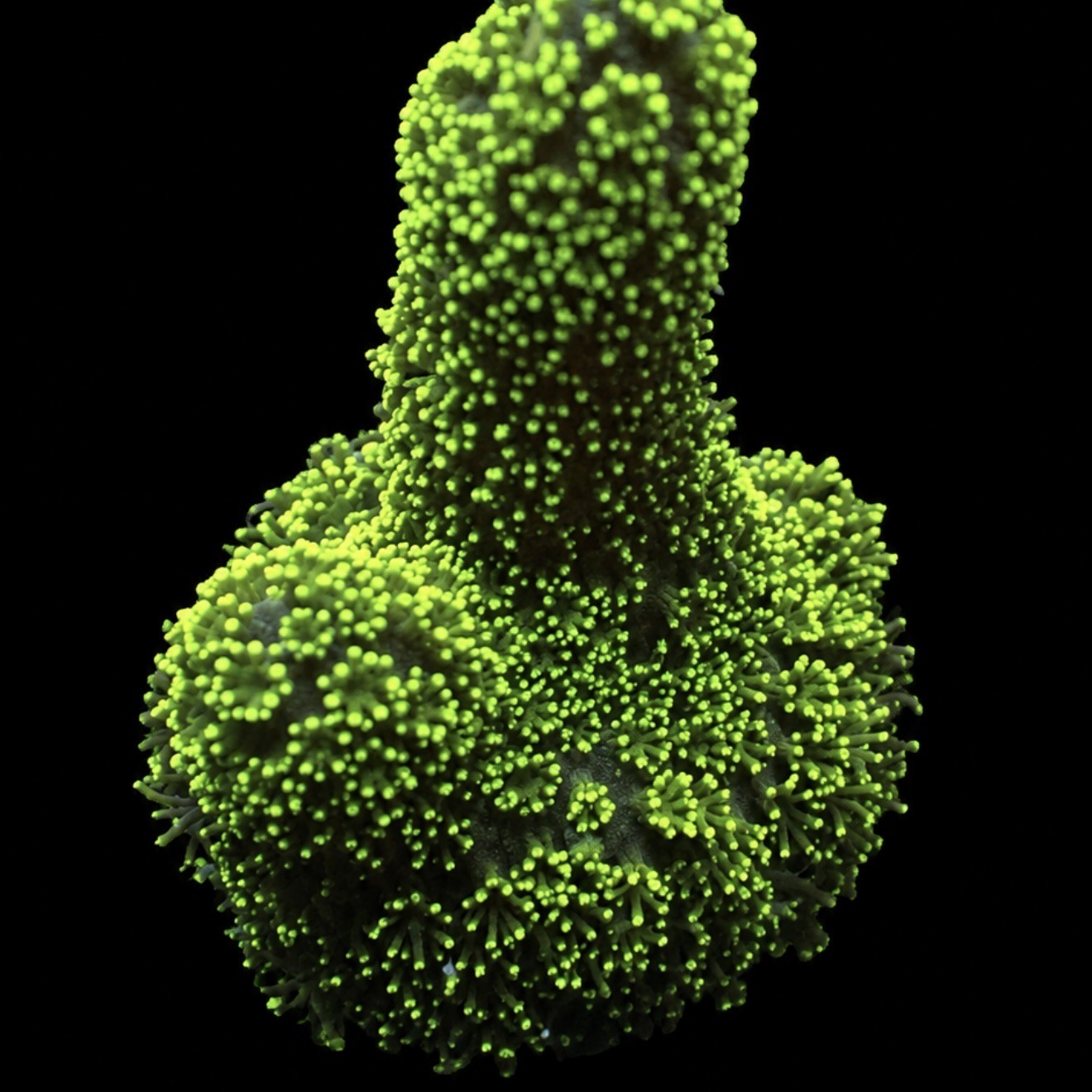
Jade Stylophora
Stylophora pistillata
Same genus
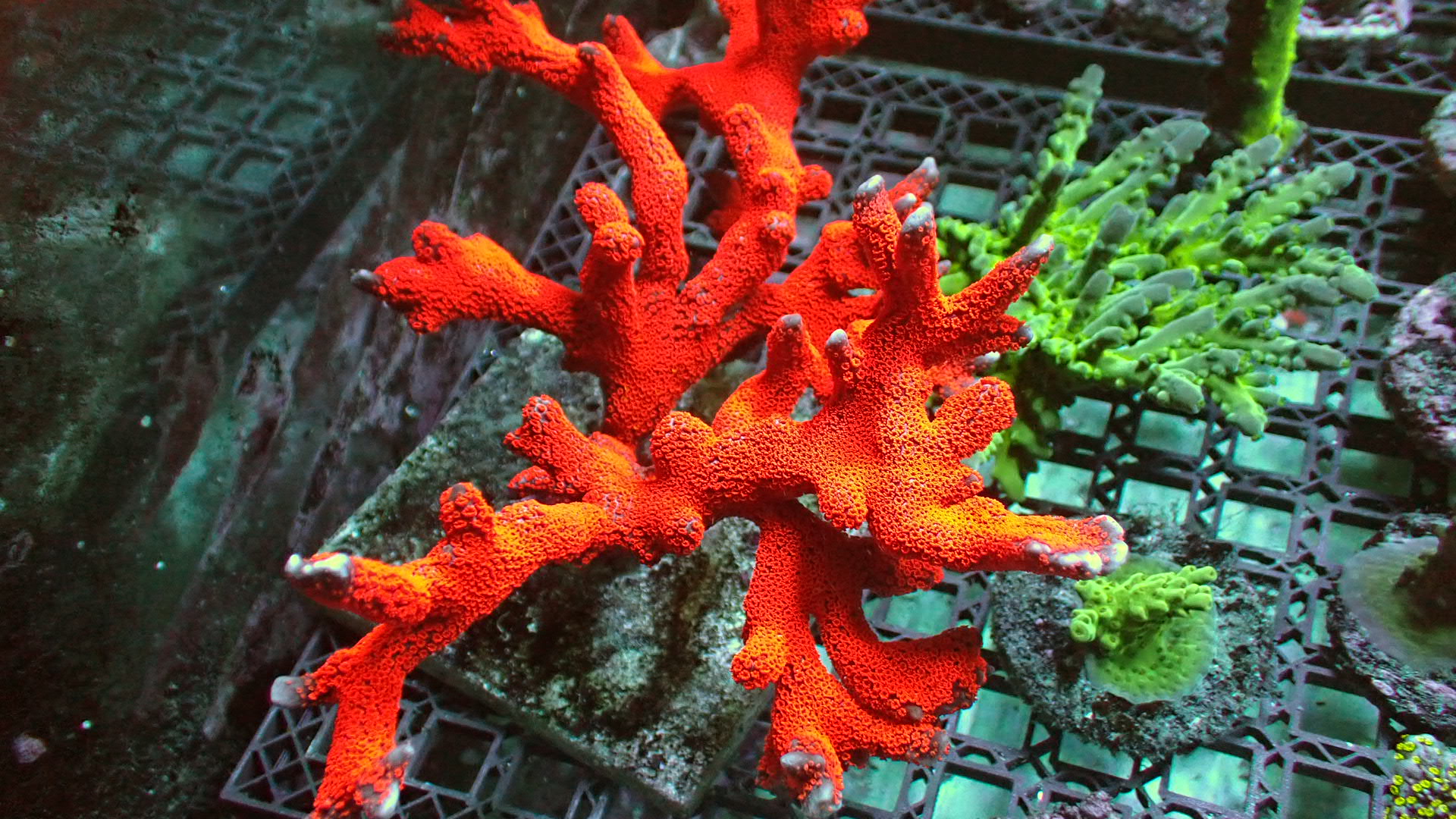
Bubblegum digitata
Montipora digitata
Similar care · SPS

Confused Rainbow Montipora
Montipora sp.
Similar care · SPS

GARF Bonsai Acropora
Acropora valida
Similar care · SPS
Joe the Coral
Acropora sp.
Similar care · SPS

Orange monti cap
Montipora capricornis
Similar care · SPS
Tubbs Stellata Montipora
Montipora stellata
Similar care · SPS