Jade Stylophora
Stylophora pistillata
Care facts
- Care
- Intermediate
- Light
- High
- Flow
- Moderate
- Place
- Top
- Space
- Peaceful
- Growth Rate
- Moderate
Gallery
Room for branches
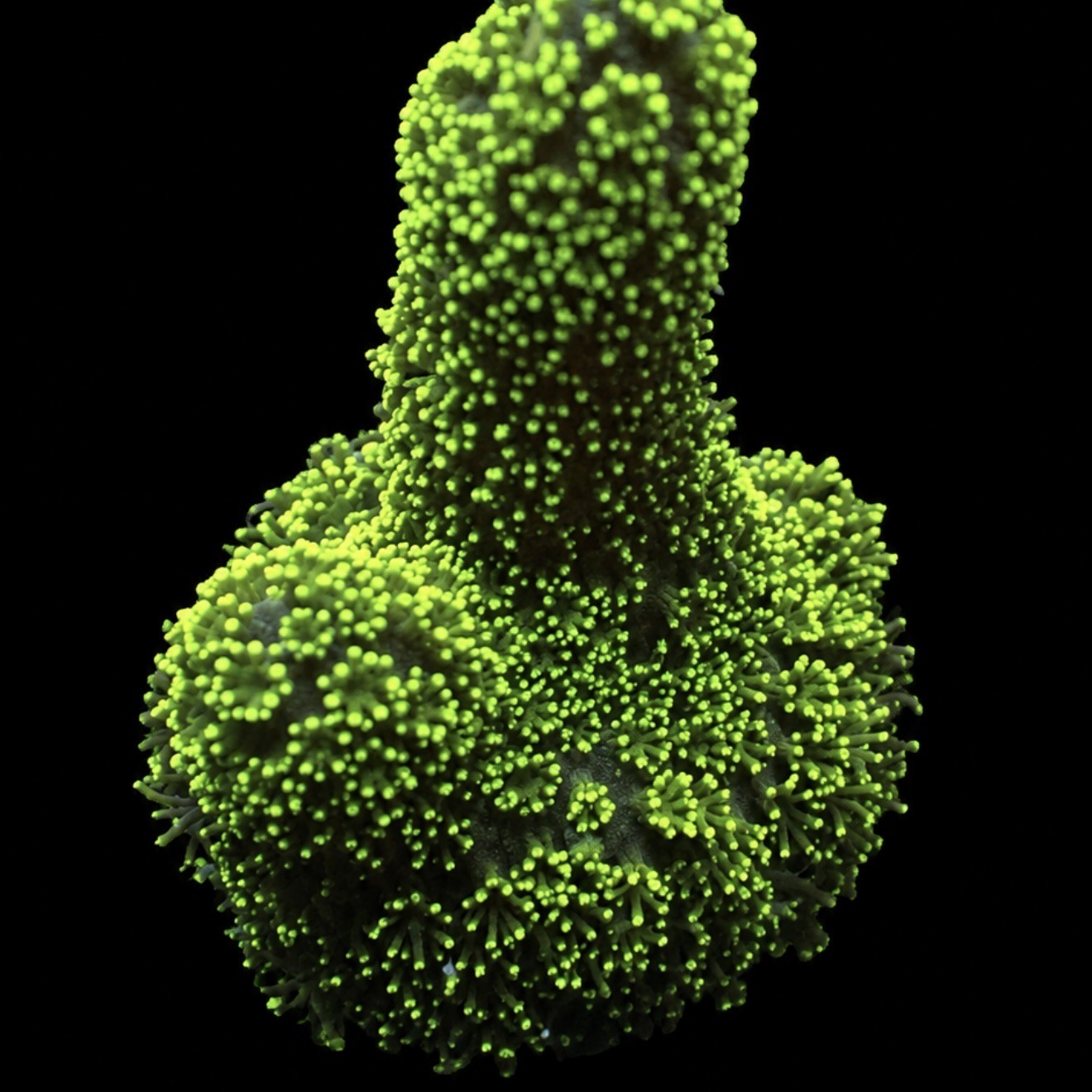
Give this little frag a place to become a colony. Stylophora grows thick, blunt-ended branches, with small polyps that give the surface a fuzzy look when extended. Jade is recorded here as Stylophora pistillata.

Choose secure rockwork with space above and around it. Leave a clear gap from neighboring corals and check that gap as the branches grow. Handle the plug or base when placing it, rather than gripping the living branches.
The care card points toward bright upper rockwork. Start a new arrival under gentler light and increase exposure gradually. Ask the seller about its previous lighting, and use a PAR meter if you have one. Avoid moving it repeatedly just to chase a brighter shade. Take photos with the same light settings to follow its progress.

Leave room for growing branches.
Flow through the branches
Set up changing water movement that reaches through the colony. Look into the center as well as across the tips. Debris collecting between branches tells you that part of the colony needs better circulation.
Aim for broad, alternating flow rather than a narrow pump jet striking one face all day. Recheck the center as the coral thickens. A position that worked for a small frag may need a different pump angle once branches fill the space.
Light supports much of its nutrition through the algae living in its tissue. If you offer supplemental food, use fine suspended particles suited to small polyps and feed lightly. Keep an eye on the tank's nutrient trend before increasing the amount.
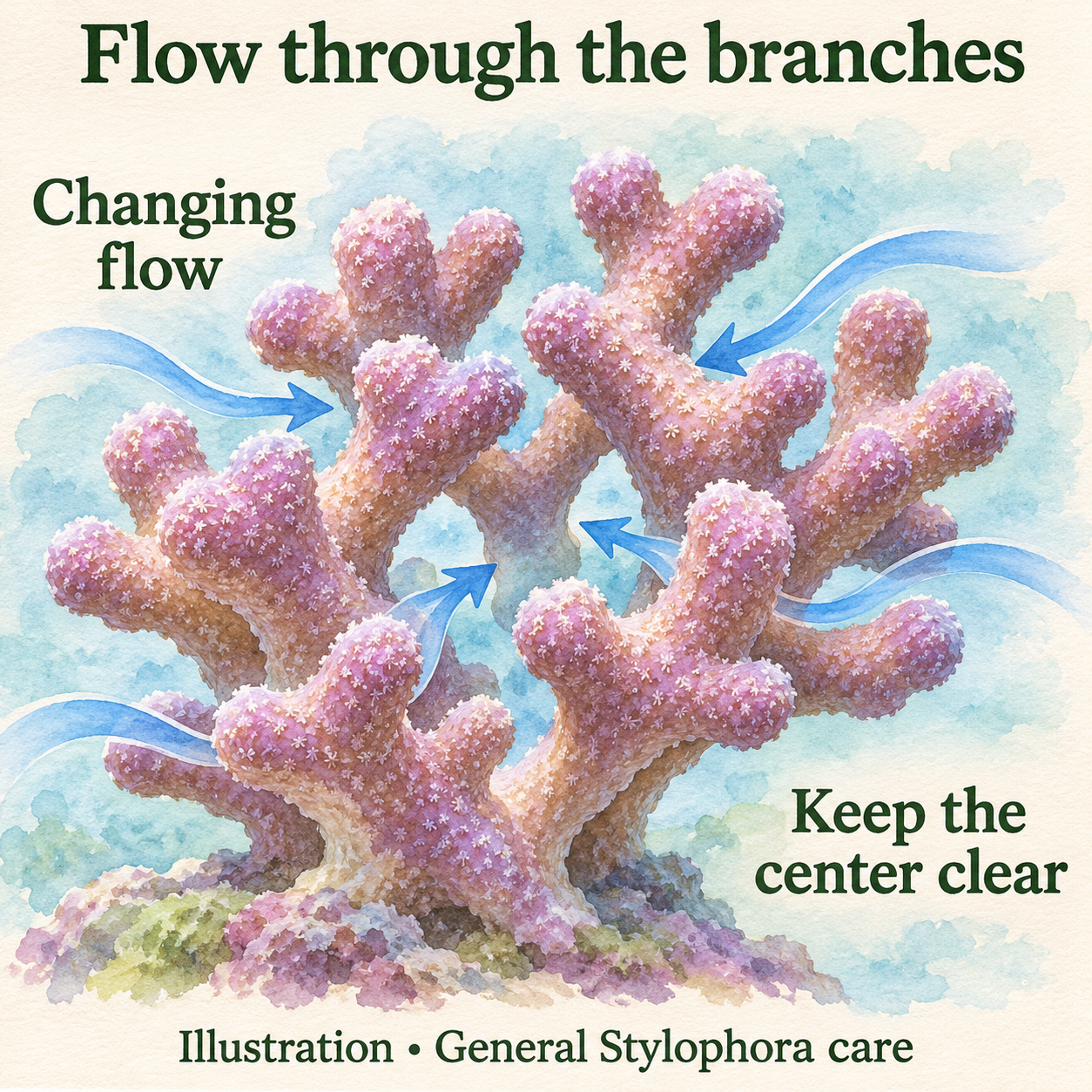
Keep water moving through the colony.
Test, log, then decide
Growing stony corals use calcium and alkalinity to build their skeletons. Test both, keep salinity and temperature steady, and include magnesium in your routine. Record results alongside water changes and dosing so you can see what the tank actually consumes.
Dose to meet that measured demand. Adding a new frag is a reason to watch the trend, not to immediately increase every supplement. Recheck an unexpected test result before making a large adjustment.
Watch the base and branches for persistent tissue loss. If you see a change, review recent lighting, flow and water-test results, and check whether a neighbor can touch it. Keep new arrivals in a separate established quarantine setup for inspection and observation before they join the display.

Use test results and dated notes to guide dosing.
Field Notes
Related species

Hood Coral
Stylophora pistillata
Same genus

Milka stylo
Stylophora sp
Same genus

Aequituberculata Montipora
Montipora aequituberculata
Similar care · SPS

Bubblegum digitata
Montipora digitata
Similar care · SPS

Confused Rainbow Montipora
Montipora sp.
Similar care · SPS
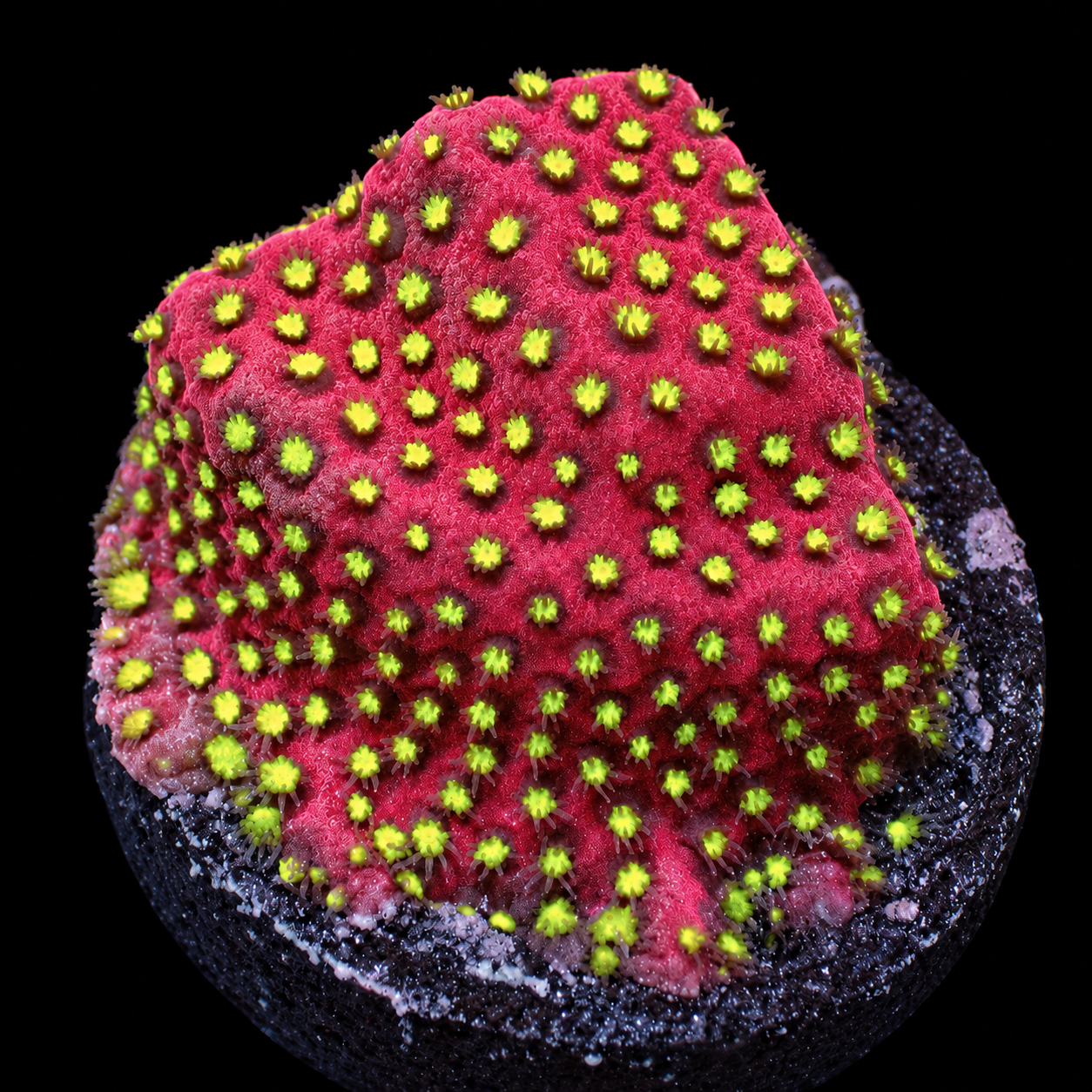
Electric daisy stylocoeniella
Stylocoeniella sp.
Similar care · SPS

Finger Coral
Porites cylindrica
Similar care · SPS
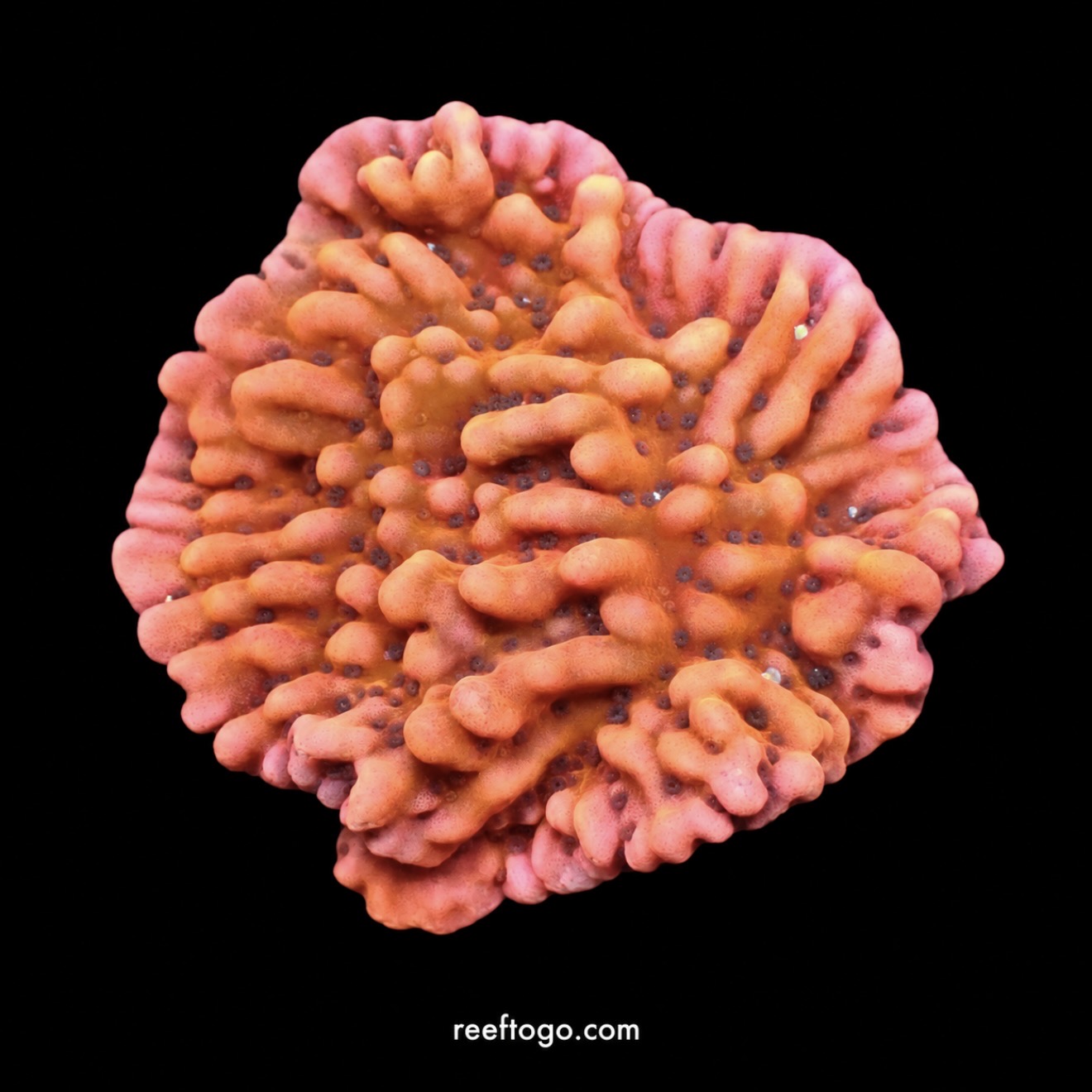
Flaming phoenix montipora
Similar care · SPS