Hump Coral
Porites porites

Jstuby at en.wikipedia · Public domain · source
Photo: Jstuby at en.wikipedia · Public domain · [Wikimedia Commons](https://commons.wikimedia.org/wiki/File:Porites_porites_French_Bay.jpg)
Care facts
- Care
- Intermediate
- Light
- High
- Flow
- Medium
- Place
- Bottom
- Space
- Peaceful
- Growth Rate
- Slow
Gallery
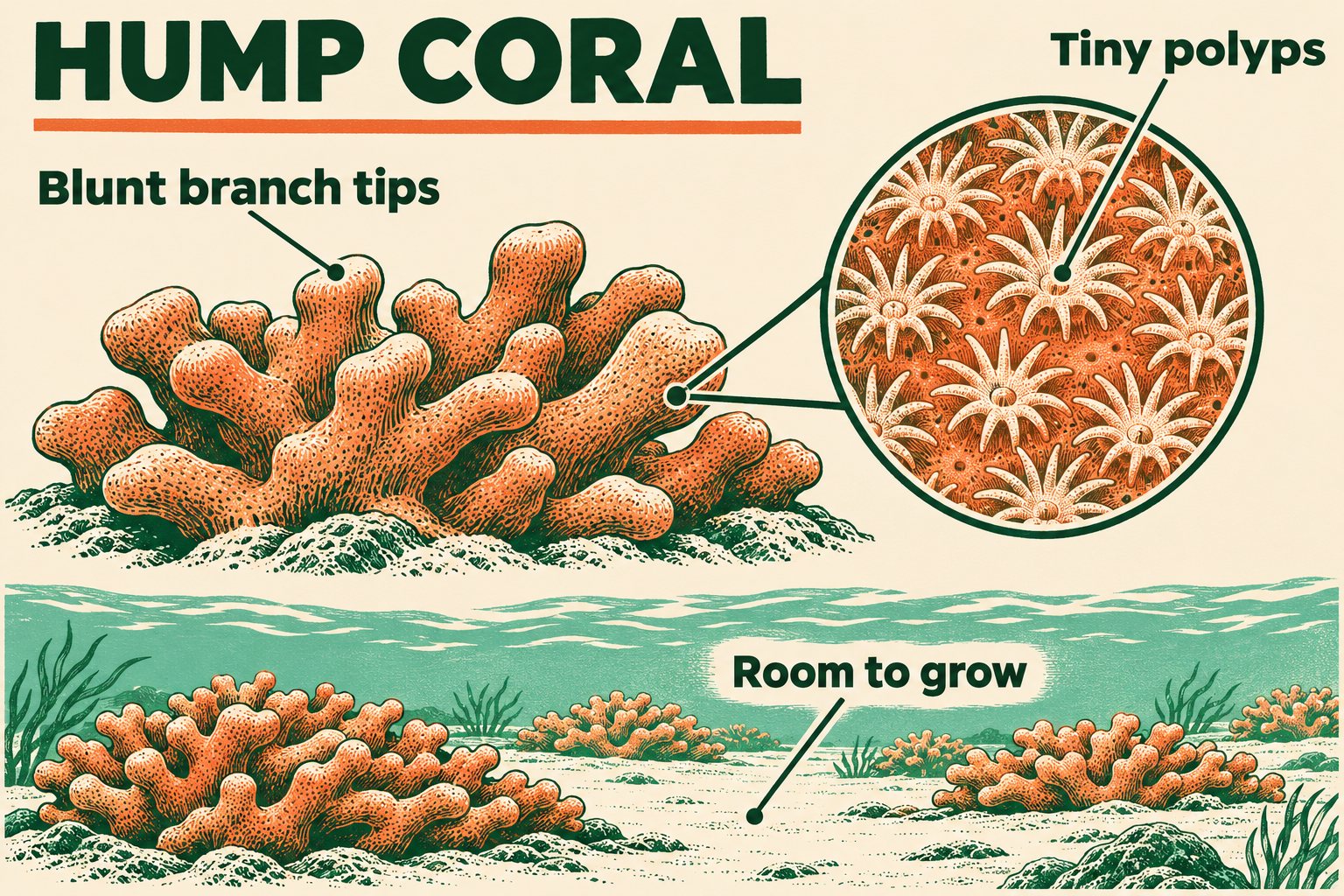
Look close at a Hump Coral and those little clubs turn fuzzy. Tiny polyps poke out all over the branches, even in daylight. They’re the animals that build this chunky Caribbean reef coral, one little cup at a time.
History of the coral
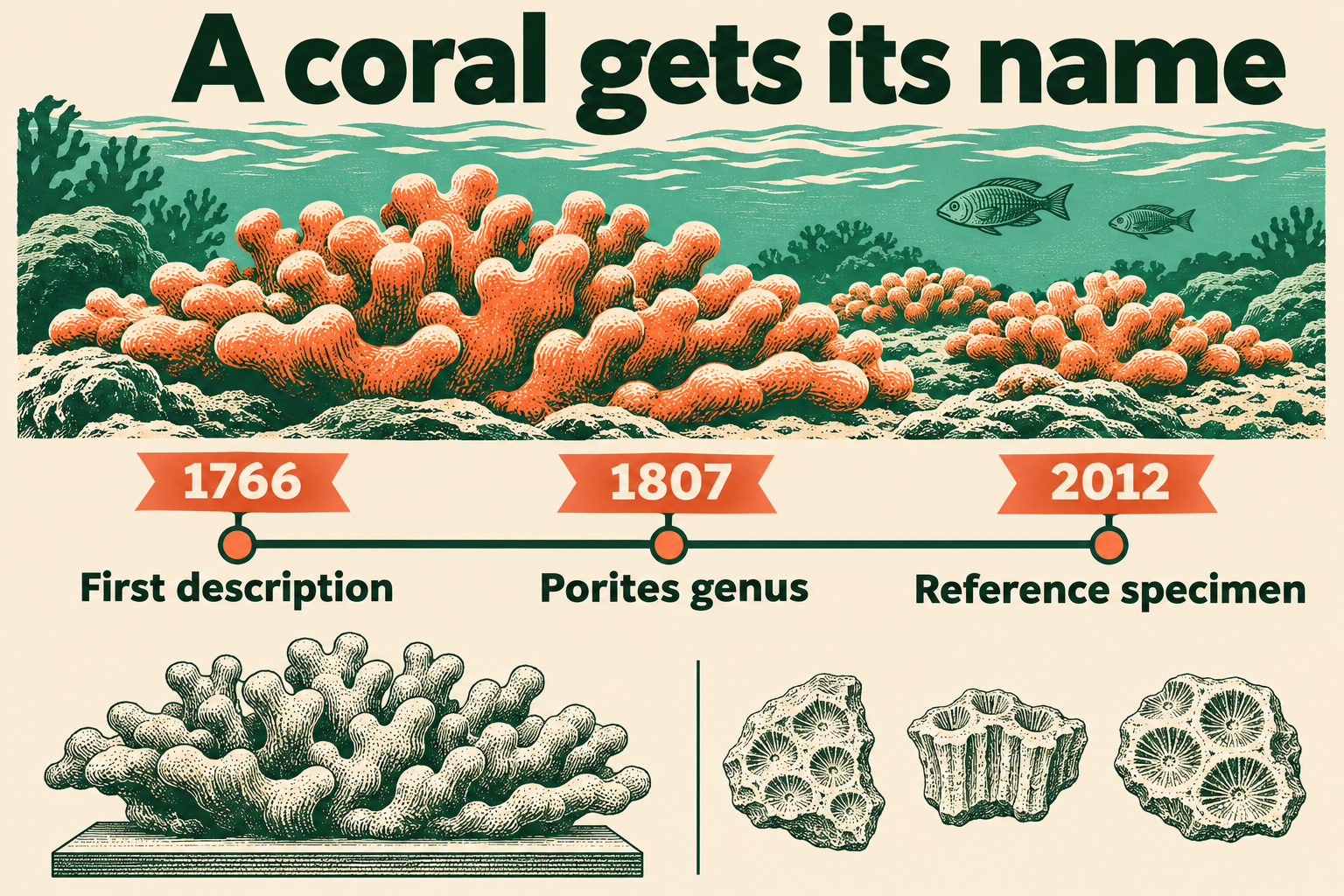
1. An old name with a new home. Peter Simon Pallas described this coral as Madrepora porites in 1766. The genus Porites came along in 1807. Today its name is Porites porites.
2. A specimen settles the name. In 2012, scientists chose a museum skeleton as the reference for the species. The nickname Clubtip Finger Coral is easy to remember. Just look at those thick, rounded branch tips.
How they live in the wild
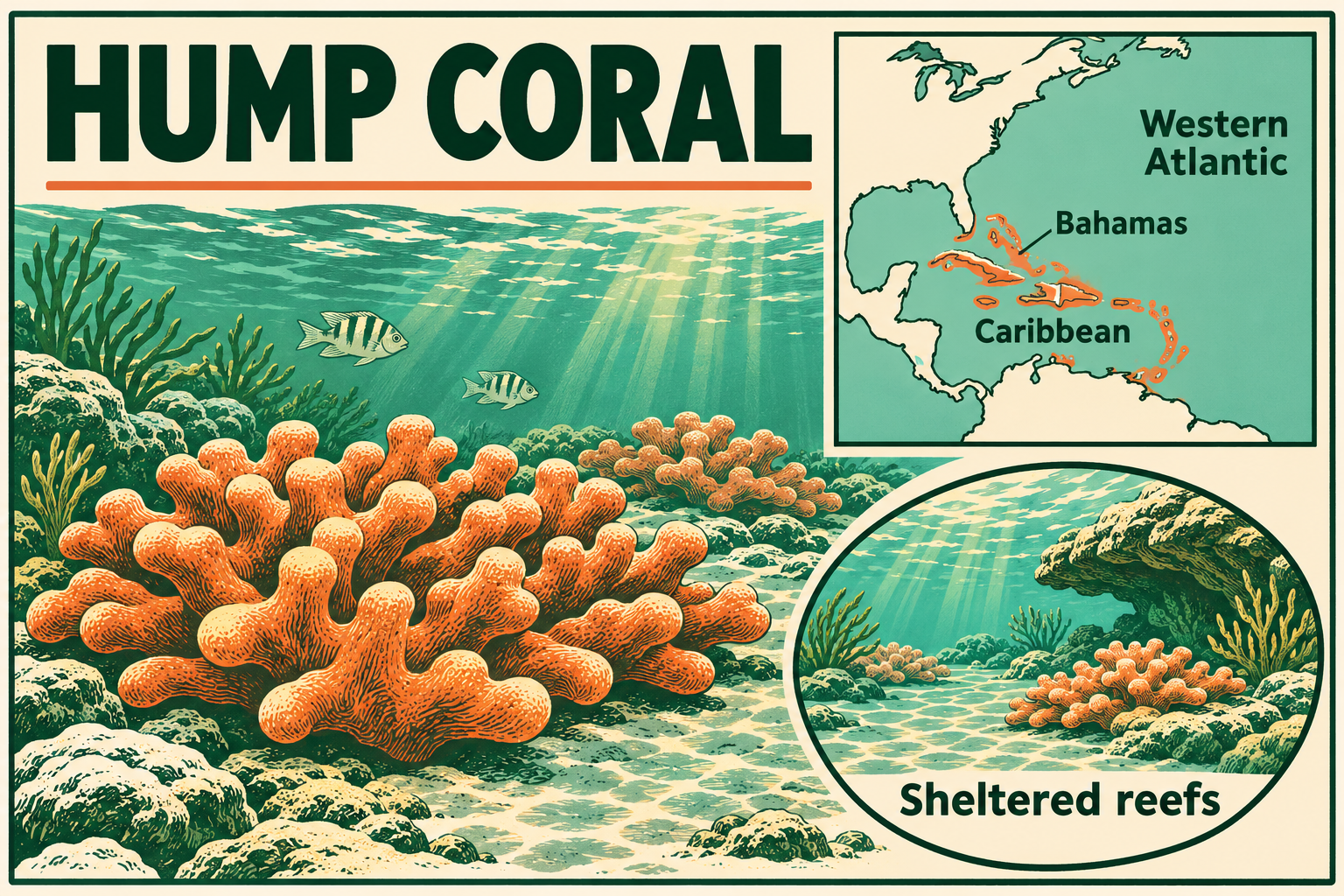
3. A Caribbean reef dweller. Look for Hump Coral in the tropical western Atlantic, including the Bahamas and Caribbean. Colonies live on sheltered reefs, in sunlit shallows, including around 4 m (13 ft) off Curaçao. They grow on hard surfaces, with branches spreading out or reaching up.
4. Sunshine and moving water. Shallow reef colonies get plenty of sun. Tiny algae inside the coral use that light to make sugars the coral can use. Water still moves through protected reefs, carrying food and clearing loose particles.
Light, flow and placement
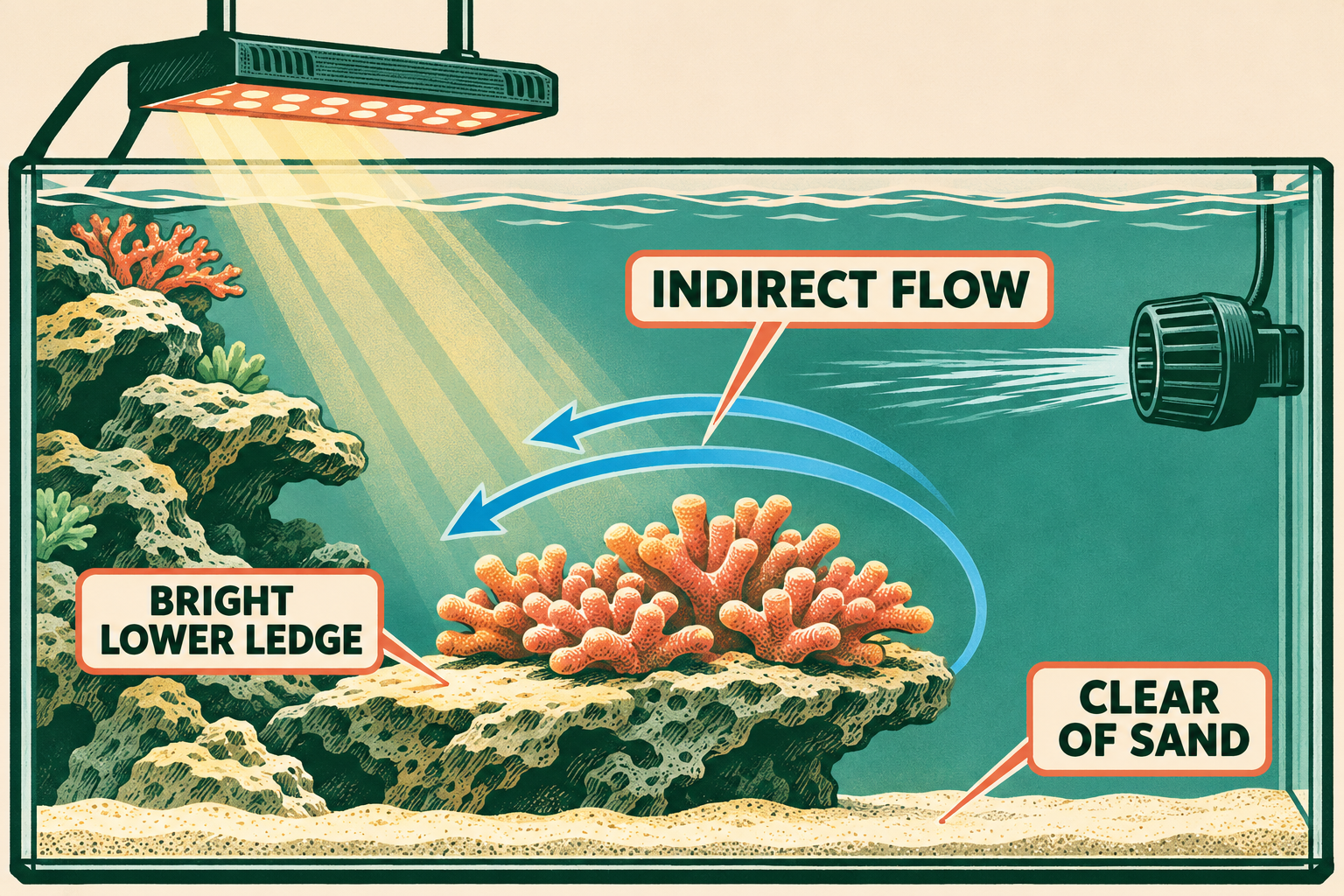
5. Find a bright spot down low. Set it on stable lower rockwork with a clear view of the lights. Keep it above shifting sand. Start under less light and step it up gradually. Use a light meter to check that the ledge gets strong light.
6. Let water move around the branches. Aim for medium, indirect flow. Set the pump so water reaches the base and slips between the fingers. If grit keeps settling there, adjust the pump angle a little at a time.
Water and feeding
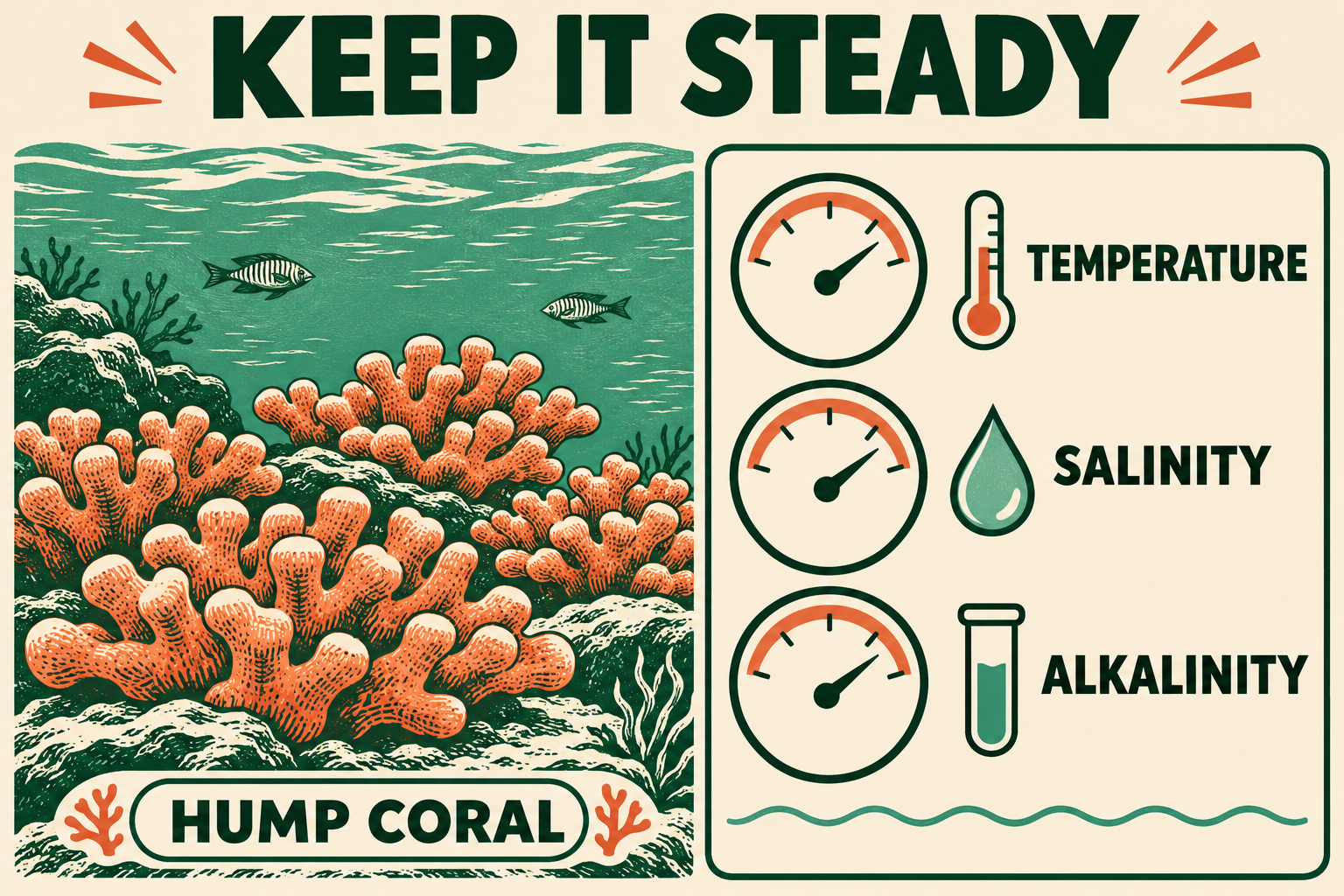
7. Keep the reef steady. Use an established tank. Track temperature, salinity and alkalinity over time. Keep calcium and magnesium stable as the colony builds its skeleton. Make small corrections so one bad reading doesn’t turn into a big swing.
8. Small mouths, small bites. Good light does the heavy lifting. Skip large chunks and heavy target feeding. If you already feed fine suspended coral food, let a small amount drift past the polyps.
Growth and neighbors
9. Give the clubs a little runway. Leave open rock around the colony so its base and branches have room. Keep it beyond the reach of a neighbor’s sweepers and trim back fast-growing corals before they touch it.
10. Watch the living edge. Growth is slow. Check the tips for new growth and look down between the fingers for trapped grit or bare skeleton. If you spot a change, check light, flow and recent test results before moving the coral.
Field notes — what keepers report
11. Hardy can still mean slow. One branching Porites keeper saw steady health and slow growth with plenty of light and flow. Keep a photo log from the same angle so you can spot changes weeks apart.
12. Watch the coral after a move. Another Porites keeper saw color return and the base slowly spread after a transfer. Use the first few weeks to watch the base and polyp extension. Give the coral time between adjustments.
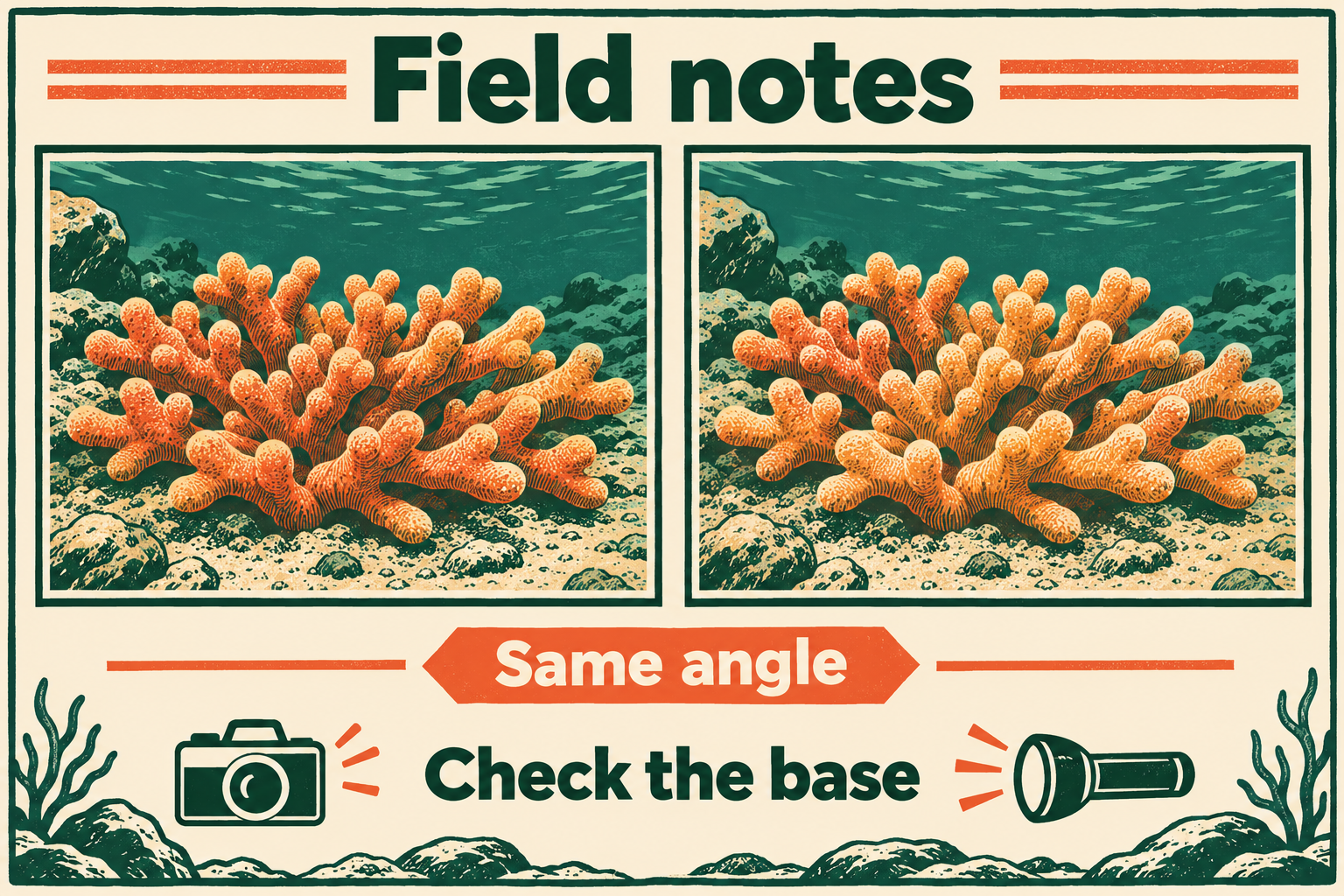
Give Hump Coral a bright lower ledge, water that reaches its base and time to settle. Then watch for that fine fuzz across the clubs. It’s one of the best details to spot on your next tank walk.
Field Notes
Related species

Finger Coral
Porites cylindrica
Same genus

Lobe Coral
Porites lobata
Same genus
Finger Porites
Porites cylindrica
Same genus
Massive Lobe Coral
Porites lobata
Same genus

Aequituberculata Montipora
Montipora aequituberculata
Similar care · SPS
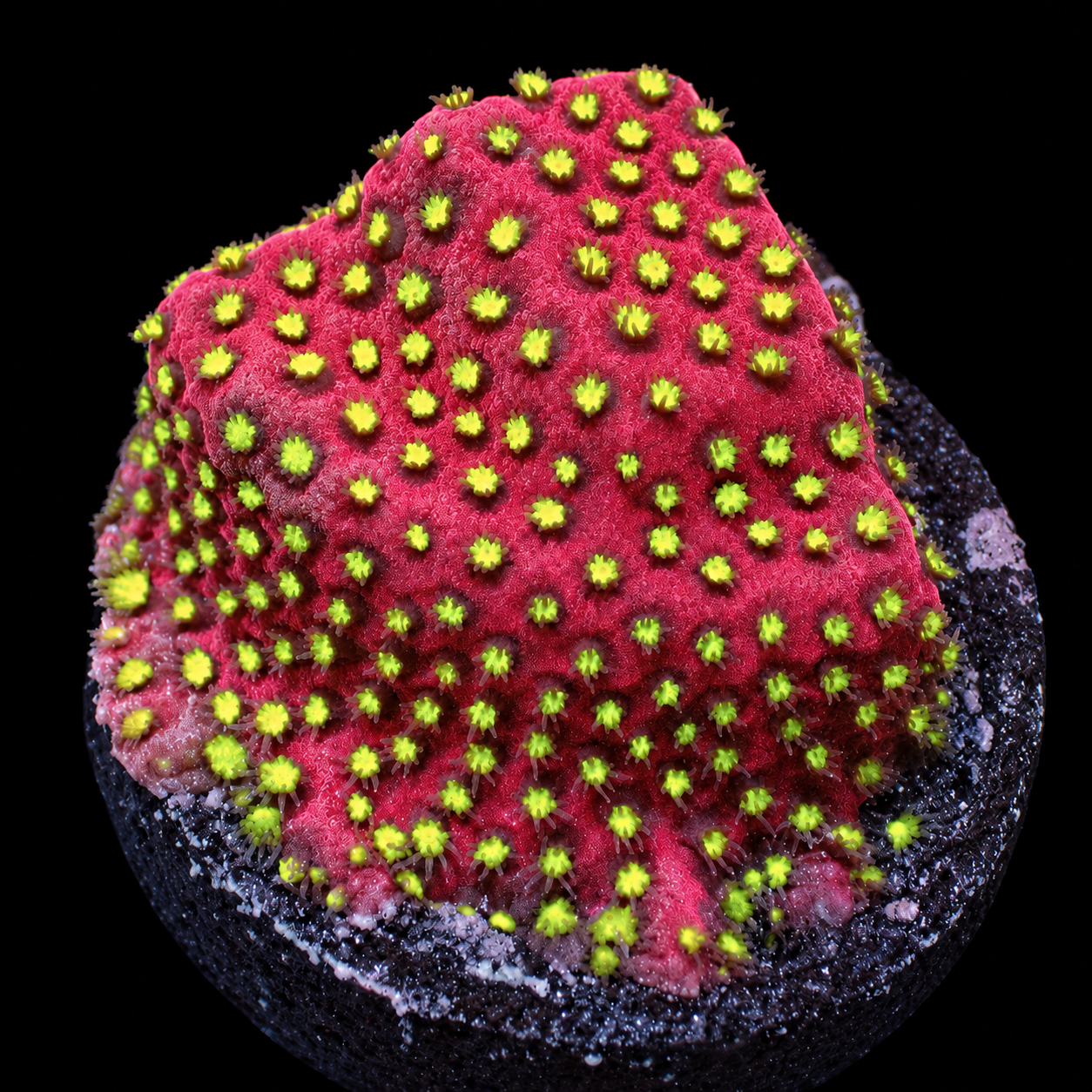
Electric daisy stylocoeniella
Stylocoeniella sp.
Similar care · SPS
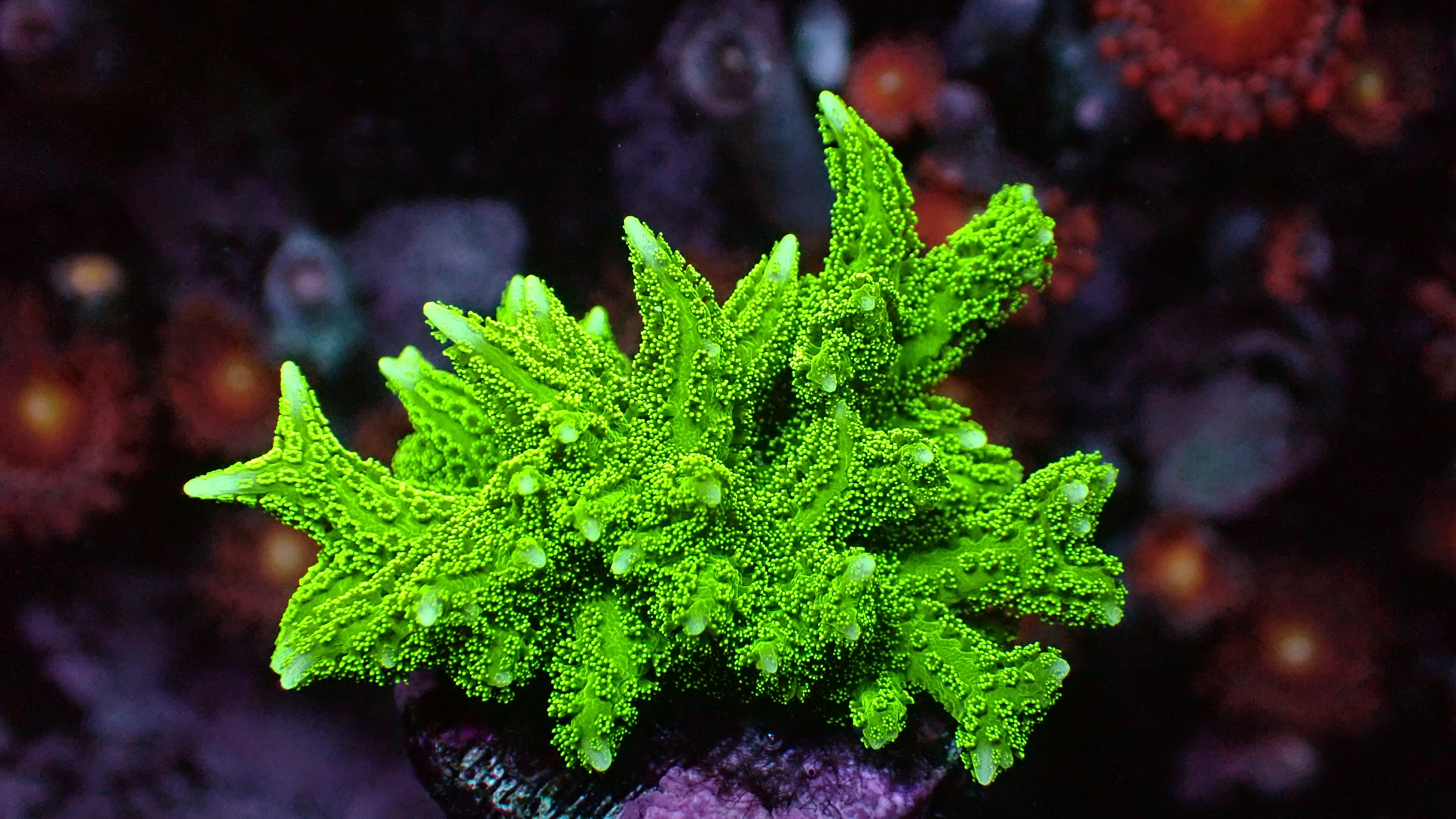
Jade birdnest
Seriatopora sp.
Similar care · SPS

Leaf Plate Montipora
Montipora capricornis
Similar care · SPS