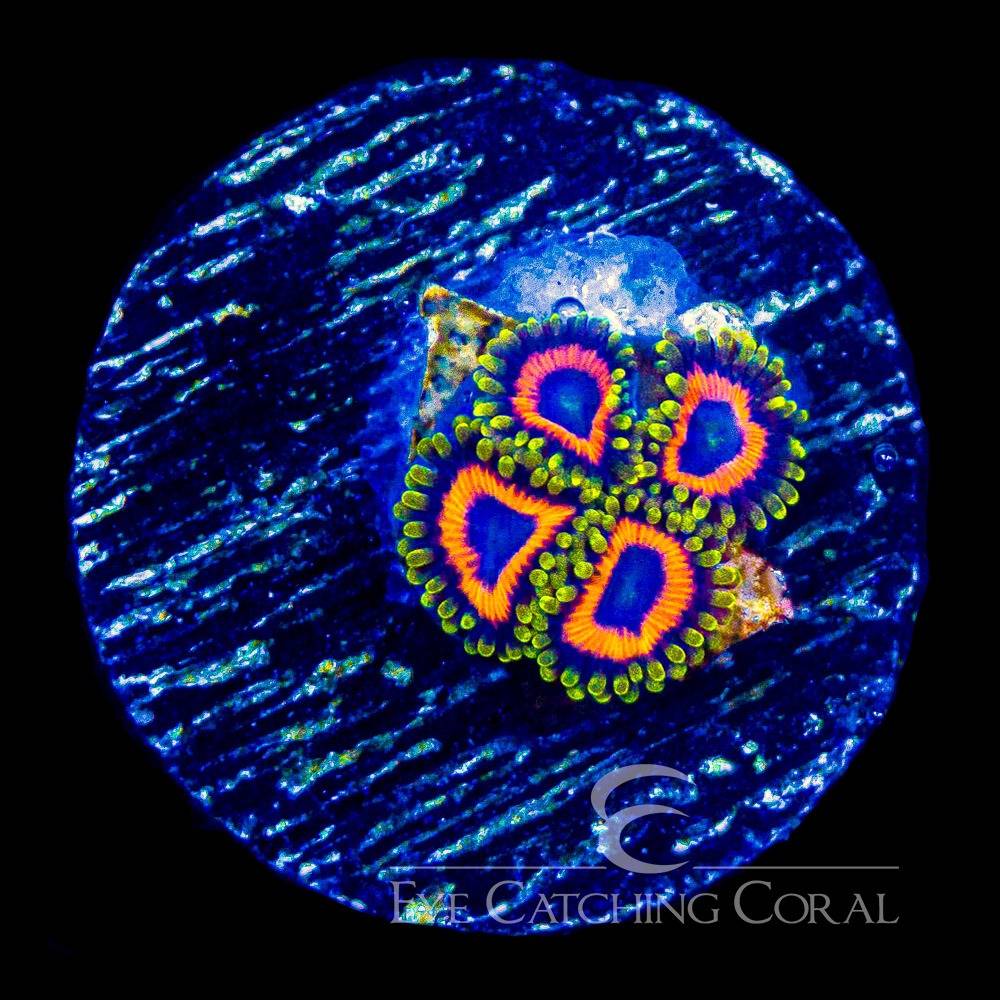
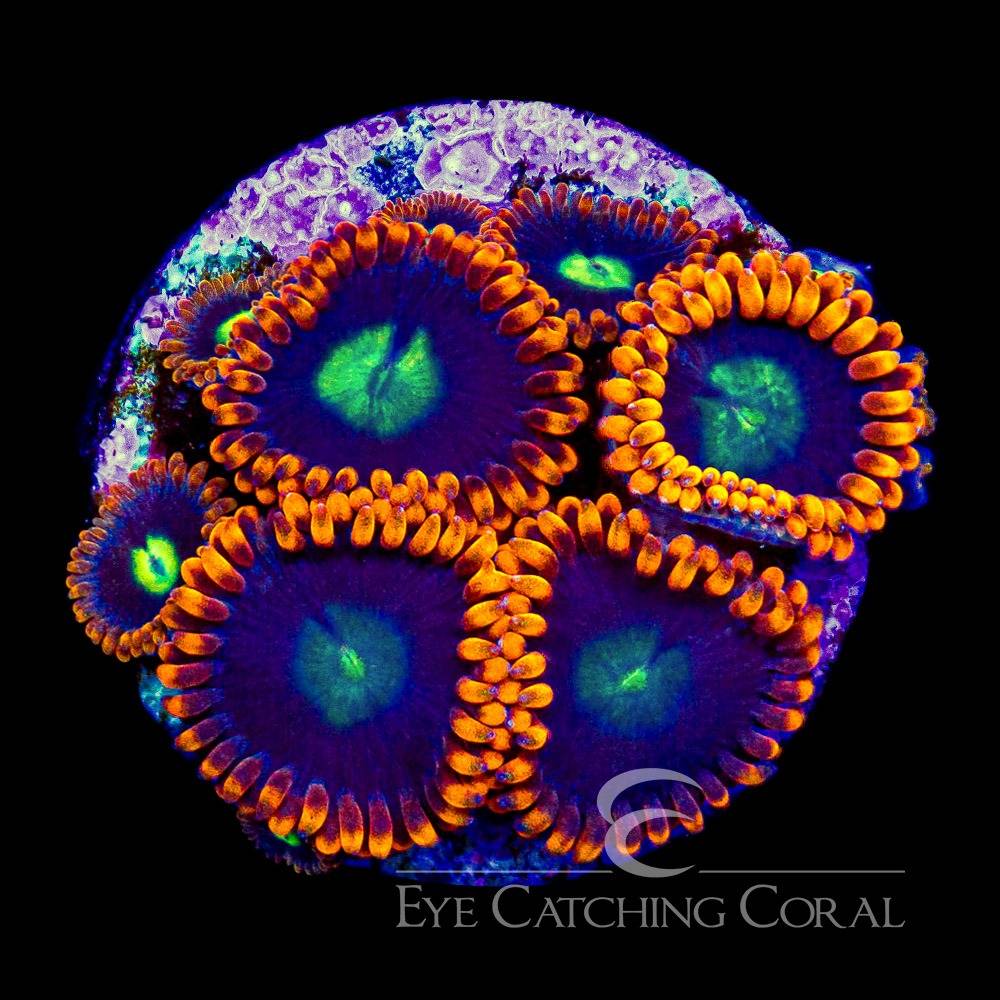
Jungle Juice zoas
Zoanthus sp
Palytoxin safety
Some zoanthids and palythoas can contain a potent toxin. Wear sturdy waterproof gloves and eye protection, minimize handling, and keep colonies submerged when possible. Never boil, steam, pressure-wash or scrub colonized rock under running water. Keep other people and pets away during handling. If exposure is suspected, seek urgent medical advice and tell the clinician about possible palytoxin exposure.
Sources: CDC: palytoxin exposure · OATA: avoiding palytoxin poisoning
Gallery
# Jungle Juice zoas

Care at a glance: CARE Beginner · LIGHT Low-Med · FLOW Med · PLACE Mid · SPACE Moderate · GROWTH Fast
These are the existing care-card settings. Use them as starting points, not a promise about every frag. Read the safety section before handling zoas. Looking is a great job for young reef keepers. Handling belongs to a prepared adult.
1. Meet a tiny colony
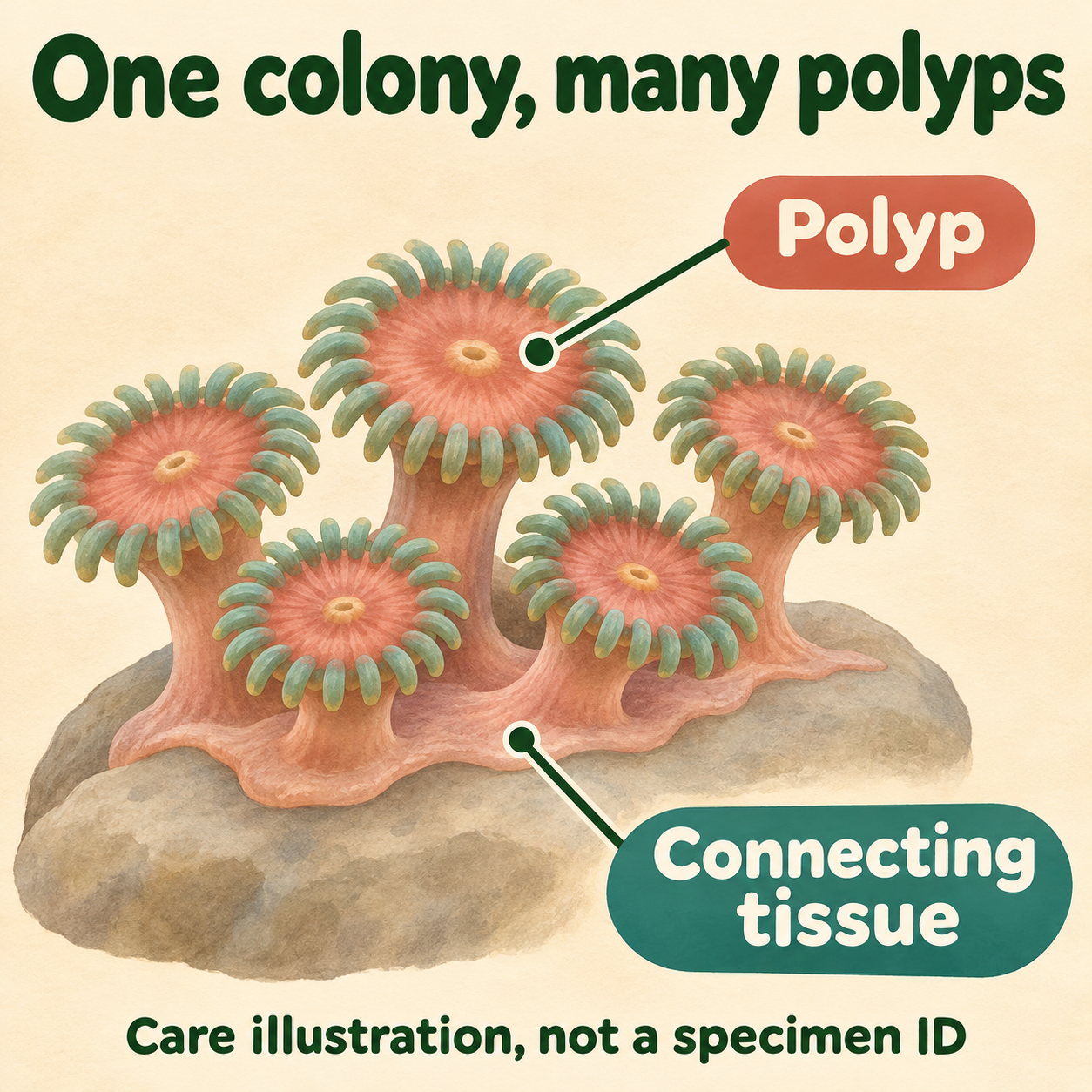
Look closely. That little patch is a crowd of animals! Each button-like polyp has a mouth surrounded by tentacles. Thin tissue joins the polyps near the rock. A new polyp can turn a small patch into a growing garden.
Jungle Juice is a trade name. Reef To Go records this coral as Zoanthus sp, meaning its species is not settled here. Keep that label with the frag. Neither a colorful photo nor a familiar shop name proves its species or lineage.
Top Shelf Aquatics also uses the Jungle Juice name. Its care page gives general zoanthid advice. That supports using a sensible zoa care plan, but it does not prove that its stock and this Reef To Go colony have the same history.
Enjoy your own colony rather than chasing a picture. Blue light and camera settings can change the view. The drawings in this guide explain care, not Jungle Juice colors or identification.
Sources: [Reef To Go record](https://database.reeftogo.com/coral/jungle-juice-zoas-74bcd6ab), [OATA coral polyps](https://ornamentalfish.org/what-we-do/advice-information/care-sheets/corals/how-to-look-after-coral-polyps/), [Top Shelf Aquatics Jungle Juice care](https://topshelfaquatics.com/pages/corals/jungle-juice-zoanthids-coral).
2. Find a comfortable spot
A frag has just left one home for another. Start with lower light and give it time to adjust. Make later light changes gradually. Do not jump straight to the brightest ledge to copy a seller's photograph.
Low-Med stays the light setting. Mid stays the placement setting. Mid rockwork can be a useful home, but height alone does not measure light. Shade, lamp strength and the shape of your reef matter too. Ask what conditions the frag came from.
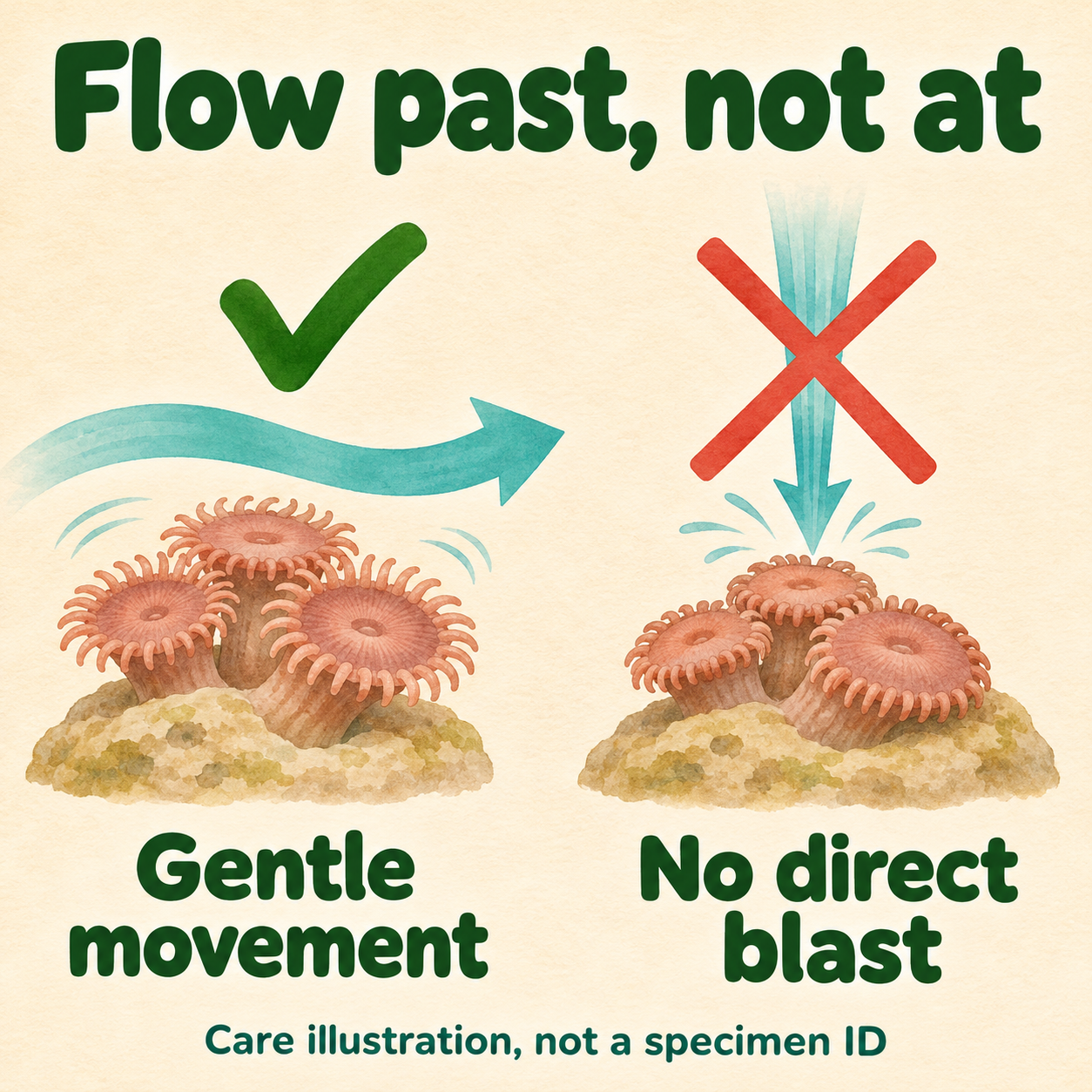
Let water travel across the colony and carry waste away. Avoid a narrow pump jet that keeps battering the same polyps. Secure the plug so it cannot tumble.
Growers differ on flow. Top Shelf Aquatics lists moderate flow for Jungle Juice. Tidal Gardens uses stronger movement around established zoas to keep debris from collecting. The practical aim is a clean colony that can open. Keep Med as the starting category, then watch the animal rather than copying a pump setting.
Sources: [Top Shelf Aquatics Jungle Juice care](https://topshelfaquatics.com/pages/corals/jungle-juice-zoanthids-coral), [Tidal Gardens zoanthid care](https://tidalgardens.com/articles/coral-care-articles/zoanthus-coral-care.html).
3. Keep the water steady
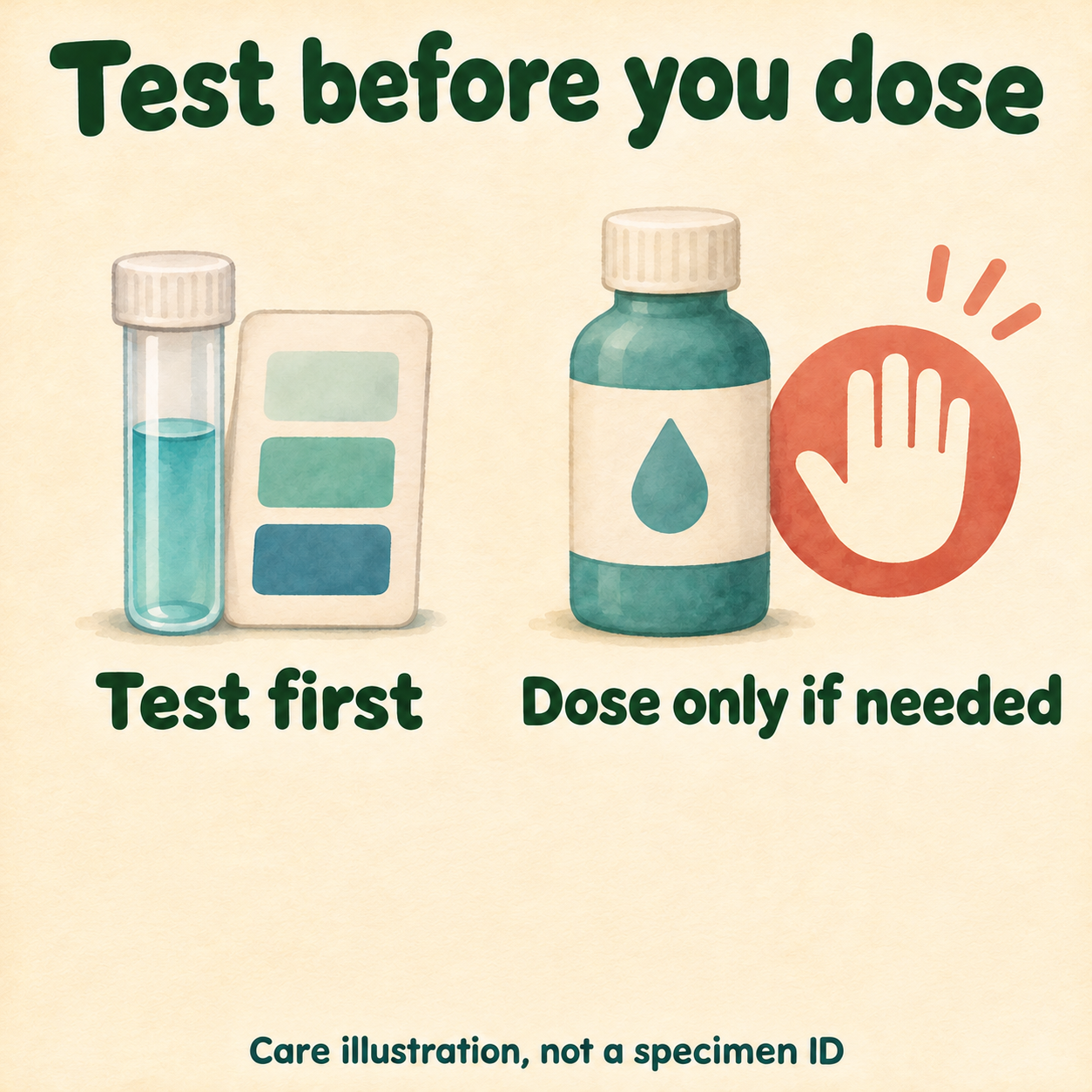
A reef does better with a steady routine than a cupboard full of quick fixes. Check temperature and salinity. Test the water, record the results, and keep up with water changes and filter care. Test before adding a supplement. Follow its directions only when the results show a need.
Water evaporates. Salt does not go with it. Replace evaporation with suitable fresh top-off water, and check salinity rather than guessing from the waterline.
Tiny algae living inside zoas use light and help feed their hosts. Suitable fine coral foods can add to that energy supply. If you try feeding, start small. Watch whether the polyps take food and whether leftovers settle on the colony.
More powder does not automatically mean more polyps. Uneaten food can spoil the water. Keep an eye on nutrient tests as well as the coral. No Jungle Juice-specific feeding dose or growth timetable is established by the sources checked here.
Sources: [OATA coral polyps](https://ornamentalfish.org/what-we-do/advice-information/care-sheets/corals/how-to-look-after-coral-polyps/), [Red Sea testing and supplement instructions](https://g1.redseafish.com/wp-content/uploads/2024/03/24965_Complete-Reef-Care-Manual_ECJ_V24A-WEB.pdf), [Tidal Gardens zoanthid care](https://tidalgardens.com/articles/coral-care-articles/zoanthus-coral-care.html).
4. A careful arrival
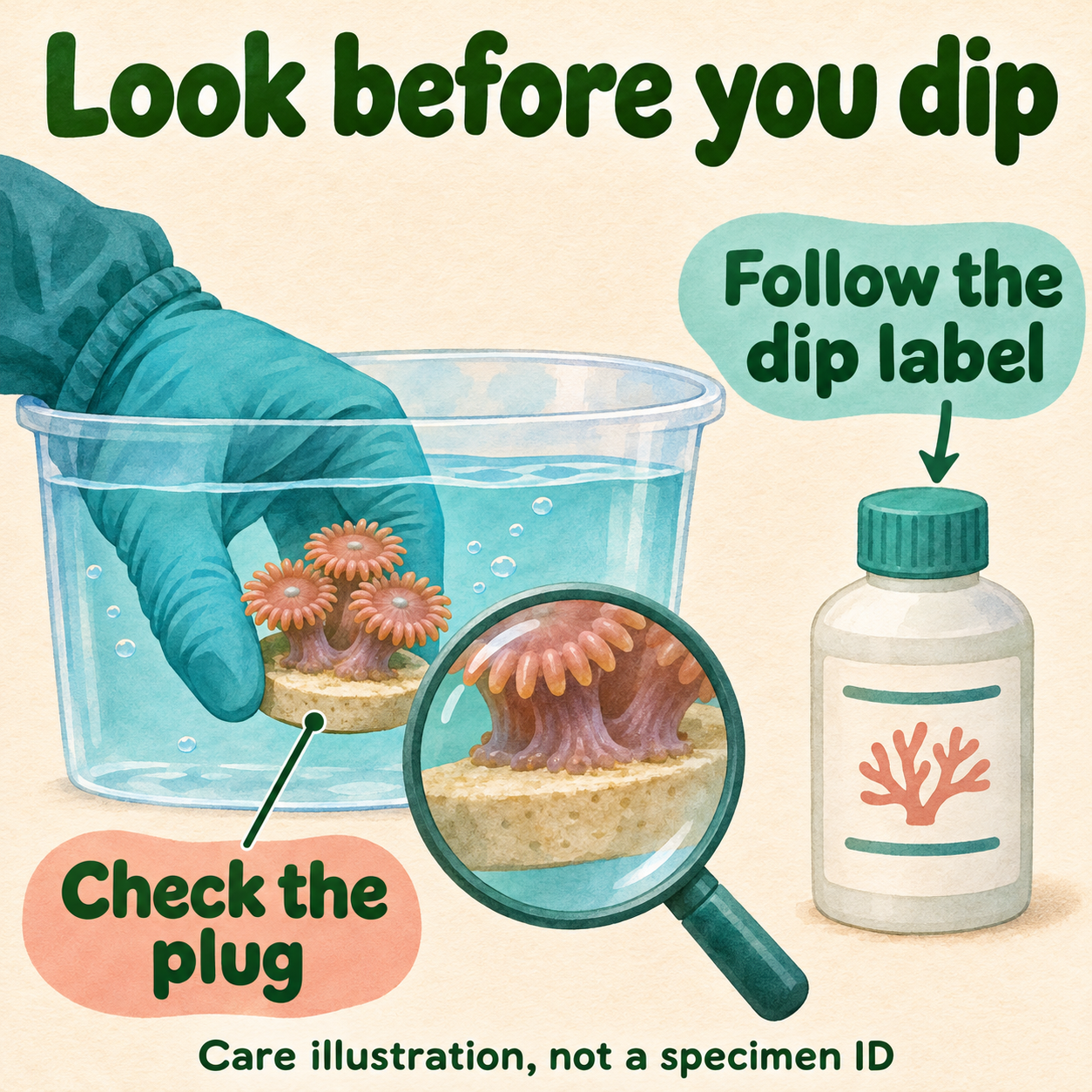
Before opening the bag, prepare a safe workspace. Put on waterproof gloves and eye protection. Have separate containers ready for the dip and rinse. Keep children and pets away.
Follow the seller's acclimation directions. Inspect the frag, its base and the underside of its plug. A tiny hitchhiker is easier to deal with before it reaches a rock-filled reef.
Use a coral dip suitable for zoanthids. Follow the current label on the exact product and strength you own. Do not borrow a dose or time from another bottle. Keep the dip in its separate container. Rinse as the product directs with clean, suitable salt water before moving the coral onward. Never pour dip solution or shipping water into the display.
A dip is one step, not a pest-free certificate. Eggs and hidden pests can escape a first check. A separate, properly maintained coral quarantine tank gives you a place to inspect again, including after lights out. It still needs suitable light, flow, temperature and water quality.
Sources: [Coral Rx dip instructions](https://coralrx.com/effectively-dip-corals-in-coral-rx/), [Coral Rx quarantine guidance](https://coralrx.com/why-you-need-to-dip-in-coral-rx-and-quarantine/), [OATA coral polyps](https://ornamentalfish.org/what-we-do/advice-information/care-sheets/corals/how-to-look-after-coral-polyps/).
5. A garden needs borders
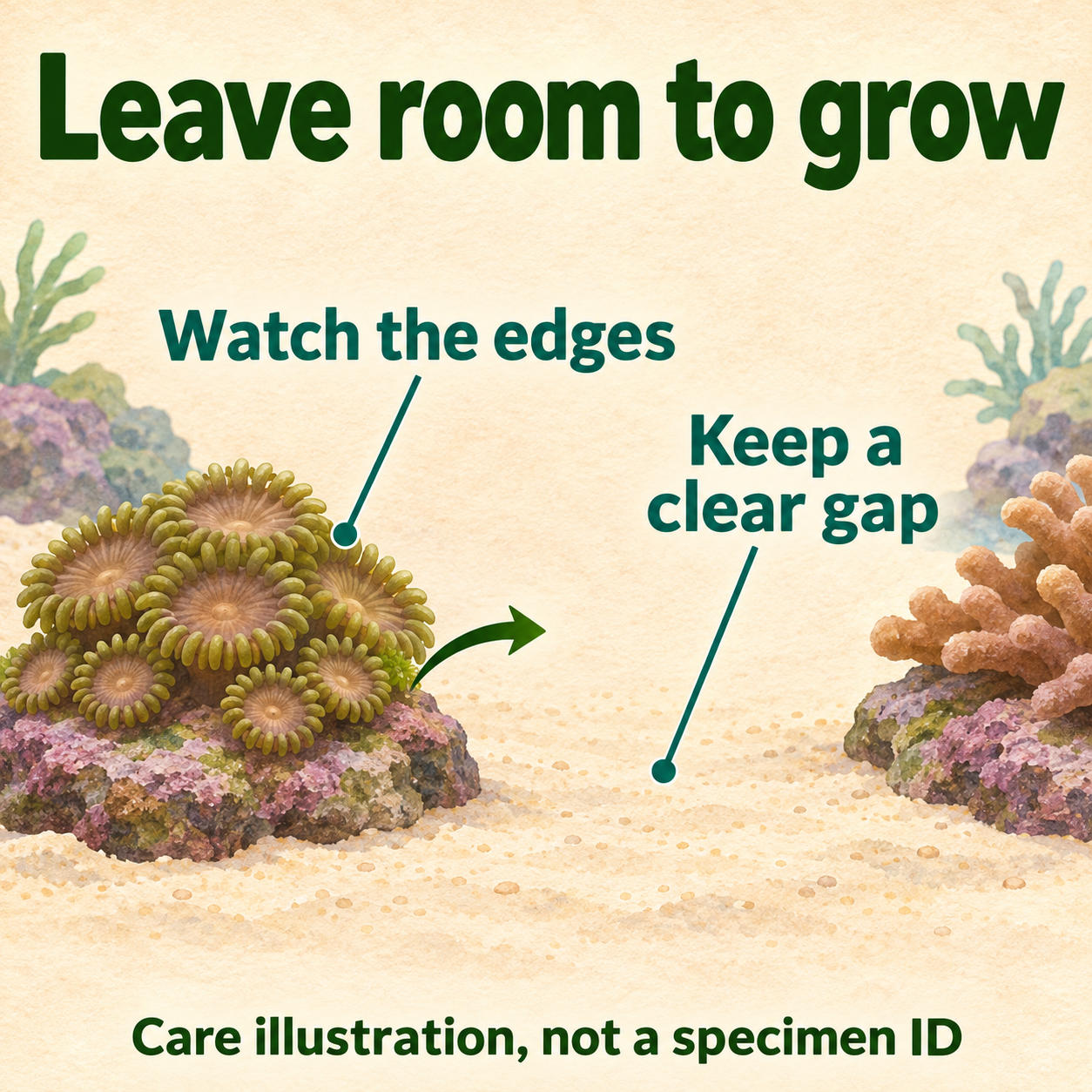
Those new polyps need somewhere to go. A separate rock makes the edge of the colony easier to watch. Keep nearby rock from becoming an easy bridge if you want to limit its spread. An island helps with planning, but it is not a permanent fence.
The old note suggested 1 to 2 inches of space. Treat that as an initial gap to watch, not a safe boundary for every neighbor. Zoas can spread, and other corals can reach beyond their daytime outlines. Check for contact as the colony grows, including at night.
SPACE stays Moderate. It is a care category, not an inch measurement or a claim that every neighbor is safe. GROWTH stays Fast, but your frag has no deadline. A slow start is a reason to observe its conditions, not to force growth with extra food or light.
Keep the name and source with any future frag. Ask an experienced coral keeper for help before cutting a colony. Fragging can expose people to coral tissue and mucus, so the safety rules matter even more.
Sources: [BRS Jungle Juice listing](https://www.bulkreefsupply.com/ecc-jungle-juice-zoanthid-eye-catching-coral.html), [Quality Marine on zoanthid growth](https://www.qualitymarine.com/news/the-love-of-zoanthids-never-fades/), [Top Shelf Aquatics Jungle Juice care](https://topshelfaquatics.com/pages/corals/jungle-juice-zoanthids-coral).
6. Palytoxin safety comes first
Zoas are wonderful to watch. Some zoanthids and palythoas can contain palytoxin, a very dangerous toxin. A trade name, photograph or beginner care label cannot tell you whether a colony is safe to touch. No toxin-test result was found for this entry. Treat its tissue, mucus and handling water with care.
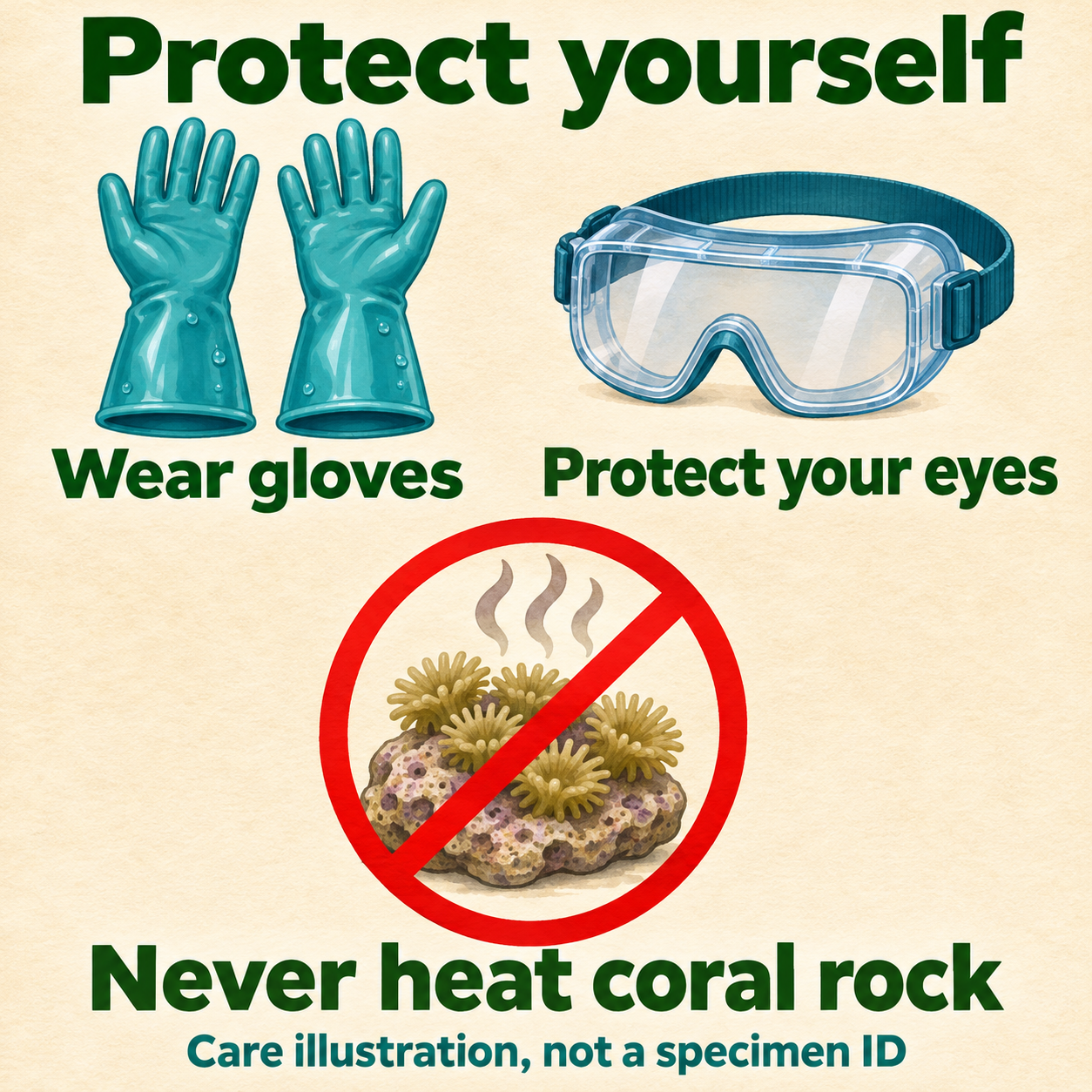
- Wear sturdy waterproof gloves and splash-resistant eye protection. Cover cuts and keep your hands away from your face.
- Handle as little as possible. Keep the colony underwater when practical and avoid splashing.
- Never boil, steam, microwave or use hot water on coral-covered rock. Never pressure-wash it or scrub it under running water. Heating or spraying can expose people nearby.
- Keep children, pets and other people away from the work area. Do not use kitchen tools or food containers for coral work. Wash your hands after taking off your gloves.
If exposure is suspected, stop handling the coral and seek urgent medical advice. Tell the clinician that palytoxin may be involved. Breathing trouble needs emergency help. Do not wait for the coral to look different before taking a person's symptoms seriously.
The safety panel already on this page still applies. This section and its picture add reminders. They do not replace it.
Sources: [CDC palytoxin exposure report](https://www.cdc.gov/mmwr/preview/mmwrhtml/mm6431a4.htm), [OATA palytoxin guidance](https://ornamentalfish.org/wp-content/uploads/How-to-avoid-palytoxin-poisoning-Oct-2023.pdf), [SA Health coral handling safety](https://www.sahealth.sa.gov.au/wps/wcm/connect/c63ced77-8ca2-408b-9389-b816f1b24a3e/Coral%2Bhandling%2Bsafety%2Btips%2Bfor%2Baquarium%2Bowners.pdf?MOD=AJPERES).
7. When polyps stay closed
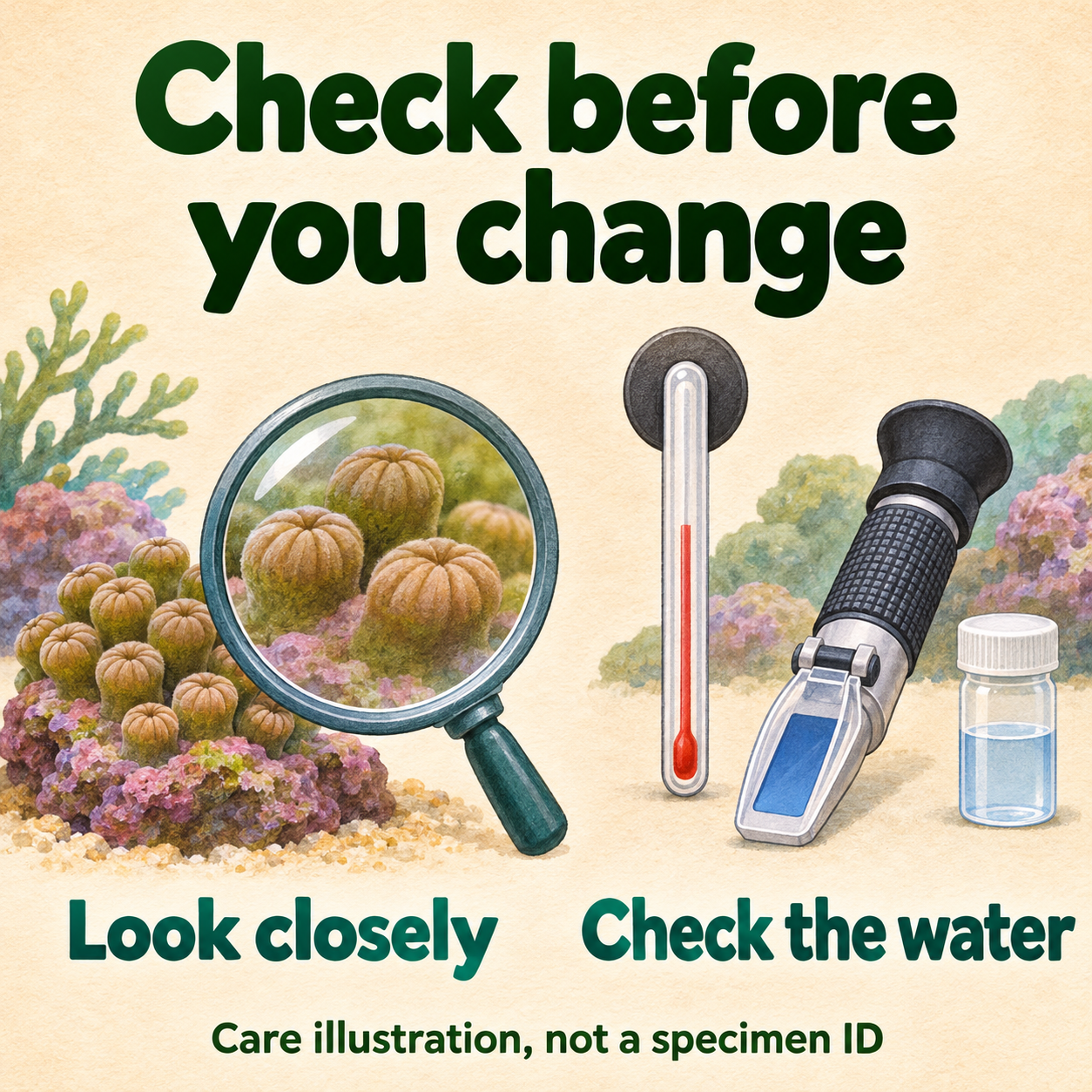
A closed polyp is a clue, not a diagnosis. Look for a pattern. Is one polyp bothered, the whole colony closed, or are other corals struggling too? What changed just before it happened?
Check the water and equipment first. Then look for debris, nearby contact or an animal picking at the colony. Inspect around the bases and under the plug. Zoanthid-eating nudibranchs, sundial snails and sea spiders are among the pests keepers watch for. Some are hard to spot, so a quick glance is not the whole inspection.
Watch for shrinking tissue, lasting loss of polyp extension, unusual pale patches or a spreading problem. Photograph what you see and ask a knowledgeable coral retailer for help if the colony is getting worse. Do not diagnose a disease from color alone or reach for several treatments at once.
When there is no urgent danger, make one sensible change and record it. That leaves you a chance to learn what helped. If the water or equipment has an obvious fault, address that fault promptly rather than waiting for a notebook experiment.
Sources: [Salty Underground zoanthid pests](https://www.saltyunderground.com/article/zoanthid-pests-and-diseases), [OATA coral polyps](https://ornamentalfish.org/what-we-do/advice-information/care-sheets/corals/how-to-look-after-coral-polyps/).
Field notes — what keepers report
Two reef keepers can try similar food and see different results. That is why a forum story is a clue, not a recipe.
On Reef2Reef, Hillerd86 wrote on July 29, 2020 that after about two weeks of Reef-Roids, some zoas opened better and grew new heads. The same report said phosphate rose, so feeding was reduced. More food came with a water-quality tradeoff.
In another Reef2Reef thread on December 12, 2020, blasterman reported that larger zoas and palys responded to Reef-Roids, while smaller zoas seemed irritated and did not show the same growth benefit. Their results were not uniform across the collection.
These are real aquarium reports, not controlled trials. They concern zoas and palys generally, not verified Jungle Juice colonies. They do not prove that a food caused the changes or that your frag will respond the same way.
Make your own small reef notebook. Write down what changed. Photograph the same spot under the same light. Change one thing at a time when it is safe to do so. Over time, your own observations become more useful than another tank's recipe.
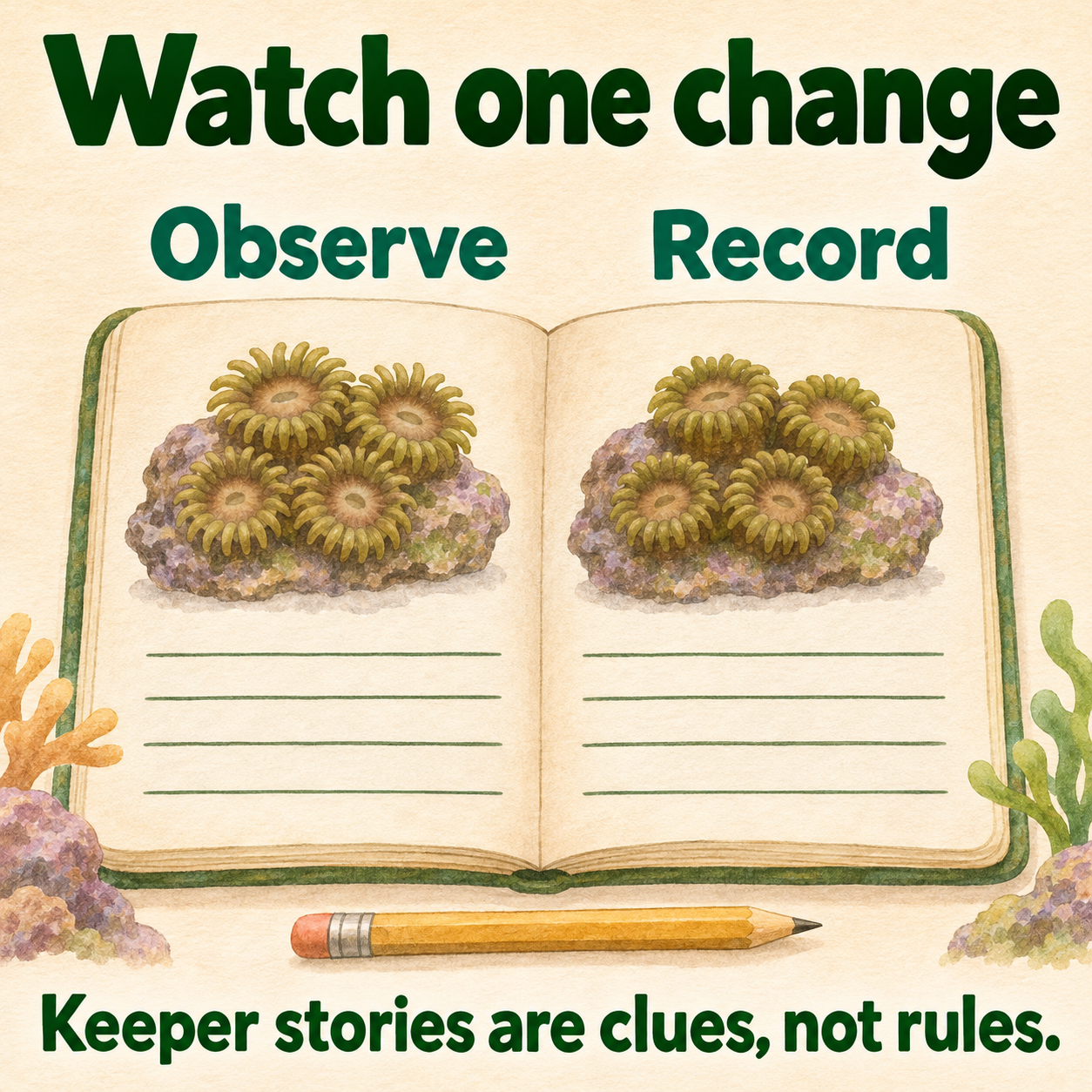
Sources: [Hillerd86, Zoa growth, post 20](https://www.reef2reef.com/threads/zoa-growth.736172/post-7777751), [blasterman, Reef Roids, post 10](https://www.reef2reef.com/threads/reef-roids.783871/post-8317674).
Field Notes
Related species
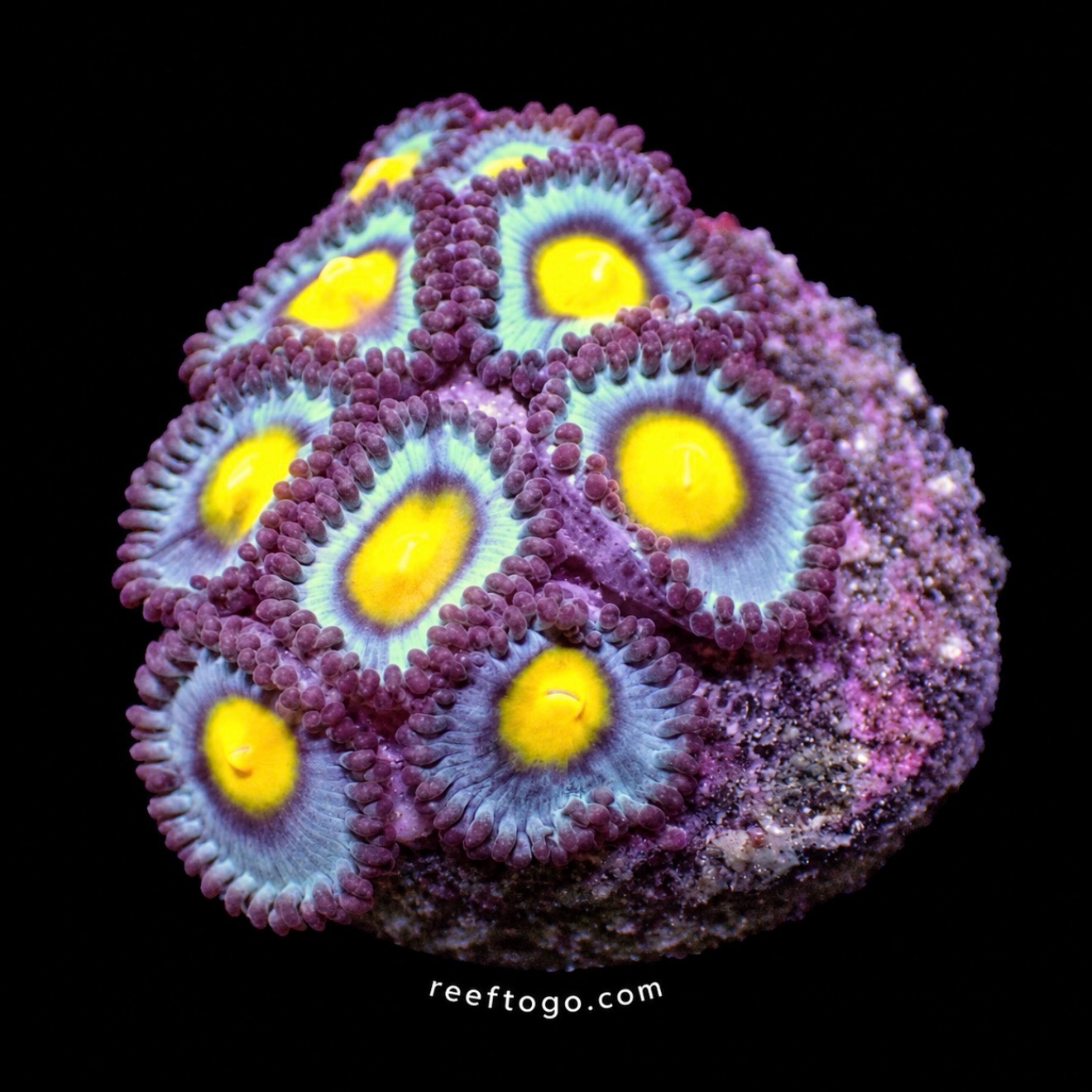
Alien Eye zoas
Zoanthus sp
Same genus
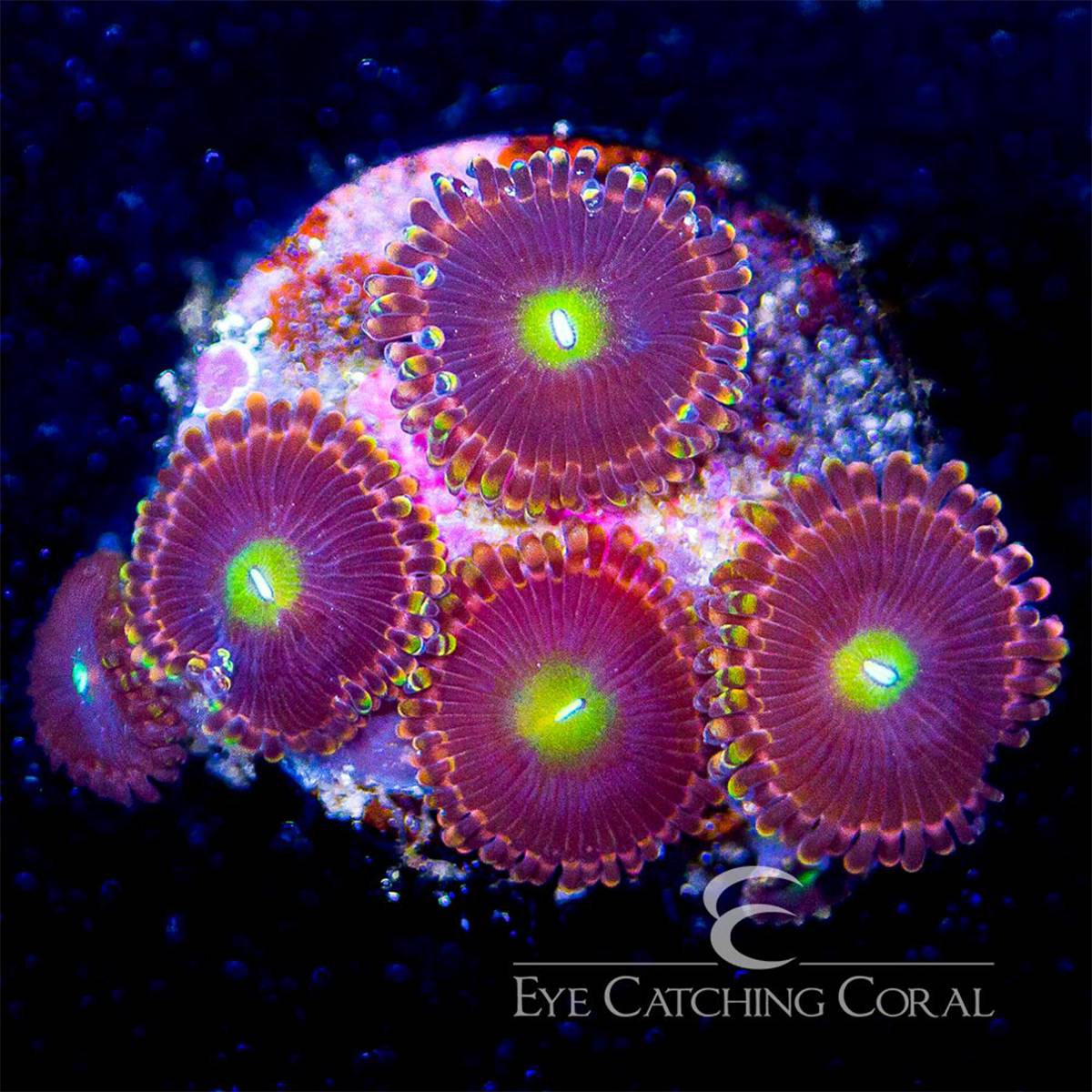
Antimatter zoas
Zoanthus sp
Same genus
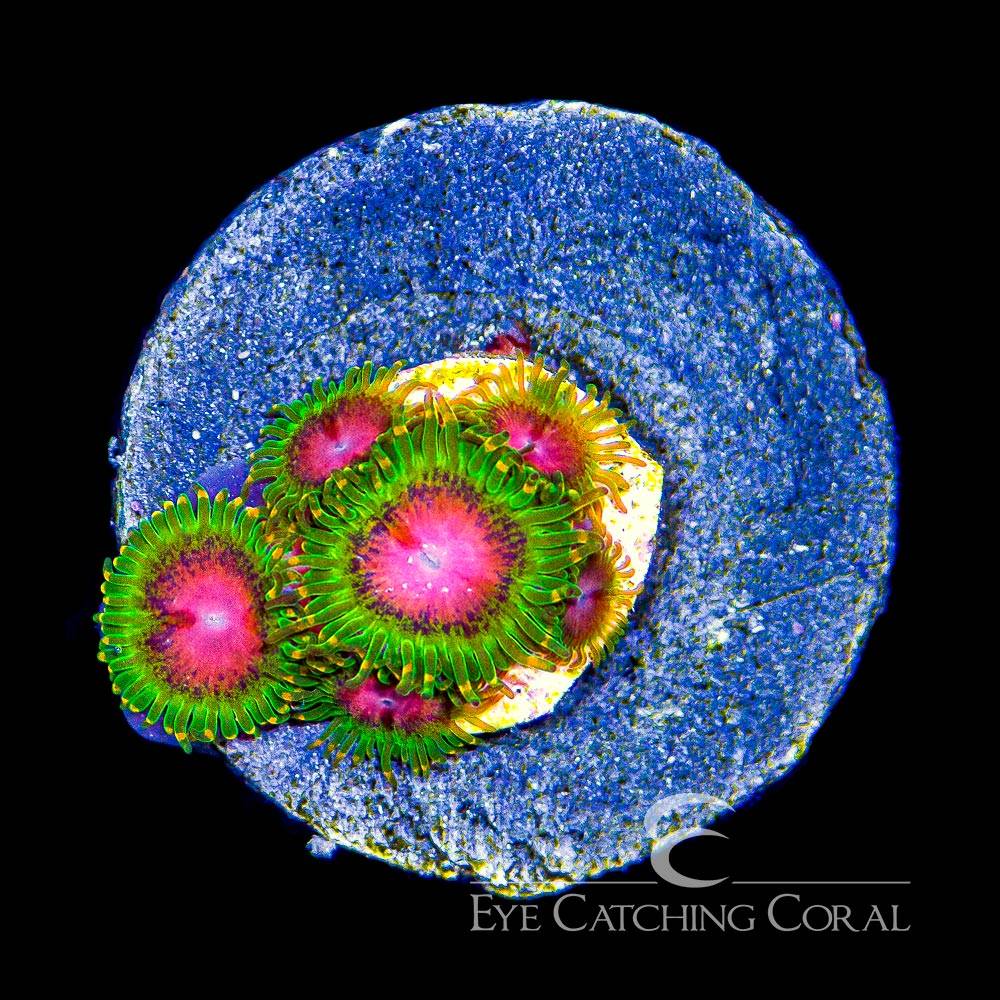
Awesome Blossom zoas
Zoanthus sp
Same genus
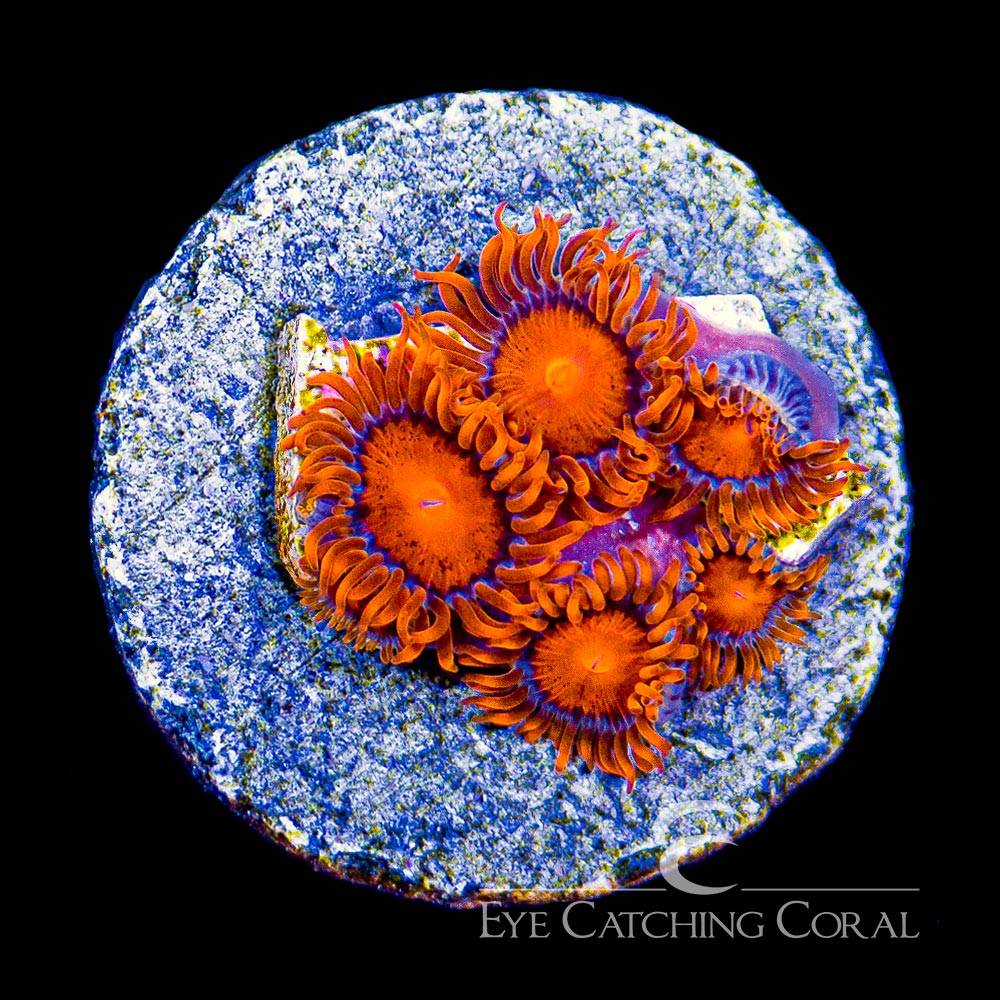
Bam Bam zoas
Zoanthus sp
Same genus
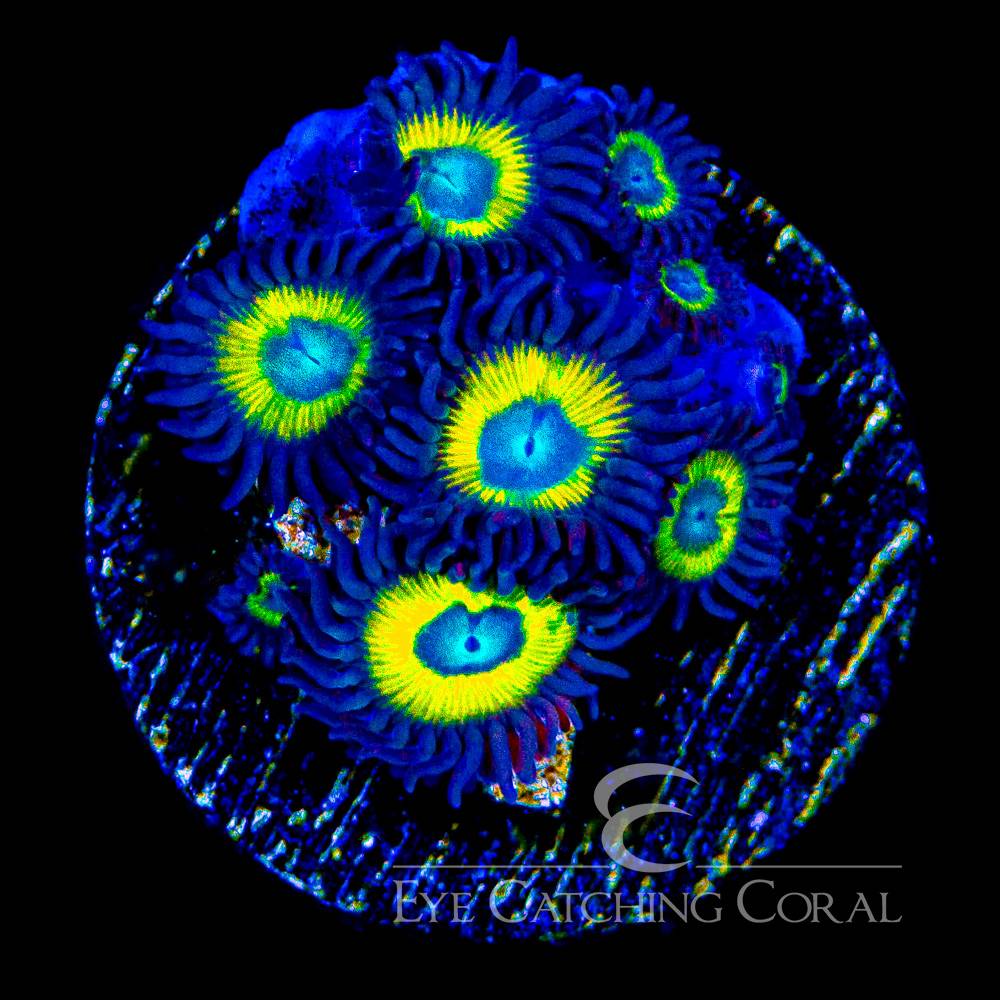
Black Bella zoas
Zoanthus sp
Same genus
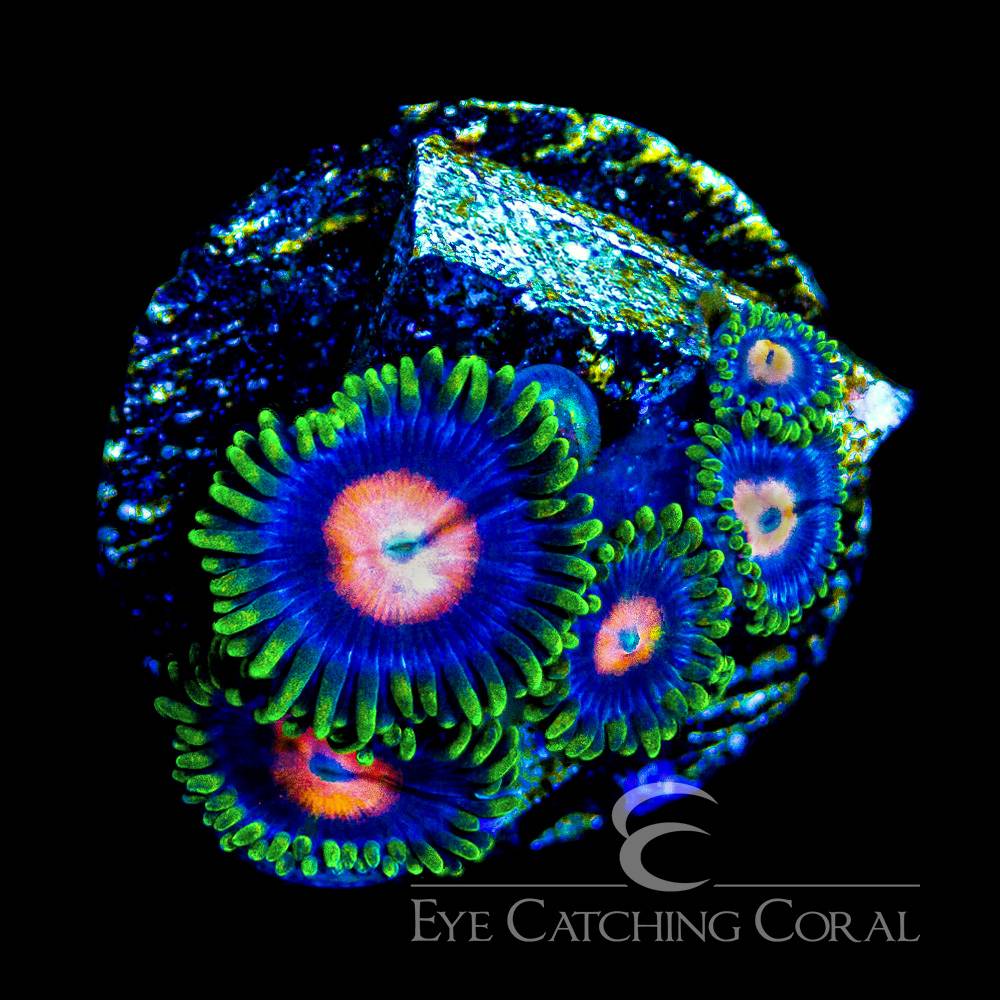
Blow Pops zoas
Zoanthus sp
Same genus
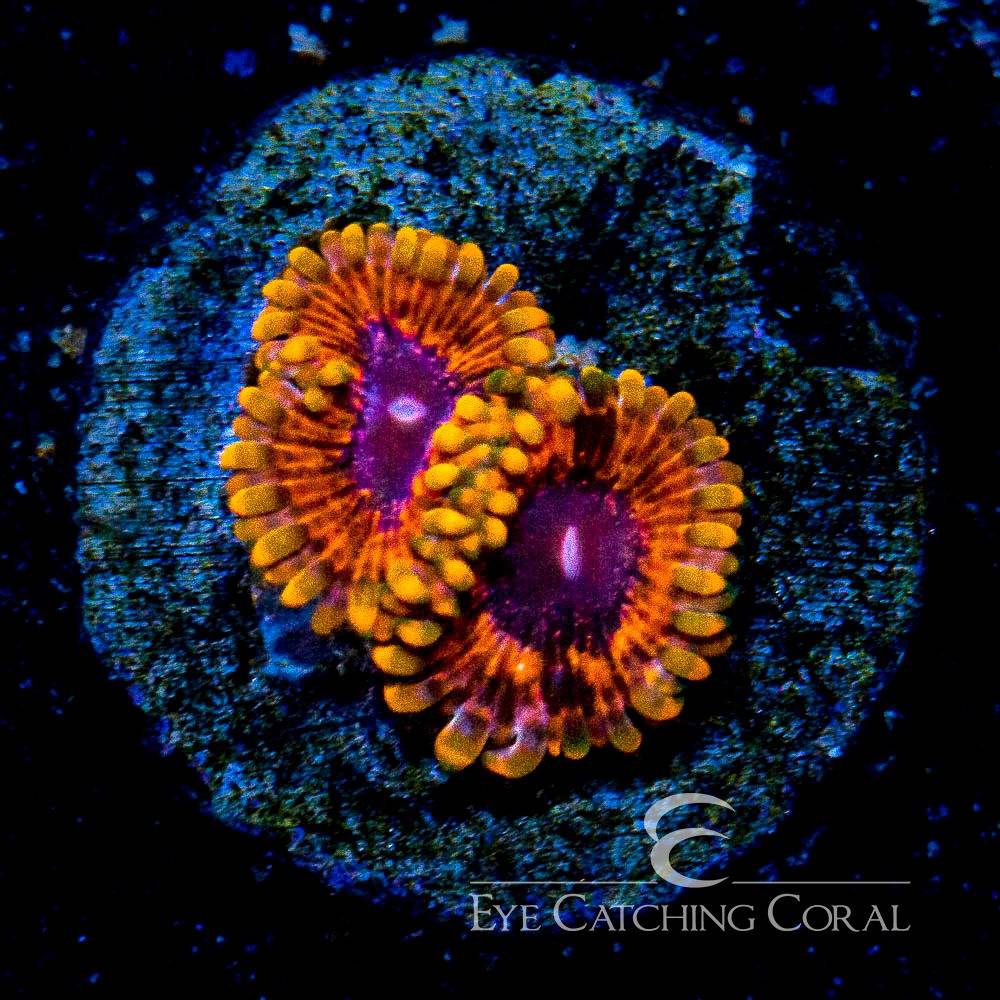
Burning Ember zoas
Zoanthus sp
Same genus
Burning Suns zoas
Zoanthus sp
Same genus