Lakers zoas
Zoanthus sp
Palytoxin safety
Some zoanthids and palythoas can contain a potent toxin. Wear sturdy waterproof gloves and eye protection, minimize handling, and keep colonies submerged when possible. Never boil, steam, pressure-wash or scrub colonized rock under running water. Keep other people and pets away during handling. If exposure is suspected, seek urgent medical advice and tell the clinician about possible palytoxin exposure.
Sources: CDC: palytoxin exposure · OATA: avoiding palytoxin poisoning
Gallery
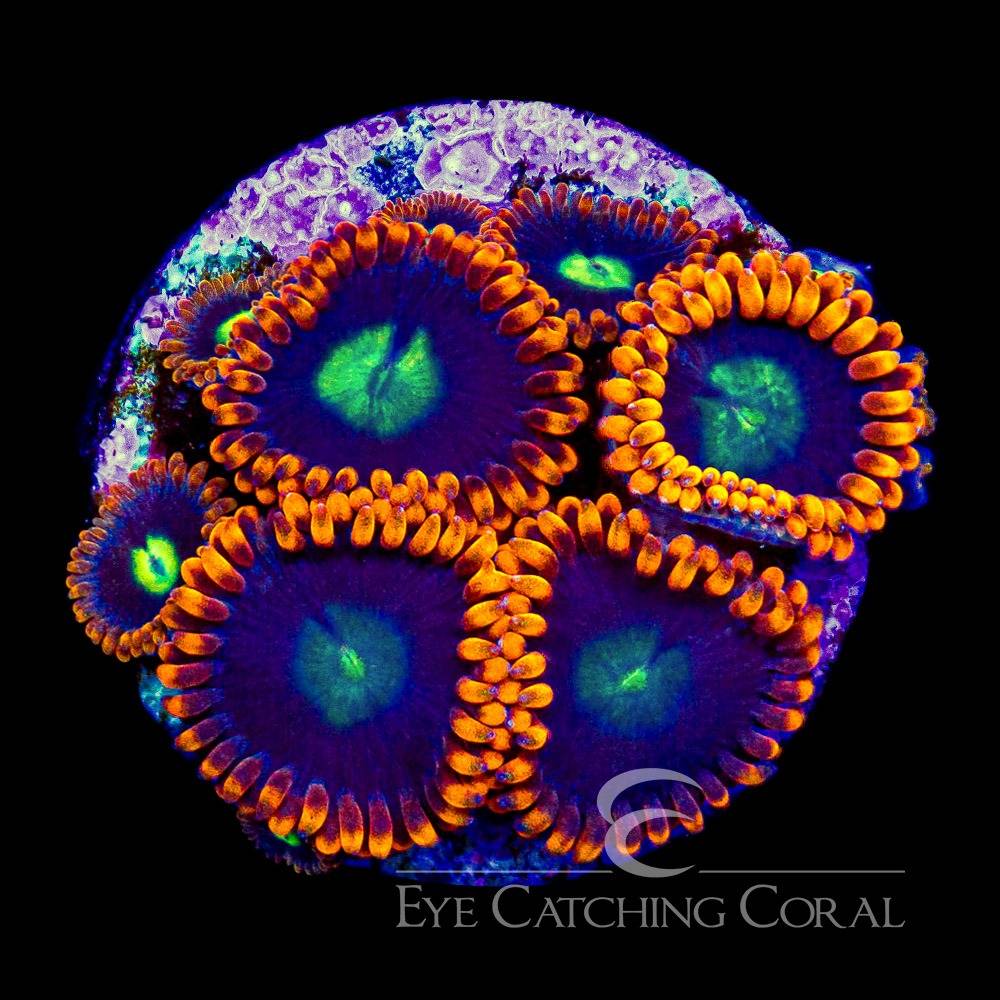
# Lakers zoas
Care at a glance: CARE Beginner · LIGHT Low-Med · FLOW Med · PLACE Mid · SPACE Moderate · GROWTH Fast
Meet Lakers zoas
A little patch of zoas can become a busy garden of button-like polyps. Each polyp is a small animal. New polyps bud beside the old ones, gradually spreading across a hard surface. [Vivid Aquariums](https://vividaquariums.com/collections/zoanthus-sp/products/la-lakers-zoanthids)
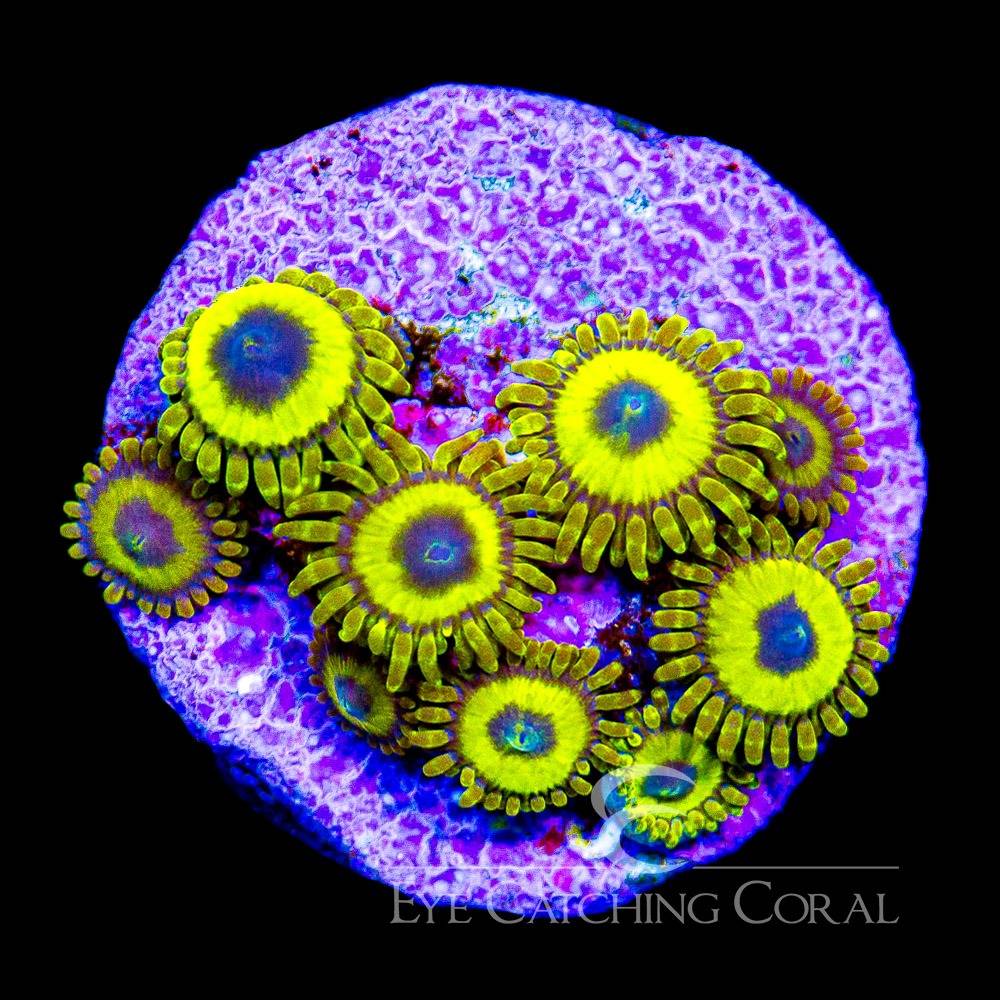
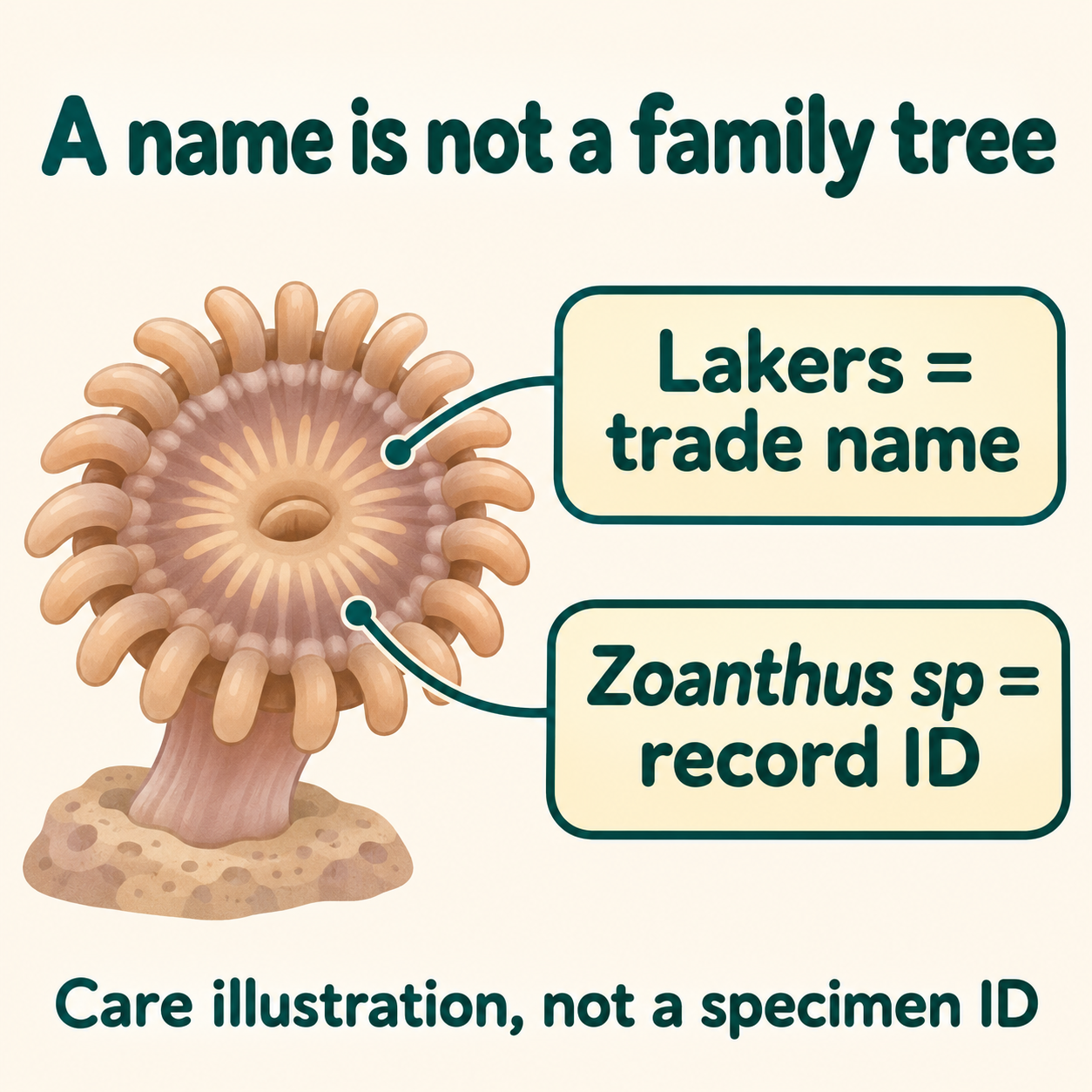
Lakers is a trade name. This entry stays at Zoanthus sp, meaning the species is not settled here. A matching shop name does not prove two sellers have the same line. The named listings below help with care, but do not prove where this colony came from. No color or family-history claim is being made from its photo. [BRS / Eye Catching Coral](https://www.bulkreefsupply.com/ecc-lakers-zoanthid-eye-catching-coral.html), [Tidal Gardens](https://tidalgardens.com/stock-la-laker-zoanthids.html)
The care card's Beginner and Fast labels are useful starting clues, not a promise of easy handling or a new polyp every week. Settling in and growth vary. Read the safety section before touching the frag.
Light, flow and a little island
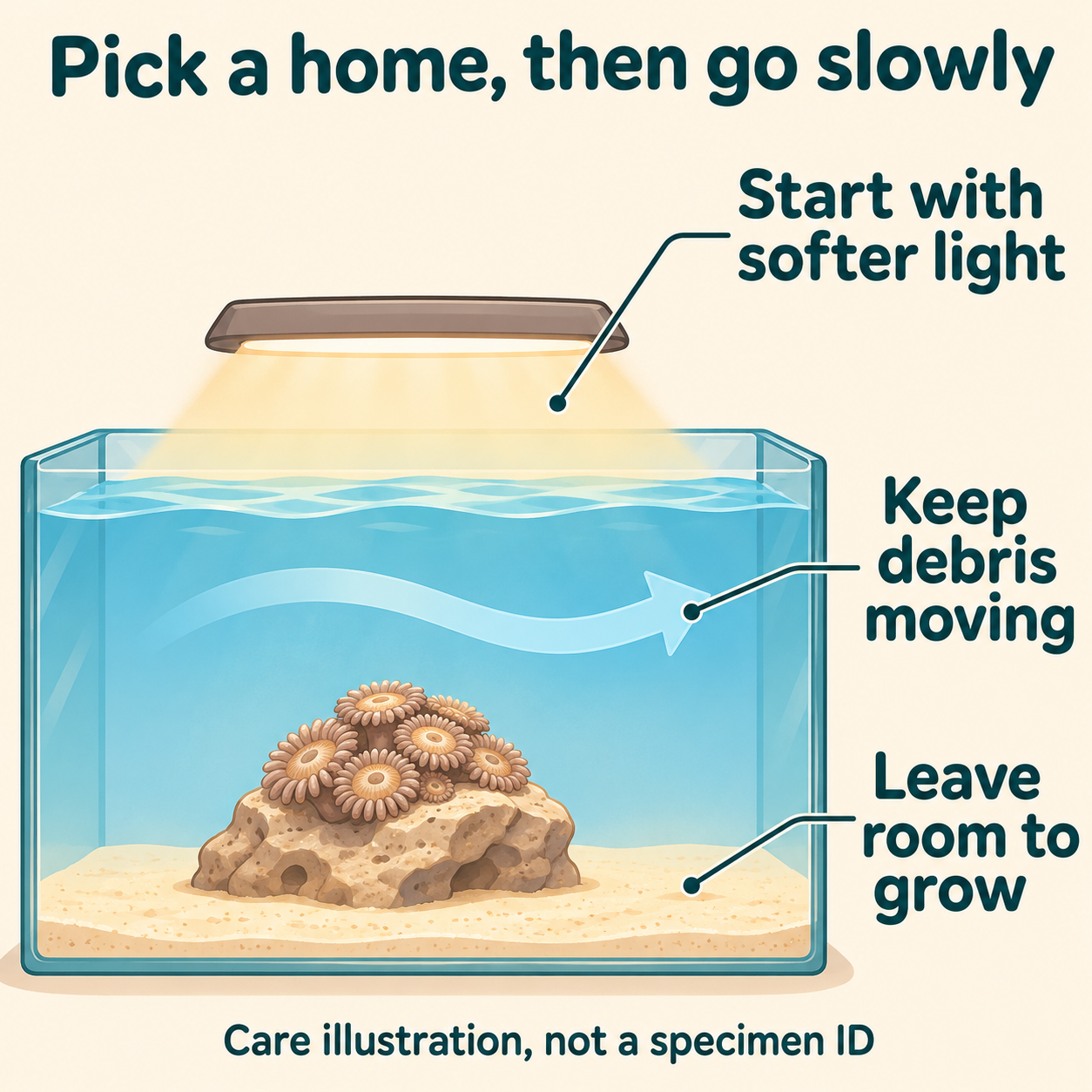
Start in softer light and give the frag time to settle. Raise light gradually if needed. Low-Med is a starting category, not one lamp setting for every tank. A bright-looking photo cannot tell you how much light reached the coral. [Tidal Gardens](https://tidalgardens.com/stock-la-laker-zoanthids.html)
Choose a secure spot with moving water that carries loose dirt away. Avoid a hard jet that keeps the polyps shut. Mid-to-lower rockwork can work; the light and flow at that spot matter more than its height. [BRS / Eye Catching Coral](https://www.bulkreefsupply.com/ecc-lakers-zoanthid-eye-catching-coral.html)
A separate, removable rock makes spreading easier to watch. Keep the mat clear of sand and check the edges as it grows. An island helps with management, but is not an escape-proof fence. [Vivid Aquariums](https://vividaquariums.com/collections/zoanthus-sp/products/la-lakers-zoanthids)
Leave room for both the zoas and their neighbors. Watch how far nearby corals reach, including after dark. There is no universal safe gap in inches. SPACE means aggression on this care card; it is not a distance measurement. This is cautious placement advice, not a measured Lakers stinging range.
Keep the water steady
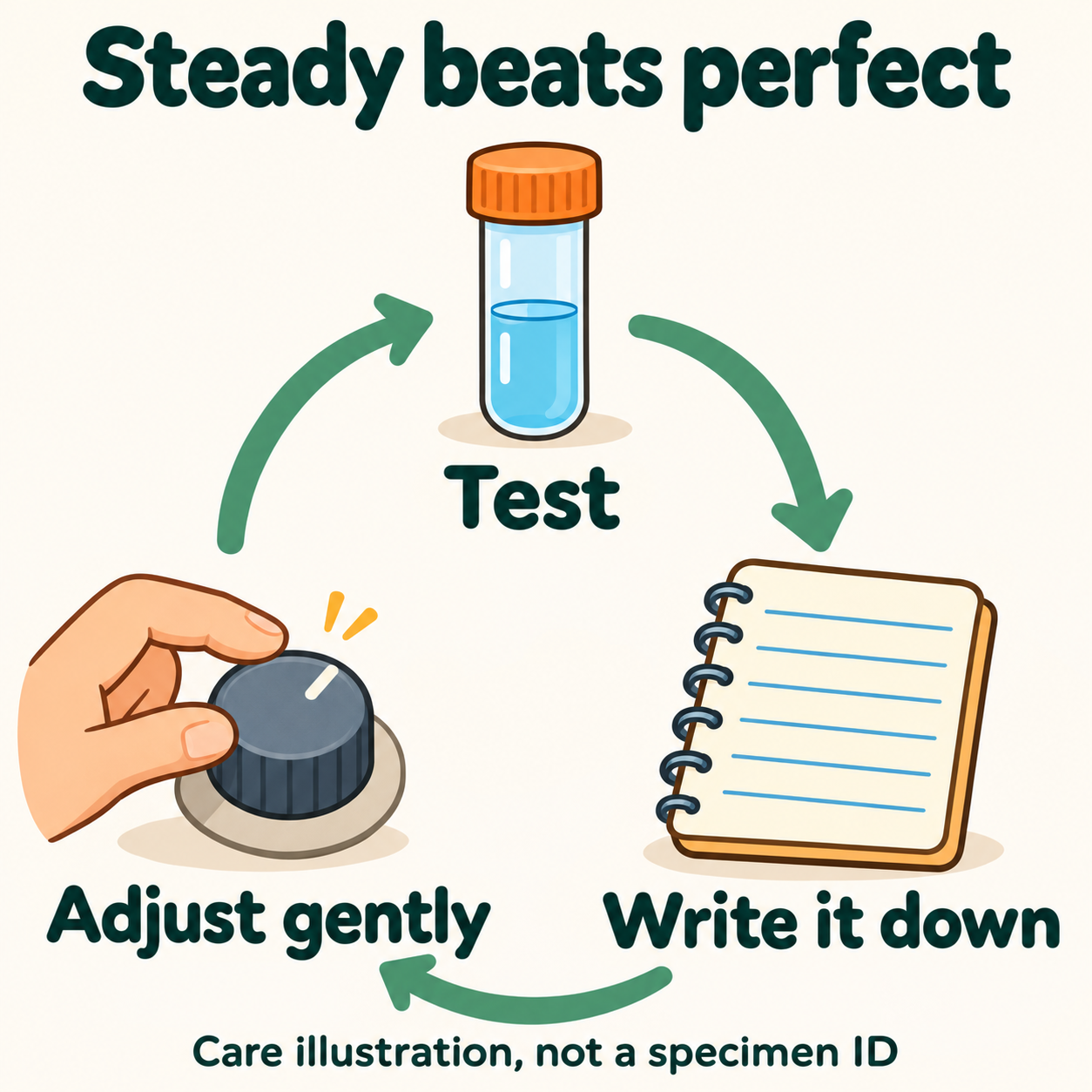
Think steady routine, not a chase for a perfect number. Check salinity, temperature and your reef's usual water tests. Write down the results, maintenance and any changes. Test before dosing, and make measured corrections rather than several big changes at once. [Red Sea reef-care manual](https://g1.redseafish.com/wp-content/uploads/2024/03/24965_Complete-Reef-Care-Manual_ECJ_V24A-WEB.pdf)
Watch nitrate and phosphate, the nutrients left in the water. Do not try to strip both to zero. Too much can also bring trouble, including nuisance growth around the polyps. Aim for a stable, maintained reef rather than copying another tank's numbers. [Tidal Gardens](https://tidalgardens.com/articles/coral-care-articles/zoanthus-coral-care.html)
This guide does not call for a special Lakers supplement, a trace-element boost or a four-part dosing program. A log of your own tank is more useful than a bottle added on a guess.
Small meals, only if useful
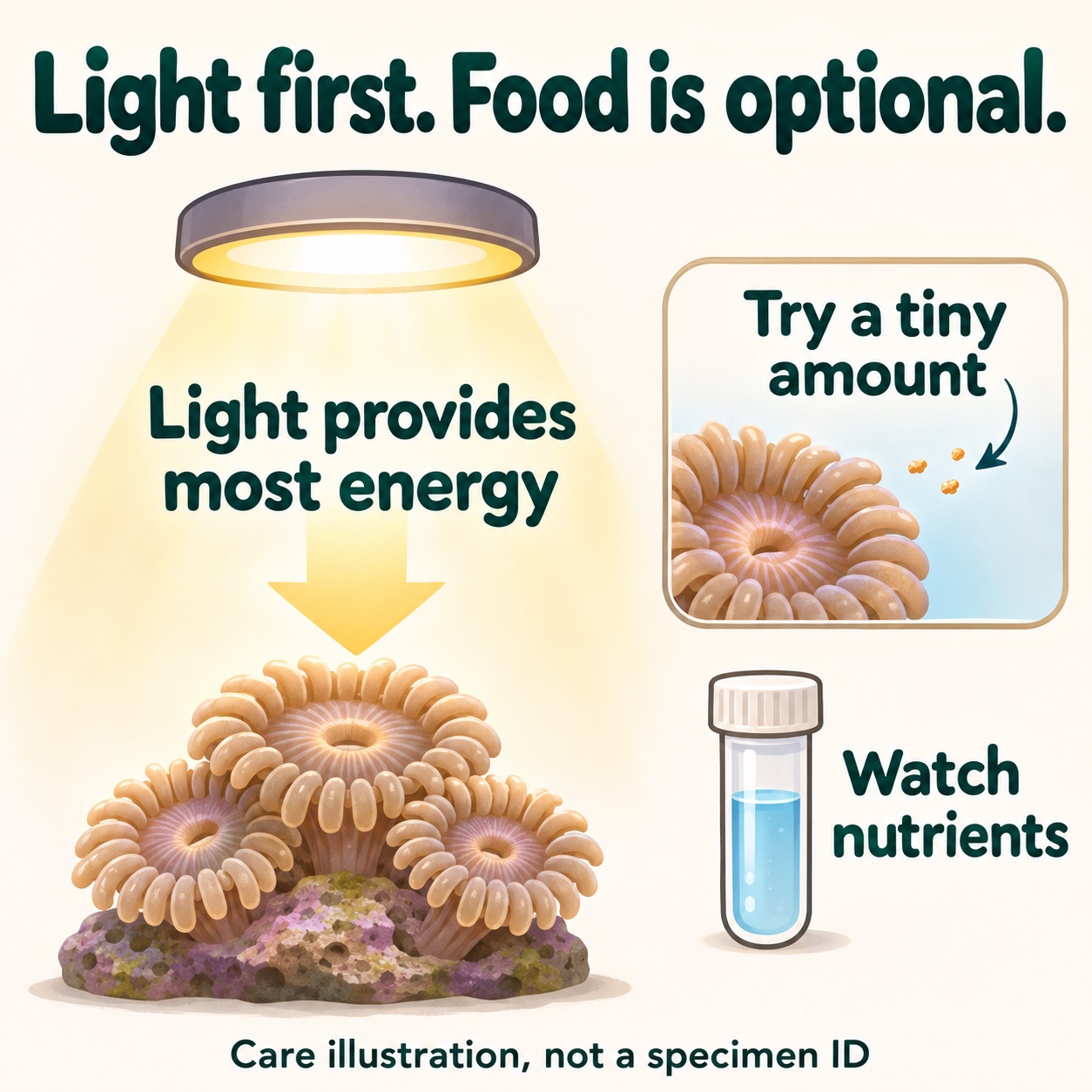
Tiny algae living inside the coral use light to make food. They supply much of the zoa's energy. Some zoas also catch fine food, but not every colony responds well to the same meal. [Tidal Gardens](https://tidalgardens.com/stock-la-laker-zoanthids.html)
Extra feeding is optional. If you try it, offer a tiny amount of suitable fine coral food rather than covering the colony in powder. Watch for actual food capture instead of assuming that a closed polyp has eaten. Stop or scale back if food collects, the polyps stay irritated, or nutrients climb. Keep notes before trying more. The keeper reports below show why a cautious trial is more useful than a fixed feeding calendar. [Hillerd86, post #20](https://www.reef2reef.com/threads/zoa-growth.736172/post-7777751), [blasterman, post #10](https://www.reef2reef.com/threads/reef-roids.783871/post-8317674)
Welcome a new frag
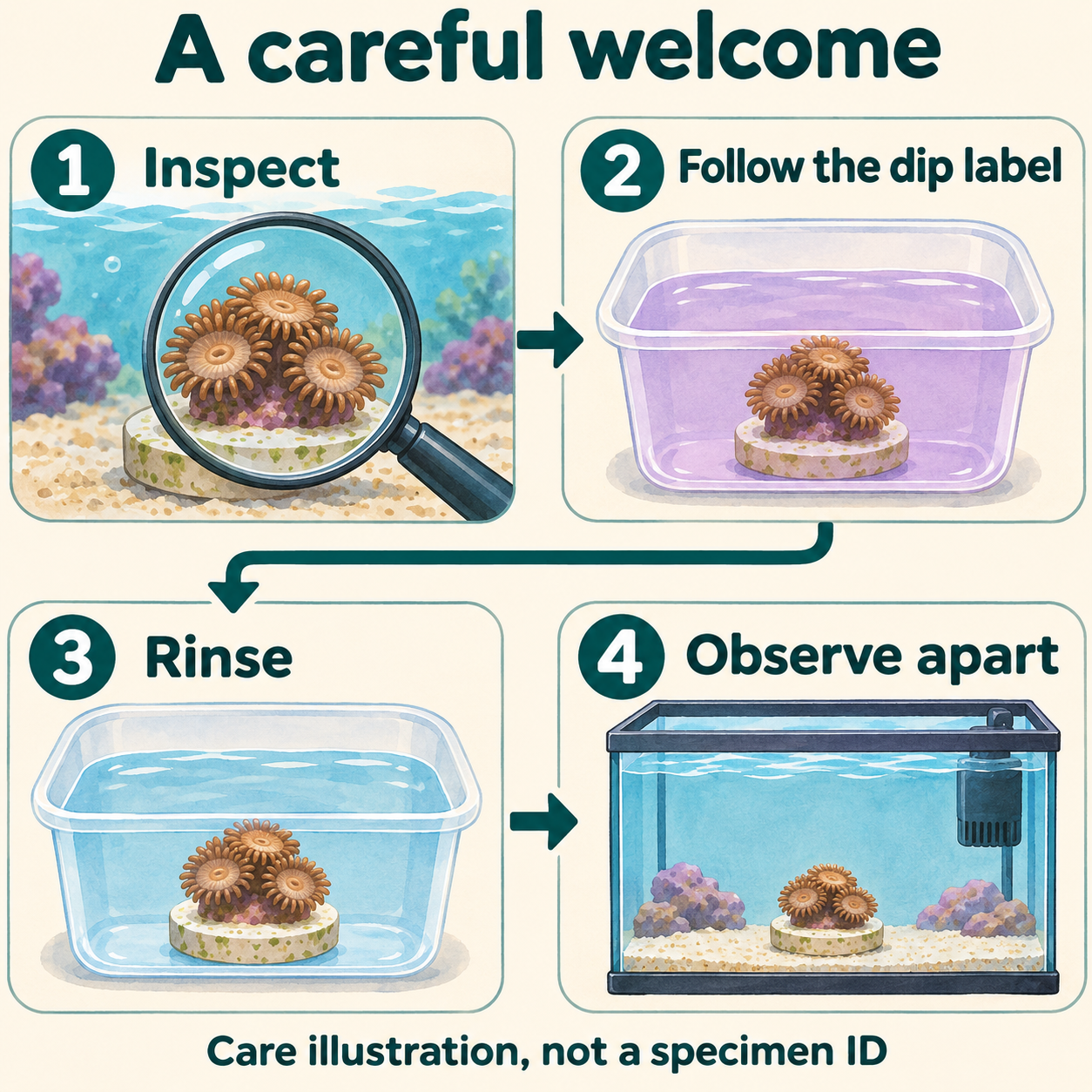
Make arrival day calm. Have the tank, tools and clean containers ready. Ask the seller how the frag was kept and follow its arrival guidance. Use the same safe-handling precautions as for an established colony.
Look closely at the plug, its underside and where the coral attaches. If using a coral dip, follow the current label for that exact product and formulation. Use a separate container and a clean saltwater rinse. Never add the dip to the display tank. Do not copy a dose or time from an unrelated bottle. [Coral Rx dipping guide](https://coralrx.com/effectively-dip-corals-in-coral-rx/), [current manufacturer directions](https://coralrx.com/)
A separate, suitable observation tank lets you watch a new frag before it joins the display. Keep checking for pests and eggs, including in hidden spots. A dip does not replace observation or prove a frag is pest-free. It also does not make zoanthids safe to handle bare-handed. [Coral Rx quarantine guide](https://coralrx.com/why-you-need-to-dip-in-coral-rx-and-quarantine/)
Look, enjoy and handle safely
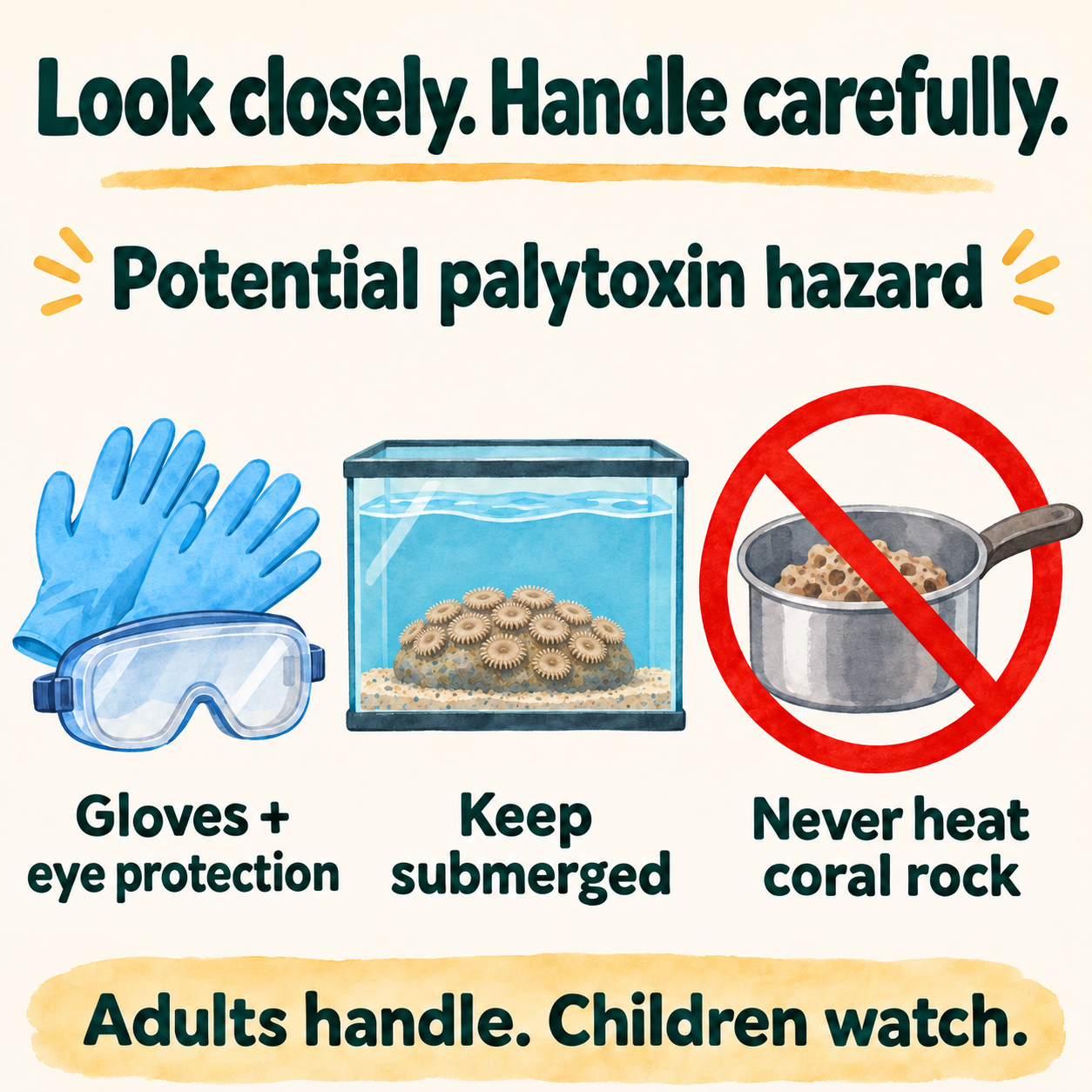
Some zoanthids can contain palytoxin, a powerful poison. A trade name, photograph or small polyp size cannot tell you that a colony is safe. Treat it as a possible hazard. Kids can enjoy watching; a prepared adult should do the handling. [SA Health](https://www.sahealth.sa.gov.au/wps/wcm/connect/c63ced77-8ca2-408b-9389-b816f1b24a3e/Coral%2Bhandling%2Bsafety%2Btips%2Bfor%2Baquarium%2Bowners.pdf?MOD=AJPERES)
Handle as little as possible. Wear sturdy waterproof gloves and eye protection. Keep the coral underwater, and keep other people and pets away from the work. Never boil, steam or heat coral-bearing rock. Avoid dry scraping, hard scrubbing, pressure-washing or cutting that can send droplets or dust into the air. Protective gear reduces exposure; it does not make risky methods safe. [SA Health](https://www.sahealth.sa.gov.au/wps/wcm/connect/c63ced77-8ca2-408b-9389-b816f1b24a3e/Coral%2Bhandling%2Bsafety%2Btips%2Bfor%2Baquarium%2Bowners.pdf?MOD=AJPERES), [CDC investigation](https://www.cdc.gov/mmwr/preview/mmwrhtml/mm6431a4.htm)
If exposure is suspected, stop the work and seek urgent medical or local poison-service advice. Breathing trouble or eye symptoms need urgent attention. Tell the clinician about the coral and possible palytoxin exposure. People nearby can be affected too. This is a safety warning, not a home-treatment plan. [OATA safety guidance](https://ornamentalfish.org/what-we-do/advice-information/care-sheets/caresheets-marine-fish/how-to-avoid-palytoxin-poisoning-if-you-keep-corals/)
When the polyps stay shut
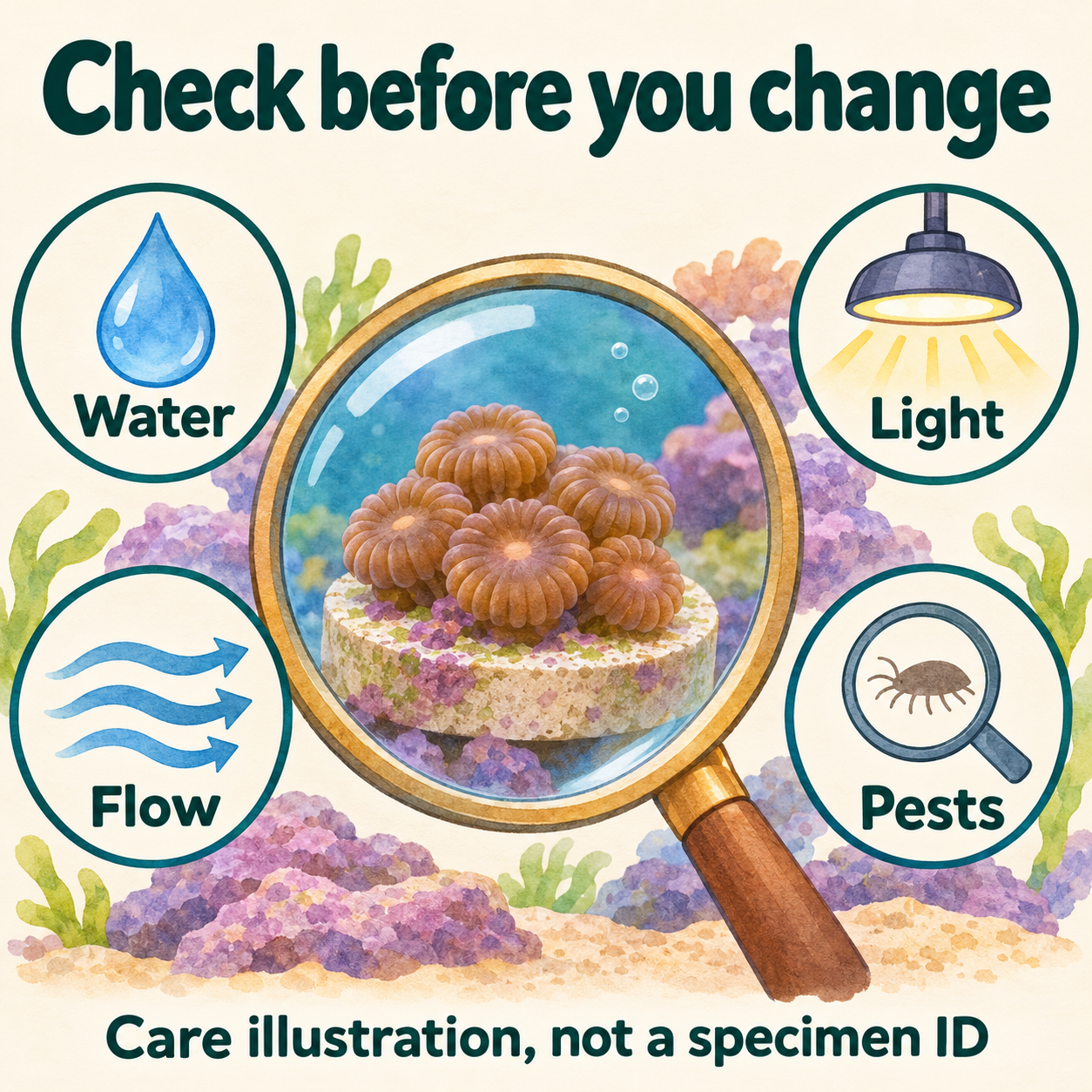
A closed polyp is a clue, not a diagnosis. Check what changed before moving the frag or reaching for a treatment. Start with water readings, the light setting and whether a pump now points at the colony. Look for settled dirt, sand, or a neighbor touching it. If it is paling after a light increase, reduce that exposure and reassess. [Tidal Gardens](https://tidalgardens.com/articles/coral-care-articles/zoanthus-coral-care.html)
Look carefully for unwanted visitors. Zoanthid-eating nudibranchs, sea spiders and sundial snails are among the known pests. Their presence needs a closer look, not an automatic guess from one blurry photo. [Coral Rx pest information](https://coralrx.com/)
Take a clear comparison photo under the same lighting. Change one likely cause at a time unless there is an immediate hazard. If tissue is disappearing or the problem is spreading, get experienced help promptly and use a separate suitable holding system if needed. Avoid repeated blind dips, improvised chemical mixes or scraping the mat. These are cautious troubleshooting steps, not a diagnosis or a Lakers-specific cure.
Field notes: what keepers saw
These are general zoa reports, not verified Lakers colonies or controlled tests.
On July 29, 2020, Hillerd86 reported that some zoas opened well and made new heads after about two weeks of Reef-Roids feeding. Feeding was reduced as phosphate rose. Two frags still did not open fully, so the result was mixed. [Zoa growth, post #20](https://www.reef2reef.com/threads/zoa-growth.736172/post-7777751)
On December 12, 2020, blasterman reported a growth response in some larger polyps but irritation and no observed growth benefit in smaller zoas. That is one keeper's experience, not proof that all small zoas refuse food. [Reef roids, post #10](https://www.reef2reef.com/threads/reef-roids.783871/post-8317674)
The useful lesson is to watch your own colony. A hopeful feeding story and a disappointing one can both be real. Neither proves what made the difference. Keep the basics steady, try small changes and let your notes guide the next step.
Field Notes
Related species
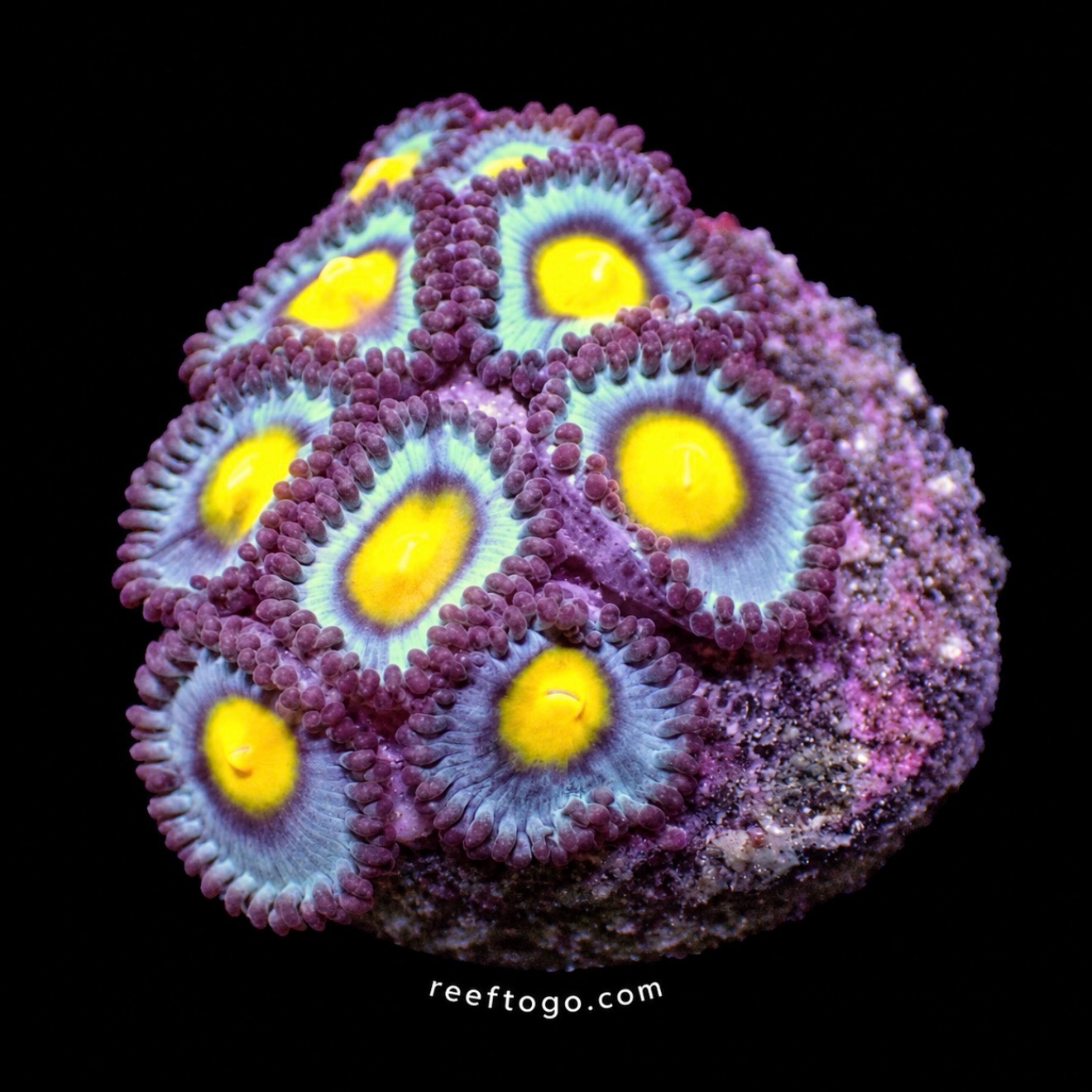
Alien Eye zoas
Zoanthus sp
Same genus
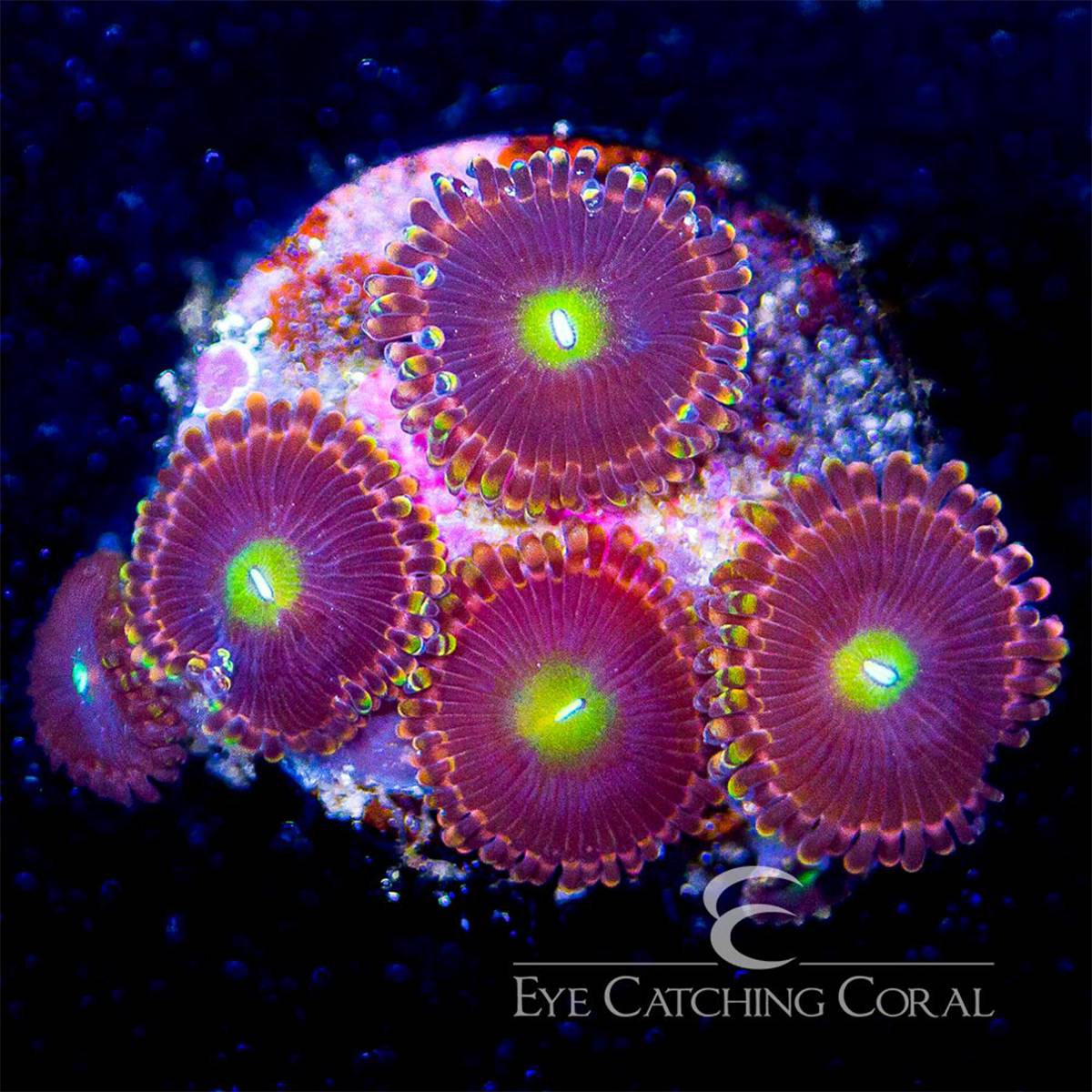
Antimatter zoas
Zoanthus sp
Same genus
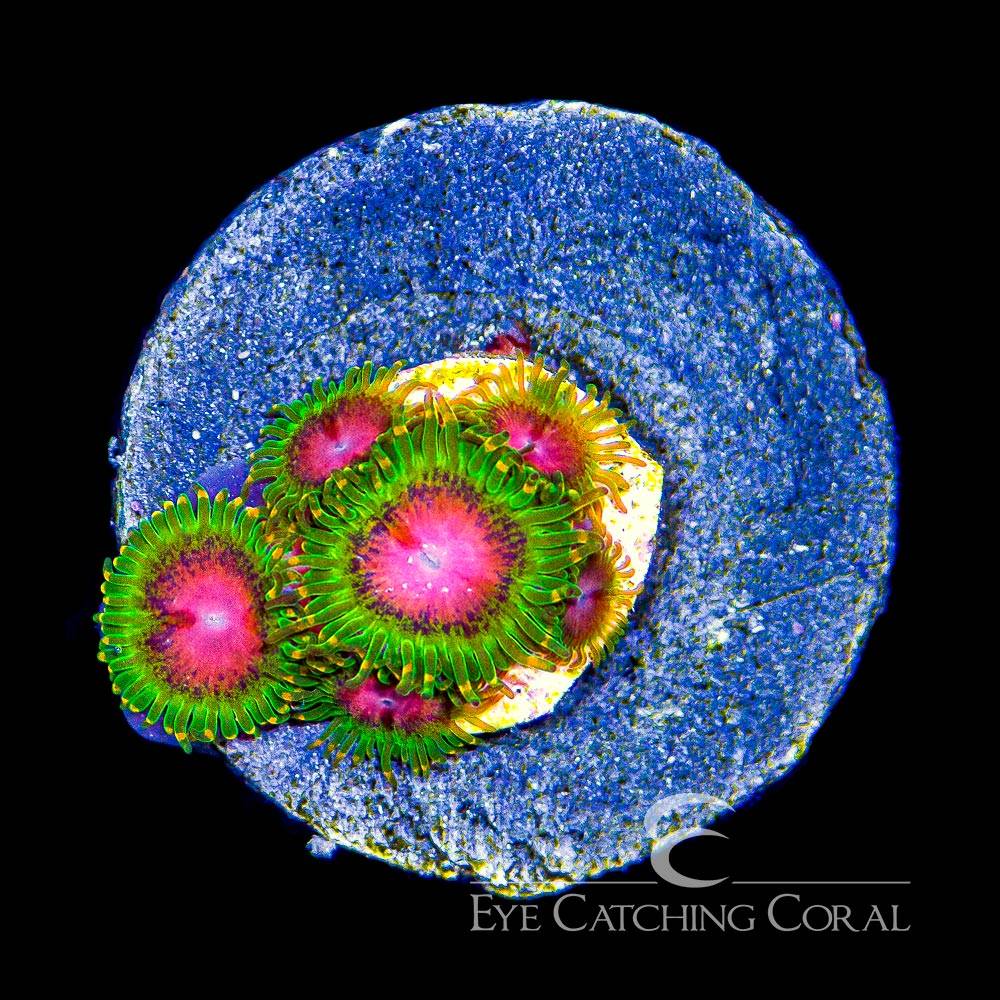
Awesome Blossom zoas
Zoanthus sp
Same genus
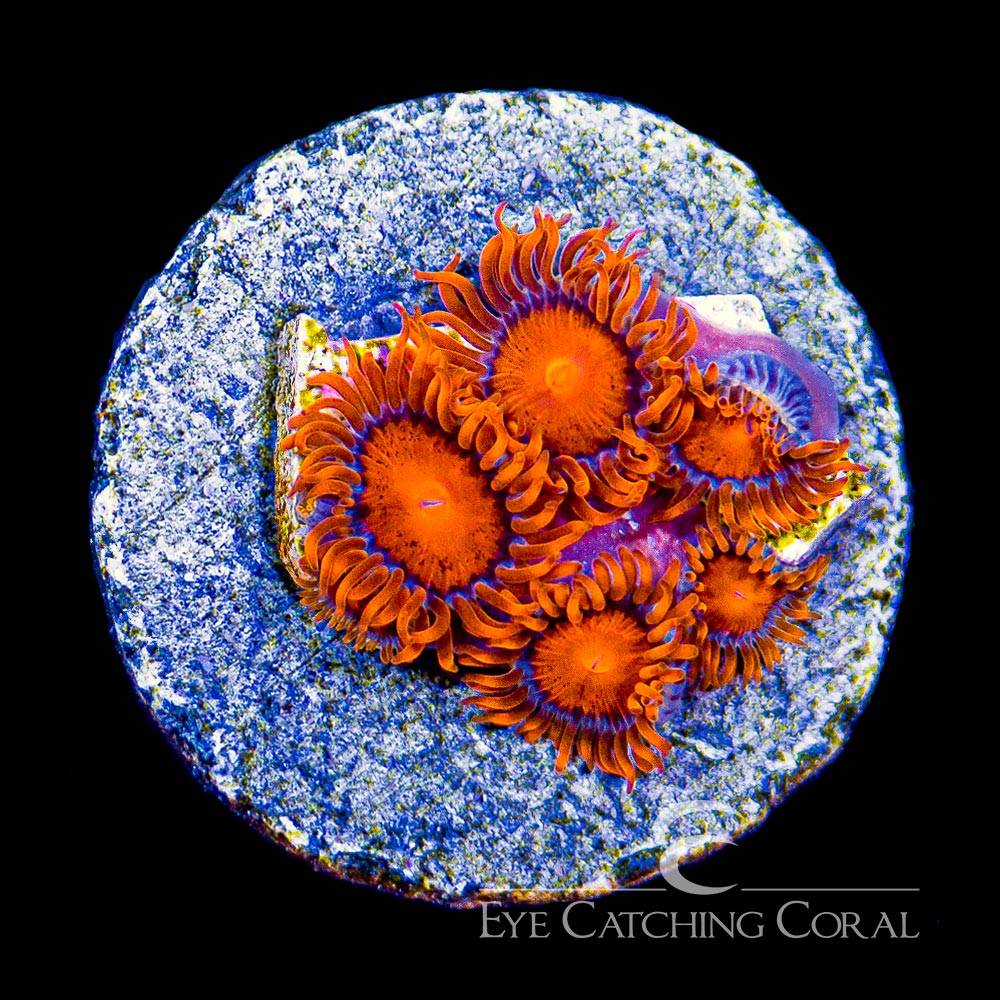
Bam Bam zoas
Zoanthus sp
Same genus
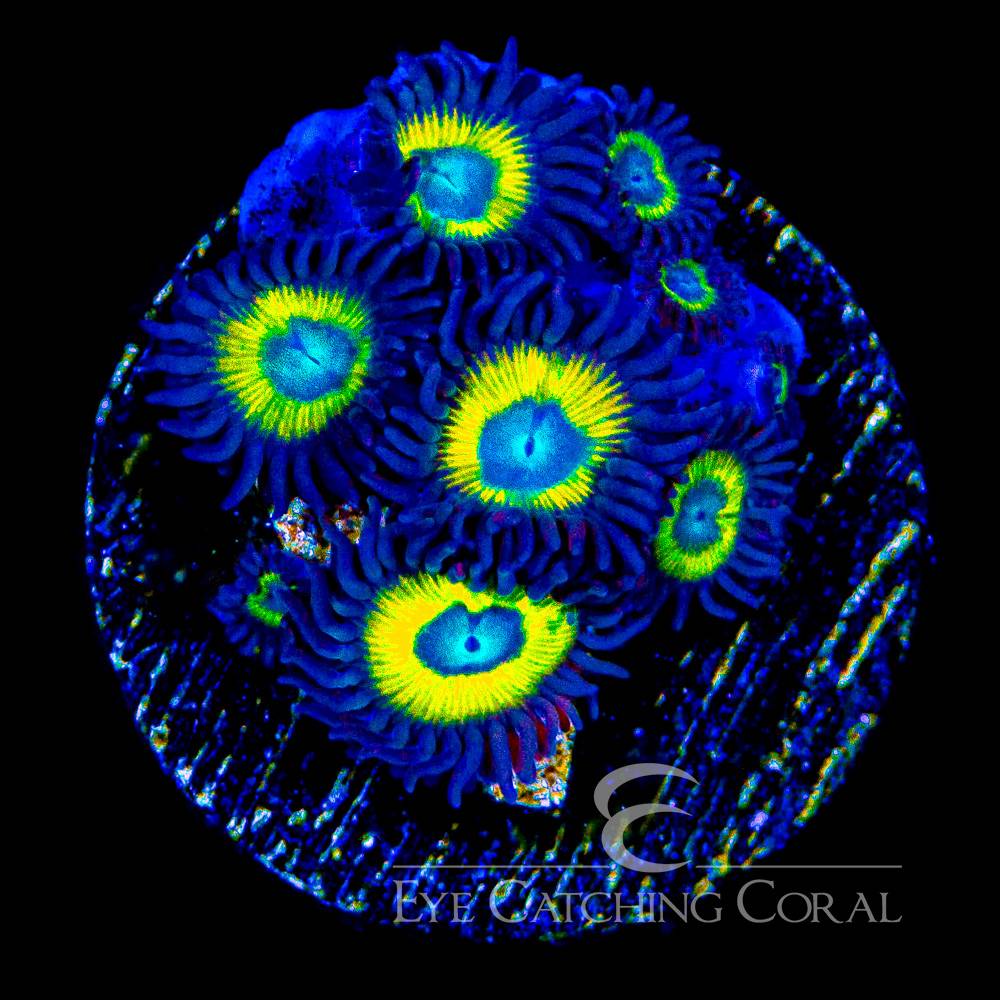
Black Bella zoas
Zoanthus sp
Same genus
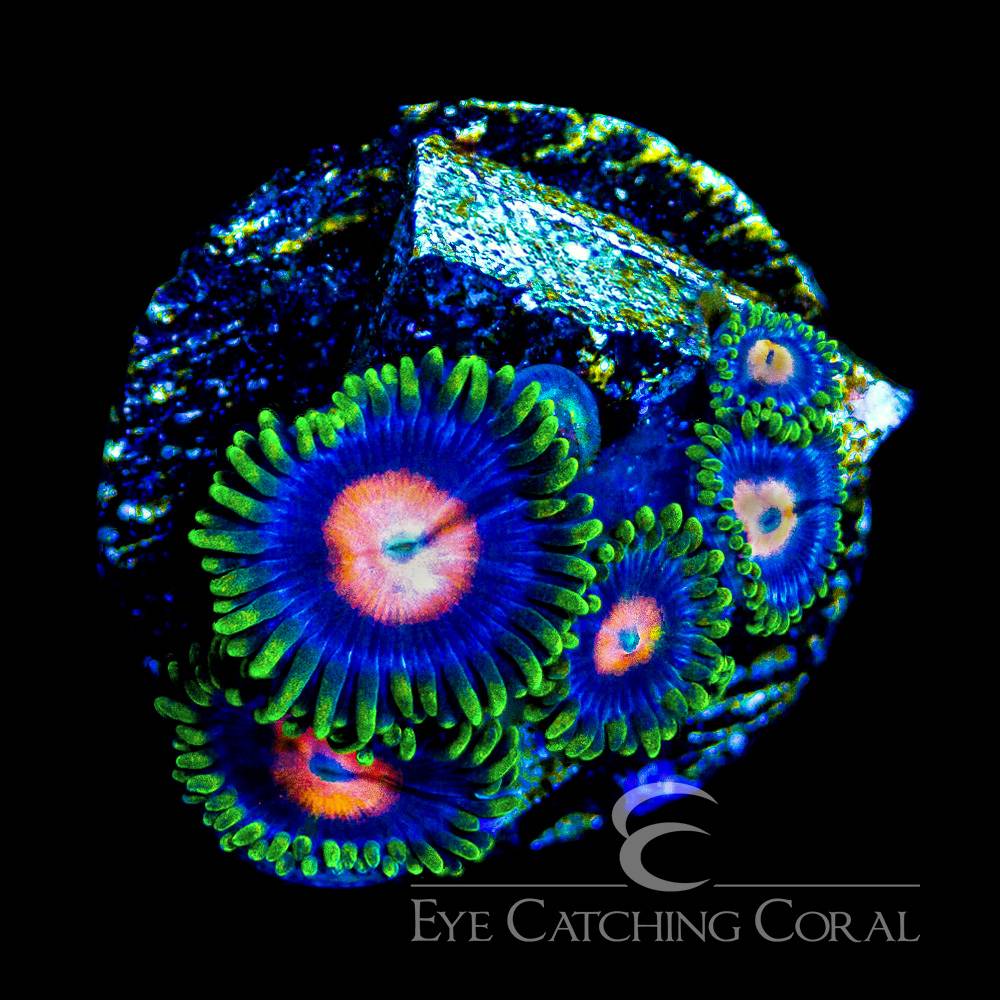
Blow Pops zoas
Zoanthus sp
Same genus
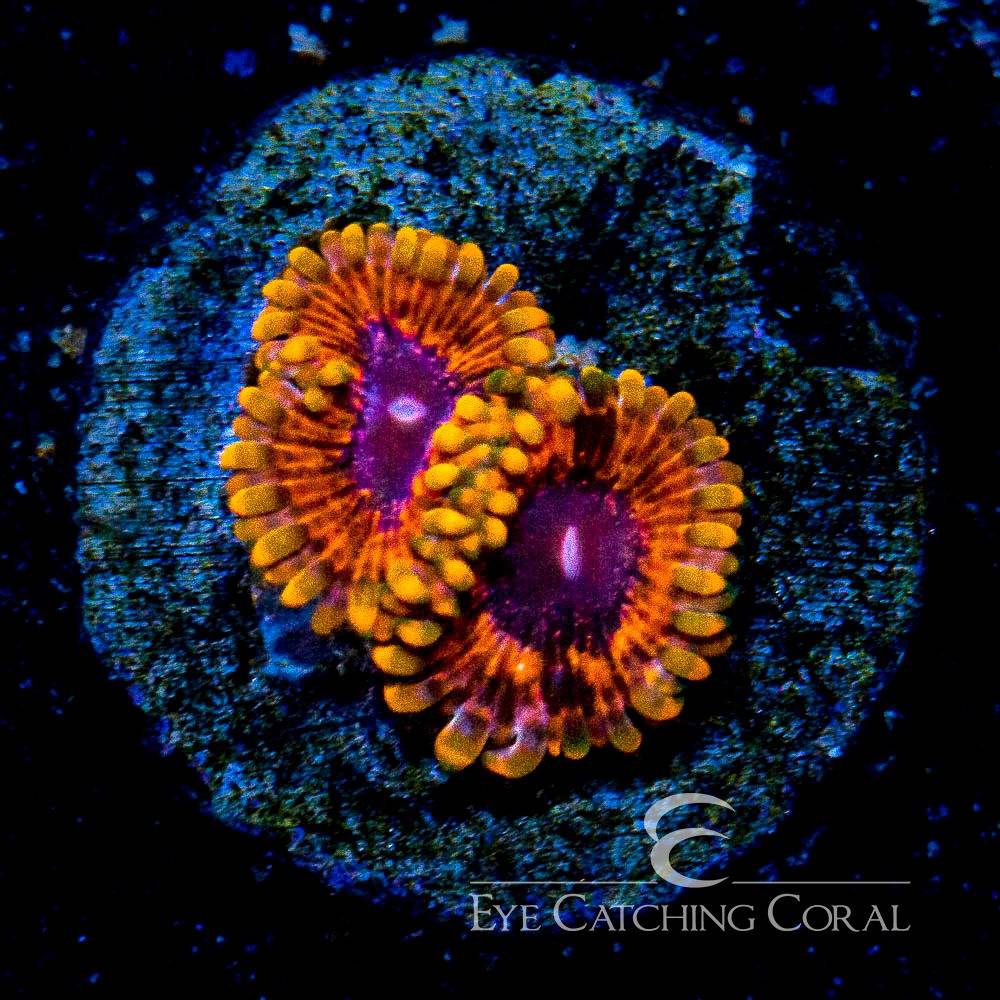
Burning Ember zoas
Zoanthus sp
Same genus
Burning Suns zoas
Zoanthus sp
Same genus