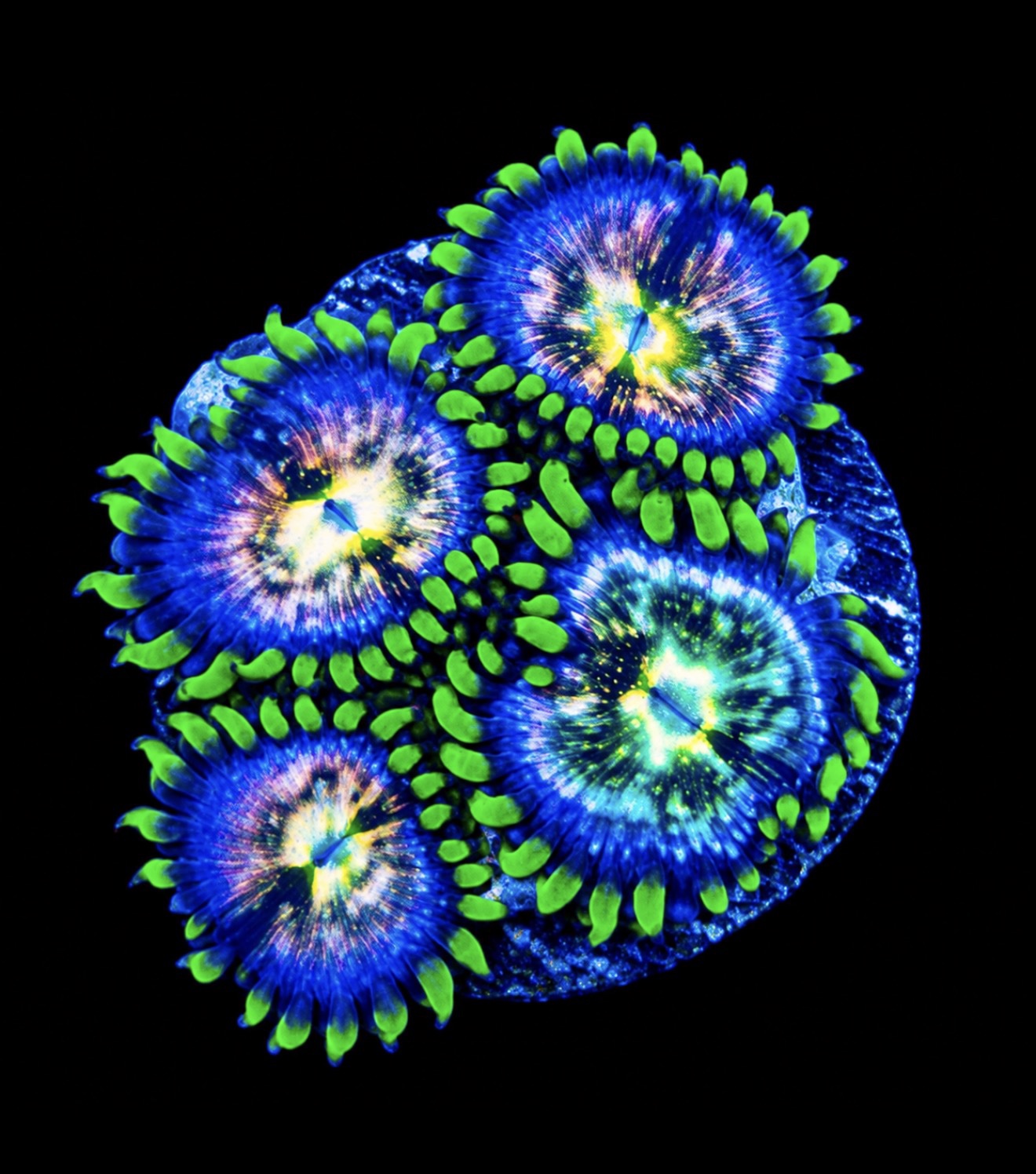
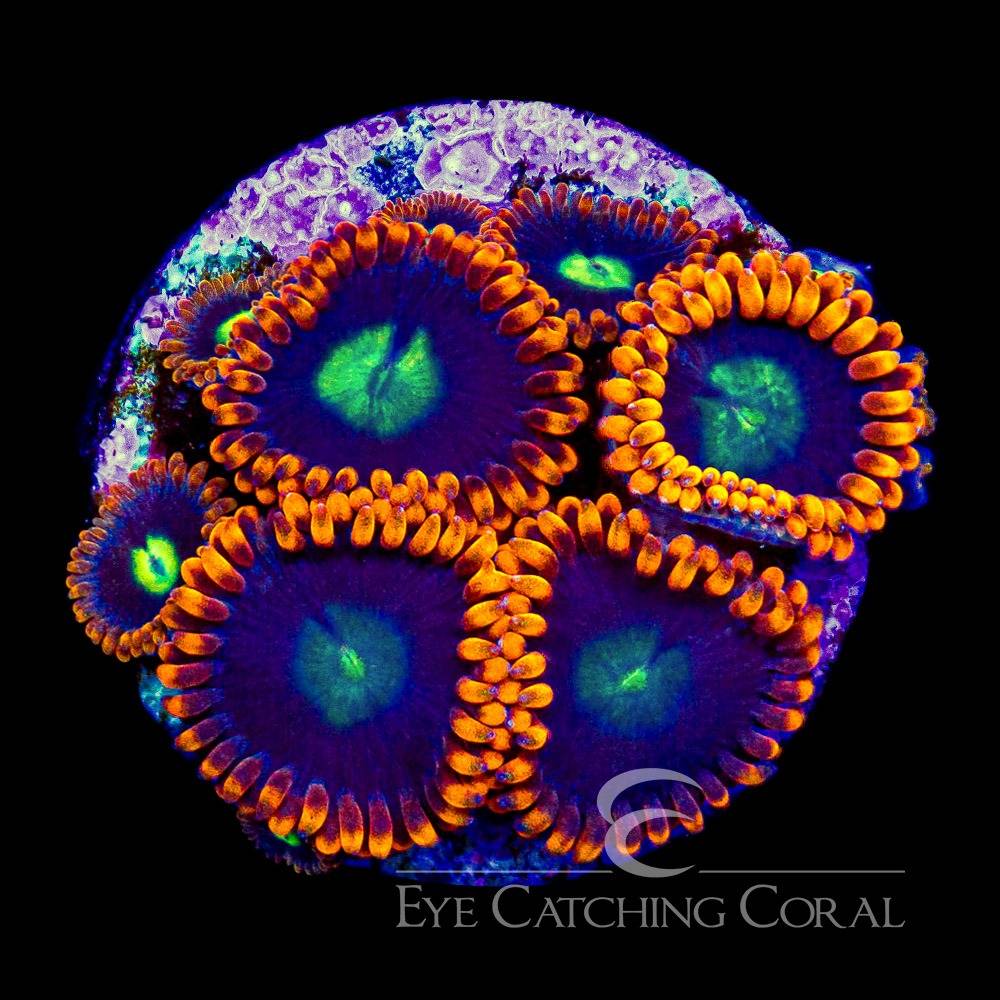
Nirvana zoas
Zoanthus sp
Palytoxin safety
Some zoanthids and palythoas can contain a potent toxin. Wear sturdy waterproof gloves and eye protection, minimize handling, and keep colonies submerged when possible. Never boil, steam, pressure-wash or scrub colonized rock under running water. Keep other people and pets away during handling. If exposure is suspected, seek urgent medical advice and tell the clinician about possible palytoxin exposure.
Sources: CDC: palytoxin exposure · OATA: avoiding palytoxin poisoning
Gallery
Nirvana zoas
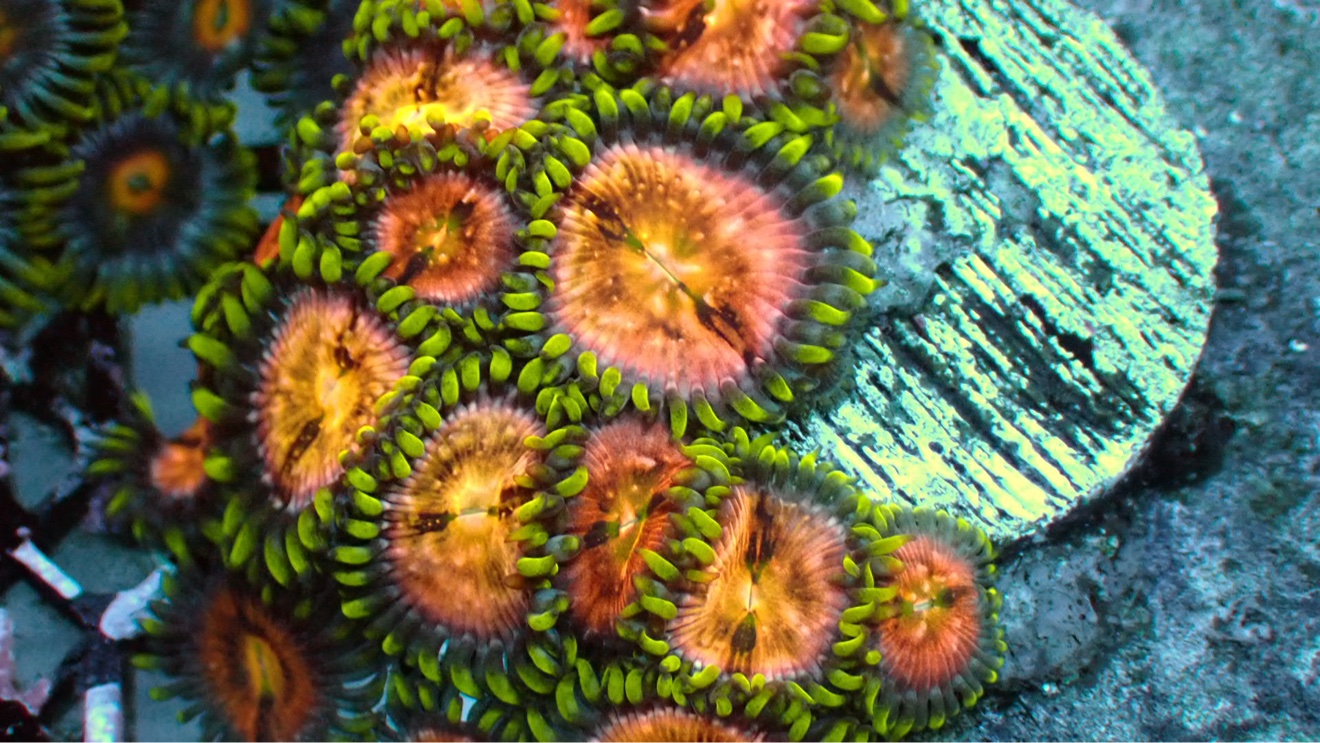
Small polyps, big garden plans. A practical guide to settling in, growing well and handling this coral with care. A trade-name zoanthid listed as “Zoanthus sp”.
Meet the little colony
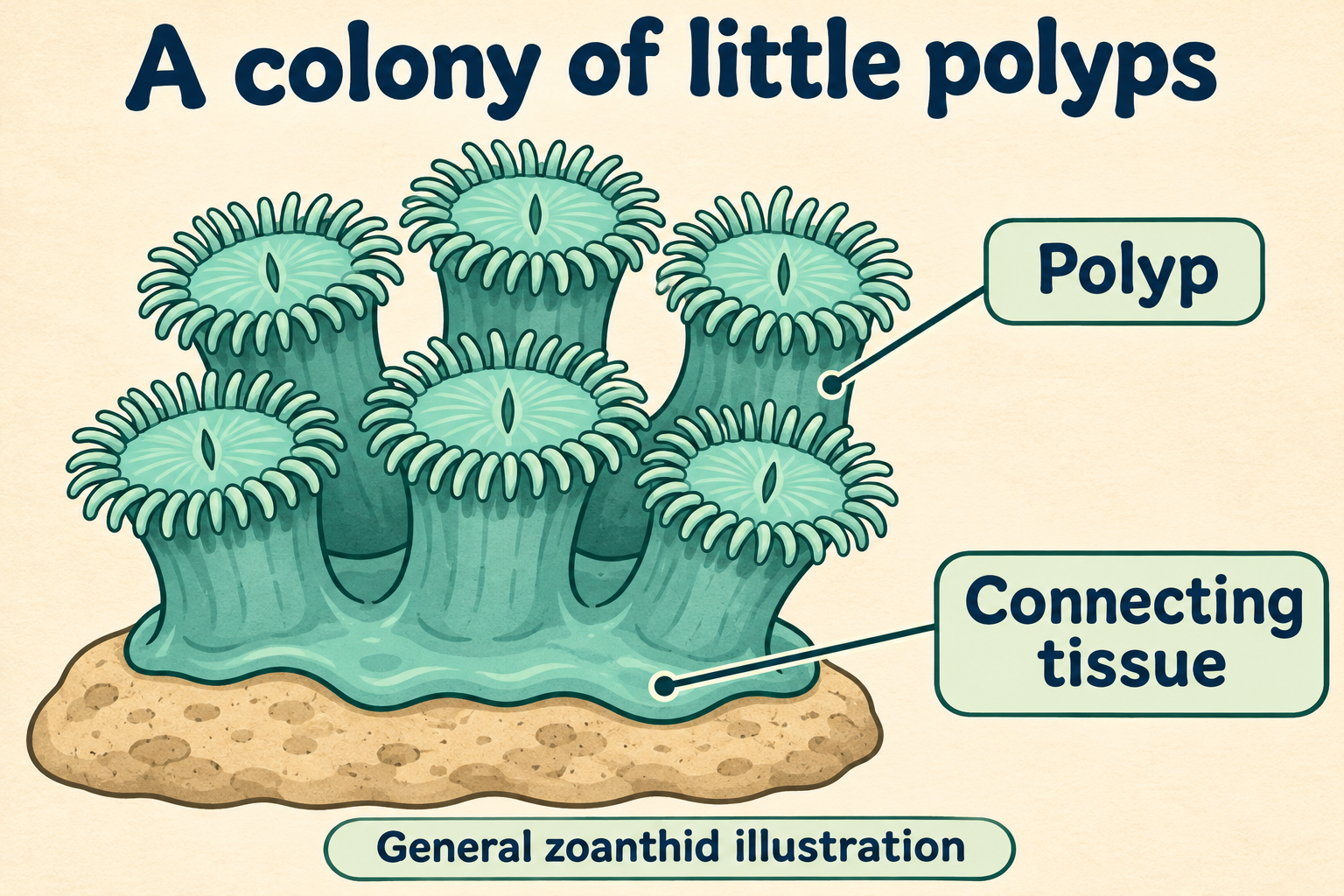
A zoa frag looks like a tiny bouquet. Each button is a living polyp, with a mouth in the middle and a fringe of tentacles. Neighboring polyps are linked by tissue across the surface beneath them. The garden grows one little mouth at a time.
Nirvana is a trade name, not a scientific species name. The scientific label here is “Zoanthus sp”. A familiar name, a bright photograph or a similar-looking frag cannot prove where a colony came from. Keep the seller's name and any parent-colony records with your own notes.
Beginner care means a good starting coral for a stable, maintained reef. It does not mean harmless to handle. Read the safety section before touching the colony or its rock.
For now, watch from the glass. Notice which polyps open, where the colony meets its rock and where the next little button appears. That quiet bit of detective work is the start of good care.
Sources: S01, S02, S15.
Ease into light and flow
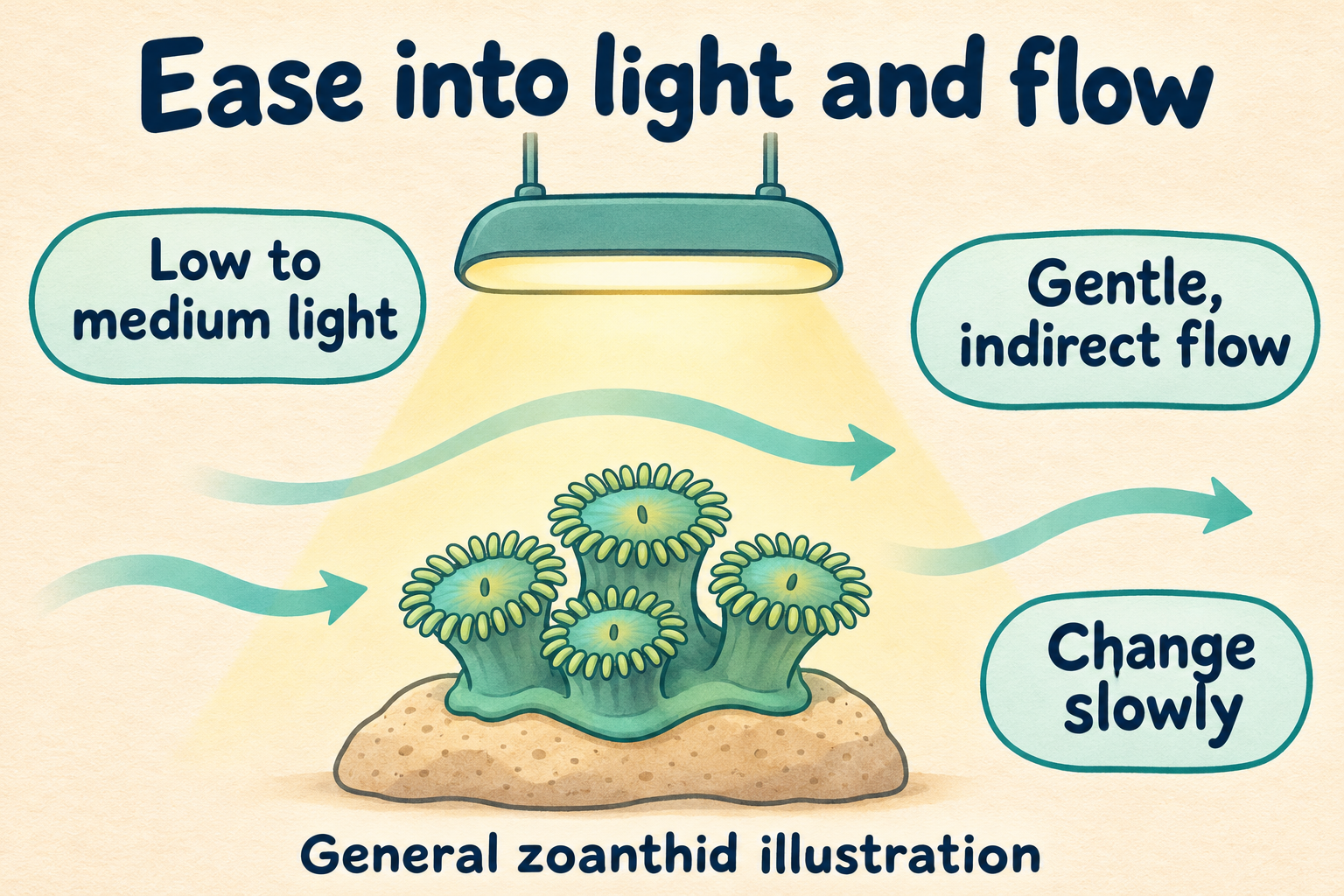
The best spot is not automatically the brightest one. A new frag has just moved house. Ask what light it lived under, then give it time to settle into yours.
Low-Med light and Med flow are useful starting categories. Aim for gentle, indirect circulation that carries loose debris away without pinning the polyps down. Mid placement is a broad guide, not a light reading. Rock shape, lamp height and neighboring corals can make two spots at the same depth very different.
One Nirvana keeper reported weeks of closure after a move to higher measured light, followed by reopening with smaller polyps. That is a reason to change gradually, not a universal limit for every Nirvana frag. The full report is in Field notes.
Watch the animal, not just the equipment dial. If debris gathers, adjust the water's path. If a narrow jet keeps the polyps folded, redirect it. If closure follows a lighting change, check the water too. Avoid moving the colony every day while you hunt for the perfect place.
Sources: S01, S02, S03, S04, S07.
Keep food and water steady
Tiny partners inside zoanthid tissue use light to make food. That helps explain why lighting matters, but it does not turn a zoa into a plant. Some colonies also take suitable fine foods.
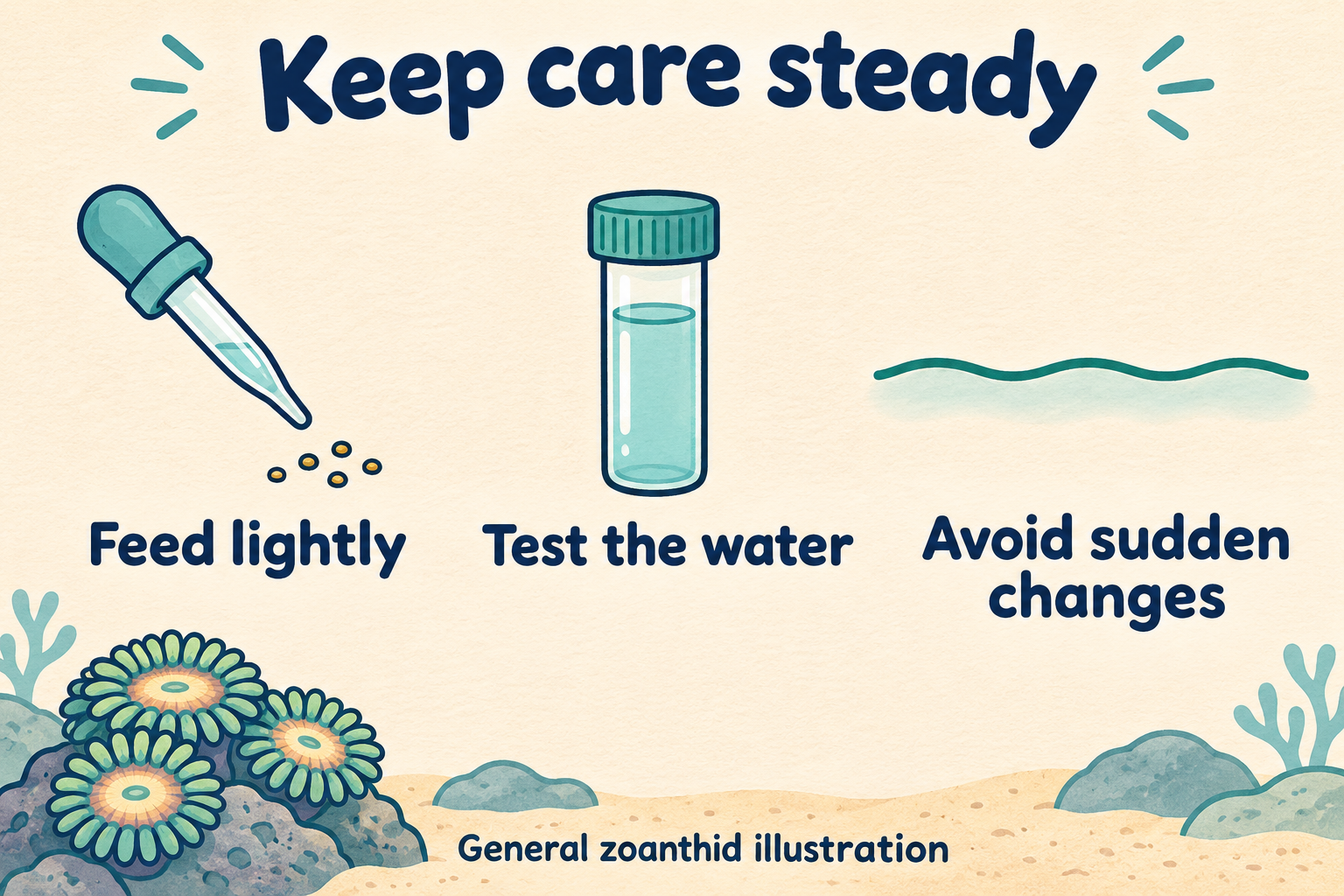
If you try supplemental feeding, start small. Watch for a response and avoid leaving a heap of food on the colony. More food is not a promise of more polyps. It also adds waste for your aquarium to process.
Keep temperature and salinity steady. Test the water, keep a simple record and look for trends before reaching for a supplement. Nitrate and phosphate are nutrients, not enemies that must always read zero. Excess waste is a problem too. A balanced reef is the goal, rather than copying every number from someone else's tank.
Change one thing at a time. When food, light and water chemistry all change together, even a happy coral cannot tell you which change helped.
Sources: S01, S02, S14.
Watch the growing edge
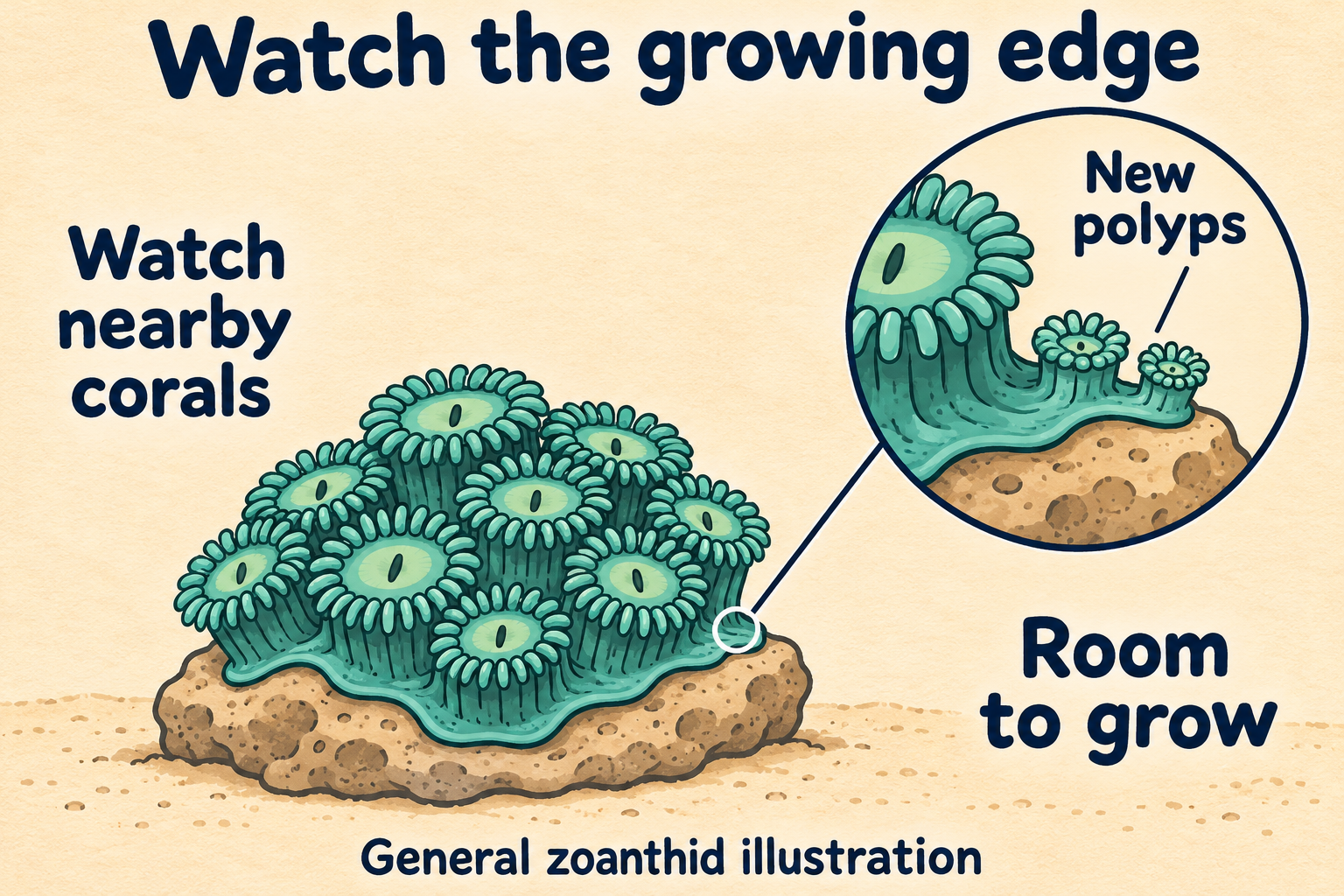
The first new polyp is exciting. A few months later, the interesting part may be the edge of the whole patch.
Nirvanas can spread well in a suitable aquarium. A keeper's report of them nearly taking over a frag rack is a useful warning to plan ahead. The Fast growth rating describes a tendency, not a promised polyp count or deadline. A new frag may spend time settling before it expands. Another keeper reported slower Nirvana growth after early trouble with an urchin. Blue Basin's page calls it fast-growing but lists a moderate rate in its summary. Watch your colony rather than expecting a schedule.
A separate, removable rock makes the boundary easier to watch. Leave room for both the colony and its neighbors to grow. Check nearby corals too, including those that extend farther at night. A small gap is not a permanent fence.
The care card's Moderate SPACE rating is a reminder to plan for competition. It describes aggression and competition, not a distance. Zoas can claim space by spreading even without long sweeper tentacles. A one-to-two-inch gap is no guarantee that neighboring corals will remain safe.
Plan the garden before it crowds itself. Any cutting or removal calls for informed adult handling and palytoxin precautions, not casual trimming. Before removal or fragging, read OATA's full guidance, including its advice on respiratory protection. This guide is not a fragging procedure.
Sources: S02, S04, S05, S08, S09, S12.
Closed polyps: look first
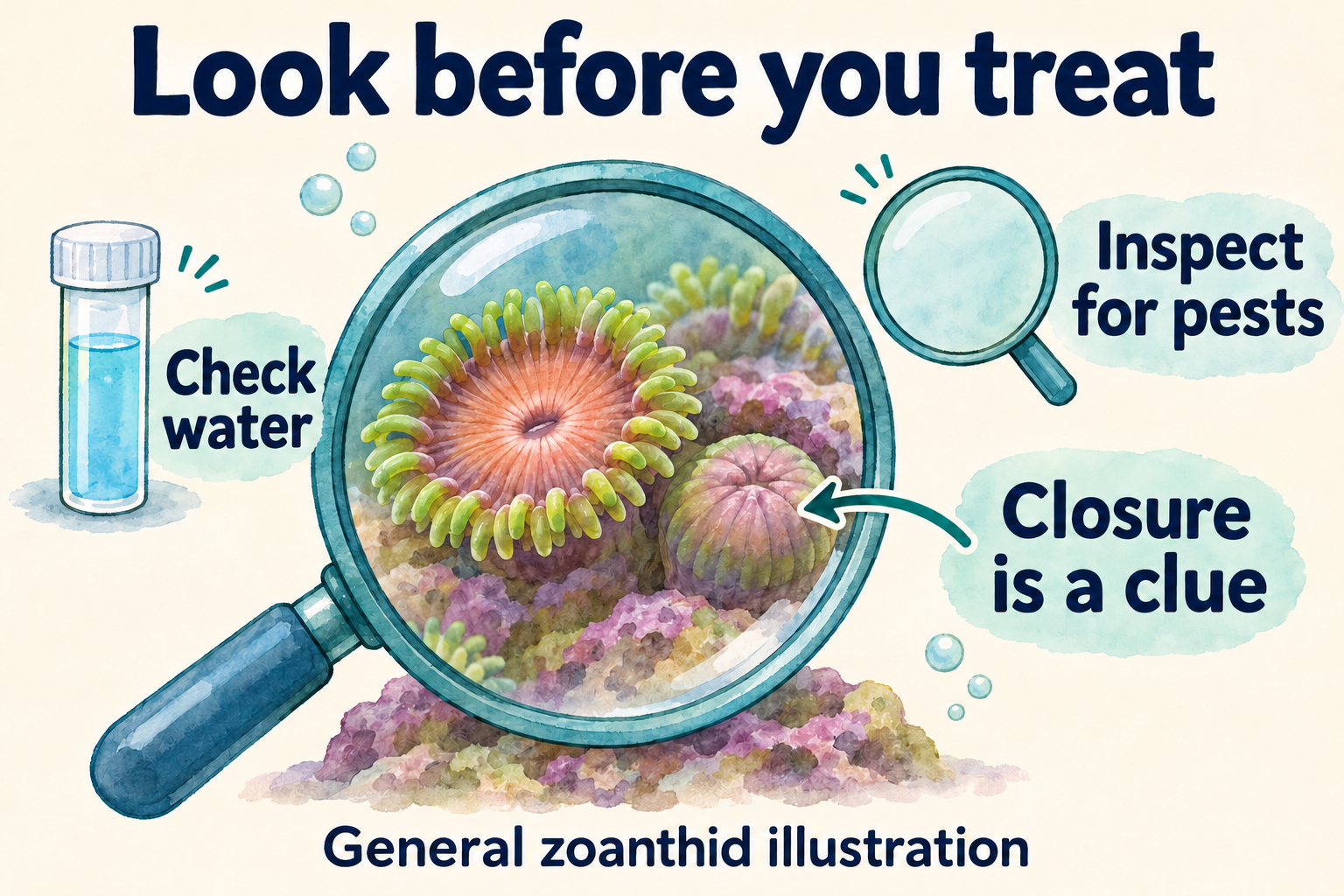
A closed polyp is a clue, not a diagnosis. It does not automatically mean “more light” or “time for a dip.”
Start with what changed. Check temperature, salinity and recent water tests. Look for sediment, a direct jet, new shade or a neighbor touching the colony. Then inspect the plug and tissue carefully. A magnifier and neutral light help you look without guessing from a blue photograph.
Zoanthid-eating nudibranchs are one pest to watch for. Not every small hitchhiker is harmful. Identify what you are seeing before choosing a treatment. Persistent closure or tissue loss deserves attention, rather than another week of random adjustments.
Inspect and quarantine new arrivals when possible. A dip is not a clean bill of health, and eggs may survive. Use only a coral-appropriate product according to its current label. Do not mix treatments or improvise with household chemicals.
Keep handling to a minimum and follow the safety section. Good observation is useful. Poking the colony open is not.
Sources: S13, S14, S12.
Field notes — what keepers report
These three posts explicitly discuss Nirvana zoanthids. They are firsthand aquarium reports under a trade name, not proof that those colonies share the Reef To Go colony's lineage.
- lbacha, Reef2Reef, September 12, 2019, post 282: after increasing light from below 150 PAR to above 200 PAR, the keeper reported that the same Nirvana colony stayed closed for two to three weeks. It later reopened with polyps about half their earlier size.
- panui22, Reef2Reef, June 4, 2020, post 5: the keeper said their Nirvanas were nearly taking over a frag rack. This is one aquarium's experience of spread, not a measured growth trial.
- Patx, Reef2Reef, February 7, 2024, post 3: their Nirvana was growing more slowly than their Sunny D and Purple Monster colonies after early trouble with an urchin. That extra history matters. It is not a clean comparison of growth rates.
The practical lessons are simple: ease into a new light setting and keep an eye on the colony's boundary. The first report does not establish a safe or harmful PAR threshold. The second does not promise that every new frag will grow quickly.
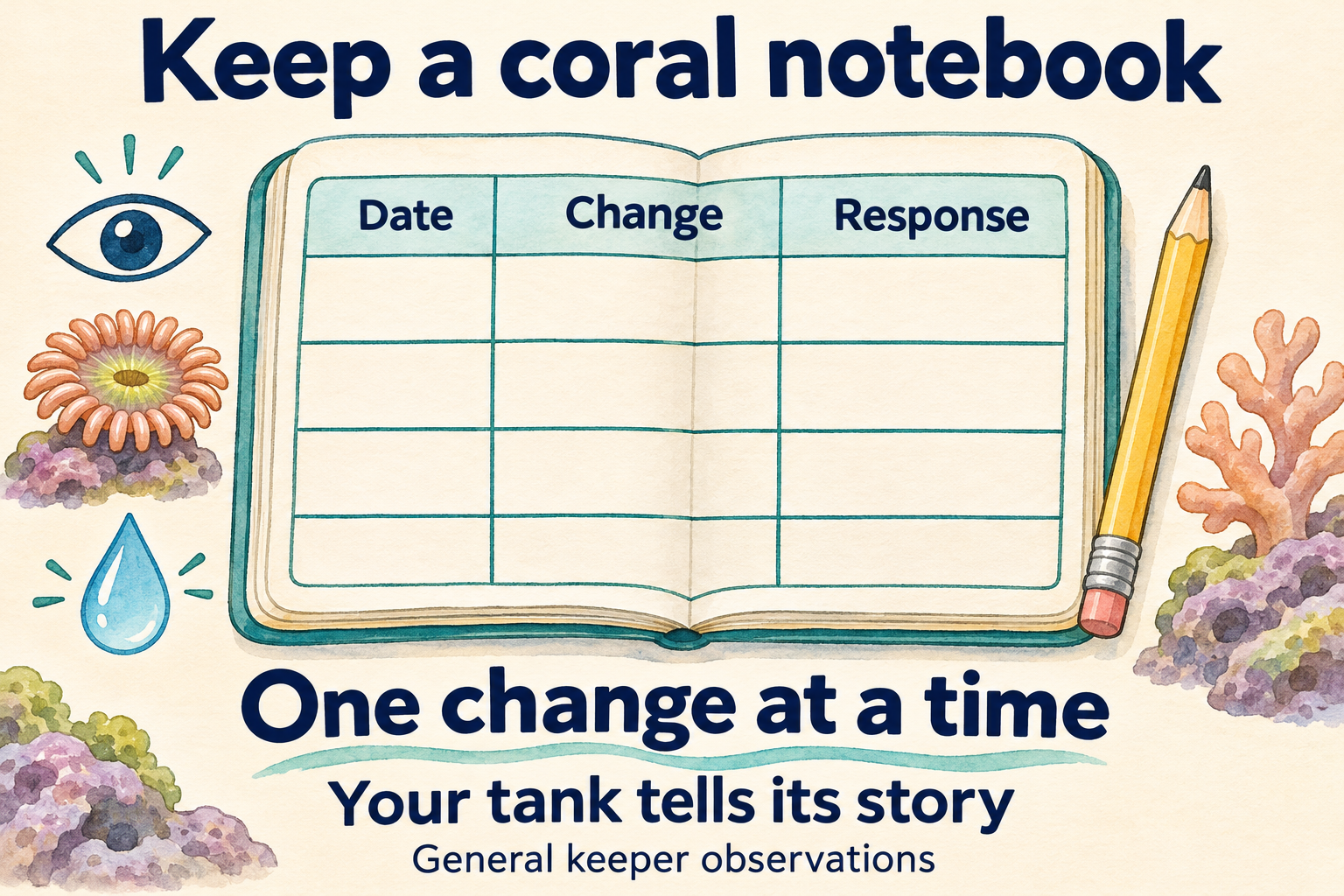
Start your own notebook with three columns: date, change and response. A few honest observations beat a perfect-looking number copied from someone else's reef.
Sources: S07, S08, S09.
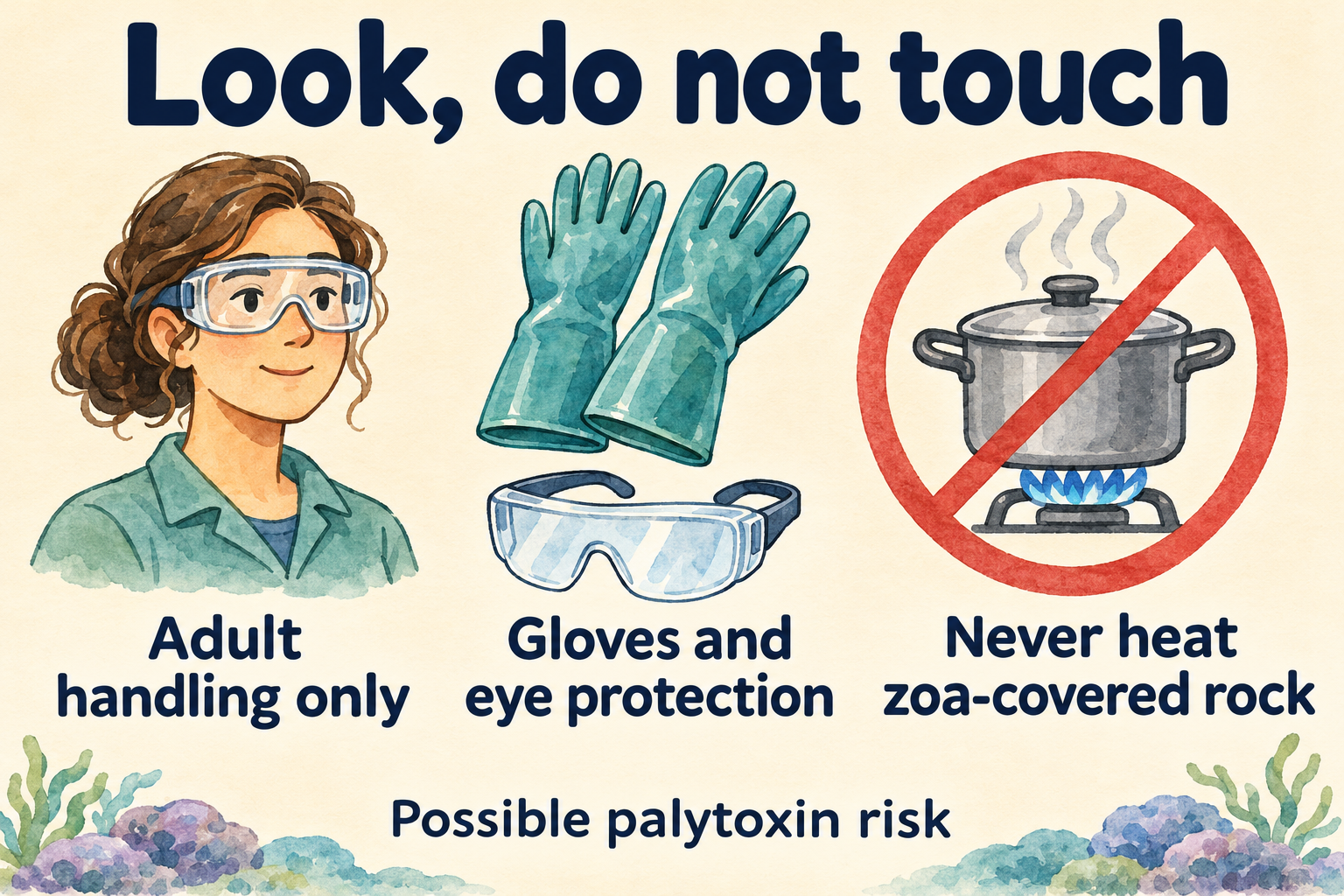
Palytoxin safety: look, do not touch
This little garden is for looking and learning, especially for children. Some zoanthids and palythoas can contain palytoxin, a powerful poison. No toxin-test result for this colony is available here. Its name and appearance cannot establish that it is safe.
Leave handling to an informed adult. Wear sturdy waterproof gloves and eye protection, cover cuts and keep hands away from your face. Minimize handling and keep colonies submerged when possible. Keep other people and pets away from the work area.
Never boil, steam, microwave, pressure-wash or pour hot water over zoa-covered rock. Never scrub it under running water or use a sprayer. These actions can spread contaminated droplets. Gloves and goggles do not make them safe.
If exposure is suspected, stop and seek urgent medical advice. Tell the clinician about aquarium coral and possible palytoxin exposure. Breathing difficulty or other severe symptoms call for emergency services immediately.
Beginner coral, serious handling rules. Enjoy the polyps through the glass, and make safe habits part of their care.
Sources: S11, S12.
Source references, checked November 11, 2026. Named keeper reports use the authors' own Nirvana labels; general care guidance is not a morph-specific trial.
S01. Tidal Gardens (corporate; no individual byline). Nirvana Zoanthids. No publication date shown. https://tidalgardens.com/stock-nirvana-zoanthids.html
S02. Bulk Reef Supply (corporate; no individual byline). ECC Nirvana Zoanthid. No publication date shown. https://www.bulkreefsupply.com/ecc-nirvana-zoanthid-eye-catching-coral.html
S03. New Wave Aquaria (corporate; no individual byline). Jason Fox Nirvana Zoas. No publication date shown. https://newwaveaquaria.com/collections/soft/products/nirvana-zoa
S04. Blue Basin Aquatics (corporate; no individual byline). Nirvana Zoanthid. No publication date shown. https://www.bluebasinaquatics.com/products/nirvana-zoanthid?variant=51749213274424
S05. Zoanthids.com (corporate; no individual byline). Nirvana Zoas. No publication date shown. https://zoanthids.com/collections/fees-products/products/nirvana-zoas
S07. lbacha. Lbacha’s 25g Lagoon & 8g Peninsula zoa & SPS garden. 2019-09-12. https://www.reef2reef.com/threads/lbacha%E2%80%99s-25g-lagoon-8g-peninsula-zoa-sps-garden.515788/post-6490839
S08. panui22. Im stumped. 2020-06-04. https://www.reef2reef.com/threads/im-stumped.726483/post-7562645
S09. Patx. Bambam / incinerator / goblin on fire... who's the fastest.. 2024-02-07. https://www.reef2reef.com/threads/bambam-incinerator-goblin-on-fire-whos-the-fastest.1033941/post-12177499
S11. Ali K. Hamade; Sandrine E. Deglin; Joe B. McLaughlin; Jonathan R. Deeds; Sara M. Handy; Ann M. Knolhoff. Suspected Palytoxin Inhalation Exposures Associated with Zoanthid Corals in Aquarium Shops and Homes — Alaska, 2012–2014. 2015-08-14. https://www.cdc.gov/mmwr/preview/mmwrhtml/mm6431a4.htm
S12. OATA (corporate; acknowledges Julian Sprung, Tropical Marine Centre and public-health advisers). How to avoid palytoxin poisoning if you keep corals. Webpage undated; linked PDF is headed September 2022, with an October 2023 filename. https://ornamentalfish.org/what-we-do/advice-information/care-sheets/caresheets-marine-fish/how-to-avoid-palytoxin-poisoning-if-you-keep-corals/
S13. Robert Farnsworth. Reef Tank Pests - Identification & Remedy Guide. 2022-01-17. https://www.bulkreefsupply.com/content/post/md-2021-02-reef-tank-pest-and-remedy-guide
S14. Tidal Gardens (article carries a Than Thein image/name). How to Care for Your Zoanthus Coral. No publication date shown. https://tidalgardens.com/articles/coral-care-articles/zoanthus-coral-care.html
S15. James W. Fatherree, M.Sc.. The Zoanthids: Sea Mats, Yellow Polyps, and Button Polyps. No publication date shown. https://www.saltcorner.com/Articles/Showarticle.php?articleID=54&i=5
Field Notes
Related species
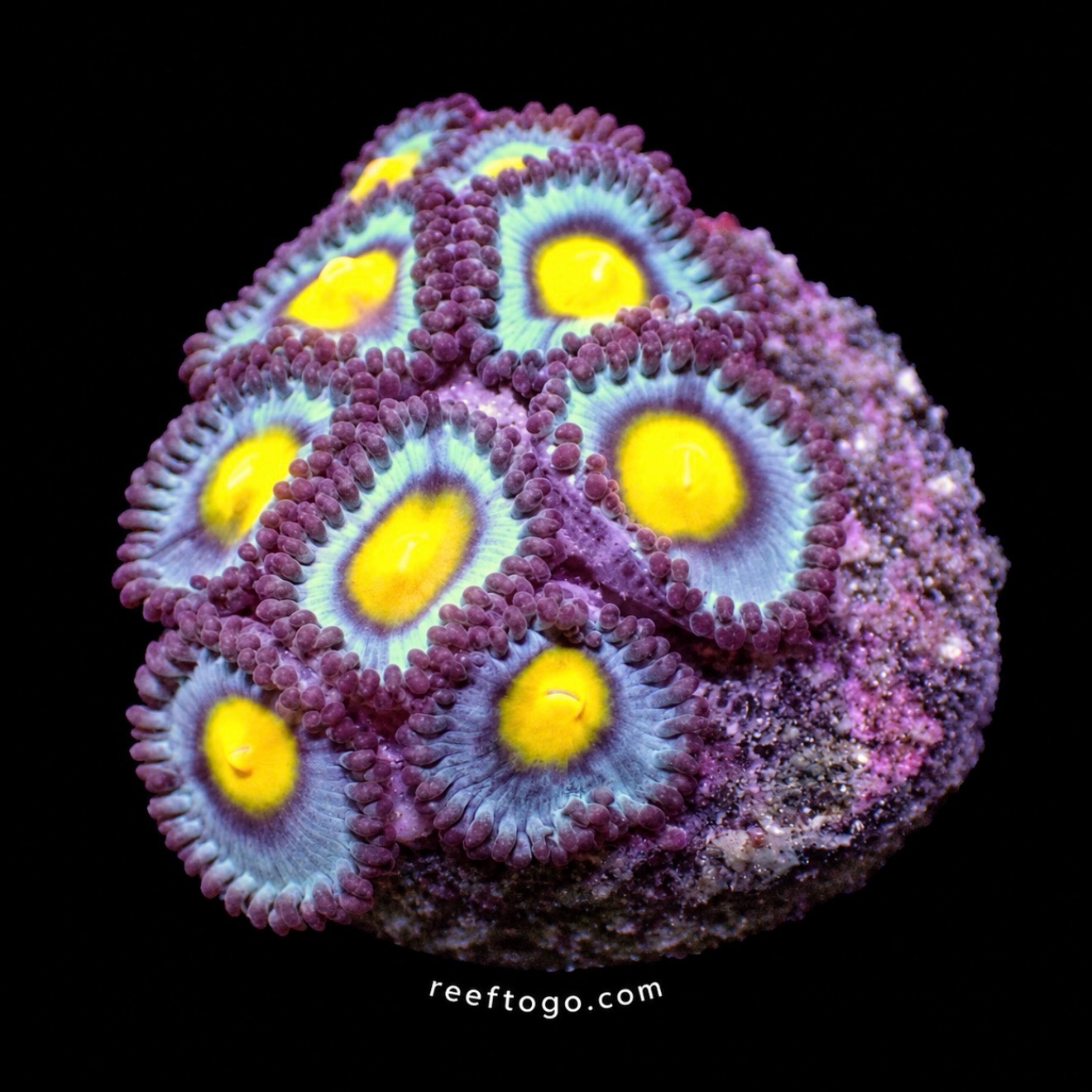
Alien Eye zoas
Zoanthus sp
Same genus
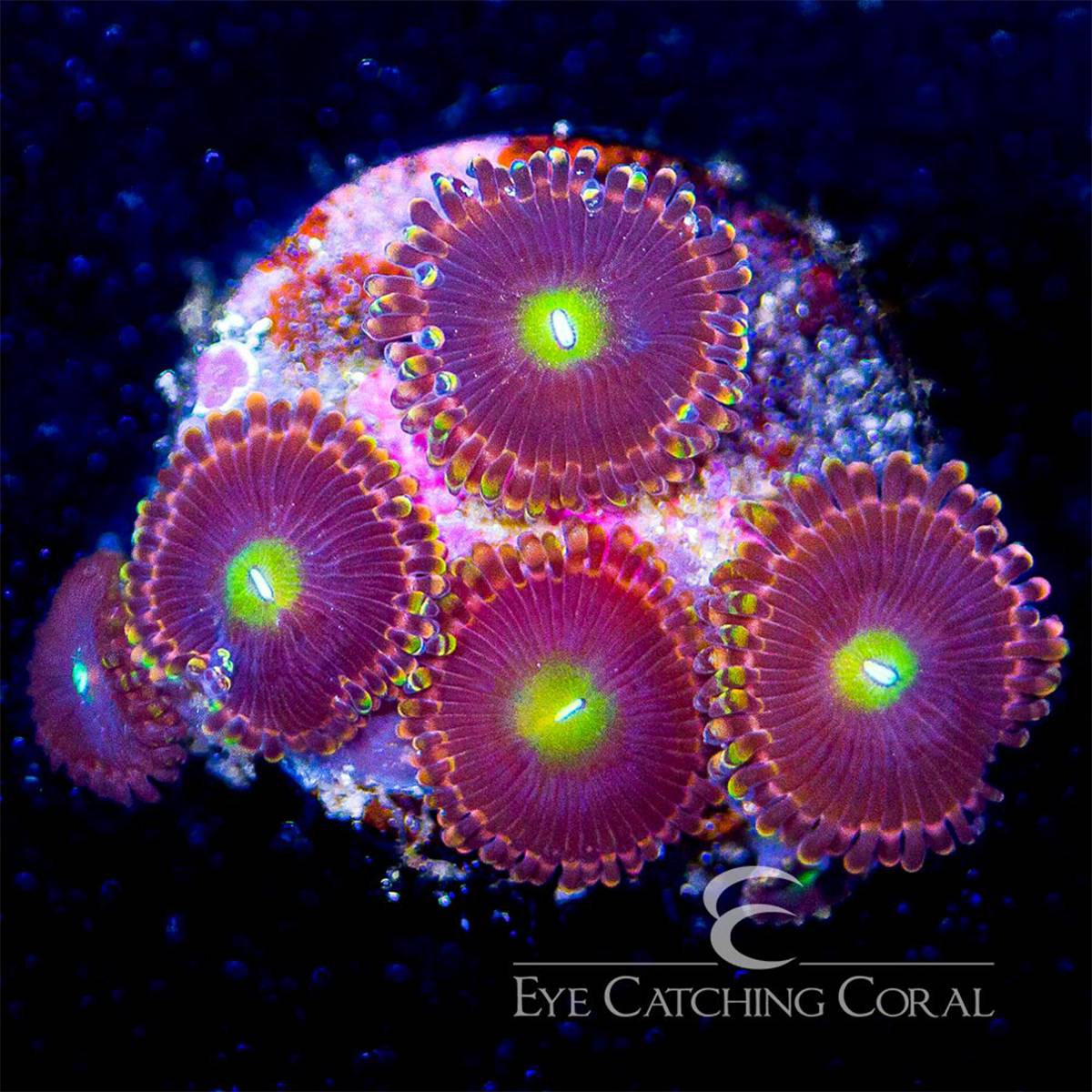
Antimatter zoas
Zoanthus sp
Same genus
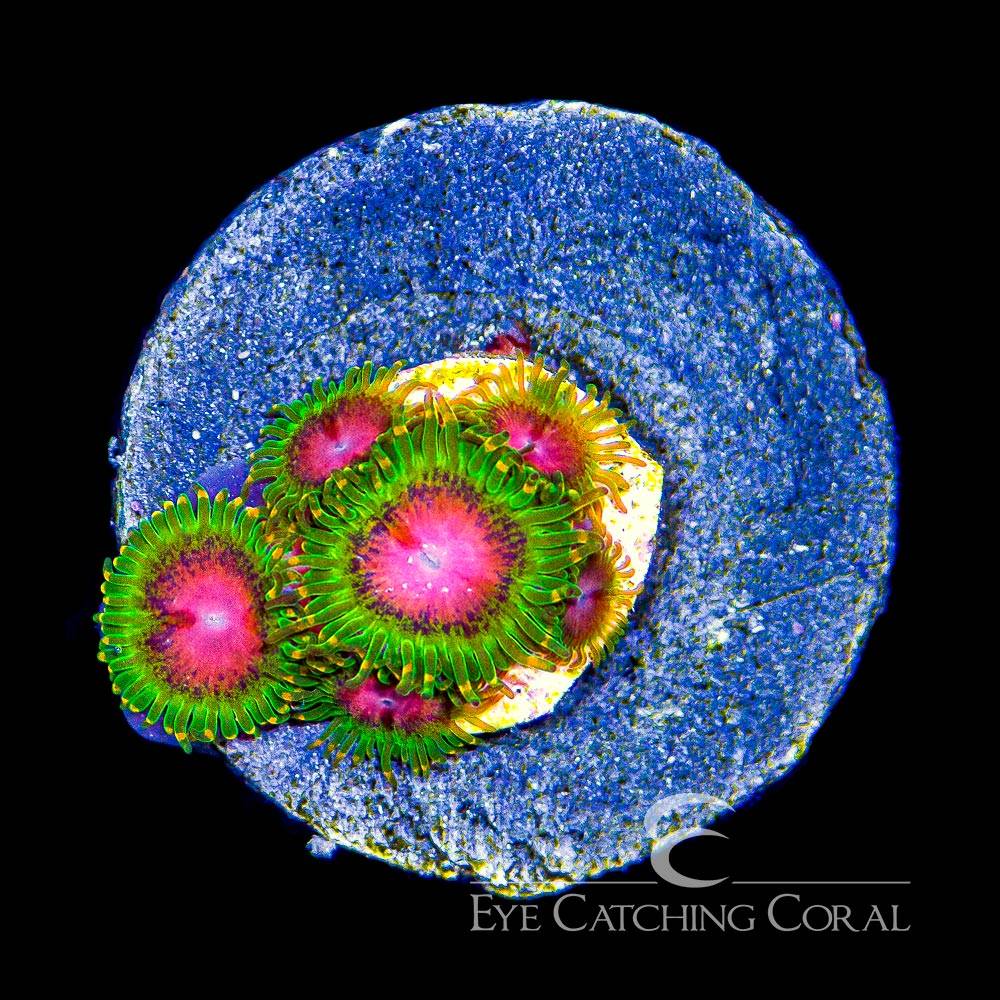
Awesome Blossom zoas
Zoanthus sp
Same genus
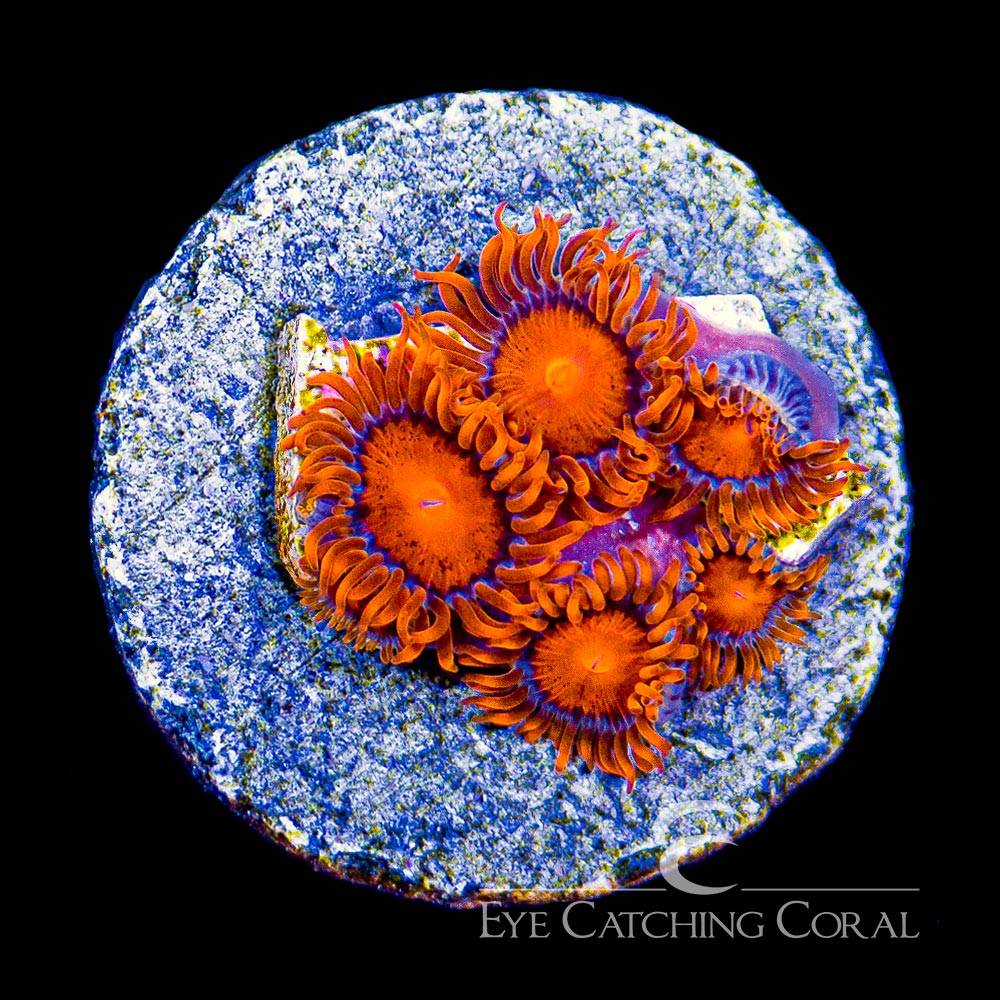
Bam Bam zoas
Zoanthus sp
Same genus
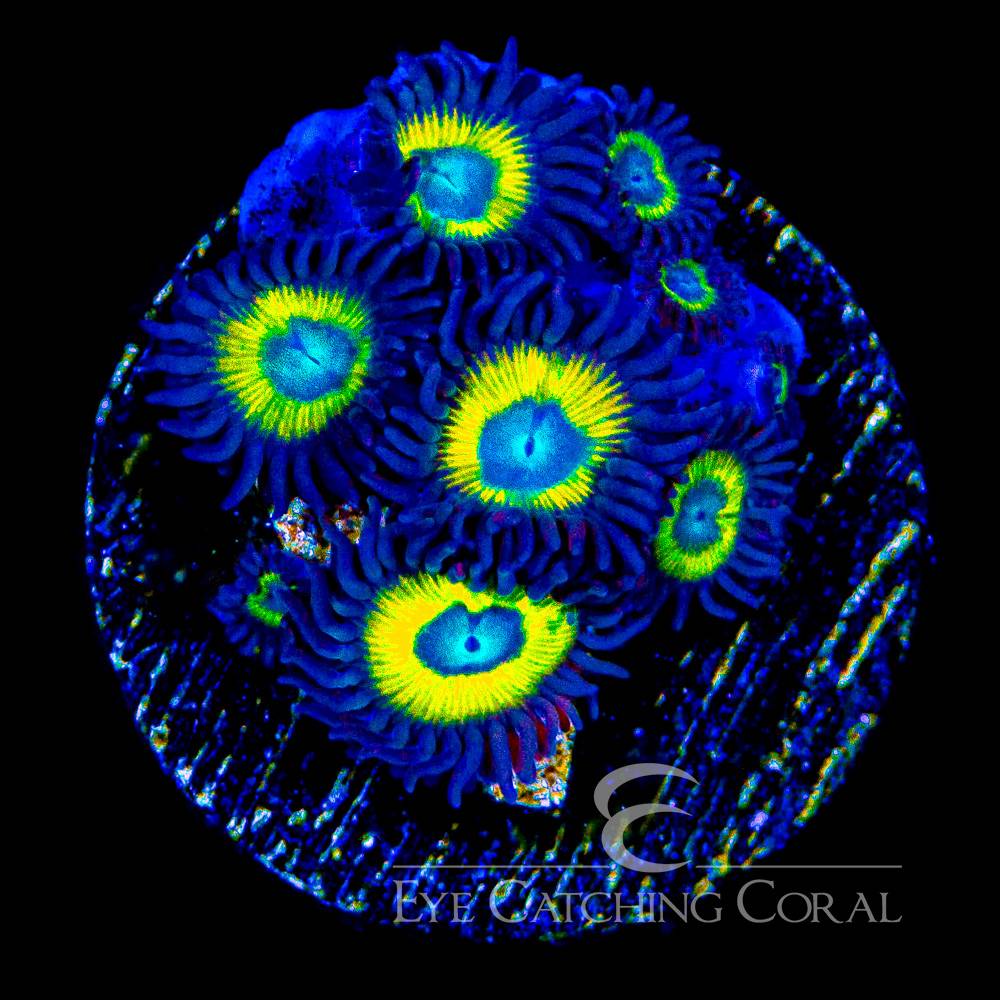
Black Bella zoas
Zoanthus sp
Same genus
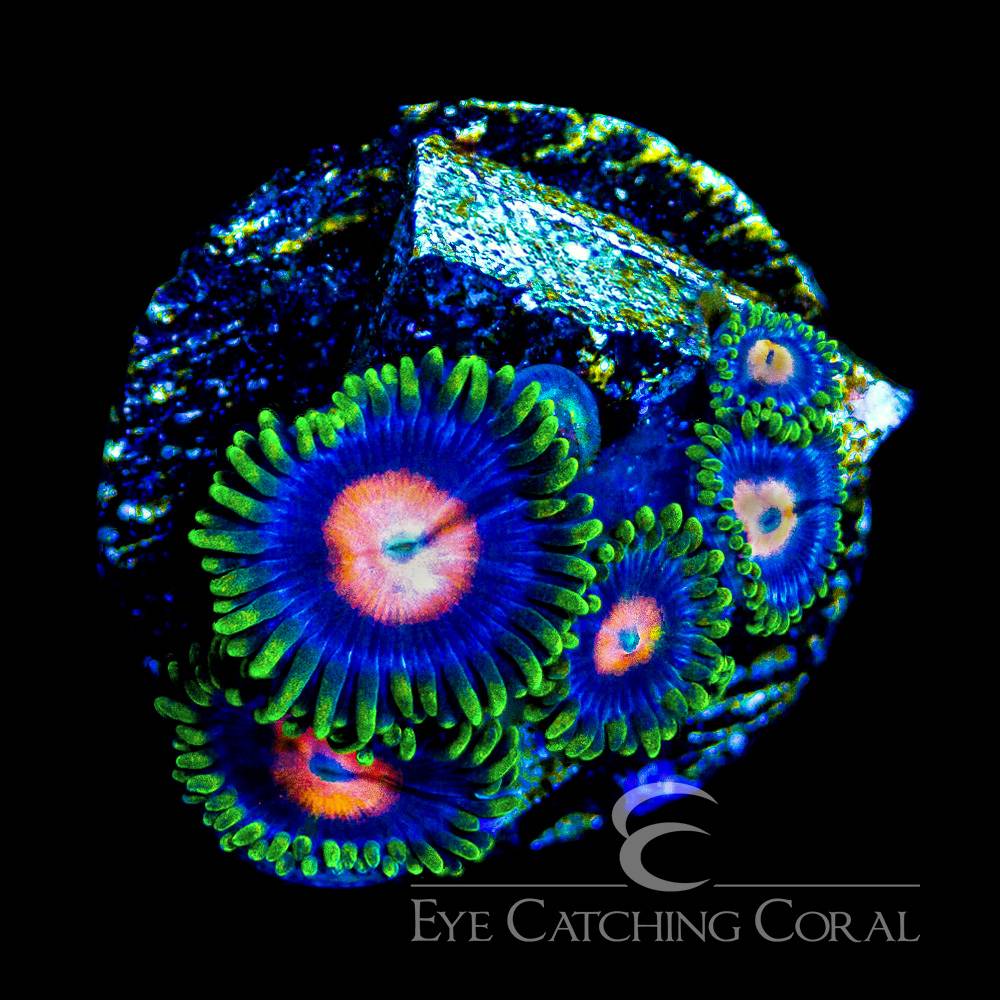
Blow Pops zoas
Zoanthus sp
Same genus
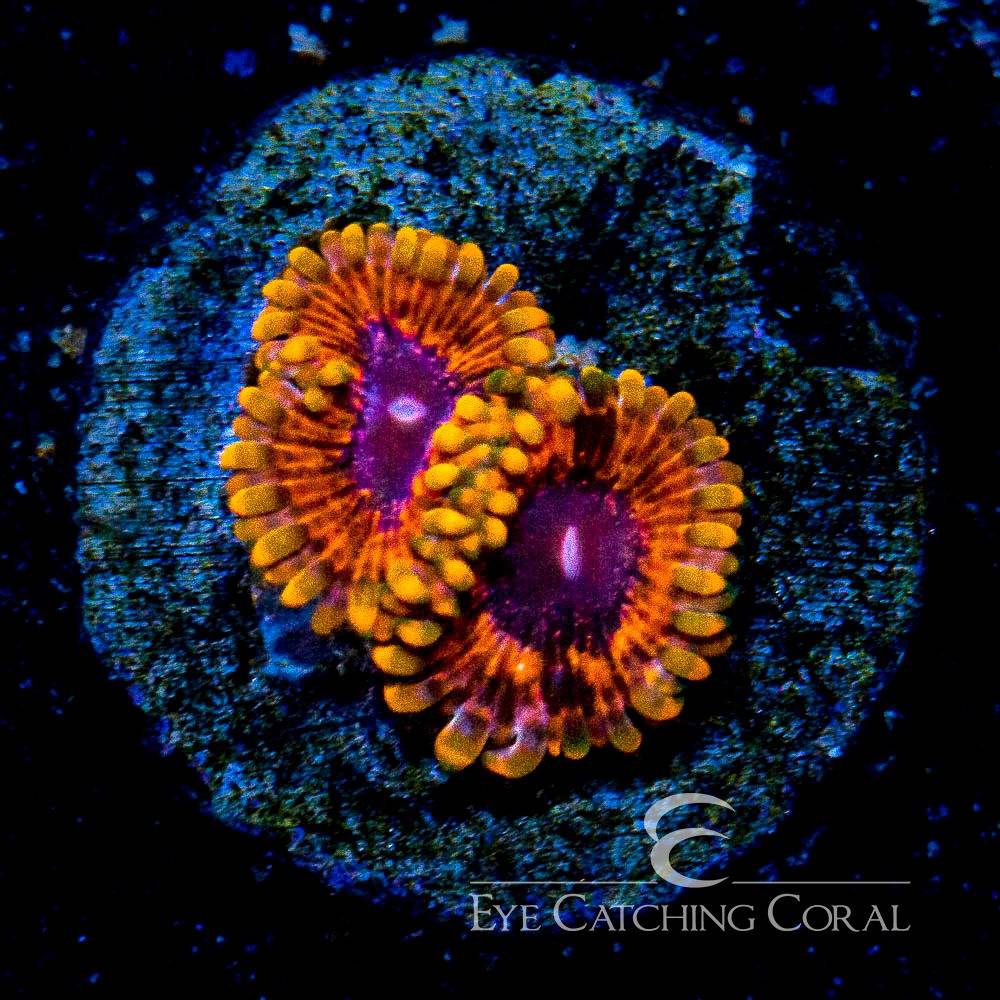
Burning Ember zoas
Zoanthus sp
Same genus
Burning Suns zoas
Zoanthus sp
Same genus