Open Brain Coral
Trachyphyllia geoffroyi

Photo: Bondolo at English Wikipedia · [CC BY 3.0](https://creativecommons.org/licenses/by/3.0/) · [Wikimedia Commons](https://commons.wikimedia.org/wiki/File:Open_Brain_Coral_Green.jpg)
Gallery
An Open Brain Coral can puff up until its soft folds spill over the hard skeleton underneath. There’s a surprise inside those folds, too. One of its glowing proteins shifts from green to red under violet light in the lab.

History of the coral
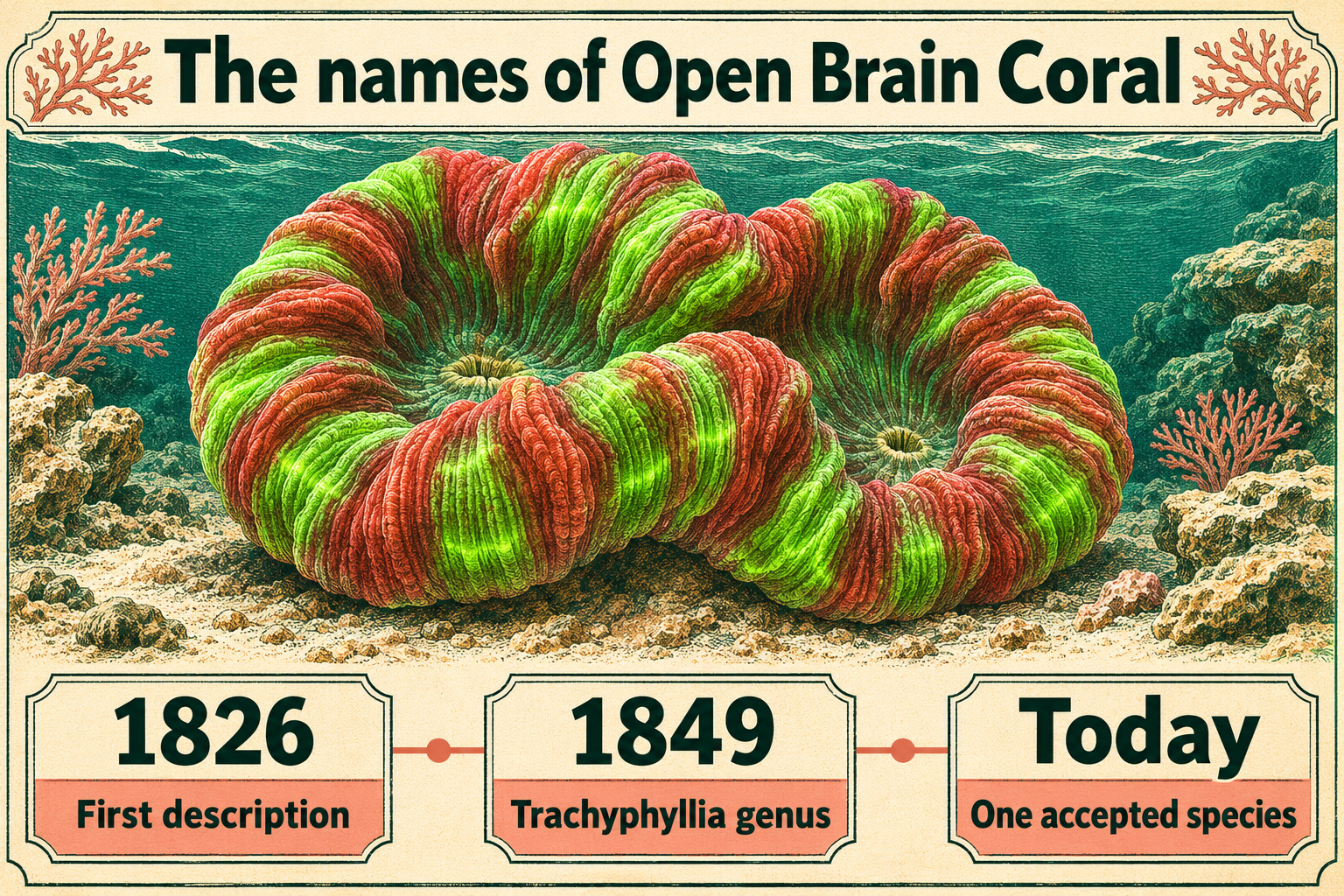
1. The name has moved. Audouin first described this coral in 1826 as Turbinolia geoffroyi. The genus Trachyphyllia arrived in 1849. Today the accepted name is Trachyphyllia geoffroyi.
2. One coral, several old names. You’ll still see Wellsophyllia on some shop labels. Wellsophyllia radiata is an old scientific name for the same species. The mantle’s deep folds give Open Brain Coral its common name.
How they live in the wild
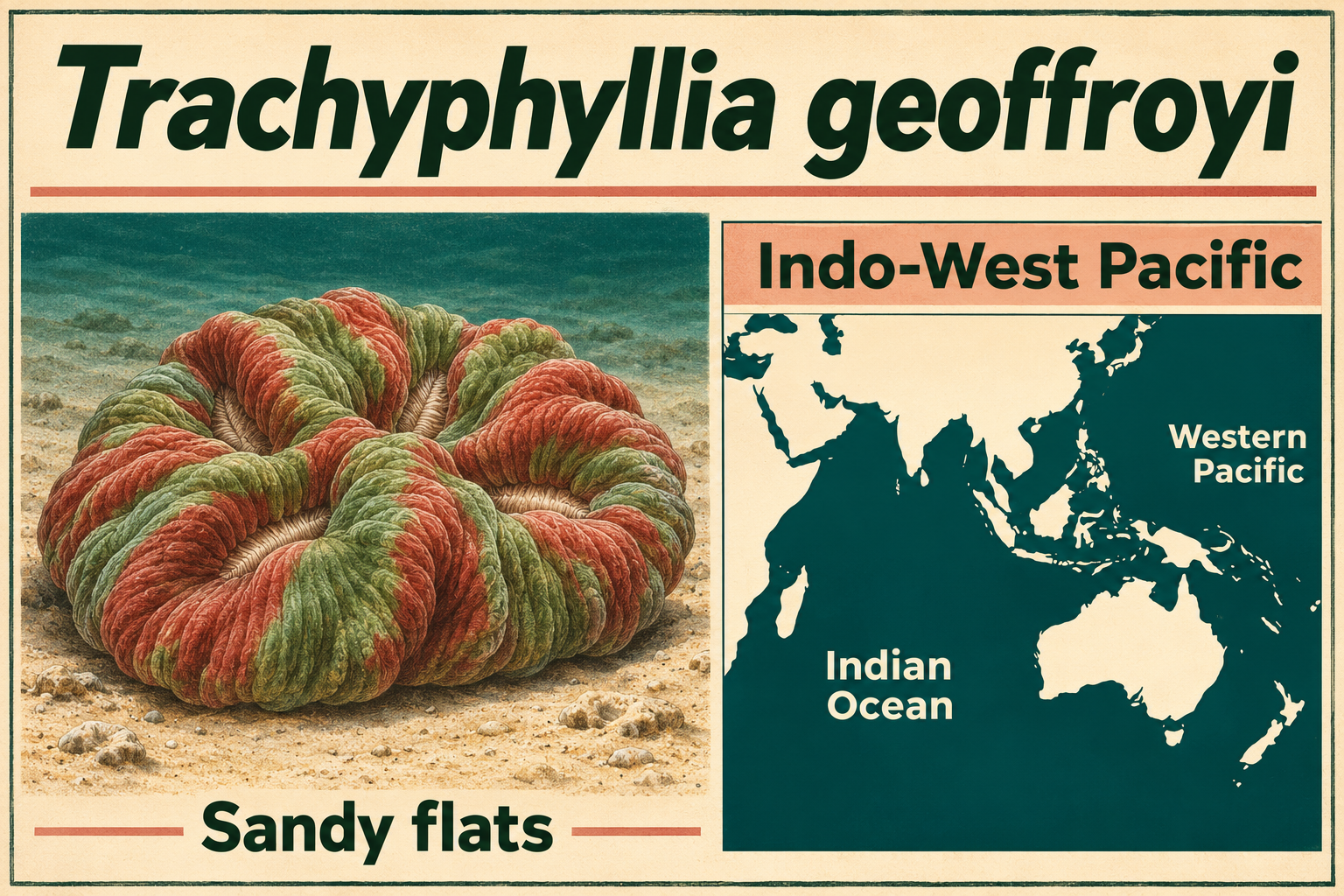
3. Life between reefs. Open Brain Coral lives across the Indo-West Pacific. Look beyond the reef wall to sandy or muddy flats. In Indonesia, these corals turn up on offshore flats around 30 to 40 meters deep, where sunlight is dimmer than in the shallows.
4. A baby sticks, an adult sits. Young corals settle on hard surfaces such as shells. As they grow, many break free. A cone-shaped base helps them sit upright on soft ground, where passing water brings food.
Light, flow and placement
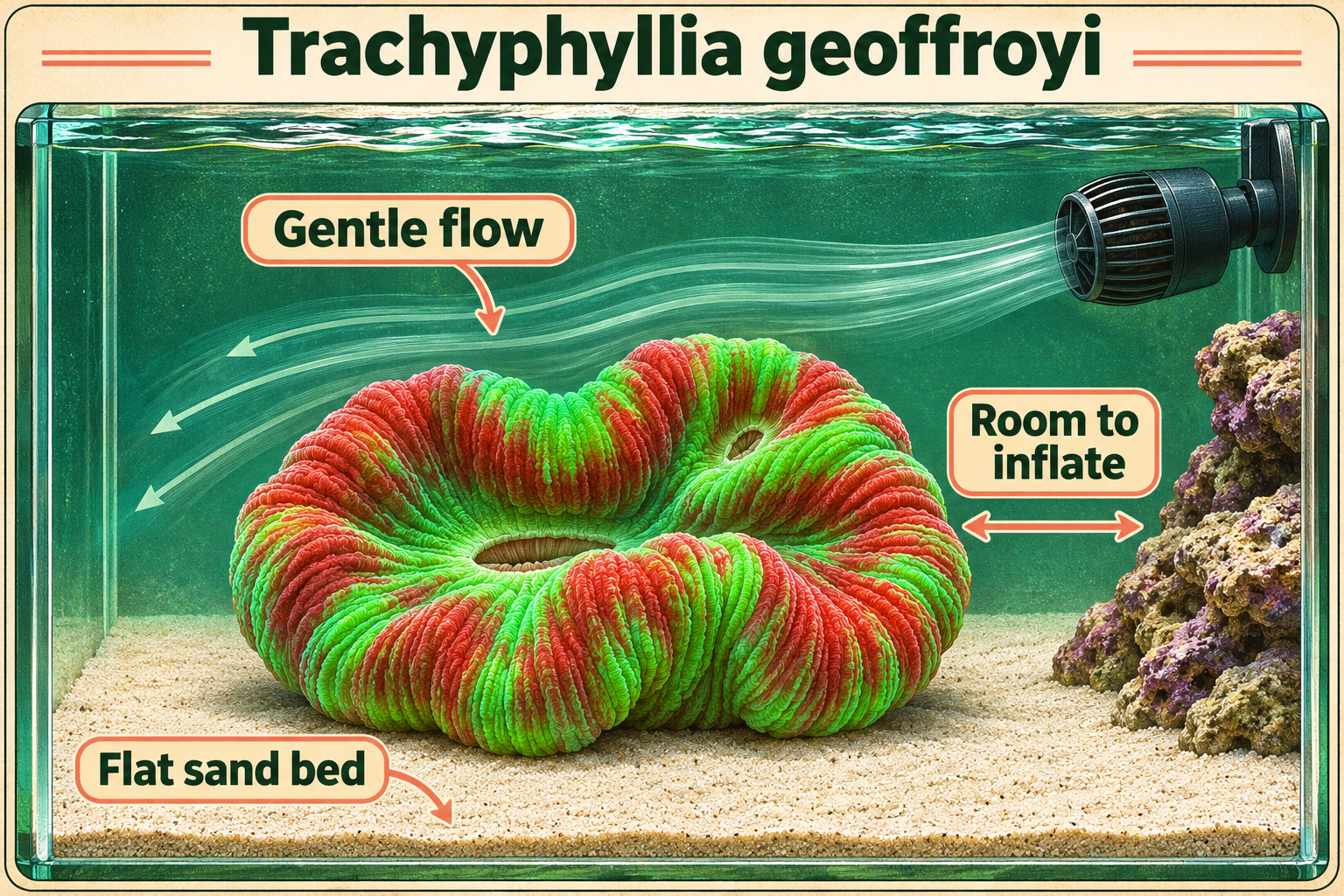
5. Give it a sand seat. Set it upright on level sand with room to puff up. Clear away sharp rubble and keep the fleshy edge off rock. Check that it stays upright after you adjust the pumps.
6. Start soft, then settle in. Start in low to moderate light and bring it up to moderate light gradually. Use low, indirect flow that keeps loose grit moving. If the tissue folds hard to one side or sand keeps settling on top, adjust the pump.
Keep the water steady
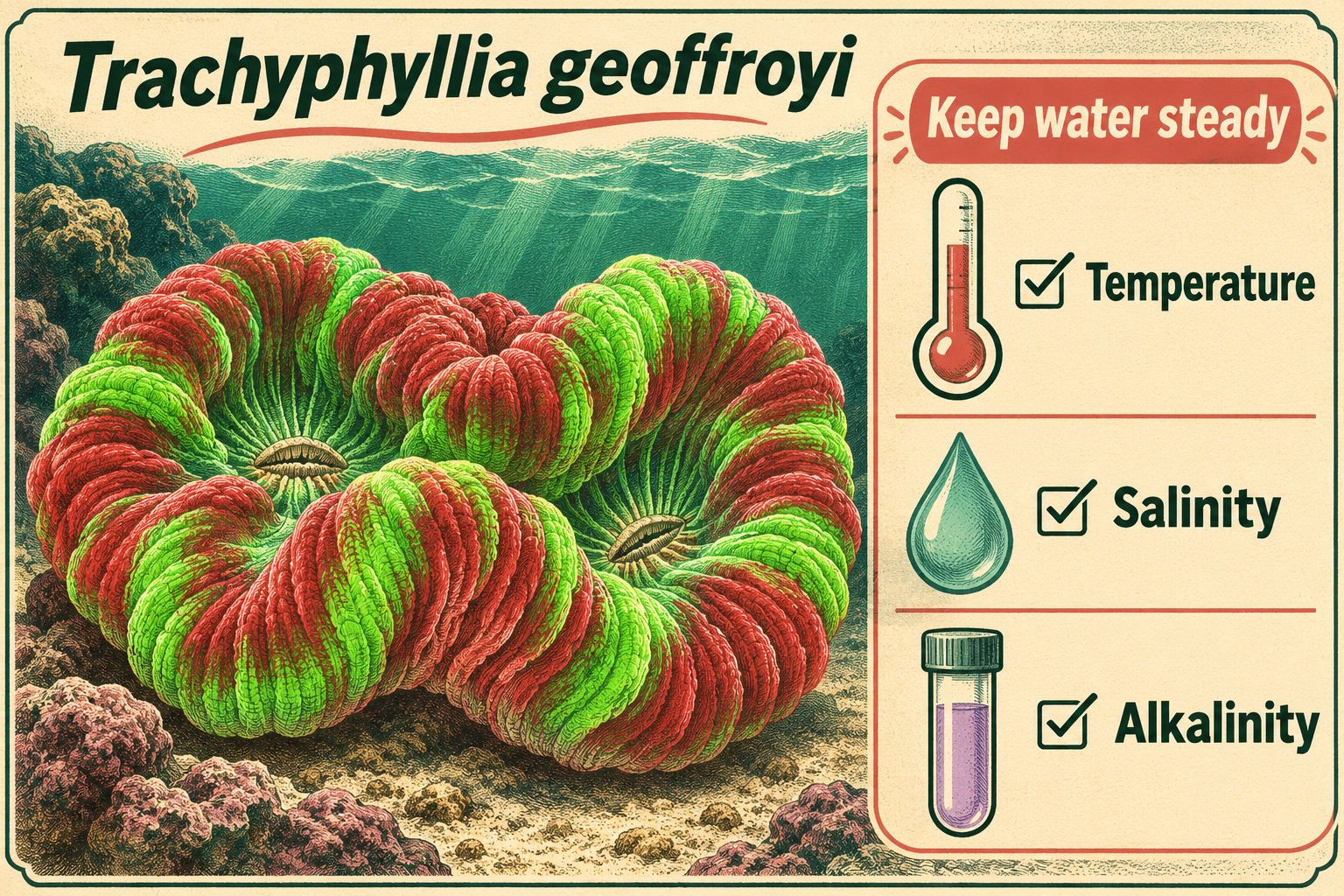
7. Pick an established tank. Track temperature and salinity. Keep alkalinity steady and check calcium and magnesium as the coral builds its skeleton. Change things in small steps.
8. Watch the living edge. This coral grows slowly. Take a photo every few weeks from the same angle. Look for new bare skeleton or tissue caught against a rock, and fix the contact before moving anything else.
Feeding and neighbors
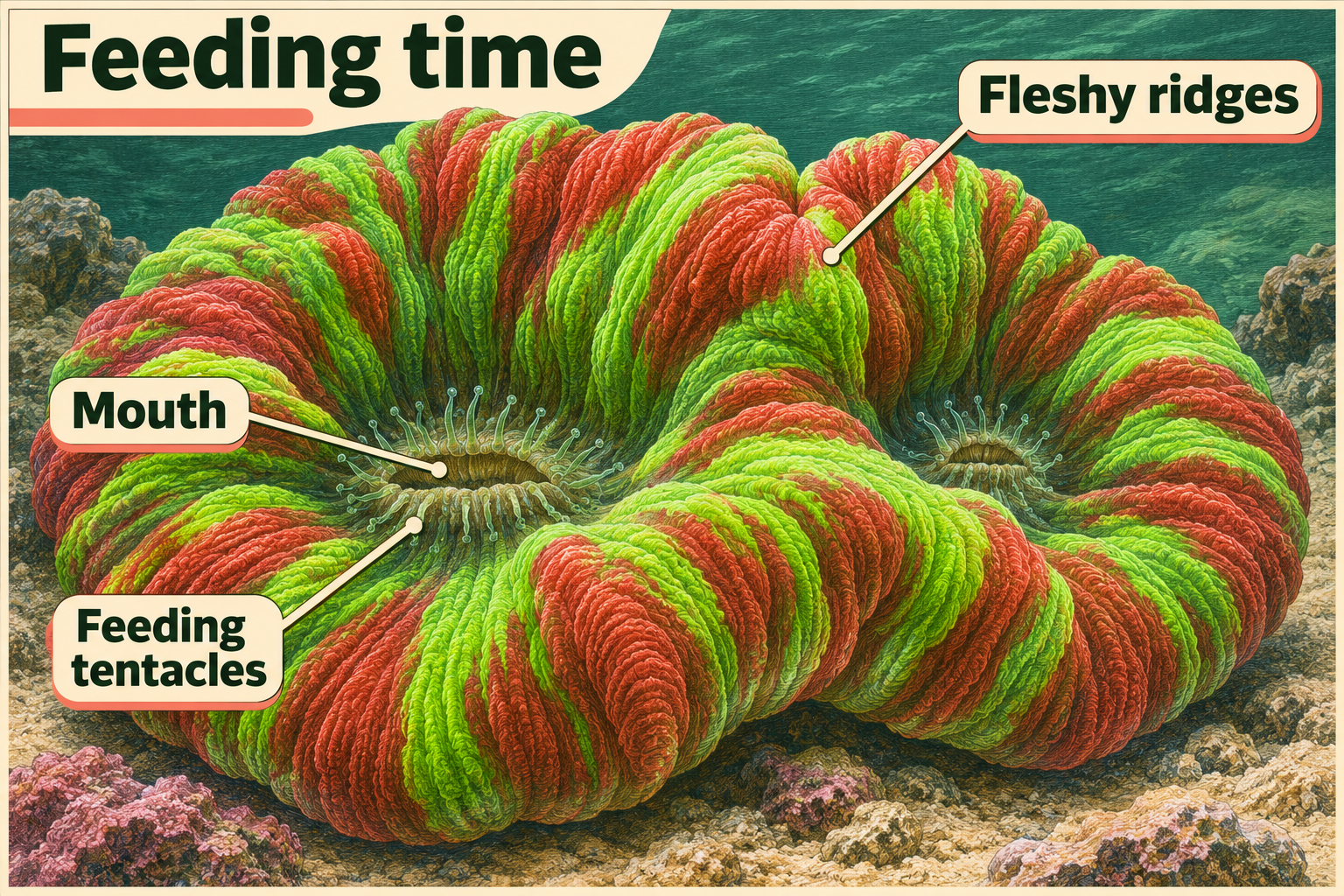
9. Watch for the dinner ring. Look for short feeding tentacles around the mouths. Offer a little thawed mysis or another small marine food when they’re out. Give the mouths time to take it in and remove leftovers.
10. Save a cushion of space. Give the coral room at full size, including when it’s puffed up. Leave a gap so neither it nor a neighbor’s tentacles touch the other colony. Check again after lights out.
Field notes — what keepers report
11. Same color, slow growth. One keeper saw good color and little growth under an overhang with gentle flow and chopped food. Take monthly photos so slow change is easier to spot.
12. Watch what falls past. Another keeper saw a sandbed Trachy catch pellets drifting down from the fish feeder. Check what yours already catches before adding a meal.
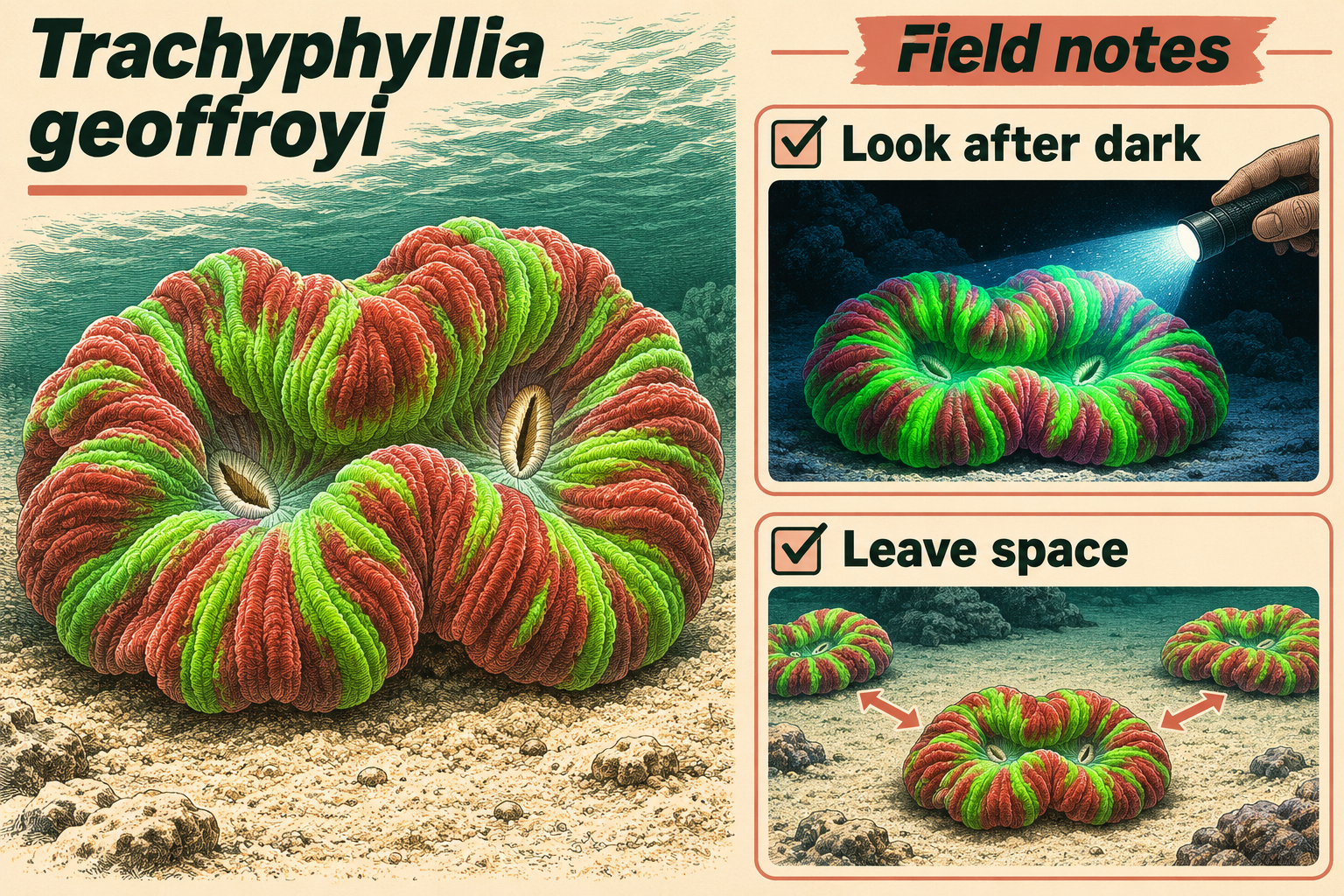
Give your Trachy a flat patch of sand, gentle flow and time. Then swing by after dark. The folds you admired all day might be framing a little ring of tentacles.
Field Notes
Related species
Splatter hammer
Fimbriaphyllia paraancora
Similar care · LPS
Hologram hammer
Fimbriaphyllia paraancora
Similar care · LPS
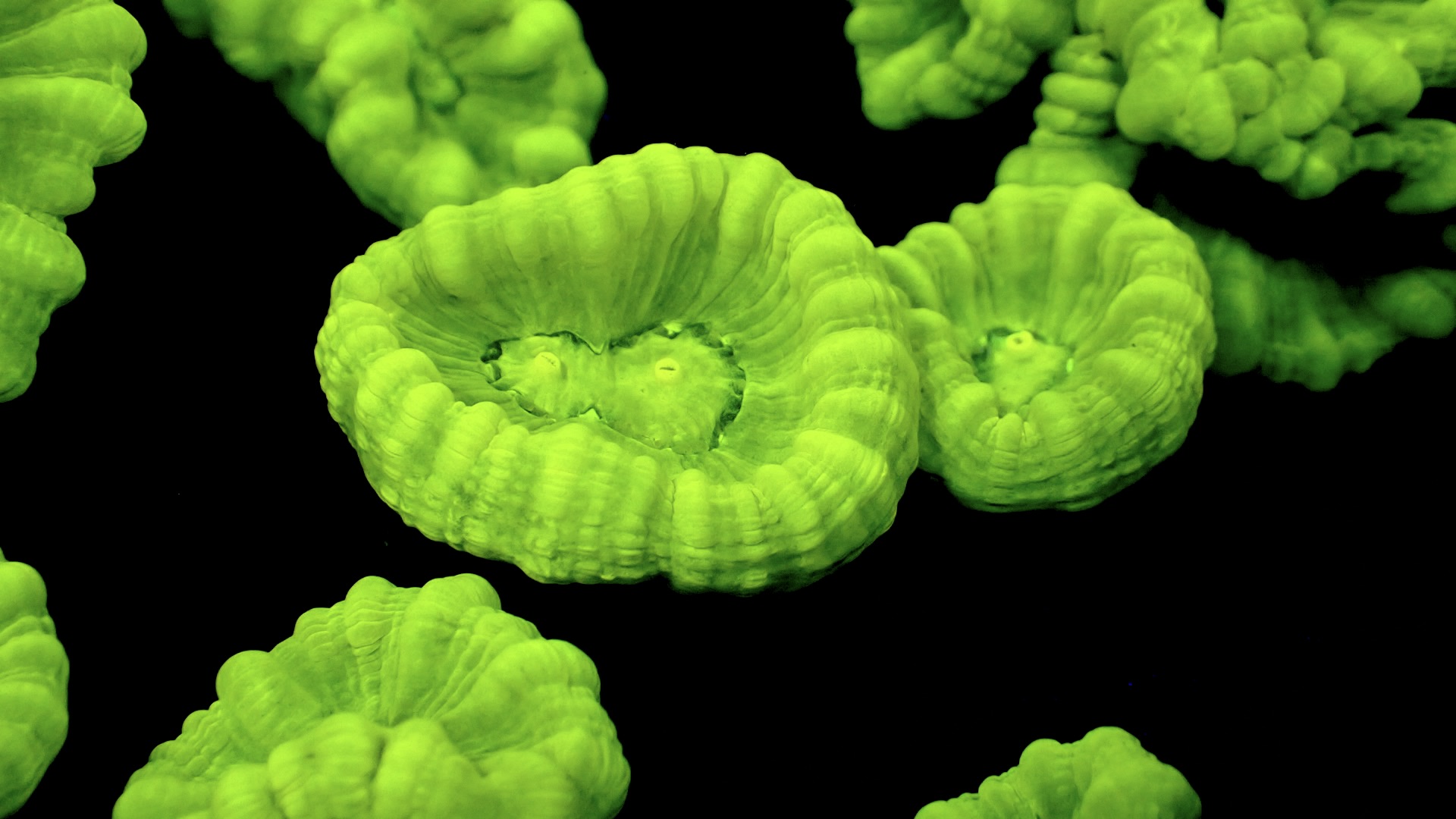
Kryptonite candy cane
Caulastrea sp
Similar care · LPS
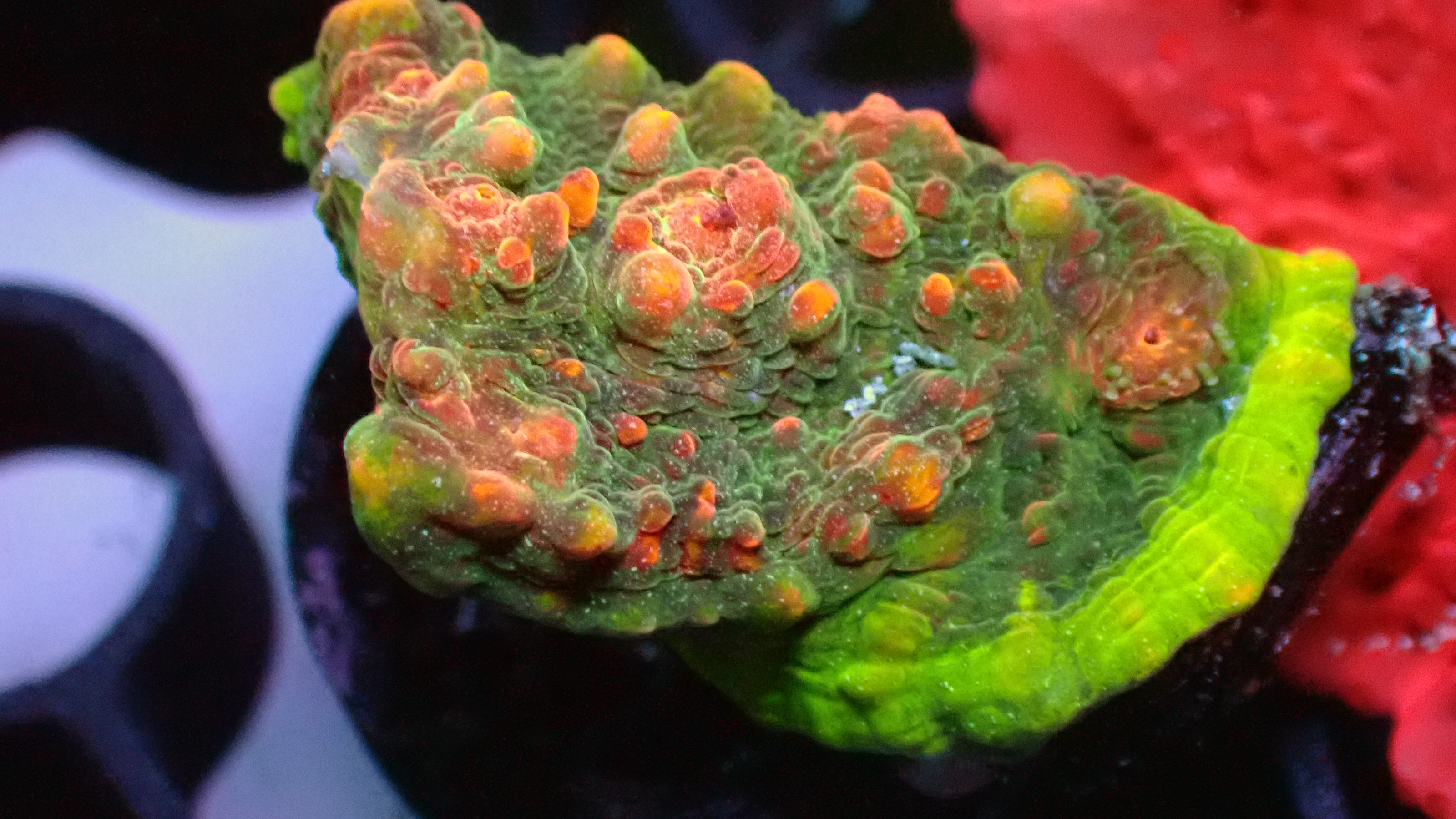
Area 51 chalice
Echinophyllia sp
Similar care · LPS
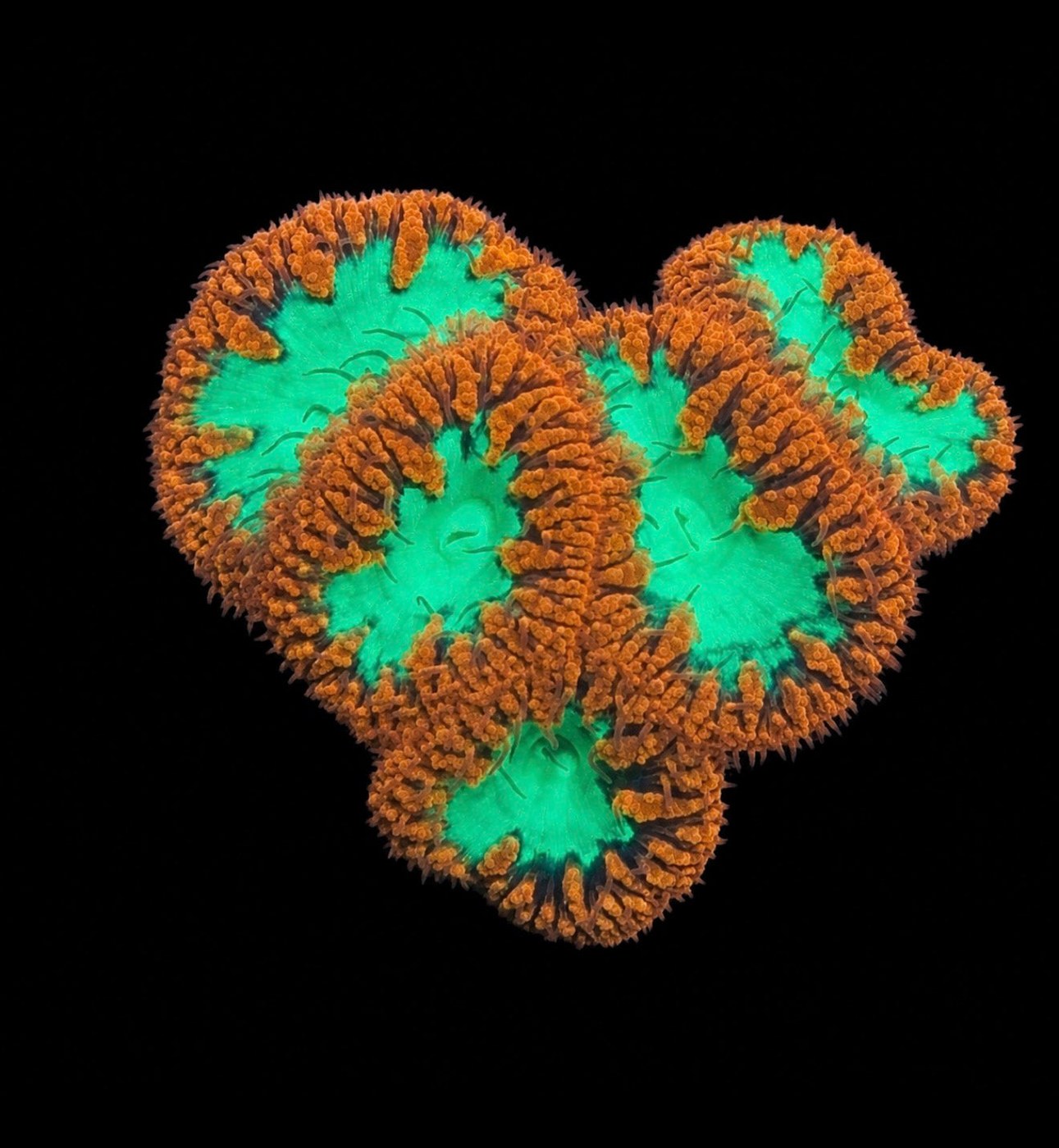
Aussie Blastomussa wellsi
Blastomussa wellsi
Similar care · LPS

Brain Coral
Platygyra daedalea
Similar care · LPS

Brain Root Coral
Lobophyllia corymbosa
Similar care · LPS

Candygram hammer
Fimbriaphyllia paraancora
Similar care · LPS