Organ Pipe Coral
Tubipora musica

Care facts
- Care
- Advanced
- Light
- Medium
- Flow
- Medium-High
- Place
- Mid
- Space
- Peaceful
- Origin
- Indo-Pacific
- Growth Rate
- Slow
Gallery
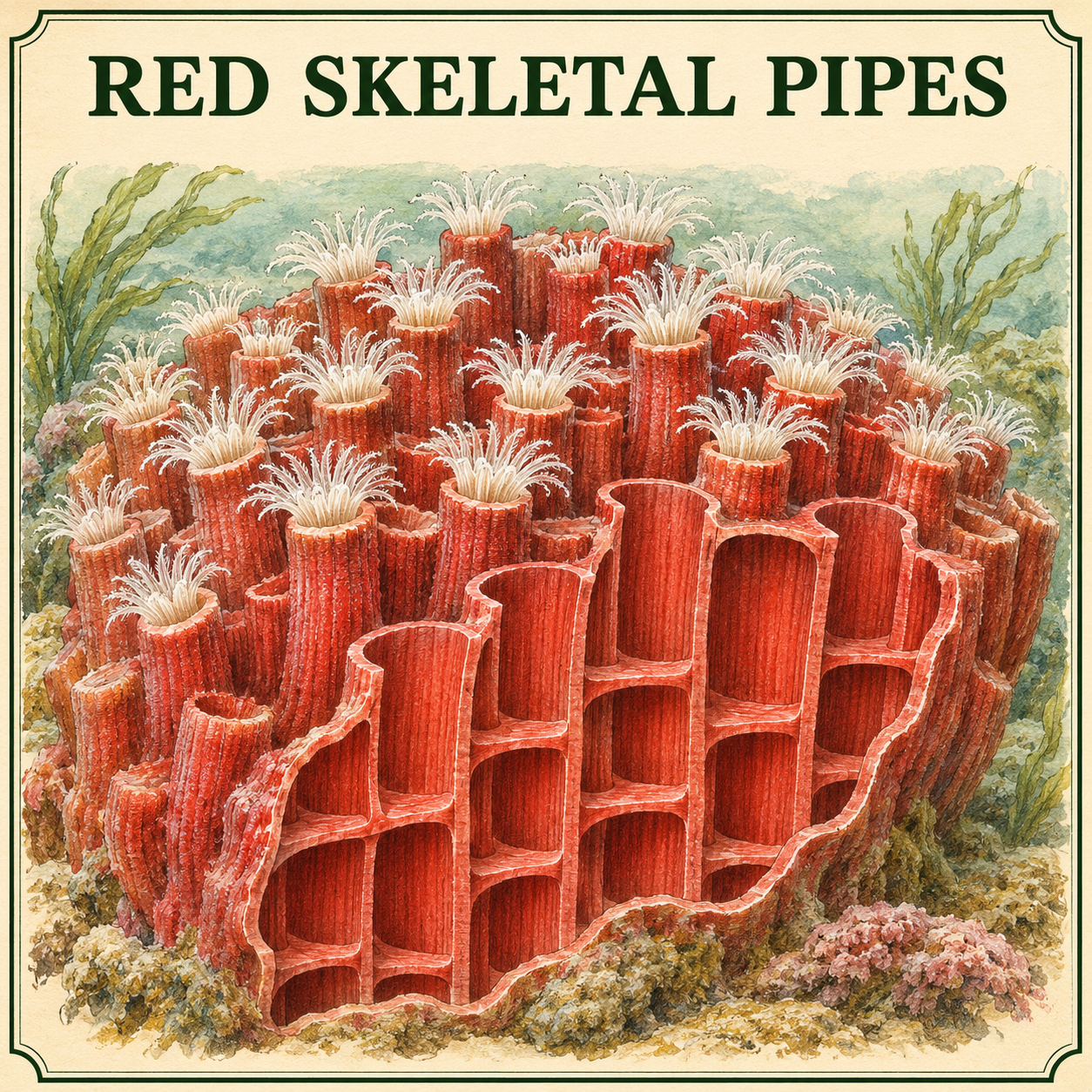
An organ pipe coral looks like a garden until you spot its red plumbing. Each little flower is an animal living in a hard tube. This soft coral builds a skeleton that looks like a tiny pipe organ, but it won't play you a tune.

A coral built from red pipes
1. Count to eight. Each polyp wears eight feathery tentacles around its mouth. When the polyps pull back, the red tubes are easier to see.
2. Floors between the pipes. Thin shelves link the tubes as the colony grows. The skeleton is hard, but its thin parts break easily. Handle the mounting rock, not the pipes.
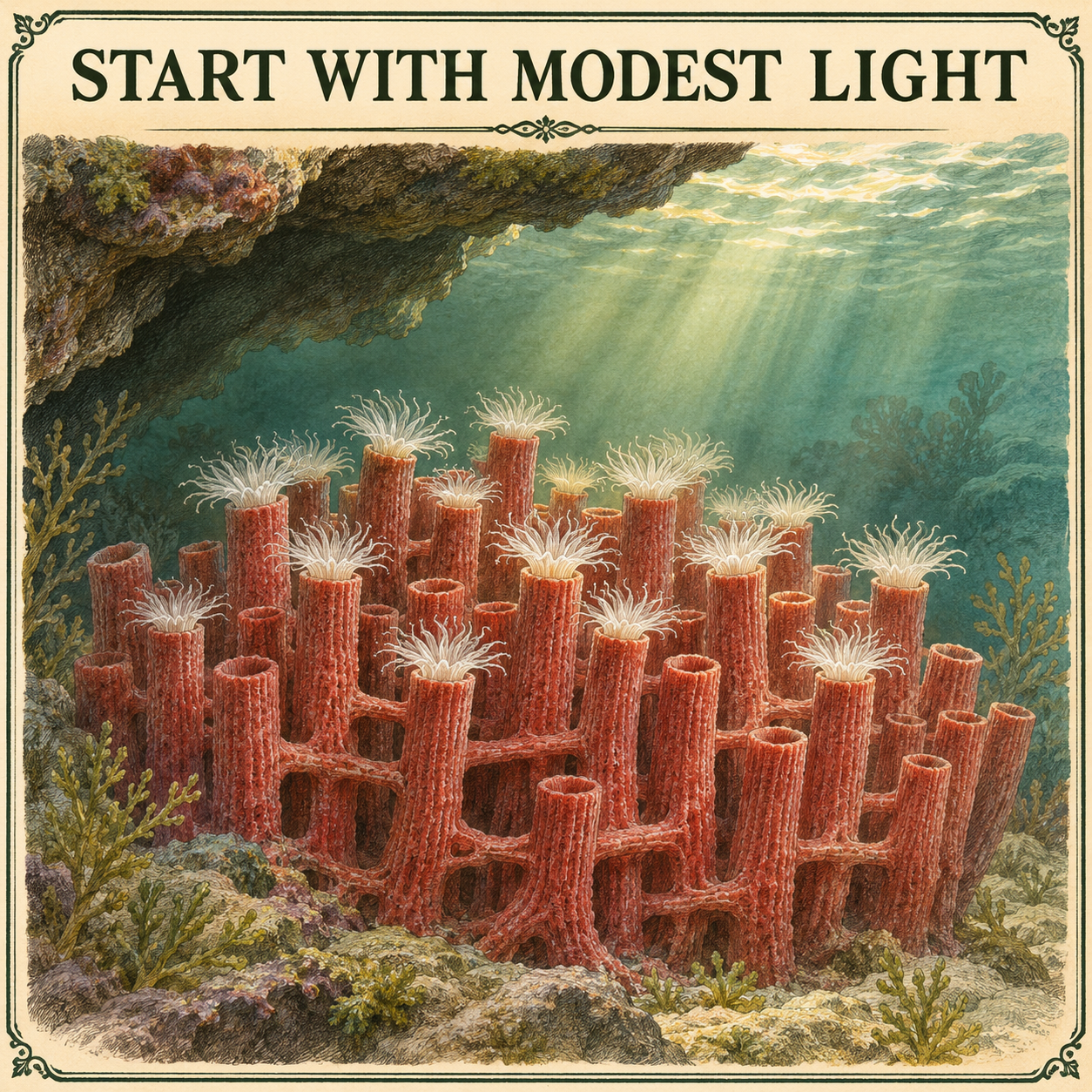
Start with moderate light
3. Feed the tiny partners. Algae living in the polyps use light to make food. Start with moderate light and ease a new colony into its spot.
4. Look at the coral, not the shelf. Mid-tank doesn't tell you how bright the light is. Check how the colony opens over several days. Change one thing at a time so you can see what helped.
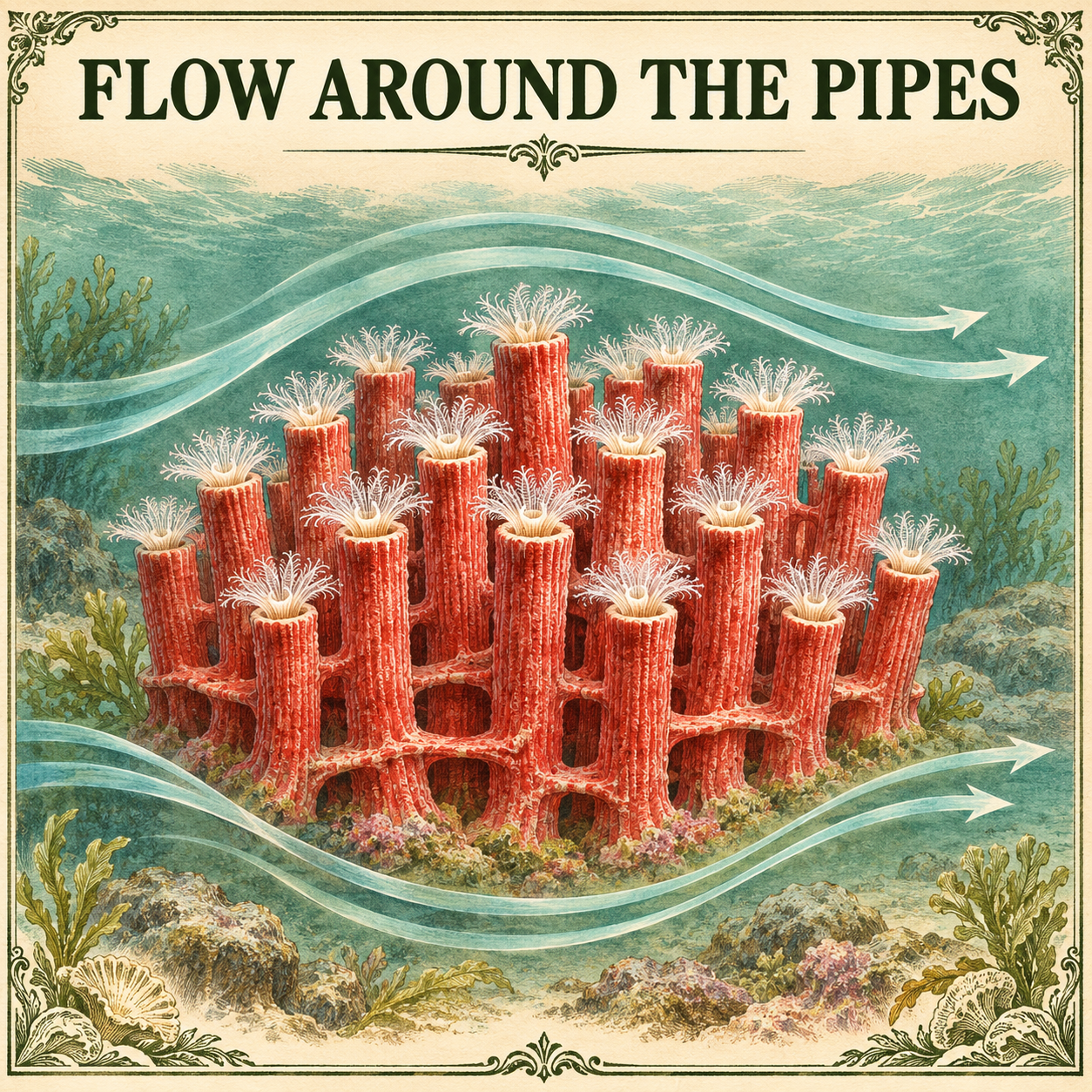
Keep water moving past the pipes
5. Sweep across, not straight at it. Use a broad, indirect current. Let the tentacles sway instead of pinning them down with a pump jet.
6. Check the gaps. Waste settles in quiet pockets between the tubes. If it keeps collecting, change the angle of the flow. Watch for algae creeping onto exposed skeleton.
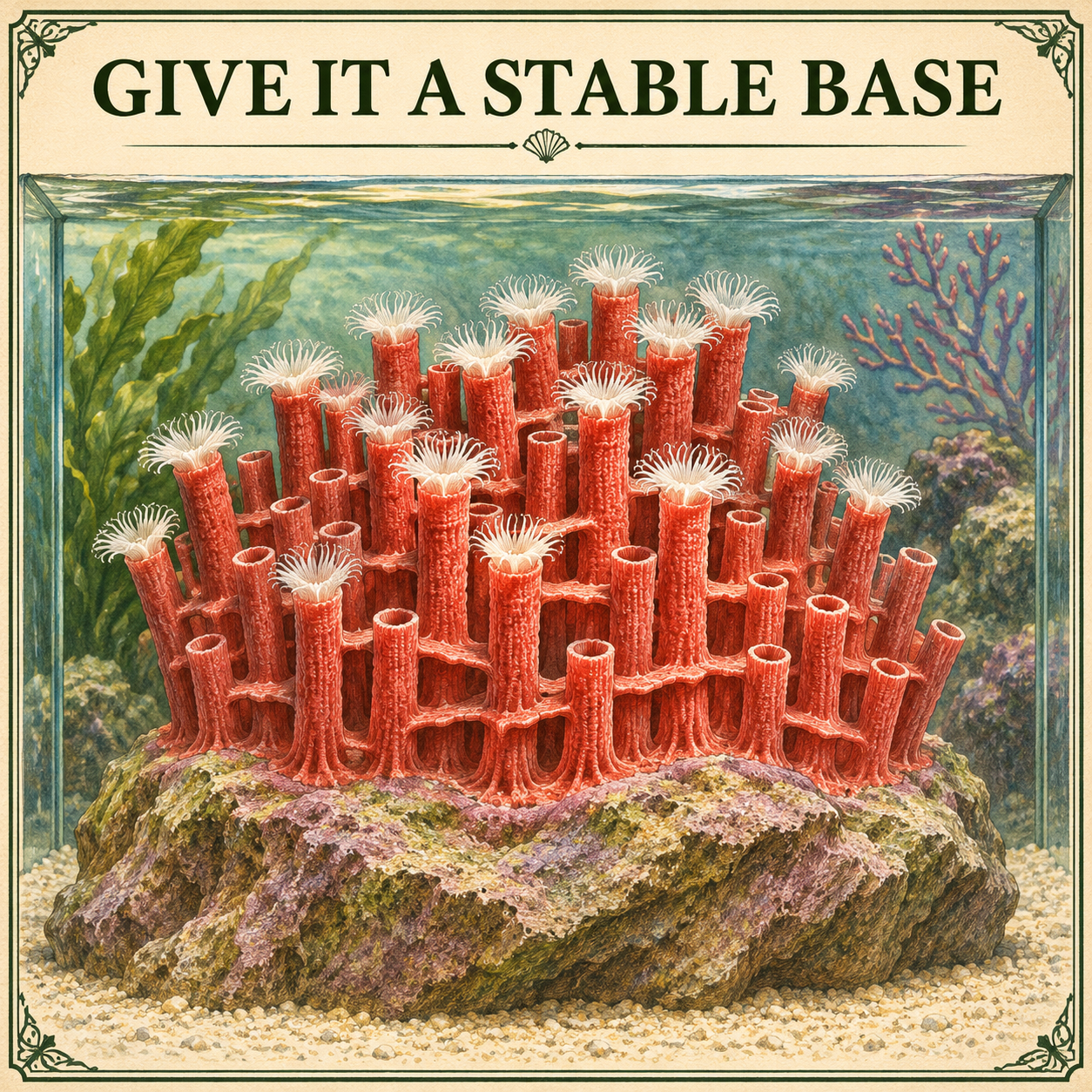
Give the colony a secure seat
7. Pick a solid ledge. Start on stable mid-level rock with suitable light and flow. Keep the colony clear of shifting sand and out of the path of your cleaning tools.
8. Leave a buffer. Keep stinging neighbors out of reach. Give the colony room to add pipes without crowding the coral next door.
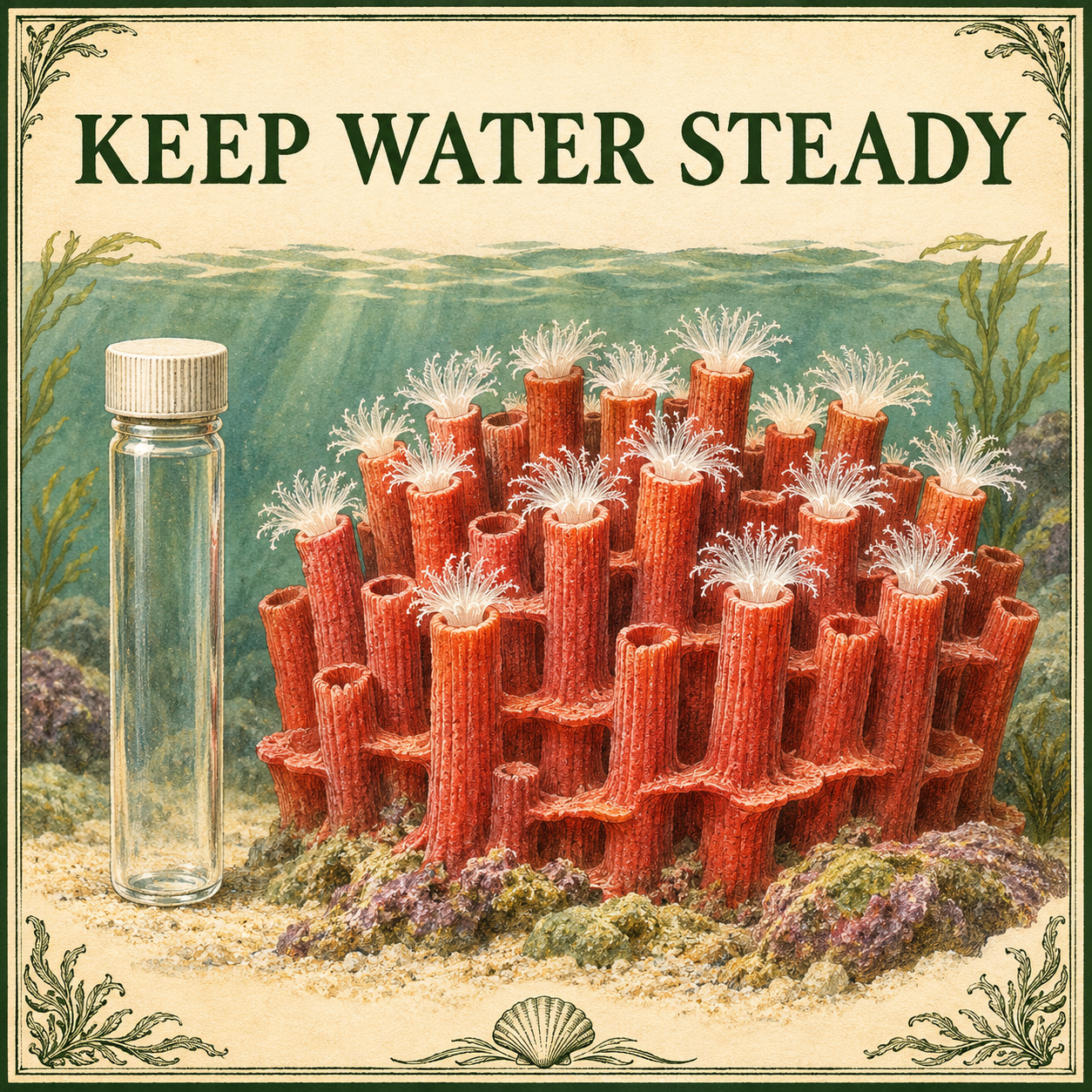
Feed lightly and keep water steady
9. Small bites only. Try a small portion of fine suspended coral food when the polyps are open. Don't pile food onto the pipes or make spot-feeding a fixed requirement.
10. Test before you adjust. Keep salinity and temperature steady. Track alkalinity and calcium as part of your reef routine. Check for deposits or algae if the polyps stay closed.
Field notes — what keepers report
11. Growth goes both ways. One keeper reported a pipe organ taking over space in a tank. Another said pipe organs hadn't done well in theirs. These are aquarium trade reports, not verified accounts for Tubipora musica.
12. Watch for new polyps. Another keeper saw small new polyps appear repeatedly. Track new tubes or polyps at the edge instead of judging growth by how wide the colony opens in a single afternoon.

Give this little pipe organ a firm seat, moderate light and enough current to keep the gaps clear. Then watch the edges. A new polyp tells you more about growth than yesterday's big show.
Field Notes
Related species
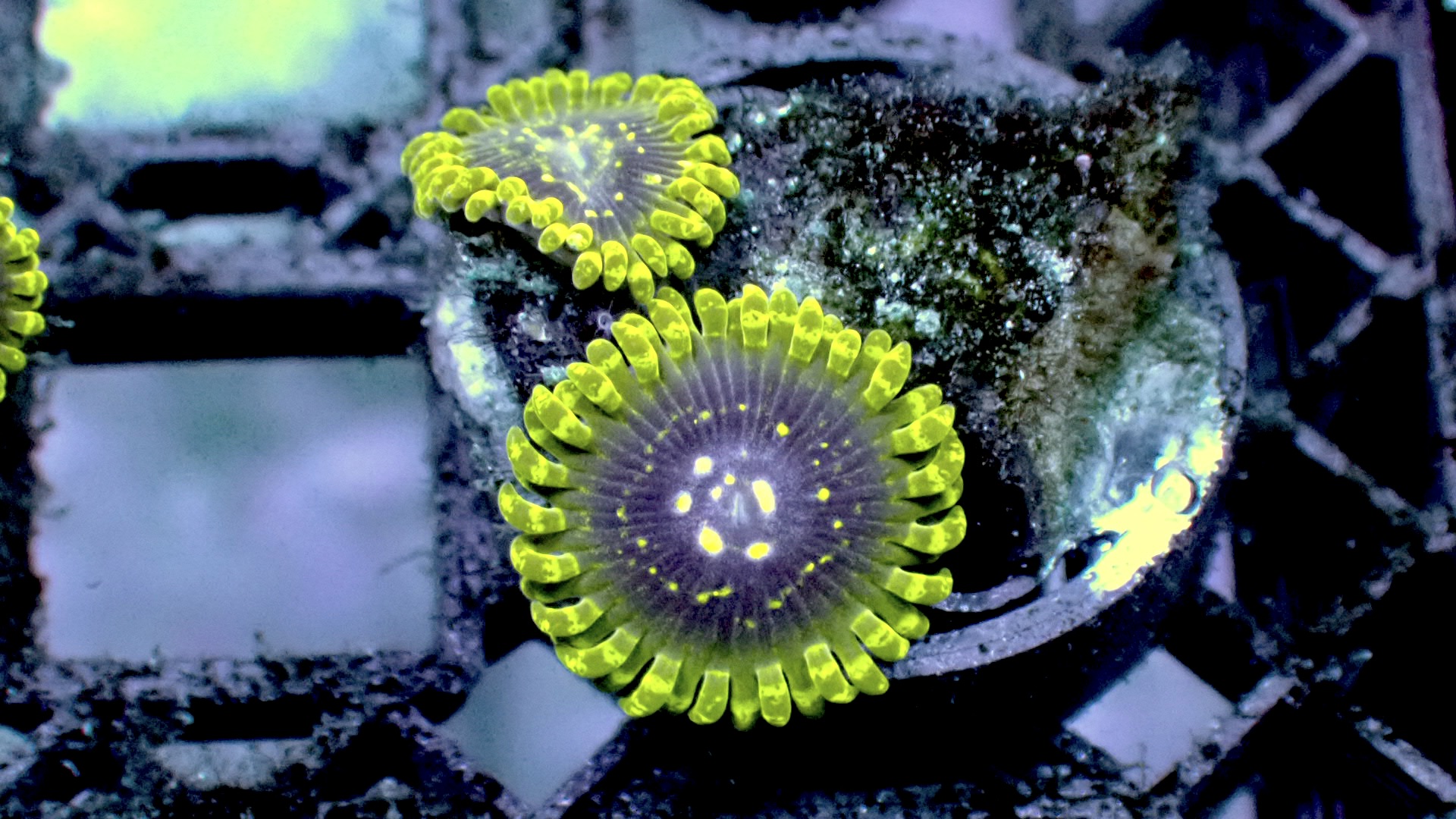
Exosphere zoanthids
Zoanthus sp
Similar care · Soft
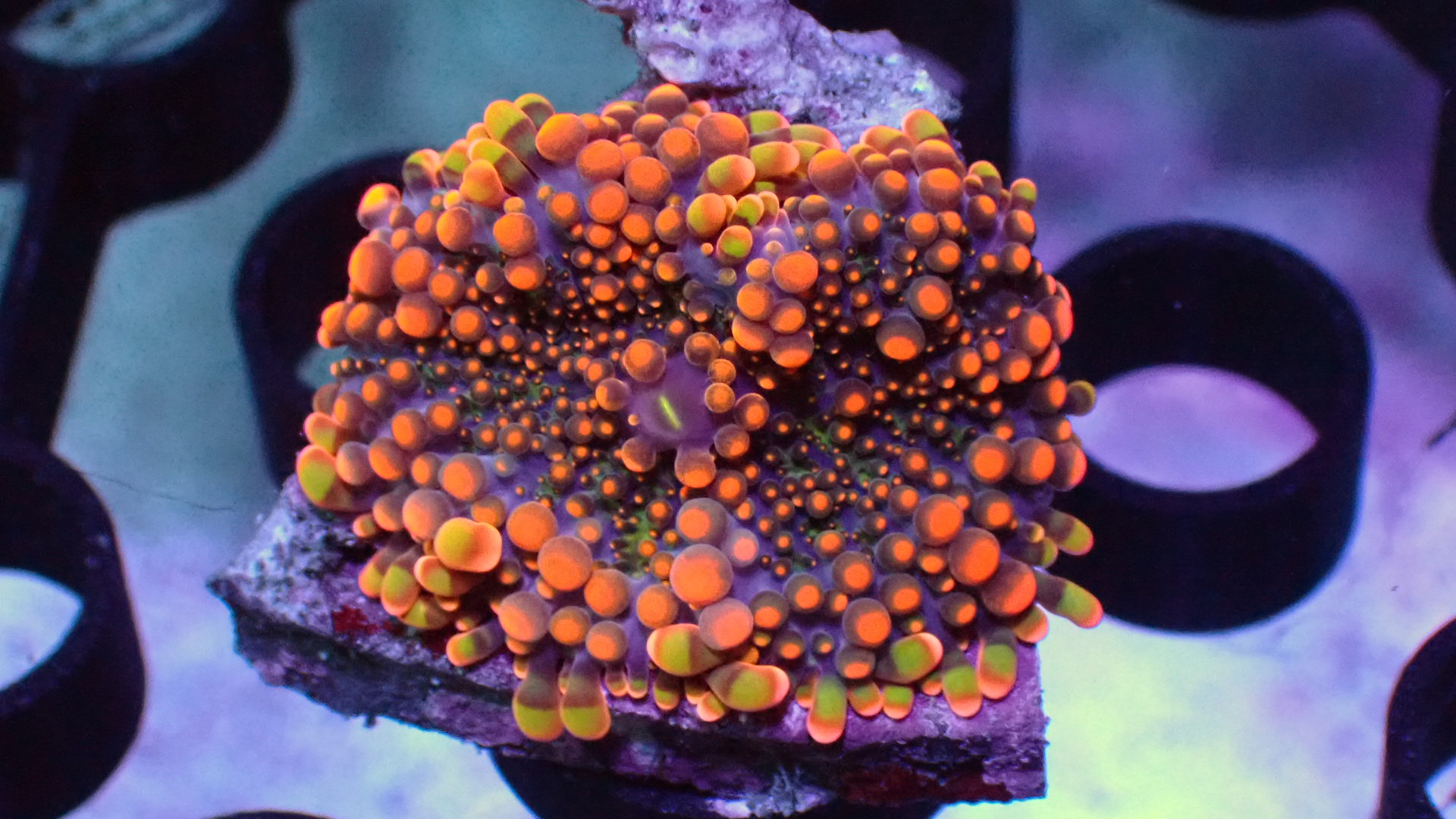
King Kong Yuma mushroom
Ricordea yuma
Similar care · Soft
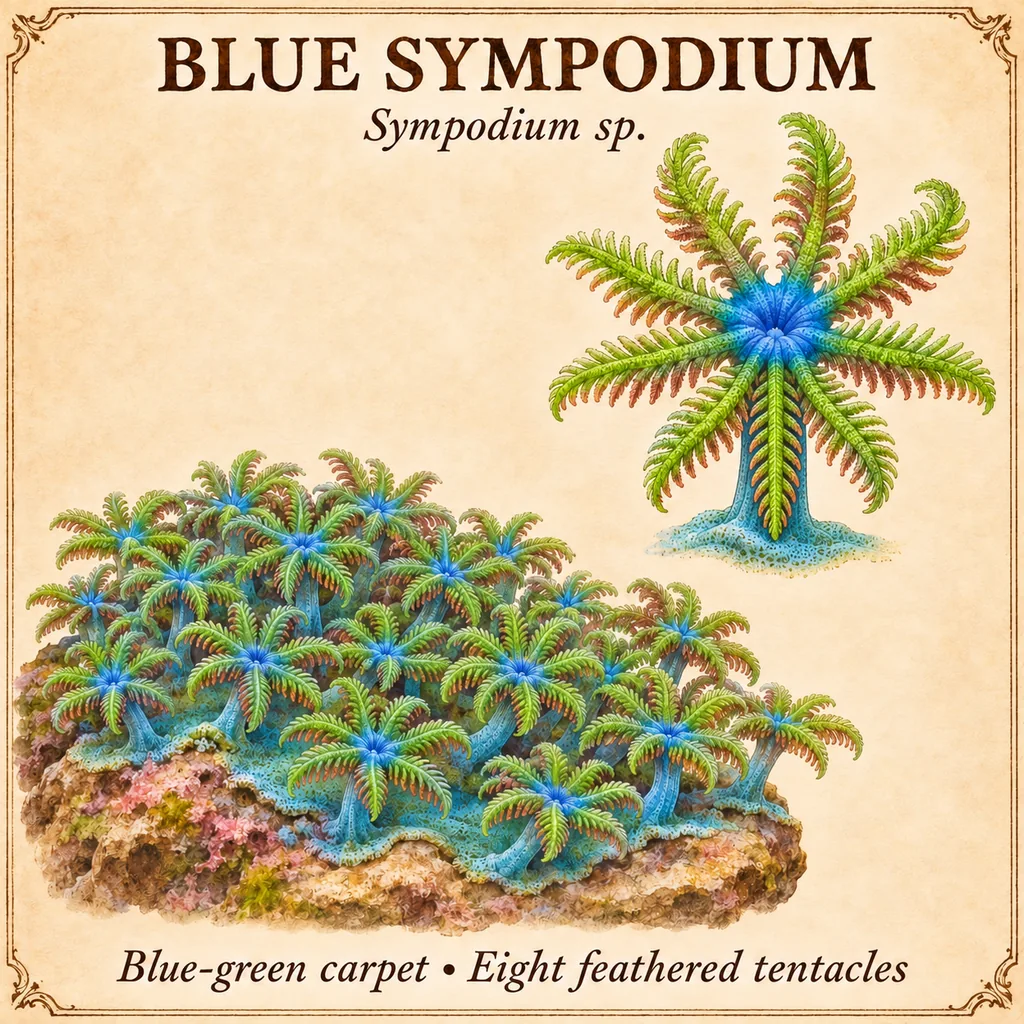
Blue Sympodium
Sympodium caeruleum
Similar care · Soft

Blueberry Haze Zoas
Zoanthus sp.
Similar care · Soft

Blueberry Zoanthids
Similar care · Soft

Burning Willow Zoas
Zoanthus sp.
Similar care · Soft

Cladiella Soft Coral
Cladiella australis
Similar care · Soft
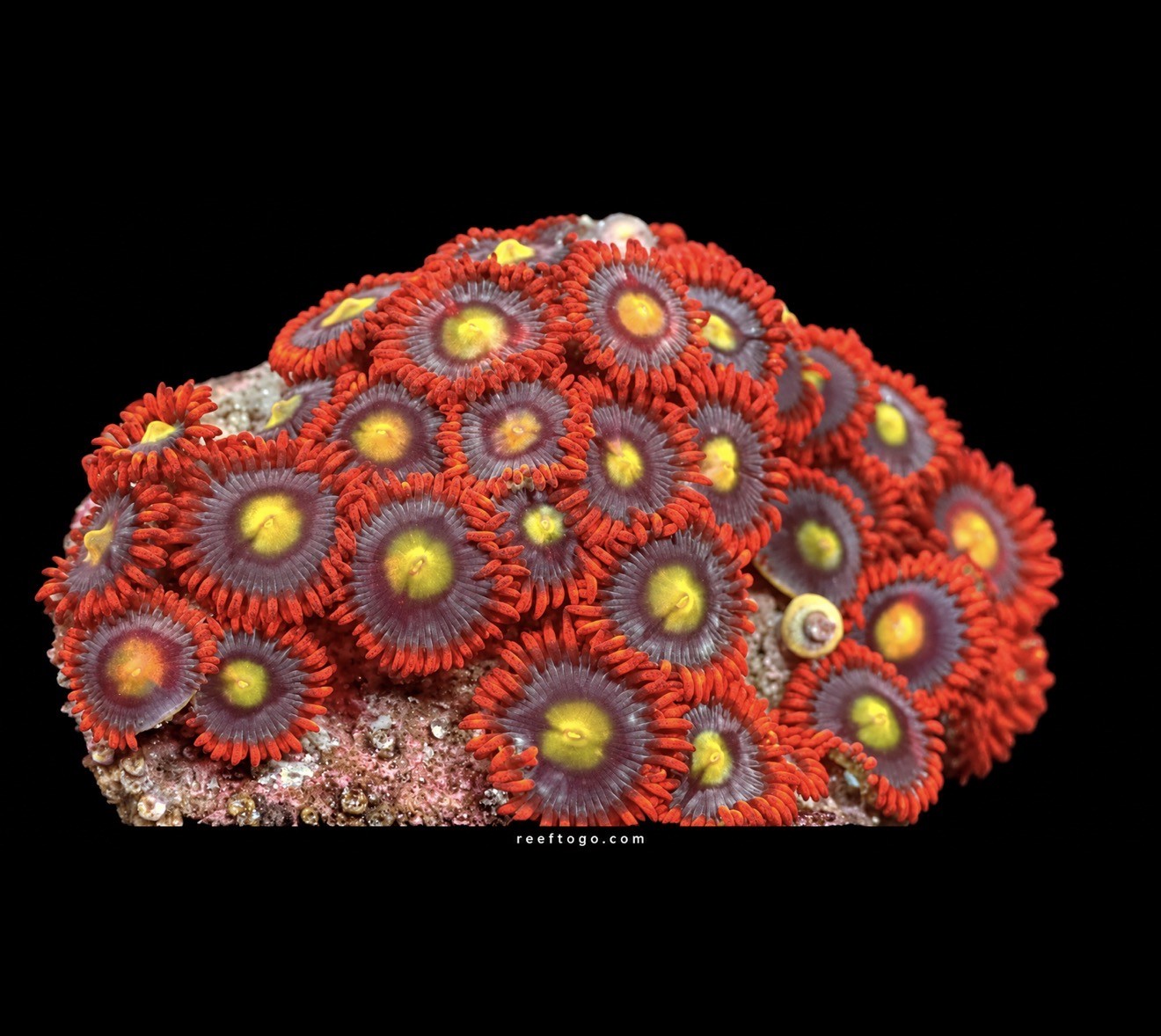
Fire and ice zoanthids
Zoanthus sp
Similar care · Soft