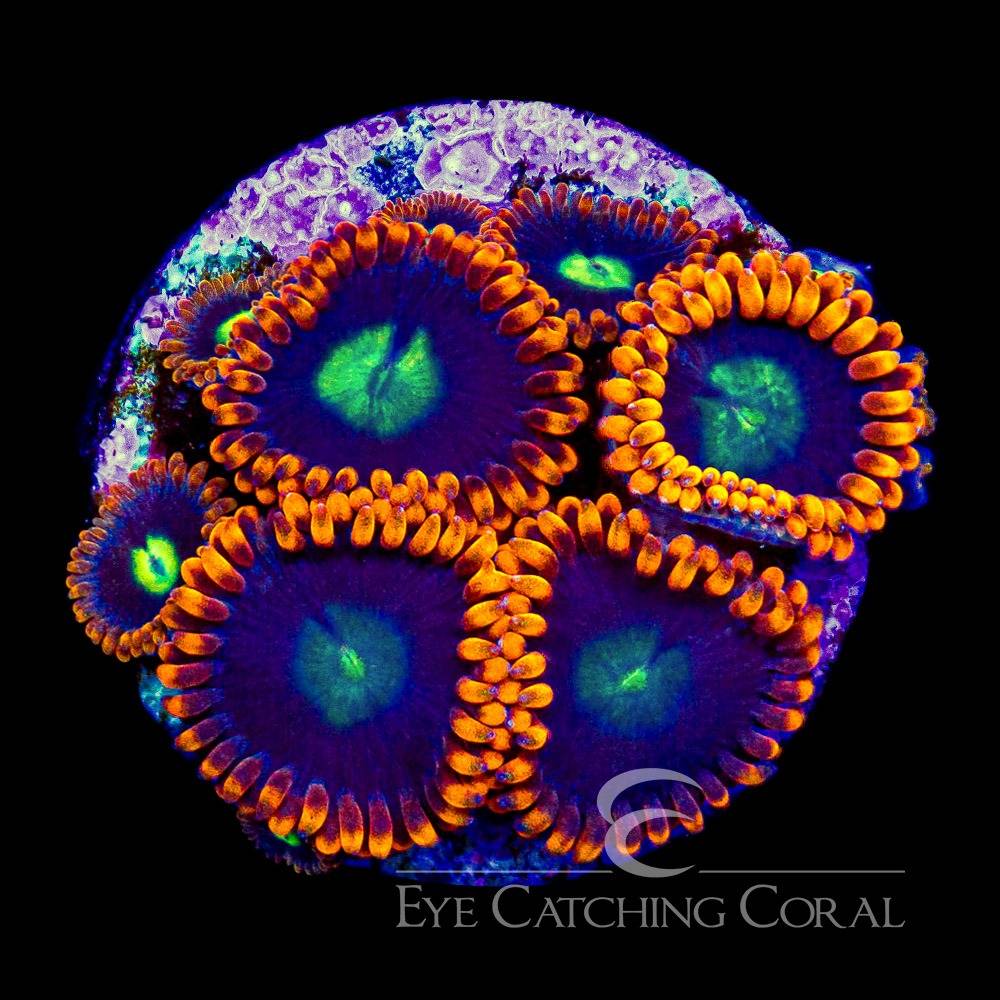
Pink Gold zoas
Zoanthus sp

Palytoxin safety
Some zoanthids and palythoas can contain a potent toxin. Wear sturdy waterproof gloves and eye protection, minimize handling, and keep colonies submerged when possible. Never boil, steam, pressure-wash or scrub colonized rock under running water. Keep other people and pets away during handling. If exposure is suspected, seek urgent medical advice and tell the clinician about possible palytoxin exposure.
Sources: CDC: palytoxin exposure · OATA: avoiding palytoxin poisoning
Gallery
Pink Gold zoas care guide
Give the little garden a boundary
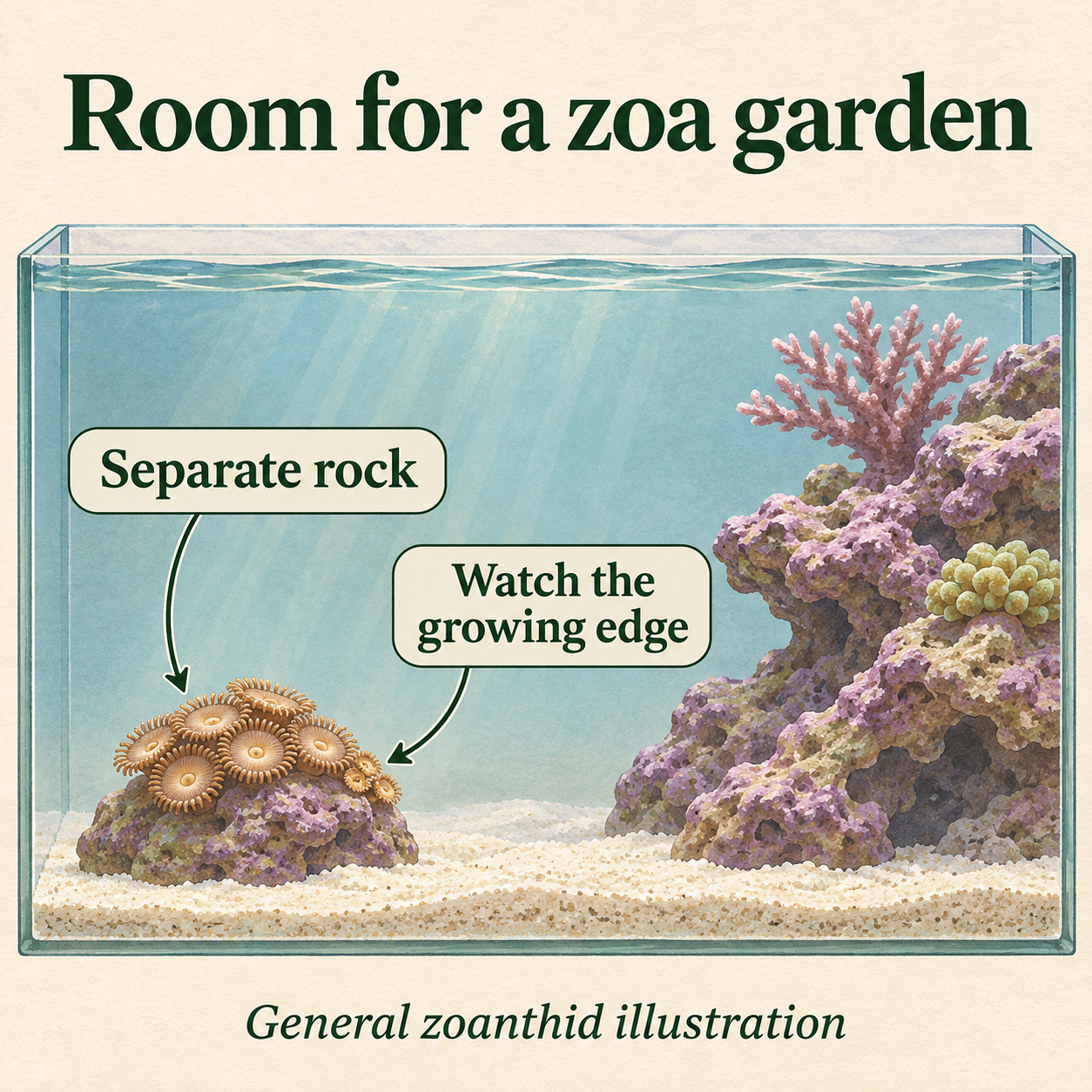
Look past the first few open polyps and picture the rock six months from now. That is the useful way to shop for Pink Gold zoas. The appeal is a small colony becoming a patchwork, not a frag staying politely inside its plug.
Pink Gold is a trade name, not a species diagnosis. This entry keeps Zoanthus sp. The ECC listing uses Pink & Gold, but similarly named corals elsewhere do not establish shared lineage.
Give the frag its own accessible rock, with room around the growing edge. The existing Moderate space rating is a reminder to manage expansion. It does not mean this zoa needs a fixed two-inch gap forever, or that every neighbor is safe within that distance. Keep an eye on the boundary as the garden fills in.
Find the light, not the shelf
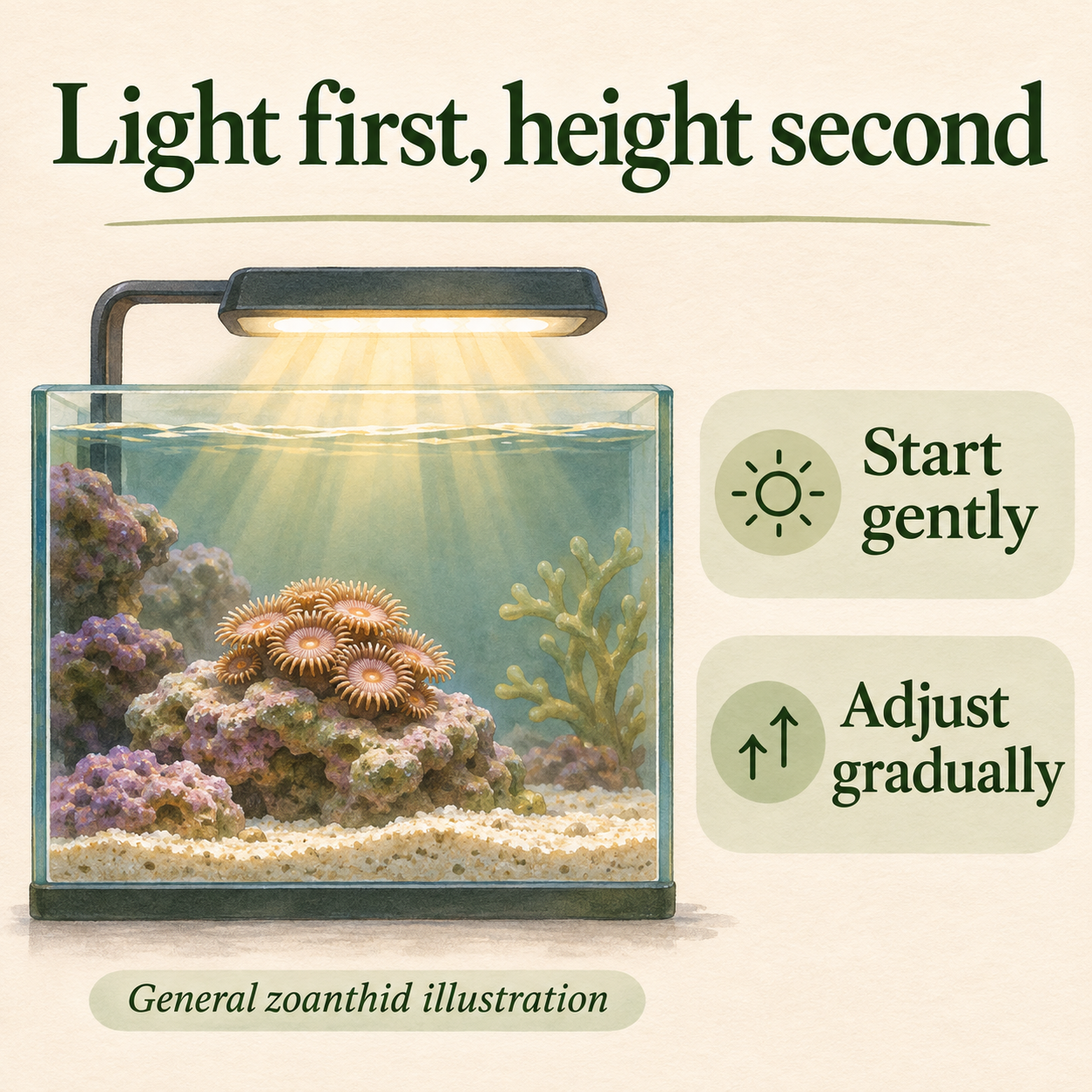
Mid placement is a starting location, not a light measurement. A shelf under an LED hotspot and a shaded shelf at the same height are different homes.
Start with the card's low-to-medium light and make changes gradually. Ask how the frag was kept before it arrived. Tidal Gardens grows zoas across different light levels and warns that a push toward brighter light can cause damage. More light is not automatically more color.
Compare photographs under the same lighting. Some zoas look vivid under blue light; others show better under daylight. That difference alone is not a diagnosis. Watch the living tissue and how the colony opens, not just whether it matches a seller's photograph.
Keep water moving through the garden
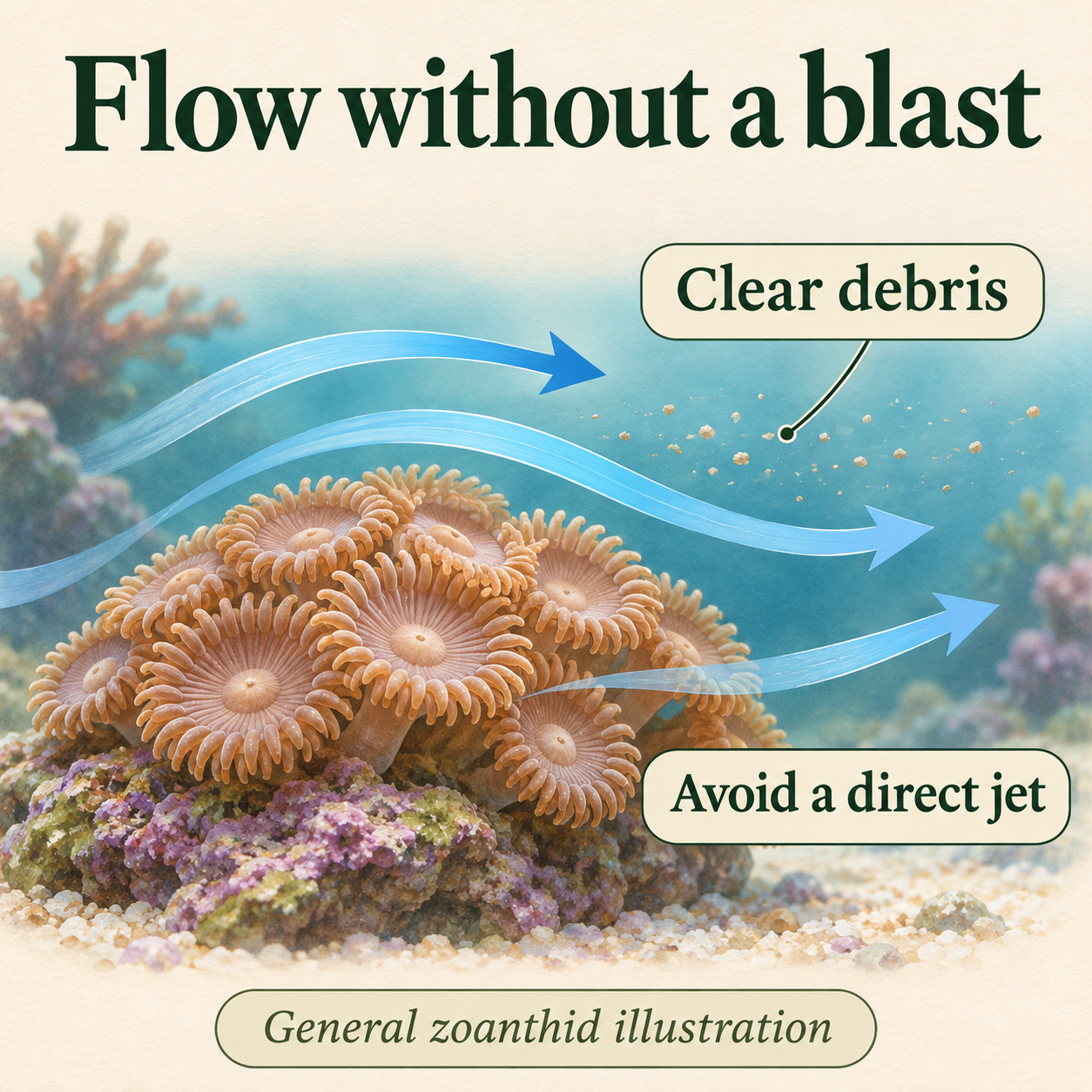
A zoa mat makes plenty of little pockets for waste to settle. Look between the polyps as well as across their tops.
Aim for moderate circulation that carries debris away without pinning the colony in a direct jet. BRS recommends moderate flow for ECC Pink & Gold. Tidal Gardens favors stronger circulation for its zoanthids, especially to prevent detritus buildup. Those recommendations come from different systems, not a controlled Pink Gold comparison.
Use the result in your tank as the check. Persistent debris deserves attention. So does a colony that stays shut after a pump change. Check attachment, water conditions and other irritation before treating a closed polyp as a request for more light or food.
Feed a little and follow the trend
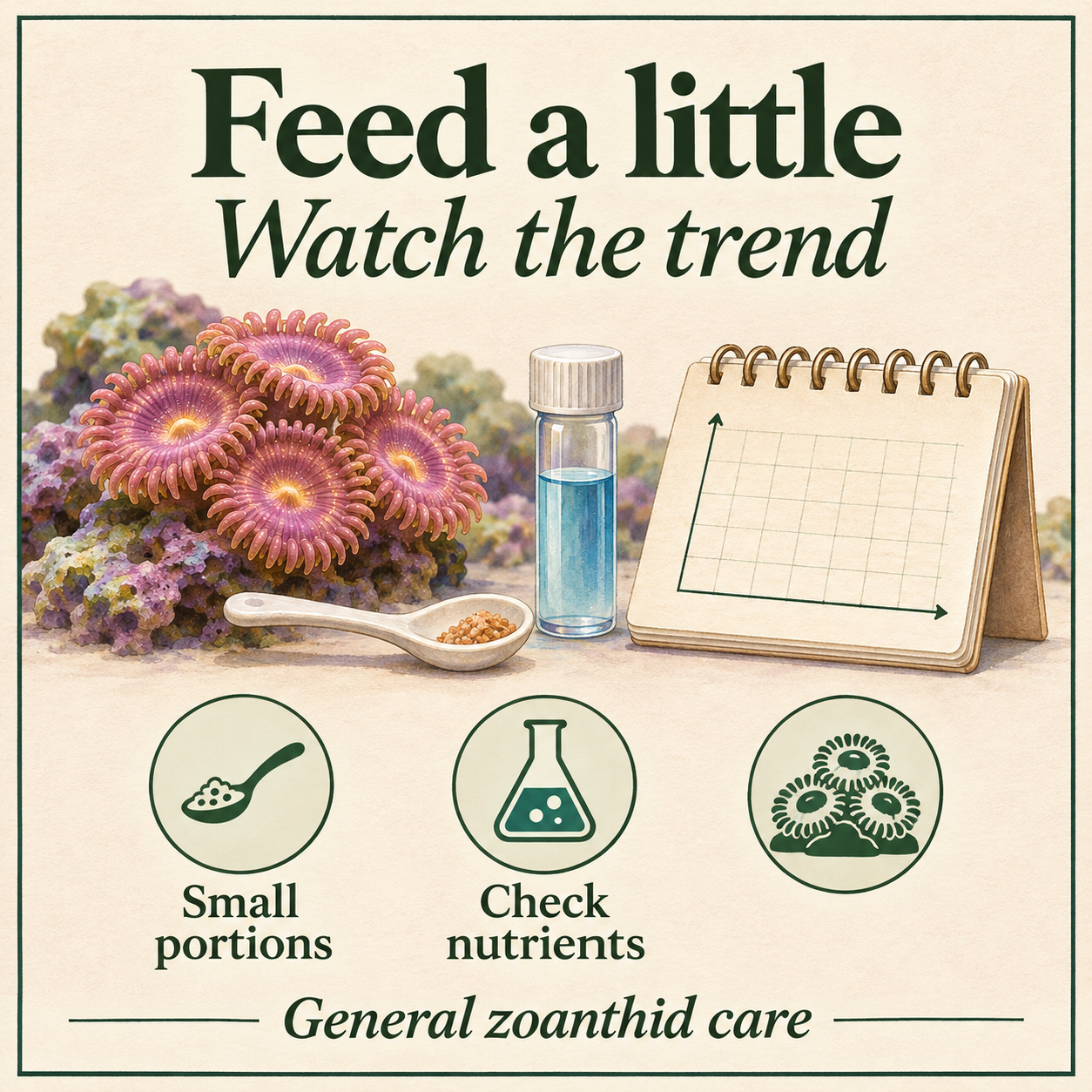
Zoanthids have photosynthetic partners in their tissue. Feeding is a supplement to suitable light and stable husbandry, not a substitute for either.
Corals.com describes its Pink & Gold stock as fast growing and responsive to feeding. That is a grower's observation about its stock, not a promise about this frag. There is no verified schedule for how quickly this colony will cover a rock.
If you offer a fine coral food, start modestly and watch what happens. Do not bury the polyps in a meal. Keep feeding notes beside your nutrient tests and comparable photographs. This turns an extra feeding into something you can evaluate rather than another bottle to add by habit.
Small polyps, serious handling rules

Read the safety notice above the care card before working with this colony. Some zoanthids contain palytoxin. A trade name or attractive color does not certify a specimen as toxin-free.
Wear sturdy waterproof gloves and eye protection, minimize handling, and keep the colony submerged when possible. Never boil, steam, pressure-wash or scrub colonized rock under running water. Keep people and pets away from the work area. Protective equipment does not make aerosol-producing work safe.
For removal or fragging, follow the full OATA guidance rather than improvising from a picture. If exposure is suspected, seek urgent medical advice and explain the possible palytoxin exposure. This section supplements the existing safety component; it does not replace it.
Field notes — what keepers report
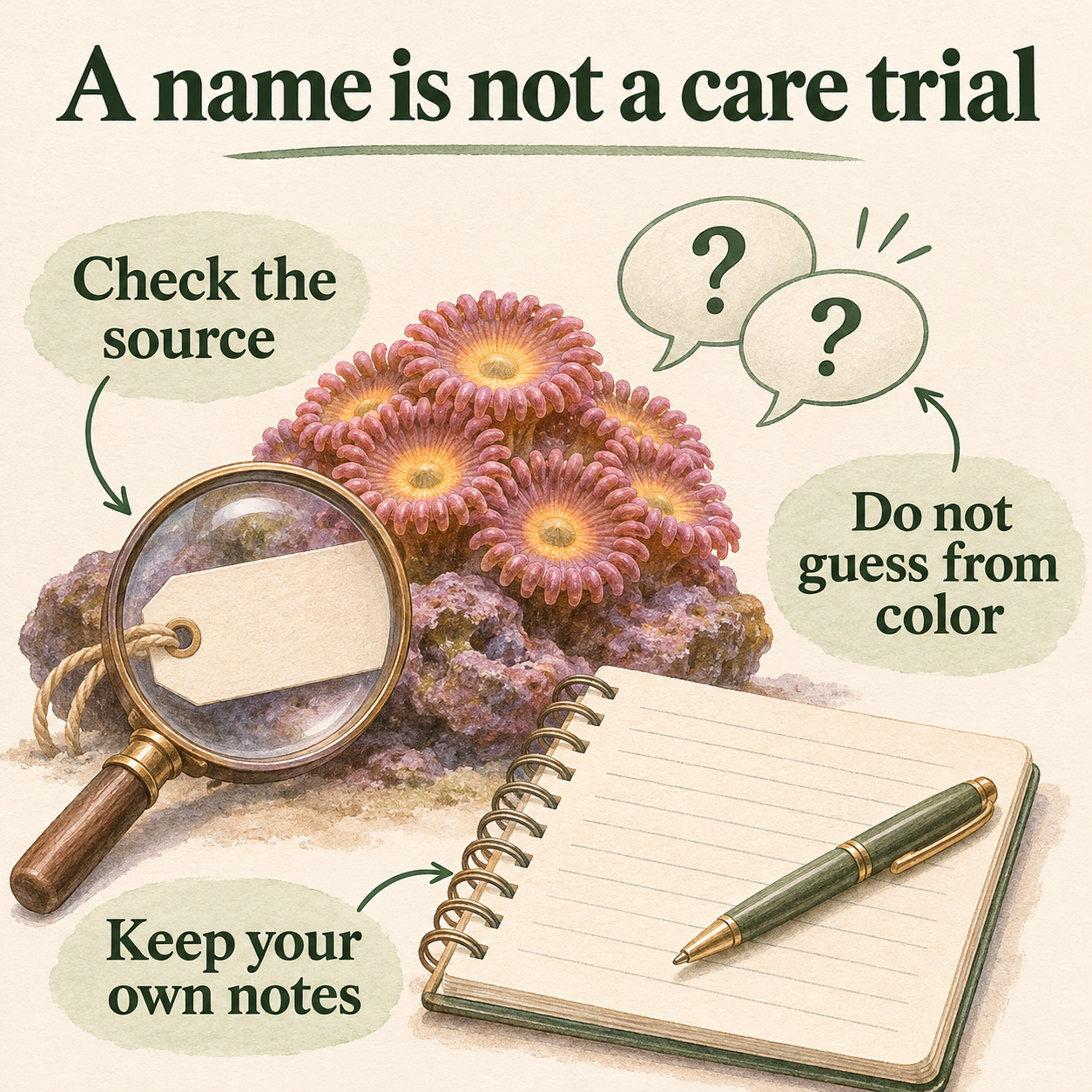
The name turns up in hobbyist conversations, but the evidence needs sorting. In a 2010 Reef2Reef sale thread, scrapz described a coral sold as Pink & Gold v2 as brighter under higher light. That is one seller's observation, with no measured light level and no verified connection to this ECC stock. It is not a reason to turn your lights up.
Identification is less tidy still. In a 2025–2026 Reef2Reef discussion, one keeper suggested Pink and Golds, while others favored Mohawks or other names. That disagreement is useful evidence of naming uncertainty, not proof that those morphs are interchangeable.
I found no verified husbandry report tied specifically to this entry's ECC lineage. Keep your own record of source, placement, lighting changes and growth. A photograph and a few dated notes are more useful than borrowing another coral's reputation.
Field Notes
Related species
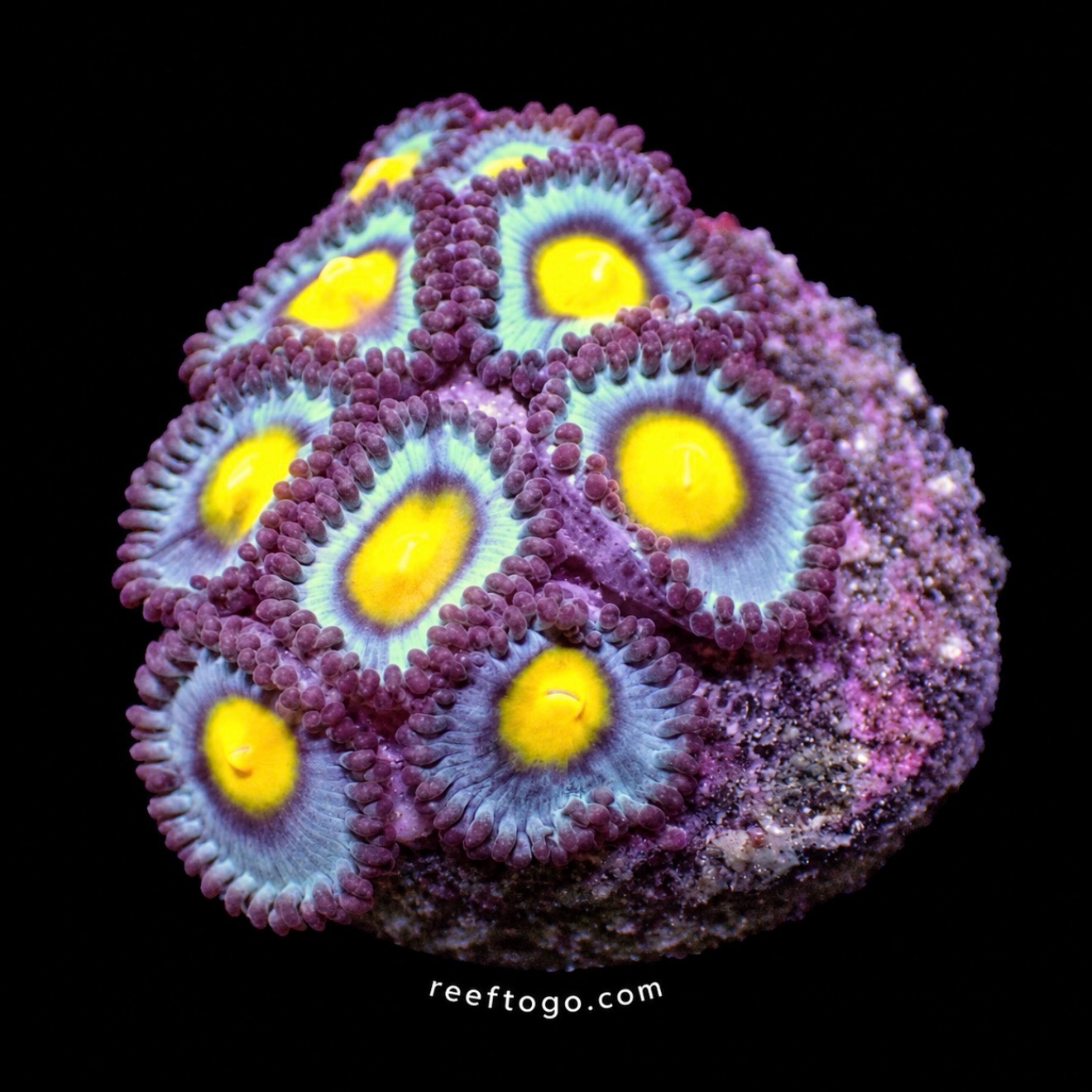
Alien Eye zoas
Zoanthus sp
Same genus
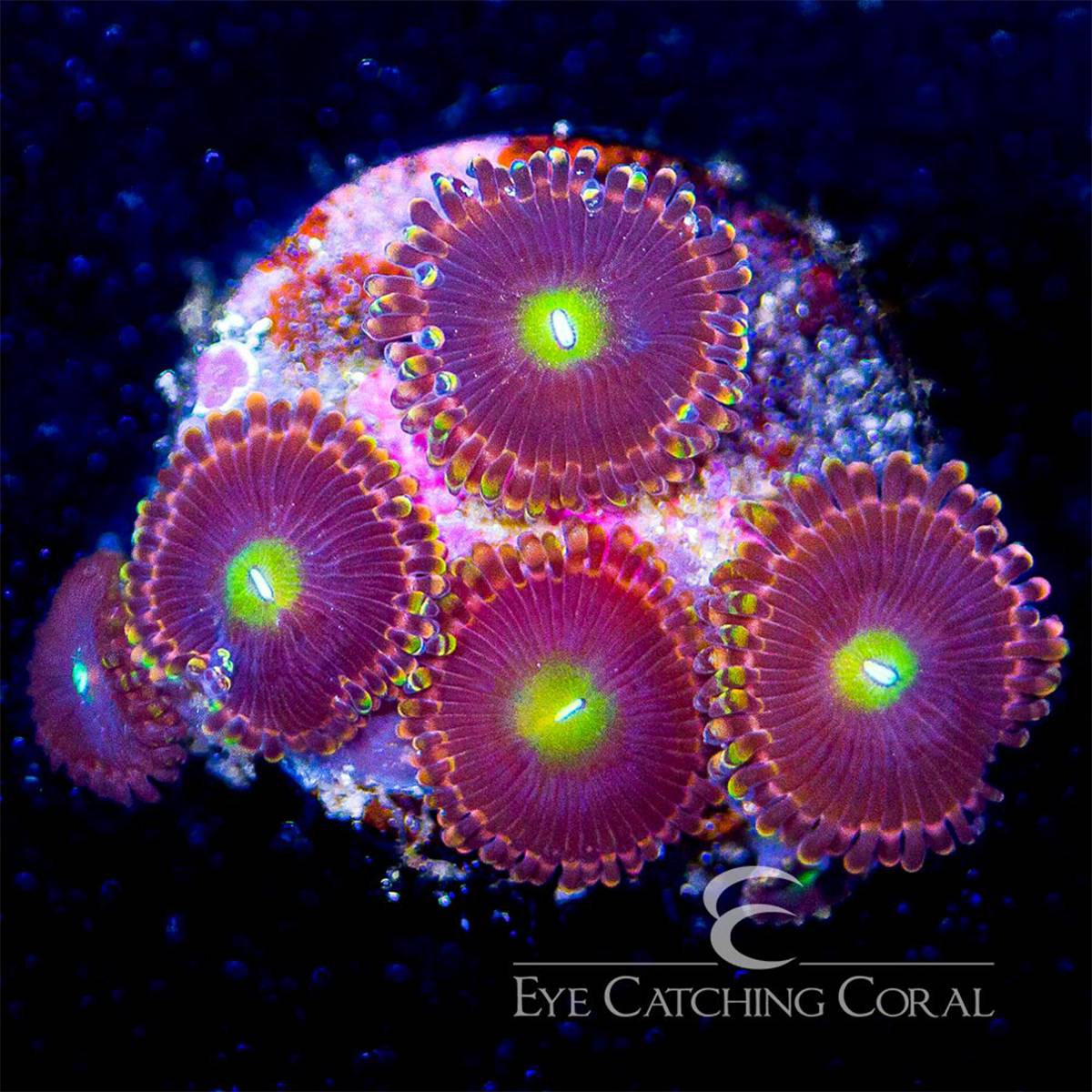
Antimatter zoas
Zoanthus sp
Same genus
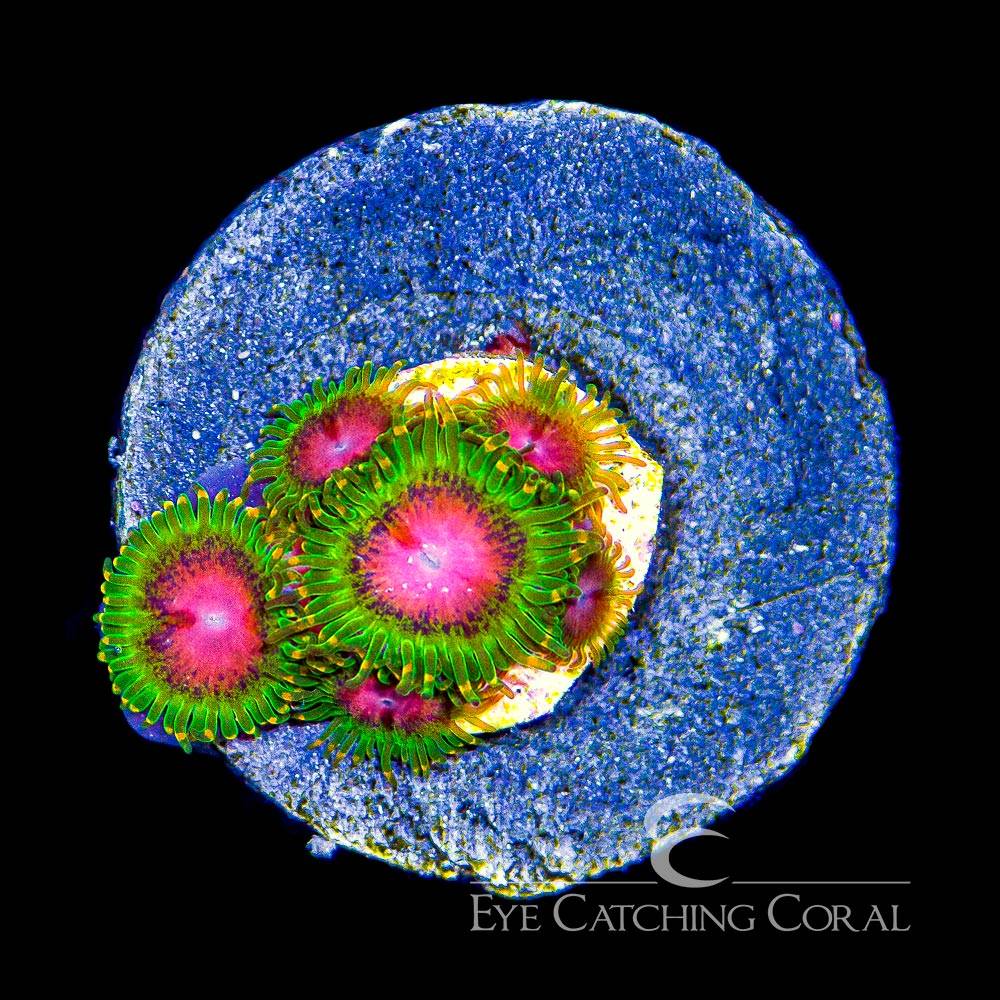
Awesome Blossom zoas
Zoanthus sp
Same genus
Bam Bam zoas
Zoanthus sp
Same genus
Black Bella zoas
Zoanthus sp
Same genus
Blow Pops zoas
Zoanthus sp
Same genus
Burning Ember zoas
Zoanthus sp
Same genus
Burning Suns zoas
Zoanthus sp
Same genus