Plasma Cutter zoas
Zoanthus sp
Palytoxin safety
Some zoanthids and palythoas can contain a potent toxin. Wear sturdy waterproof gloves and eye protection, minimize handling, and keep colonies submerged when possible. Never boil, steam, pressure-wash or scrub colonized rock under running water. Keep other people and pets away during handling. If exposure is suspected, seek urgent medical advice and tell the clinician about possible palytoxin exposure.
Sources: CDC: palytoxin exposure · OATA: avoiding palytoxin poisoning
Gallery
Plasma Cutter zoas care guide
Leave room for the next polyp
The frag looks small on its plug. Give it a little corner of rock, let the polyps open, and the empty space around it starts to look like possibility. That is the appeal of Plasma Cutter zoas: a small garden you can watch fill in.
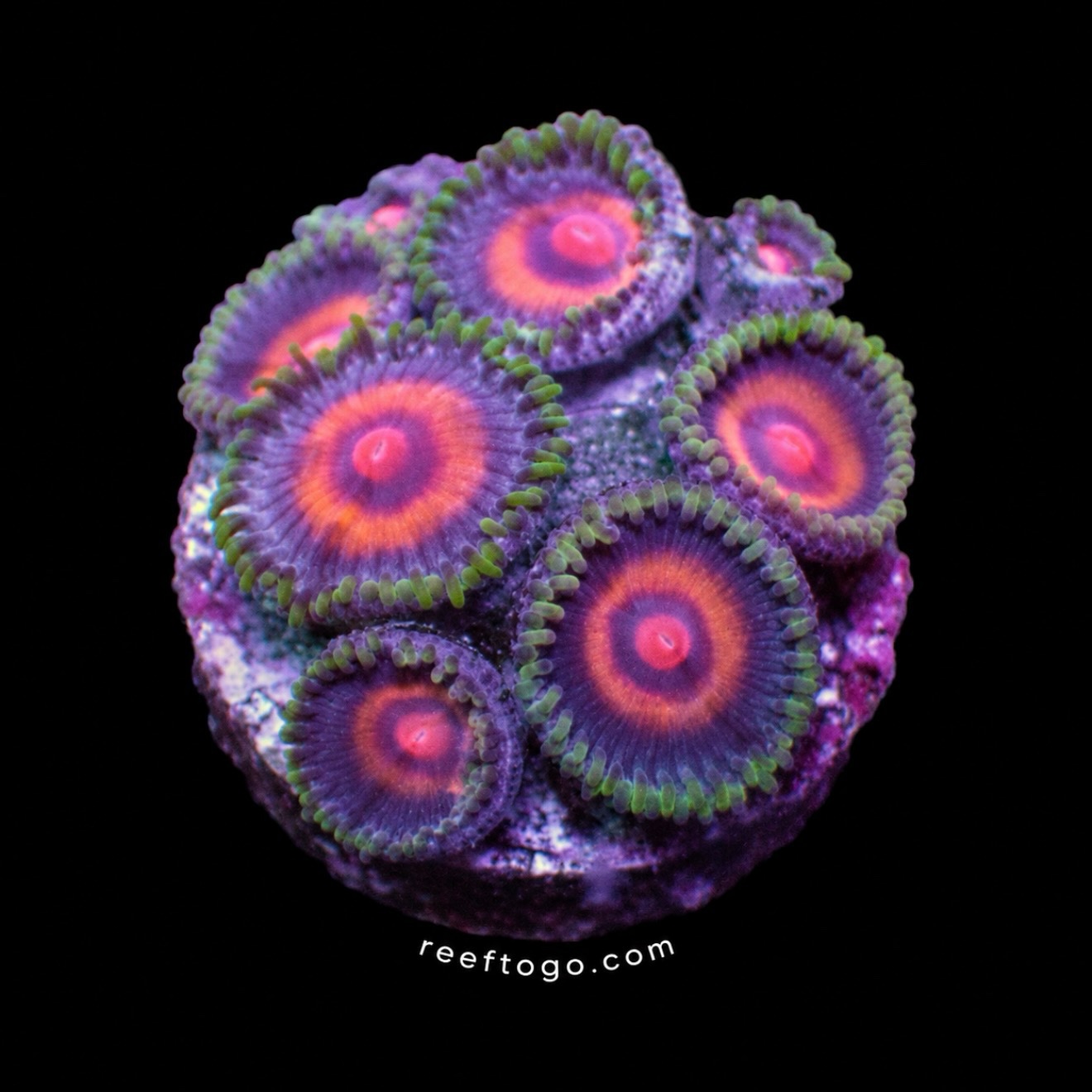
Corals.com describes this named morph with magenta centers, pink and purple rings, and a subtle green skirt. Treat that as a seller's description, not a color guarantee. Blue lighting and camera settings can change the impression.
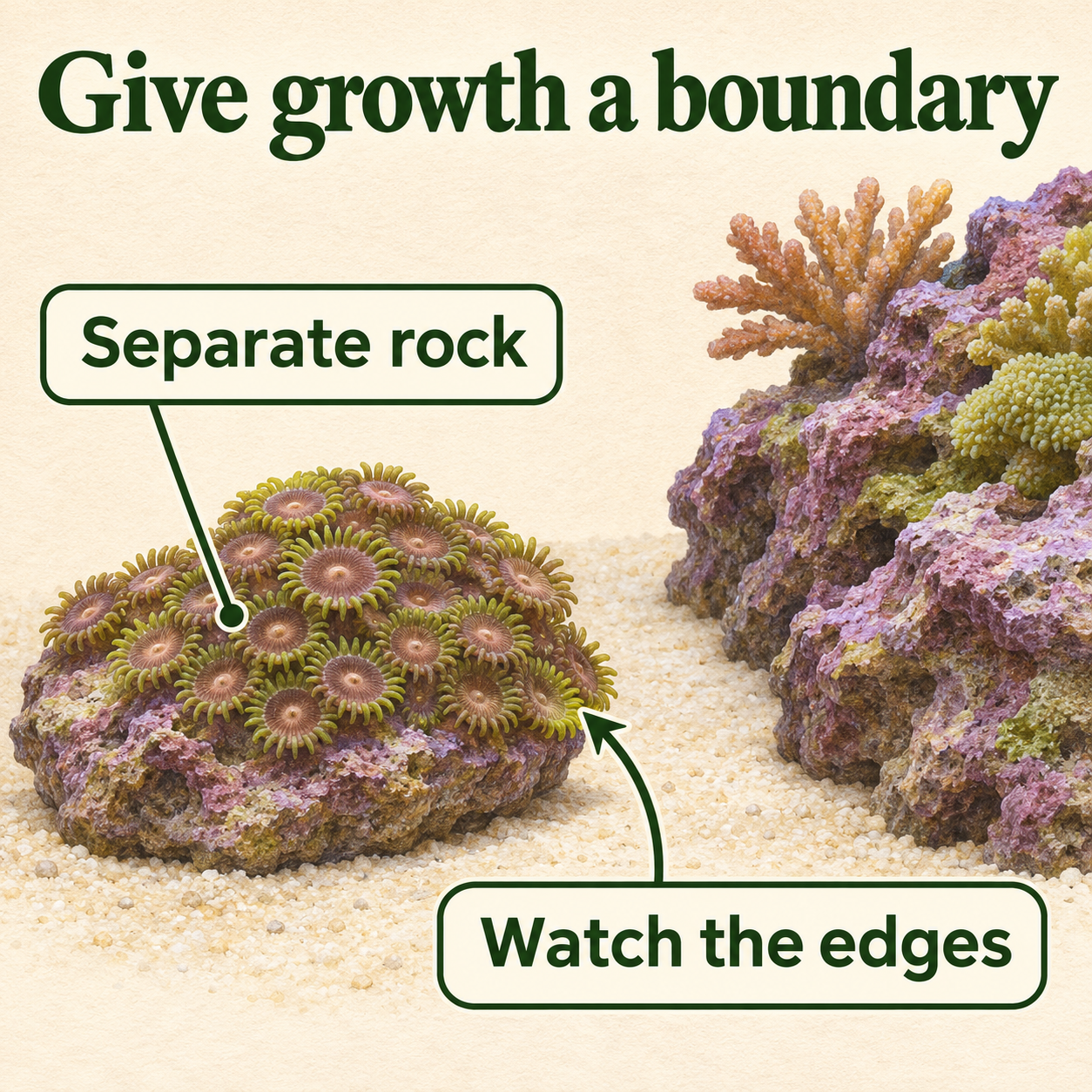
Plan for sideways growth. A separate, removable rock gives you an edge to watch before the colony meets its neighbors. An island helps manage spread; it is not a permanent fence. Leave open space and check it as new polyps appear.
Give the light time to work
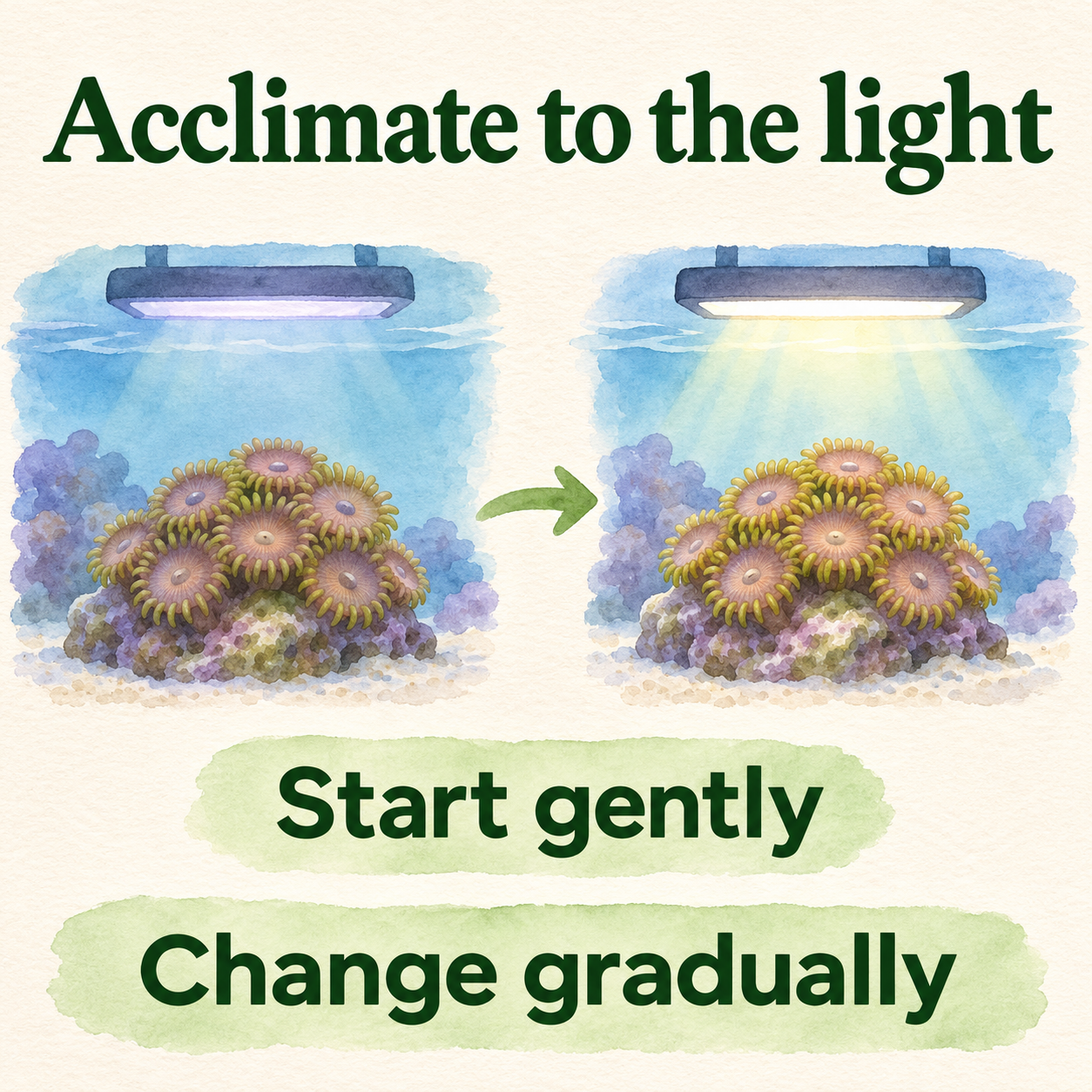
A new frag does not need the brightest seat in the tank. Start with gentler light and let it settle before increasing exposure. The middle shelf in one aquarium can be brighter than the top of another.
The ECC listing places Plasma Cutter in low to medium light and gives a broad 75 to 250 PAR range. That is supplier guidance, not a measured sweet spot for every frag. A PAR meter is more useful than guessing from height alone.
Keep the light schedule steady while you observe. If you make an adjustment, change one thing at a time. Repeated moves make it hard to learn which position actually suits the colony.
Let the water sweep past
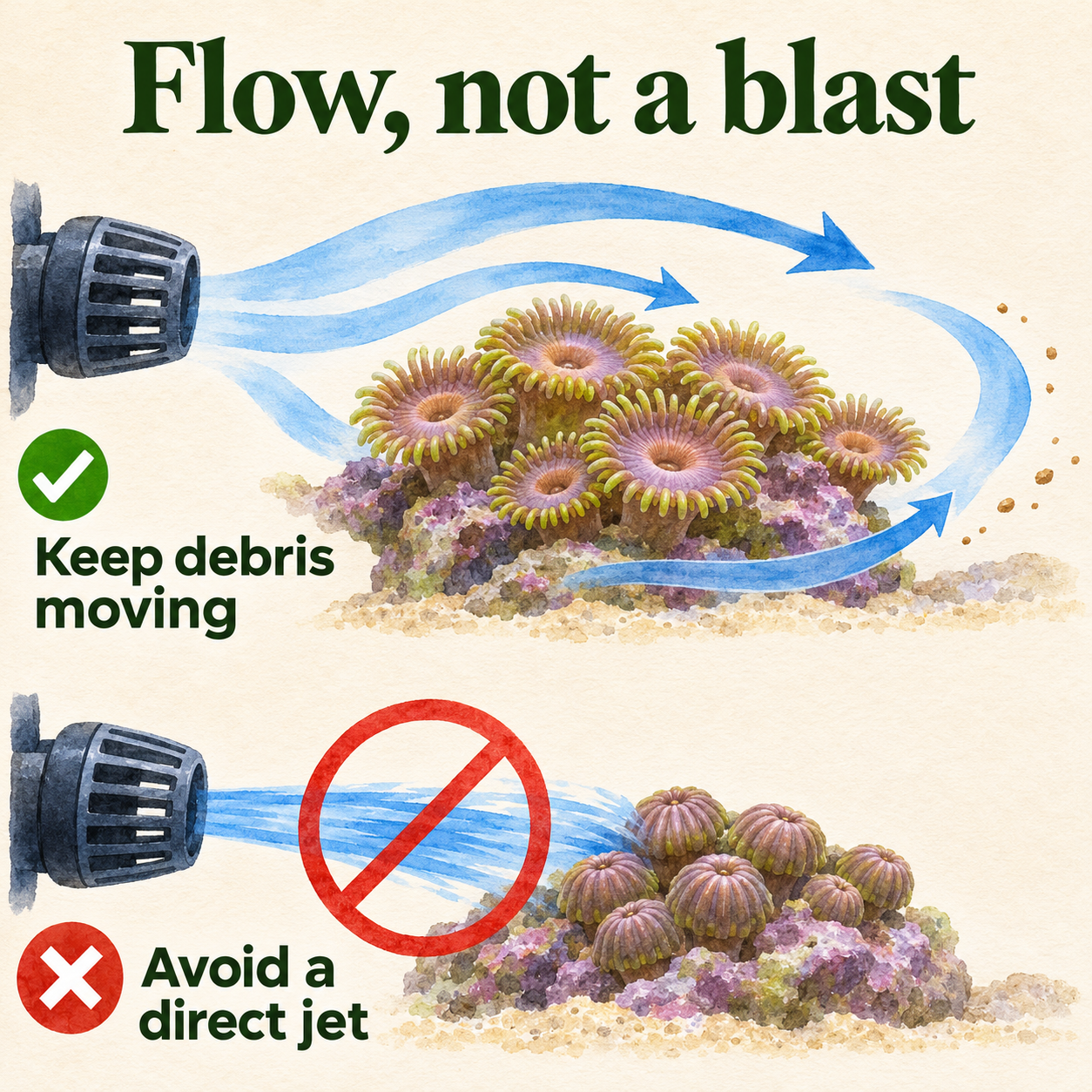
Look between the polyps, not just at their faces. A colony can look lively while debris settles around its base. Water movement should carry that debris away without pinning the polyps shut.
Moderate flow is the practical starting point here. Aim for movement across the rock rather than a narrow pump jet straight into the frag. A new attachment also needs time to become secure.
If the colony stays closed, check what changed. Look for debris, irritating neighbors and anything crawling among the polyps before deciding that more light or more flow is the answer. Closed polyps are a clue, not a diagnosis.
Keep feeding small and useful
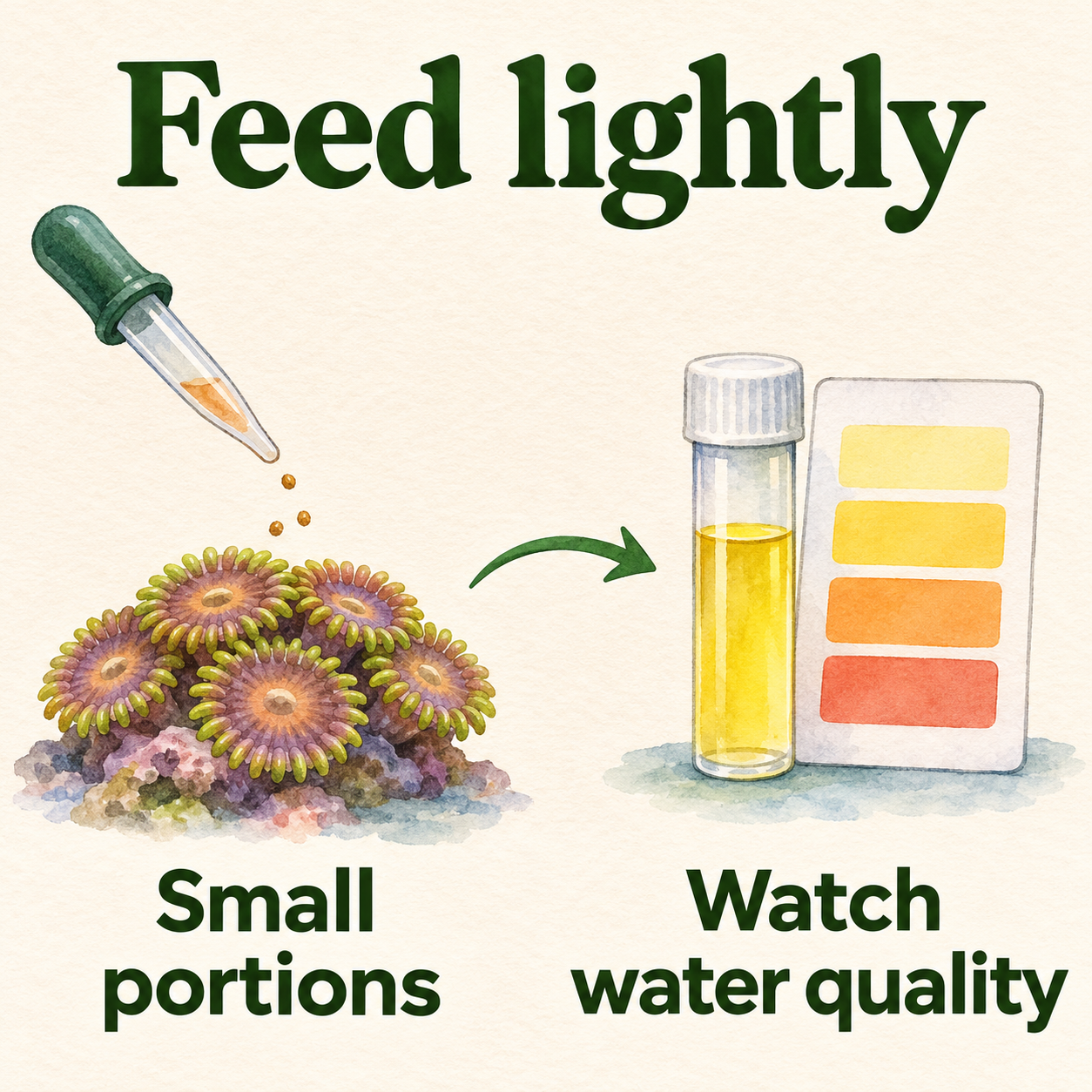
These zoas get much of their energy through their resident photosynthetic partners. Feeding is an option, not a reason to bury the colony in powder. Tidal Gardens notes that Zoanthus can capture food, but do not always feed as readily as larger palythoas.
Try a small amount of suitably fine coral food and watch what happens. Food drifting past is not proof that it was eaten. Keep track of your water tests alongside any feeding change, rather than adding more whenever growth slows.
A dated photo is useful here. Compare the colony under the same lighting and from the same angle. New polyps and an expanding edge tell a more useful story than today's extra glow.
Small polyps deserve careful handling

Put on sturdy waterproof gloves and eye protection before handling zoas. Keep them submerged where practical, minimize damage, and keep children, pets and bystanders away from the work area.
Some zoanthids can contain palytoxin. A trade name, attractive color or healthy appearance does not establish that a colony is safe to handle barehanded. Never boil, steam, microwave or pressure-wash colonized rock. Do not scrub it under running water. Routine maintenance must not turn into an attempt to cook or blast the colony off its rock.
Wash your hands after aquarium work. If exposure is suspected, seek urgent medical advice and mention possible palytoxin exposure. This section adds context to the prominent safety notice on the page; it does not replace it.
Field notes — what keepers report
I found Plasma Cutter mentioned in KikoenaiW's Reef2Reef tank journal, first as a planned purchase and later as a coral on the way. Those posts show interest in the morph, not a record of how it grew. No verified Plasma Cutter-specific husbandry outcome emerged from the sources checked for this guide.
General zoanthid reports point in different directions. In a 2023 discussion, george9 described better growth after moving zoas into stronger light and flow, with feeding also in the mix. In a 2021 thread, jiffyjhn described a fallen yellow-zoa frag opening in a shaded, quieter hole while its parent colony stayed closed elsewhere.
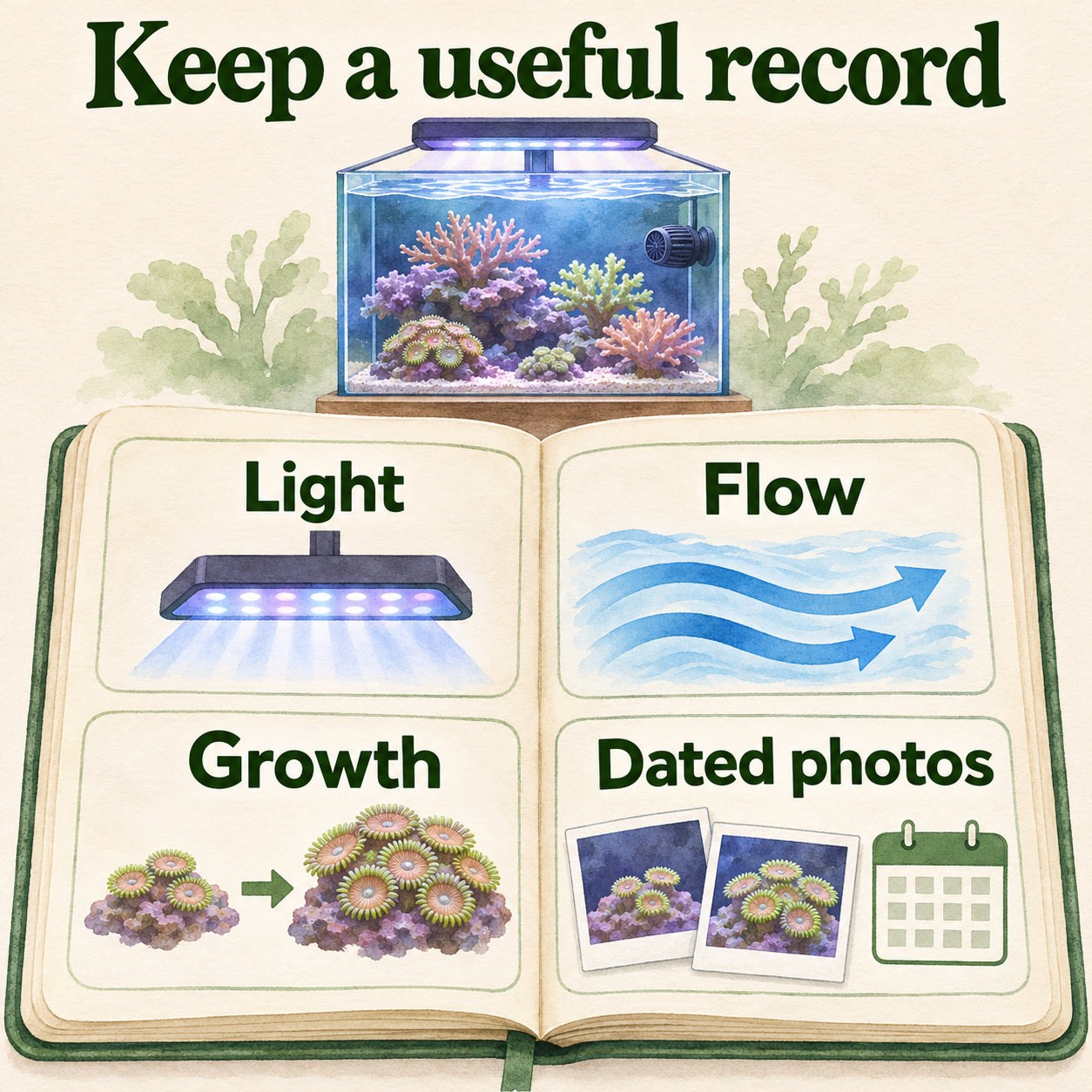
Neither account is a Plasma Cutter trial, and neither isolates one cause. Borrow the habit of observing, not somebody else's exact setting. Record light, flow, feeding changes and dated photos. Your own colony's history will be more useful than a confident rule borrowed from an unrelated morph.
Field Notes
Related species
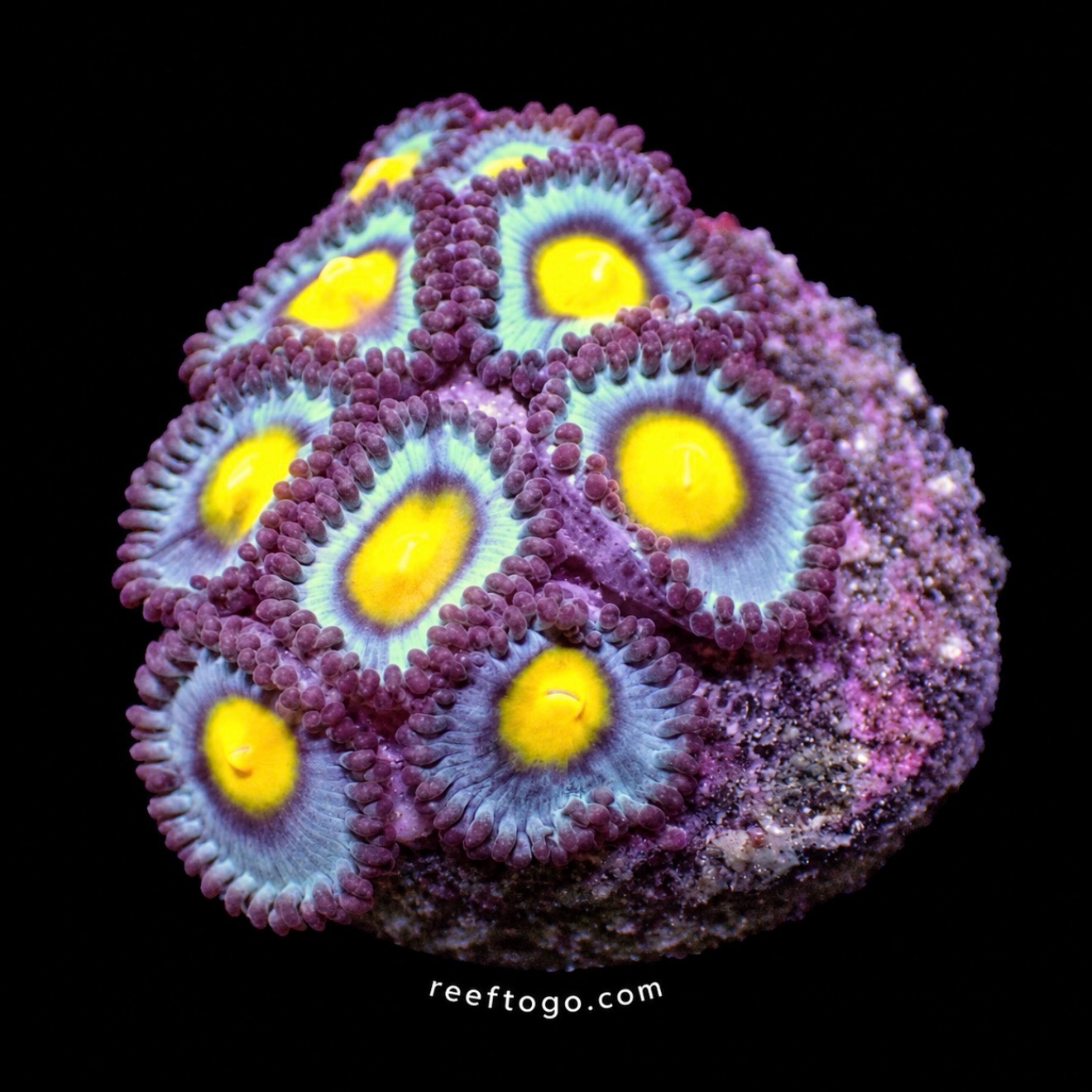
Alien Eye zoas
Zoanthus sp
Same genus
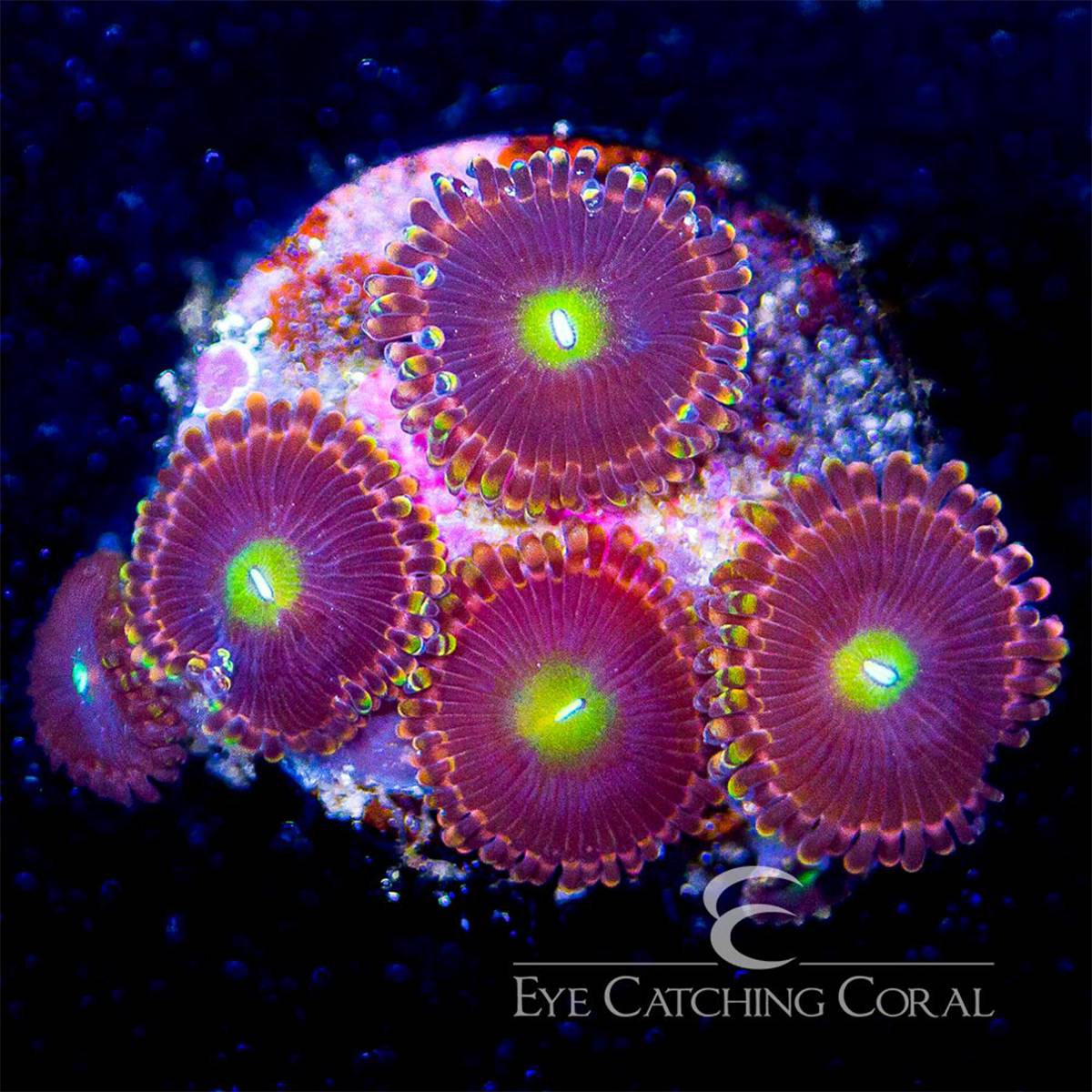
Antimatter zoas
Zoanthus sp
Same genus
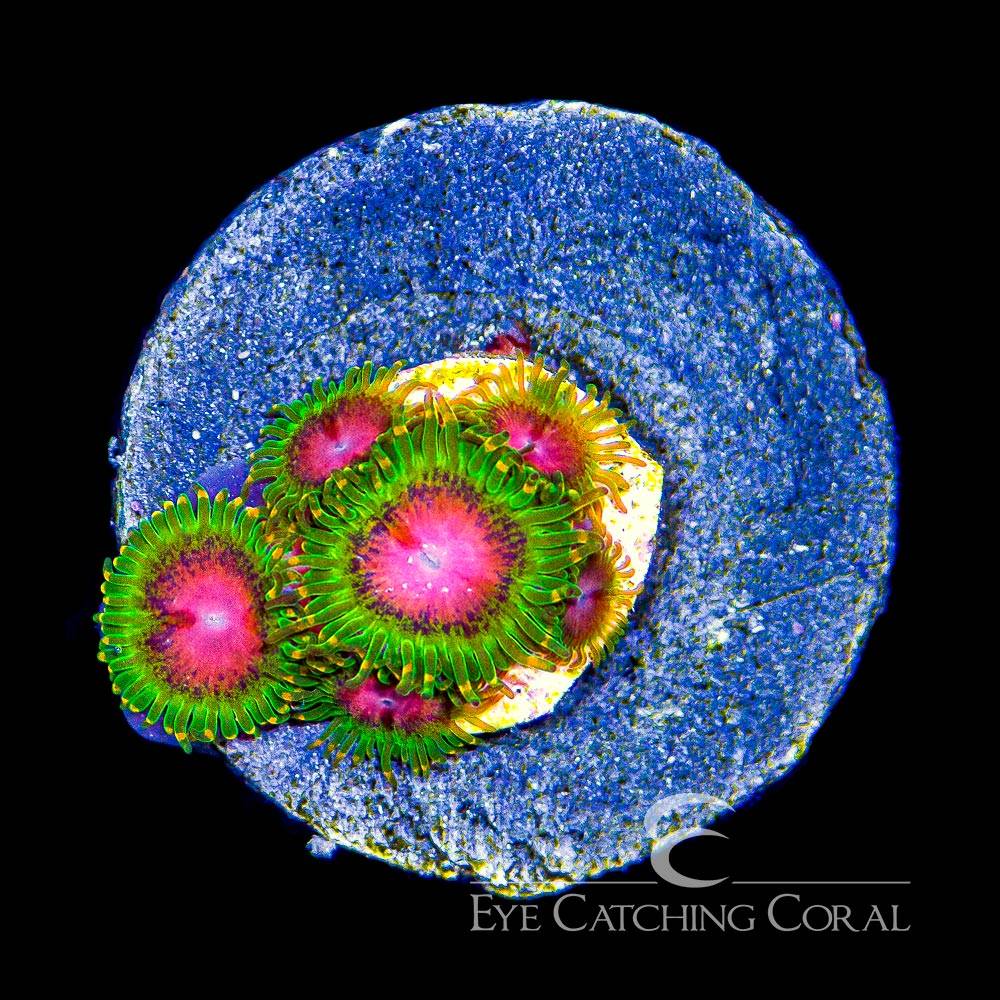
Awesome Blossom zoas
Zoanthus sp
Same genus
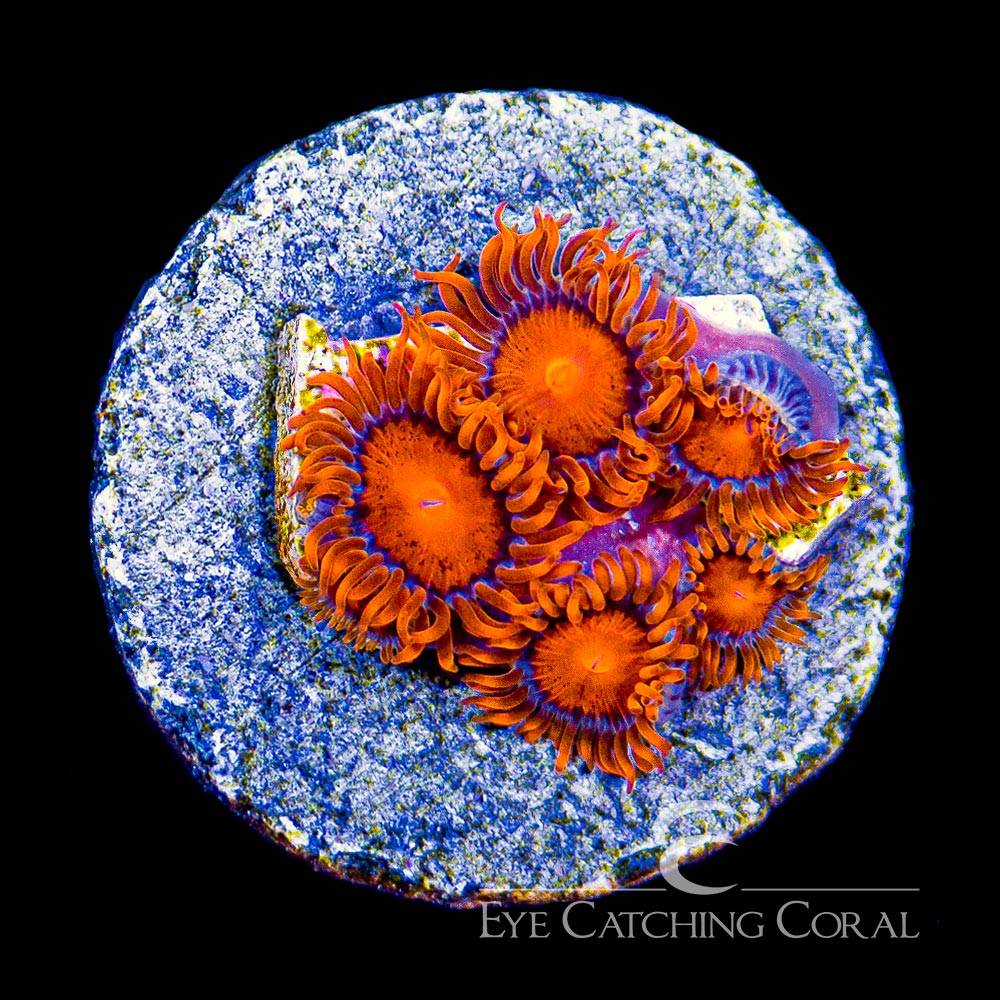
Bam Bam zoas
Zoanthus sp
Same genus
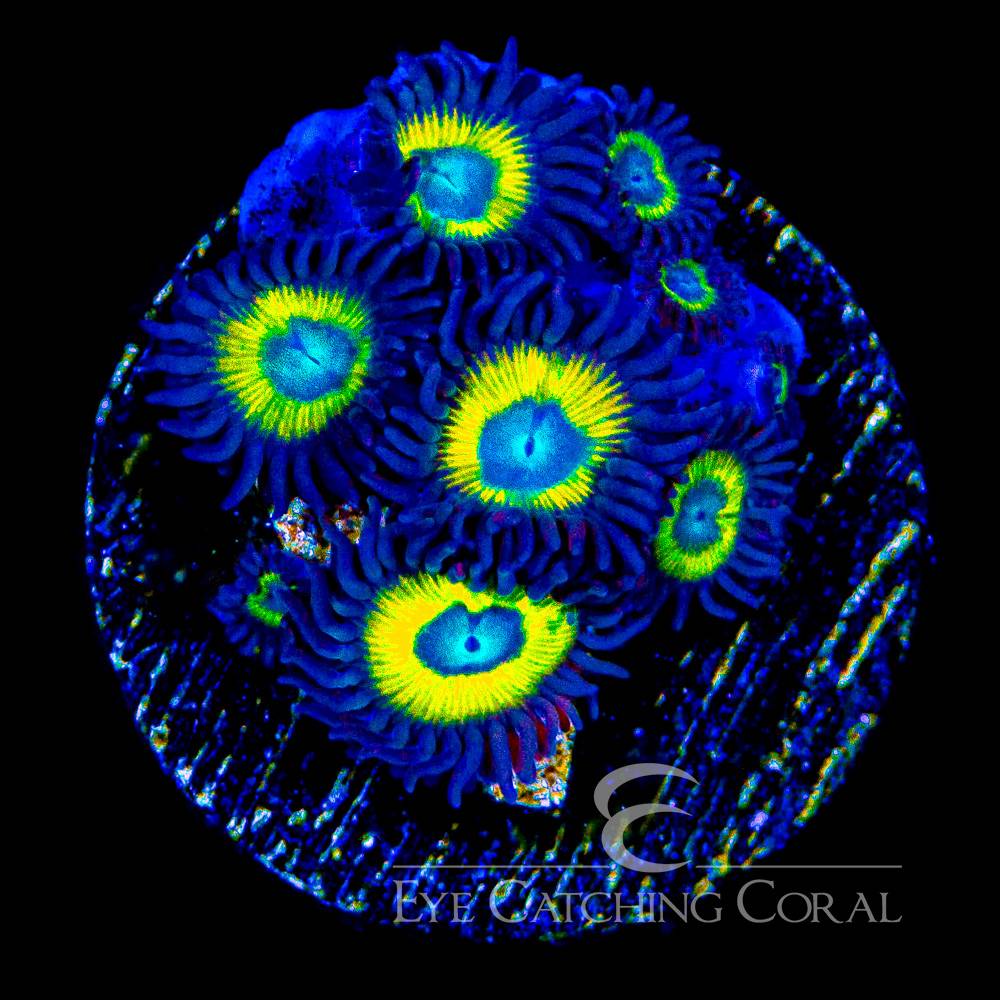
Black Bella zoas
Zoanthus sp
Same genus
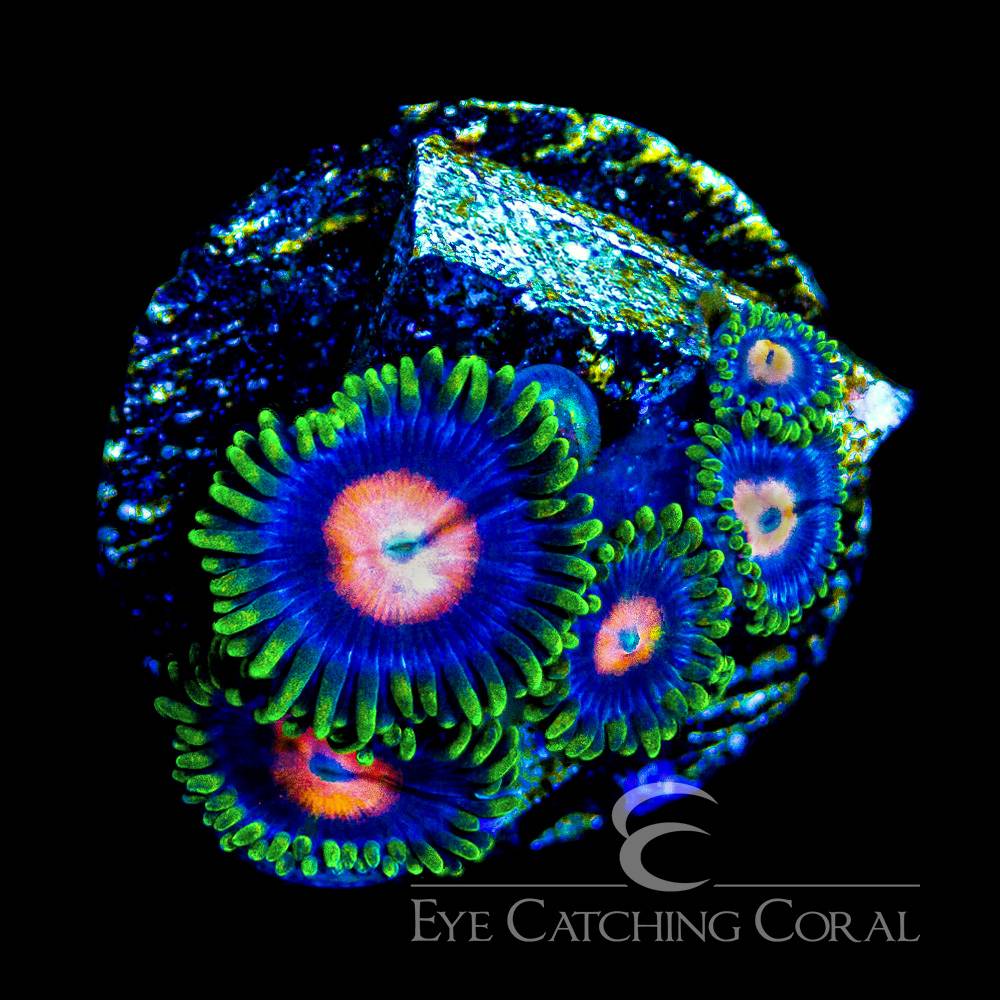
Blow Pops zoas
Zoanthus sp
Same genus
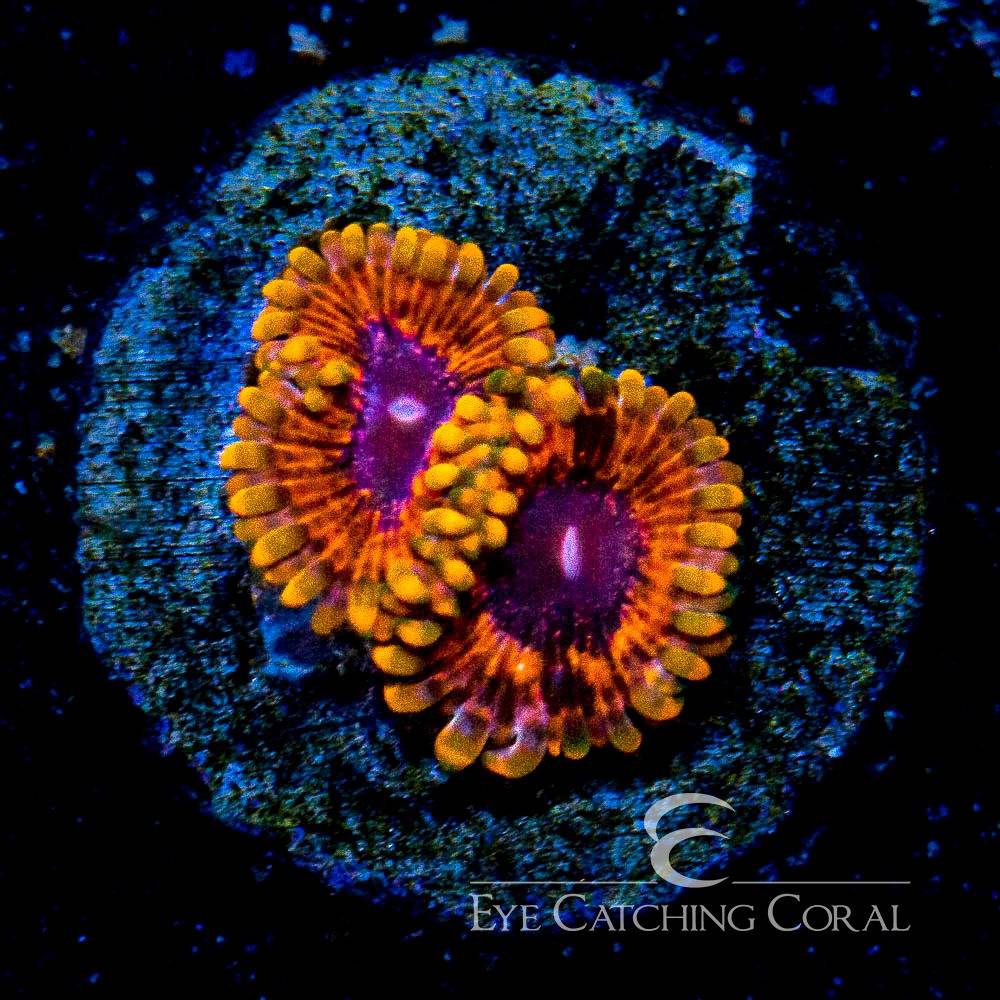
Burning Ember zoas
Zoanthus sp
Same genus
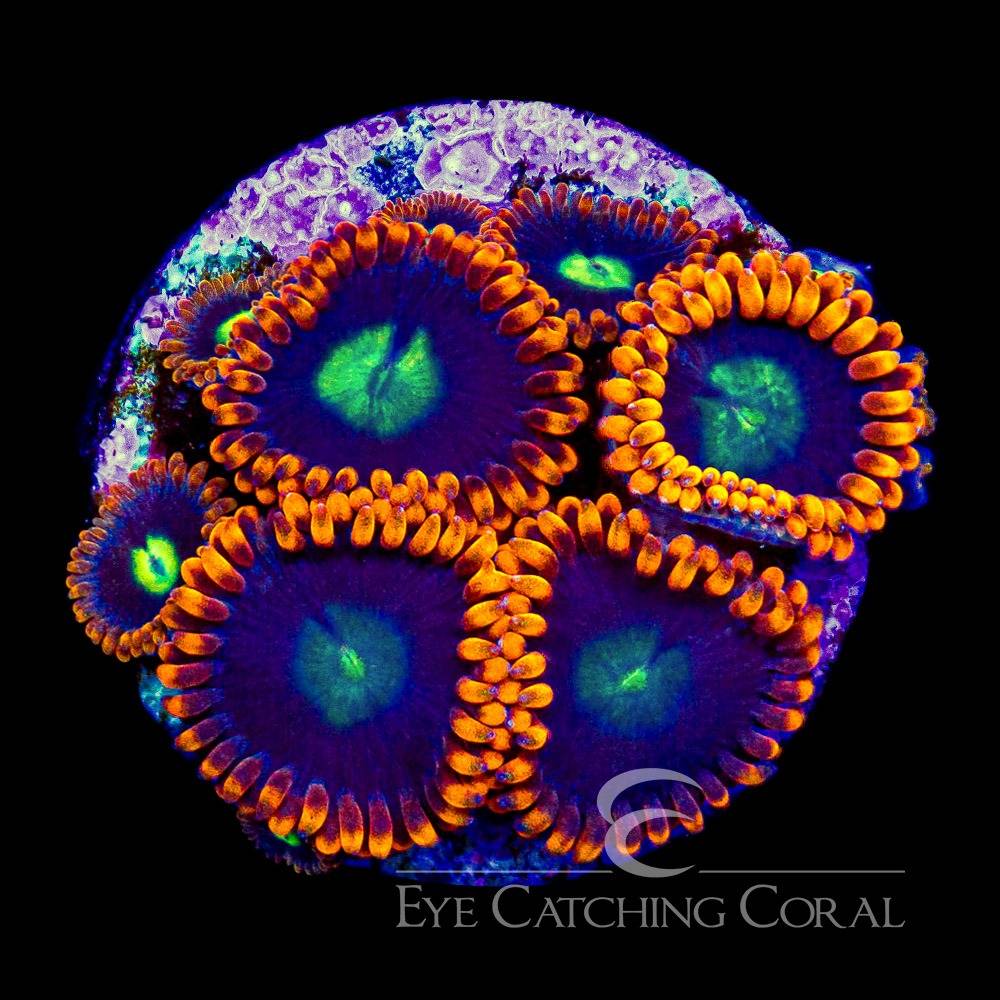
Burning Suns zoas
Zoanthus sp
Same genus