Care facts
- Care
- Intermediate
- Light
- Medium
- Flow
- Low
- Place
- Bottom
- Space
- Peaceful
- Growth Rate
- Slow
Gallery
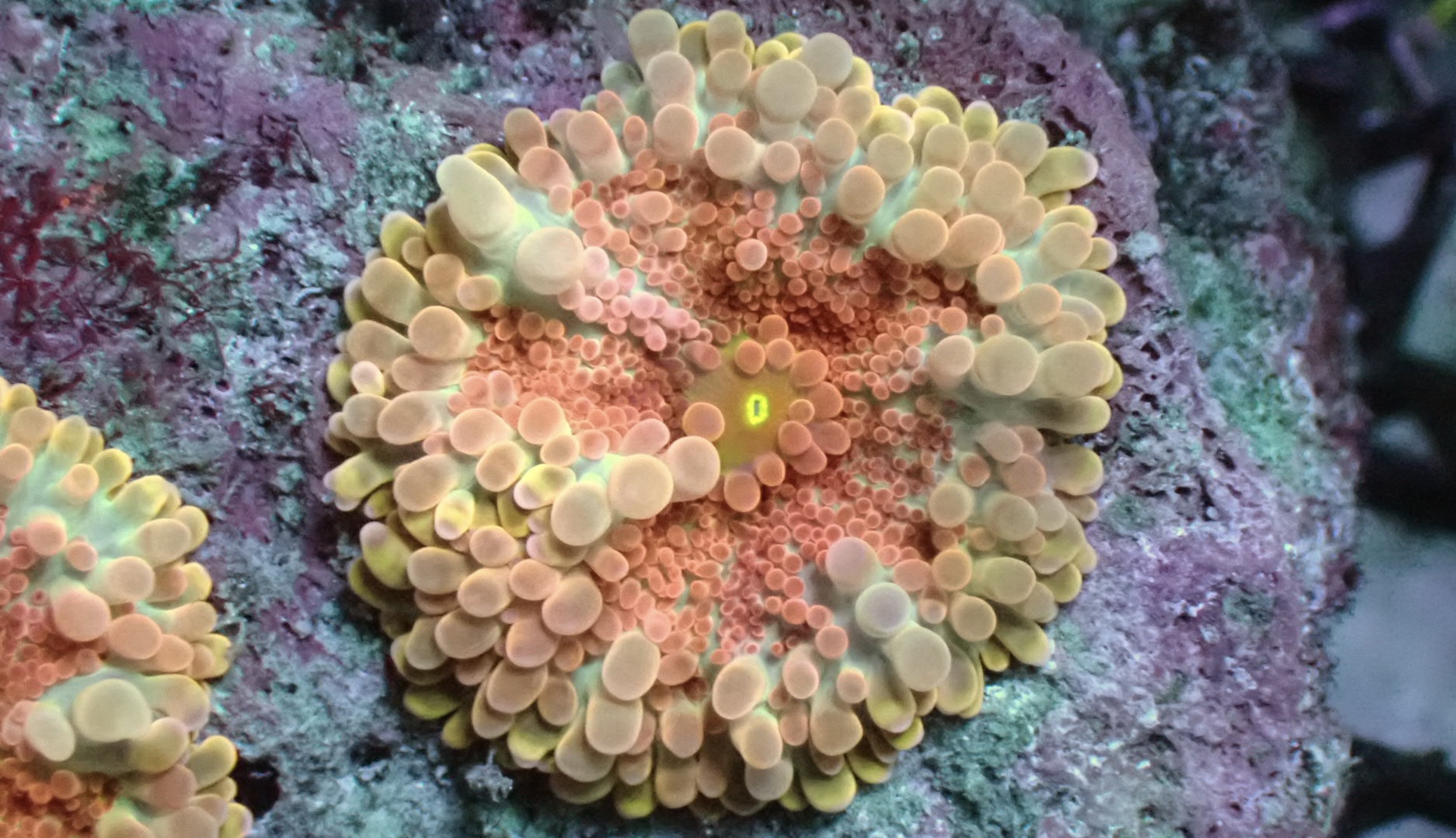
Princess peach Yuma mushroom is a named Ricordea yuma, listed as Ricordea yuma. Yuma mushrooms are soft corals with a round disc covered in short, bubble-like tentacles, attached to rock by a fleshy foot on a short stalk. The princess peach name follows the soft peach and pink tones the disc can show, with color that reads gentler under white light and richer under blue. A settled disc sits relaxed and wide, with tentacles held evenly across the surface.
The entry lists intermediate care, medium light, low flow, bottom placement, peaceful behavior, and slow growth. Intermediate fits the settling period rather than any demanding water need. Yumas can be slow to attach and sensitive to change in the first weeks. Place the mushroom low, on rock near the sand bed, in a sheltered pocket. Medium light at that low level suits it to start. Strong light can shrink the disc through the day, pale the color, or push it to detach and drift toward shade.
Low flow is equally important. The disc should sit flat and relaxed. Flow that lifts an edge, folds the disc, or keeps it cupped all day is too strong for that spot. A mushroom that dislikes its placement may release its foot and float, so a calm landing zone matters during the first weeks. Many keepers settle new Yumas in a low-flow container with rubble until the foot grips firmly, then place the rubble piece where it will stay.
This coral is peaceful and has no sweeper reach. Spacing is still worth planning because a settled disc expands wide at midday and babies appear around the mother over time. Leave room for the disc to open fully without pressing against stinging neighbors, which can damage the mushroom badly. LPS sweepers and aggressive corals should stay well clear of its low, sheltered zone.
Feeding is light. Ricordea may absorb nutrients from the water and can take very fine foods that settle on the disc, closing slowly around them. Regular reef feeding is enough in most tanks. Direct attempts with large meaty pieces usually end with the food sliding off or fouling the rock around the base, and repeated handling to feed often costs more in stress than the food adds.
Growth is slow. A mother disc grows gradually, then produces babies from the foot or splits over a long period. Stable placement beats frequent repositioning, because each move can cost weeks of attachment and opening. Keep nutrients present and steady. Ultra-clean water can shrink mushrooms over time, while wild nutrient swings invite algae on the surrounding rock and can keep a new Yuma closed.
Common pitfalls include high light in pursuit of brighter color, strong flow on a new piece, and handling the foot repeatedly while checking attachment. Give a detached mushroom calm rubble and time rather than daily intervention, and change light in small steps when a settled disc looks pale or stretched.
Field notes — what keepers report
- Settling reports divide Yumas from hardier mushrooms. Some keepers describe a foot gripping rubble within days in a calm, shaded spot, while others describe repeated drifting and closed days after moves or light changes. The shared advice is a sheltered rubble tray and patience during the first weeks.
- Color reports vary with light. Keepers in low, sheltered placements describe soft peach tones held across a wide, flat disc, while keepers who placed the mushroom higher describe paler discs that shrank during the day or detached. Both sides describe bottom placement as the safer starting point for a new piece.
- Growth reports lean slow across the board. Keepers describe mothers holding size for long stretches before a baby appears at the foot, with little difference tied to feeding attempts. Reports agree that stability, rather than extra food, is the factor most often present when babies do appear.
Field Notes
Related species
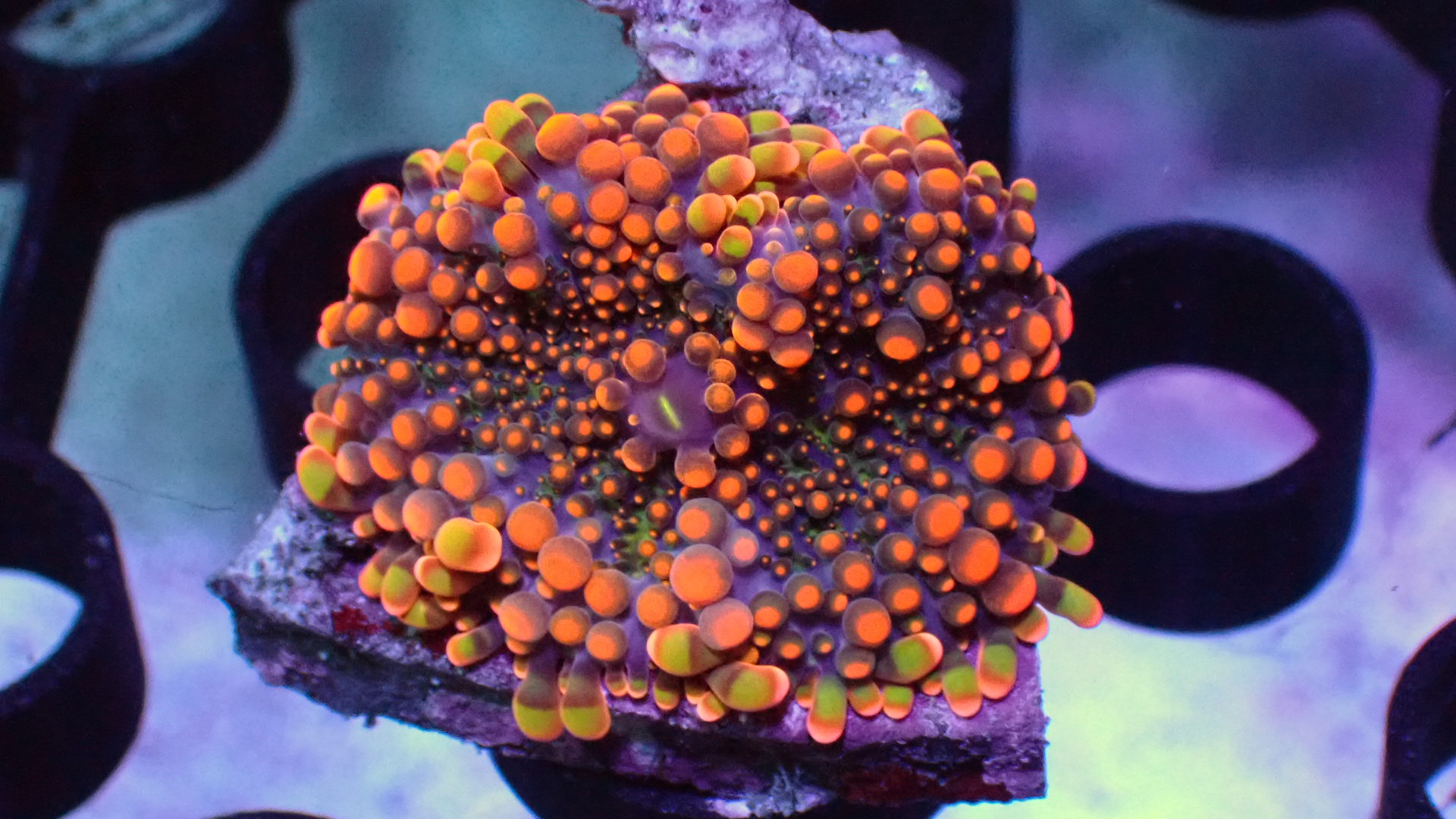
King Kong Yuma mushroom
Ricordea yuma
Same genus

Blueberry Yuma
Ricordea yuma
Same genus
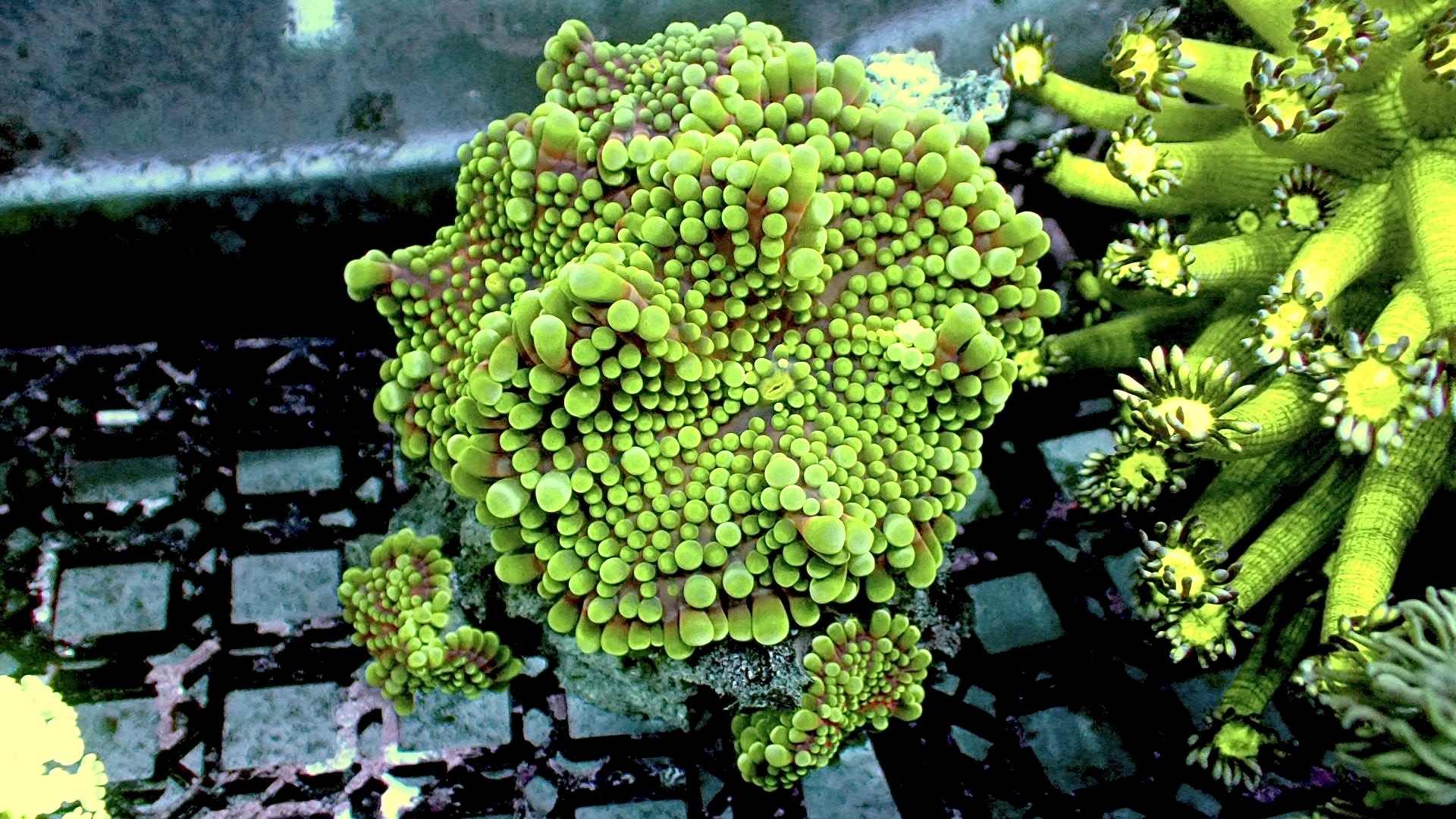
Gurple Yuma mushroom
Ricordea yuma
Same genus
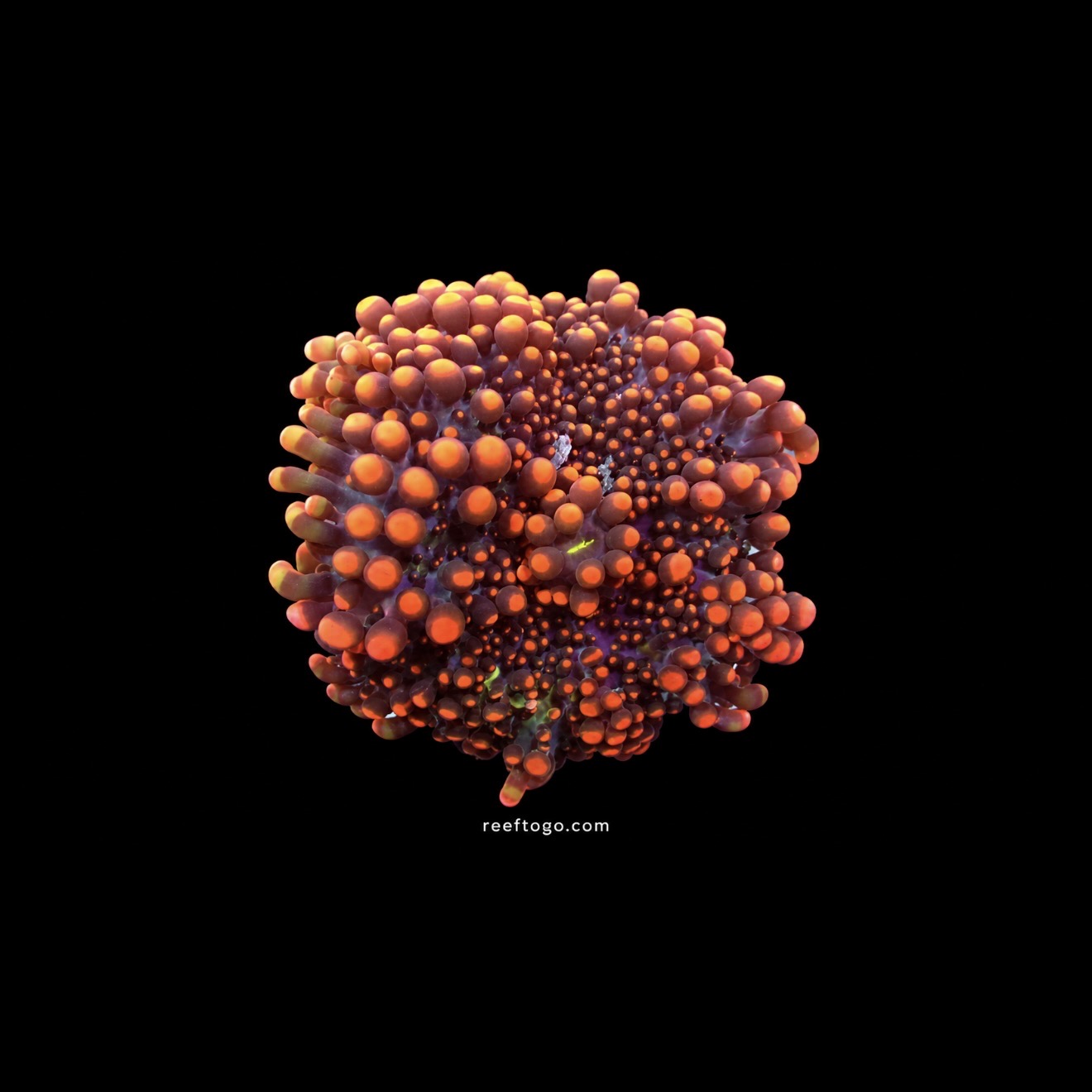
Orange Yuma Ricordea Mushroom
Ricordea yuma
Same genus
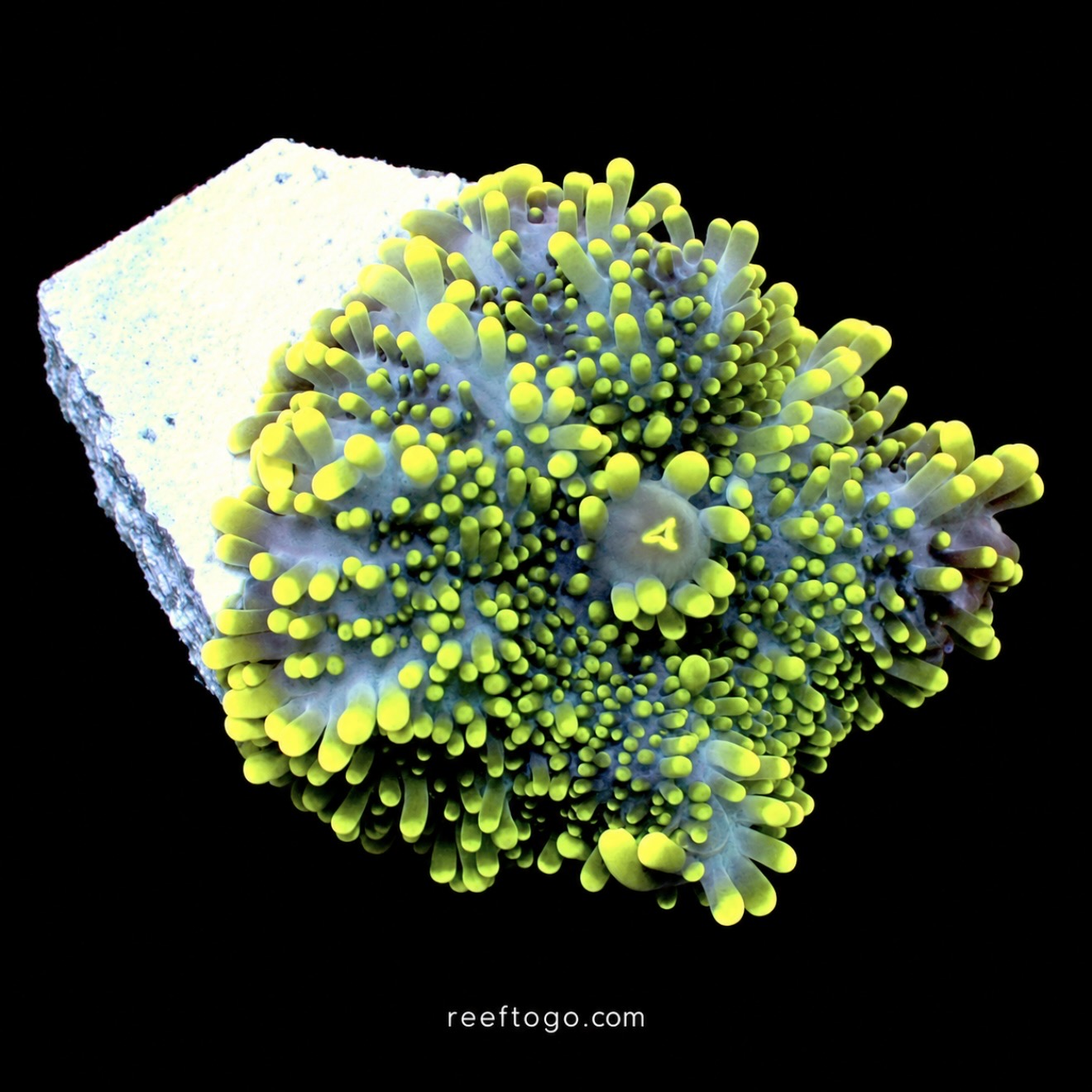
Shamrock Yuma Ricordea mushroom
Ricordea yuma
Same genus
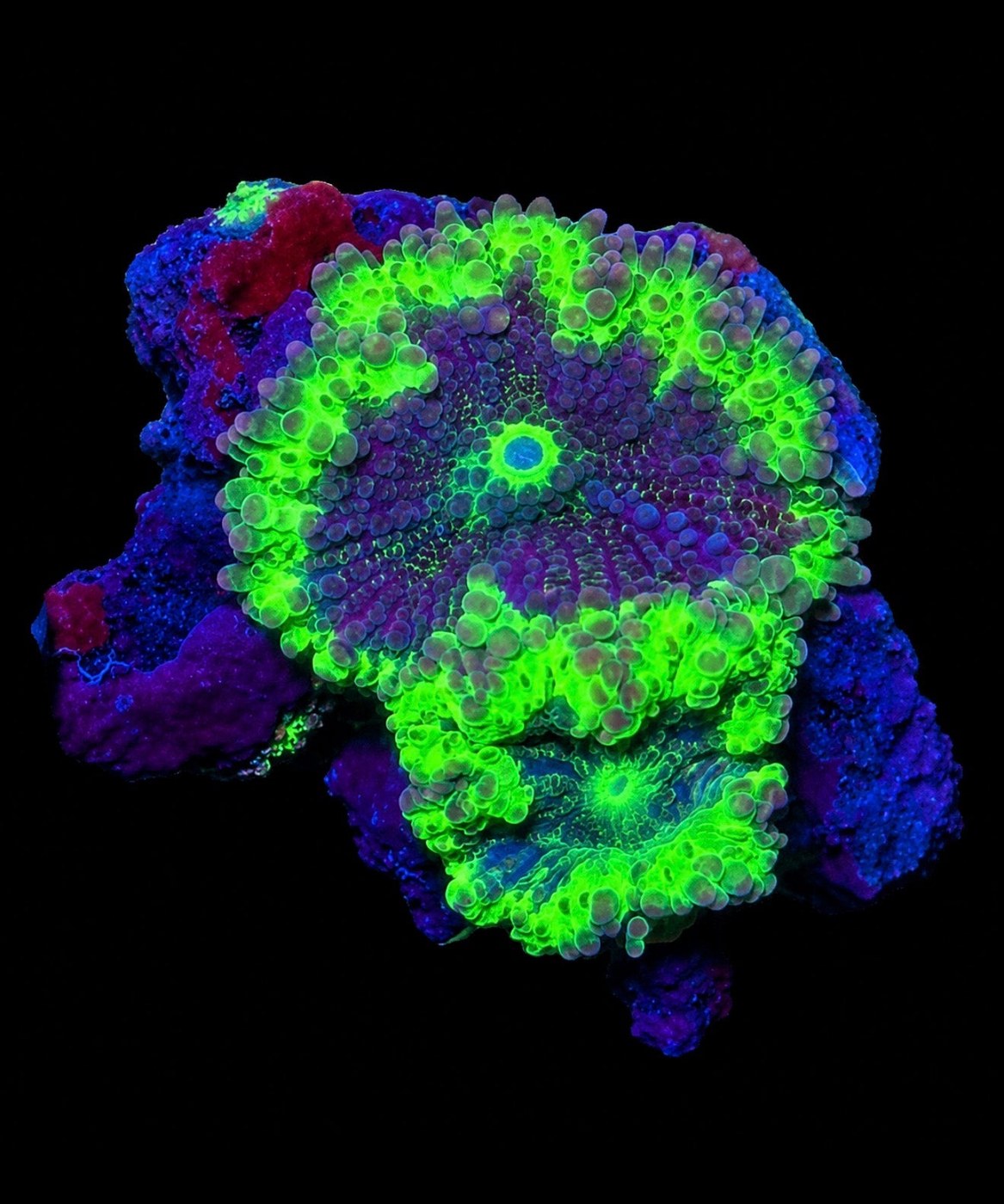
Buzz light beer Yuma
Ricordea yuma
Same genus

Green Ricordea florida
Ricordea florida
Same genus

Mellow Yellow Yuma
Ricordea yuma
Same genus