Rasta Bobs zoas
Zoanthus sp

Palytoxin safety
Some zoanthids and palythoas can contain a potent toxin. Wear sturdy waterproof gloves and eye protection, minimize handling, and keep colonies submerged when possible. Never boil, steam, pressure-wash or scrub colonized rock under running water. Keep other people and pets away during handling. If exposure is suspected, seek urgent medical advice and tell the clinician about possible palytoxin exposure.
Sources: CDC: palytoxin exposure · OATA: avoiding palytoxin poisoning
Gallery
Rasta Bobs zoas care guide
A little zoa frag can become the patch you notice first when the lights come on. The useful question is not how quickly you can make it match a sales photo. It is how to give that particular colony a steady place to settle, open and spread.
A name worth keeping straight
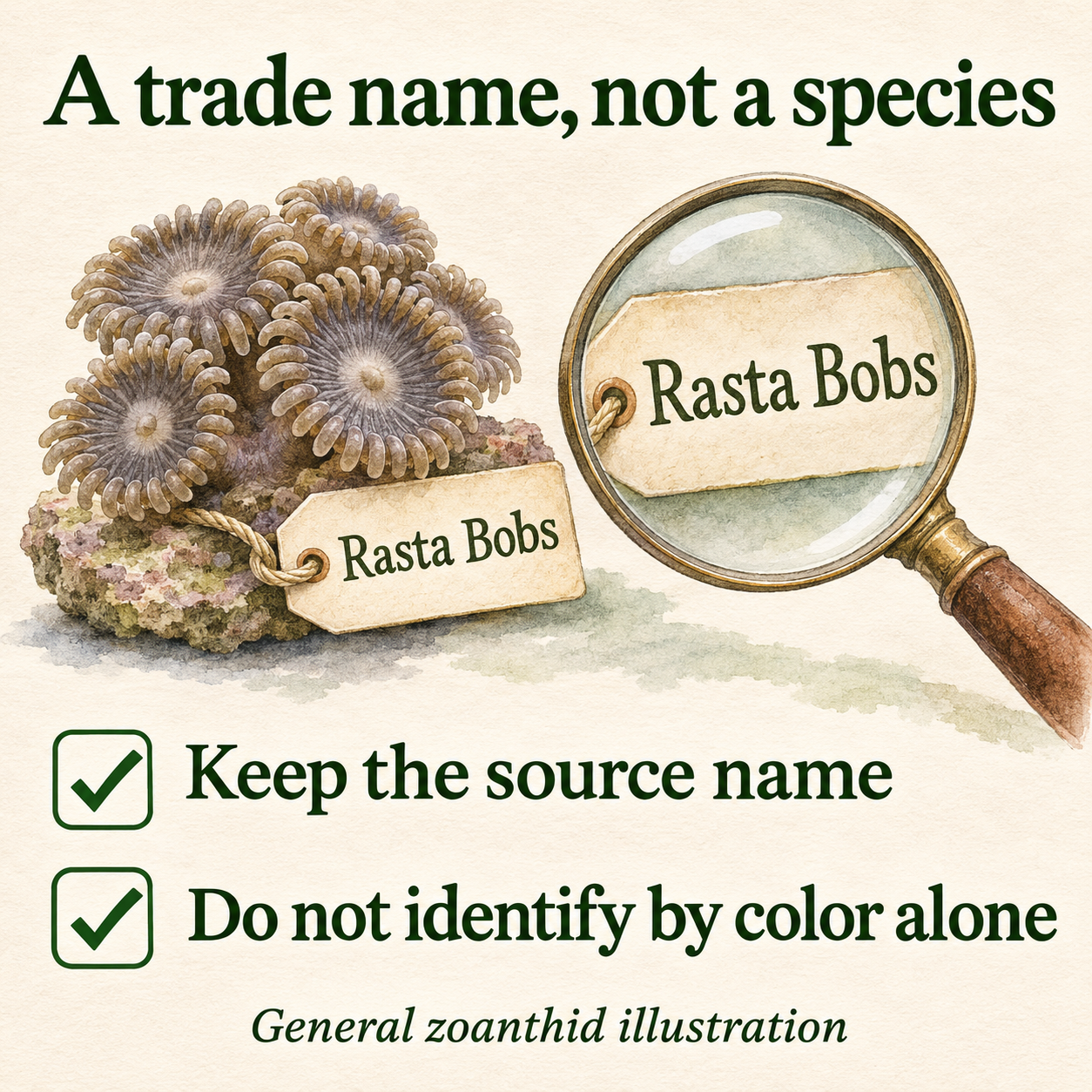
Rasta Bobs is a trade name, not a species diagnosis. Eye Catching Coral lists Rasta Bob's and Rasta as separate frags. Keep those names separate, and do not borrow Bob Marley stories just because the names sound related. The Atlas record identifies this coral only to the genus Zoanthus.
Keep the seller's name with your purchase record and your first tank photo. That small habit saves a lot of confusion when frags change hands. A resemblance under blue lights is not a reliable replacement for a source record.
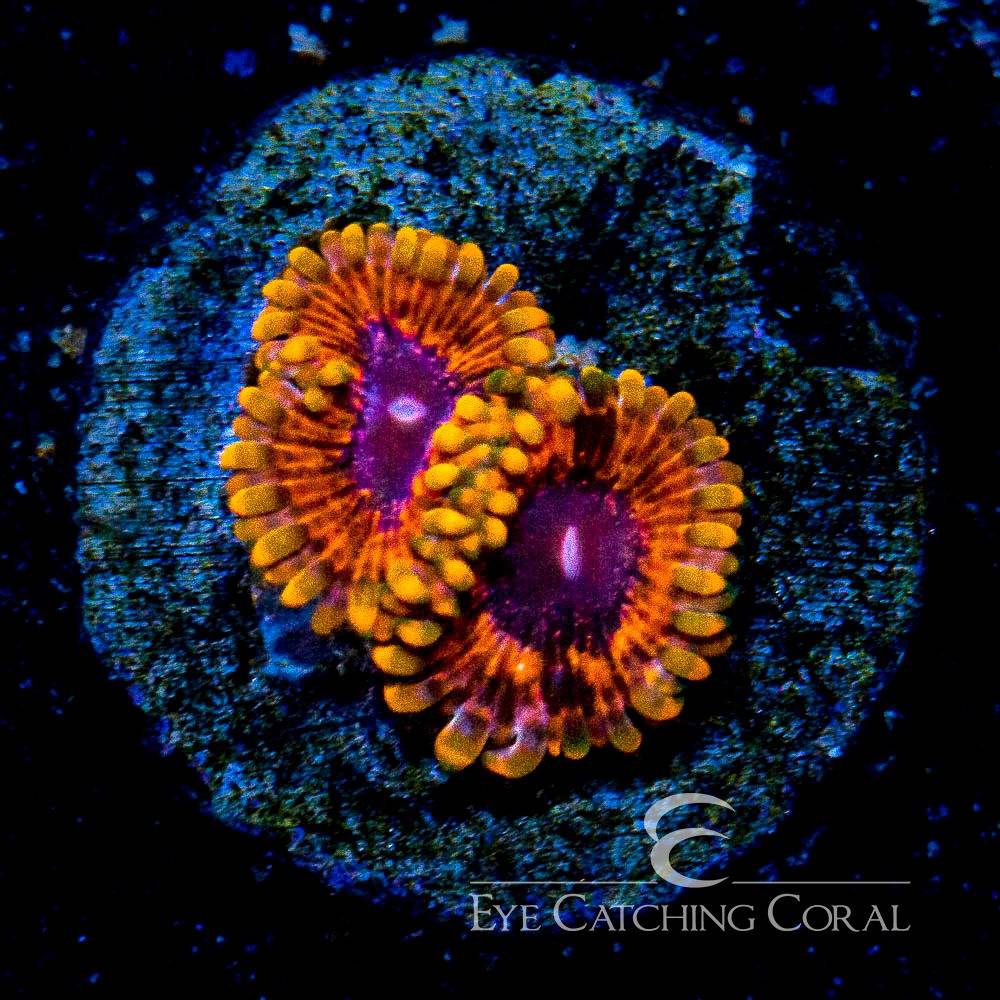
The verified sources do not give a detailed written color description for Rasta Bobs. This guide will not invent one. The existing specimen photo stays, while the diagrams explain general zoanthid care rather than identifying this morph.
Find the right light and flow
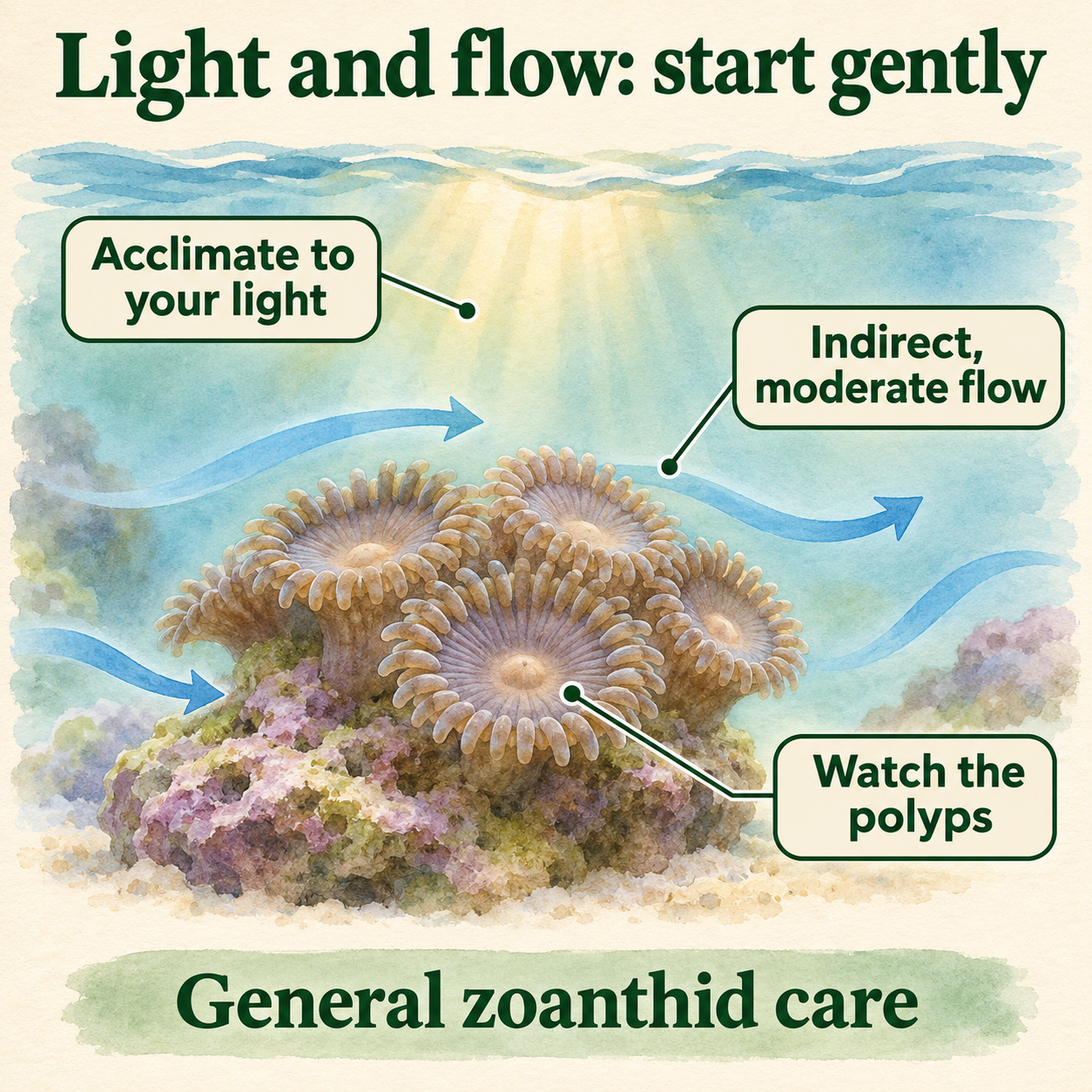
The exact ECC listing supports low-to-medium light and moderate flow. Start a new arrival cautiously, then adjust gradually instead of jumping straight to a brighter spot. Mid-level placement is a starting point, not a promise about the light reaching that rock.
Tidal Gardens reports success with zoas across different lighting conditions. It also notes that spectrum changes their appearance. Judge a change under consistent lighting, rather than chasing a different photograph every day.
Watch the water between the polyps. Detritus collecting there is a reason to review circulation. Tidal Gardens uses stronger flow on established colonies, while the ECC listing recommends moderate flow. The practical goal is a clean colony, not a direct jet that keeps the polyps closed. Copy the observation, not somebody else's pump setting.
Give the colony room to spread
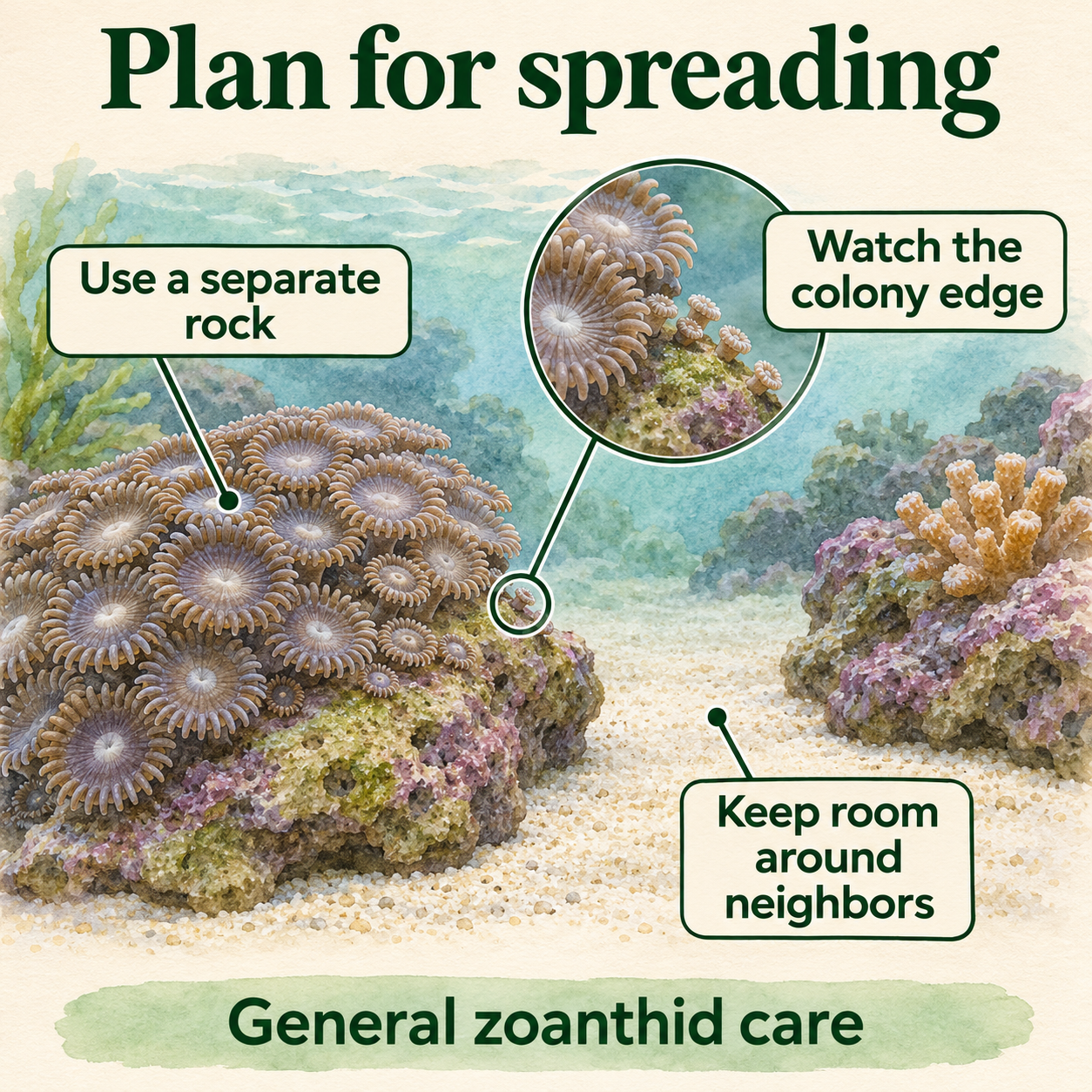
Zoanthids spread over available surfaces. A separate rock makes the colony's edge easier to inspect and manage. Leave space around neighboring corals and check it as the colony expands. A sand gap is a management aid, not a permanent fence.
The retailer's peaceful label does not mean the colony stays where you put it. On this page, Moderate appears under Space. Read that as a reminder to plan for encroachment, not as evidence of a powerful sting.
Take a wider photograph occasionally, with the neighboring corals in frame. Close-ups show individual polyps beautifully, but the wider view tells you whether the garden is running out of room. Do not turn growth management into casual scraping or cutting. Read the handling precautions first.
Feed lightly and keep a useful baseline
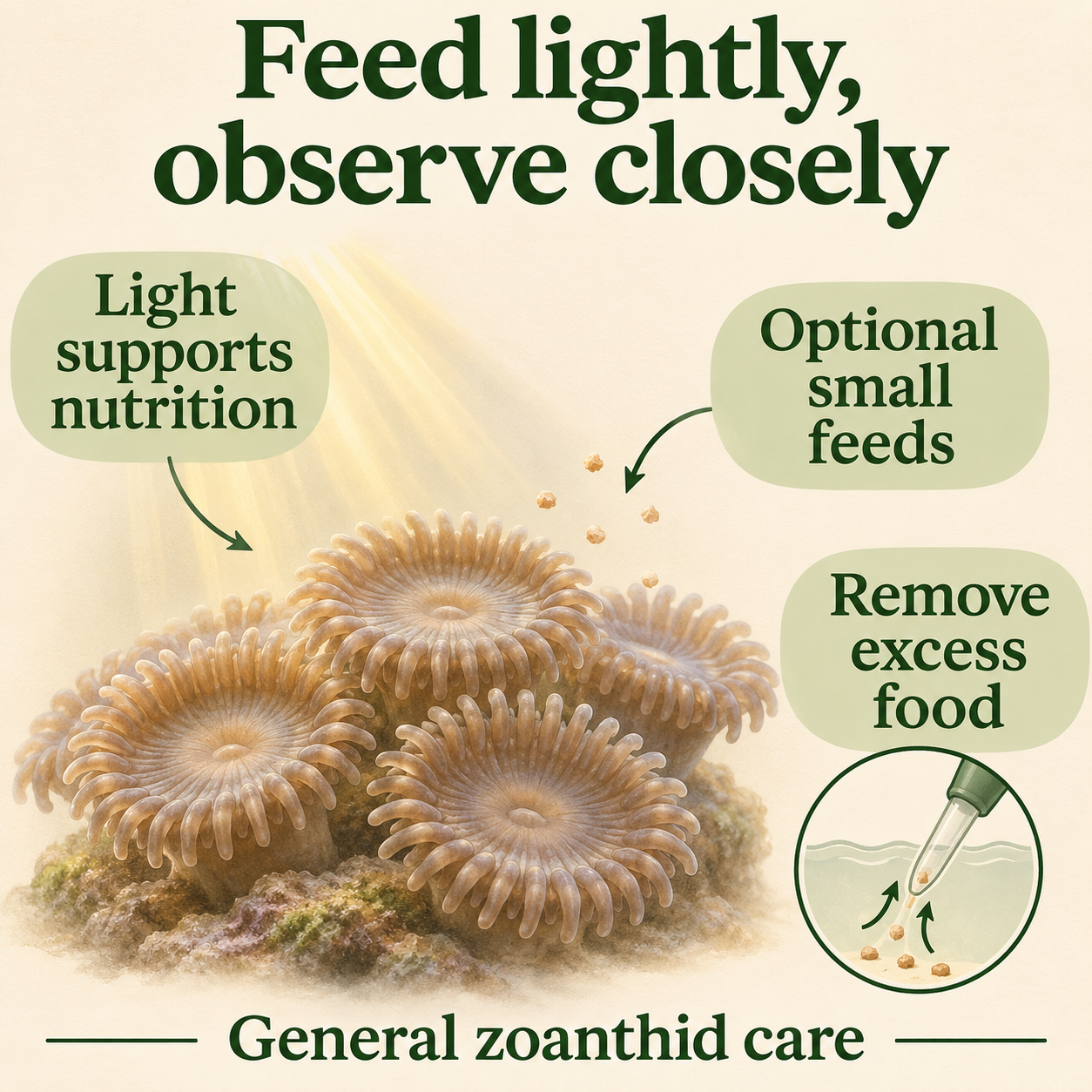
Zoanthids receive energy from photosynthetic partners in their tissue. Tidal Gardens also recommends feeding, while noting that feeding responses vary and small foods are more suitable than large chunks. Supplemental feeding is an option to evaluate, not a requirement to pour more food into a struggling tank.
If you try it, start small and watch what happens. Do not leave a mound of food on the colony. Remove excess food without disturbing the polyps. Record the food and the date alongside your normal water tests, so a later change has some context.
Avoid changing feeding, light and flow all at once when you are trying to understand a problem. That is a troubleshooting habit, not a guaranteed cure. Persistent closure needs investigation rather than another scoop of food or a promised color-up deadline.
Handle every zoa with care
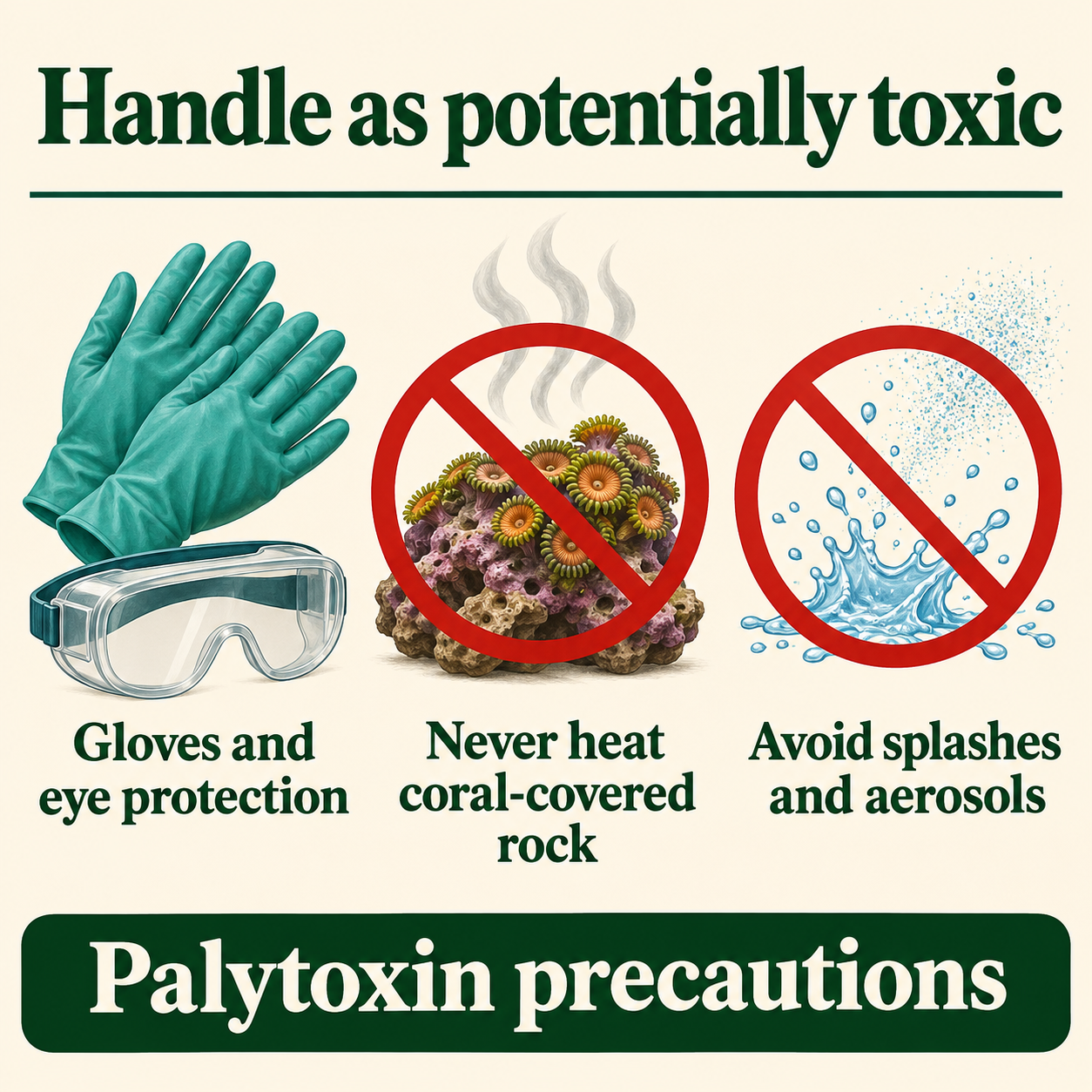
Treat zoanthids as potentially toxic. CDC has documented serious aquarium-related palytoxin exposures, but that does not establish the toxin content of Rasta Bobs. A trade name or attractive color cannot tell you that a colony is safe.
Wear sturdy waterproof gloves and eye protection. Minimize handling, keep colonies submerged where practical, avoid splashes and wash your hands afterward. Keep children, other bystanders and pets away from the work area. Protective equipment reduces risk; it does not make careless handling safe.
Never boil, steam, microwave, pressure-wash or pour hot water over coral-covered rock. Do not scrub it under running water. Avoid activities that create airborne droplets or particles.
If exposure is suspected, seek urgent medical help and mention possible palytoxin exposure from aquarium coral. Breathing difficulty needs emergency help. These reminders supplement the page's existing palytoxin safety panel; they do not replace it.
Field notes — what keepers report
No verified Rasta Bobs-specific husbandry reports were found in the sources reviewed for this guide. The exact BRS listing had no customer reviews. Reports about ordinary Rastas or Bob Marley zoas are not evidence about this morph.
There is a useful disagreement in Reef Central's general zoanthid feeding discussion. In August 2017, ozmosis7 reported little growth difference after spot feeding. In September, jeffmol54 reported strong growth while using fine coral food and frequent water changes. These are general zoanthid anecdotes, not Rasta Bobs trials. Several conditions differed, so neither account proves what feeding alone will do.
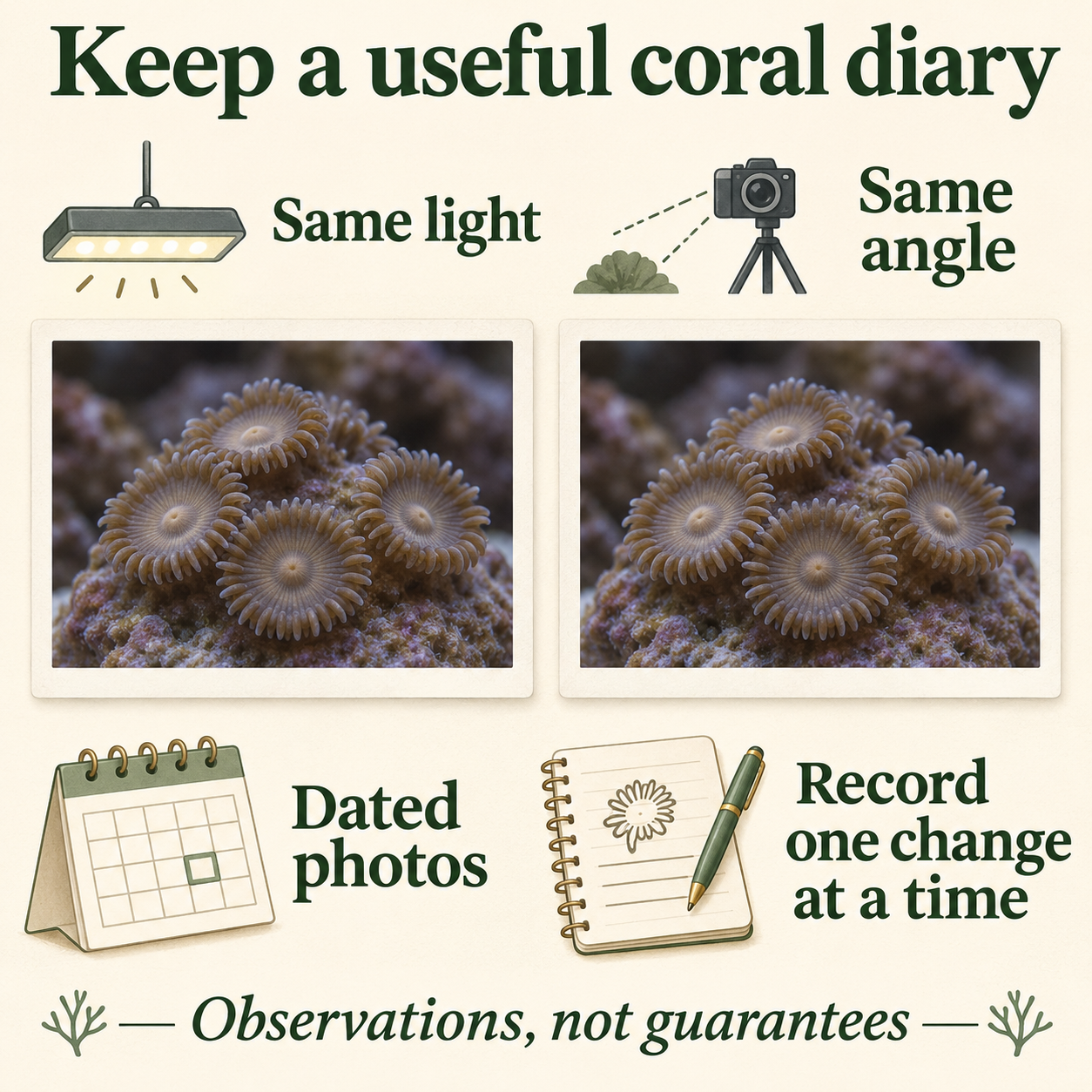
Start your own modest record: dated photos, the same angle, the same light and a note when something changes. That gives you a better comparison than an unverified promise of new polyps every week.
Field Notes
Related species
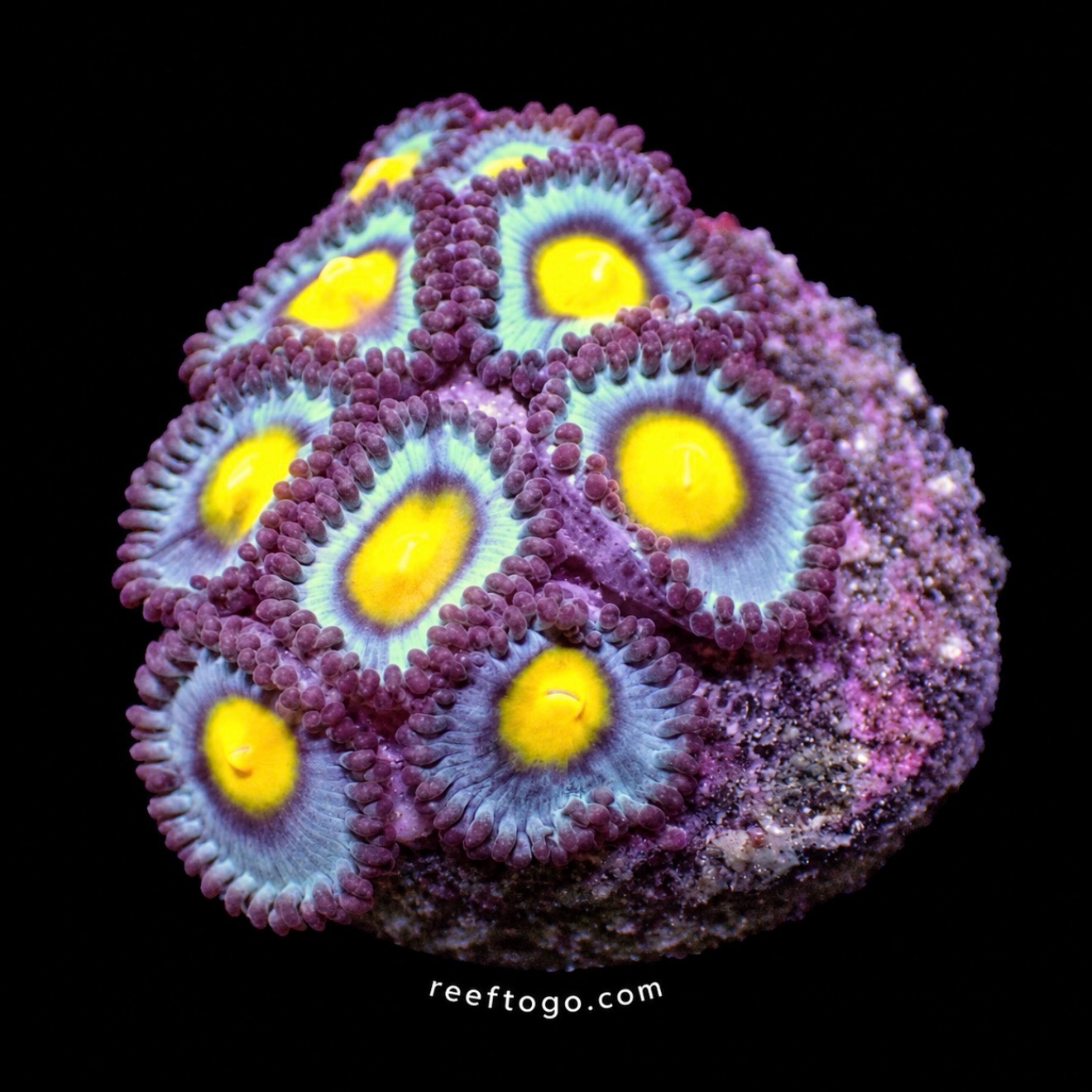
Alien Eye zoas
Zoanthus sp
Same genus
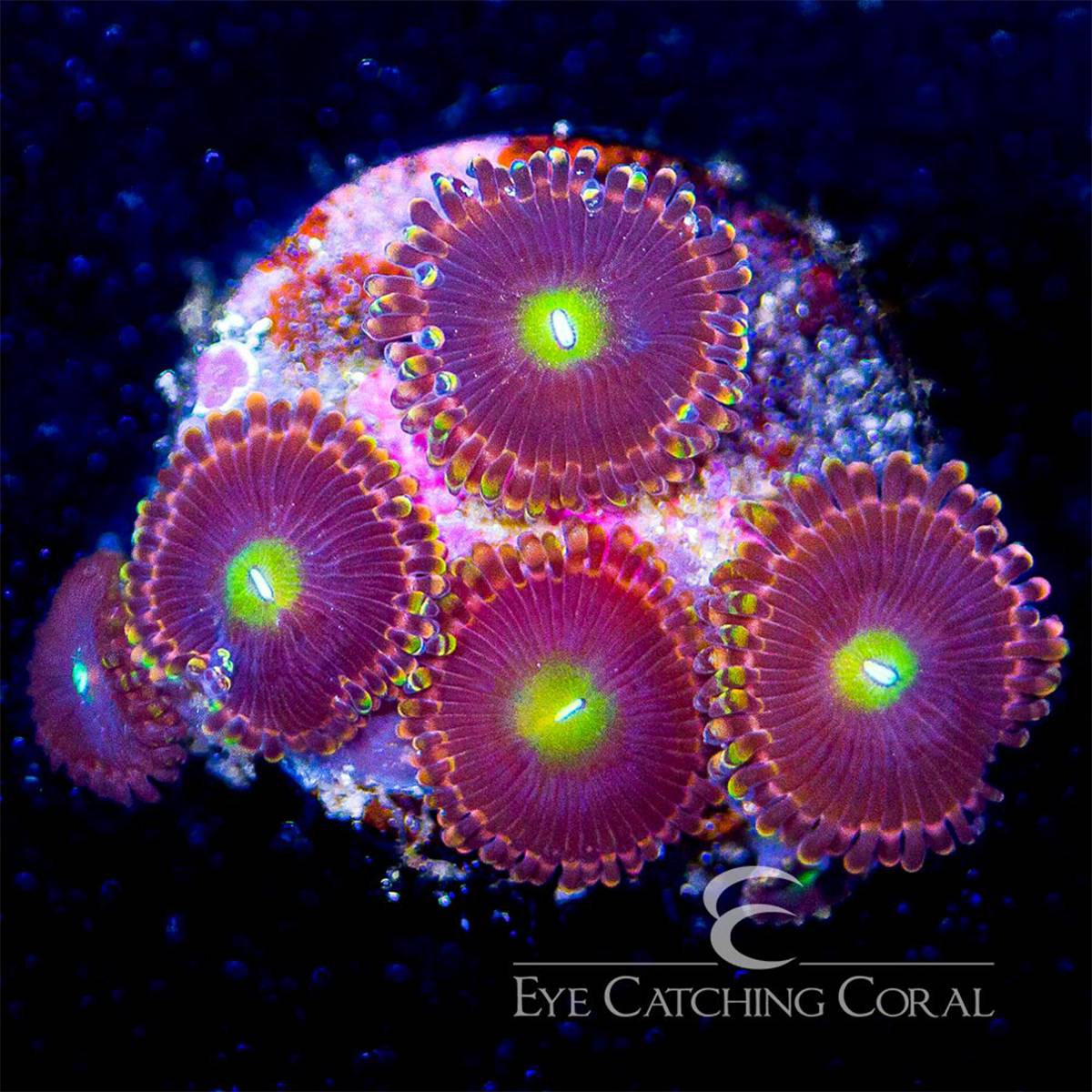
Antimatter zoas
Zoanthus sp
Same genus
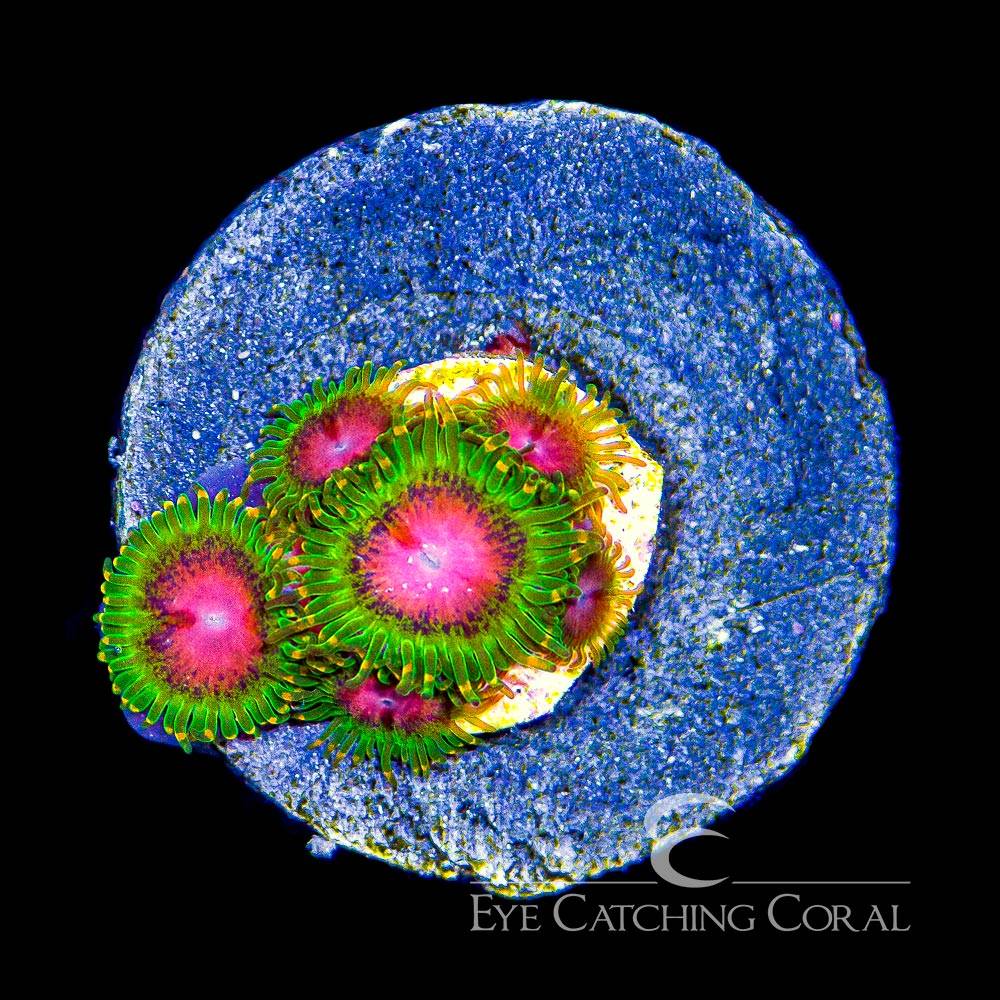
Awesome Blossom zoas
Zoanthus sp
Same genus
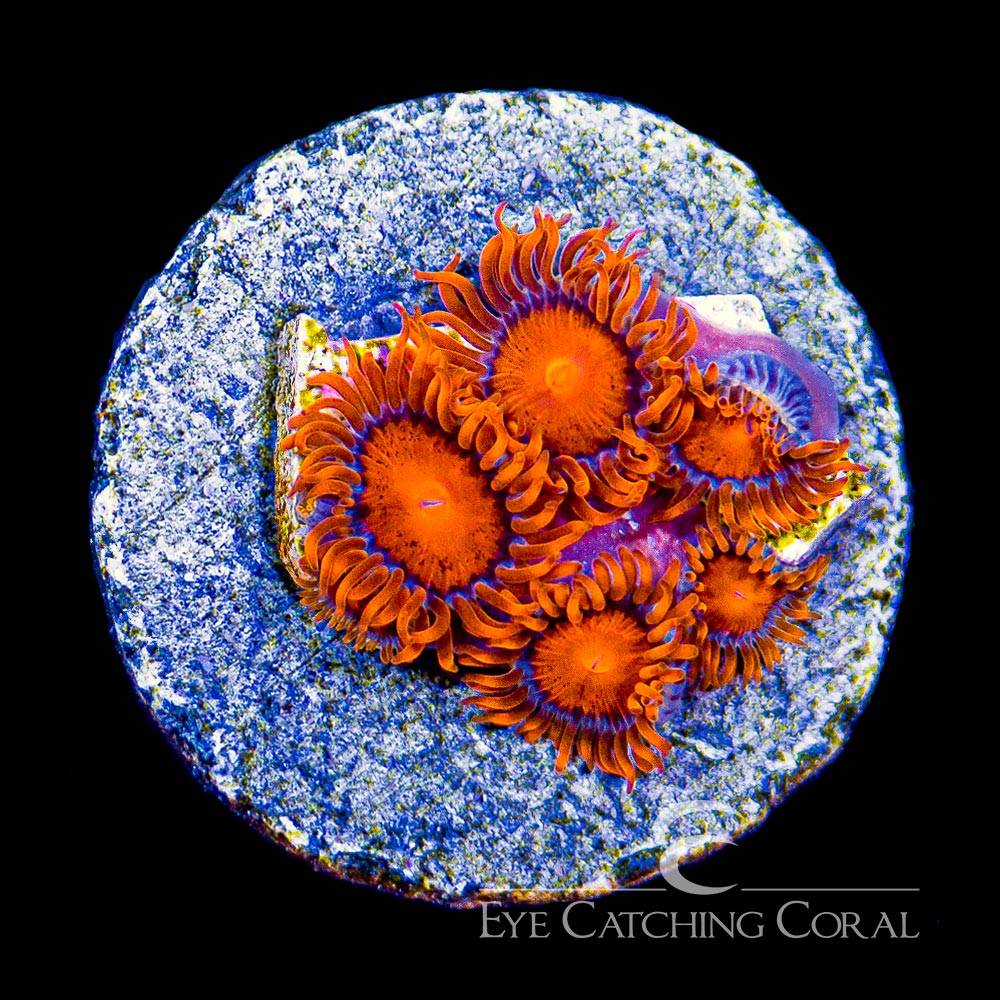
Bam Bam zoas
Zoanthus sp
Same genus
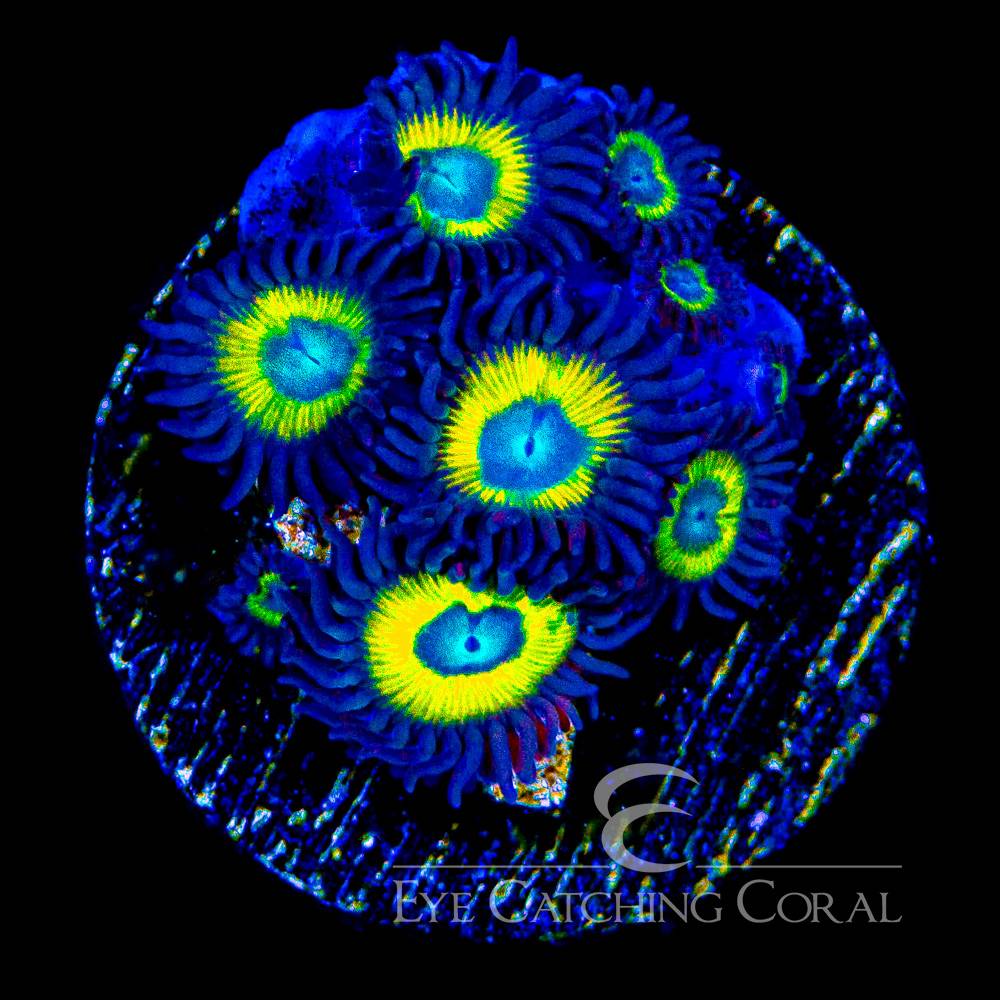
Black Bella zoas
Zoanthus sp
Same genus
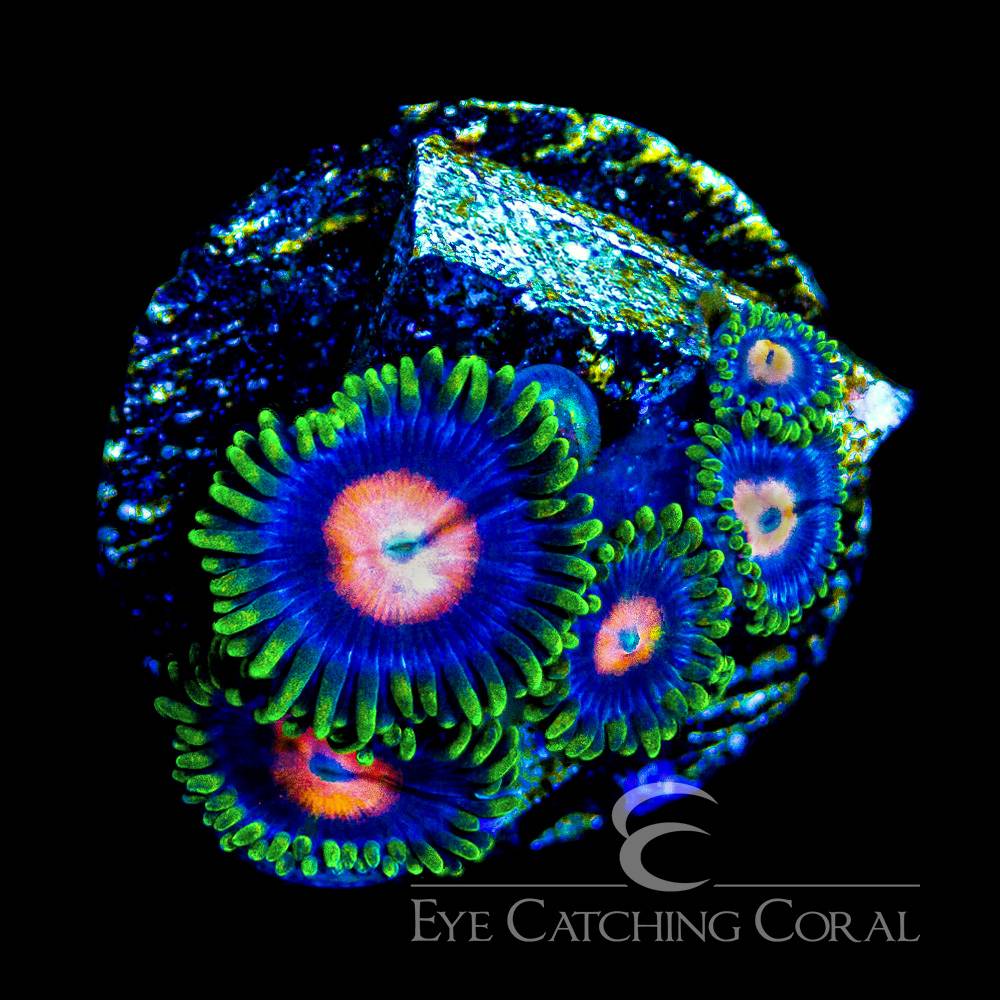
Blow Pops zoas
Zoanthus sp
Same genus
Burning Ember zoas
Zoanthus sp
Same genus
Burning Suns zoas
Zoanthus sp
Same genus