Care facts
- Care
- Intermediate
- Light
- Medium
- Flow
- Medium
- Place
- Bottom
- Space
- Peaceful
- Growth Rate
- Slow
Gallery
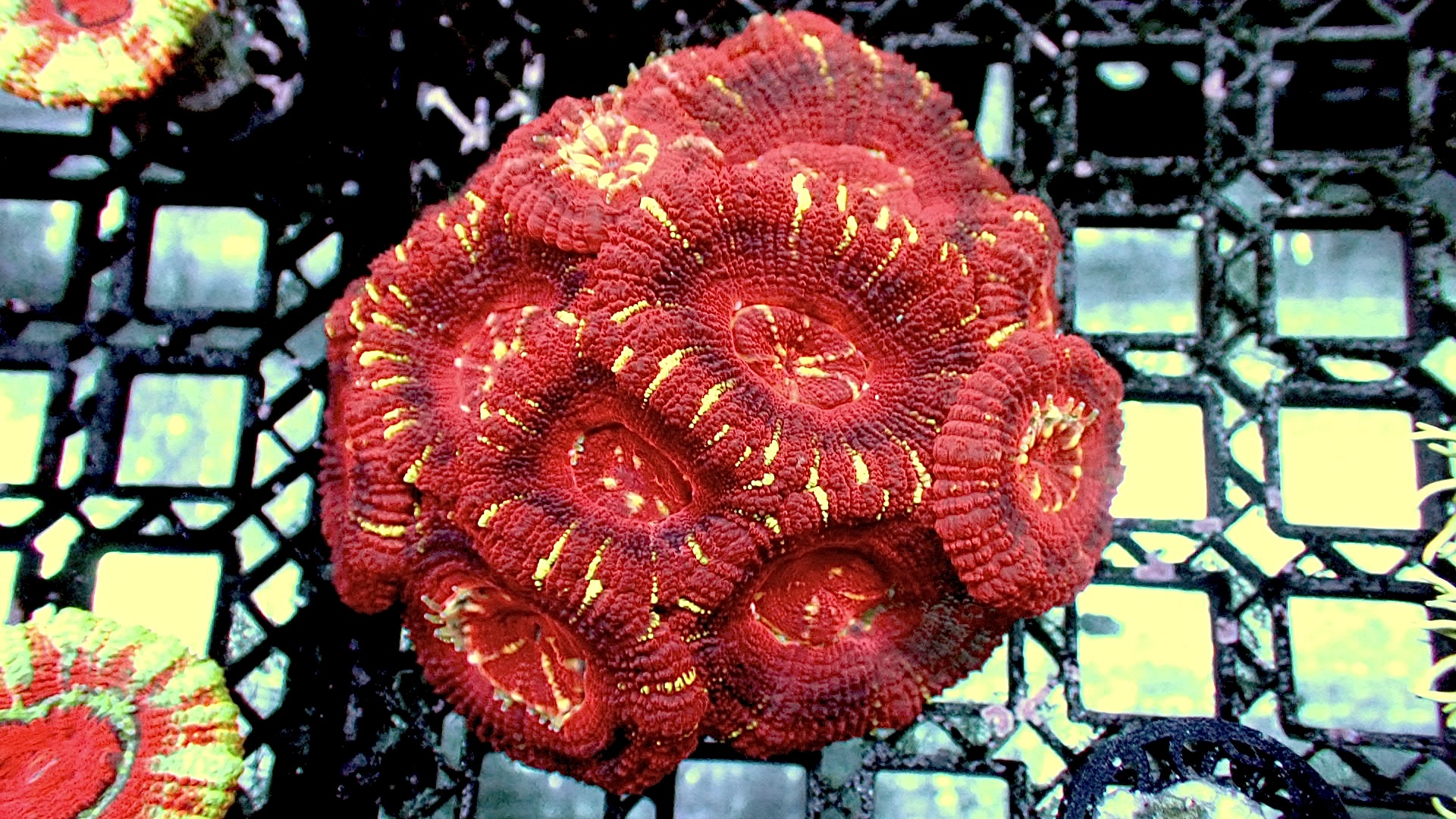
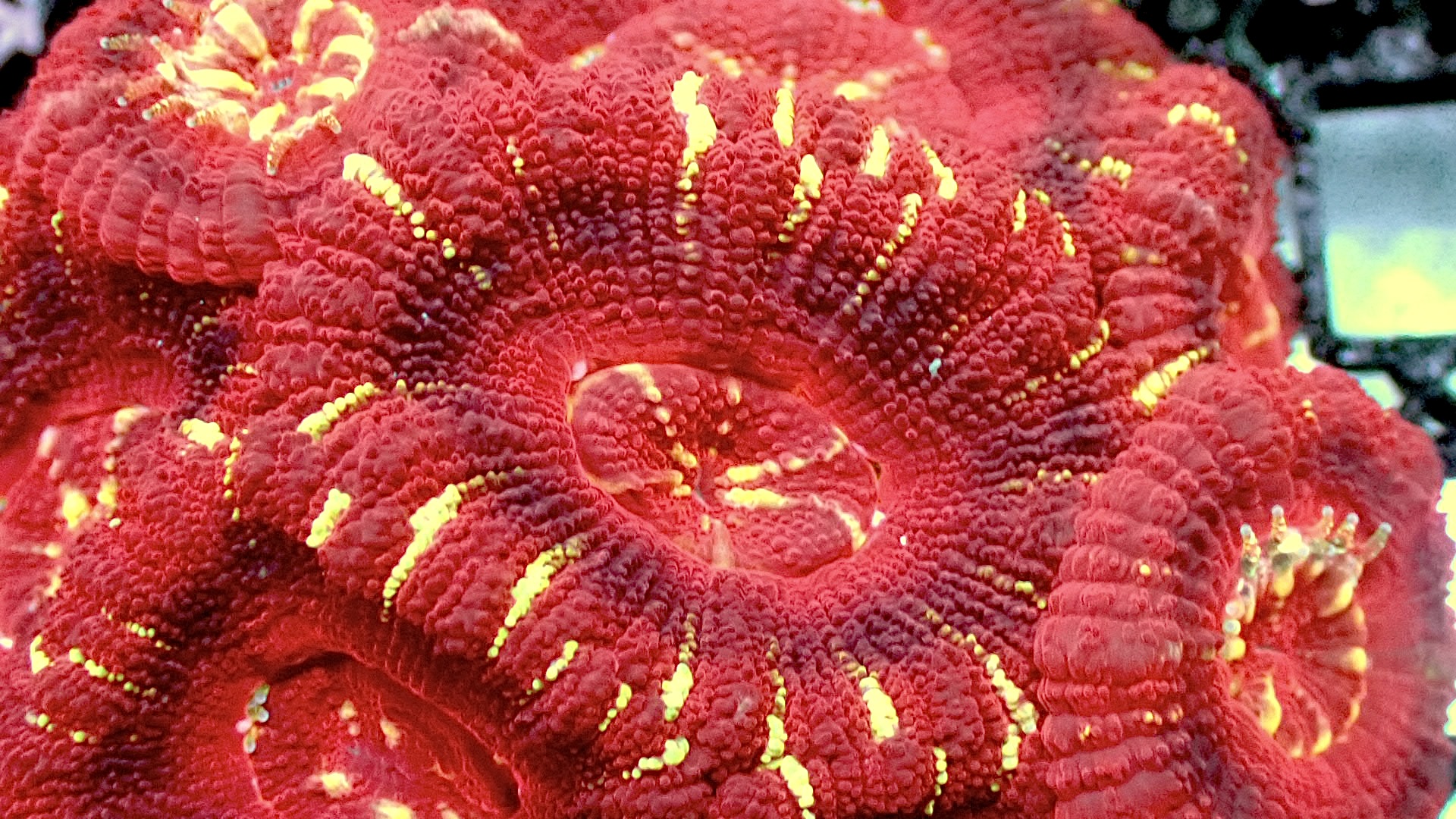
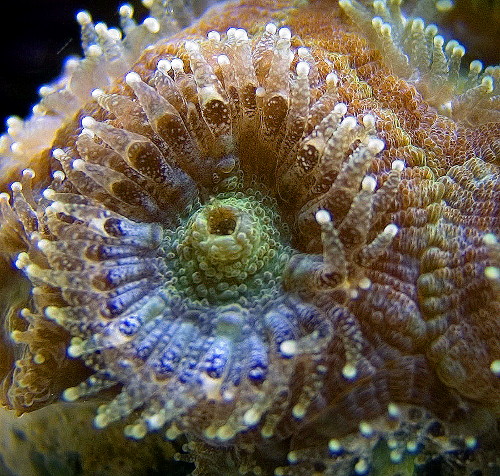
Red tiger Asian acan is a striped red form of Micromussa lordhowensis, the species long kept in the hobby as Acanthastrea lordhowensis and often called acan lord. Colonies grow as a cluster of large, fleshy polyps packed over a heavy skeleton, each polyp with a distinct mouth at the center and tissue that swells well beyond its corallite when settled. The red tiger name follows the pattern keepers look for: a rich red base broken by darker striping that radiates across the polyp face, so a settled colony reads as a row of bold red discs with tiger-like markings.
The entry lists intermediate care, medium light, medium flow, bottom placement, peaceful behavior, and slow growth. Intermediate fits the settling period, when a new frag needs stable placement more than any special routine. Place it low on stable rockwork or on a flat base near the sand bed, with polyps facing upward. Medium light at a bottom placement protects the red color. Strong light can pale the tissue or keep polyps drawn in through the day, and a move upward should run in small steps over weeks, with daily inflation as the guide.
Medium flow should move across the colony in a gentle, varied pattern. The polyps need enough movement to clear waste from between them, and they suffer when a direct jet presses tissue against the skeleton below. Still corners collect detritus inside the cluster, which can irritate the edges. A broad pattern that lifts debris away without flattening the polyps gives the most even inflation across the whole group.
Feeding supports fullness in this coral. The polyps extend short feeding tentacles, often after the main lights dim or when food reaches the water, and they will take small meaty foods such as mysis, finely chopped seafood, or LPS pellets. Offer food once or twice a week with flow lowered for a short window, and spread it across several polyps rather than loading a single mouth. Light supplies much of the energy, so feeding supports growth and recovery rather than replacing good placement.
This coral is listed as peaceful, and the polyps have only a short reach. Spacing still matters because Micromussa can sting a neighbor that falls against it or grows into direct contact overnight. Leave a clear gap of a few inches around the colony, keep stronger LPS sweepers well away, and leave room for new polyps to form around the edge without pressing into a rock wall or another frag. A colony that touches a neighbor can damage tissue on both sides before the contact is noticed.
Growth is slow. New polyps bud around the margin of the cluster, tissue thickens over the skeleton, and the group widens gradually over months. Stable alkalinity, calcium, and magnesium support that skeleton growth. Polyps that stay shrunken, a margin that pulls back to expose skeleton, or striping that fades across the whole colony usually trace back to light that is too strong, harsh flow, a chemistry swing, or a sting from a nearby coral.
Common pitfalls include placing a fresh frag under bright light in pursuit of stronger red, mounting it loosely so it tips face-down into the sand, and handling the fleshy polyps directly when moving it. Support the skeleton from below, start low and calm, and let inflation guide any small adjustment.
Field notes — what keepers report
- Inflation is the signal keepers cite most. Reports describe polyps swelling full and smooth, with striping clear, in a settled low spot with gentle flow, and polyps staying tight after a move to brighter light or a direct flow change. Recovery after a return to calm conditions gets described over days to weeks.
- Color reports split by light. Keepers under medium, blue-leaning light describe deep red tissue with dark striping held across the face, while keepers who placed the coral higher describe paler, washed tones that strengthened again after a move back down. Both sides treat slow acclimation as important.
- Feeding reports lean positive. Keepers who target-feed describe fuller polyps and new edge polyps arriving sooner, while keepers who rely on broadcast feeding alone describe healthy colonies that grow more slowly. Reports agree that food left sitting between polyps should be cleared rather than left to decay.
Field Notes
Related species
Gold Coast acans
Micromussa lordhowensis
Same genus
Darth Maul acan
Micromussa lordhowensis
Same genus
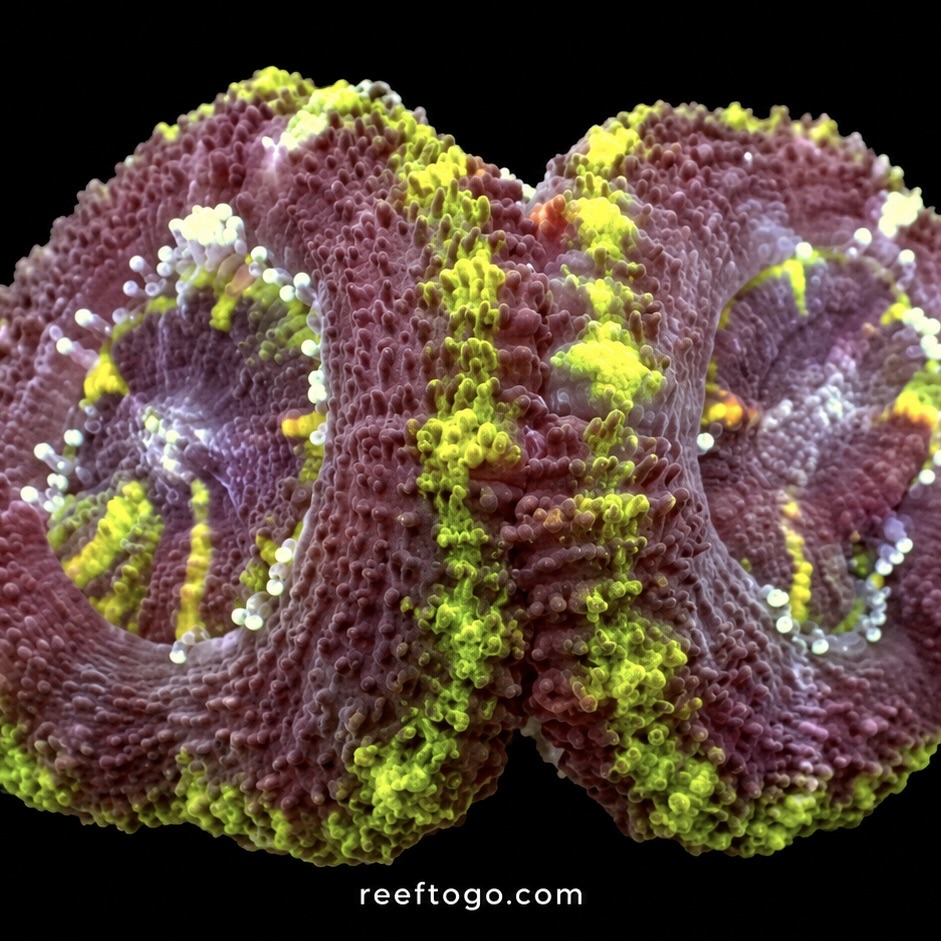
Green acan lord
Micromussa lordhowensis
Same genus
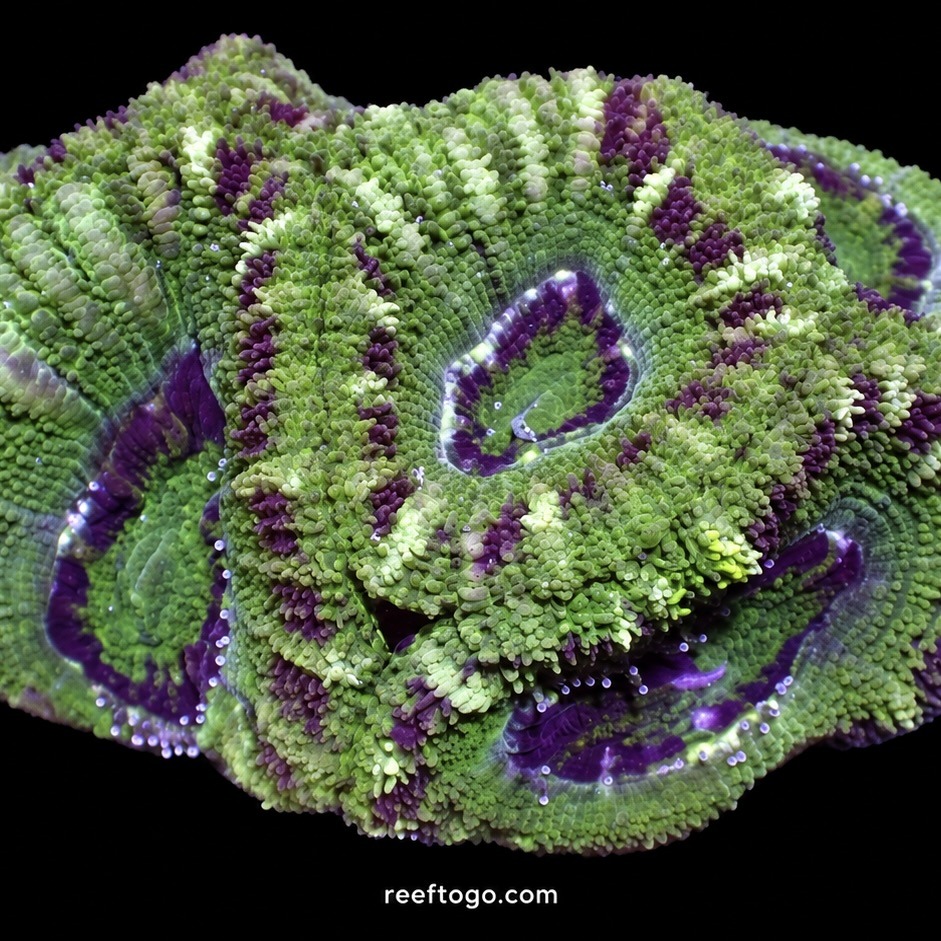
Green tiger acan lord
Micromussa lordhowensis
Same genus
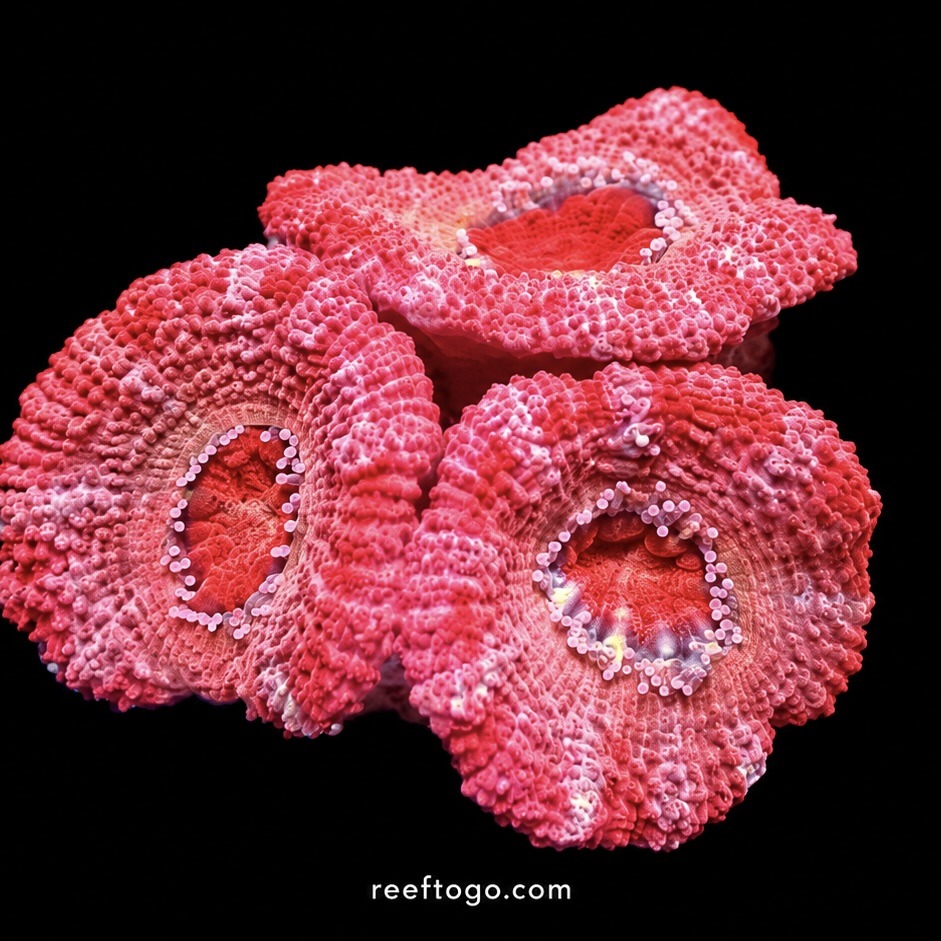
Red candy acan lord
Micromussa lordhowensis
Same genus
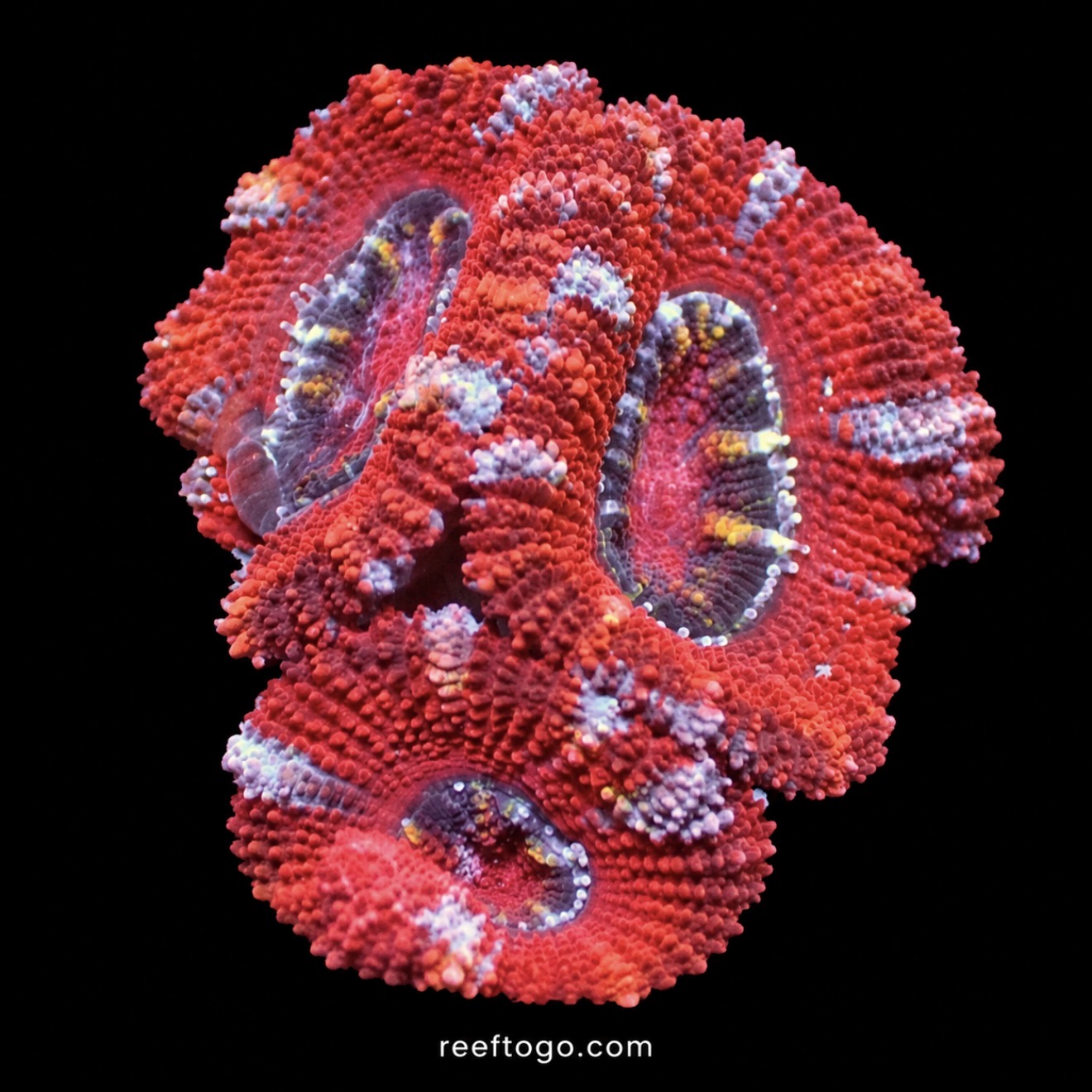
Bulls eye acan lord
Micromussa lordhowensis
Same genus
Lordhowensis Acan
Micromussa lordhowensis
Same genus

Forest Green Alveopora
Similar care · LPS