Red candy acan lord
Micromussa lordhowensis
Care facts
- Care
- Intermediate
- Light
- Low-Med
- Flow
- Moderate
- Place
- Bottom
- Space
- Moderate
- Growth Rate
- Moderate
Gallery
# Red Candy Acan Lord

Micromussa lordhowensis
Quick glance: Intermediate care. Low to medium light. Gentle to moderate indirect flow. Start low in the tank. Leave at least 6 inches between open fleshy edges, then adjust for sweepers and growth. Slow to moderate growth.
1. Meet the Red Candy Acan Lord
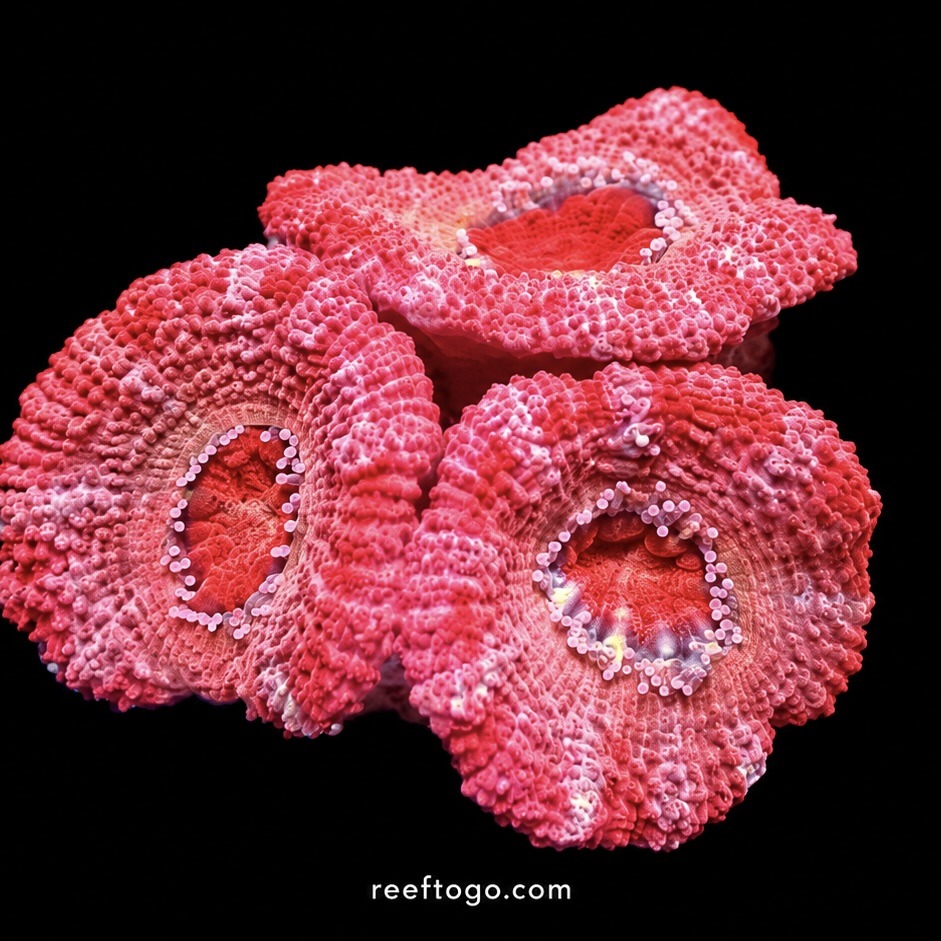
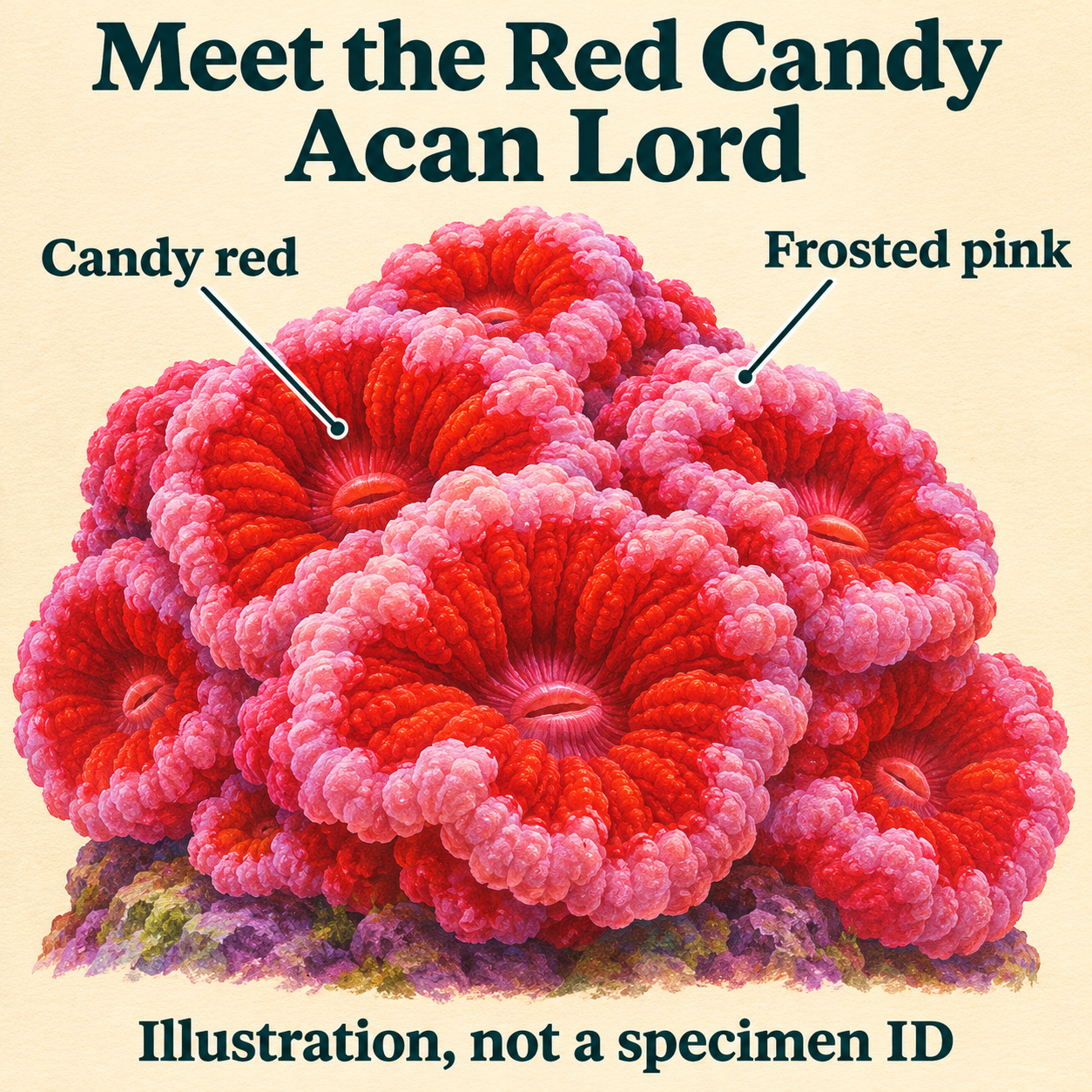
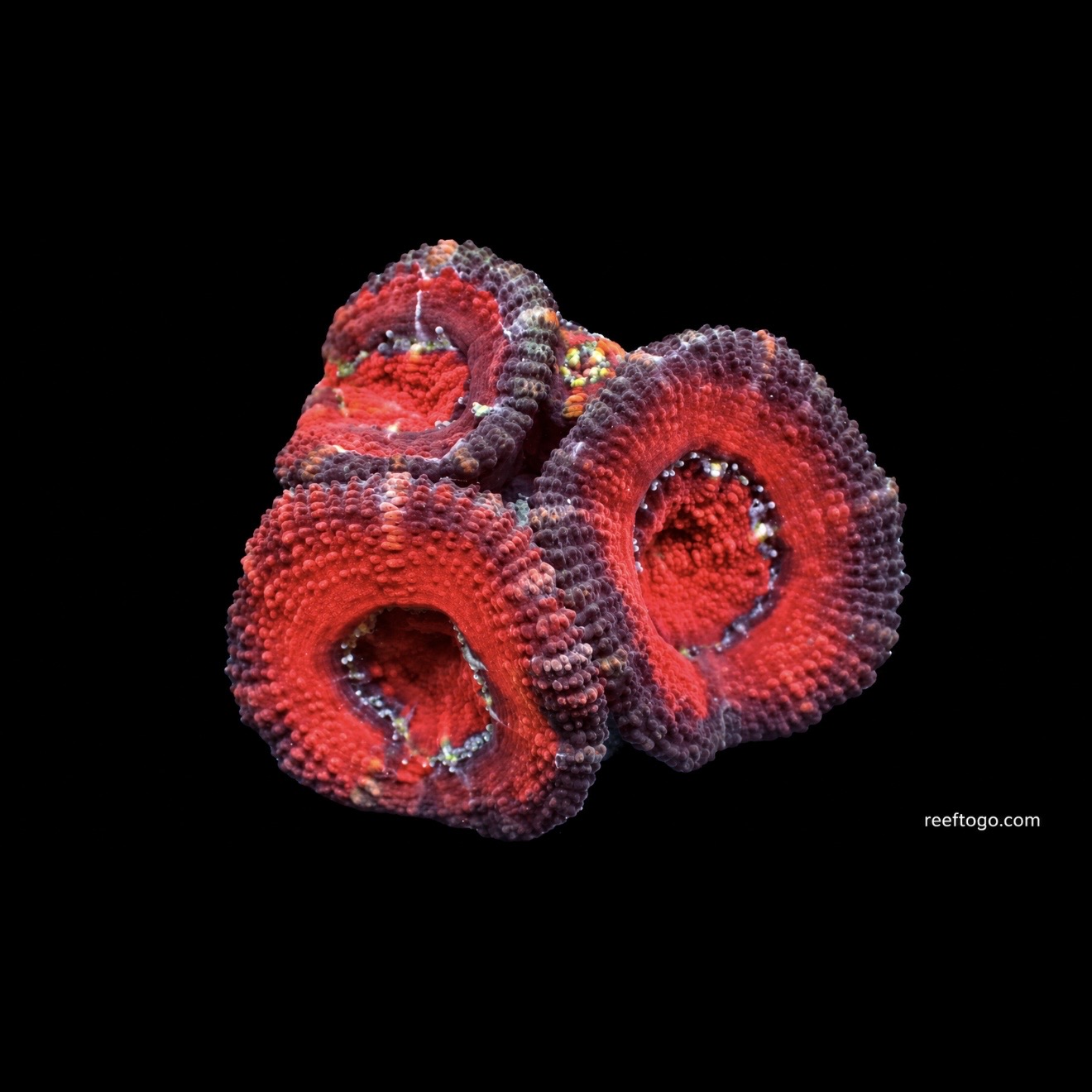
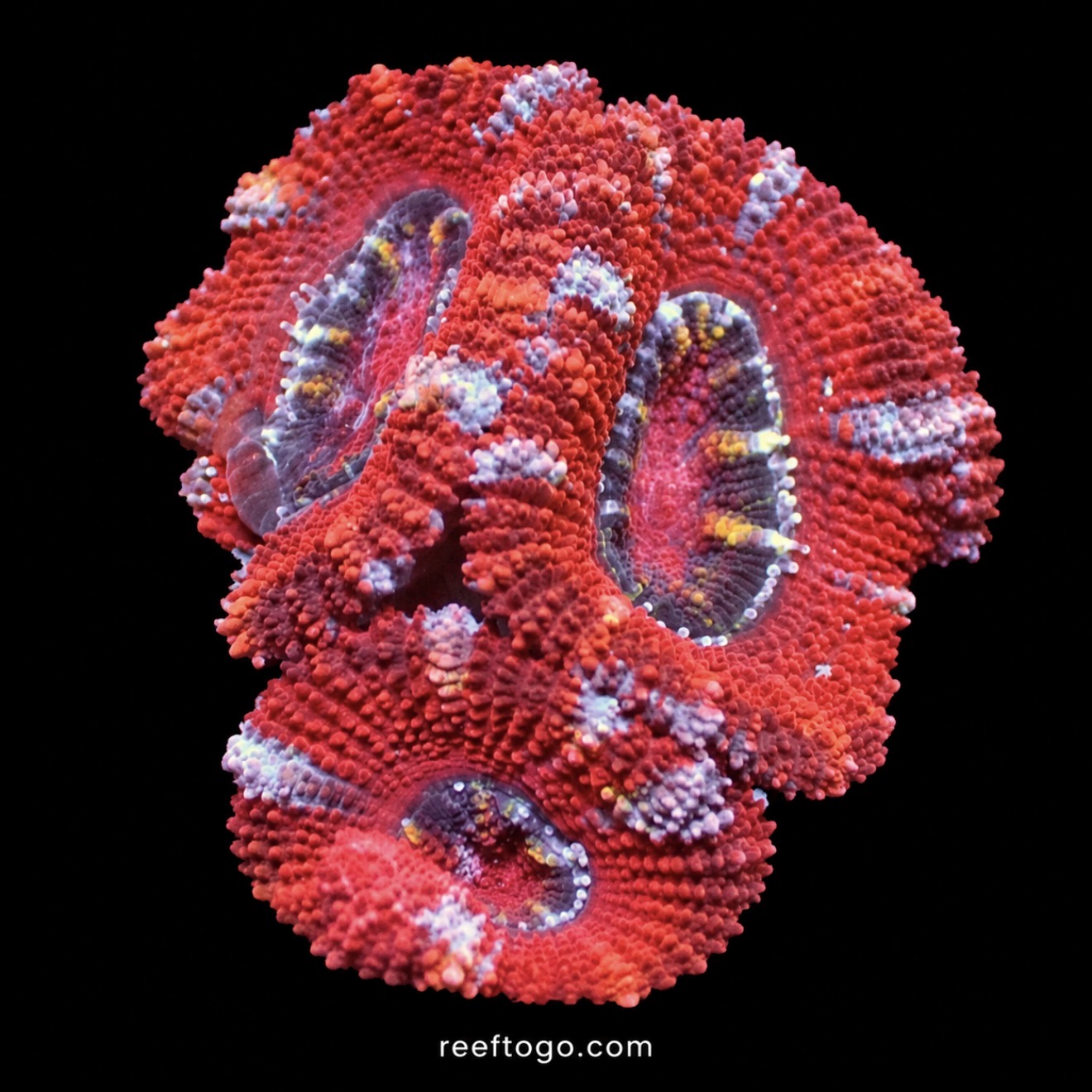
Think of a tiny patch of reef dressed in candy colors. Reef To Go describes this coral as saturated candy red with frosted pink highlights on bumpy, fleshy polyps. Each polyp is a little animal with a mouth in the middle. Under that soft tissue sits a hard skeleton.
The scientific name is Micromussa lordhowensis. You may still see its old name, Acanthastrea lordhowensis, or the shop name Acan Lord. Scientists moved the species into Micromussa in 2016. Red Candy is a trade name, not proof of a separate species or a shared lineage with every red acan sold elsewhere. Color can change with the tank and its lighting.
2. Where it lives in the wild
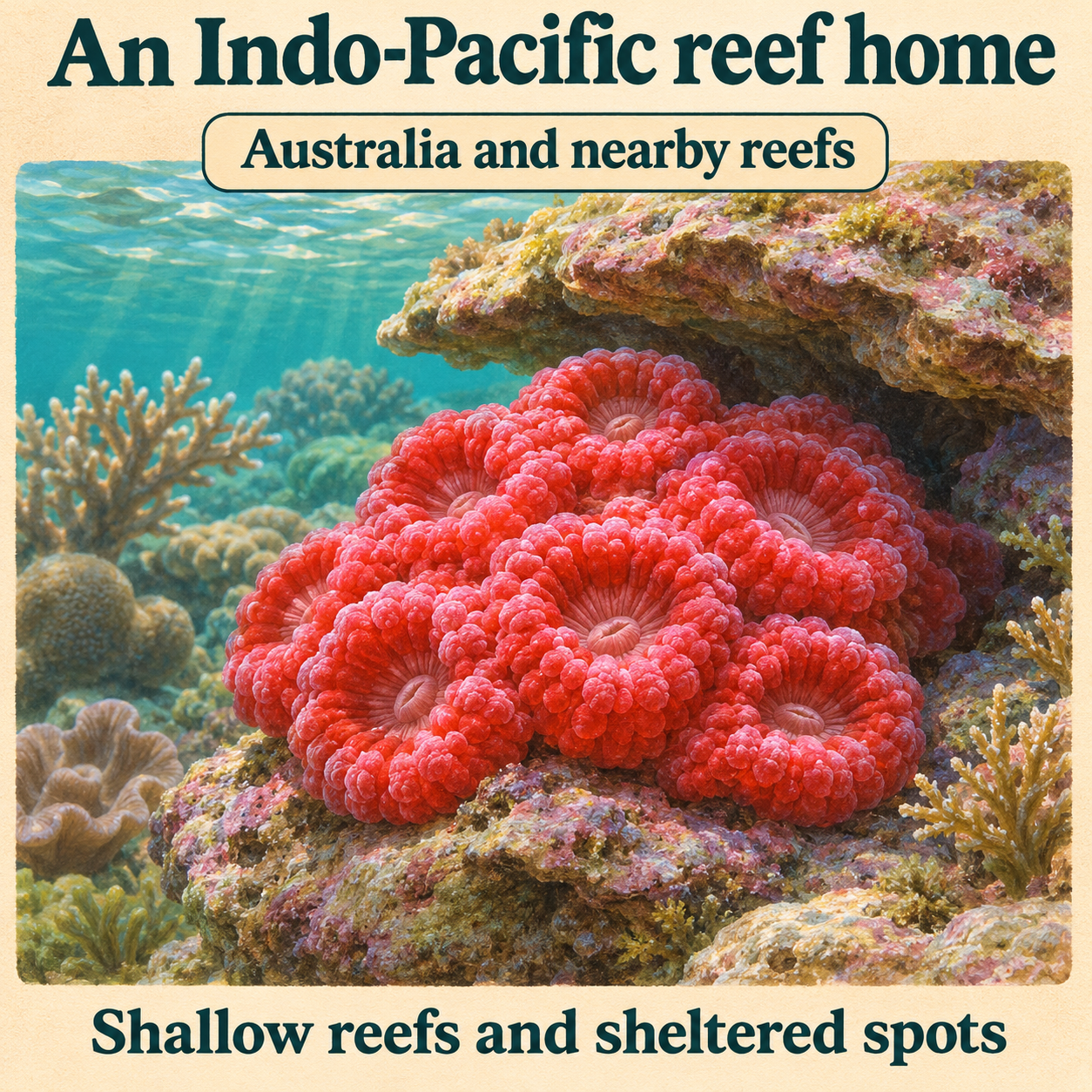
This is an Indo-Pacific reef coral, documented around Australia, including Lord Howe Island. The species name points to that island.
Wild records include shallow reefs. So “deep-water coral” is too simple a label. Hobby care guides describe sheltered reef slopes and sandy areas, but those descriptions do not capture every place this species lives. In a tank, aim for a calm, stable spot with gentle light. The Red Candy trade name does not tell us where this particular colony was collected or grown.
3. Light
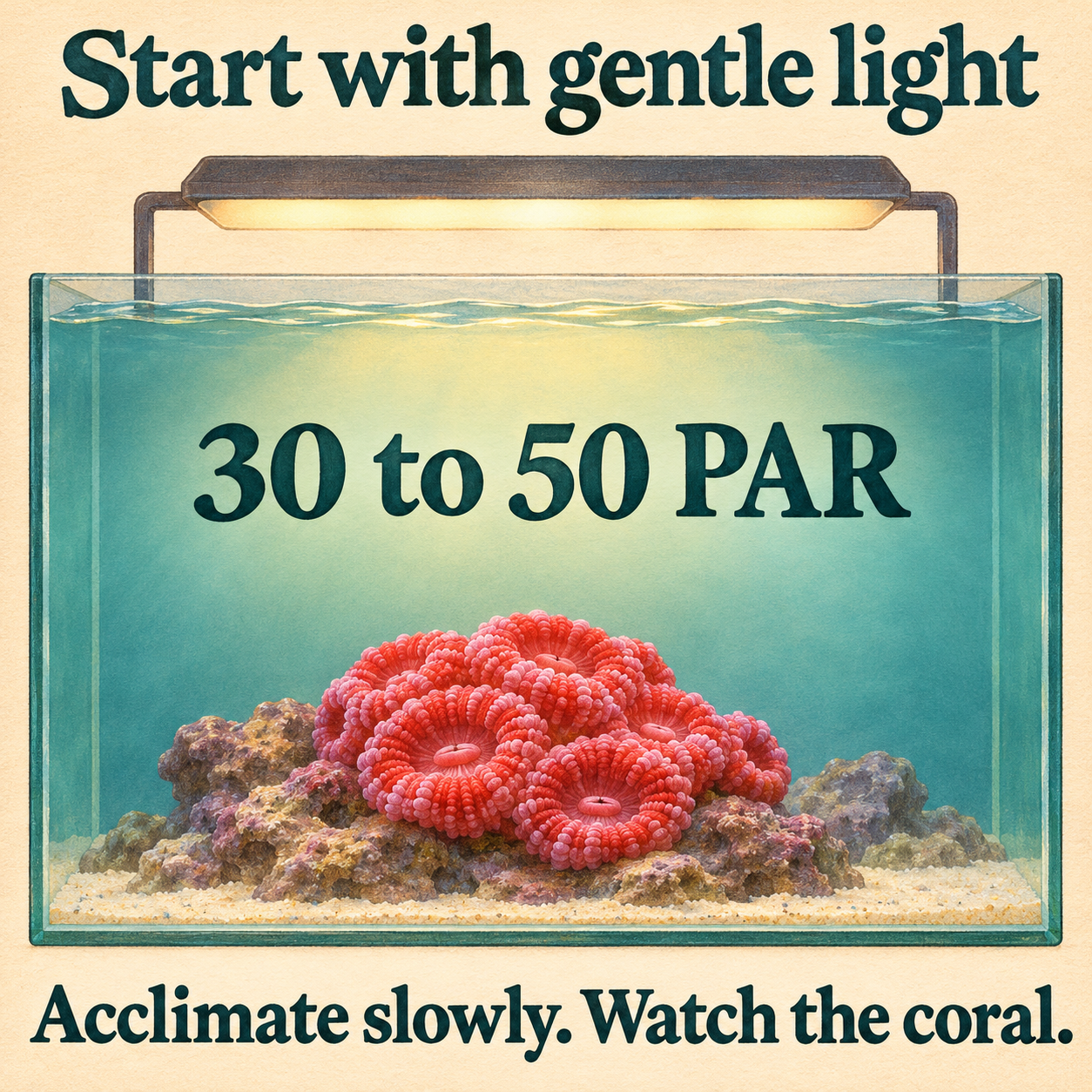
Start gently. About 30 to 50 PAR is a cautious starting range for an Acan Lord when its previous lighting is unknown. PAR measures the light available to the coral. A meter is more useful than guessing from how bright the tank looks.
Keepers use different ranges. Tidal Gardens recommends 25 to 50 PAR for Micromussa. Some Lords do well around 50 to 80 PAR, while other guides allow higher levels after careful acclimation. There is no prize for turning up the light. A happy coral at lower light can stay there.
Give a new coral a week or two to settle before considering a change. Look for at least three straight days of healthy expansion and stable color before any increase. That is a useful check, not a guarantee. Then adjust one small step at a time. Watch the coral, not just the calendar. Sudden strong light can make tissue pale or bleach. Color shifts can happen quickly, but color alone does not tell the whole health story.
4. Flow and placement
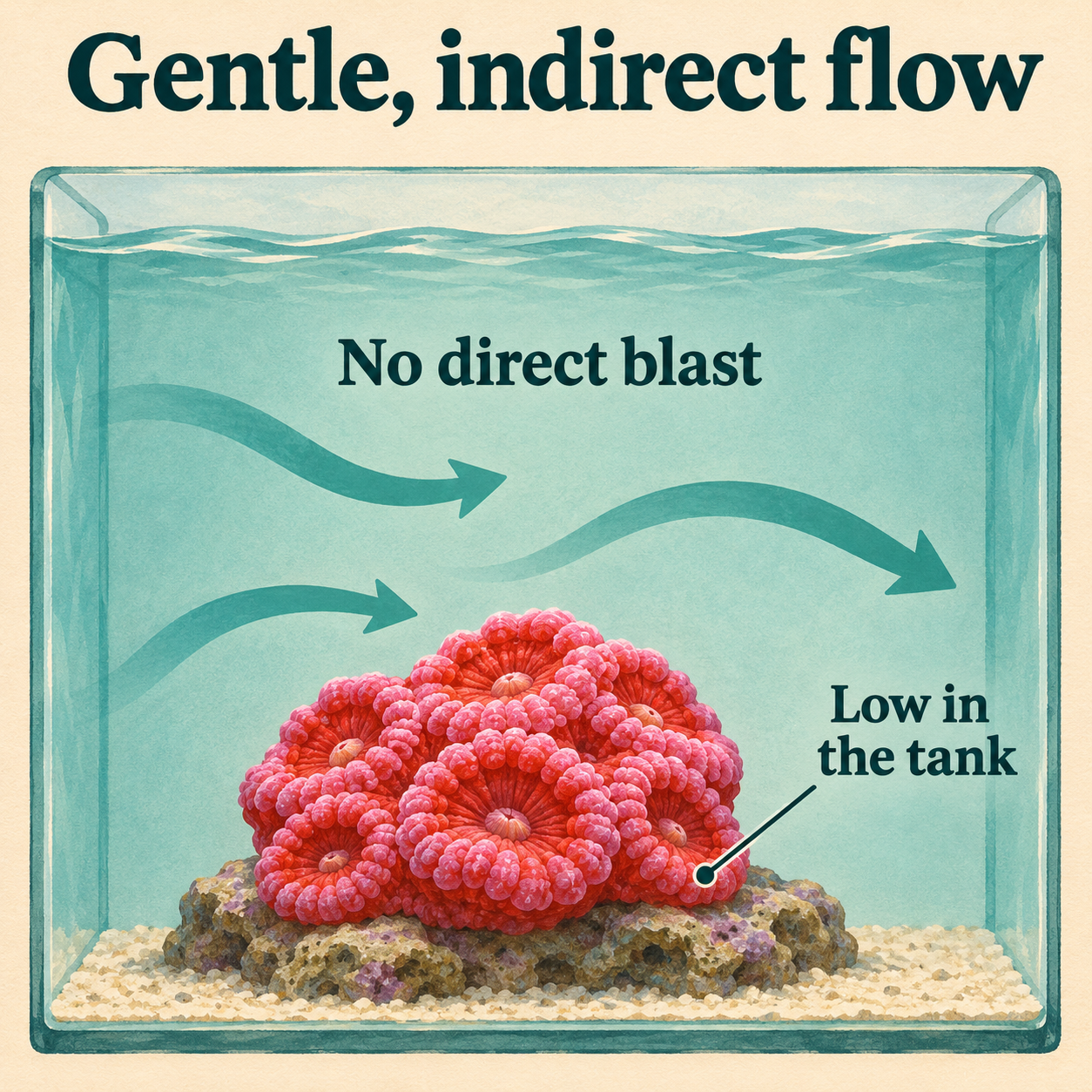
Choose gentle to moderate, indirect flow. The fleshy polyps should sway softly, not flatten in a hard jet. Enough movement should pass by to keep dirt from settling.
Start near the bottom, on a stable base on the sandbed or lower rockwork. A partly shaded spot can help under strong lights. Keep the living tissue clear of sand, sharp rock and neighbors. Lower to middle rockwork may work after the coral has settled and the light is suitable.
When it arrives, follow the seller's acclimation plan. If the seller advises floating the sealed bag, 15 to 30 minutes is a common starting period. Confirm temperature rather than relying only on the clock. Then check the water conditions. A coral dip must follow its label and use a separate container. Rinse as directed in clean saltwater. Never pour shipping or dip water into the display. Dipping does not replace quarantine. Hold the plug or skeleton, not the soft flesh.
5. Feeding
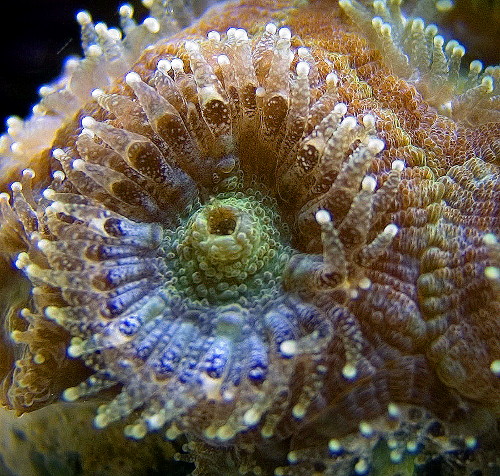
Those tiny tentacles are food catchers. The coral also gets energy from tiny algae living in its tissue. Small, meaty meals can support growth and recovery.
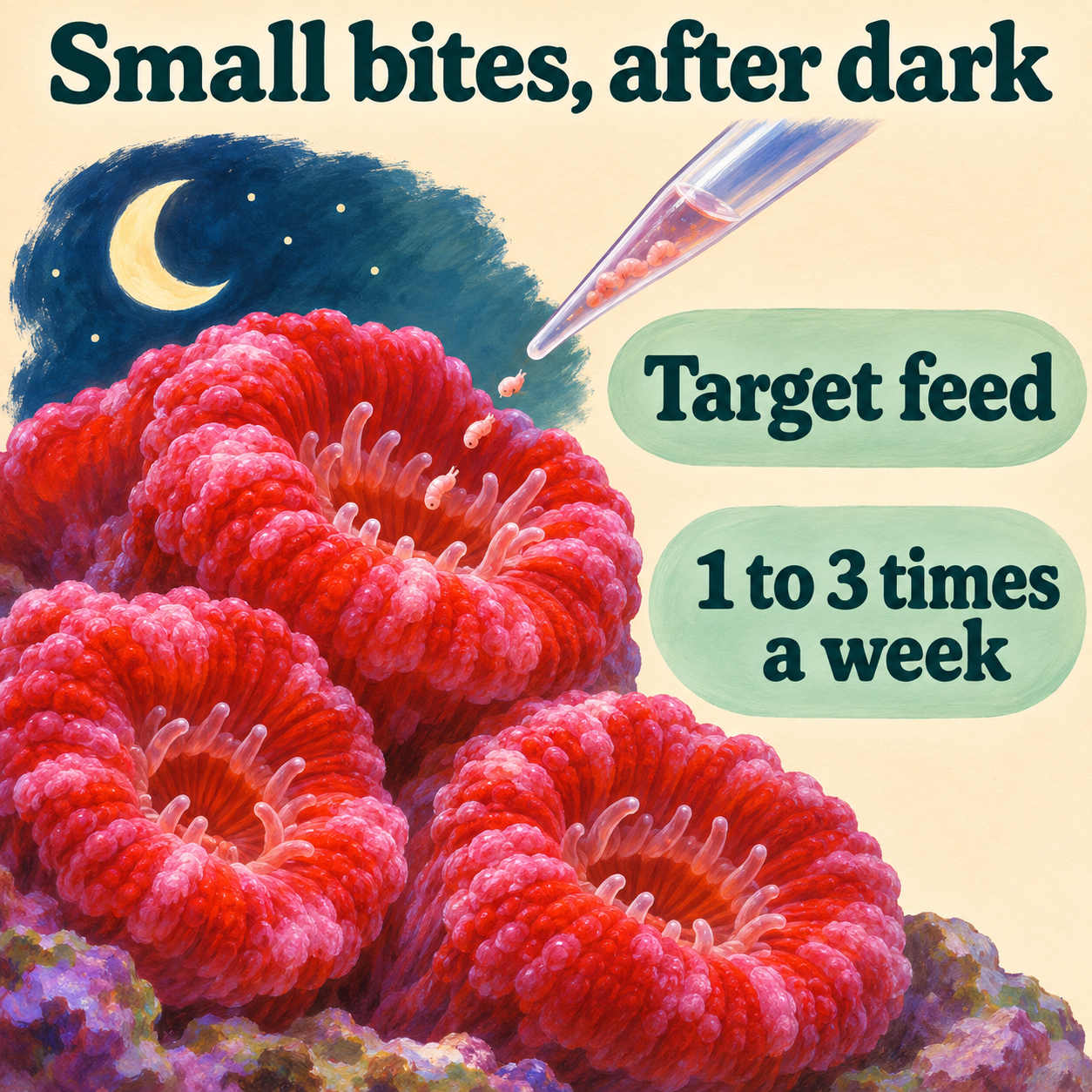
Try gentle target feeding one to three times a week. Offer tiny mysis shrimp, finely chopped krill, brine shrimp or suitable coral pellets. Feed after lights dim or when feeder tentacles are out. Slow the flow briefly so food stays nearby, then restore it after feeding.
Keep pieces small. For dry food, follow the product's coral-feeding directions and start sparingly. Pellet sizes vary. Do not force food into a closed mouth. Fish and shrimp may steal dinner, so watch for a few minutes. Reduce the amount if food is left over or nutrients keep climbing.
6. Water and growth
Steady water matters more than chasing a perfect number. These are practical aquarium targets, not a promise that every coral prefers one exact setting:
- Temperature: 74 to 80 F, about 23 to 27 C.
- pH: 8.1 to 8.4.
- Specific gravity: 1.024 to 1.026, measured with a calibrated instrument.
- Alkalinity: 8 to 9 dKH.
- Calcium: 400 to 450 ppm.
- Magnesium: 1250 to 1400 ppm.
- Nitrate: 5 to 15 ppm.
- Phosphate: 0.03 to 0.10 ppm.
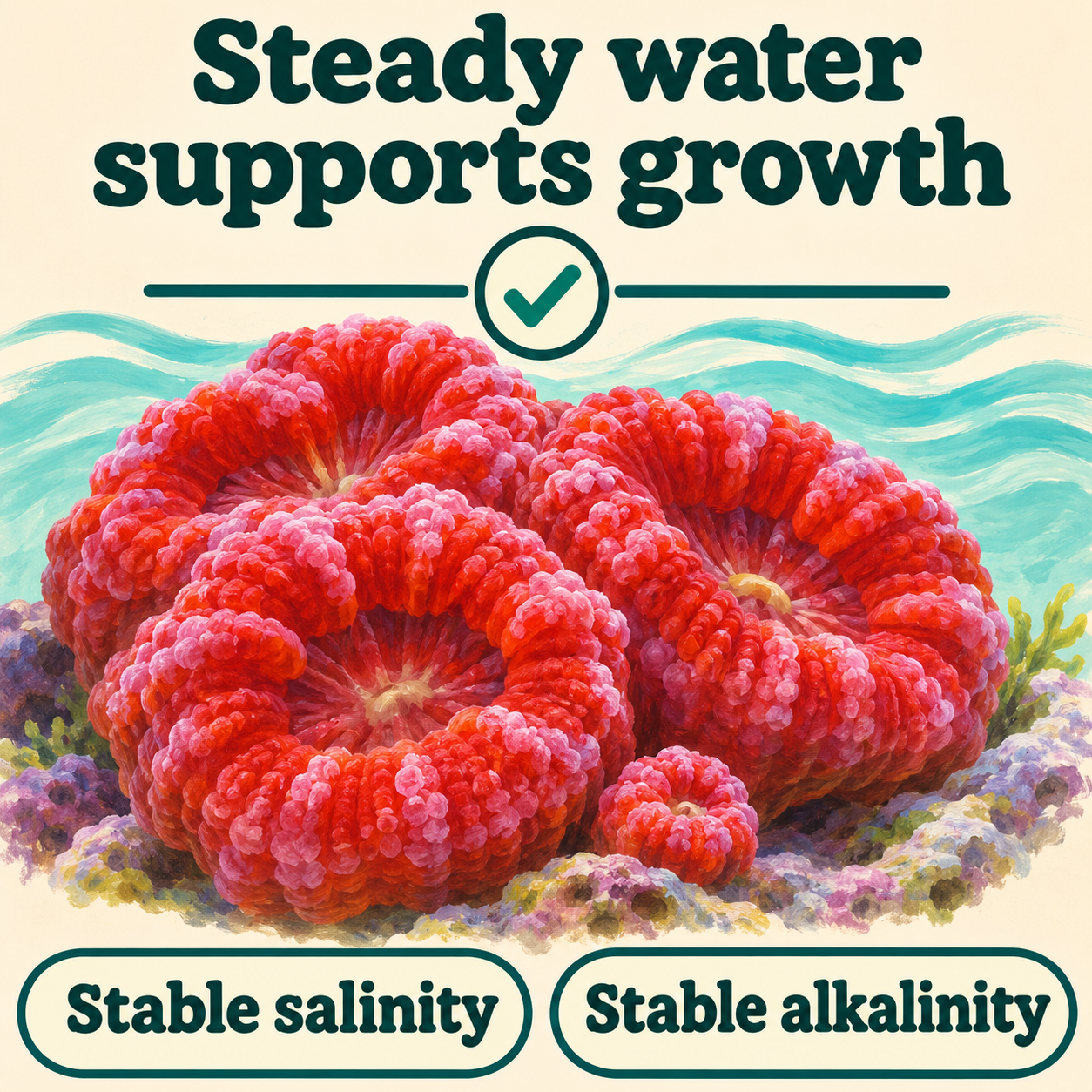
Keep salinity and alkalinity steady. Make corrections gradually. Measurable nitrate and phosphate are useful, but extra food is not a shortcut to growth. Watch the trend in nitrate and phosphate instead of letting either climb unchecked or trying to drive both to zero. Tidal Gardens reports tissue recession as nitrate approaches 30 to 50 ppm. Treat that as a grower warning, not a universal cutoff.
Growth is usually slow to moderate. Look for little new polyps around the edge as the colony spreads. Tissue may also grow over healed cut edges.
Fragging is possible, often with a coral bandsaw, but this is not a good first cutting project. The skeleton is thick and the fleshy polyps sit close together. Get experienced help. Clean equipment, careful cuts and stable recovery conditions matter. Small meals may help once the coral opens and accepts food.
7. Space and neighbors
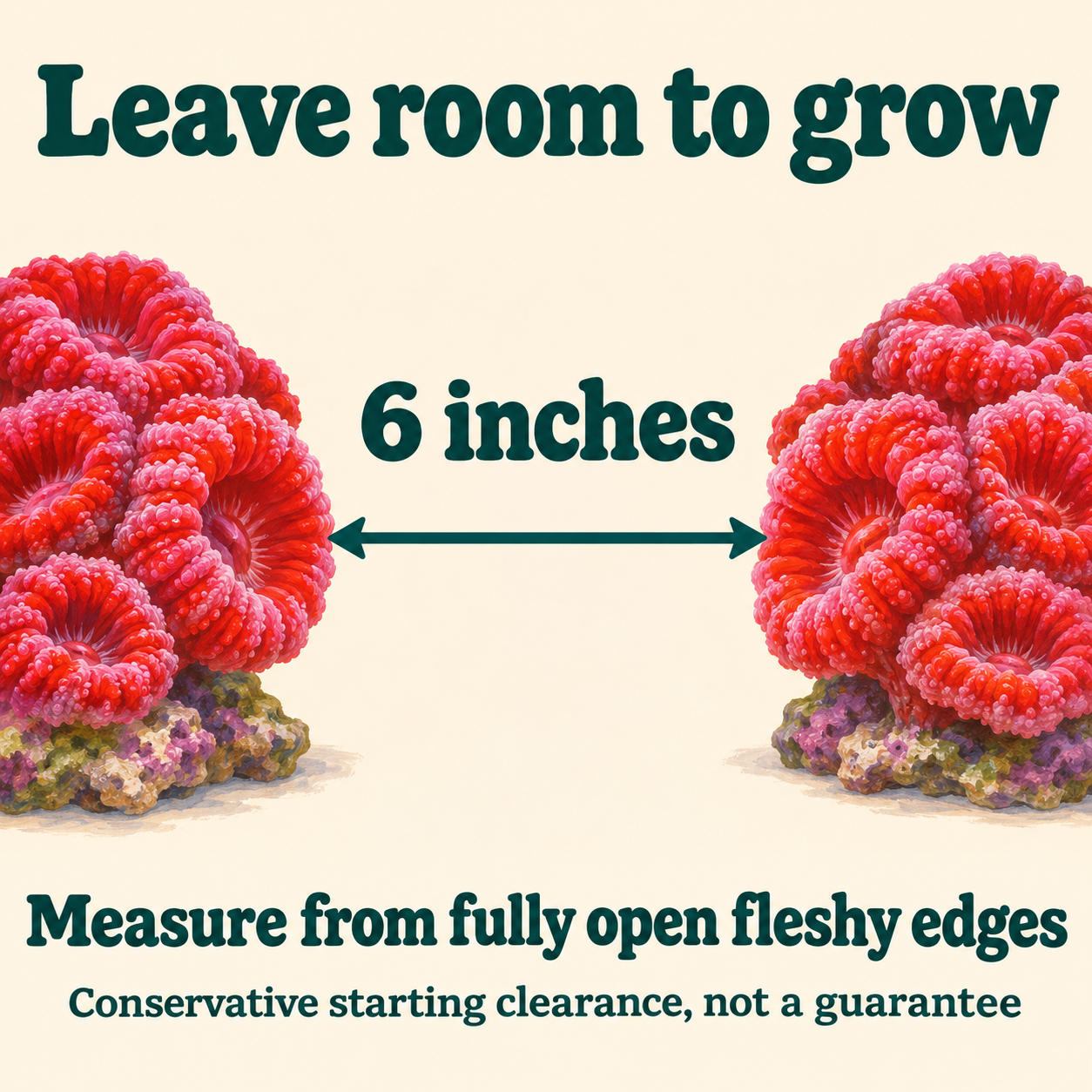
Start with at least 6 inches of clear space between the fully open fleshy edges of this coral and its neighbors. Measure the soft tissue, not just the frag plugs.
The old two-inch advice leaves too little margin for expanding polyps, stinging tentacles and growth. Six inches is a safer starting buffer and agrees with the Reef To Go listing. It is not a guarantee. A neighbor with long sweepers may need much more room.
Look after lights dim with a dim flashlight. Check for reaching tentacles and damaged edges. Add space as either colony grows. Do not assume two corals can touch just because both were sold as acans. Unrelated colonies can sting each other.
8. Trouble signs
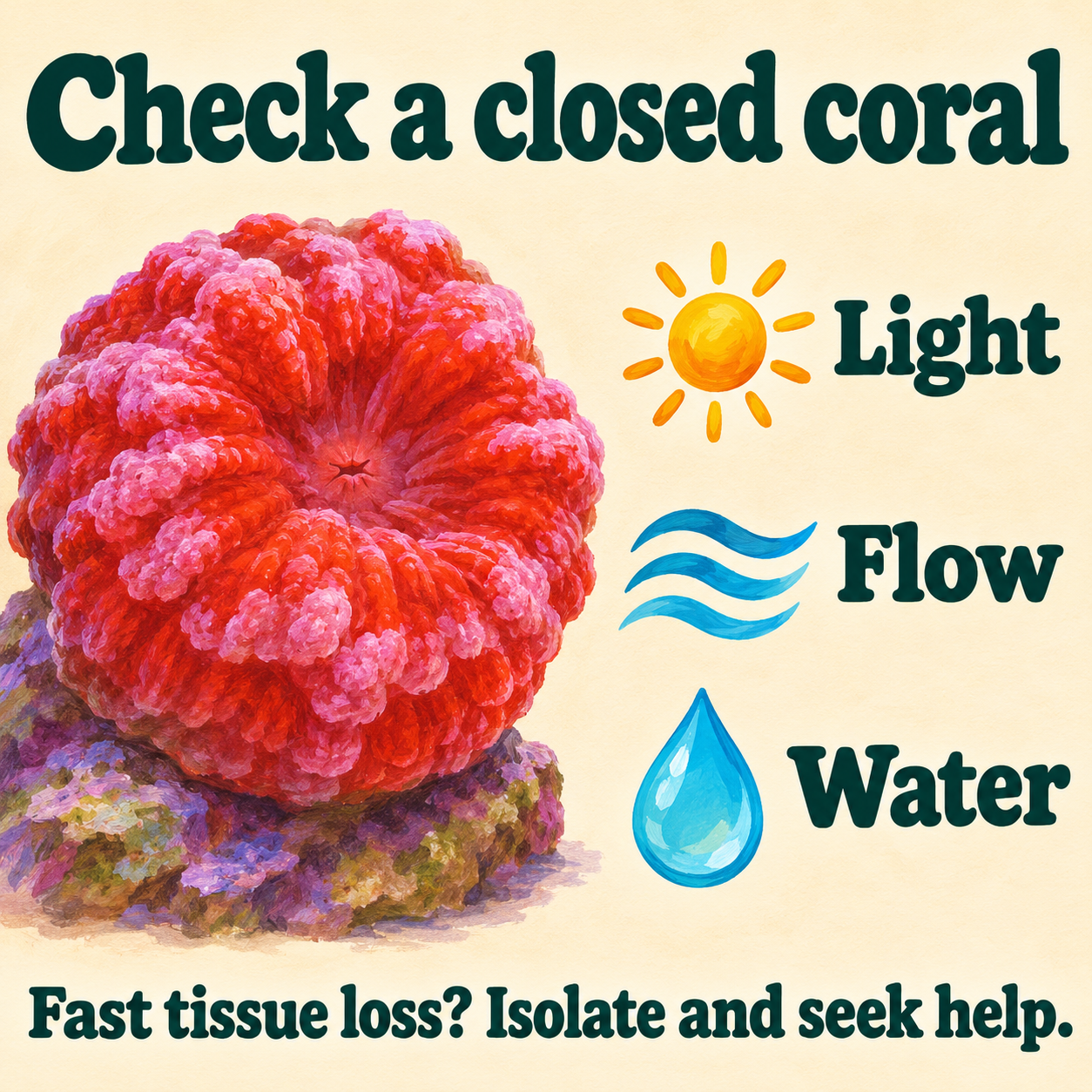
A closed coral is asking you to look closer. Check recent changes, light and flow first, then test the water. Brief retraction after handling or feeding can be normal. Persistent trouble needs attention.
- Pale tissue: check for too much light, a sudden light change or nutrients near zero. Paling is a clue, not a diagnosis.
- Tissue pulling back or bare skeleton: look for a sting, rubbing, unstable alkalinity or salinity, trapped debris or pests.
- Dirt on the flesh: lift it gently with a turkey baster and improve indirect flow. Do not blast the tissue.
- Brown, jelly-like material or fast tissue loss: act promptly. Isolate the affected coral if possible, avoid spreading material, photograph the damaged edge and ask an experienced coral keeper or aquatic professional for help.
Change one likely cause at a time unless the coral is losing tissue quickly. A clear photo and a few days of water-test notes can make the problem much easier to understand.
Field notes — what keepers report
Real tanks do not always tell the same story. These are hobbyists' reports about Acan Lords generally. They are not controlled trials, and none identifies the coral as Reef To Go's Red Candy.
Feeding brings mixed reports. On February 1, 2016, Reef2Reef keeper mannyhernz reported rapid growth with daily feeding. In the same discussion, Shep said feeding had made no noticeable difference to growth. The next day, TheGrimmReefer reported growing frags into colonies over 12 to 14 months without direct coral feeding. Food and nutrients could still have been available from the rest of the tank. These stories do not prove that more feeding always means faster growth.
Feeding time can vary, too. On August 14, 2019, Reef2Reef keeper OlderManSea reported that their Acan Lords ate during daylight but stayed tightly closed at night. Watch your coral's feeding response rather than following the clock alone.
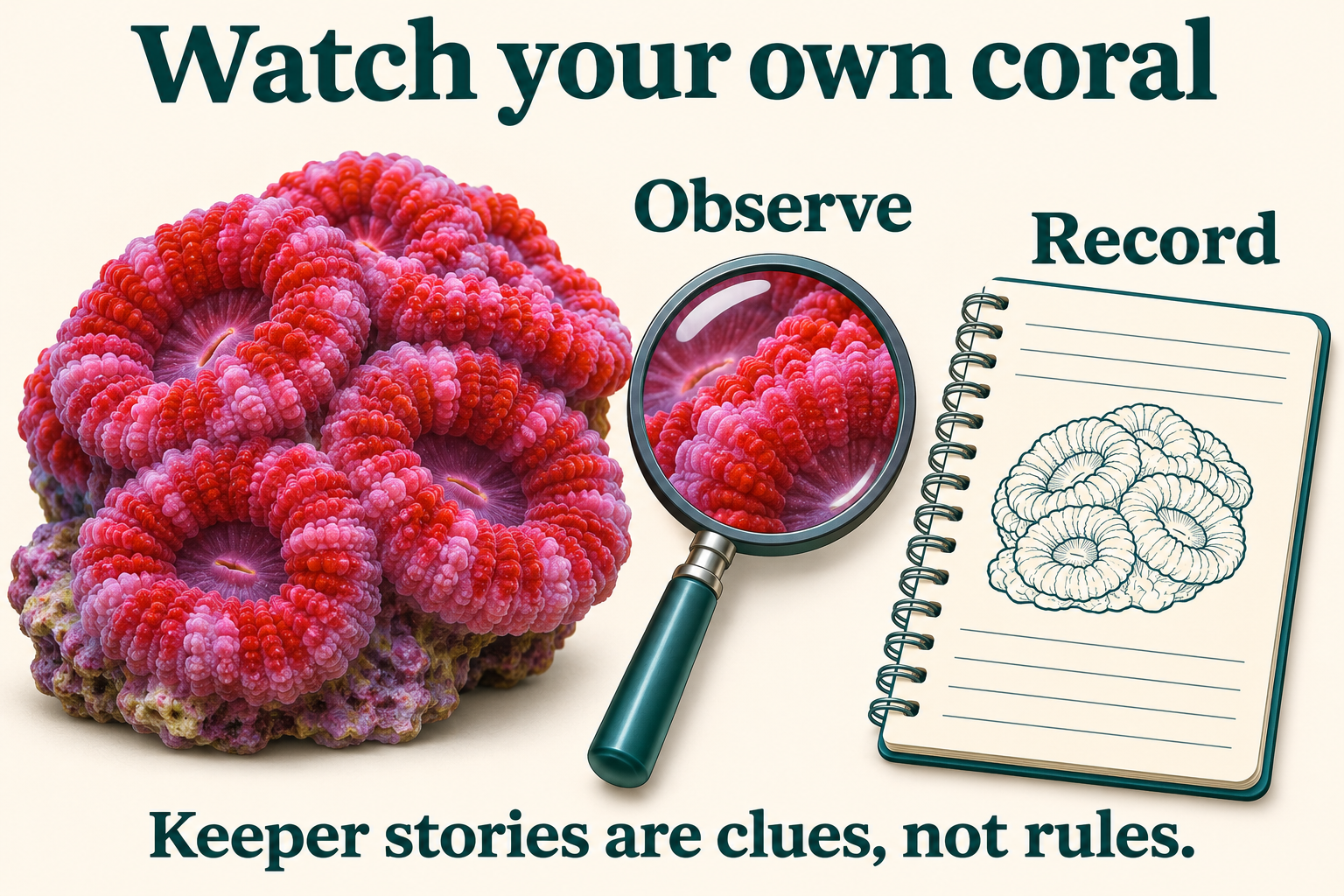
Keeper reports are clues, not promises. Keep a little notebook of what you change. Photograph the same spot over time so you can compare new polyps. Change one thing at a time and give your coral a chance to respond.
Sources: [Reef2Reef, mannyhernz, February 1, 2016, Acan Info?](https://www.reef2reef.com/threads/acan-info.233164/post-2716058) · [Reef2Reef, Shep, February 1, 2016](https://www.reef2reef.com/threads/acan-info.233164/post-2716080) · [Reef2Reef, TheGrimmReefer, February 2, 2016](https://www.reef2reef.com/threads/acan-info.233164/post-2716349) · [Reef2Reef, OlderManSea, August 14, 2019, Acan Micromussa care](https://www.reef2reef.com/threads/acan-micromussa-care.639695/post-6385941)
Field Notes
Related species
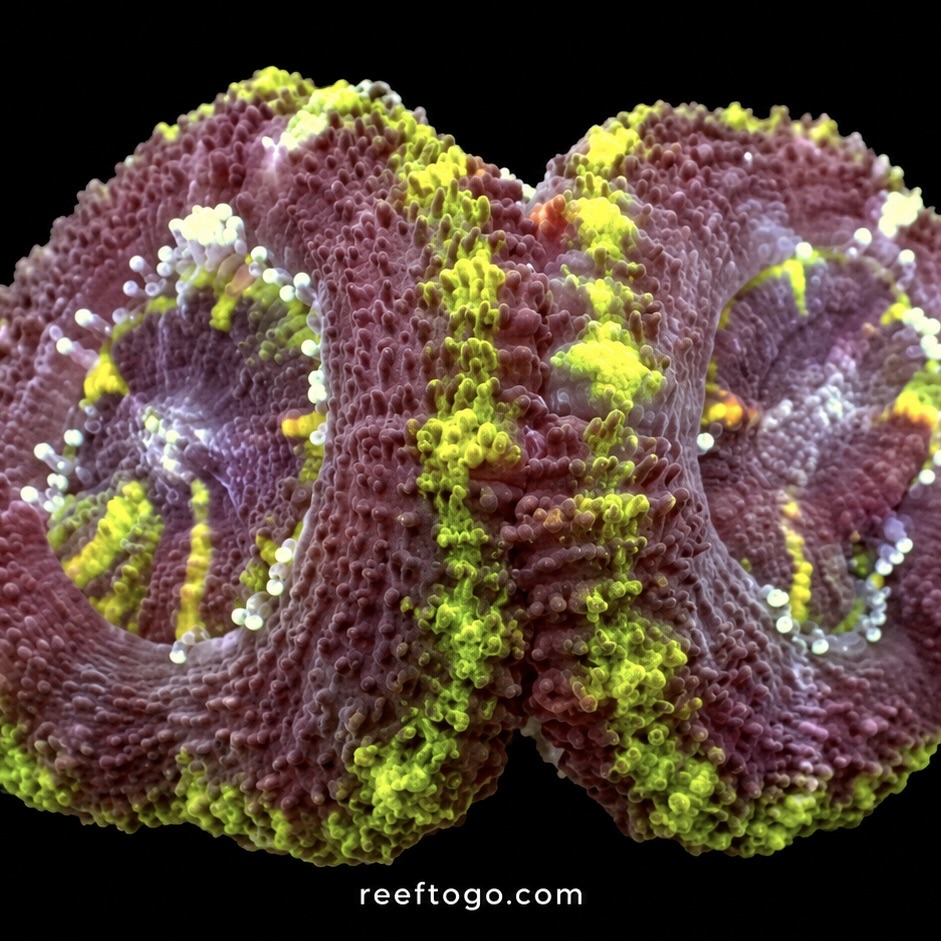
Green acan lord
Micromussa lordhowensis
Same genus
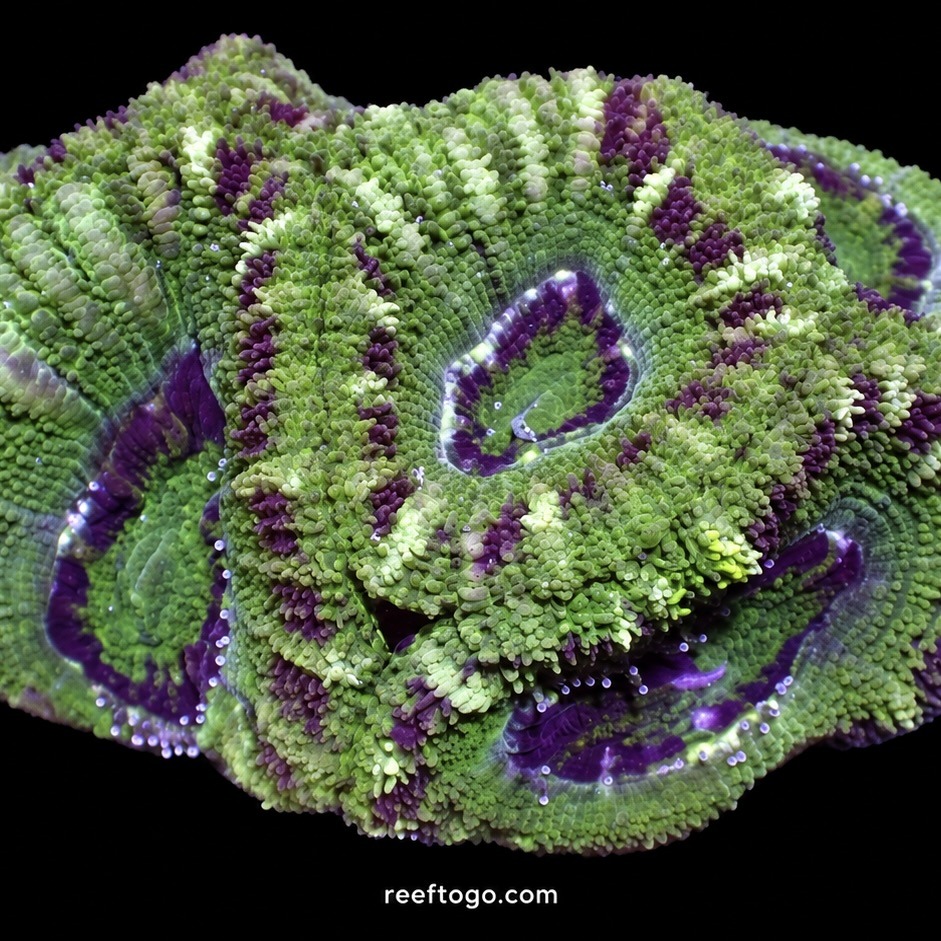
Green tiger acan lord
Micromussa lordhowensis
Same genus
Darth Maul acan
Micromussa lordhowensis
Same genus

Red tiger Asian acan
Micromussa lordhowensis
Same genus
Bulls eye acan lord
Micromussa lordhowensis
Same genus

Gold Coast acans
Micromussa lordhowensis
Same genus
Lordhowensis Acan
Micromussa lordhowensis
Same genus

Pot of Gold Acanthophyllia
Acanthophyllia sp.
Similar care · LPS