Green tiger acan lord
Micromussa lordhowensis
Care facts
- Care
- Intermediate
- Light
- Medium
- Flow
- Moderate
- Place
- Bottom
- Space
- Moderate
- Growth Rate
- Moderate
Gallery
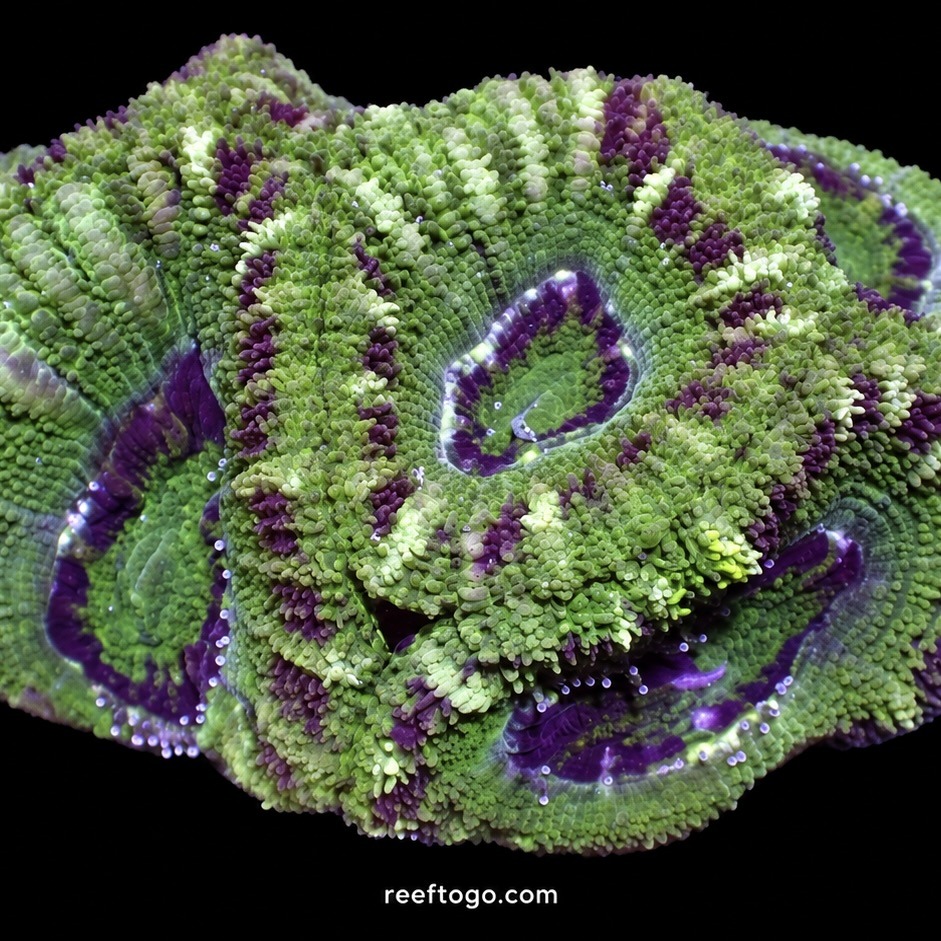
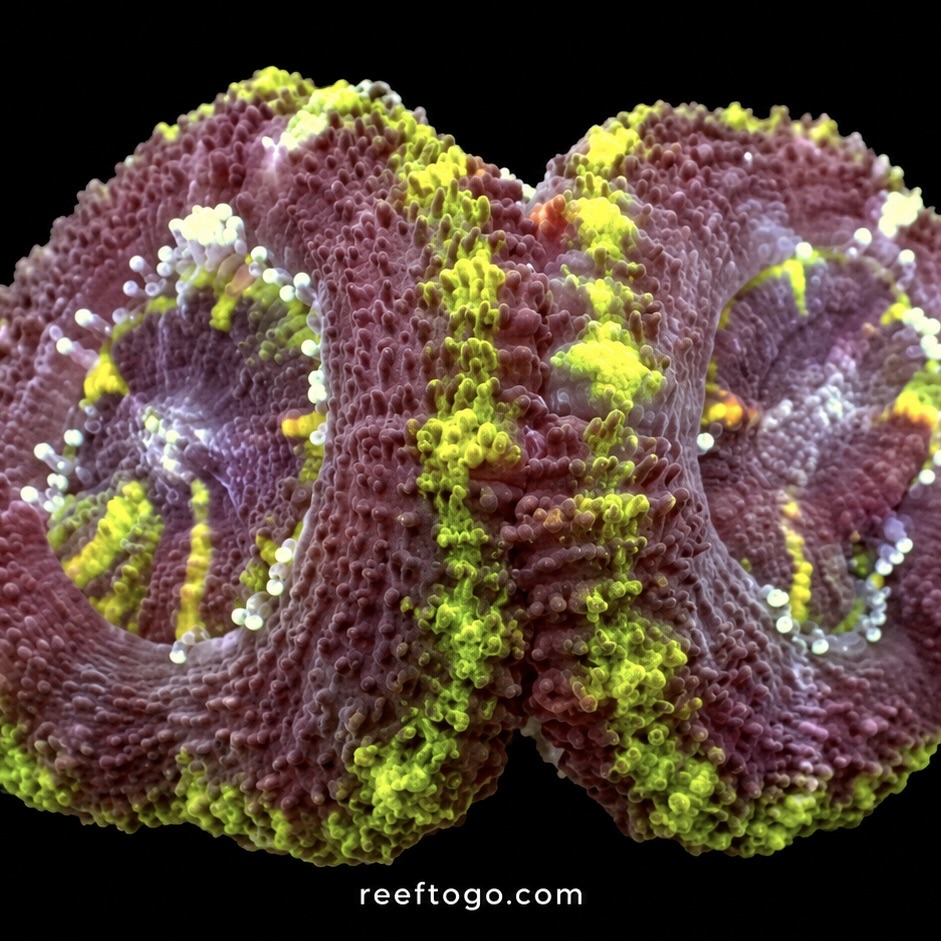
Look into the purple rings of a Green Tiger Acan Lord. Each one frames a mouth! The lime green bumps around it are living tissue, and after lights-out, little tentacles can turn that cushion into a dinner trap.

History
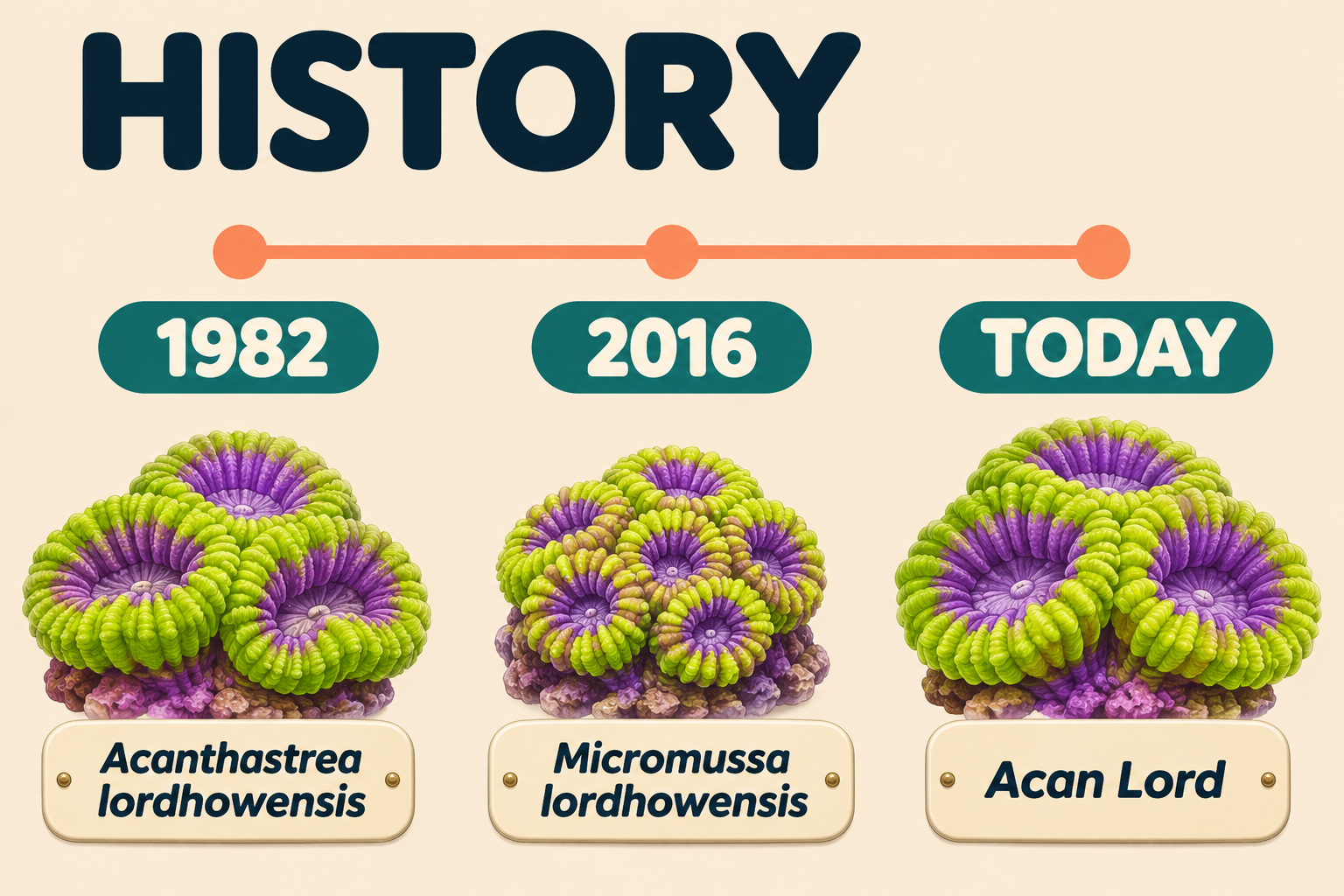
1. Named for an island. The specimen that anchors this species name came from Lord Howe Island. Scientists described it in 1982 as Acanthastrea lordhowensis. DNA and skeleton clues moved it to Micromussa in 2016.
2. Where the tiger comes in. Reefers kept the old nickname, acan lord. Green Tiger is Reef To Go’s trade name for the lime green stock with purple tiger mottling and ringed mouths.
In the wild
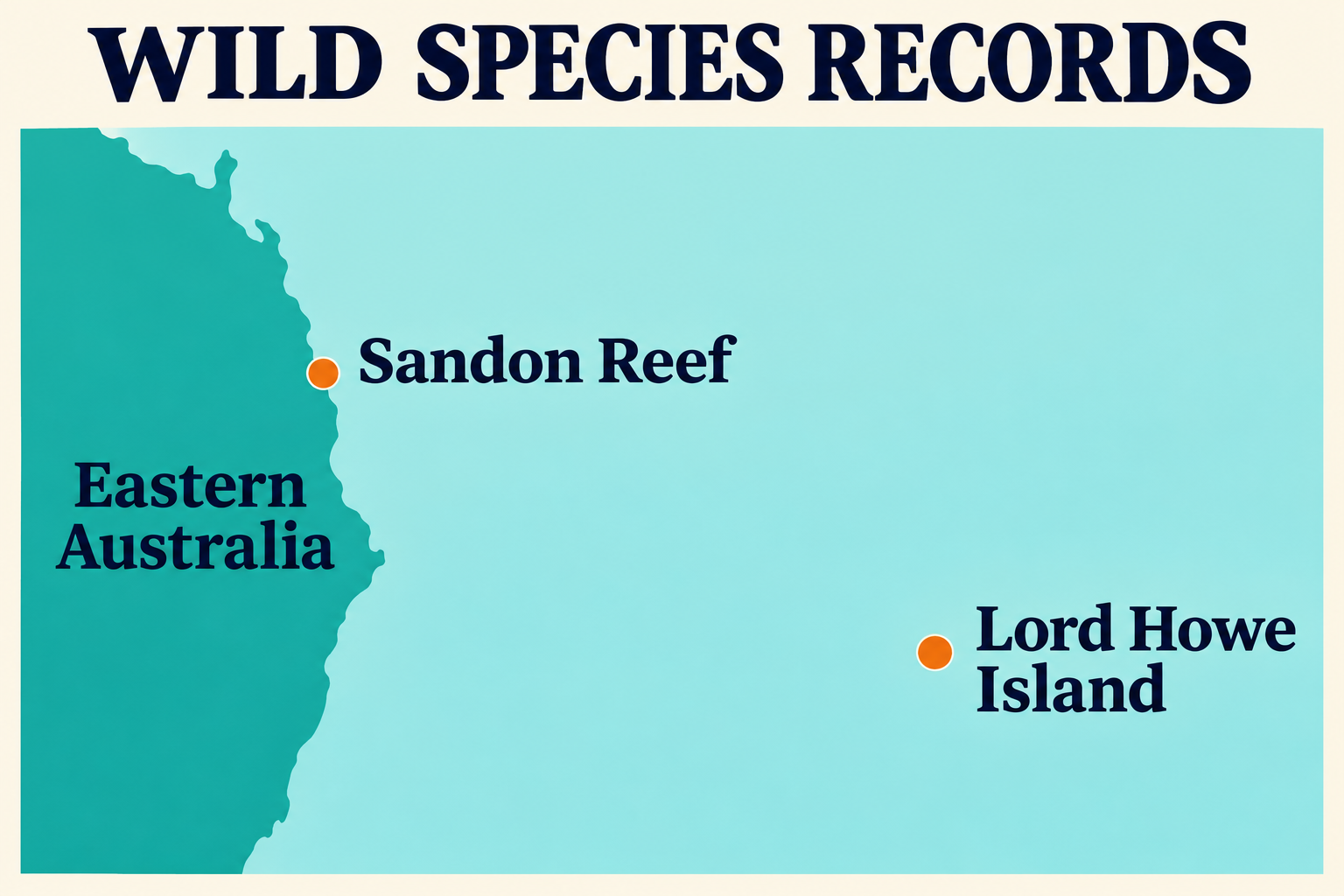
3. Two stops in the Tasman Sea. Wild colonies live off eastern Australia and at Lord Howe Island. Specimens came from just 0.5 m down at Sandon Reef and from 14 m down off Lord Howe Island.
4. Daylight and moving water. This species lives on shallow reefs, including sites where cloudy water softens the light. Tiny algae inside its tissue use daylight, while waves and currents bring food past its mouths.
Light, flow and water
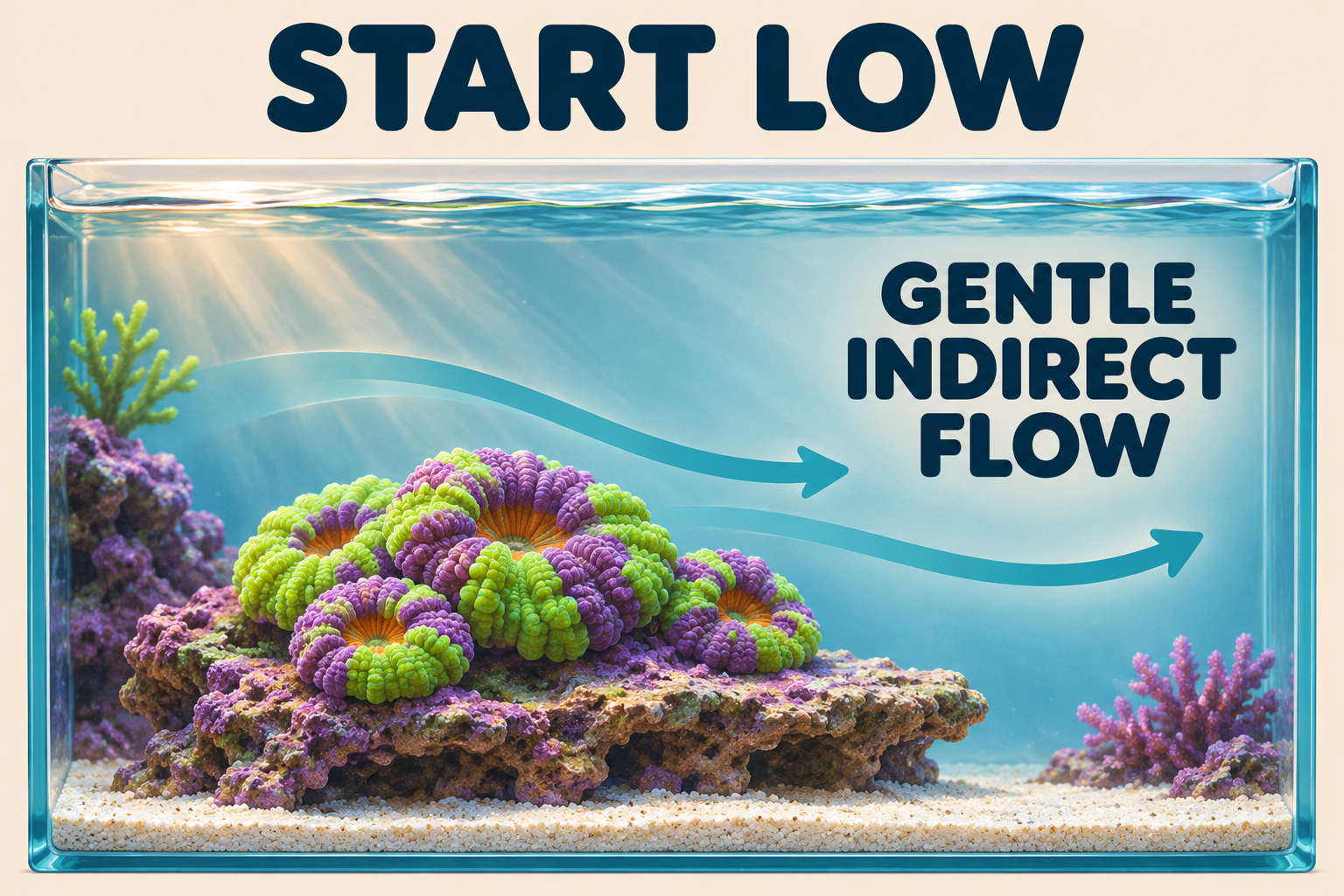
5. Give it a low perch. Set the frag on stable lower rockwork. Begin on the dimmer side and raise the light a little at a time after it opens regularly. Test alkalinity, calcium and salinity and keep them steady.
6. Sweep past the folds. Aim for moderate, indirect flow. Water should carry grit away without pinning the flesh. If debris keeps collecting, turn the pump a little and watch what happens.
Space to puff up
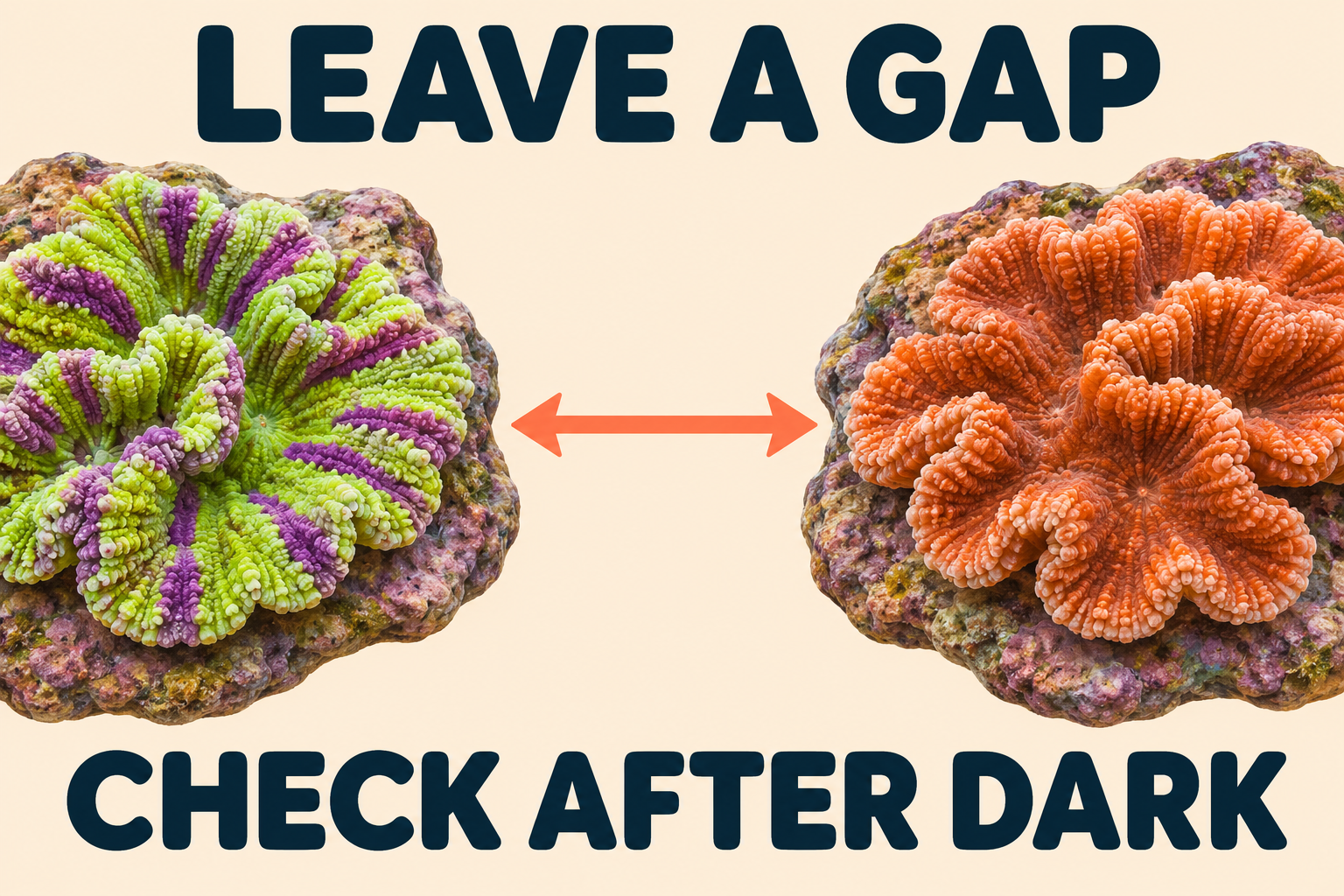
7. Measure from the flesh. Start with about two inches between fully open neighbors. Look again after dark. Give the colony more room wherever its stinging tentacles can touch.
8. Lift from below. Hold the frag by its plug or bare base. Keep tools away from its fleshy rim. Leave open rock around the edge for new little mouths.
Snack time
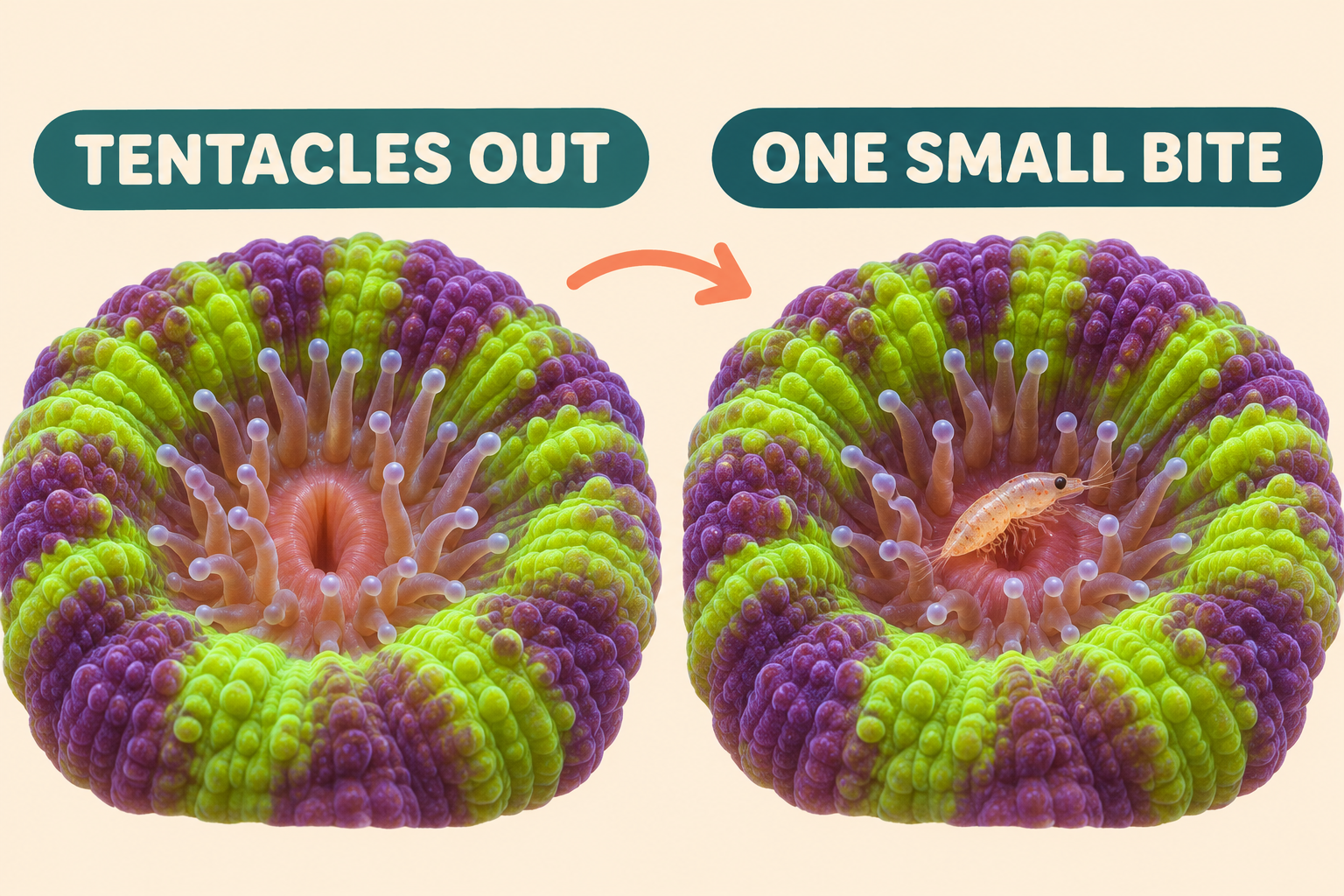
9. The dinner signal. Watch for fine feeding tentacles around the mouths. Offer a tiny piece of thawed mysis or a small coral pellet. Let the polyp pull the bite in on its own.
10. Keep the bites occasional. Try a small feed once the frag has settled and opens well. Clear away what it drops. Check for new mouths around the rim as the colony grows.
Field notes — what keepers report
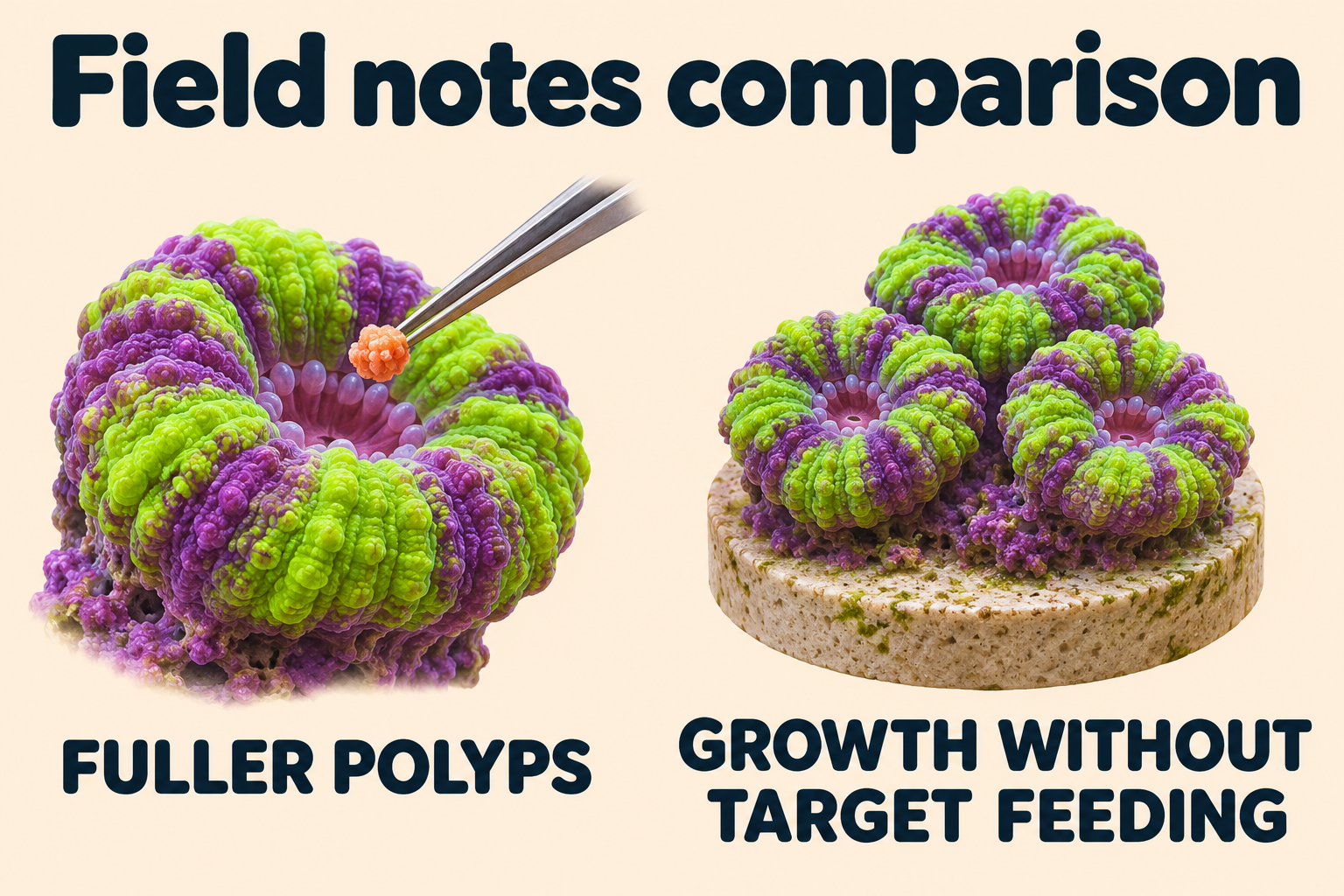
11. A plumper cushion. One keeper who fed acans directly once or twice a week saw fuller tissue. Their colonies did not grow any faster.
12. New heads without spot feeding. Another keeper grew frags into colonies in about a year without feeding the mouths one by one. Take a photo each month to track new heads in your own tank.
Pick a low spot, watch the stripes puff up and check the gap after dark. Once you spot a tiny new mouth at the edge, you’ll know exactly where to look for the next one.
Photo: Tin Huynh / ReefToGo photo, Green tiger acan lord
Field Notes
Related species
Green acan lord
Micromussa lordhowensis
Same genus
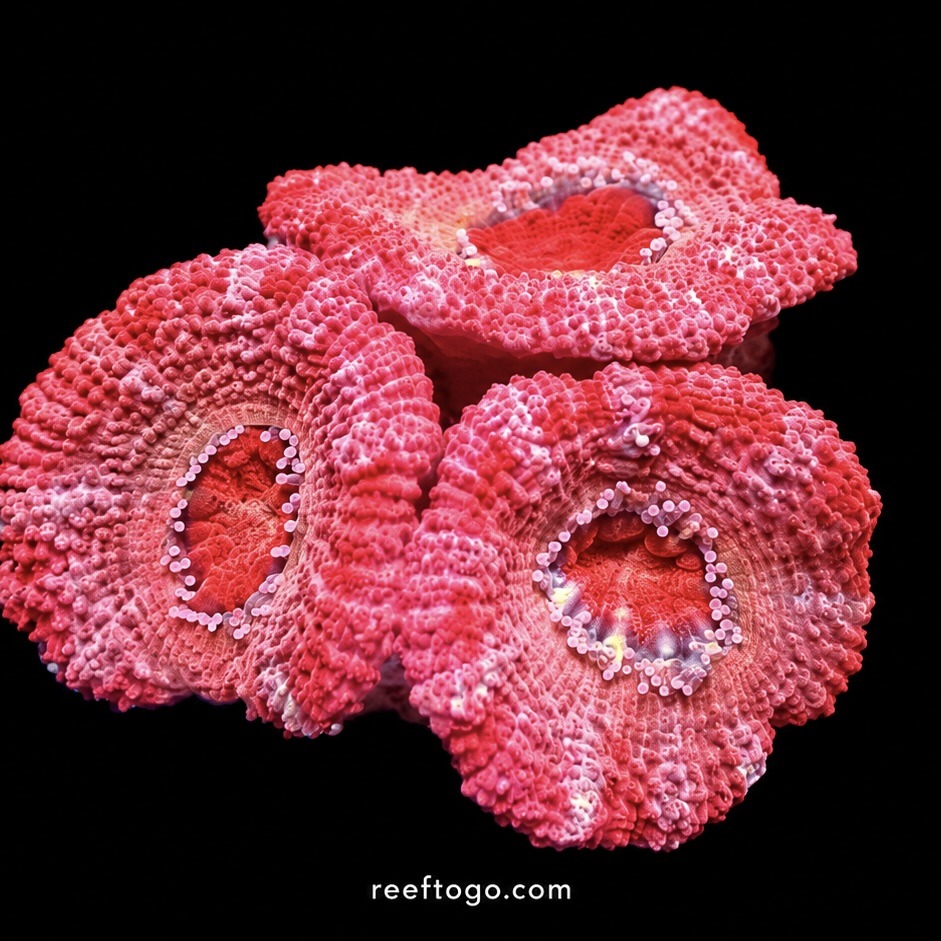
Red candy acan lord
Micromussa lordhowensis
Same genus
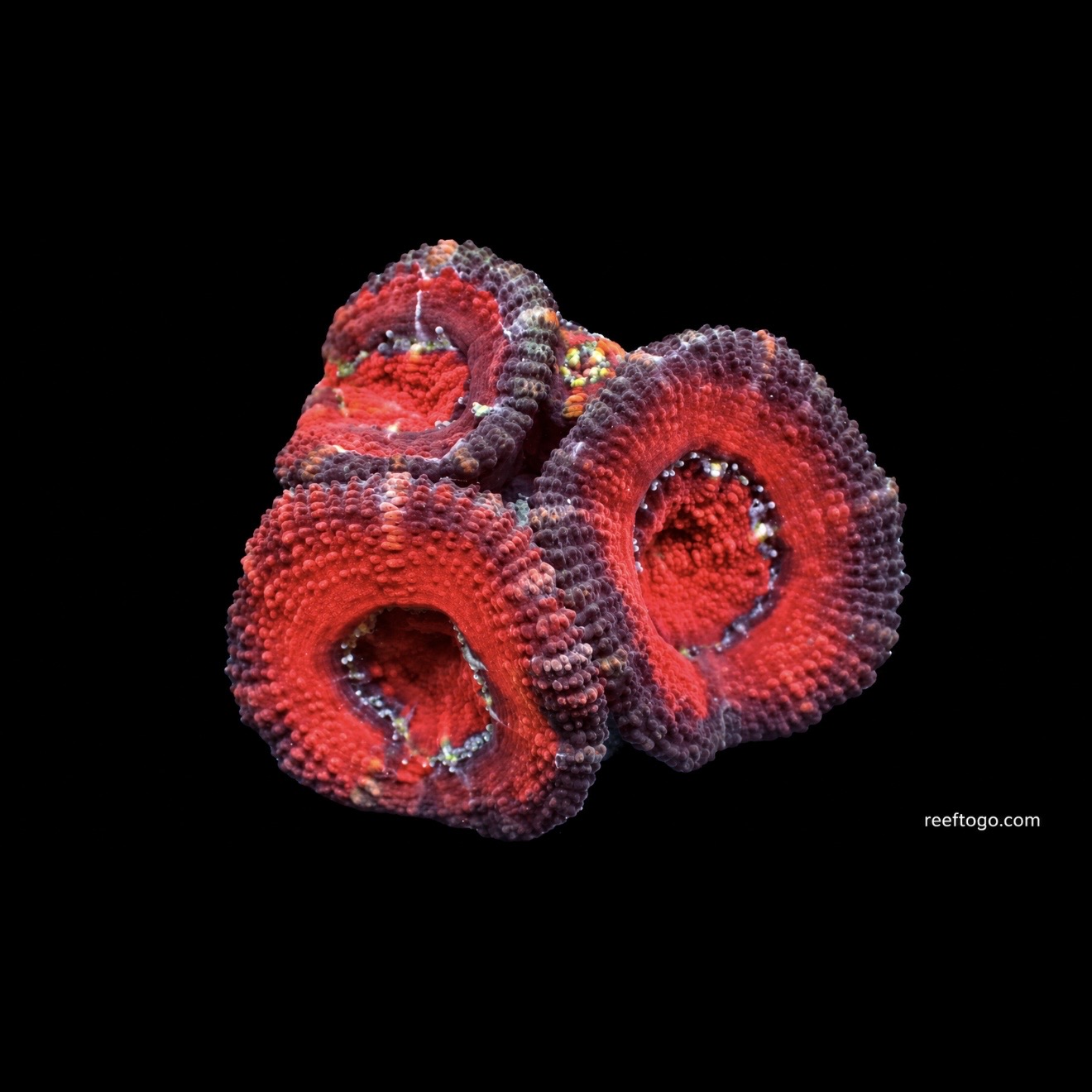
Darth Maul acan
Micromussa lordhowensis
Same genus

Red tiger Asian acan
Micromussa lordhowensis
Same genus
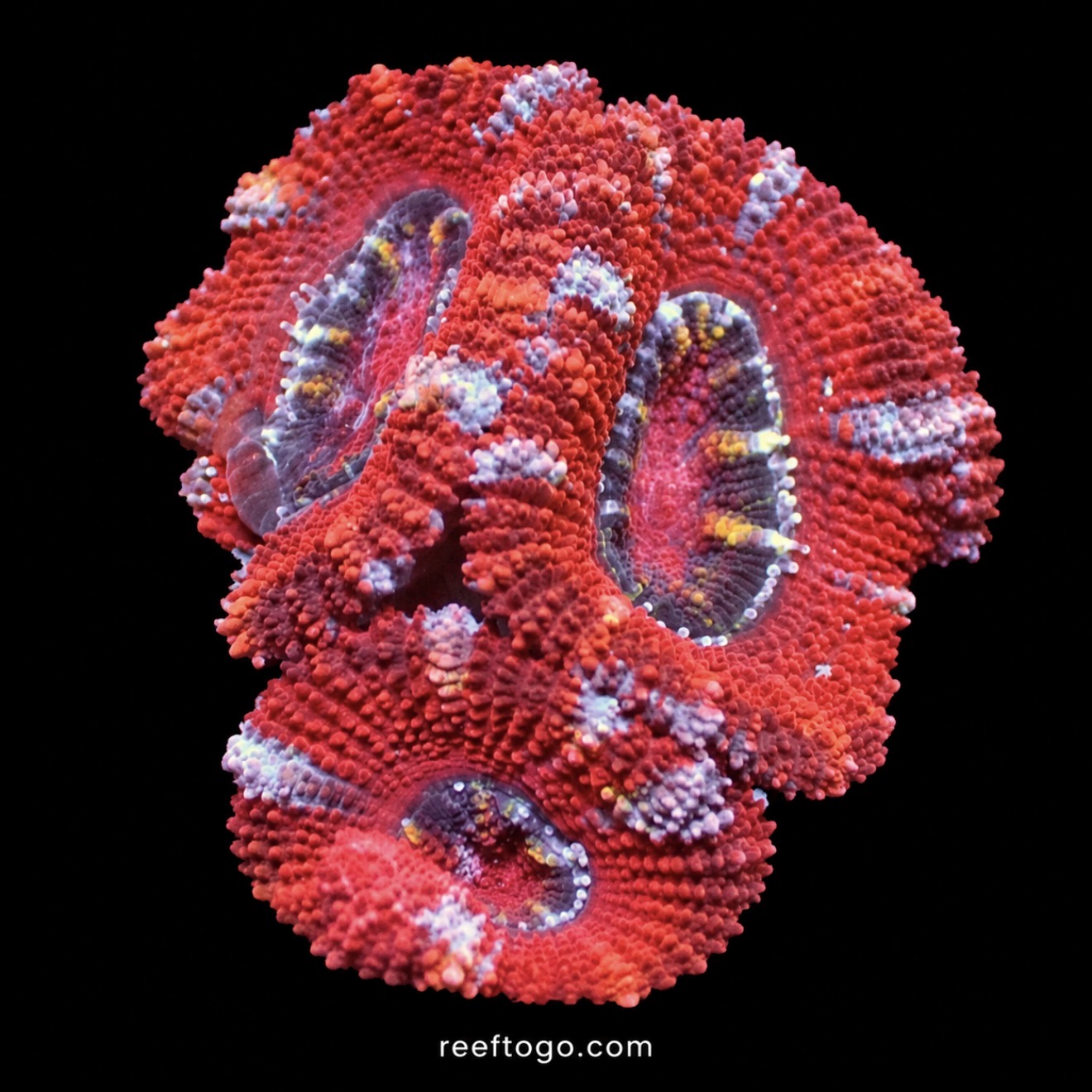
Bulls eye acan lord
Micromussa lordhowensis
Same genus

Gold Coast acans
Micromussa lordhowensis
Same genus
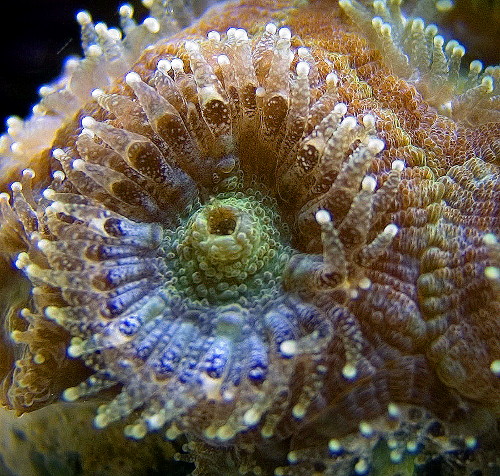
Lordhowensis Acan
Micromussa lordhowensis
Same genus

Pot of Gold Acanthophyllia
Acanthophyllia sp.
Similar care · LPS