Green acan lord
Micromussa lordhowensis
Care facts
- Care
- Intermediate
- Light
- Medium
- Flow
- Moderate
- Place
- Bottom
- Space
- Moderate
- Growth Rate
- Moderate
Gallery
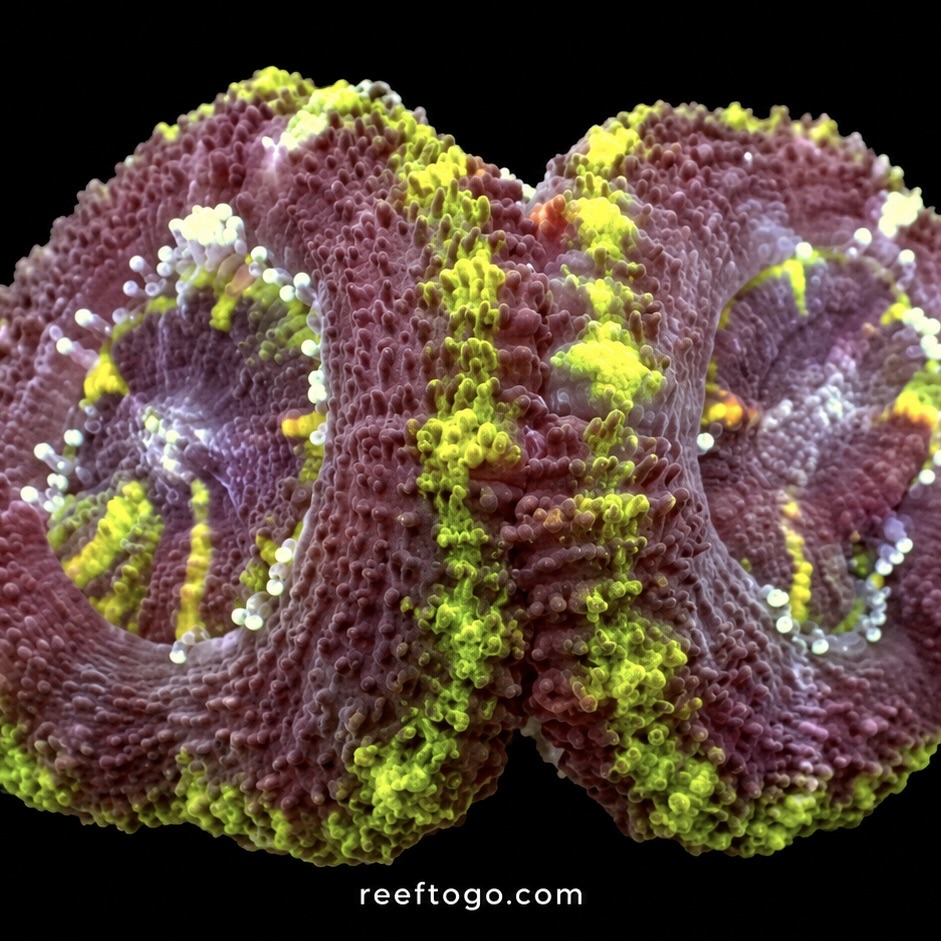
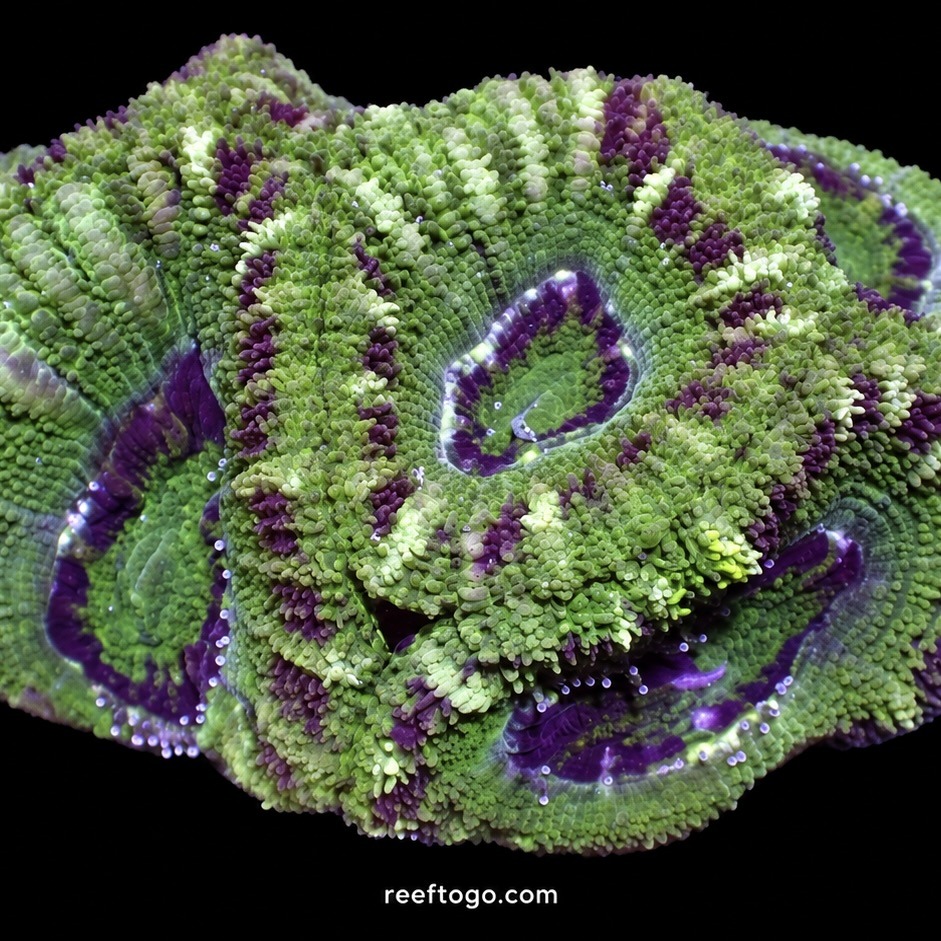
Those puffy mouths can grab dinner. Look closely at Reef To Go’s Green Acan Lord and you’ll see lime streaks on maroon flesh and tiny white tips around the mouths. Give each polyp room to open and you can watch it work.

History
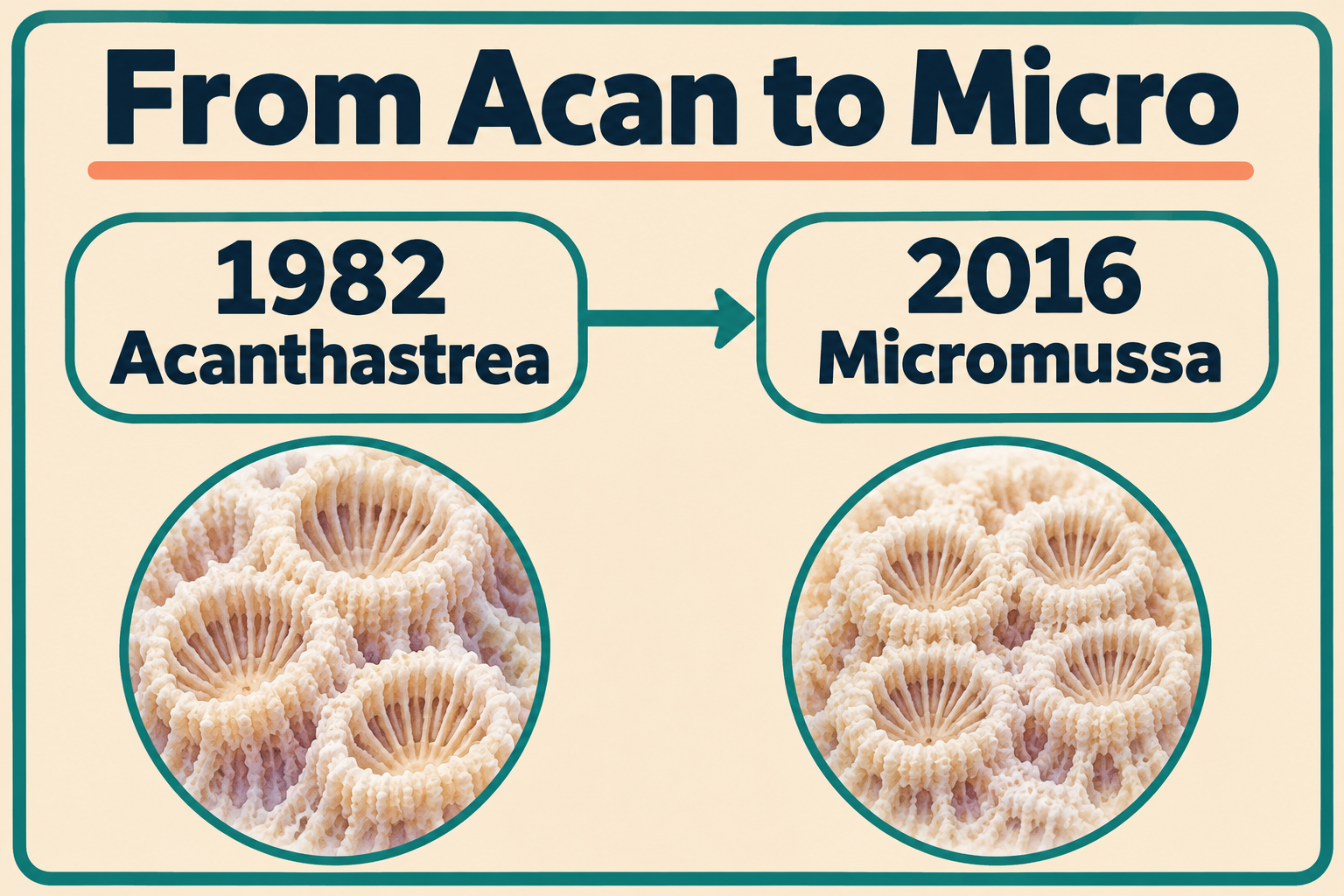
1. An old name that stuck. Scientists described this species in 1982 as Acanthastrea lordhowensis. Its name points to Lord Howe Island. A 2016 study of DNA and skeletons moved it to Micromussa.
2. Meet the Green Acan Lord. Reef To Go sells this maroon-and-lime color form as Green Acan Lord. The old Acan Lord name still does the rounds at frag swaps. Green Tiger is a separate Reef To Go listing.
In the wild
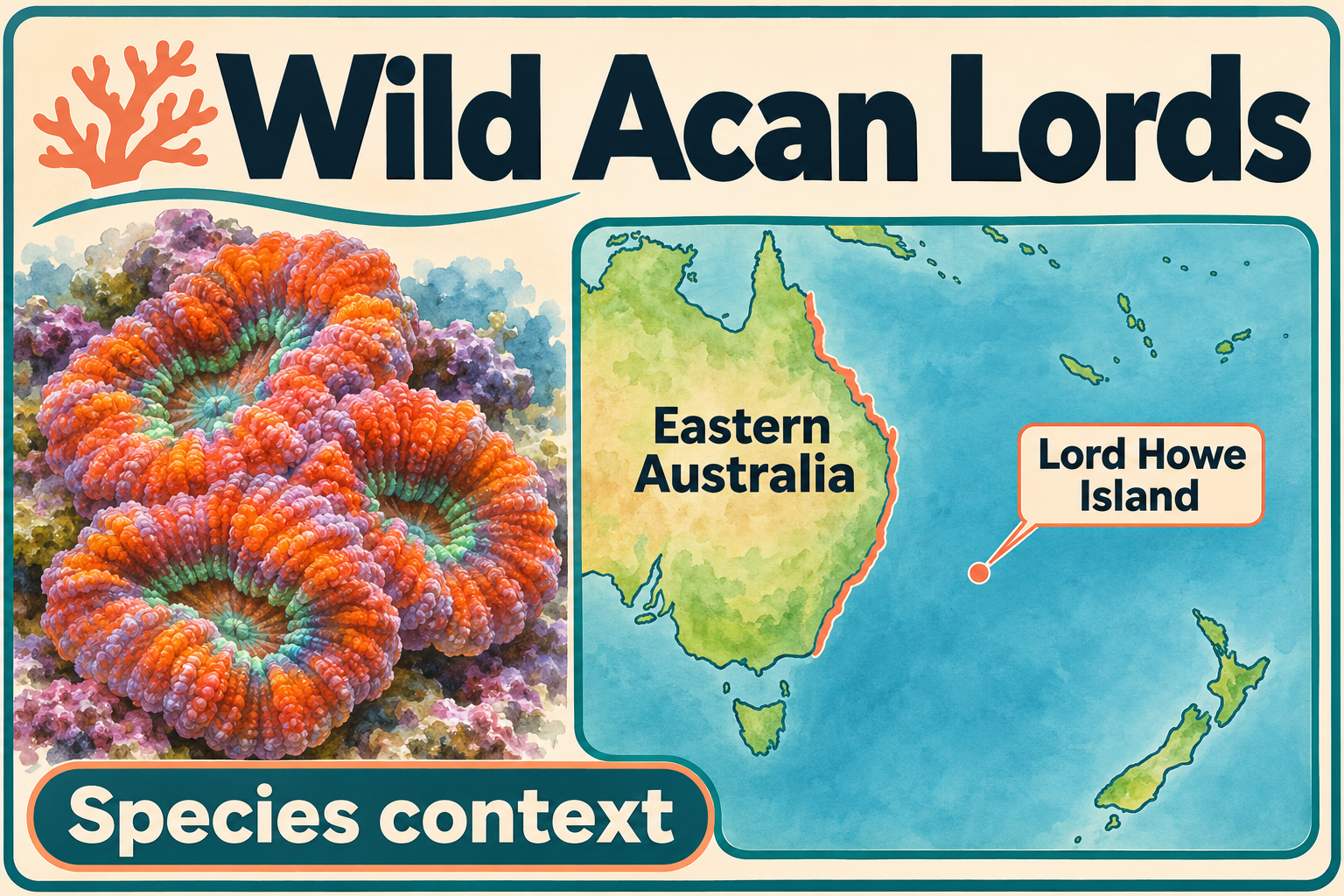
3. From reef pools to deeper rock. Wild Acan Lords live around eastern Australia and Lord Howe Island. Documented colonies include Solitary Islands specimens from about half a meter and a Lord Howe sample at 14 meters.
4. Reefs have bright spots and cloudy spots. Some wild colonies live in shallow, cloudy reef water. Depth and suspended particles change the light that reaches the tissue. Rocky reef shapes also change how the current reaches a colony.
Light and flow
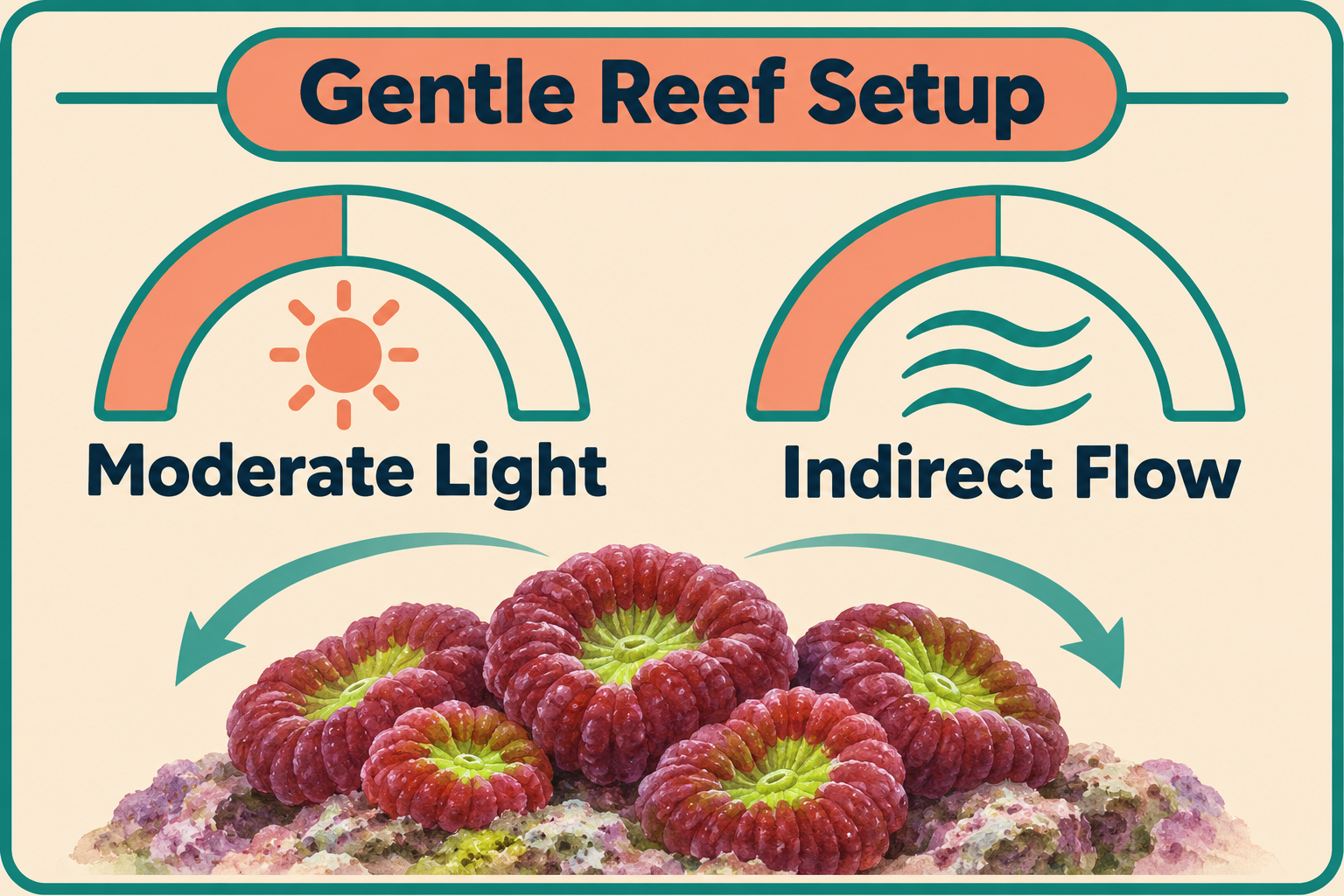
5. Start a little dim. Set a new frag low in the tank and let it settle before raising the light toward moderate. Give it time to open between adjustments.
6. Let the current brush past. Aim for moderate, indirect flow. Give the frag enough movement to keep loose grit from settling on it. If the flesh flaps hard or stays tight on the pump side, redirect the pump.
Placement and growth
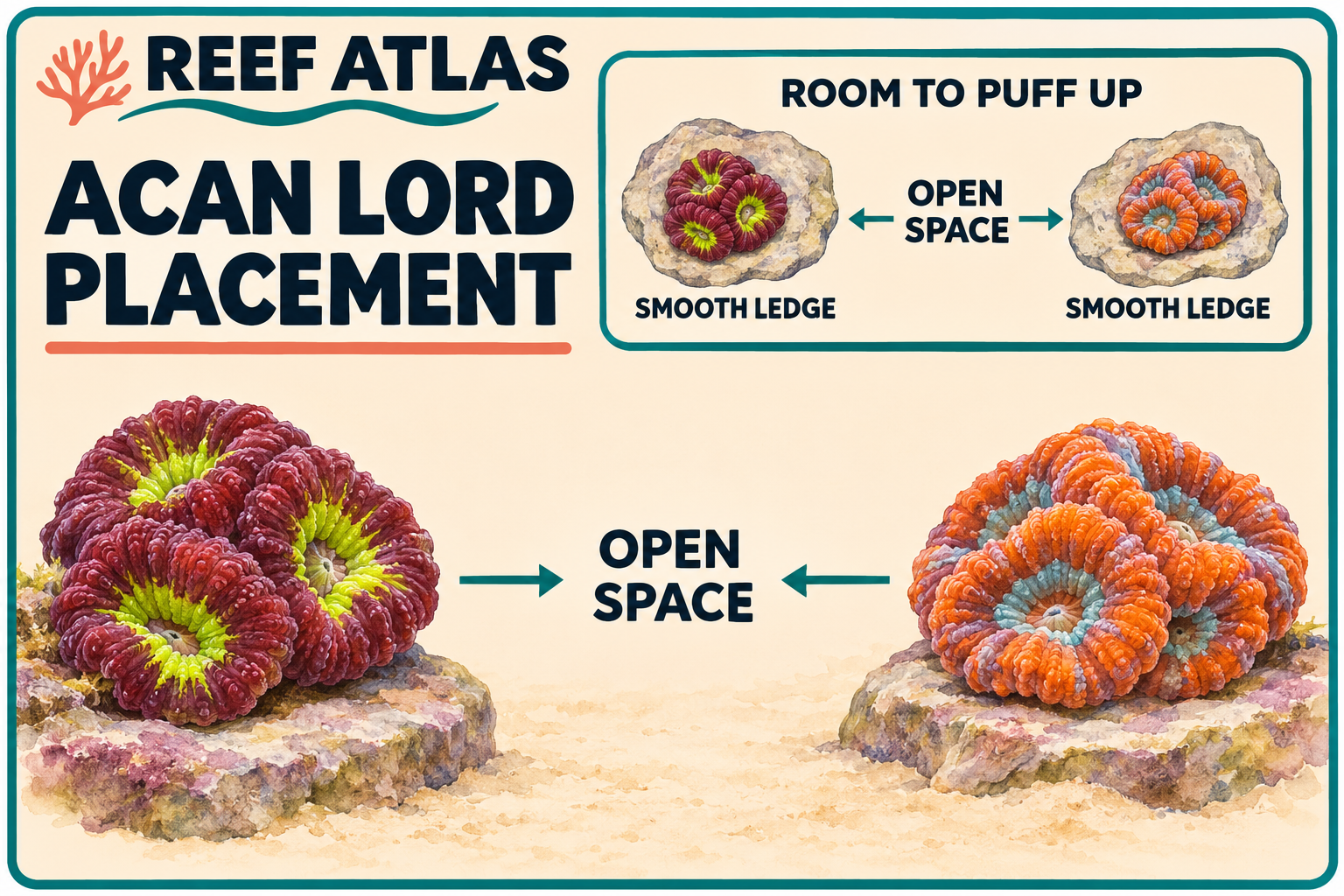
7. Leave a landing pad. Secure the frag on low, stable rock with no sharp edges rubbing its flesh. Leave about two inches of open space as a starting point. Widen the gap beside strong stingers or if tentacles reach across it.
8. Count heads, not puffiness. An open polyp can look much bigger than it did an hour ago. Check the rim for new mouths over time. Take a photo from the same angle once a month.
Feeding and water
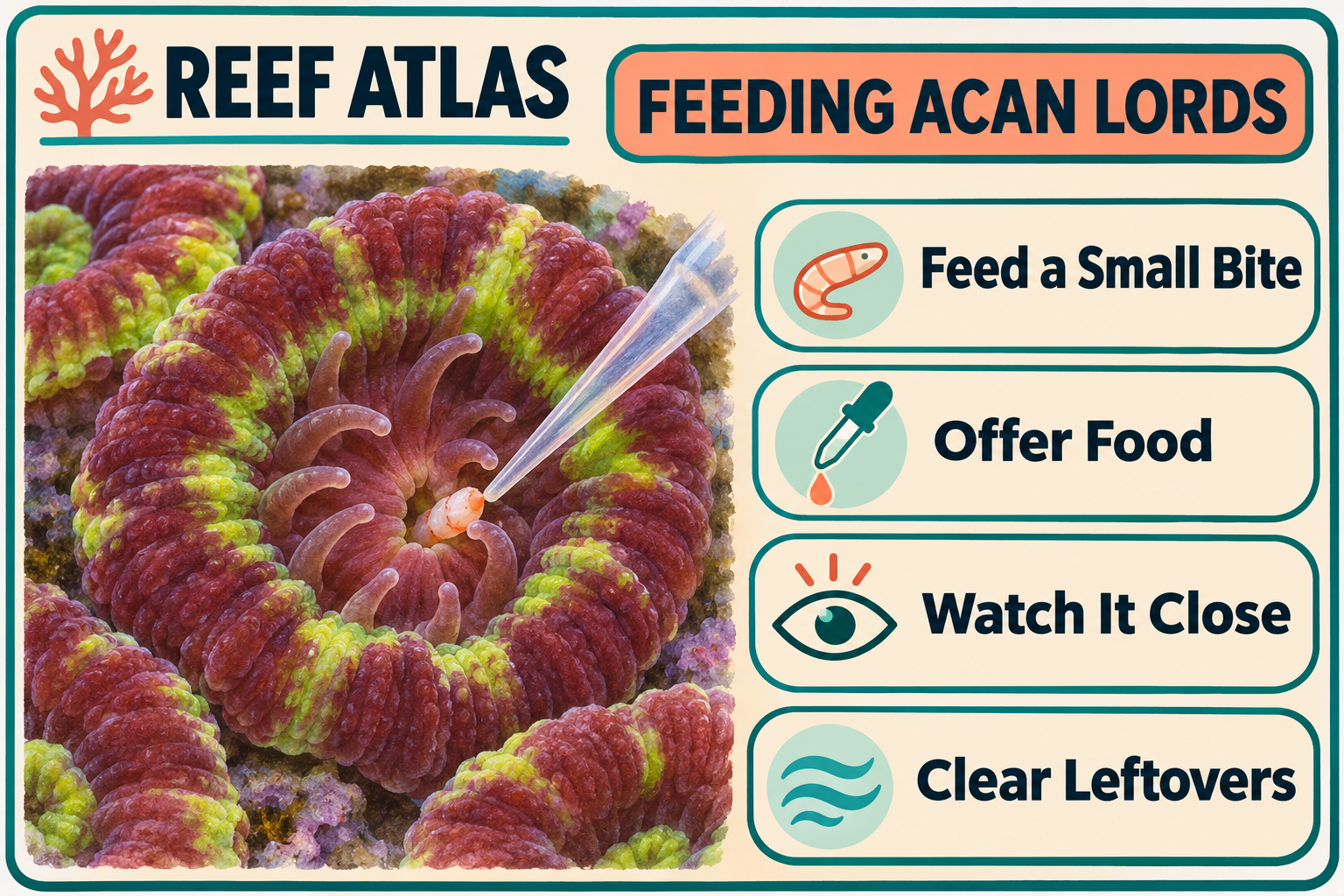
9. Offer a bite when it reaches. Use a pipette to drop a tiny piece of mysis or chopped shrimp when the feeding tentacles are out. Slow the flow briefly if the food blows away, then return the pumps to normal. Remove leftovers.
10. Keep the water steady. Use an established tank and test alkalinity on a regular schedule. Keep salinity, temperature and calcium steady. If tissue pulls back, check for a strong pump jet, a nearby sting and recent changes in the tank.
Field notes — what keepers report
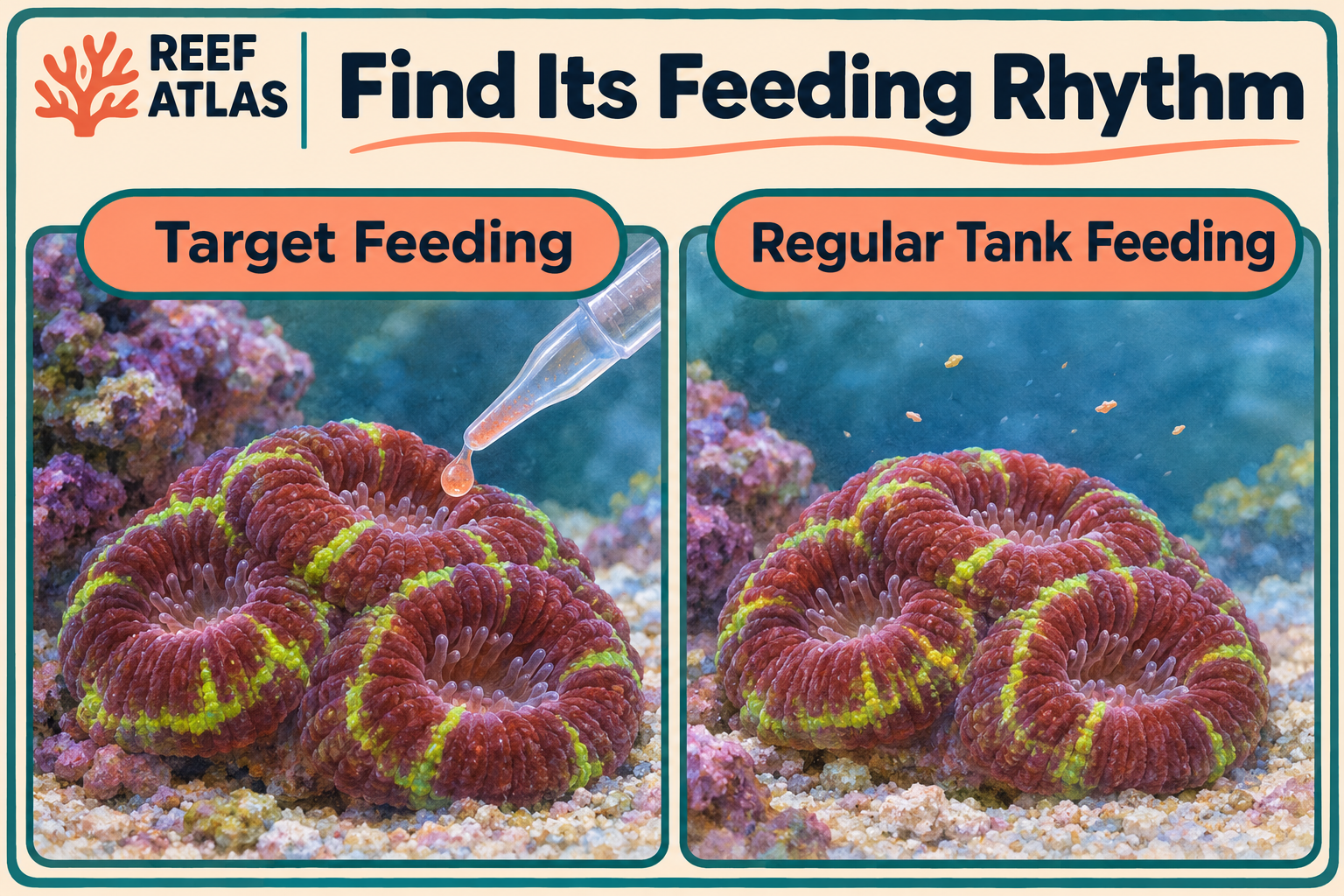
11. A fuller look after feeding. One keeper got fleshier polyps with direct meals once or twice a week. They saw a difference in how the tissue filled out and no clear jump in growth.
12. One tank skipped the pipette. Another keeper grew frags into colonies over about a year with ordinary tank feeding and no direct meals. Start with small portions if you feed, then watch how the coral responds.
Set it low, let the current brush past and give those fat polyps a clear spot to stretch. Next time the tentacles come out, grab a flashlight and watch a bite disappear.
Photo: Tin Huynh / Reef To Go, Green Acan Lord.
Field Notes
Related species
Green tiger acan lord
Micromussa lordhowensis
Same genus
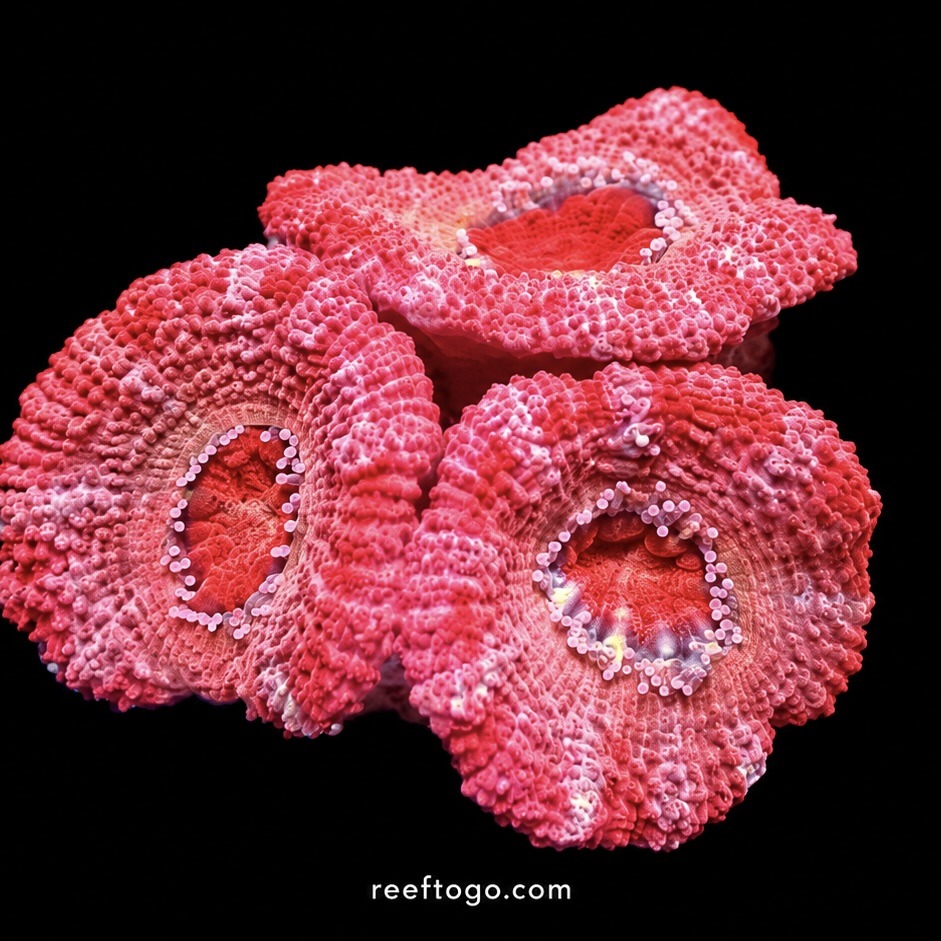
Red candy acan lord
Micromussa lordhowensis
Same genus
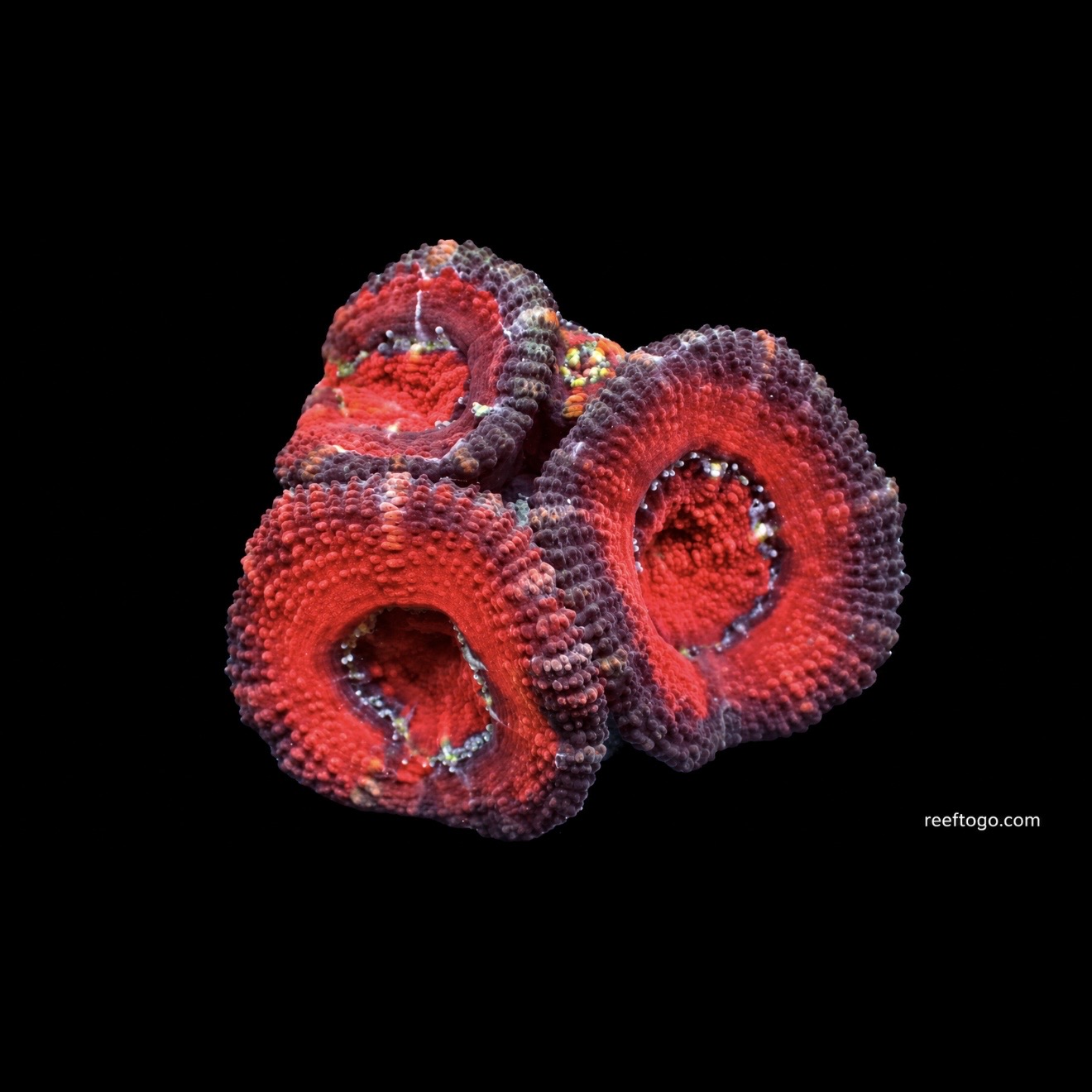
Darth Maul acan
Micromussa lordhowensis
Same genus

Red tiger Asian acan
Micromussa lordhowensis
Same genus
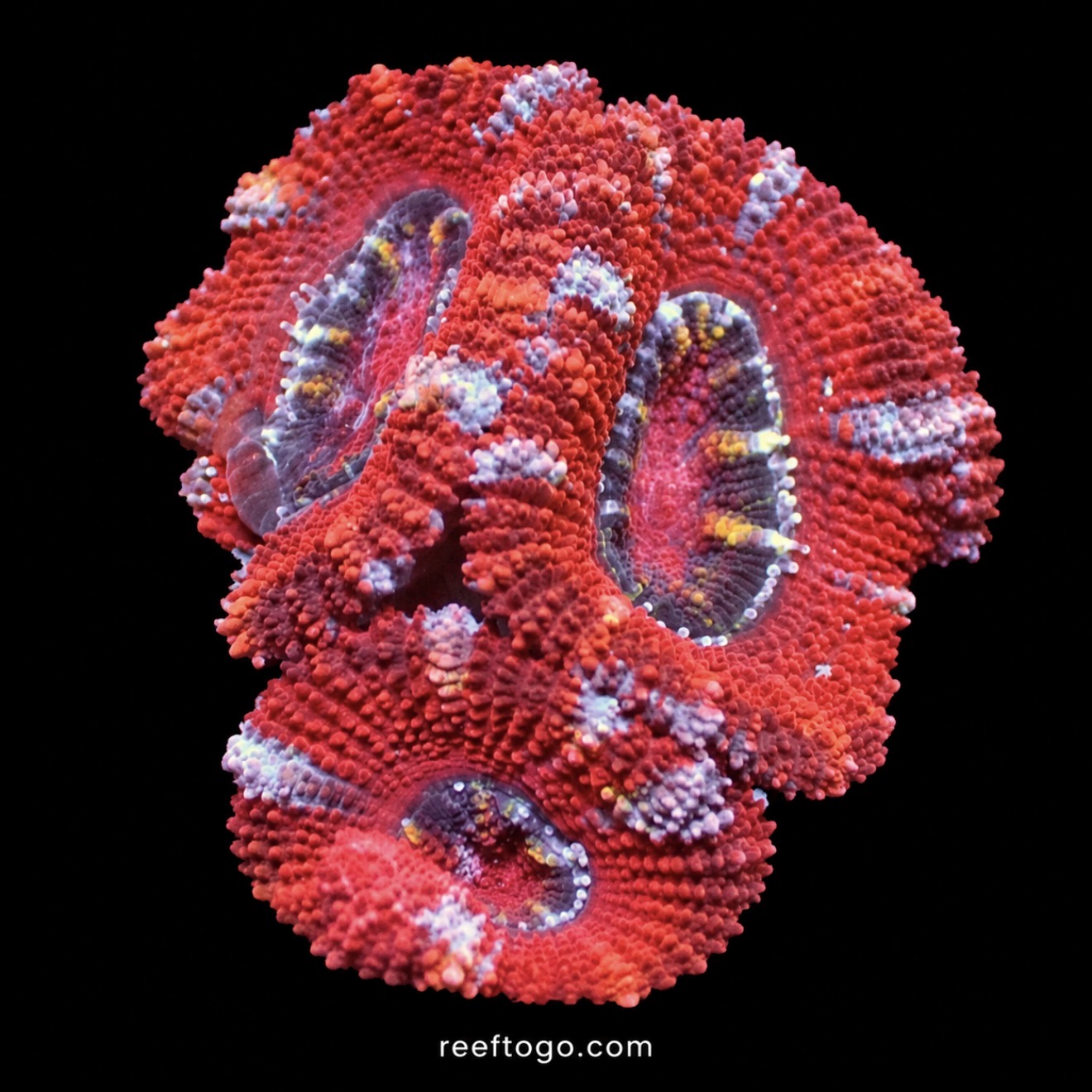
Bulls eye acan lord
Micromussa lordhowensis
Same genus

Gold Coast acans
Micromussa lordhowensis
Same genus
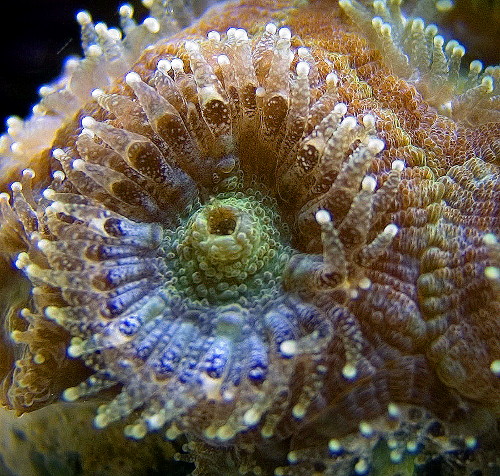
Lordhowensis Acan
Micromussa lordhowensis
Same genus

Pot of Gold Acanthophyllia
Acanthophyllia sp.
Similar care · LPS