Seduction zoas
Zoanthus sp

Palytoxin safety
Some zoanthids and palythoas can contain a potent toxin. Wear sturdy waterproof gloves and eye protection, minimize handling, and keep colonies submerged when possible. Never boil, steam, pressure-wash or scrub colonized rock under running water. Keep other people and pets away during handling. If exposure is suspected, seek urgent medical advice and tell the clinician about possible palytoxin exposure.
Sources: CDC: palytoxin exposure · OATA: avoiding palytoxin poisoning
Gallery
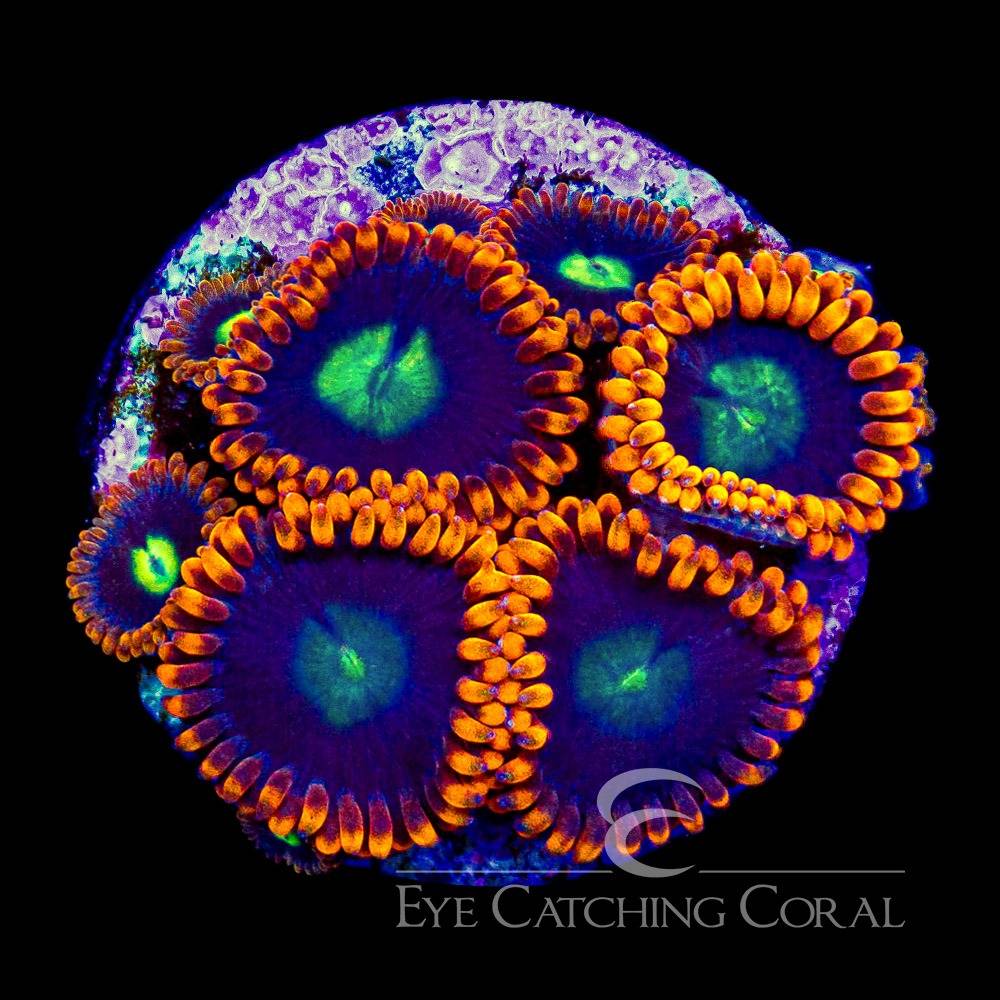
A little colony worth watching. Seduction zoas turn a small rock into a growing patch of polyps. Start gently, watch the edge and keep a simple record as the colony settles.

Keep the name, keep the record
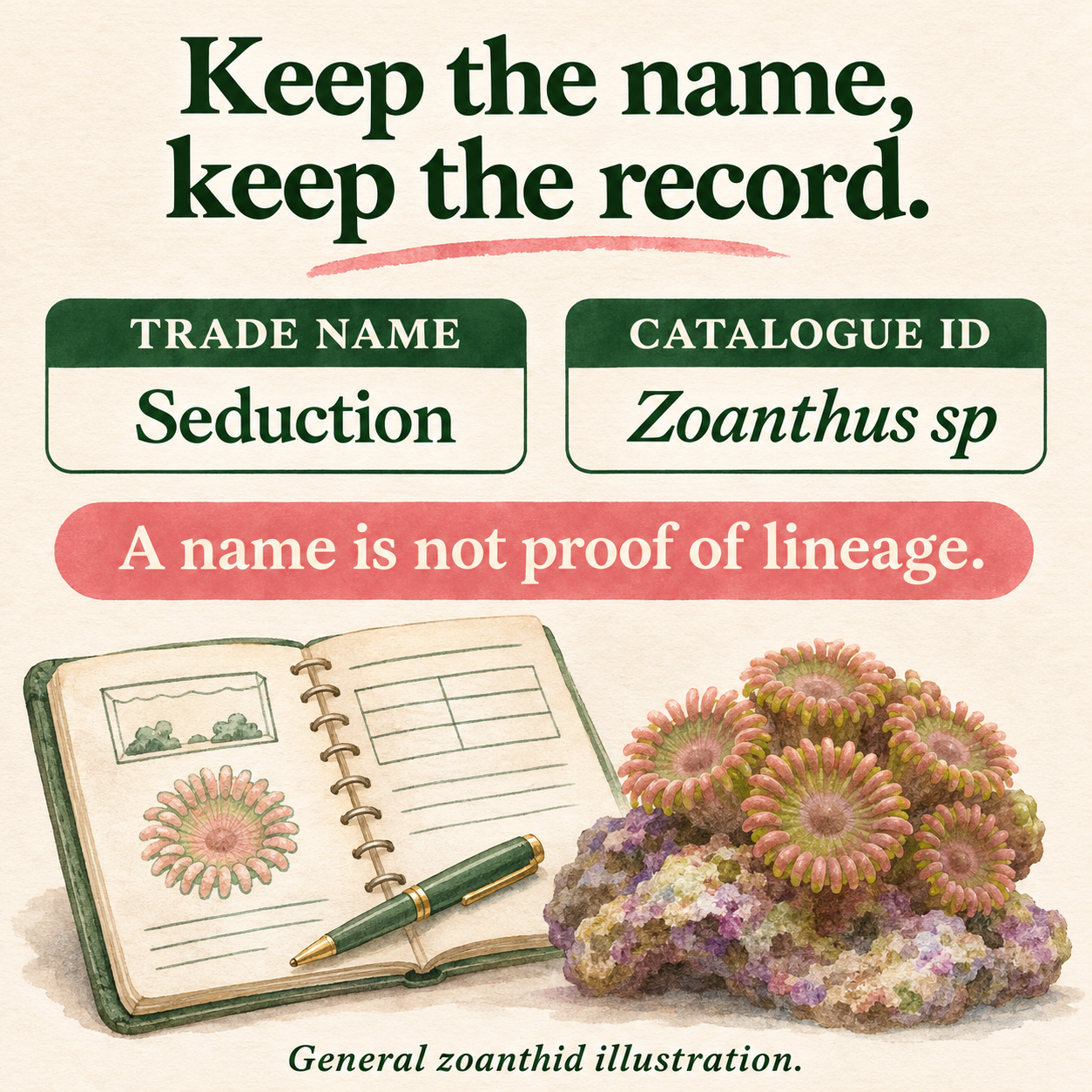
1. A name worth saving. A named zoa can be a small purchase with a big personality. Seduction is a trade name, not a species diagnosis or a guarantee that every frag sold under it shares one lineage. Keep the scientific label Zoanthus sp. with the frag. Keep the seller's name and your purchase record alongside your own photographs.
Blue lighting and orange camera filters can make coral colors look different from normal aquarium viewing. Compare pictures under consistent lighting before deciding that a coral has changed.
Start gently, observe closely
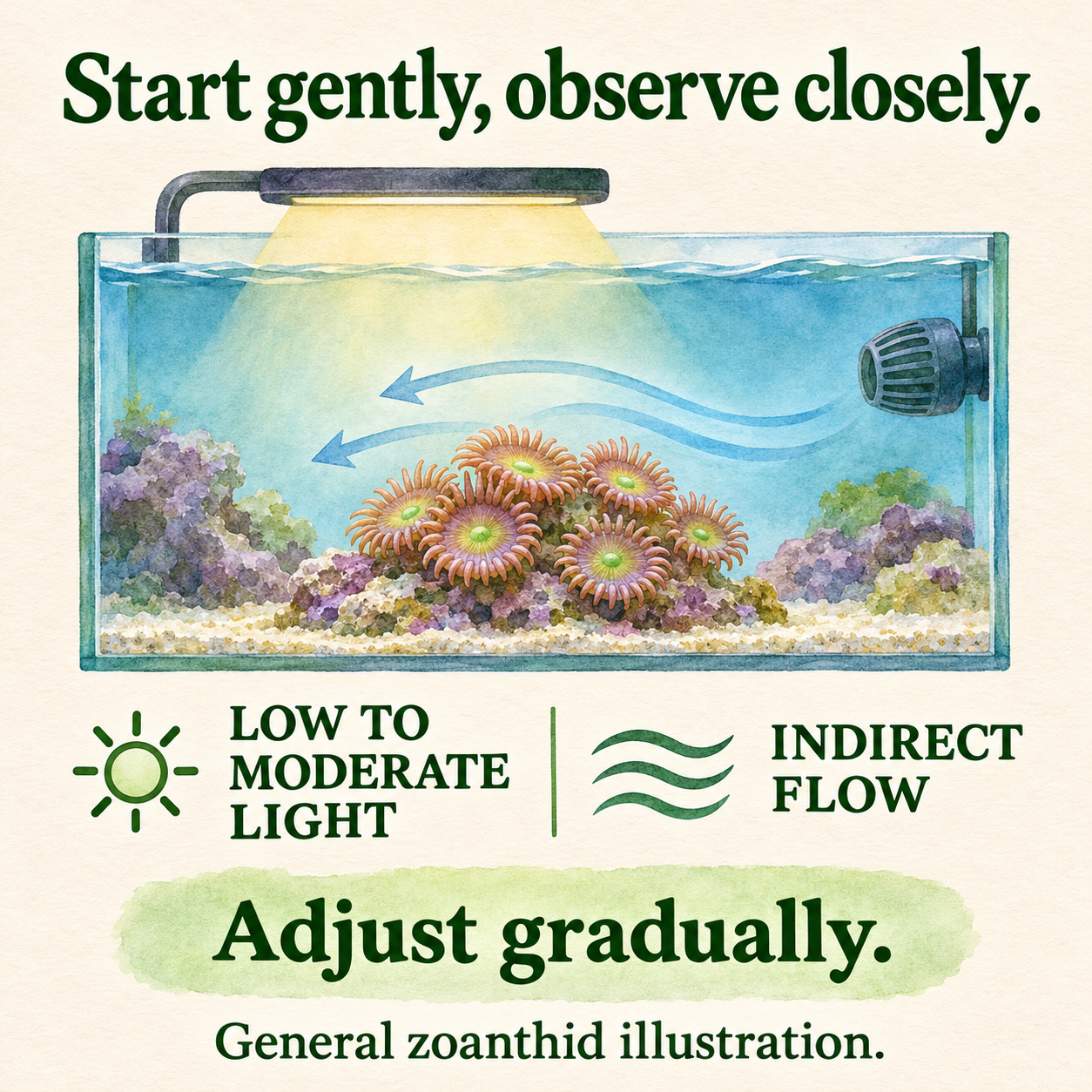
2. A steady start. Give a new frag a steady starting place rather than a daily tour of the tank. Start with low-to-moderate light and indirect low-to-moderate flow, then change placement gradually. Mid rockwork is a location, not a light measurement. A shallow tank and a deep tank can deliver very different exposure at the same height.
Keep water moving between the polyps so waste does not collect. Aim for moving water without a concentrated jet that keeps the colony shut. If it stays closed, check conditions and recent changes before assuming it needs more light. Closure alone does not diagnose the cause.
Plan for the growing edge
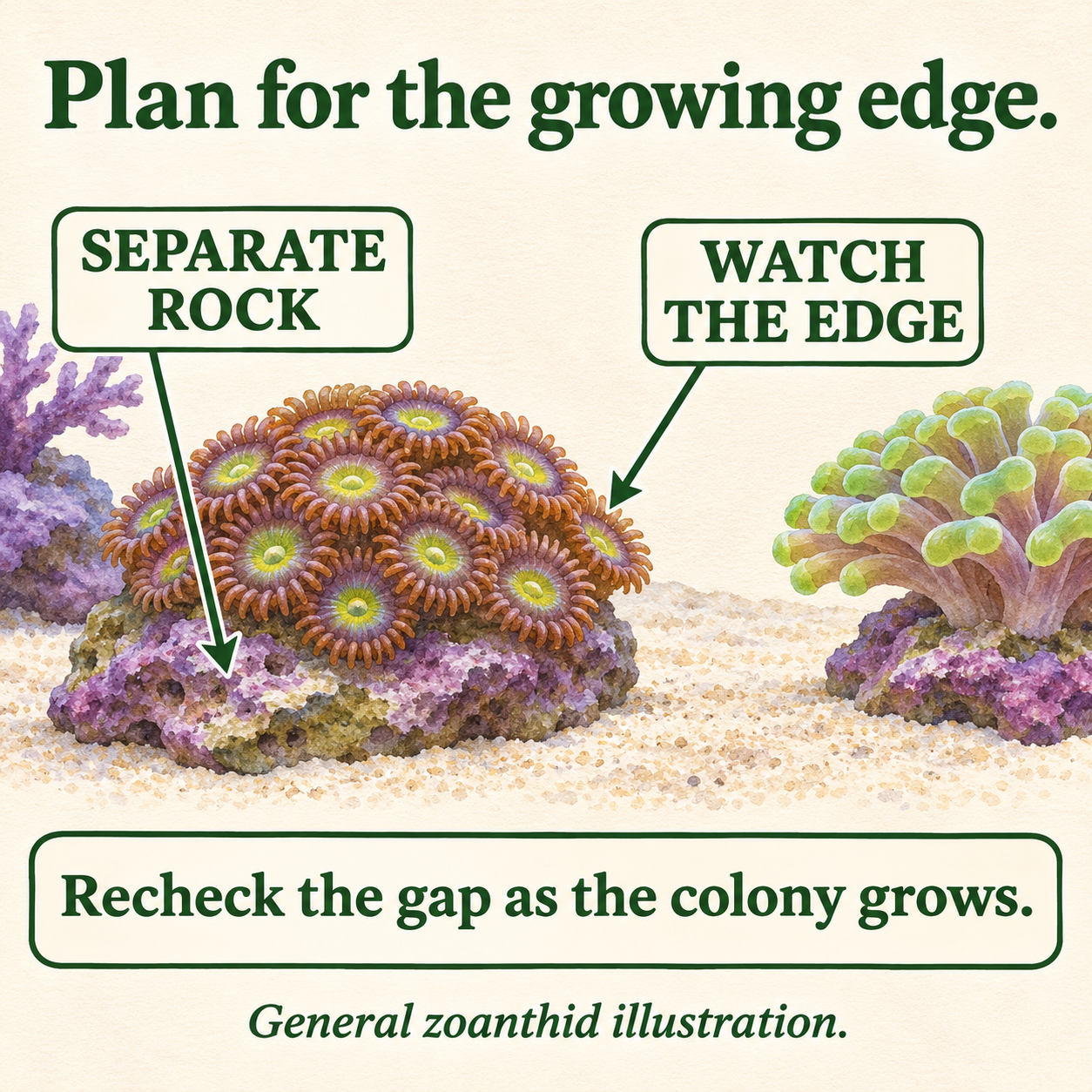
3. Watch the growing edge. Think about where the colony can go, not just where today's plug fits. Seduction is sold as a mat-forming zoanthid. A separate, accessible rock makes the boundary easier to watch and manage. Check that neighboring rockwork has not created an easy bridge. This is a practical containment choice, not a guarantee that growth stops at the sand.
Leave room around the growing colony. A one-time gap is not permanent protection as neighboring colonies expand. Photograph the whole island occasionally, not only the most colorful polyp.
Keep feeding simple
4. Small meals, useful notes. Light supports the photosynthetic partners in zoanthid tissue. Supplemental food can be useful, but heavier feeding is not automatically better. Feeding is optional and supplements the energy supplied through light.
If you offer a suitable fine coral food, start modestly and watch what happens. Food settling untouched is not proof of a meal. Keep feeding notes beside nutrient test results and look for trends. Test before making chemistry corrections. Do not buy a dosing routine just because a product page recommends one.

Handle zoas with care
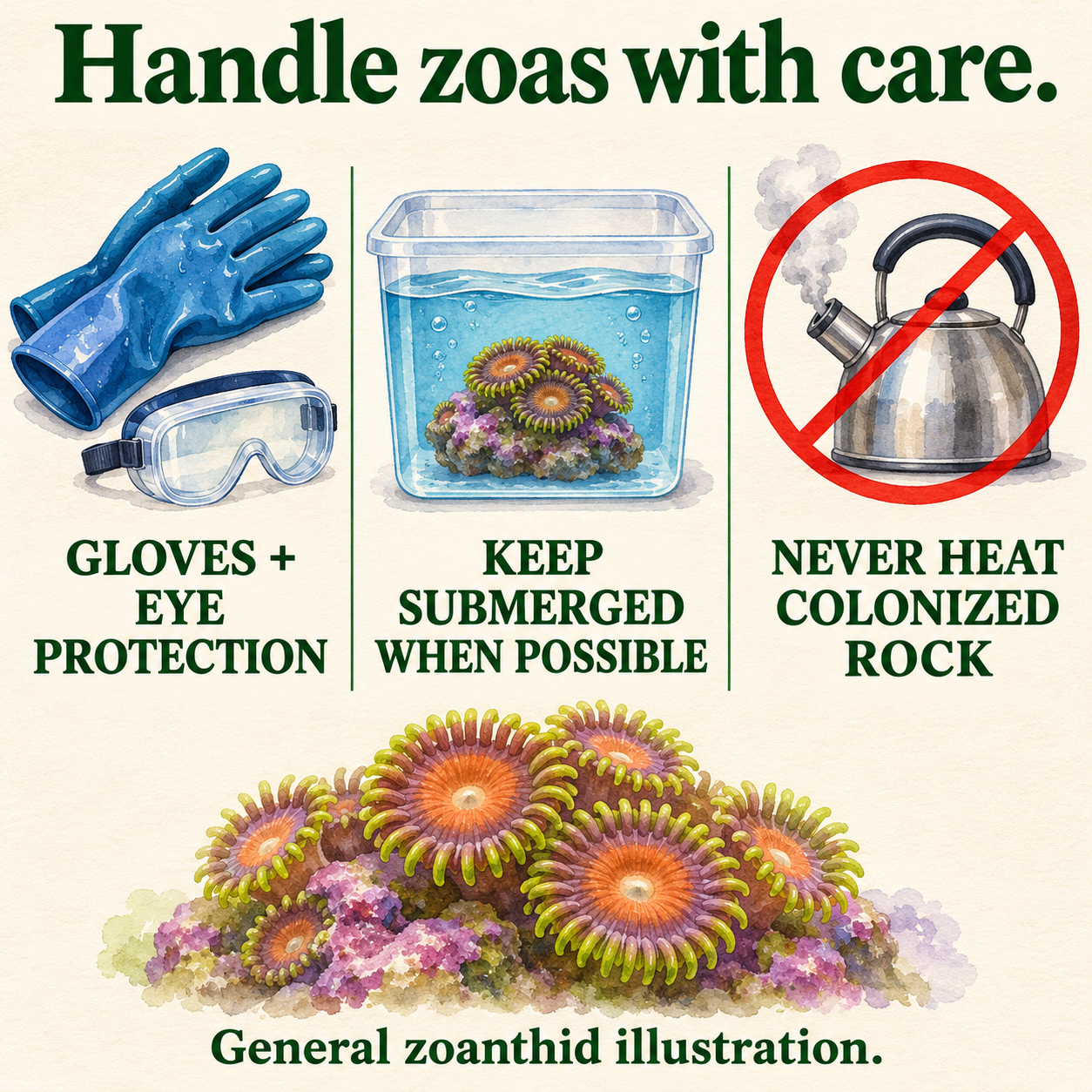
5. Safety comes first. A trade name cannot tell you whether a colony contains palytoxin. Aquarium-related palytoxin exposure can cause serious illness. Treat handling precautions as part of keeping zoas, not an optional step reserved for unfamiliar brown polyps.
Wear sturdy waterproof gloves and eye protection. Keep colonies submerged when possible, minimize handling, and keep other people and pets away. Never boil, microwave, steam-clean, pressure-wash or scrub colonized rock under running water. These actions can create dangerous exposure. If exposure is suspected, seek urgent medical advice and tell the clinician about possible palytoxin exposure.
This section supplements the page's existing safety notice. It is not a fragging or disposal recipe.
Field notes — what keepers report
6. Keep observations honest. There are named-Seduction comments, but the useful evidence is thin. In the Reddit thread “my first corals,” a new owner said they had just bought a single Seduction polyp and thought it might grow slowly. That is an expectation, not a measured growth history.
In “Hardy 1st coral?”, another keeper reported their Seduction polyps had stayed closed for a day while other named zoas in the same aquarium behaved differently. The comment does not establish a cause or report a resolved outcome. It is not evidence that every Seduction frag is difficult.
Growth varies between colonies and tanks. Your own dated photographs, polyp counts and notes about changes will be more useful than expecting a new head by a particular weekend.
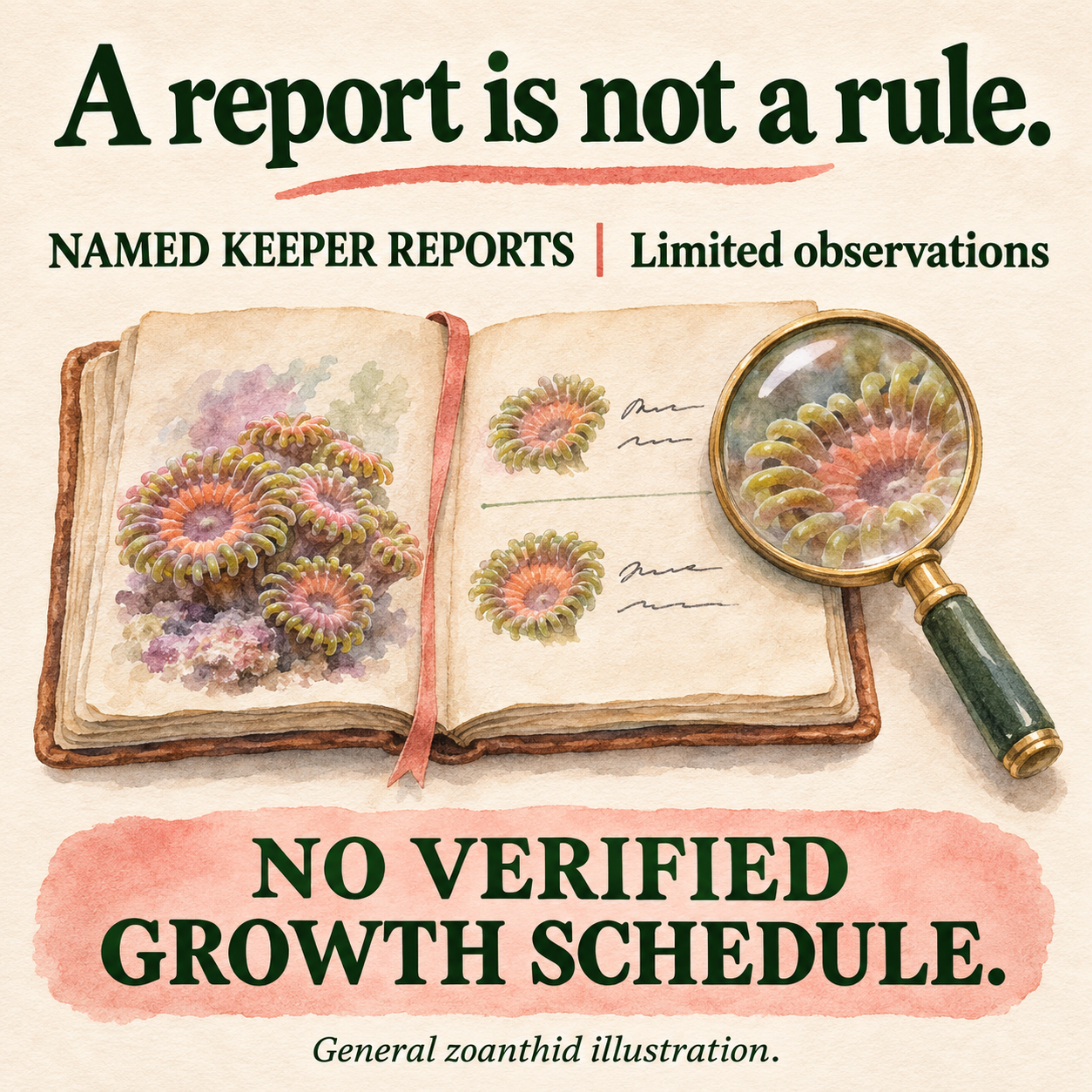
Steady care wins. Keep conditions stable, give the colony room and handle it safely. Take comparable photos so the small changes are easy to spot.
Field Notes
Related species
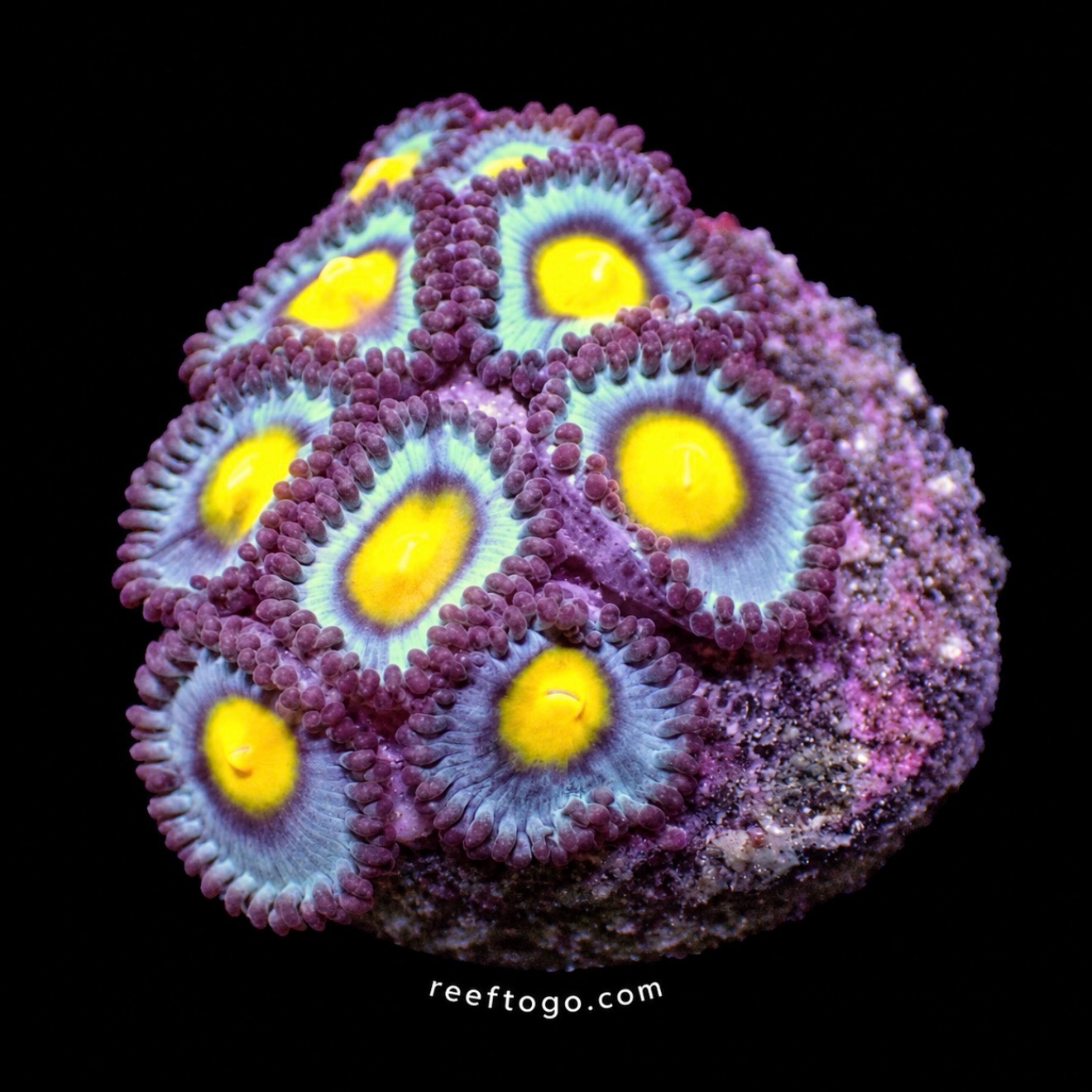
Alien Eye zoas
Zoanthus sp
Same genus
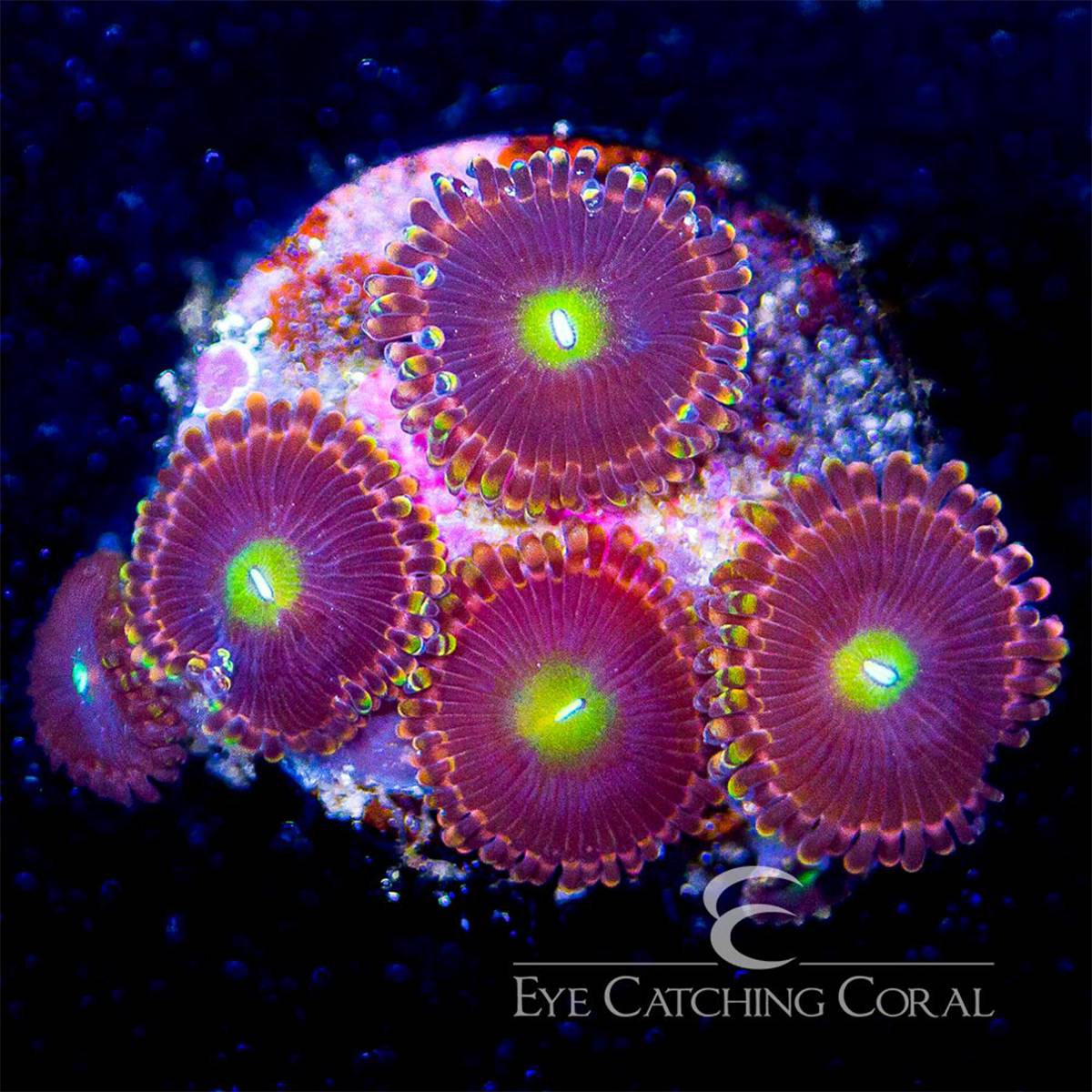
Antimatter zoas
Zoanthus sp
Same genus
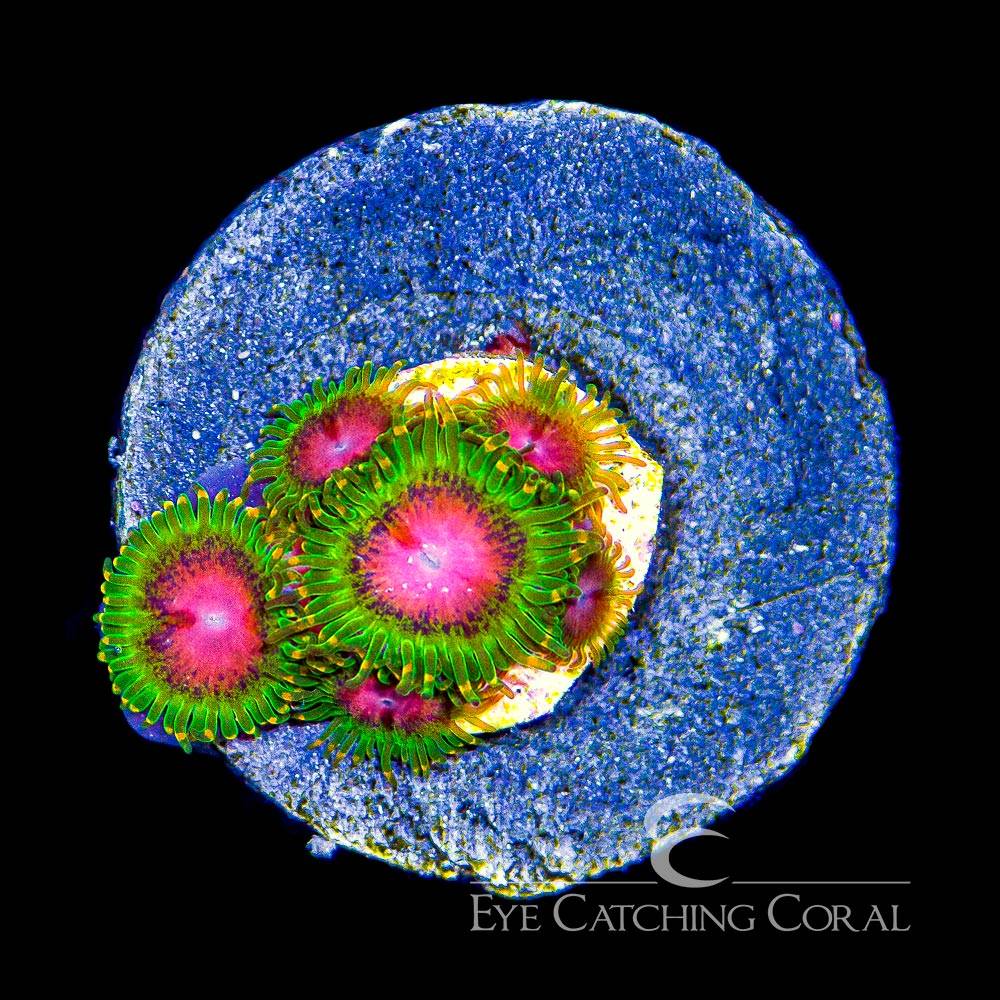
Awesome Blossom zoas
Zoanthus sp
Same genus
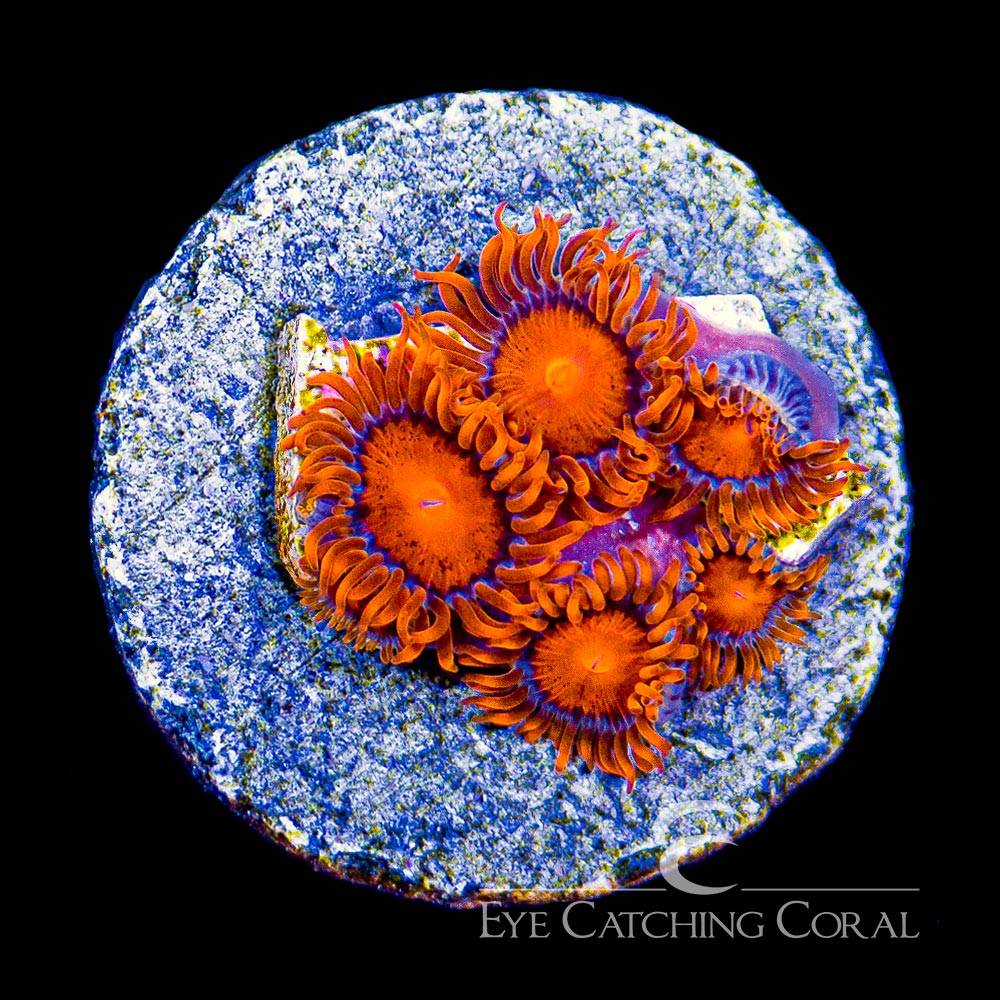
Bam Bam zoas
Zoanthus sp
Same genus
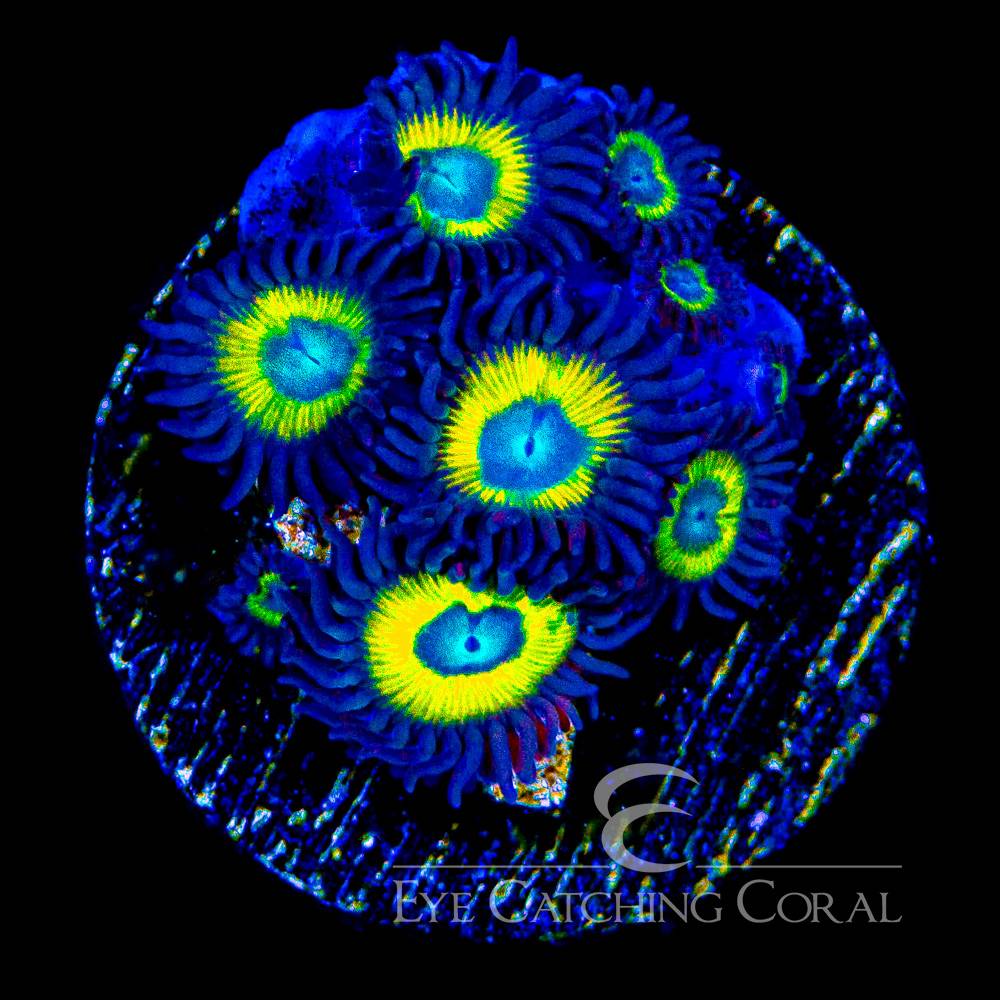
Black Bella zoas
Zoanthus sp
Same genus
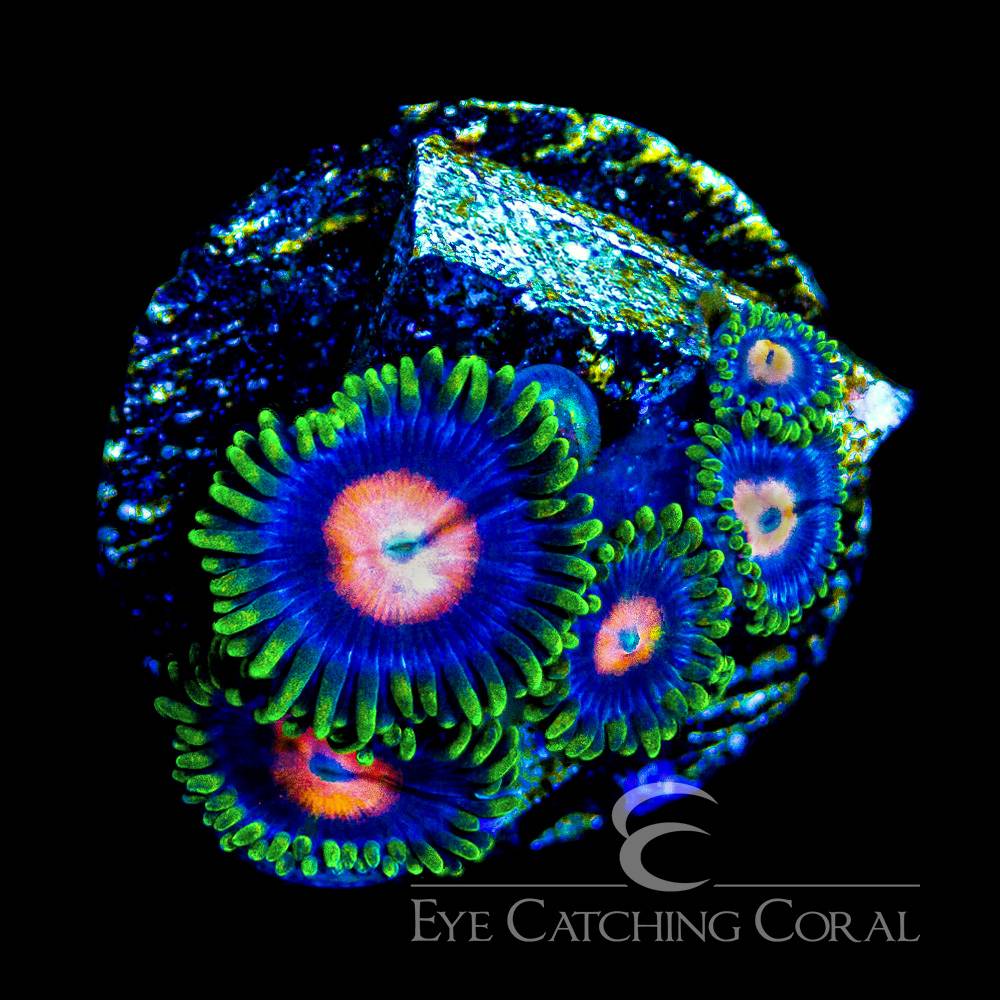
Blow Pops zoas
Zoanthus sp
Same genus
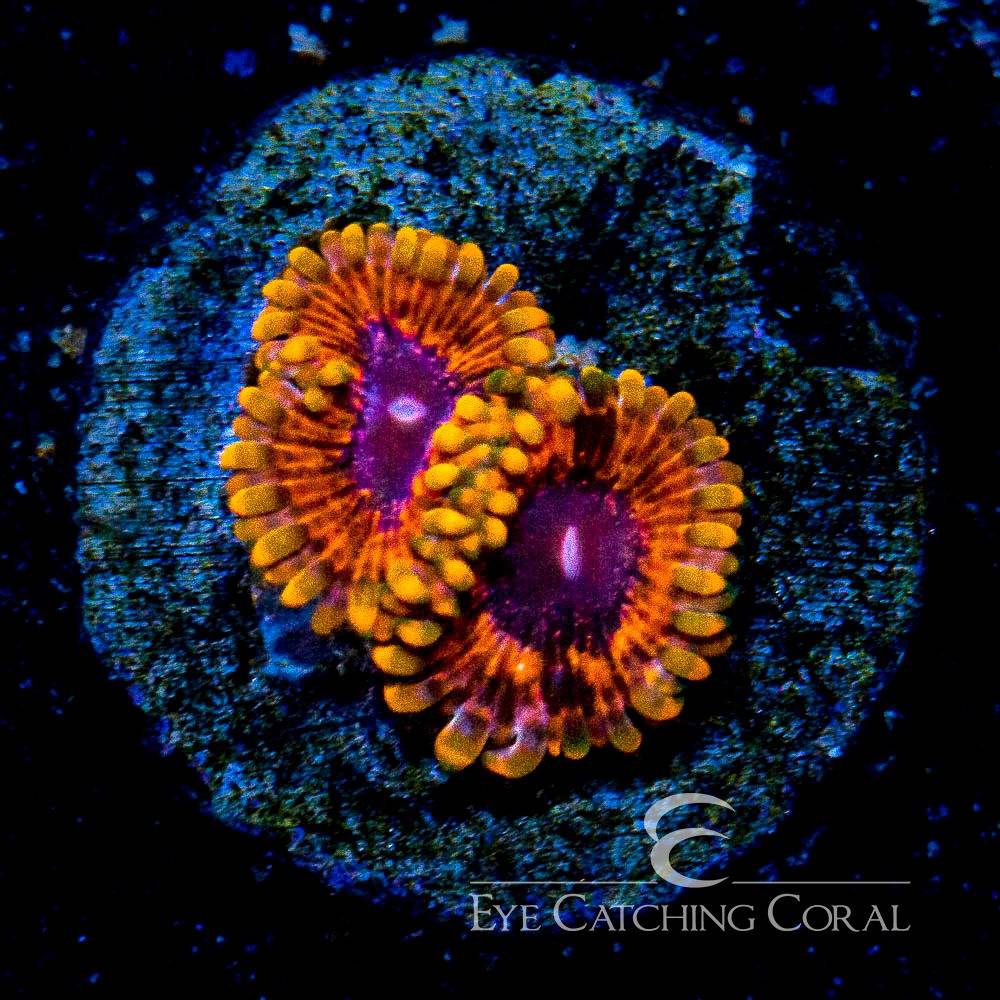
Burning Ember zoas
Zoanthus sp
Same genus
Burning Suns zoas
Zoanthus sp
Same genus