Shatterfield zoas
Zoanthus sp

Palytoxin safety
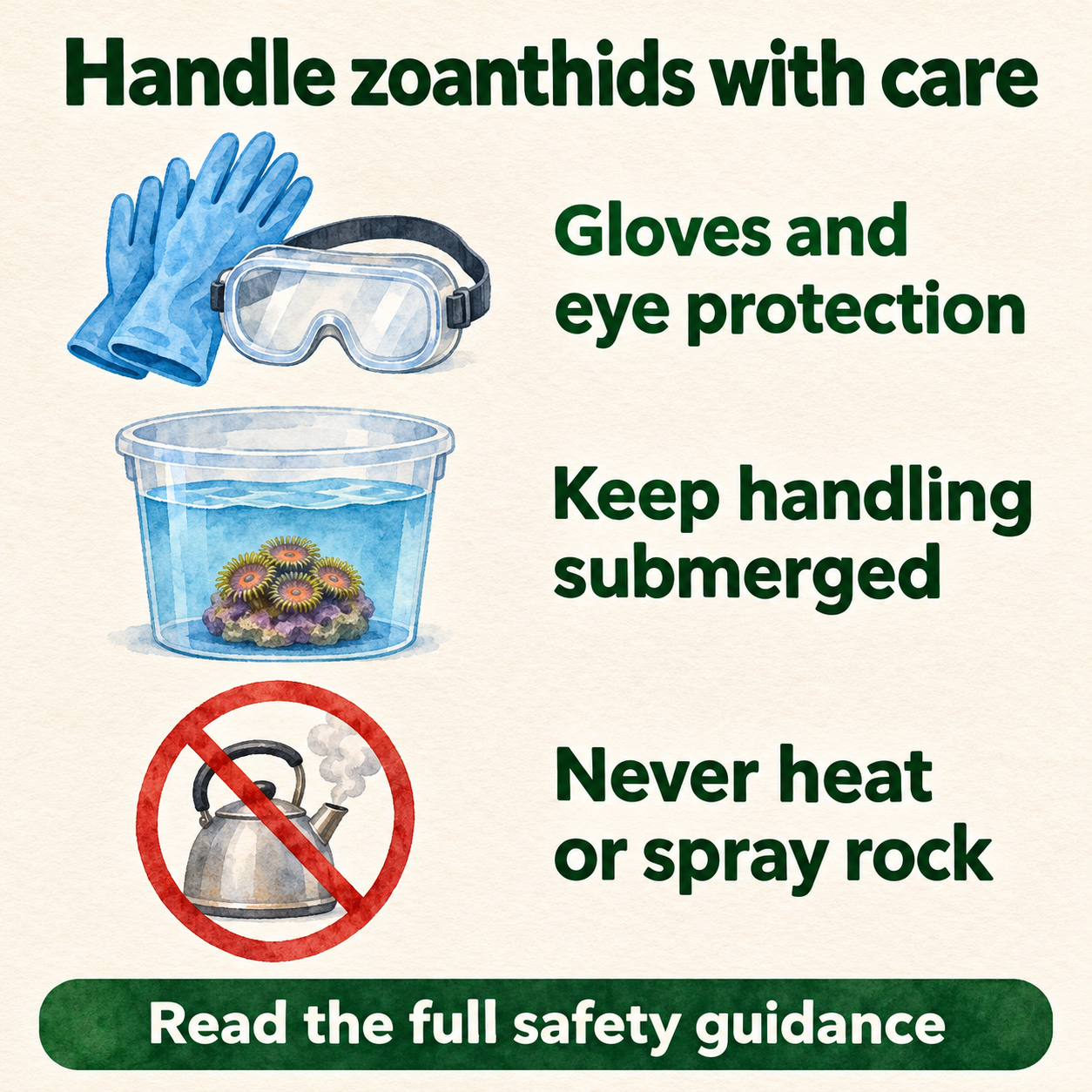
Some zoanthids and palythoas can contain a potent toxin. Wear sturdy waterproof gloves and eye protection, minimize handling, and keep colonies submerged when possible. Never boil, steam, pressure-wash or scrub colonized rock under running water. Keep other people and pets away during handling. If exposure is suspected, seek urgent medical advice and tell the clinician about possible palytoxin exposure.
Sources: CDC: palytoxin exposure · OATA: avoiding palytoxin poisoning
Gallery
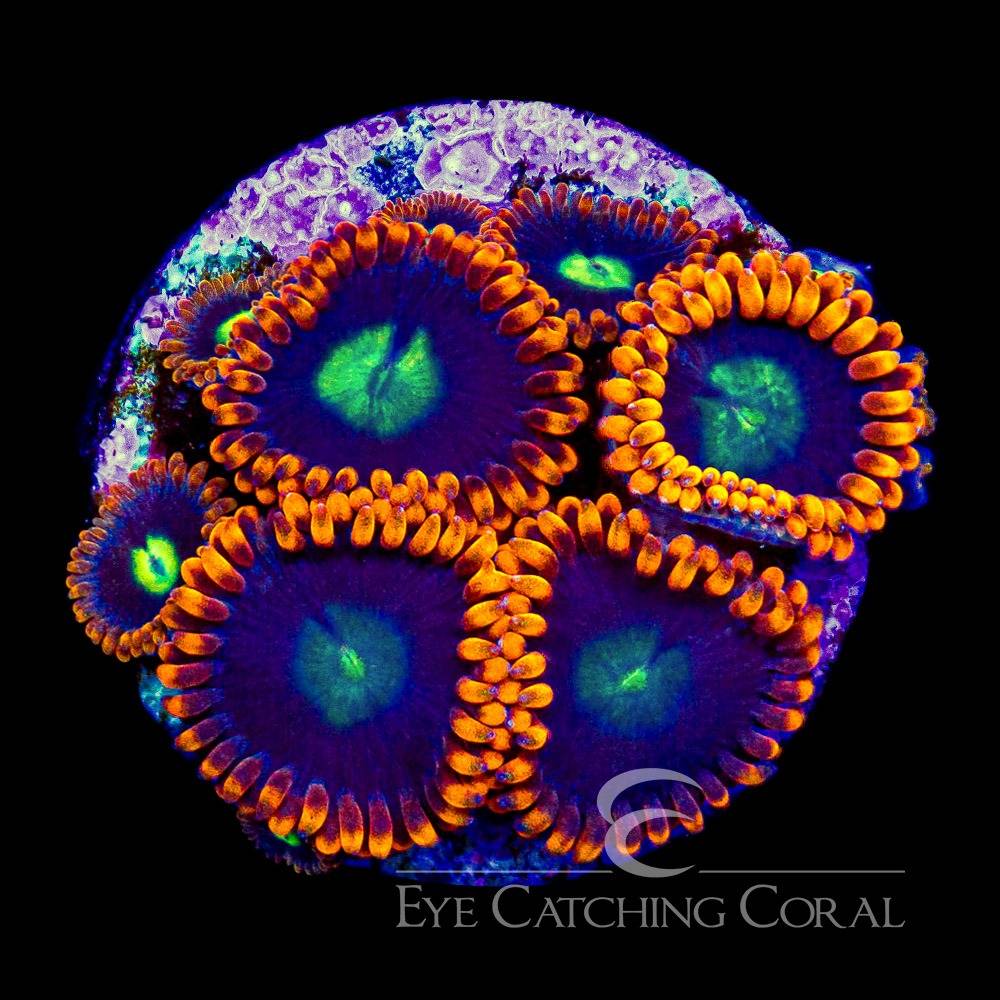
A little colony worth watching. Shatterfield zoas turn a small rock into a growing patch of polyps. Start gently, watch the edge and keep a simple record as the colony settles.
A name worth keeping track of
1. Keep its story. A small zoa frag can become the detail you keep stopping to look at. Give Shatterfield a place where you can watch the polyps open and follow the colony as it spreads.
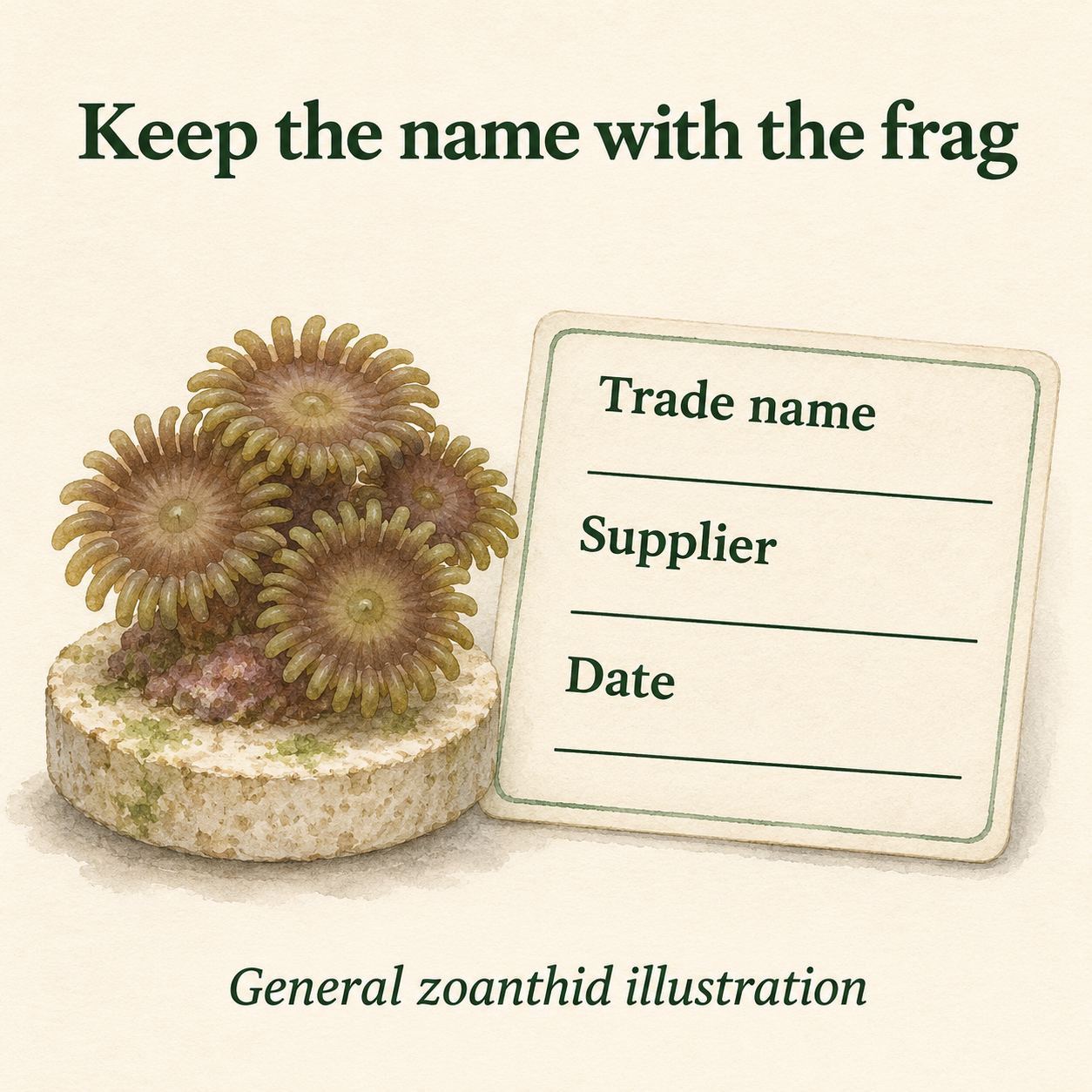
Shatterfield is a trade name. Keep the scientific label Zoanthus sp. with your frag. Keep the seller's name and purchase record with your frag. A photograph alone cannot establish a named morph's lineage.
Lighting changes how zoanthids look. Take your progress photos under the same settings so you have a useful comparison. The drawings in this guide explain general care; the existing specimen photo remains the visual reference for this entry.
Find a settled spot
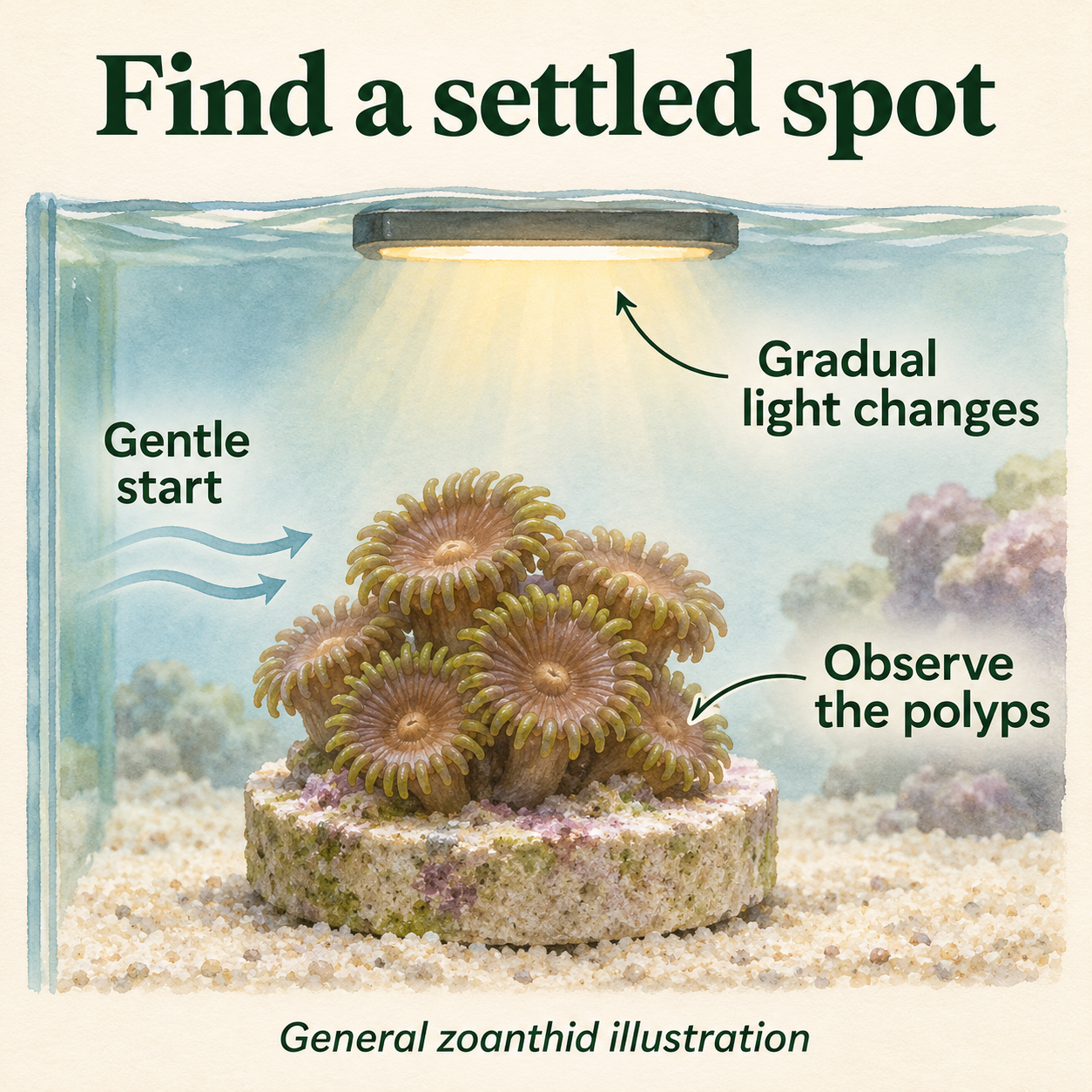
2. Find its comfort zone. Start with a secure spot in lower-to-middle rockwork and low to moderate light. Watch the frag as it settles, then make gradual adjustments. Tank height alone tells you little about the light reaching a particular ledge. Nearby shade and the fixture matter too.
Aim for current that carries debris away while the polyps open comfortably. Use moderate flow as a starting point. Excessive flow can close the polyps; established colonies can tolerate stronger circulation that keeps their mats clean. Adjust to the actual response and attachment of your frag.
Give the mat a boundary
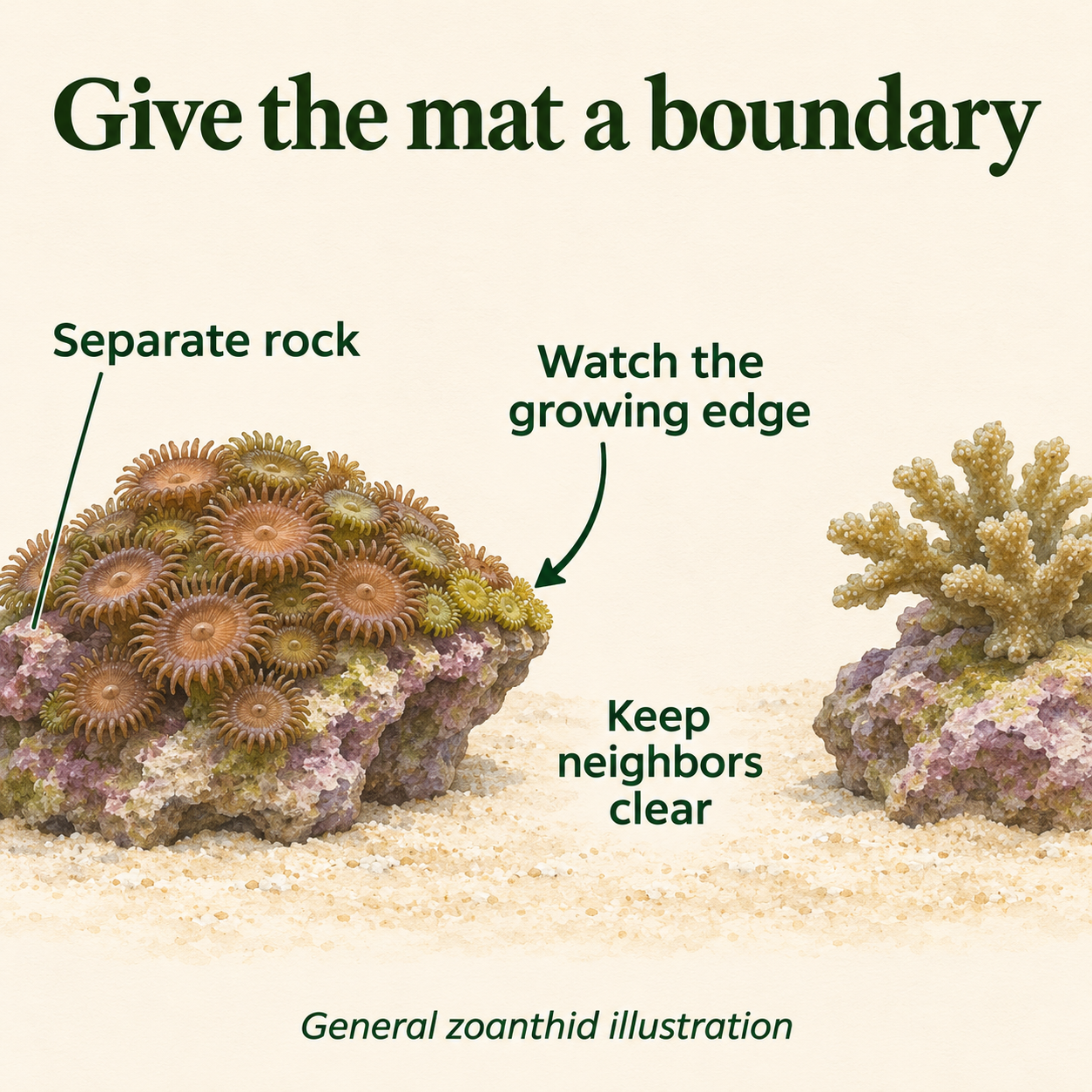
3. Watch the mat spread. Think about the rock around the frag. Zoanthids spread across surfaces, and a growing mat can reach neighboring corals. A separate rock makes that edge easier to watch and manage.
Leave clearance and revisit it as the colony expands. Plan for both colonies to expand. Check the gap again as they grow.
A photograph from the same angle can help you notice fresh polyps at the edge. Growth varies between colonies and tanks.
Keep the routine easy to read
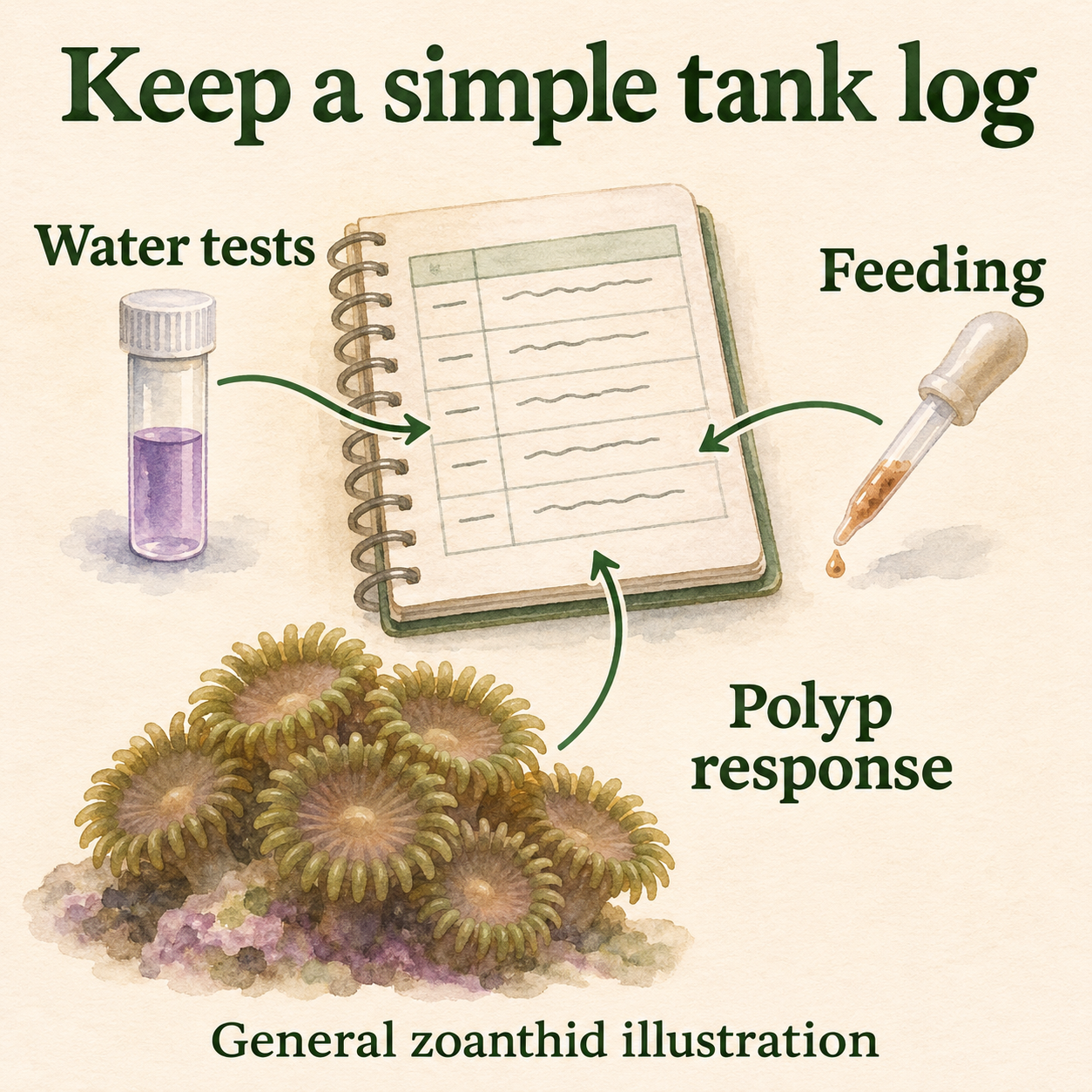
4. Let your notebook help. A simple tank log earns its space beside the test kit. Record water tests, feeding and changes in polyp opening. It gives you something concrete to review when a colony behaves differently.
Zoanthids obtain much of their energy through photosynthetic partners in their tissue. Small marine foods can supplement that energy, and feeding responses vary. If you offer food, keep the portion small and observe what happens.
Keep salinity and temperature steady and track nutrients alongside feeding. Watch for nutrients becoming depleted or accumulating excessively. Avoid making several changes together; a clear record makes the next decision easier.
Field notes — what keepers report
5. A photo is a starting point. There is a real Shatterfield mention in the Reef2Reef Eye Candy thread. On December 13, 2023, AquaGemCorals shared collection pictures, including a file labeled “Shatterfield Zoa.jpg.” The post supplies no lighting measurements, feeding history or growth record for that coral. It documents the name in use and a labeled photo.
No detailed Shatterfield-specific husbandry report was verified in the sources checked for this guide. The following reply discusses Bloodshots and Pink Diamonds. Those comments belong to those other morphs and provide no care evidence for Shatterfield.
Useful future notes would include how long the colony has been kept, measured light, flow, recent changes and comparable photos. That is the sort of record that can make this section stronger.

Handle zoanthids with care
6. Safety comes first. Treat zoanthids as a potential palytoxin hazard. Appearance and a trade label cannot tell you whether a particular colony contains toxin. Aquarium-related palytoxin exposure can cause serious illness.
Wear protective gloves and eye protection. Keep handling submerged where practical and avoid damaging tissue. For removal or fragging, use suitable respiratory protection and read the full linked safety guidance before starting that work. Keep other people and pets away from the work area.
Never boil, heat, steam-clean or pressure-spray colonized rock. Avoid brushing it under running water. These activities can create hazardous exposure. Wash hands after aquarium work and keep them away from your eyes and mouth.
If exposure is suspected, seek urgent medical help and tell the clinician that you handled aquarium corals and suspect palytoxin. Breathing difficulty is an emergency. This section supplements the entry's existing safety notice.
Steady care wins. Keep conditions stable, give the colony room and handle it safely. Take comparable photos so the small changes are easy to spot.
Field Notes
Related species
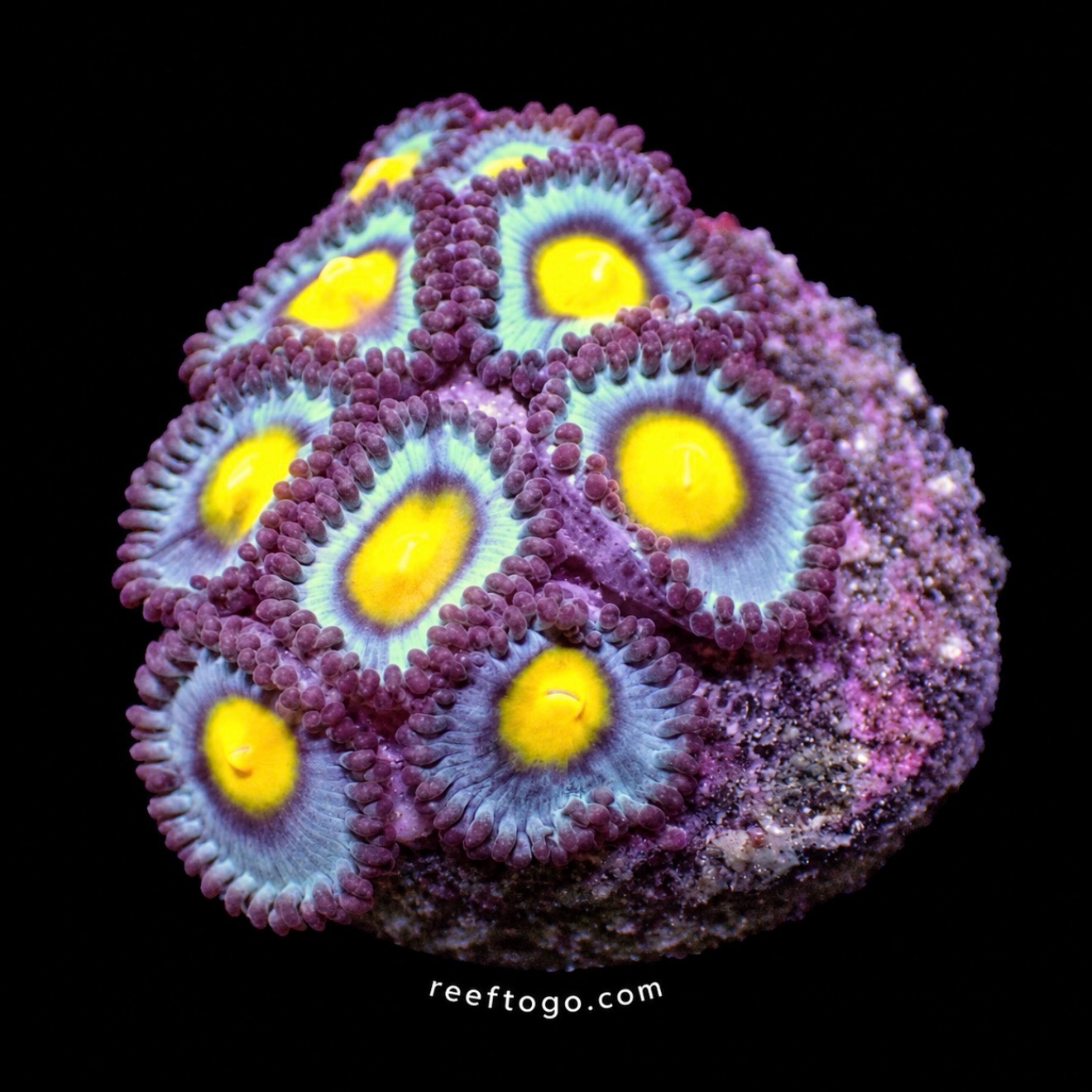
Alien Eye zoas
Zoanthus sp
Same genus
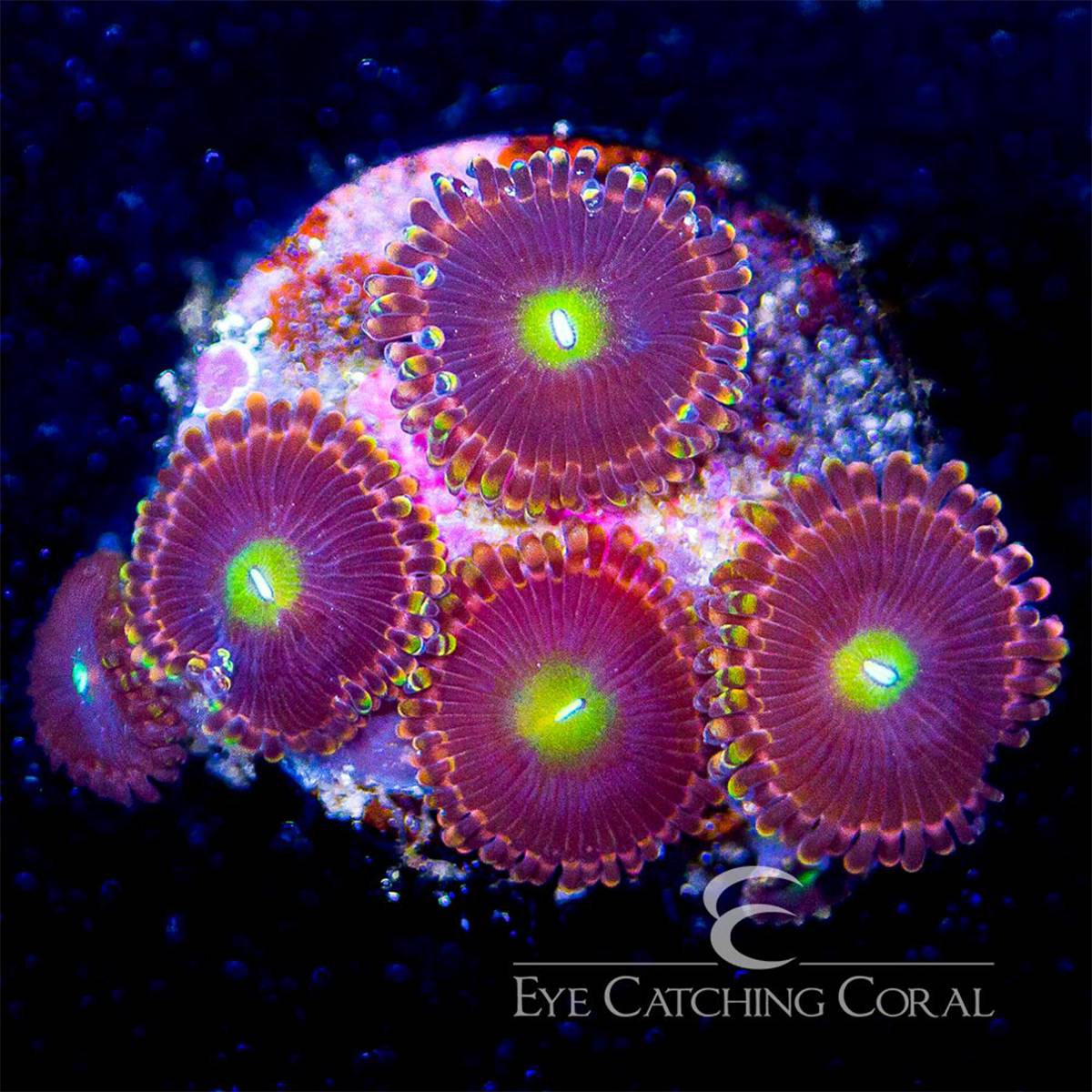
Antimatter zoas
Zoanthus sp
Same genus
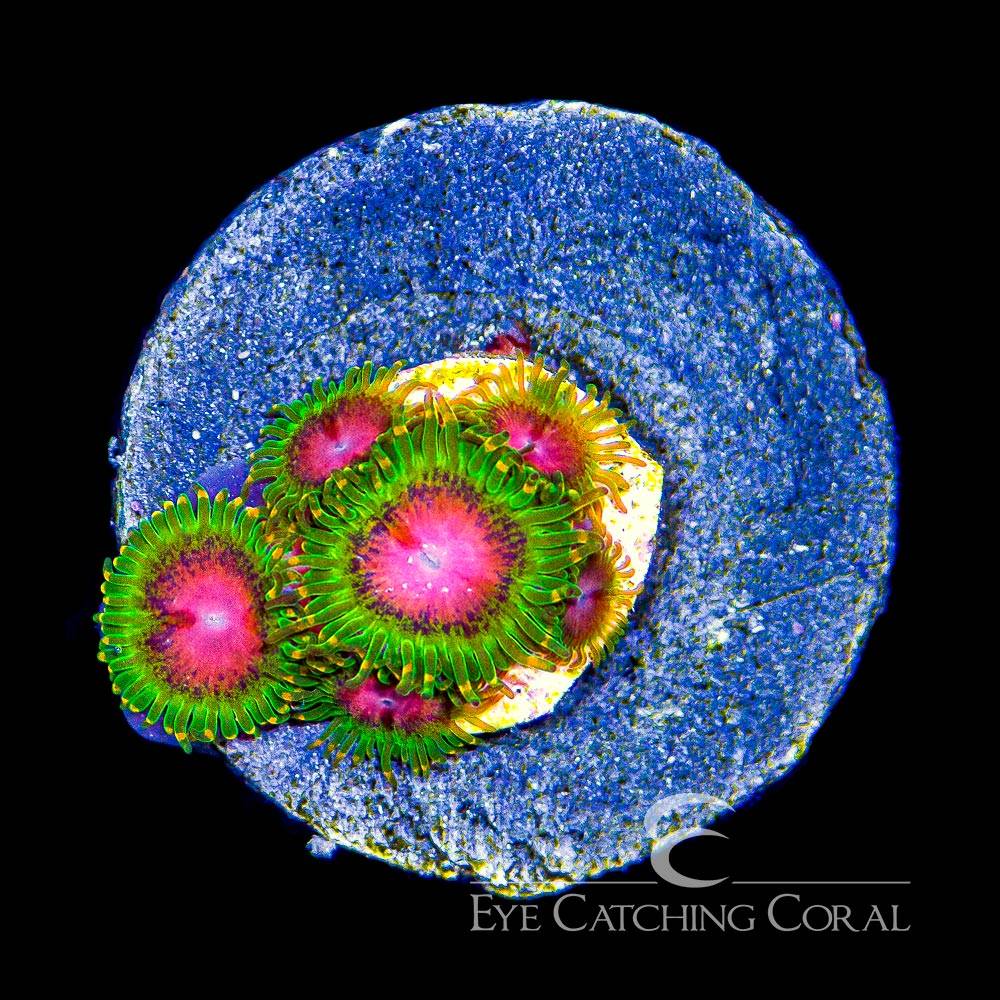
Awesome Blossom zoas
Zoanthus sp
Same genus
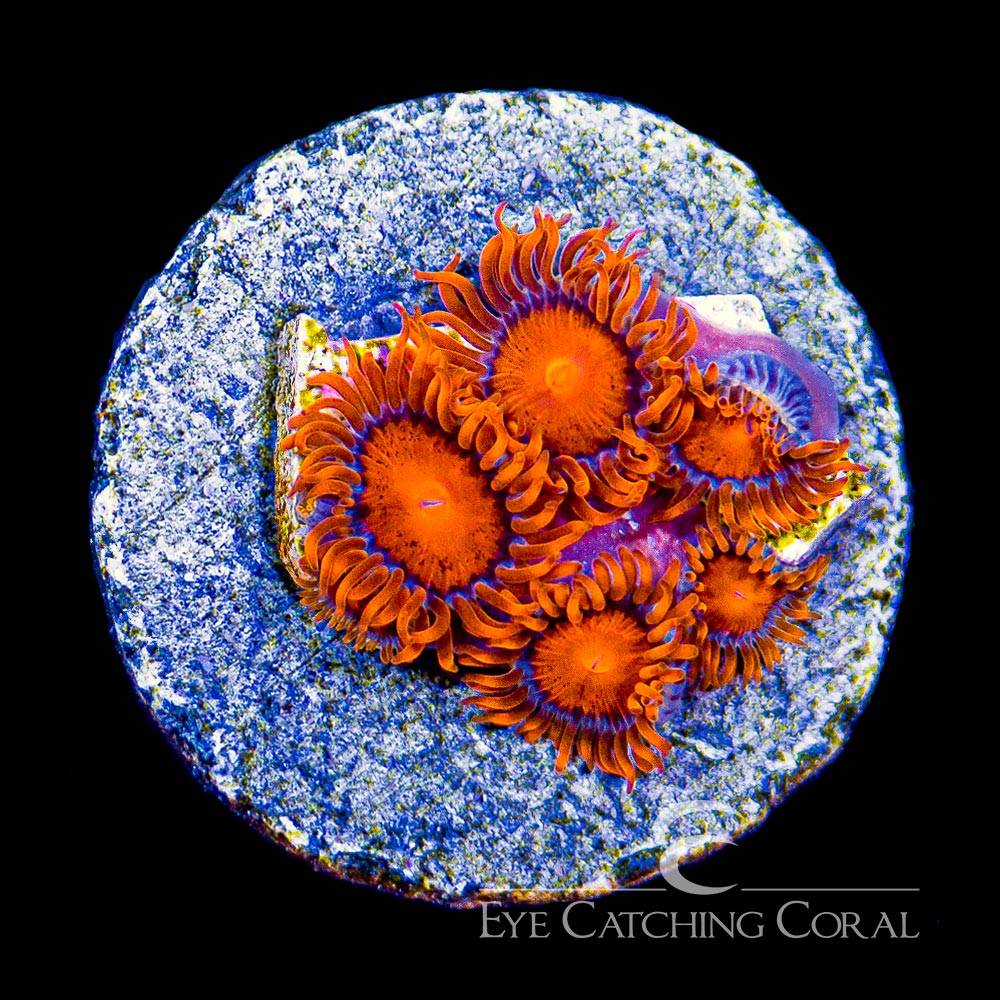
Bam Bam zoas
Zoanthus sp
Same genus
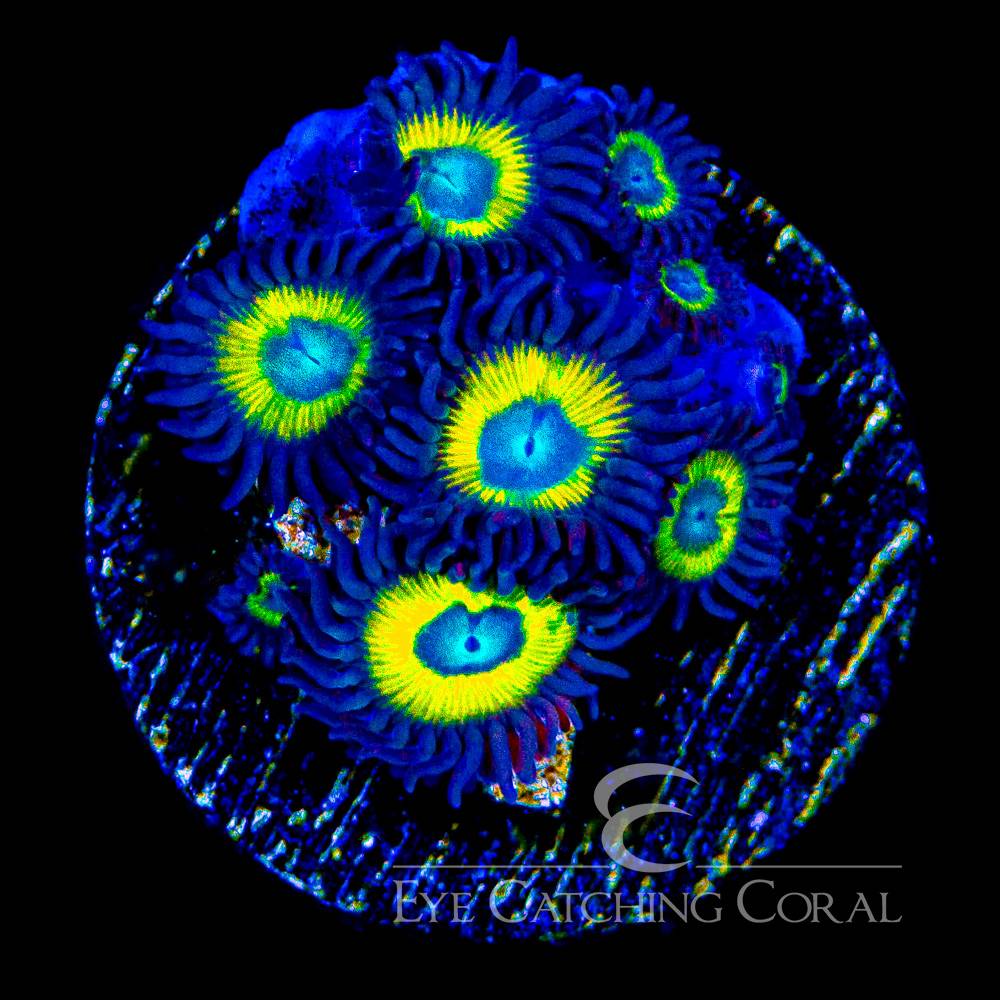
Black Bella zoas
Zoanthus sp
Same genus
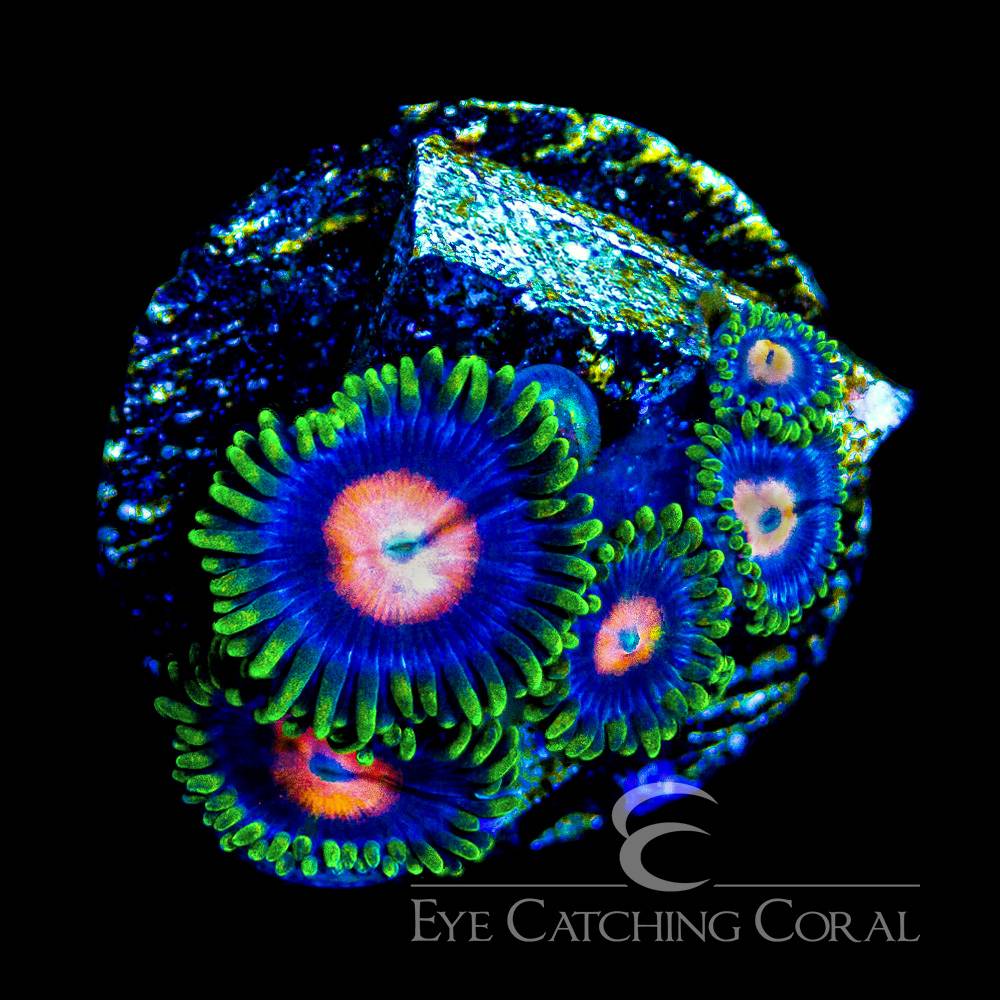
Blow Pops zoas
Zoanthus sp
Same genus
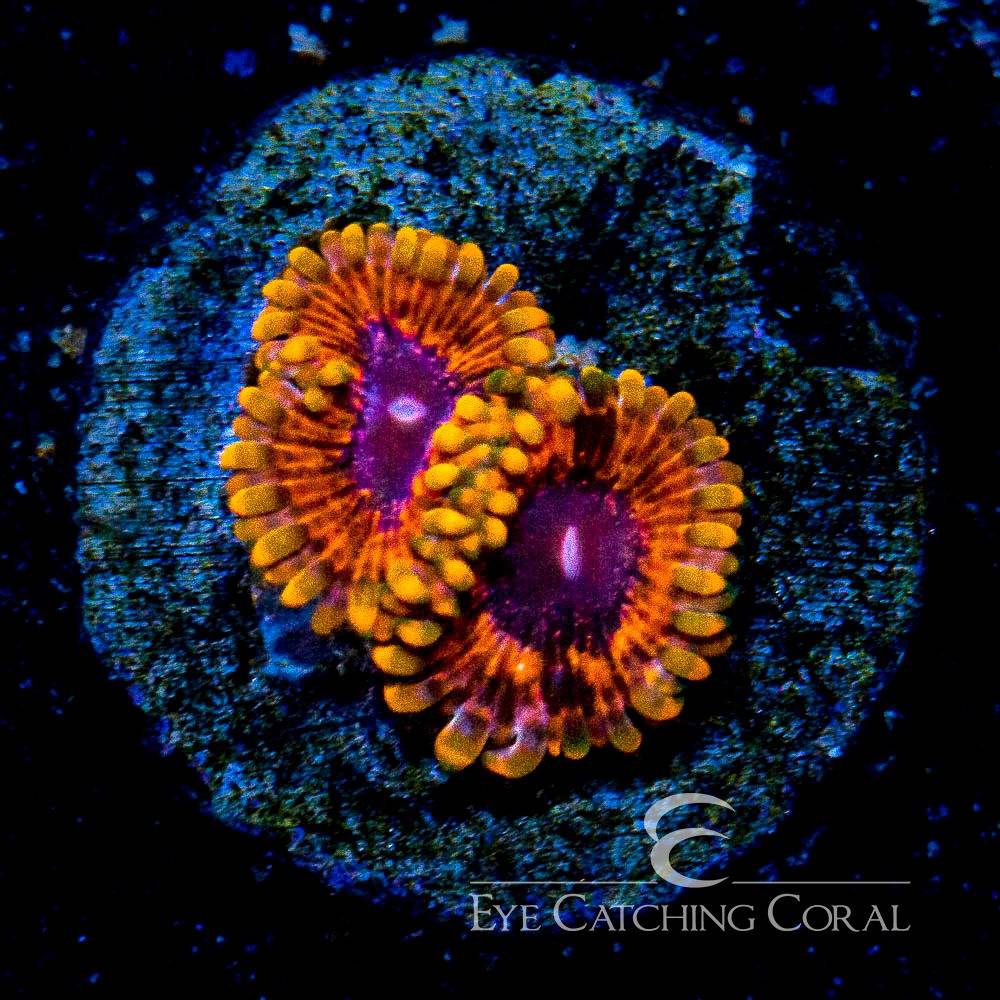
Burning Ember zoas
Zoanthus sp
Same genus
Burning Suns zoas
Zoanthus sp
Same genus