Soft Tree Coral
Nephthea sp.

Nhobgood Nick Hobgood · CC BY-SA 3.0 · source
Care facts
- Care
- Intermediate
- Light
- Low-Medium
- Flow
- Medium-High
- Place
- Mid
- Space
- Peaceful
- Origin
- Indo-Pacific
- Growth Rate
- Moderate
Gallery
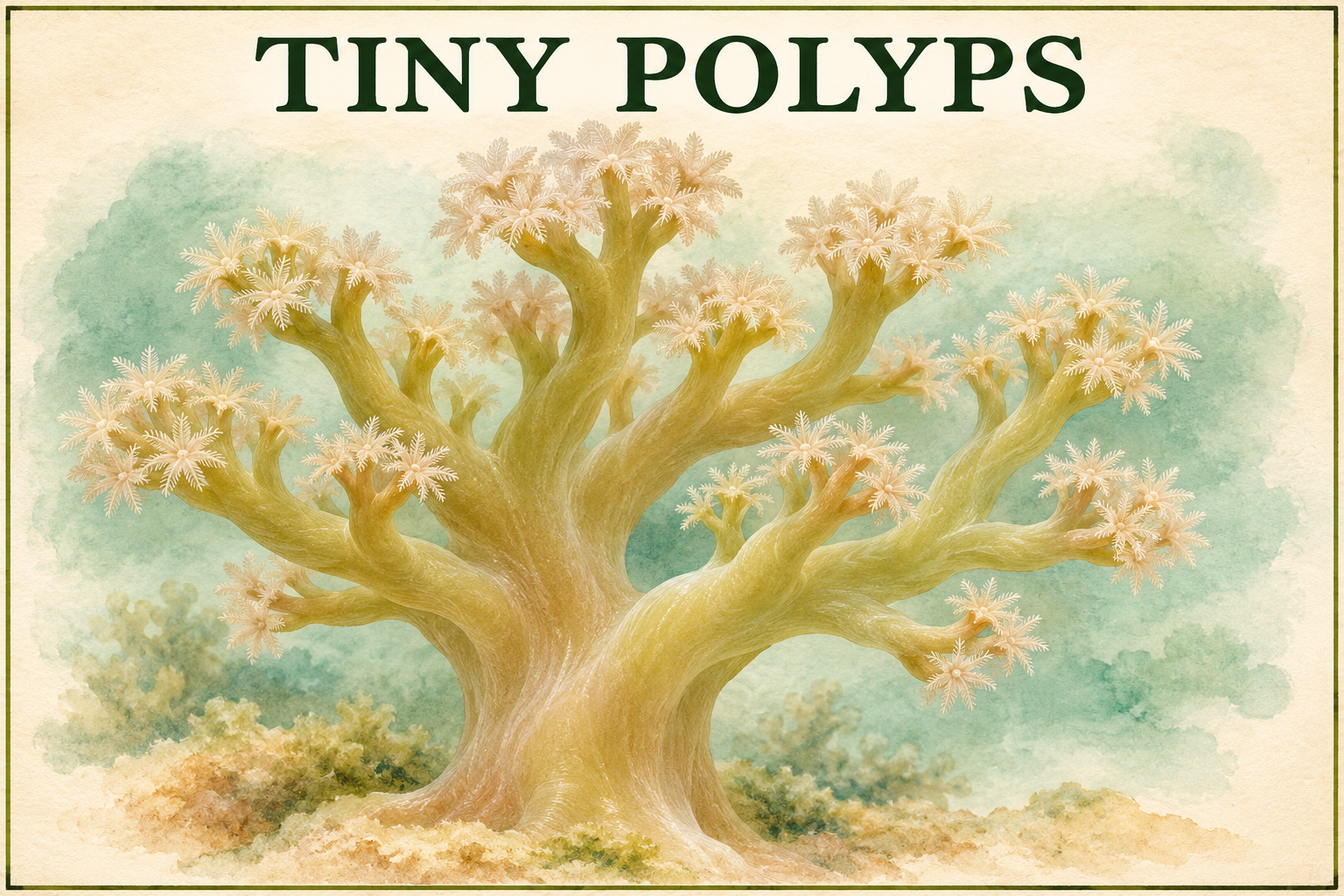
This little tree isn't a plant. It's a colony of soft coral animals. Look close and the tips seem to sprout tiny flowers. Then the current moves and the whole tree sways.
A tree made of animals
1. Count to eight. Each open polyp has eight feathery tentacles. The polyps crowd the branch tips, like a bouquet of tiny hands.
2. Two names for the same genus. Nephthea is the old genus name. Litophyton is the current one. Soft Tree Coral is a genus-level entry, not a name for every coral shaped like a tree.
Give its algae light
3. Light helps feed the tree. Tiny algae live inside Litophyton tissue. They use light to make sugars and share some of what they make with the coral.
4. Start gently. Give it low to moderate reef light and make changes gradually. Don't use the heavy-feeding routine for nonphotosynthetic carnation corals just because both have branches.

Let the branches sway
5. Move water past it. Aim for a broad, indirect current around the branches. Tilt the pump away if one jet pins the tree over.
6. Watch the tips. A gentle sway tells you more than a pump setting. Check for still pockets that collect debris and move the flow before moving the coral.

Make room on the rock
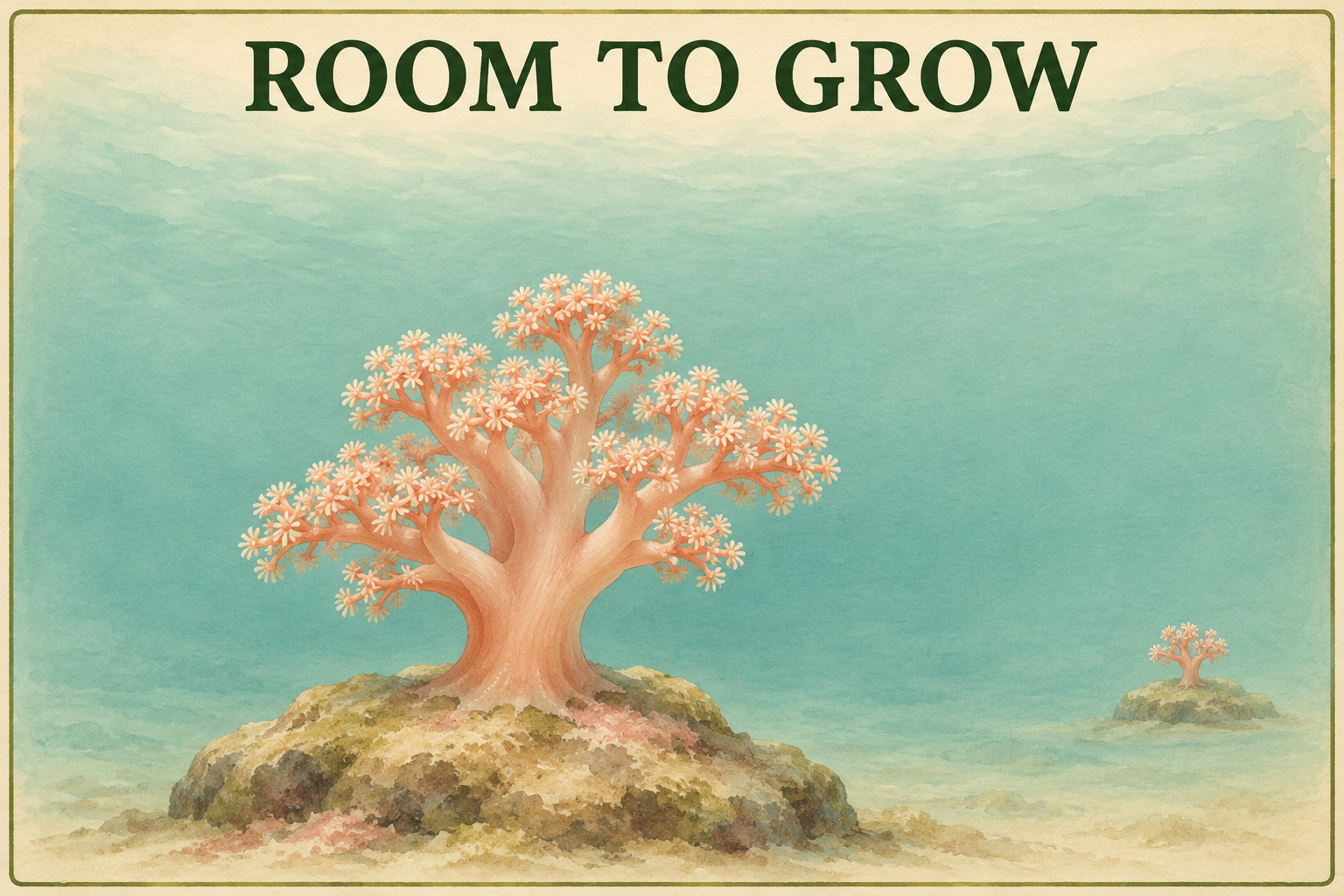
7. Anchor the base. Start on stable mid-level rockwork where the light and flow fit. Keep the base out of shifting sand and give the branches room above it.
8. Think past frag size. Leave room between this tree and its neighbors even though it's classed as peaceful. Check the gap as the crown grows.
Keep the water steady
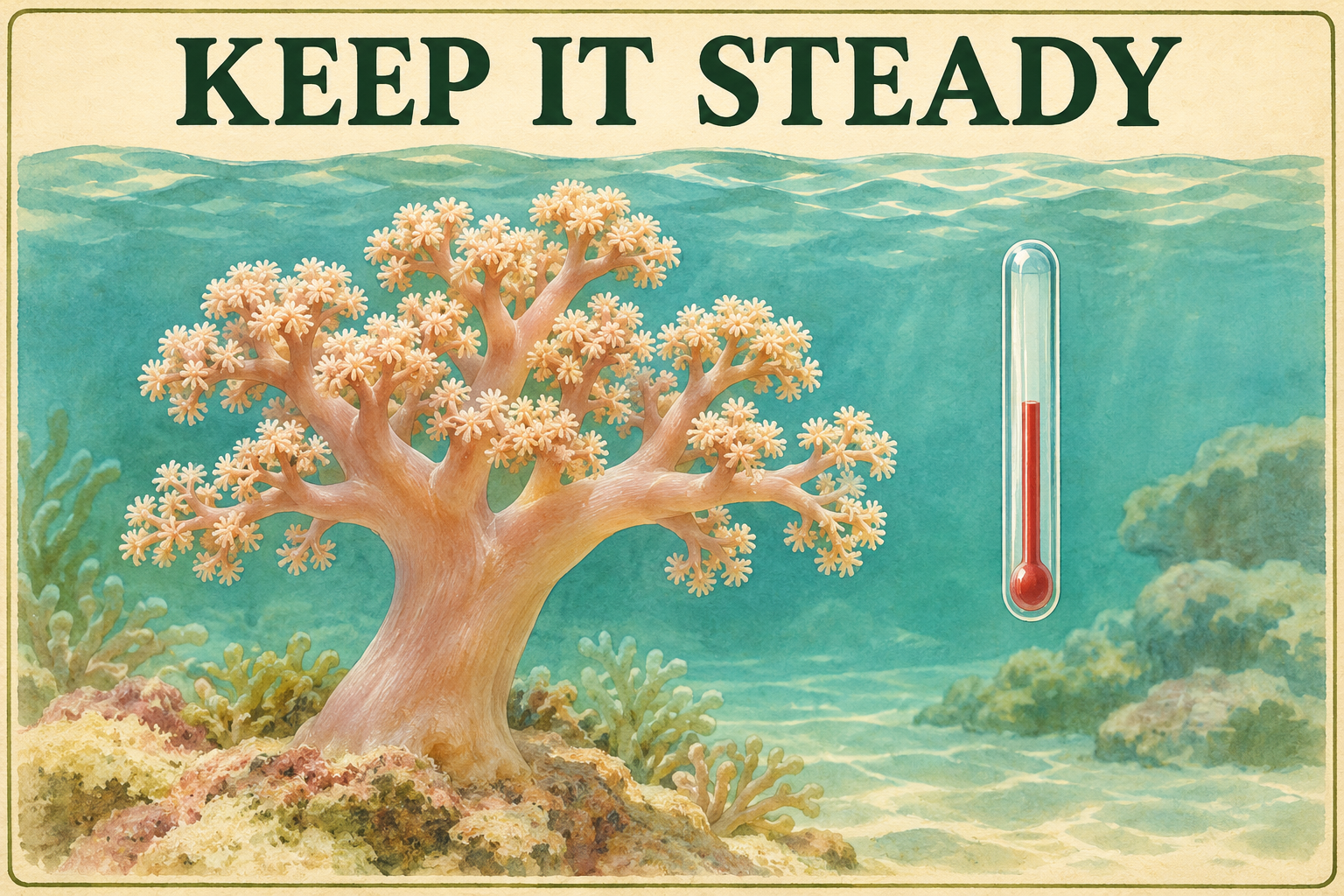
9. Check before changing. Keep salinity and temperature steady. If the tree stays closed, check the water and recent changes to the lights or pumps before chasing a new setting.
10. Use small portions. If you offer fine suspended coral food, start with a little and watch how the tank responds. Don't treat food as a substitute for steady light or water quality.
Field notes — what keepers report
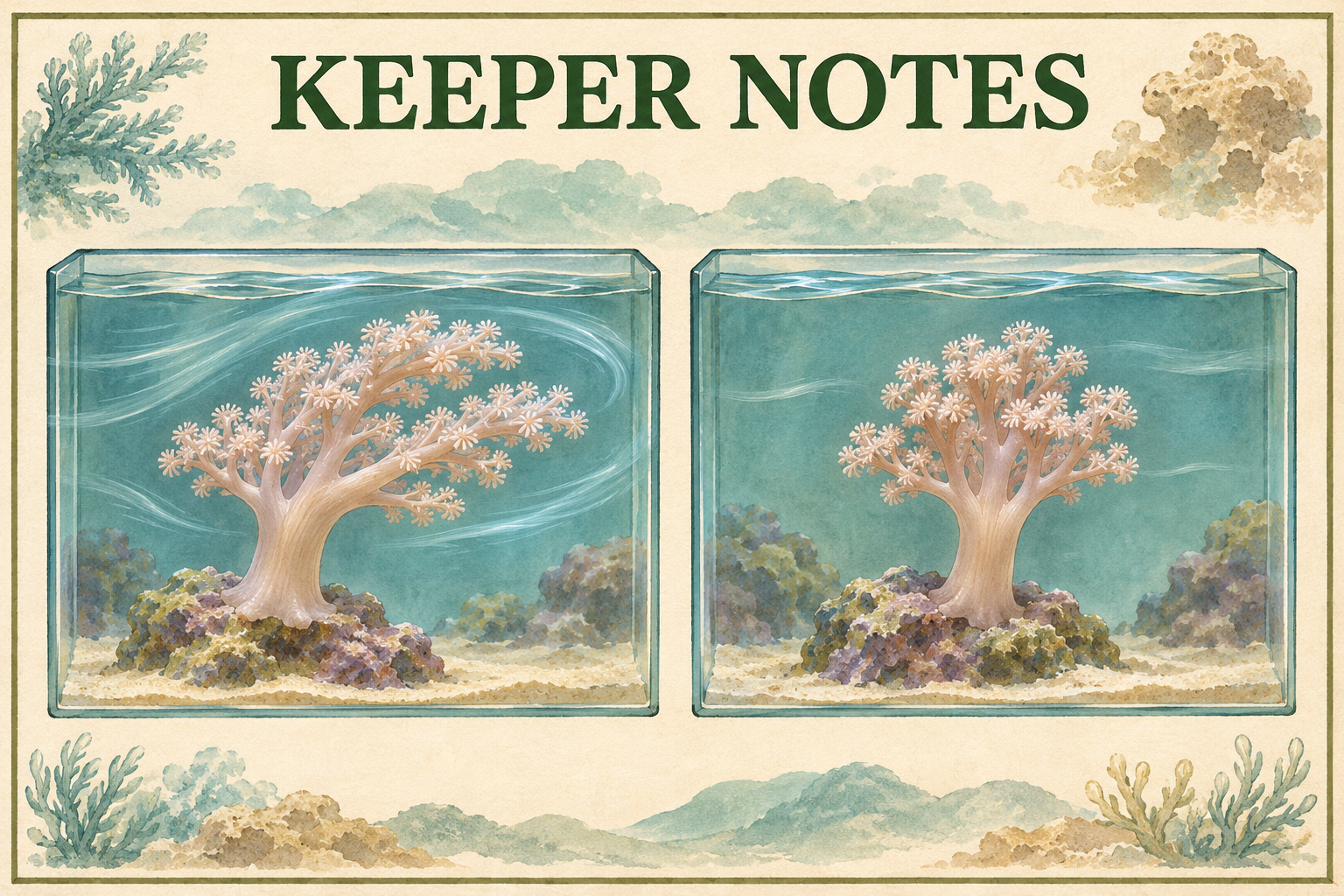
11. Two different currents. One keeper grew a green trade Nephthea with indirect current bouncing off the glass. Another got better growth on a brighter perch with little flow. These are trade-name reports, not confirmed species IDs.
12. A move can shrink the tree. One keeper saw new frags shrink within an hour of adding them. Another saw repeated shrinkage and a thin coating after disturbing theirs. The keeper record is thin, so watch how your own colony rebounds.
Give this little tree a steady home and space to sway. Watch the branch tips over the next few days. When they're open, you'll see a whole crowd of animals moving together.
Field Notes
Related species

Blueberry Yuma
Ricordea yuma
Similar care · Soft
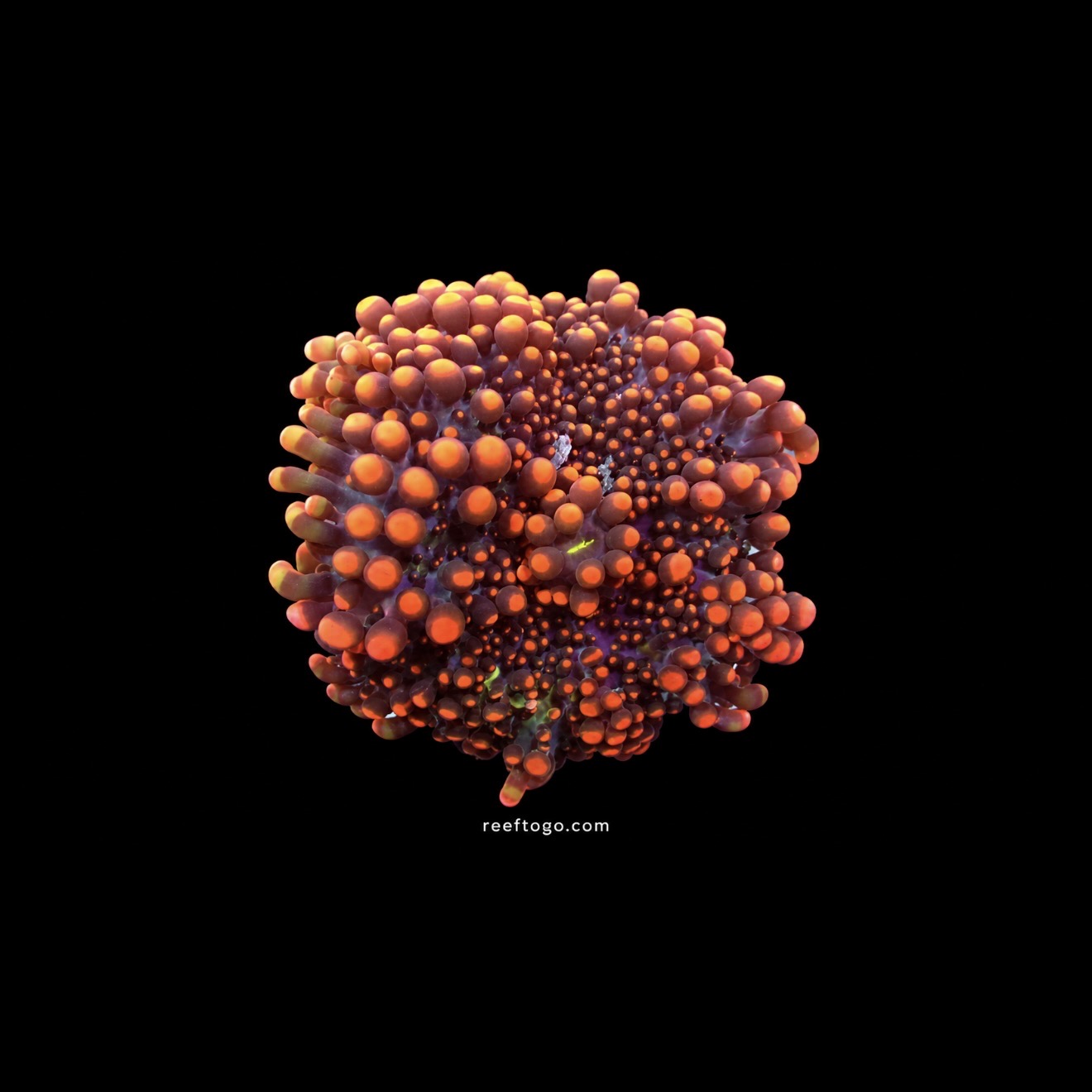
Orange Yuma Ricordea Mushroom
Ricordea yuma
Similar care · Soft
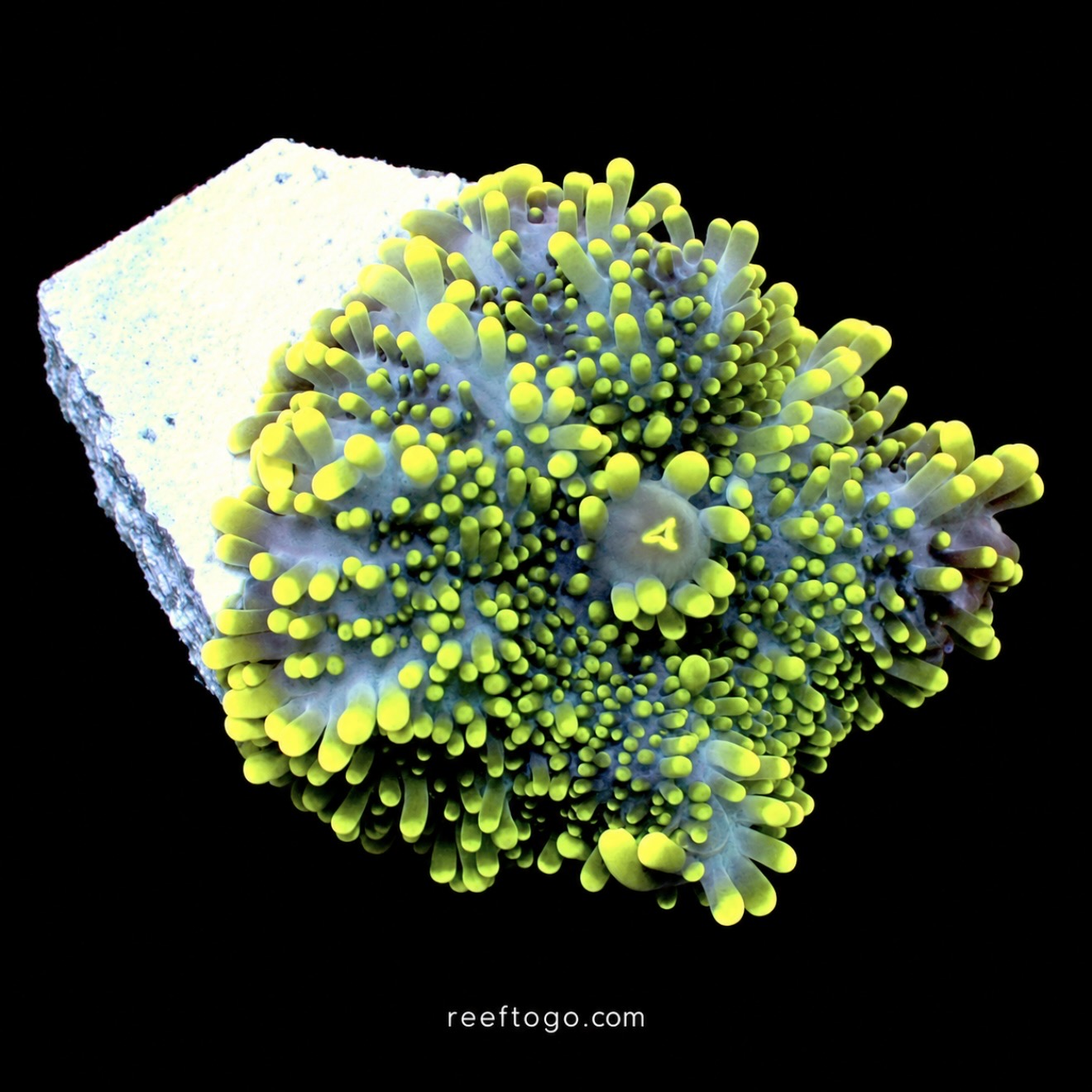
Shamrock Yuma Ricordea mushroom
Ricordea yuma
Similar care · Soft
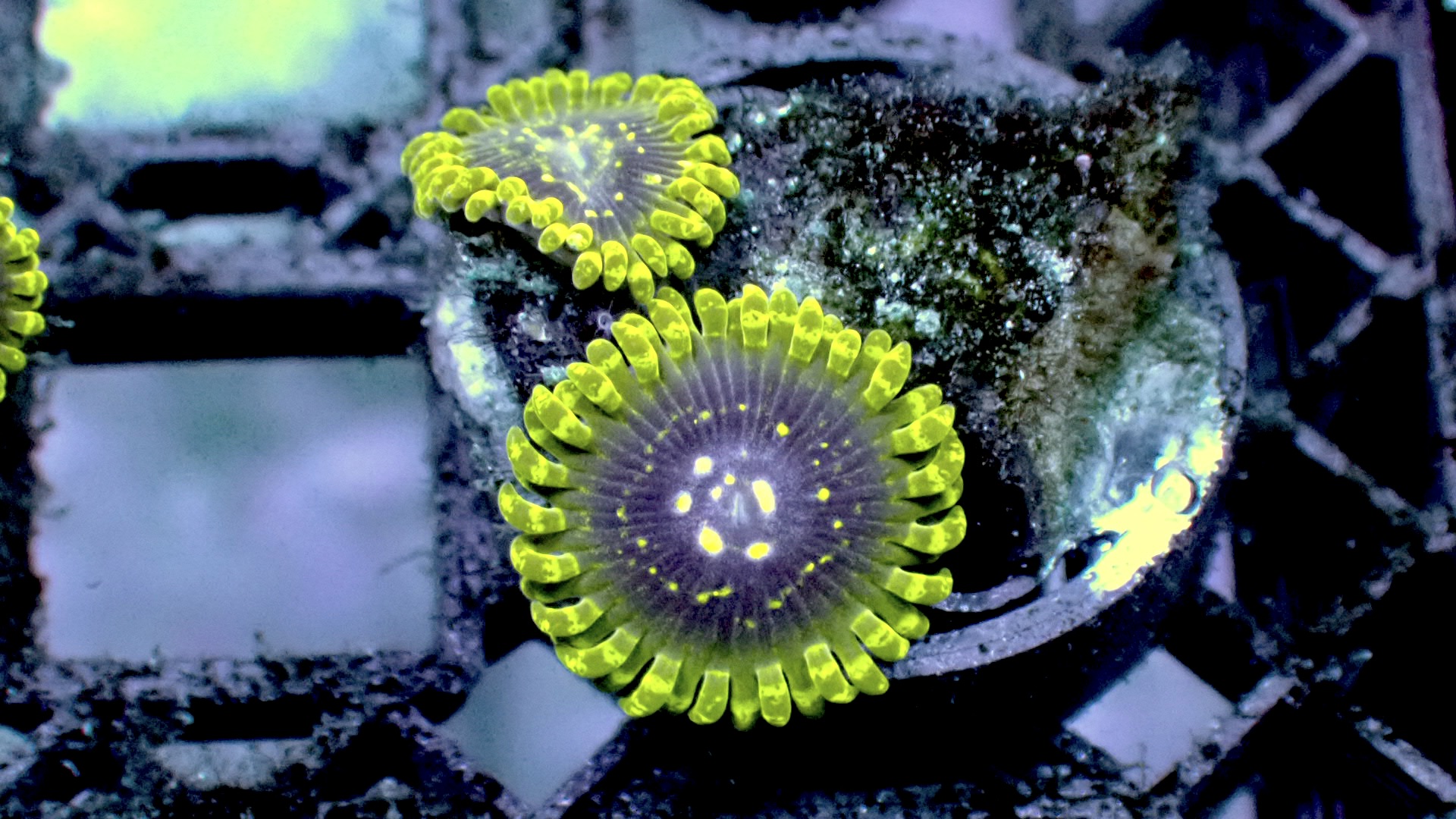
Exosphere zoanthids
Zoanthus sp
Similar care · Soft
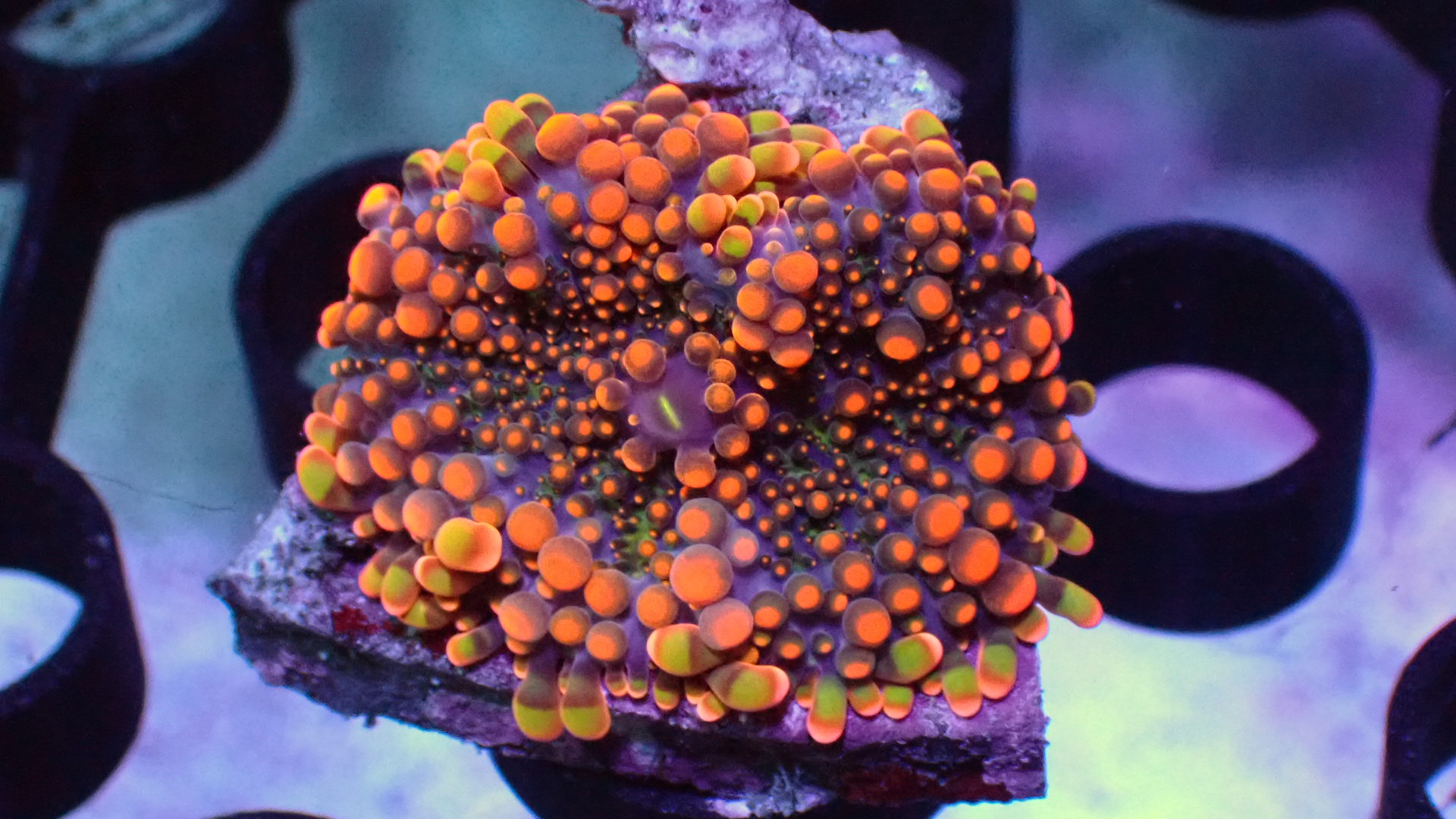
King Kong Yuma mushroom
Ricordea yuma
Similar care · Soft
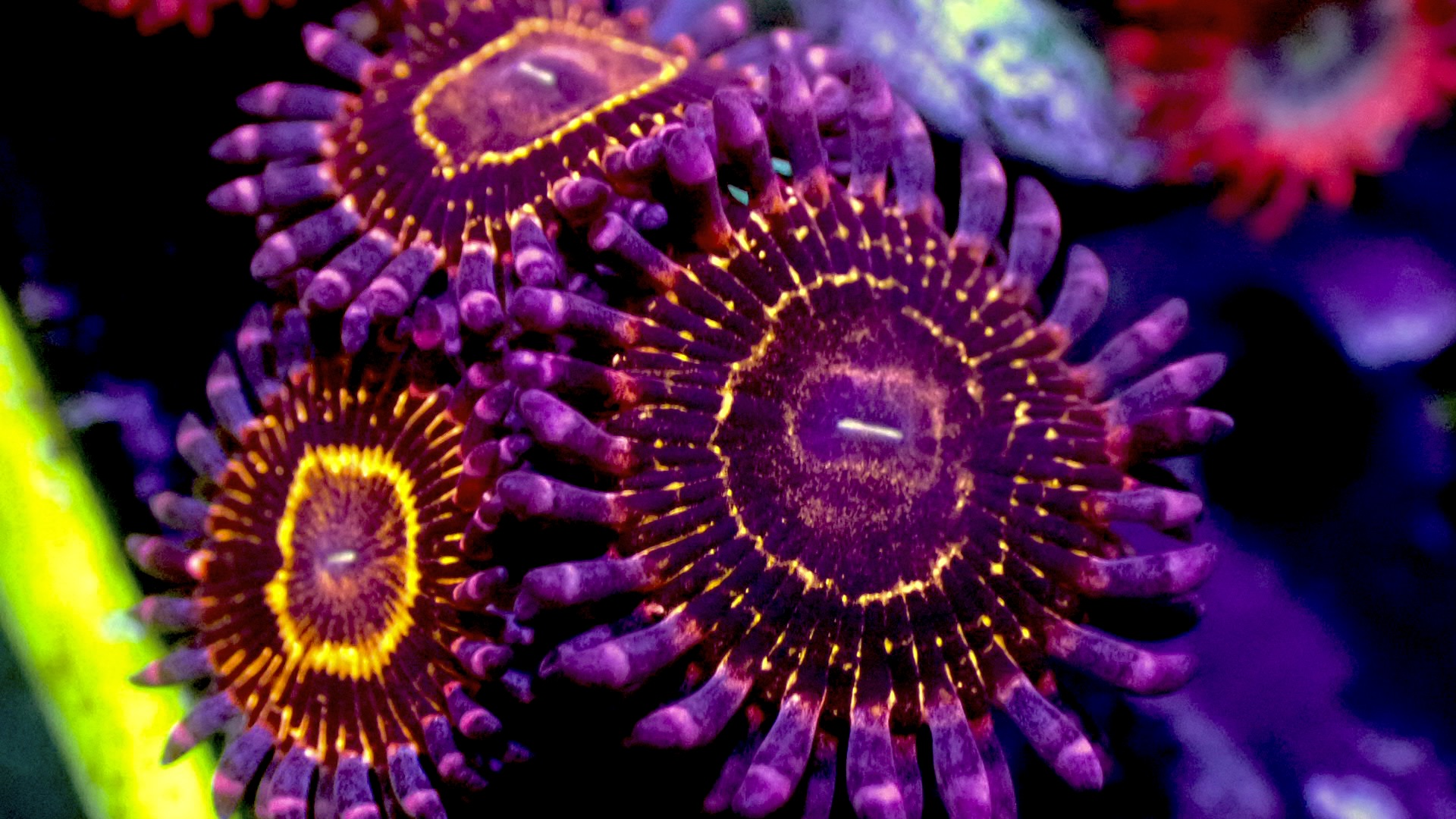
Stratosphere
Zoanthus sp
Similar care · Soft
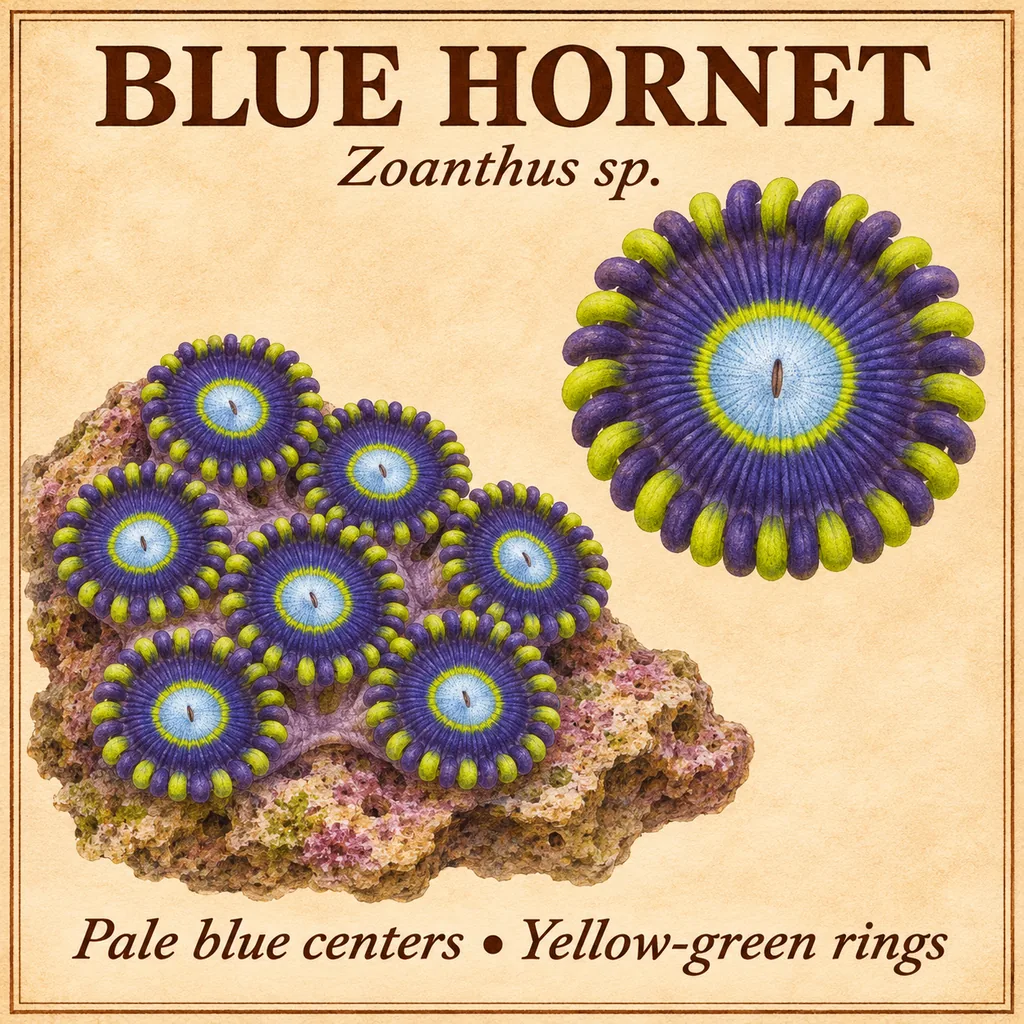
Blue Hornet
Zoanthus sp.
Similar care · Soft
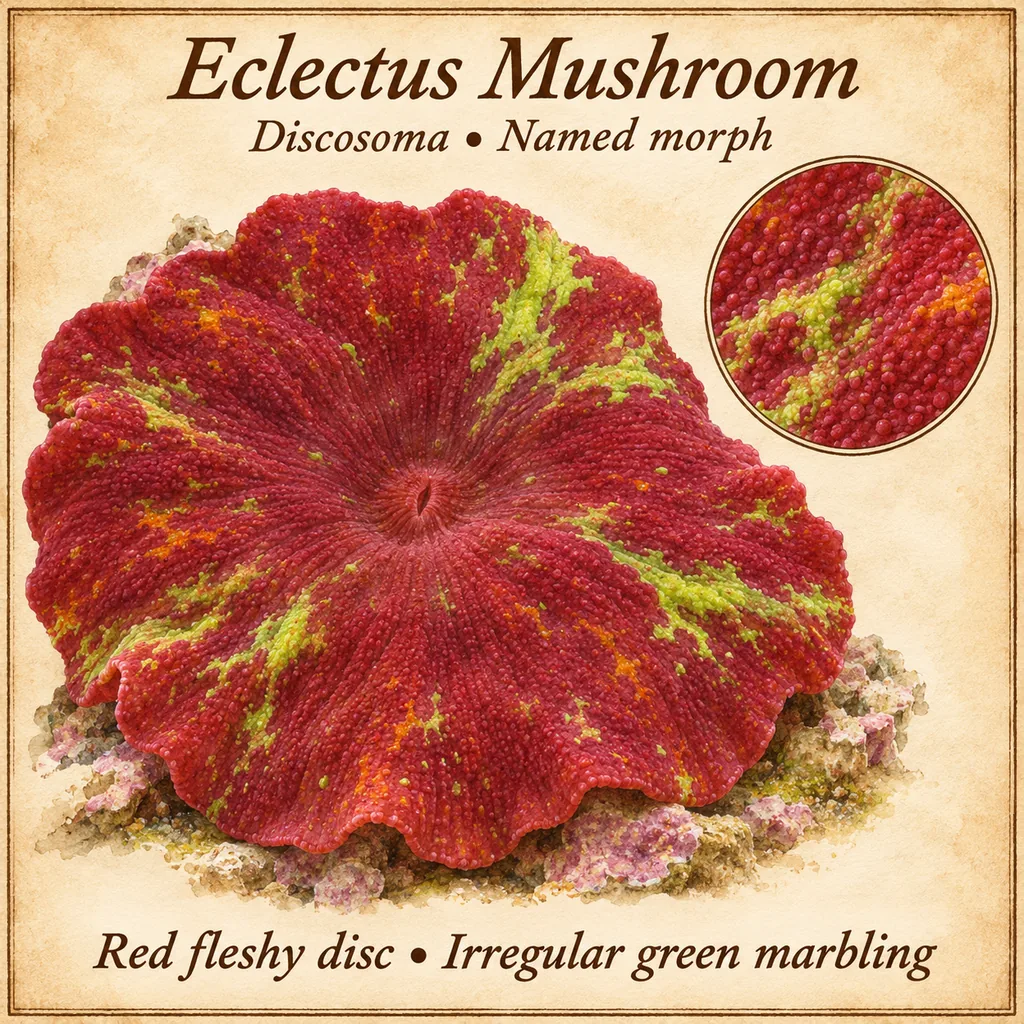
Eclectus Mushroom
Discosoma sp.
Similar care · Soft