Sunburst zoas
Zoanthus sp
Palytoxin safety
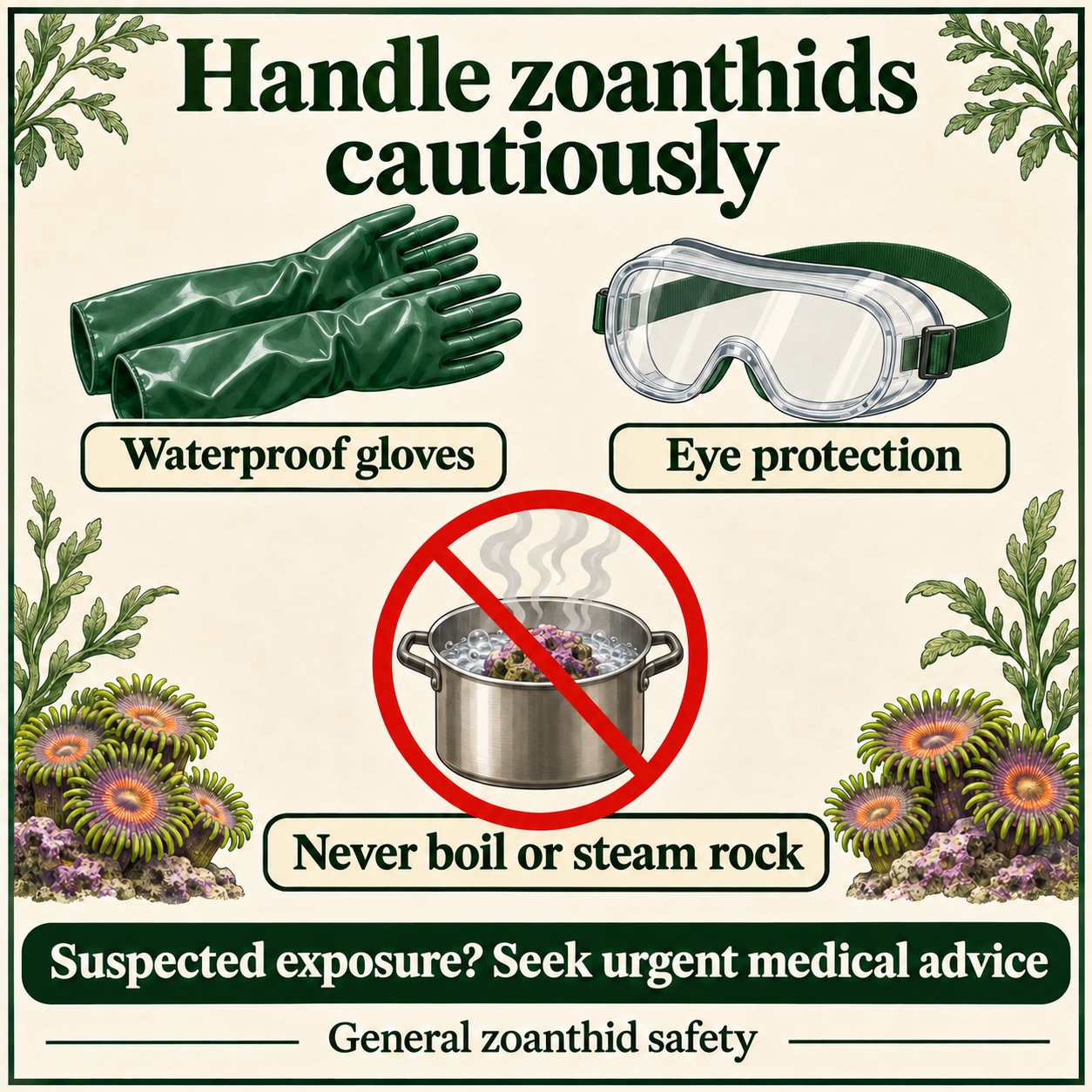
Some zoanthids and palythoas can contain a potent toxin. Wear sturdy waterproof gloves and eye protection, minimize handling, and keep colonies submerged when possible. Never boil, steam, pressure-wash or scrub colonized rock under running water. Keep other people and pets away during handling. If exposure is suspected, seek urgent medical advice and tell the clinician about possible palytoxin exposure.
Sources: CDC: palytoxin exposure · OATA: avoiding palytoxin poisoning
Gallery
Keep the name with the frag
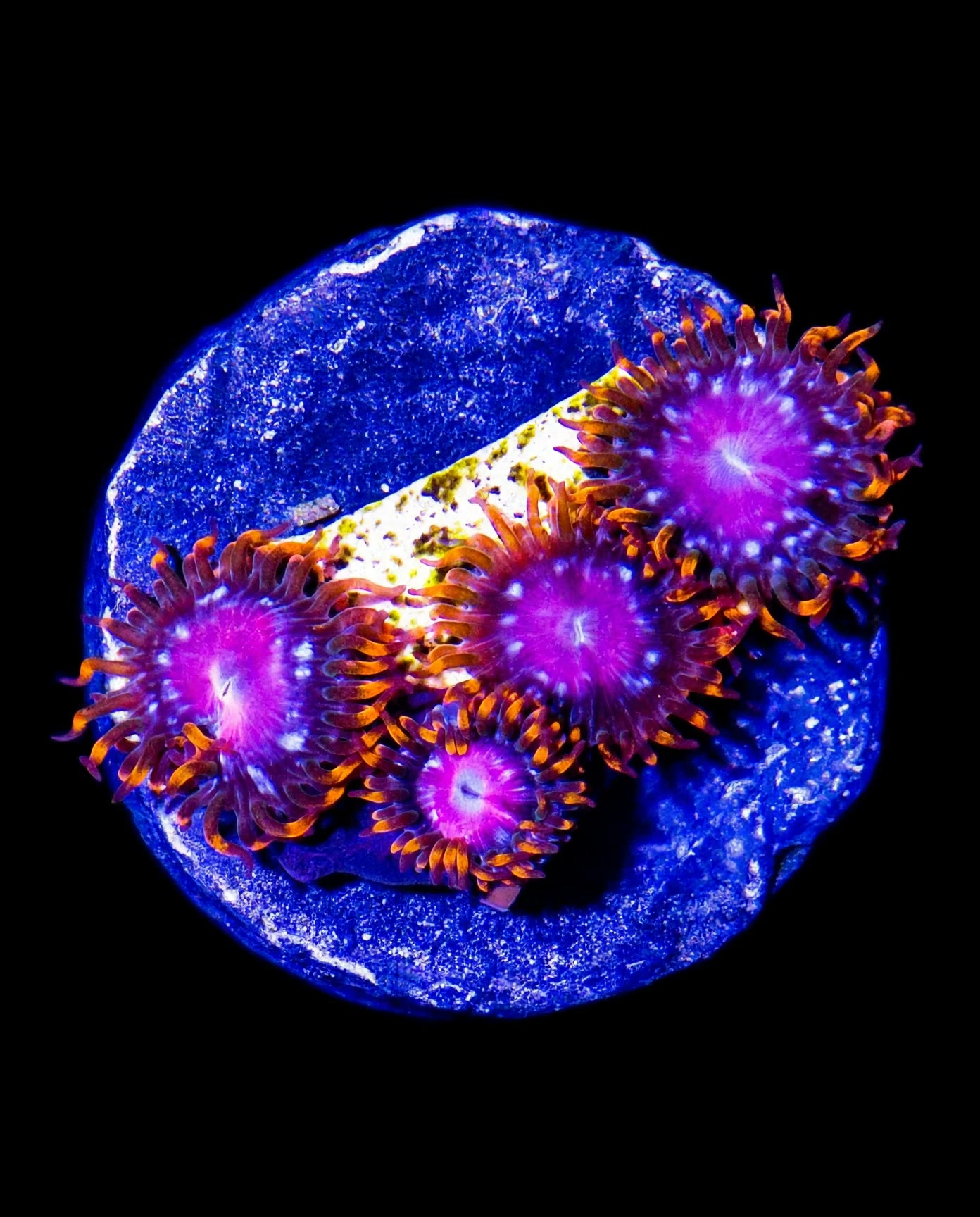
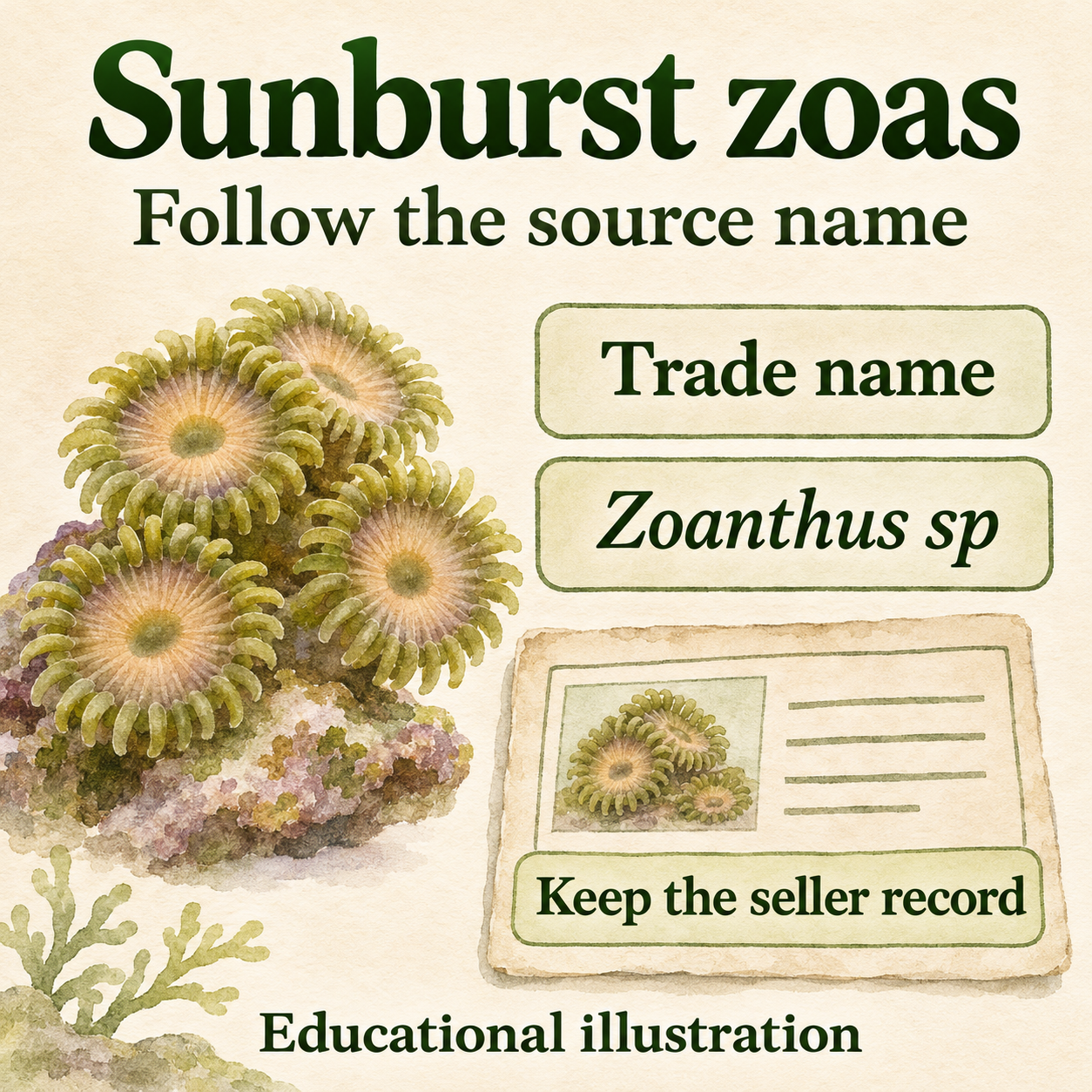
A small zoa frag can become the patch you look for first when the lights come on. Start by keeping its name attached to its source. This entry follows the ECC Sunburst Zoanthid catalog name and the database identification, Zoanthus sp. Eye Catching Coral lists Sunburst among its aquacultured frags. [1]
A trade name does not settle a species identification or prove that every similarly named frag shares a lineage. Keep the seller record and an arrival photograph. Names such as KH Sunburst and Japanese Sunburst appear elsewhere in the hobby. Their relationship to this ECC offering was not verified for this guide.
Give it a gentle start
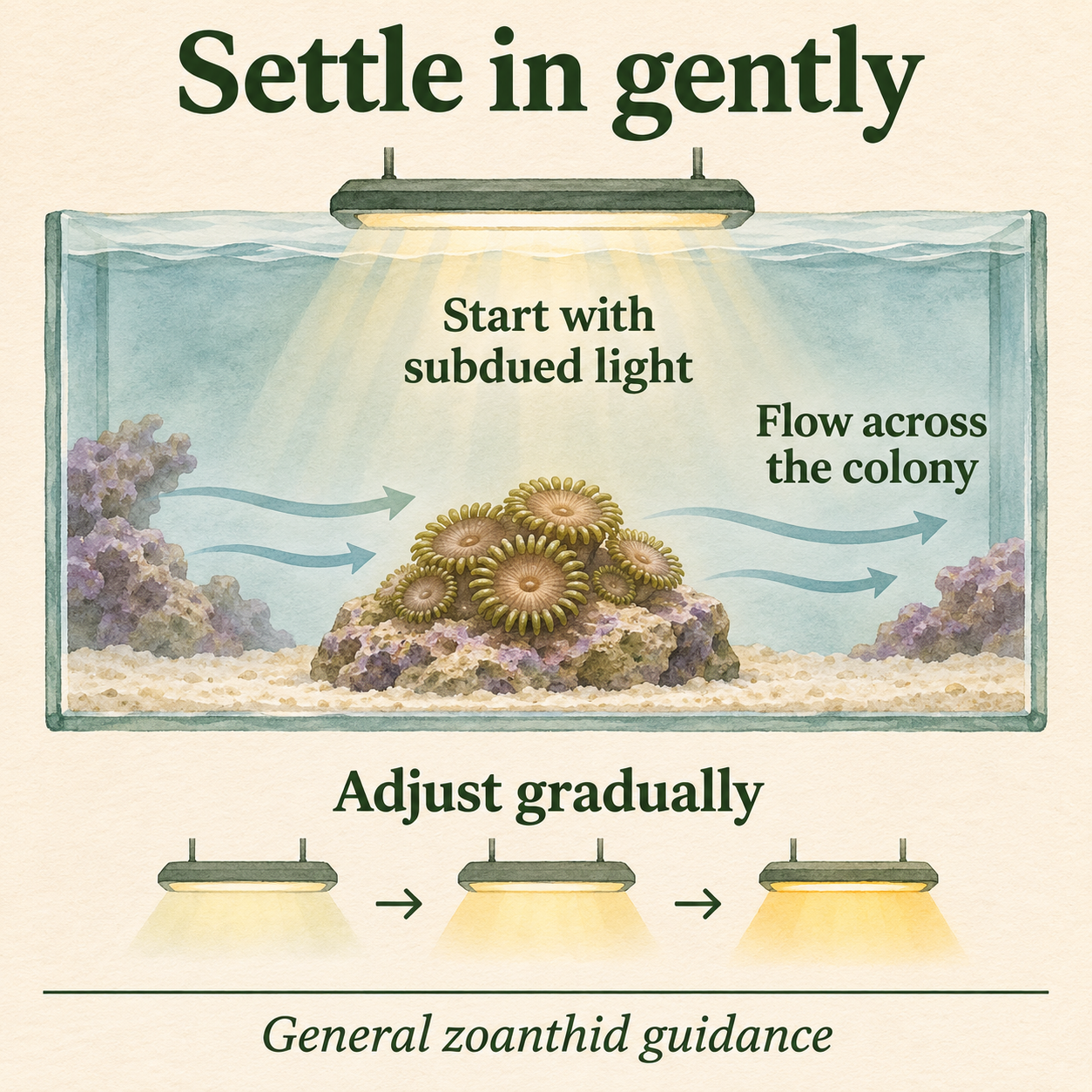
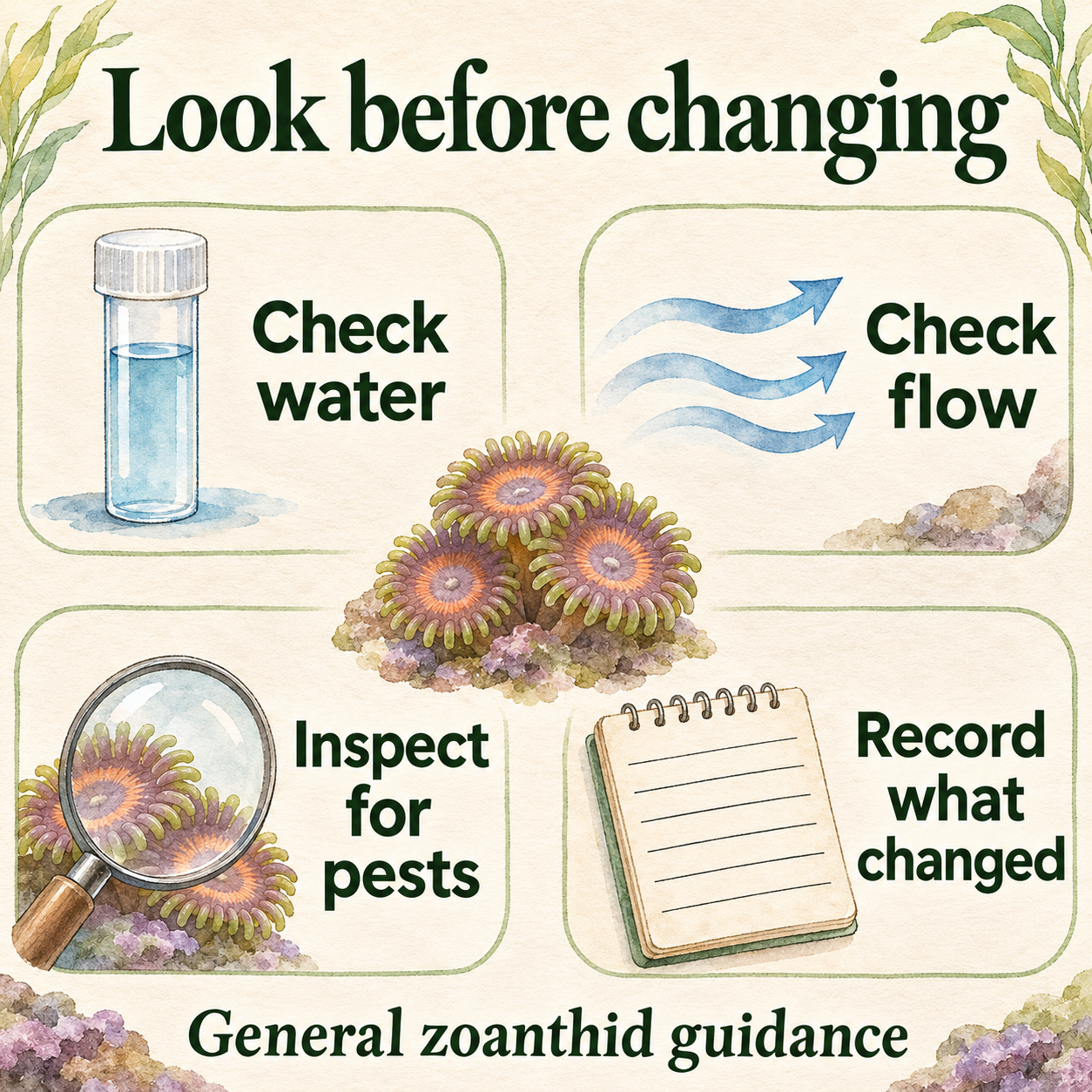
Choose a secure spot with subdued light and current passing across the colony. BRS lists the ECC offering for low to medium light and moderate flow, with initial placement lower down or in shade. Let its response guide gradual changes. A position called “mid” will receive different light in different tanks. [2]
Tidal Gardens grows zoanthids under varied lighting and reports that spectrum changes their appearance. Compare photographs under the same settings before deciding the coral has changed color. Its grower guidance also favors enough flow to prevent debris collecting between polyps. Avoid making several adjustments at once; write down what you changed. [3]
Plan for the growing edge
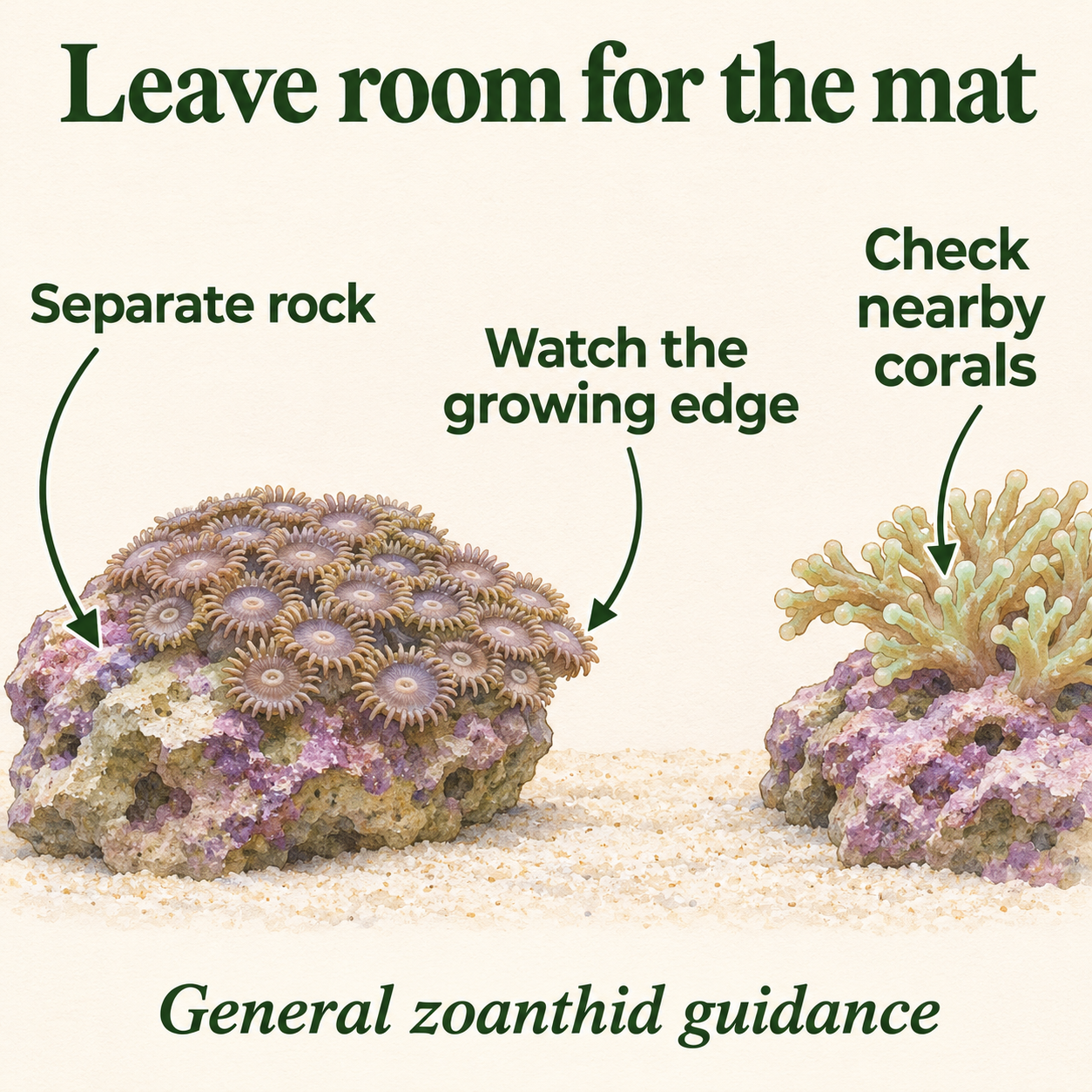
Picture the space beyond today's plug. Zoanthids spread across surfaces, and BRS recommends a separate rock to make that expansion easier to manage. Watch where the mat approaches neighboring corals. An initial gap needs another look as colonies grow. [2]
The Atlas card calls this “Moderate” space. That is a useful reminder to allow for encroachment. It does not mean this morph has a documented strong sting. Leave the care card unchanged and keep checking the actual boundary.
Take a photograph from the same angle now and again. It gives you a simple record of which edge is advancing, where a neighbor is getting close, and whether the rock still suits the layout.
Make observation part of the routine
Zoanthids receive much of their energy through photosynthetic partners. Small supplemental foods can be tried, with the coral's response and the tank's nutrient tests guiding the routine. Extra food that simply accumulates around the frag is a reason to reassess. [3]
If a colony stays closed or loses tissue, look at water conditions, accumulated debris, light, flow and possible irritation before reaching for a treatment. Tidal Gardens identifies zoanthid-eating nudibranchs and sundial snails among potential pests. A close inspection can give you a better question to ask than a photograph of closed polyps alone. [3]
Record the date, recent changes and what you can actually see. Seek help with a clear photograph if tissue loss continues. This guide does not prescribe a dip or diagnose a disease from appearance.
Field notes — what keepers report
No verified husbandry account tied specifically to ECC Sunburst was found in the sources checked for this guide. Search results included similarly named zoas, sales lists and identification guesses. Those cannot establish how this particular line behaves.
General zoanthid experience shows why context matters. In Reef2Reef's January 2023 “Zoas Struggling” discussion, NSS described colonies doing well and others declining in the same aquarium. A reply proposed more light. NSS questioned whether some polyps were already irritated by it. The keeper later found a vermetid snail among the affected zoas and planned both its removal and a lighting change. [4]
That thread gives competing explanations, not a controlled answer. It supports checking the whole situation and recording changes. It does not establish a Sunburst-specific light target or prove that light caused the trouble.

Handle zoanthids cautiously
Some zoanthids and palythoas can contain palytoxin. CDC has documented serious aquarium-associated exposures. The trade name and a reassuring-looking photograph cannot serve as a safety test. [5]
Wear sturdy waterproof gloves and eye protection. Minimize handling and keep colonies submerged when possible. Keep other people and pets away from the work. Never boil, steam, pressure-wash or scrub colonized rock under running water. Wash your hands after aquarium work and before touching your face. [6]
If exposure is suspected, seek urgent medical advice and explain that aquarium coral and possible palytoxin are involved. Breathing difficulty or severe symptoms warrant emergency help. Keep the page's standalone palytoxin safety notice in place; this section reinforces it. [5,6]
Field Notes
Related species
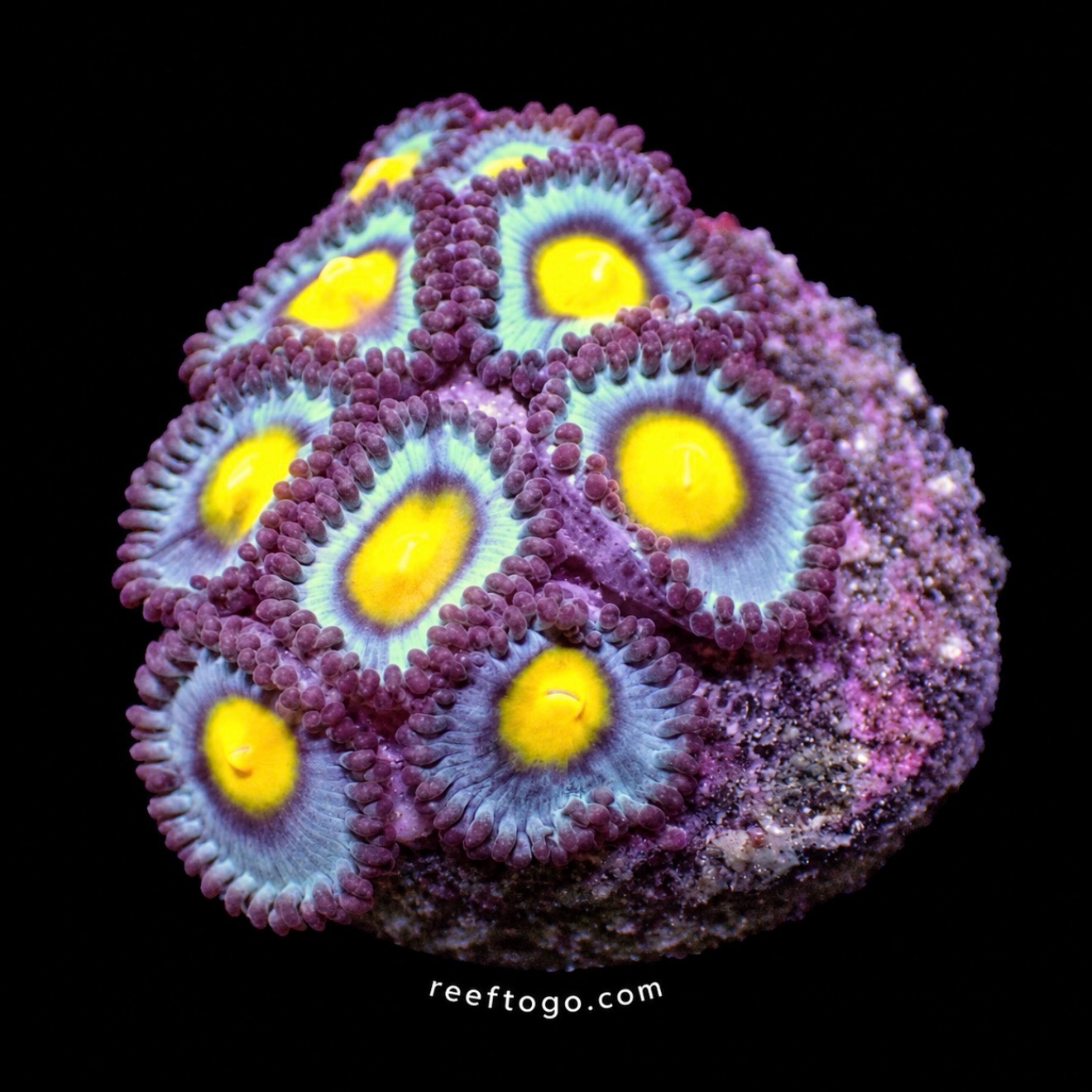
Alien Eye zoas
Zoanthus sp
Same genus
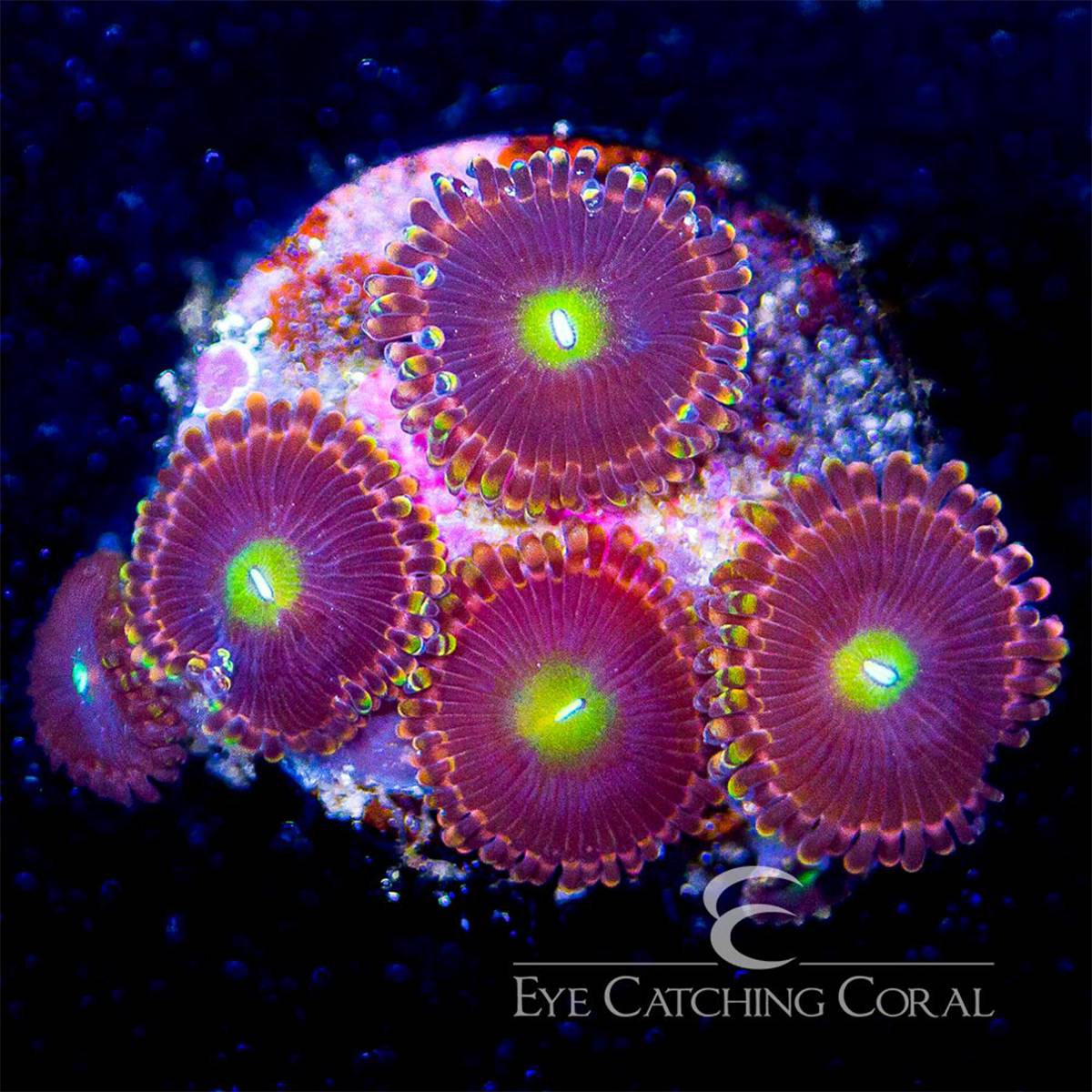
Antimatter zoas
Zoanthus sp
Same genus
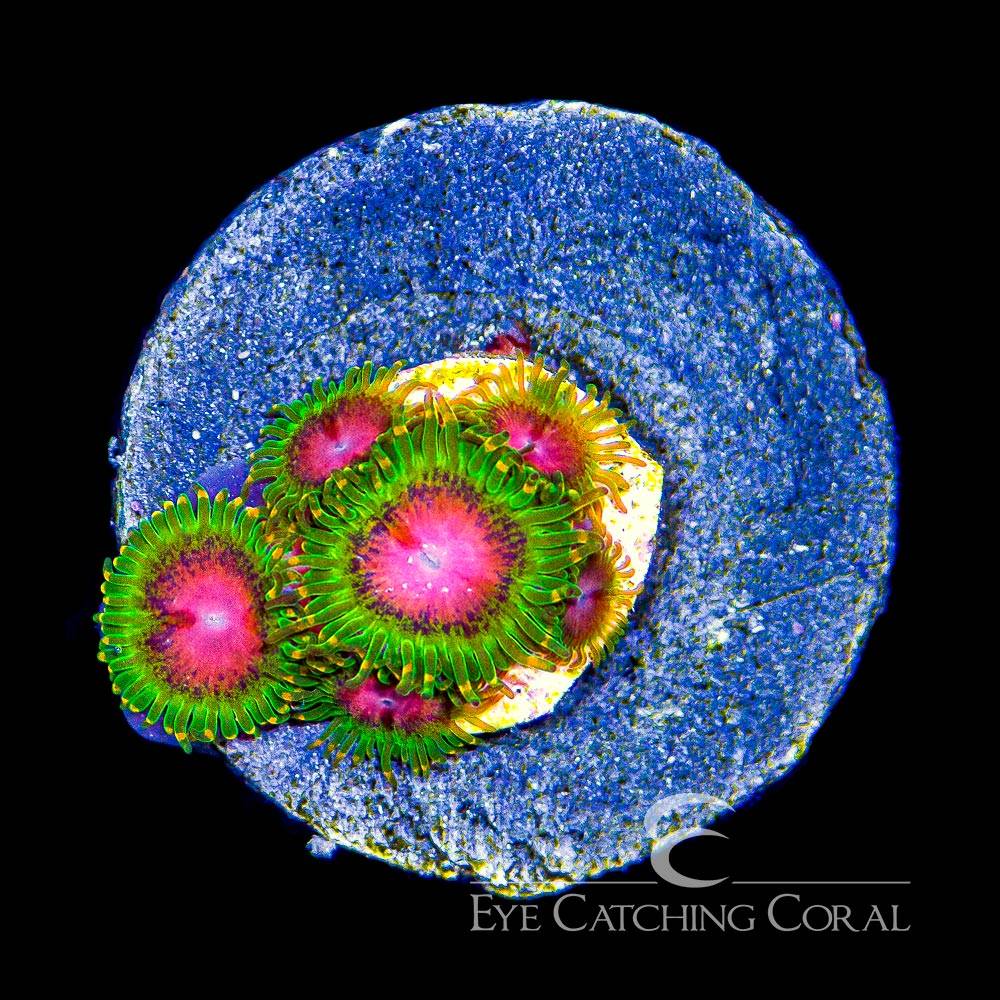
Awesome Blossom zoas
Zoanthus sp
Same genus
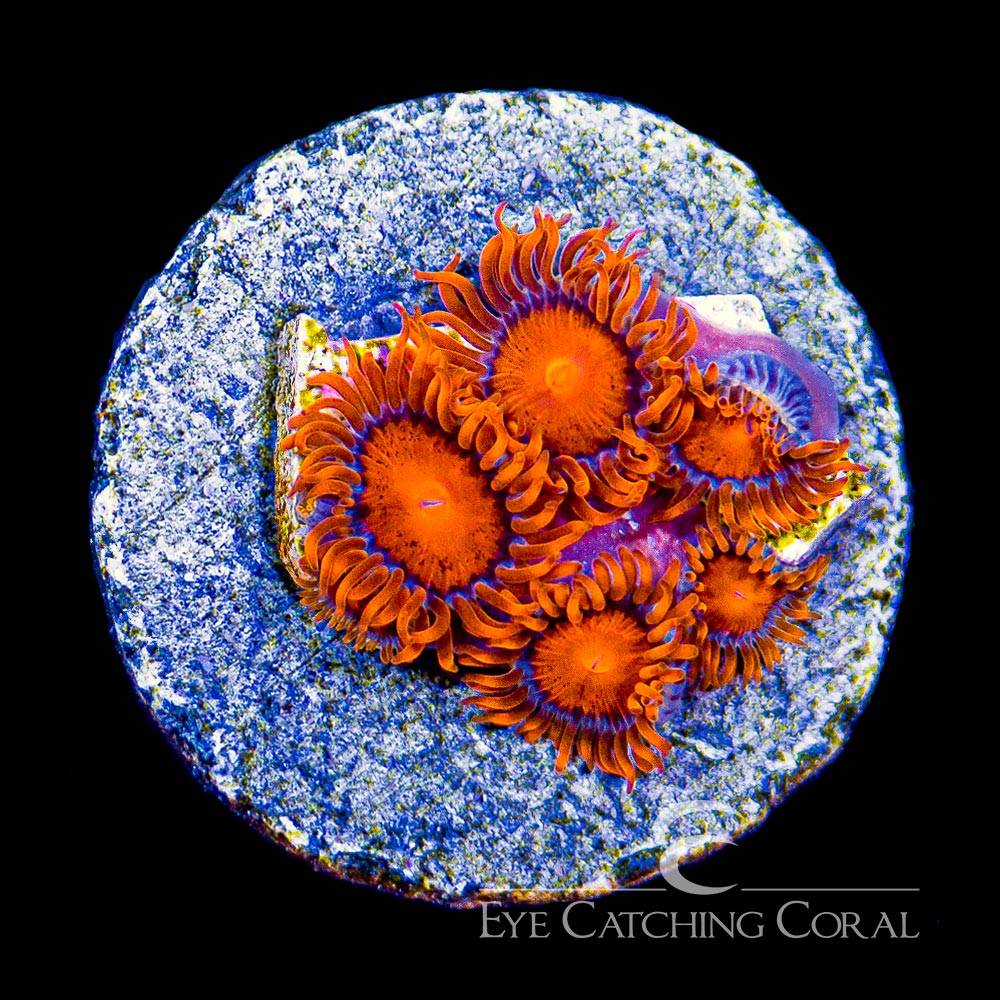
Bam Bam zoas
Zoanthus sp
Same genus
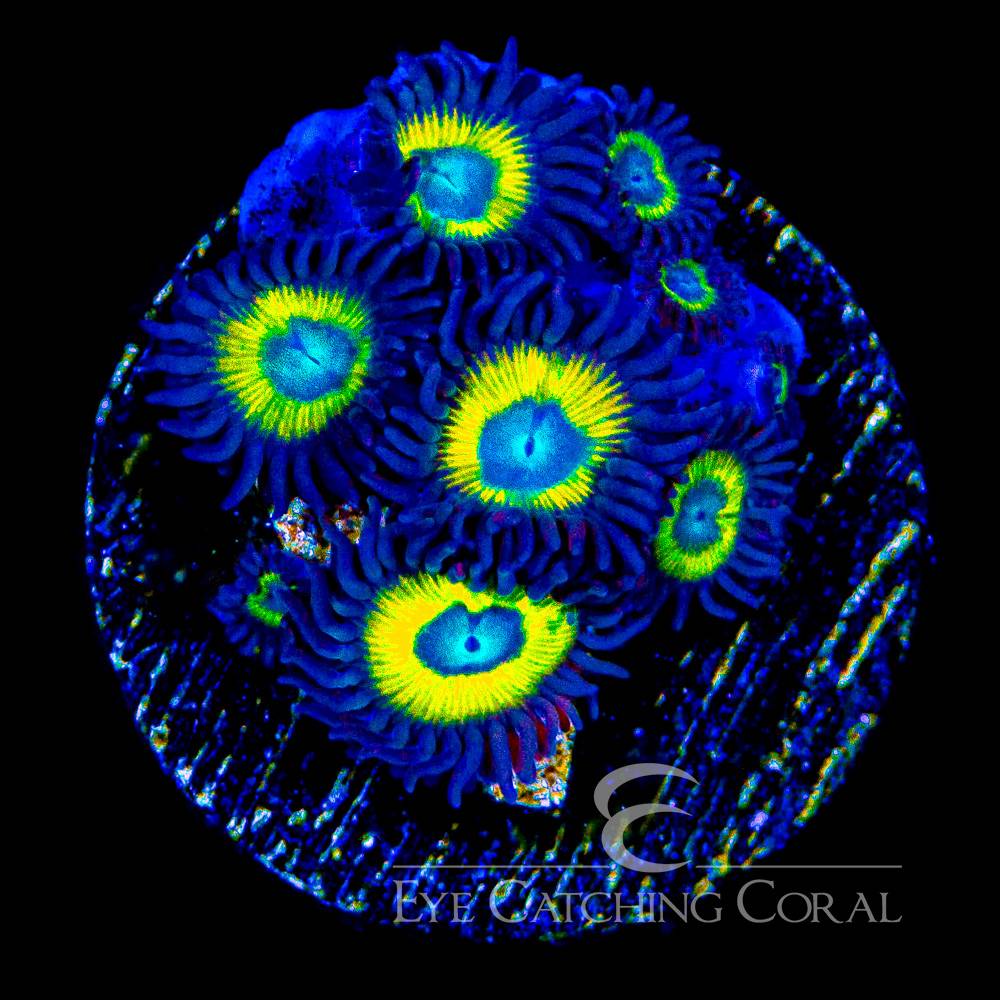
Black Bella zoas
Zoanthus sp
Same genus
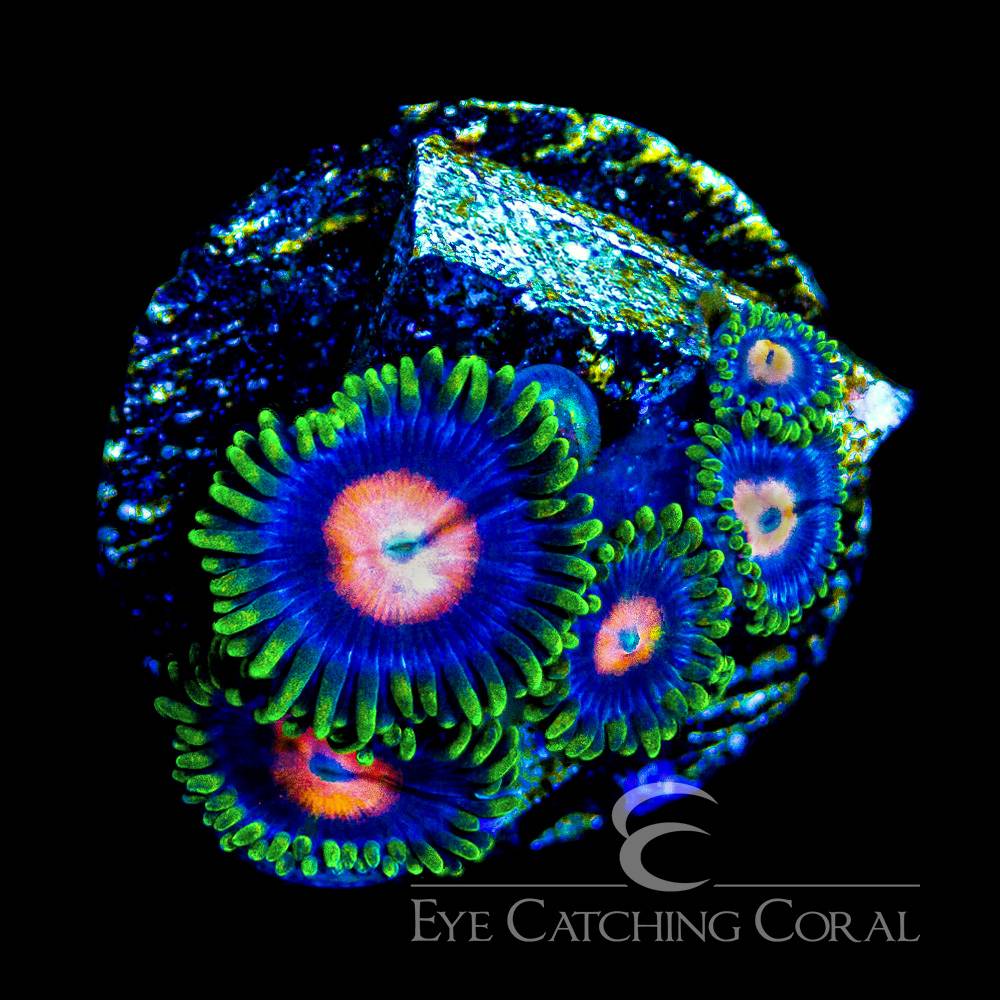
Blow Pops zoas
Zoanthus sp
Same genus
Burning Ember zoas
Zoanthus sp
Same genus
Burning Suns zoas
Zoanthus sp
Same genus