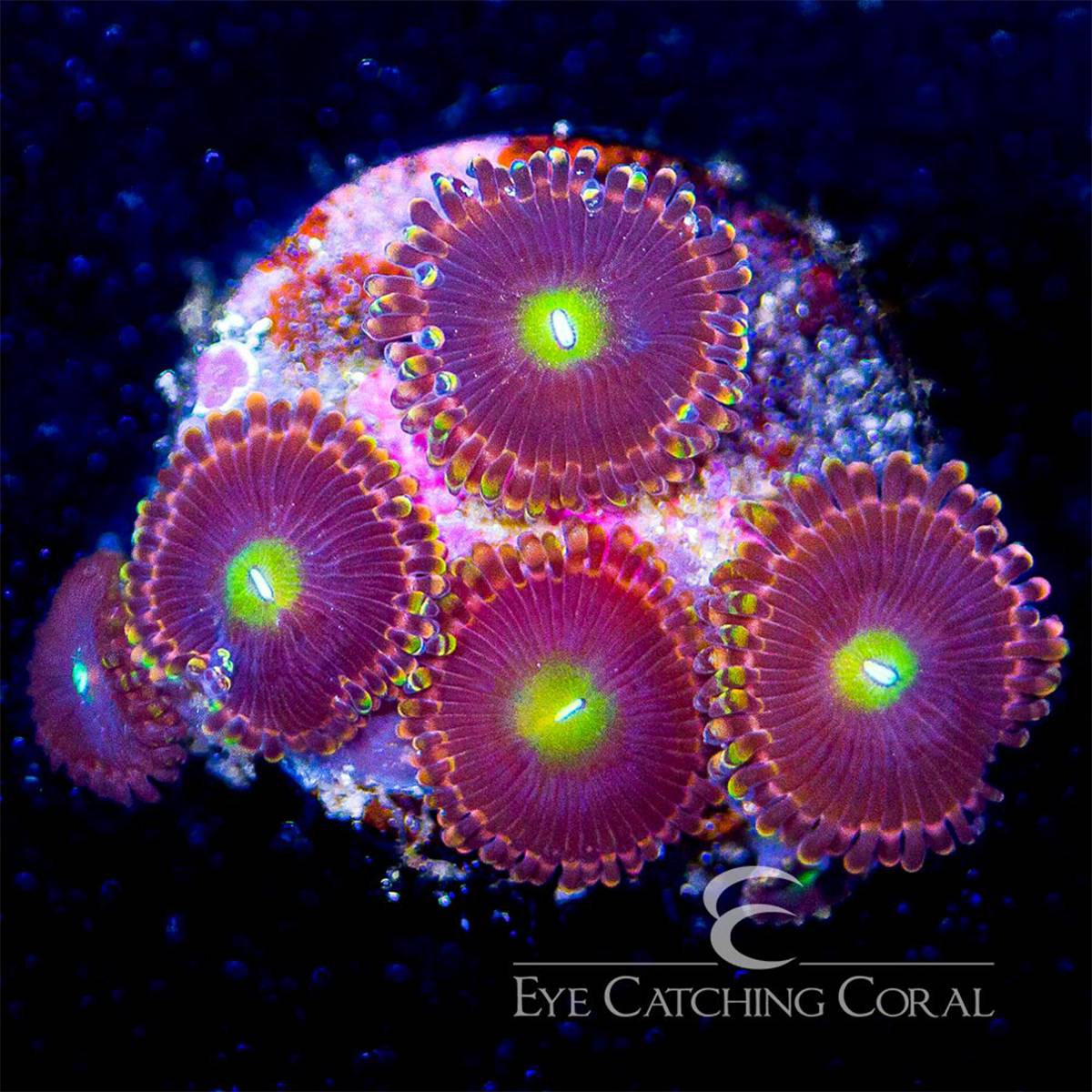
Super Fruit zoas
Zoanthus sp
Palytoxin safety
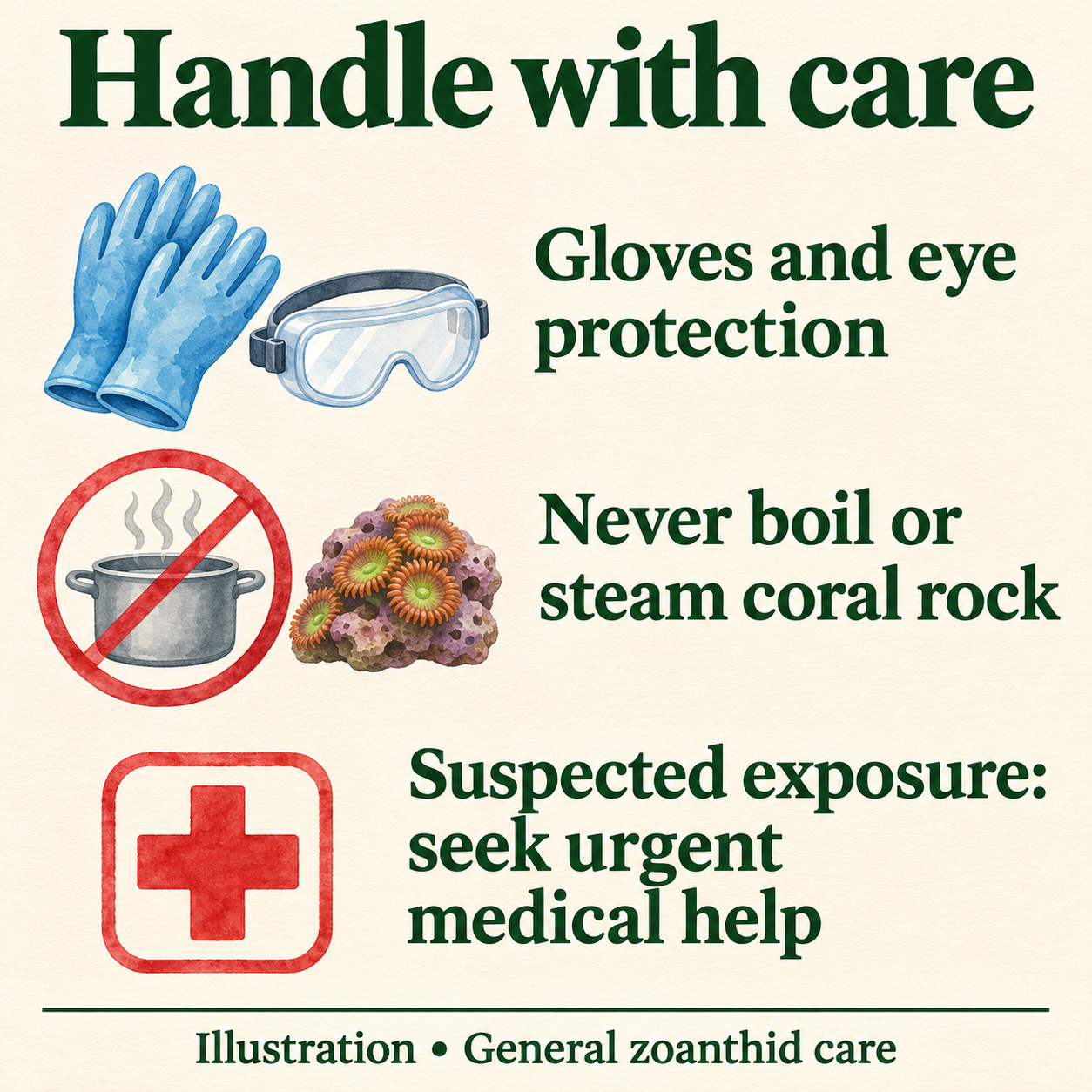
Some zoanthids and palythoas can contain a potent toxin. Wear sturdy waterproof gloves and eye protection, minimize handling, and keep colonies submerged when possible. Never boil, steam, pressure-wash or scrub colonized rock under running water. Keep other people and pets away during handling. If exposure is suspected, seek urgent medical advice and tell the clinician about possible palytoxin exposure.
Sources: CDC: palytoxin exposure · OATA: avoiding palytoxin poisoning
Gallery
Keep the name with the frag
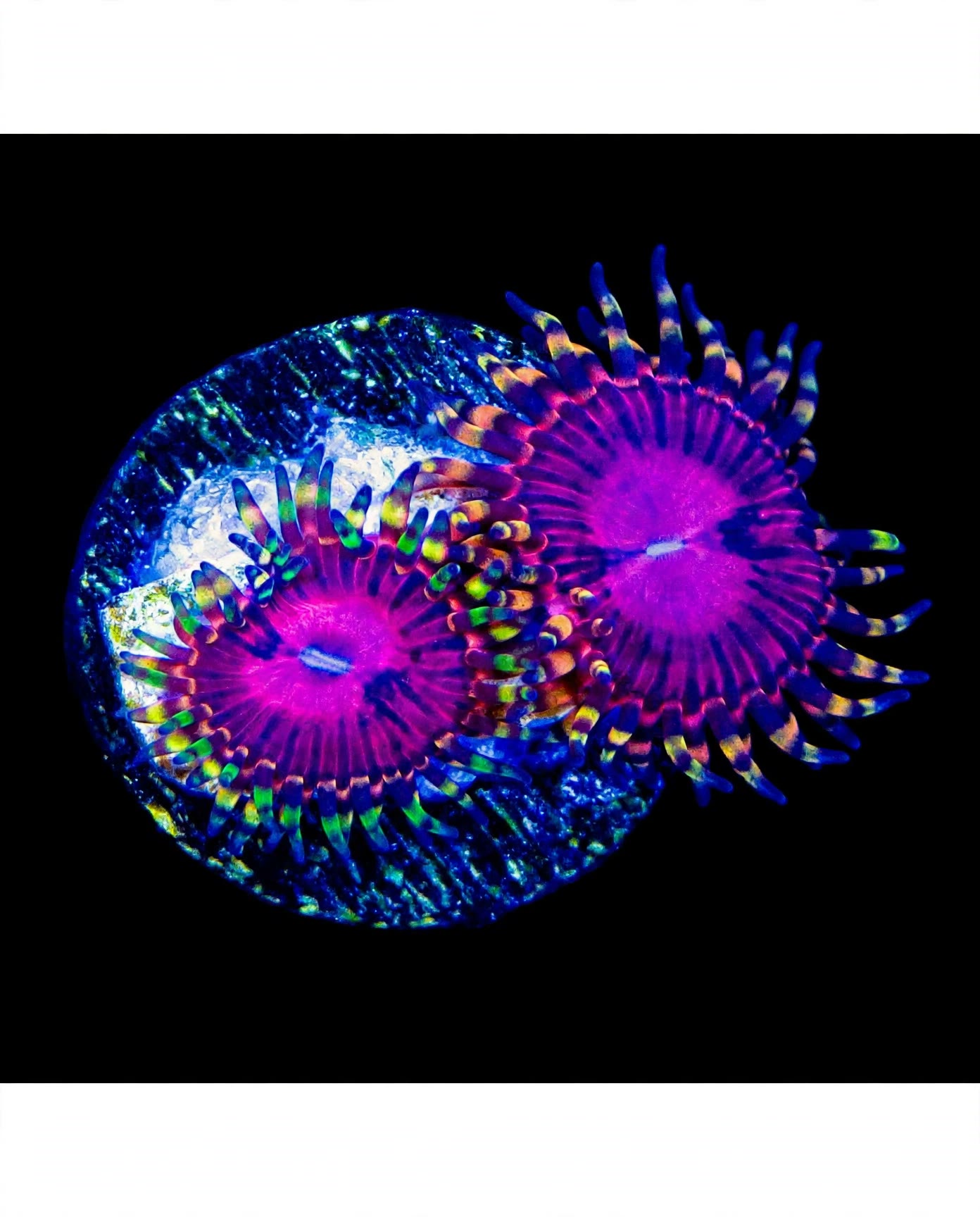
A little zoa frag gives you a front-row seat to a colony taking shape. Watch the first polyps open, then look for new ones along the edge. With Super Fruit, start with a settled home and leave room for that edge to grow.
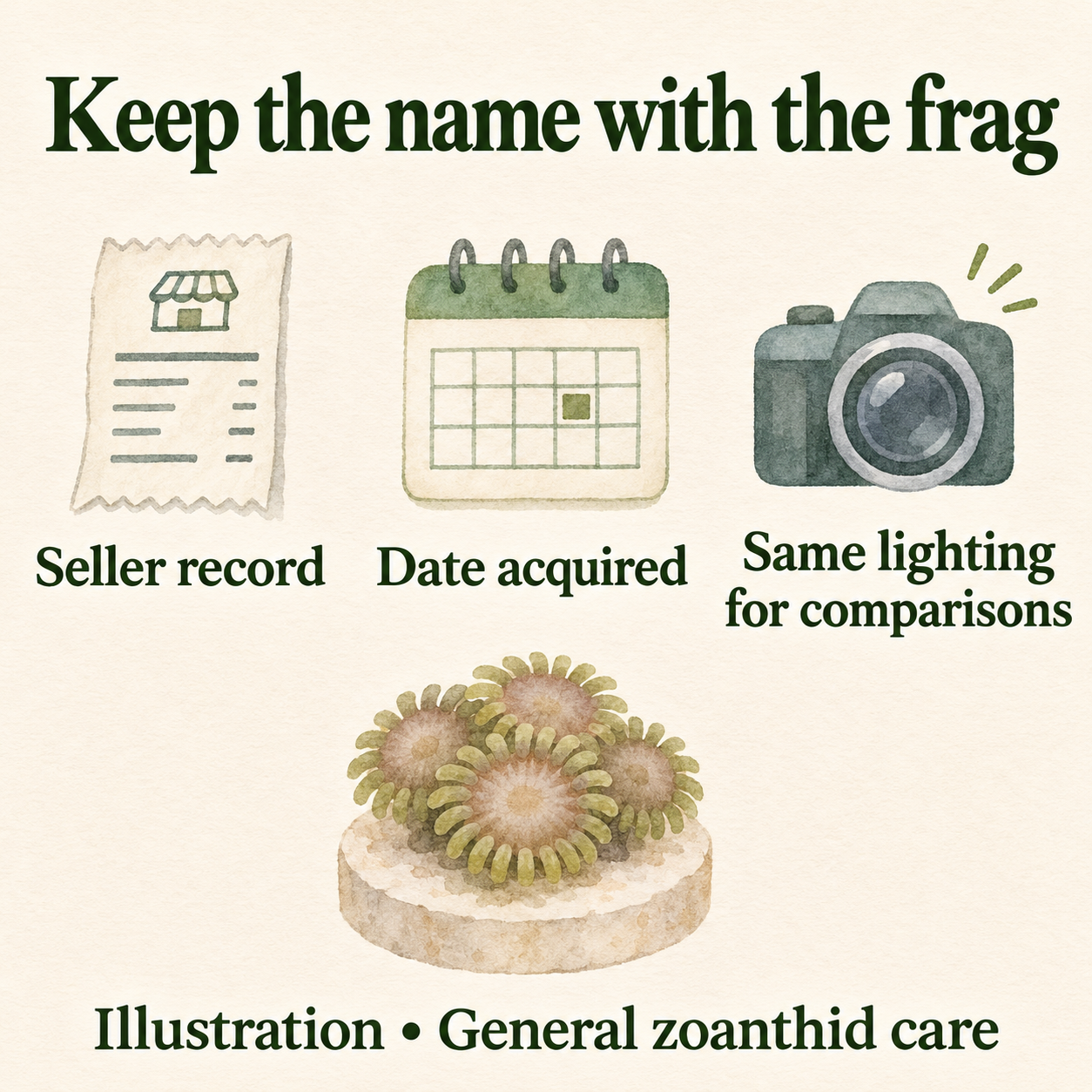
Save the seller's name and the date you brought it home. Super Fruit is sold under that name by Eye Catching Coral. Keep the label with any pieces you later share.
Take a photo under your usual tank lights. Use the same light settings for later pictures so you can follow the colony's progress.
Give it a gentle start
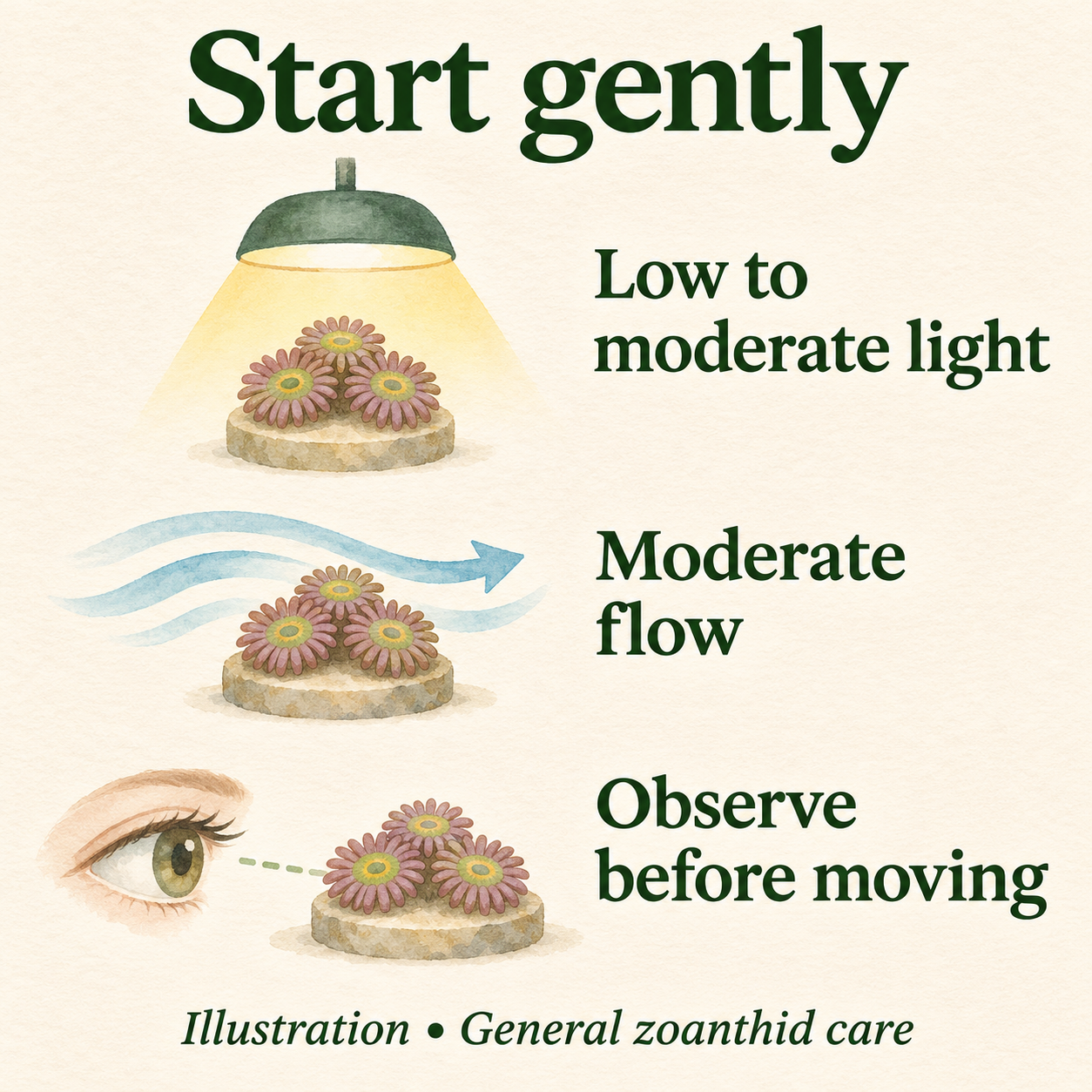
Start on lower-to-middle rockwork, away from the brightest spot beneath the light. A lightly shaded ledge works well in a bright reef. Ask the seller what lighting the frag came from.
Let it settle and open regularly. If it needs more light, move it upward in small steps, giving it time to respond between moves. Leave a comfortable, growing frag where it is. If it turns pale after a move, return it to gentler light.
Aim for moderate flow across the mat. The skirts should move gently while the polyps stay open. Loose particles should drift past instead of collecting between them. Redirect a jet that keeps the colony folded shut.
Plan for the growing edge
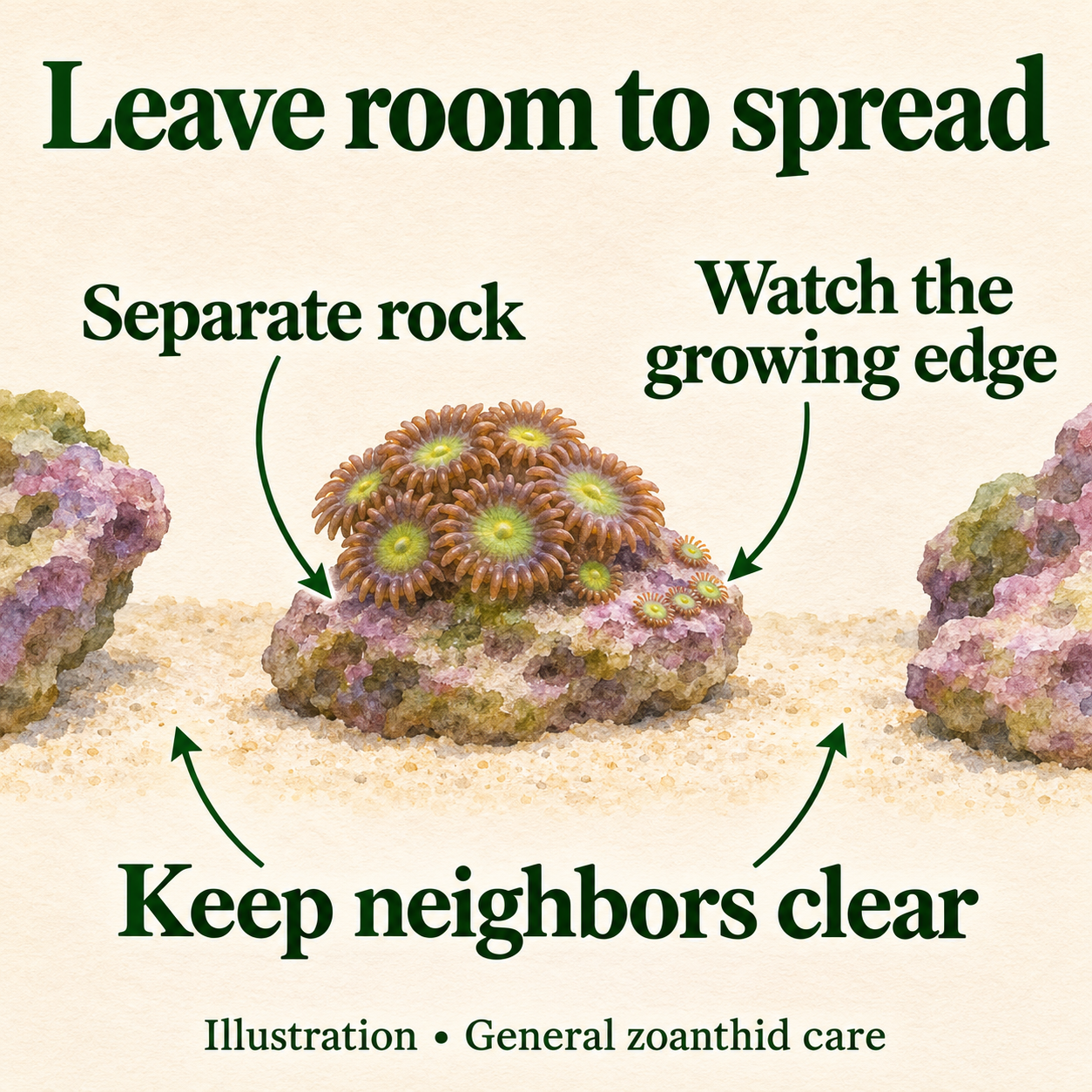
Give Super Fruit its own small rock with a clear gap around it. That keeps a fast-growing mat easier to manage and lets you move the whole rock when needed.
Start with about 1 to 2 inches of space from neighboring corals. Leave more beside corals with long stinging tentacles. Check the gap during weekly maintenance as new polyps reach the edge. Move the rock before colonies touch.
Keep sand from piling onto the mat and watch for loose rubble bridging the gap to nearby rockwork. A little attention now saves a much harder separation later.
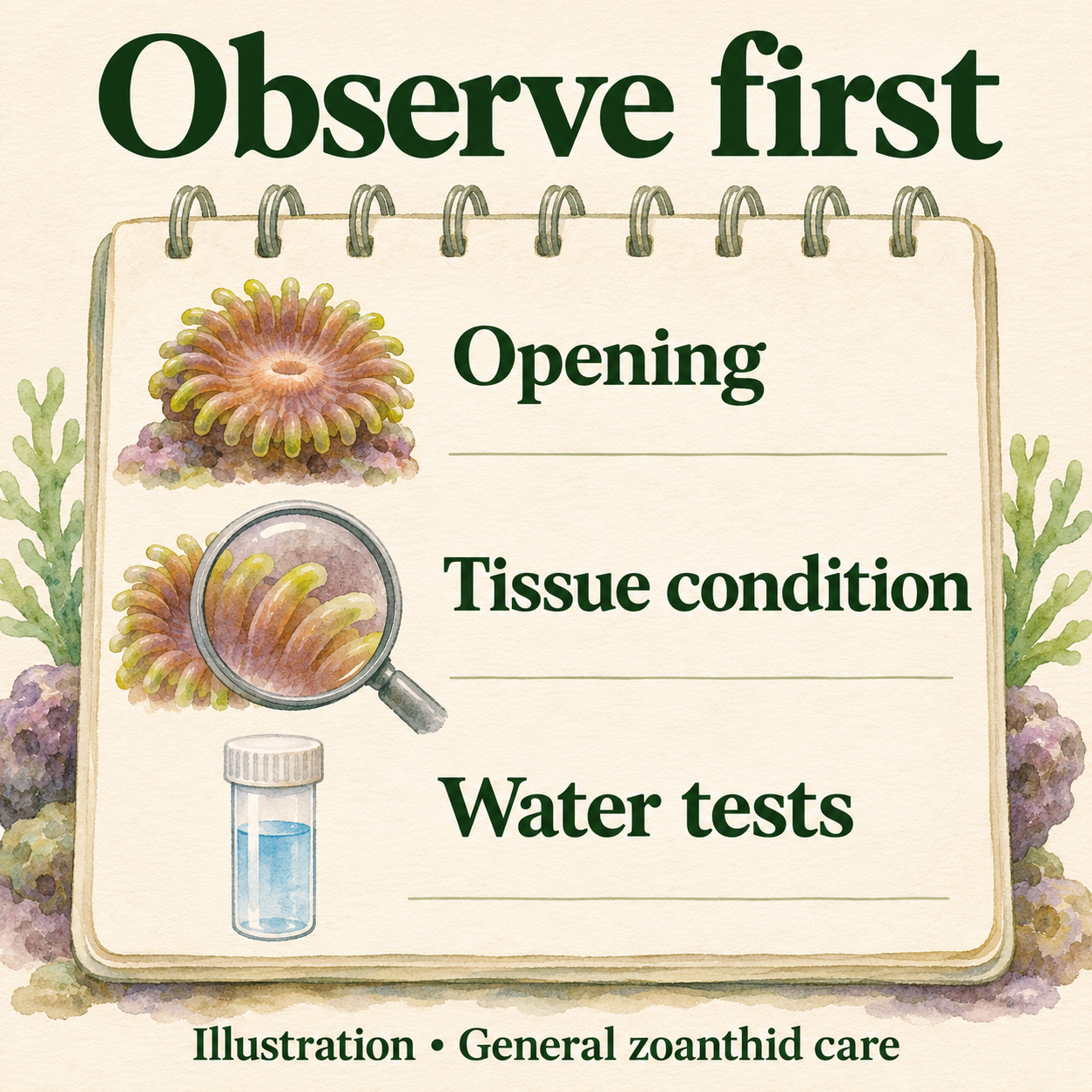
Make observation part of feeding
Light supplies much of a zoanthid's energy. A small supplemental meal is something to try once the frag is settled and opening well.
Start with a tiny target feed once a week. Mix a fine coral food with tank water, following its directions. Gently release a little above the open polyps with a pipette. Keep the tip off the tissue.
Watch for particles sticking and the polyp folding around them toward its mouth. Food blowing past calls for a gentler delivery. If it sits uneaten on the mat, use less next time. Skip extra meals when the coral shows no interest.
Check nitrate and phosphate as you adjust feeding. Keep a brief note of meals, opening and new growth. Use that record to decide whether the extra food is helping.
Field notes — what keepers report
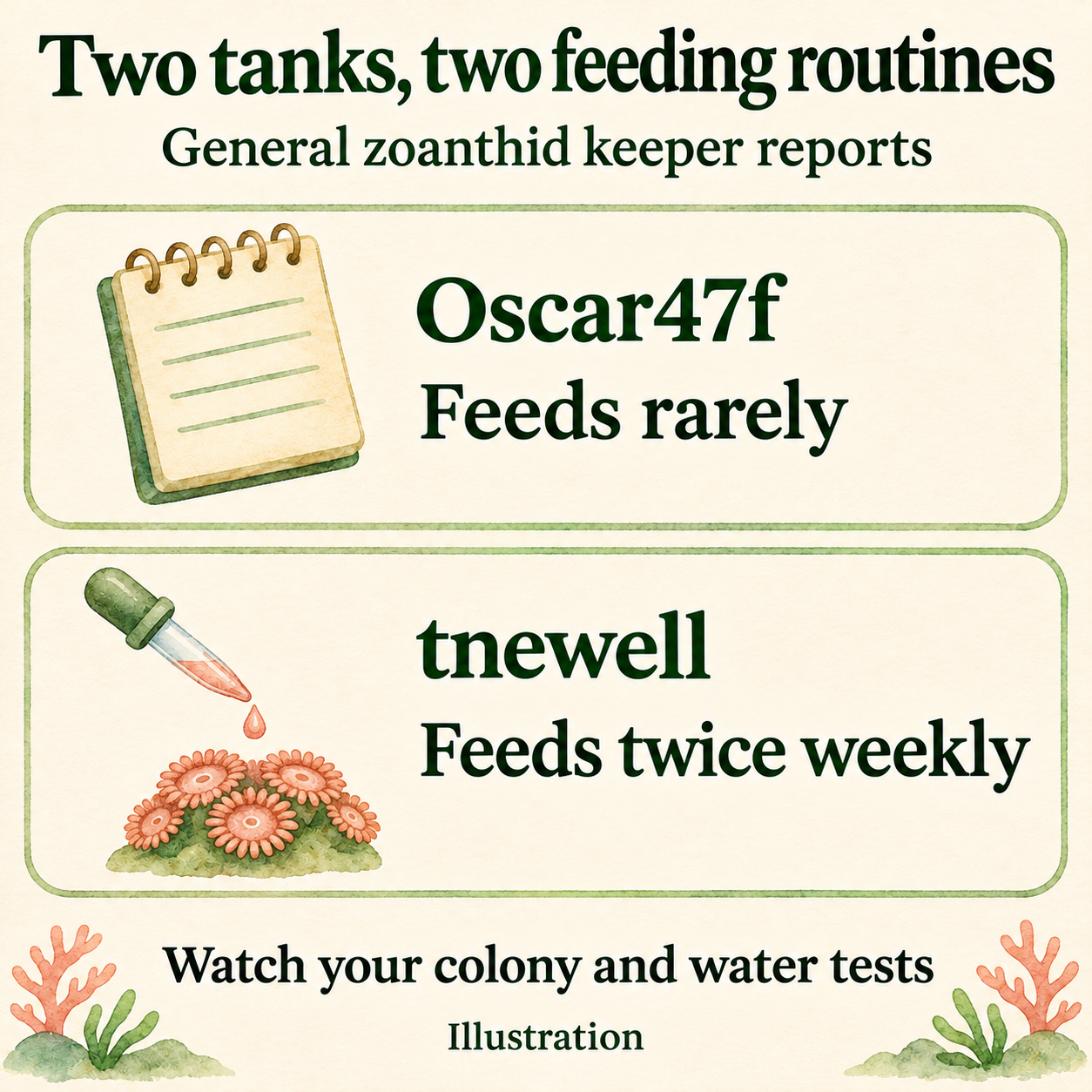
No verified Super Fruit-specific husbandry reports were found. General zoanthid keepers have different feeding routines.
In one Reef2Reef discussion, Oscar47f said frequent feeding did poorly in their tank and that they fed rarely. In the same thread, tnewell reported their fastest growth with twice-weekly direct feeding. Start small and let your own colony and water tests guide the next meal.
Handle zoanthids cautiously
Zoanthids can contain palytoxin, a powerful toxin. Wear sturdy waterproof gloves and eye protection when handling them. Hold the plug or rock, keep handling brief and keep the colony submerged whenever possible.
Keep children, pets and bystanders away while you work. Wash your hands afterward and before touching your face or eating.
Never boil, steam, microwave or pressure wash coral rock. Do not scrub it under running water. These jobs can release dangerous spray or mist.
If you suspect exposure, get urgent medical help and tell the clinician that palytoxin may be involved. Call emergency services for trouble breathing or other severe symptoms.
Field Notes
Related species
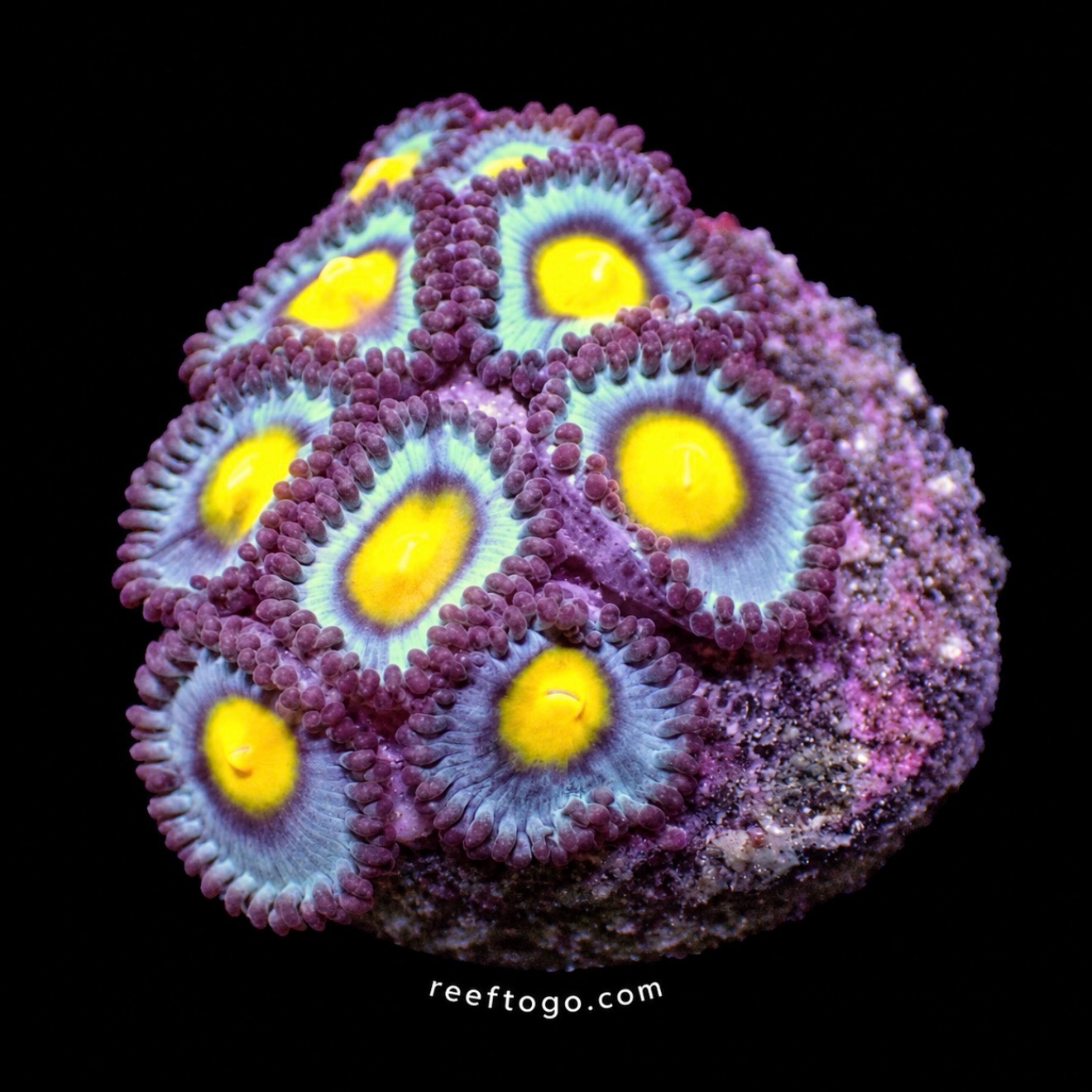
Alien Eye zoas
Zoanthus sp
Same genus
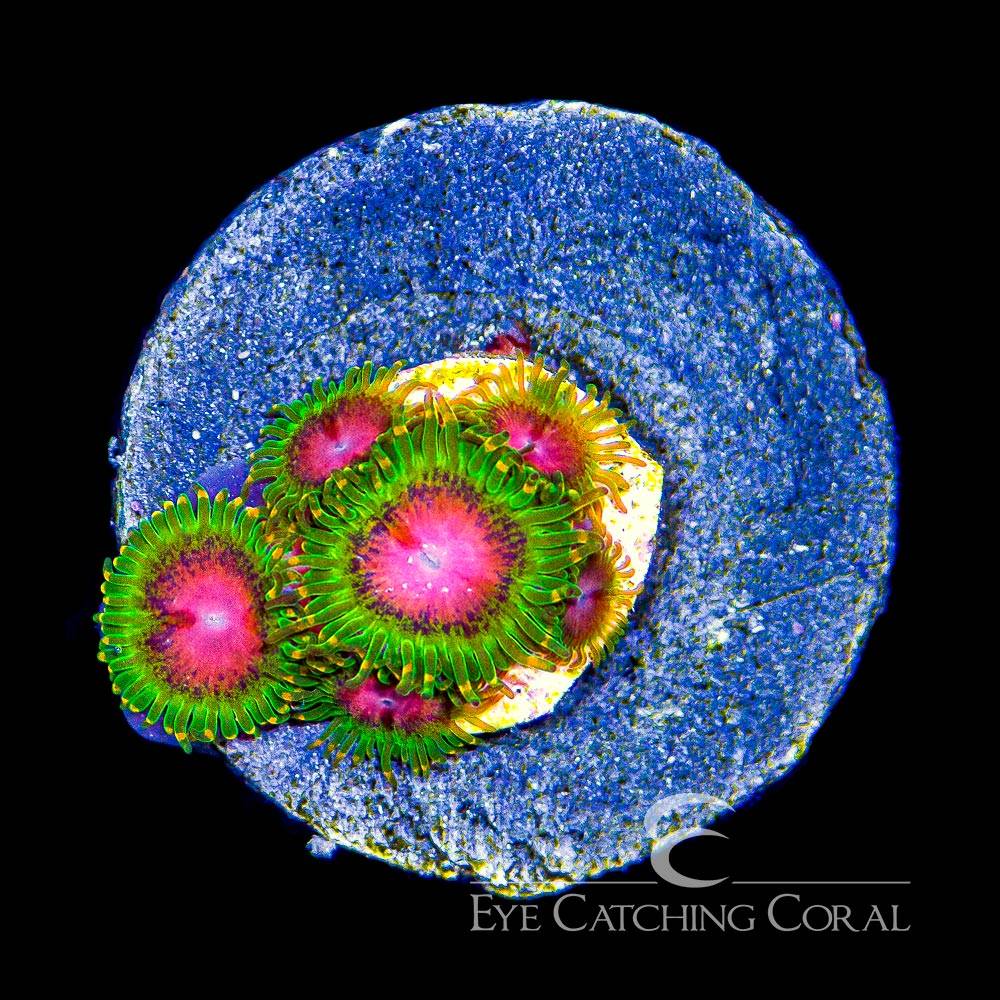
Antimatter zoas
Zoanthus sp
Same genus
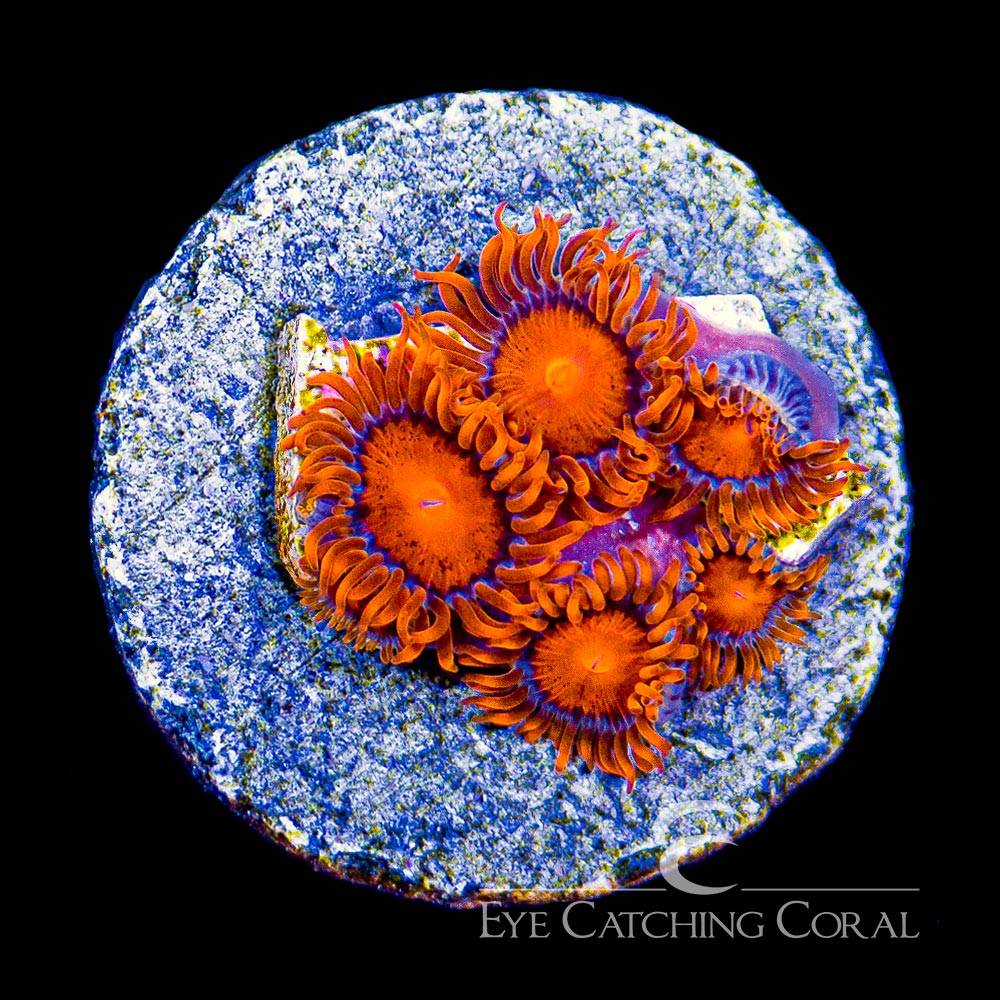
Awesome Blossom zoas
Zoanthus sp
Same genus
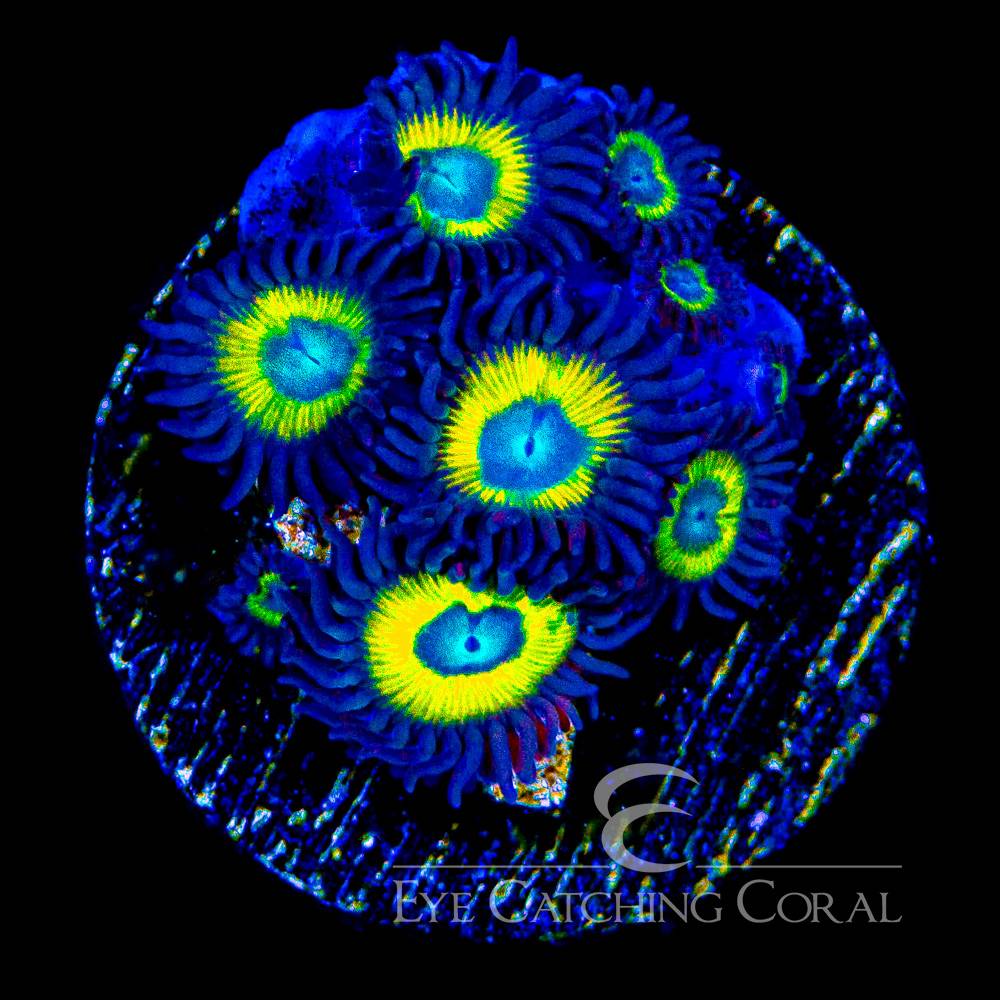
Bam Bam zoas
Zoanthus sp
Same genus
Black Bella zoas
Zoanthus sp
Same genus
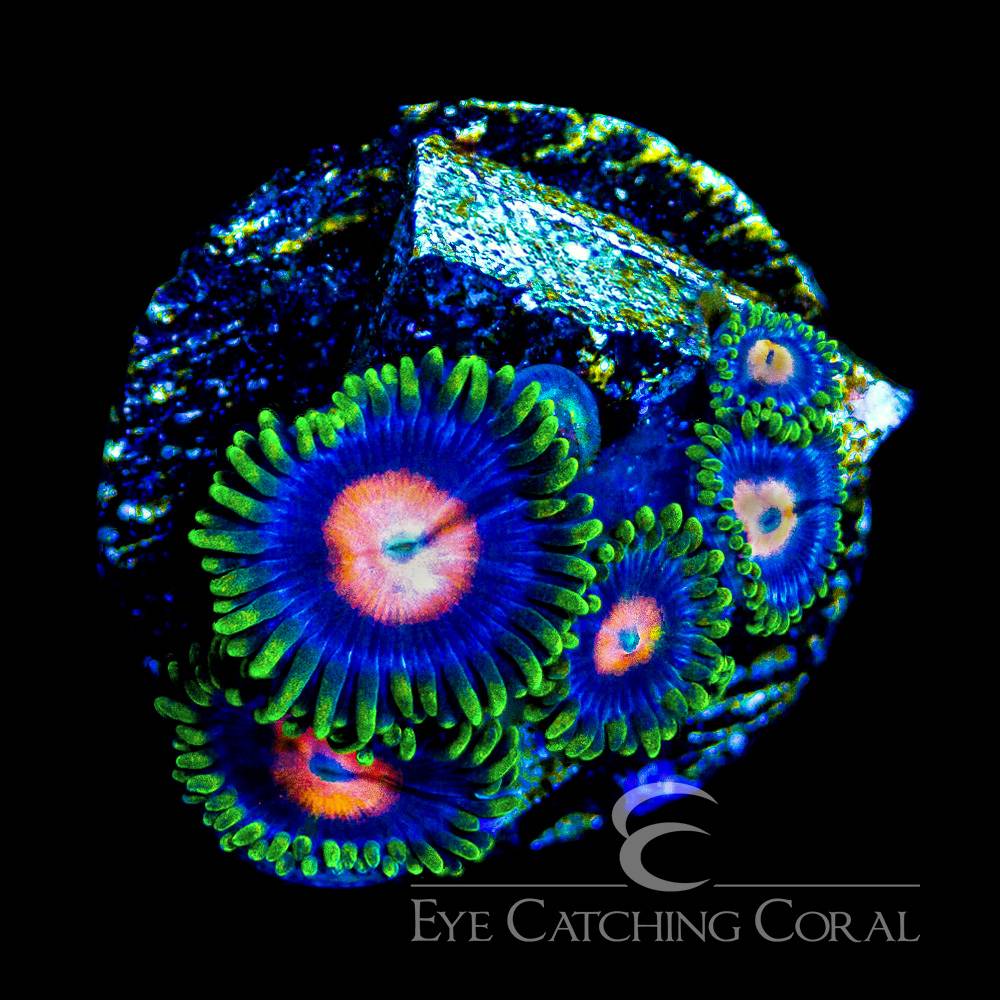
Blow Pops zoas
Zoanthus sp
Same genus
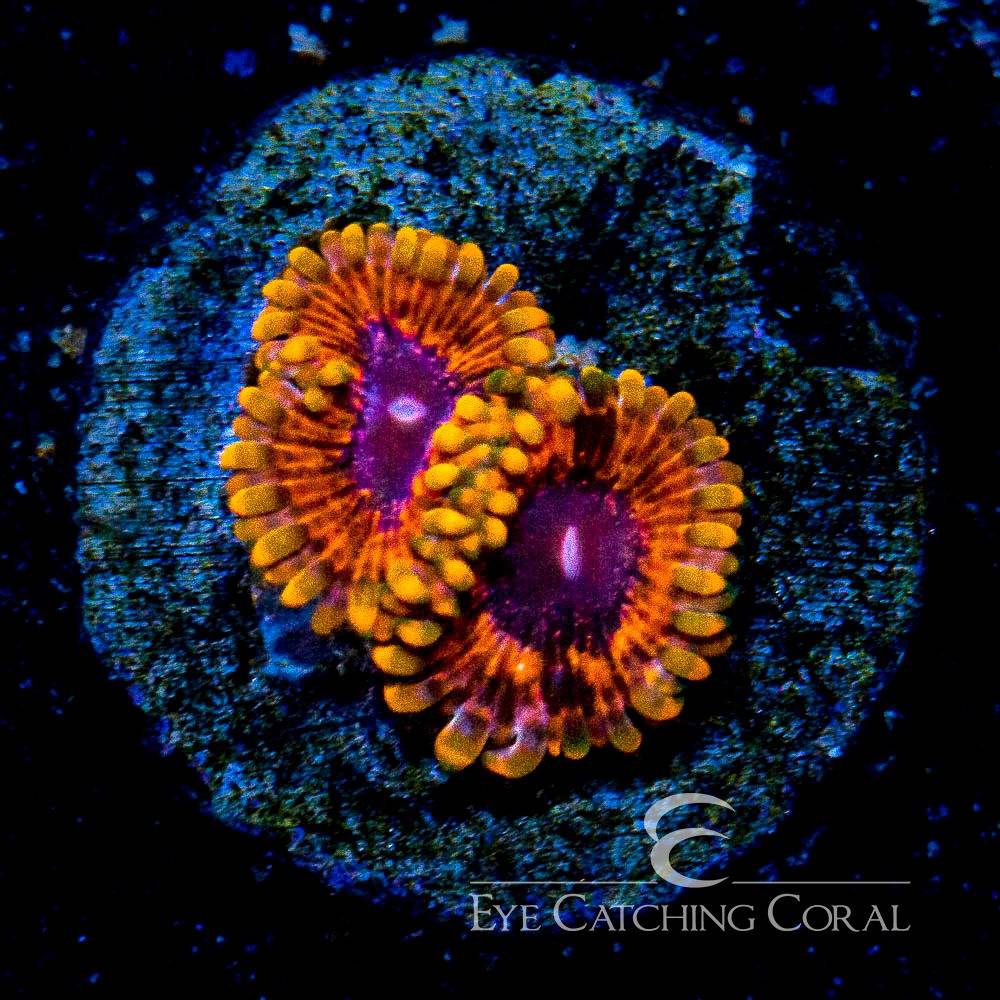
Burning Ember zoas
Zoanthus sp
Same genus
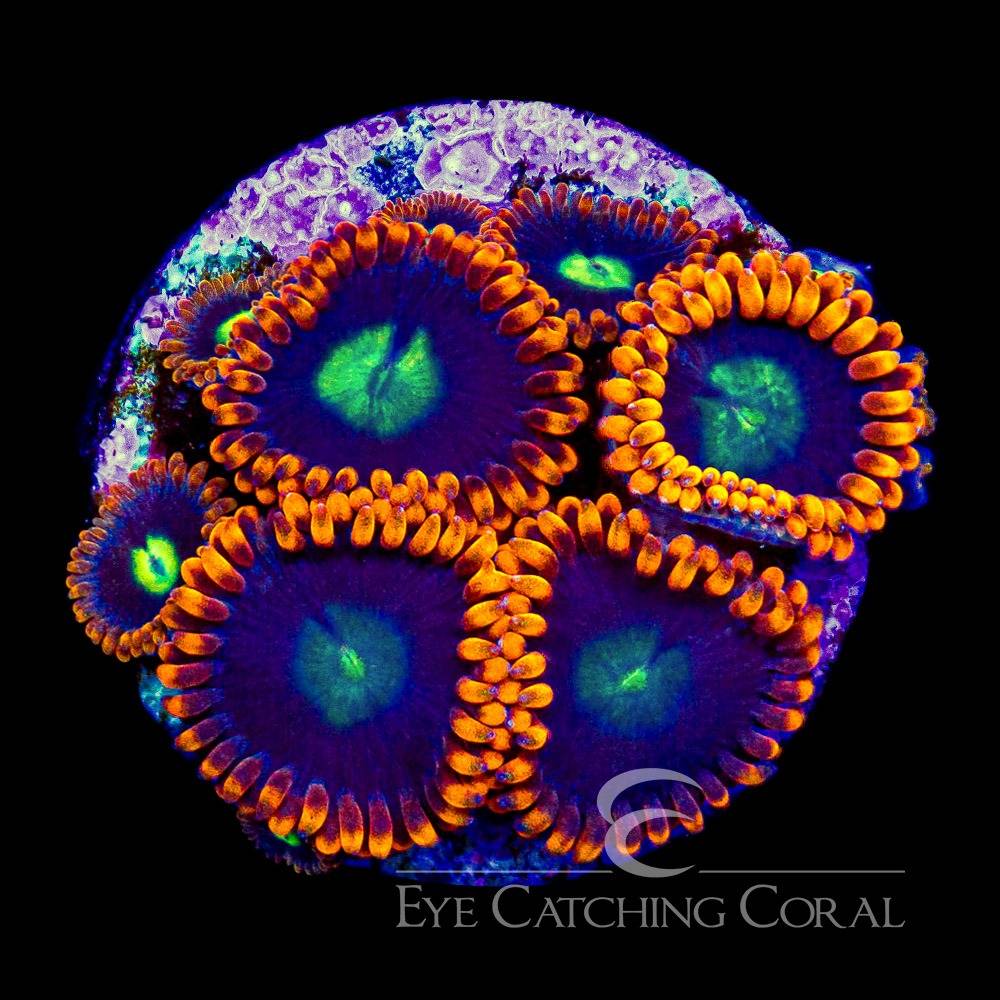
Burning Suns zoas
Zoanthus sp
Same genus