Turbinaria Stellulata
Turbinaria stellulata

Care facts
- Care
- Intermediate
- Light
- Medium
- Flow
- Medium
- Place
- Mid
- Space
- Peaceful
- Origin
- Indo-Pacific
- Growth Rate
- Slow
Gallery
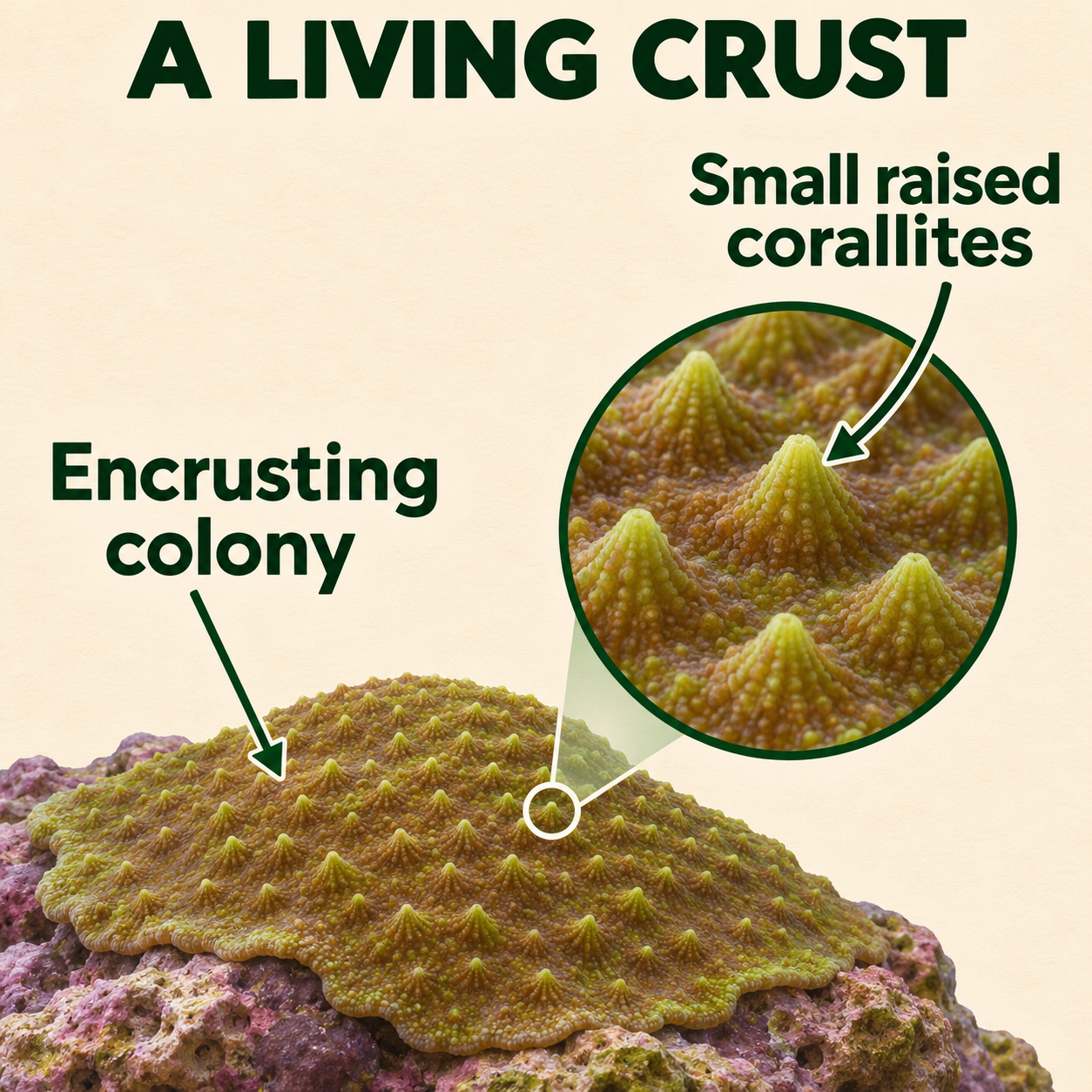
Turbinaria stellulata is a coral with a twist. While many of its relatives grow like cups or scrolls, this one spreads across rock and can build a bumpy dome. Look closely and you will find a crowd of tiny coral homes covering its surface.
Meet the rock hugger
1. A living neighborhood. Each little bump is a hard home for a coral polyp. Together, these tiny animals build one colony.
2. Flat first, dome later. This species often grows over a surface. Large colonies can become rounded, so leave room for the whole colony to expand.
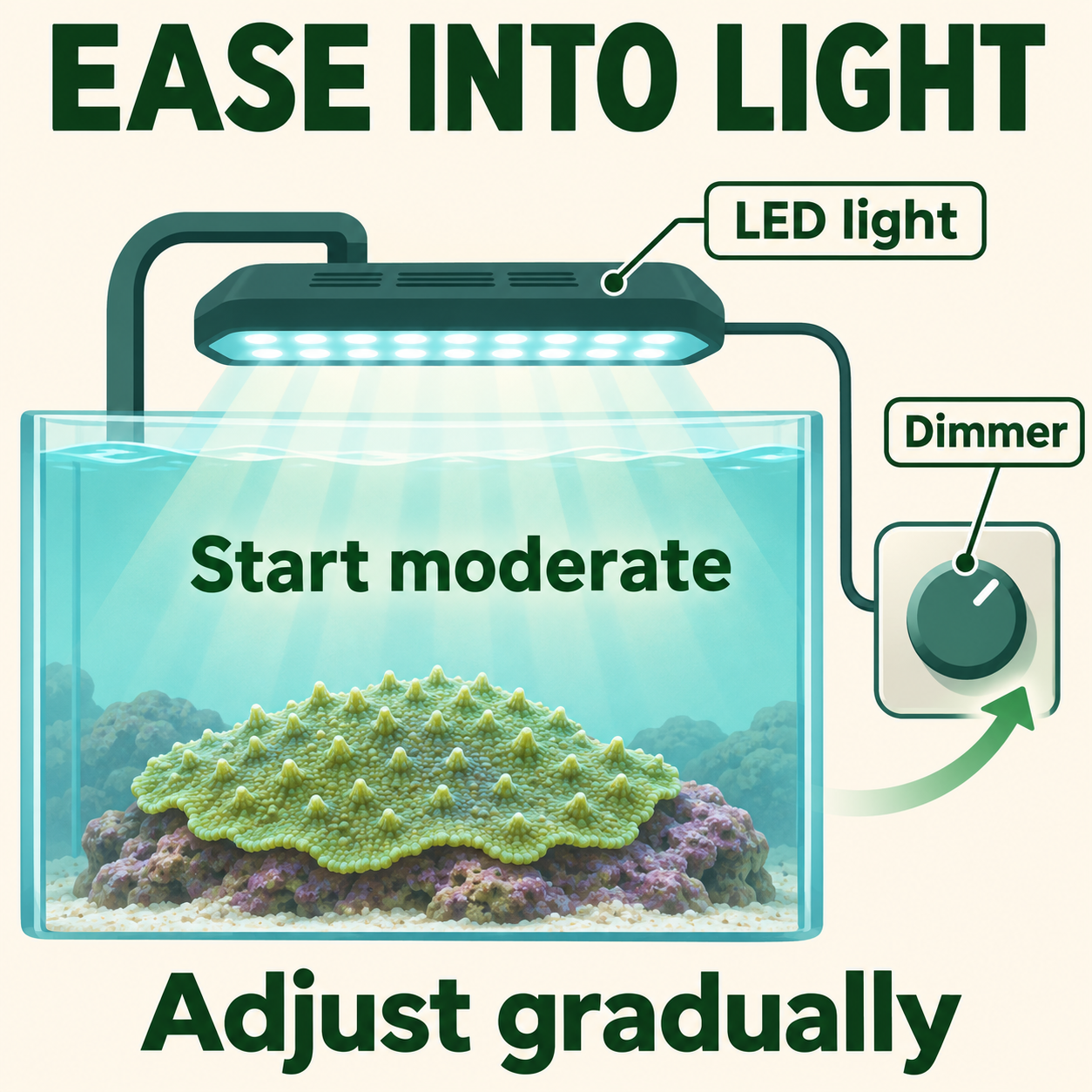
Give it a bright start
3. Start in the middle. Place the coral in moderate light, then give it time to settle. New lights and unfamiliar tanks can make even a familiar setting feel different.
4. Move slowly. If you need to change its light, make small changes and watch the tissue and color. Avoid moving a new coral around every day.
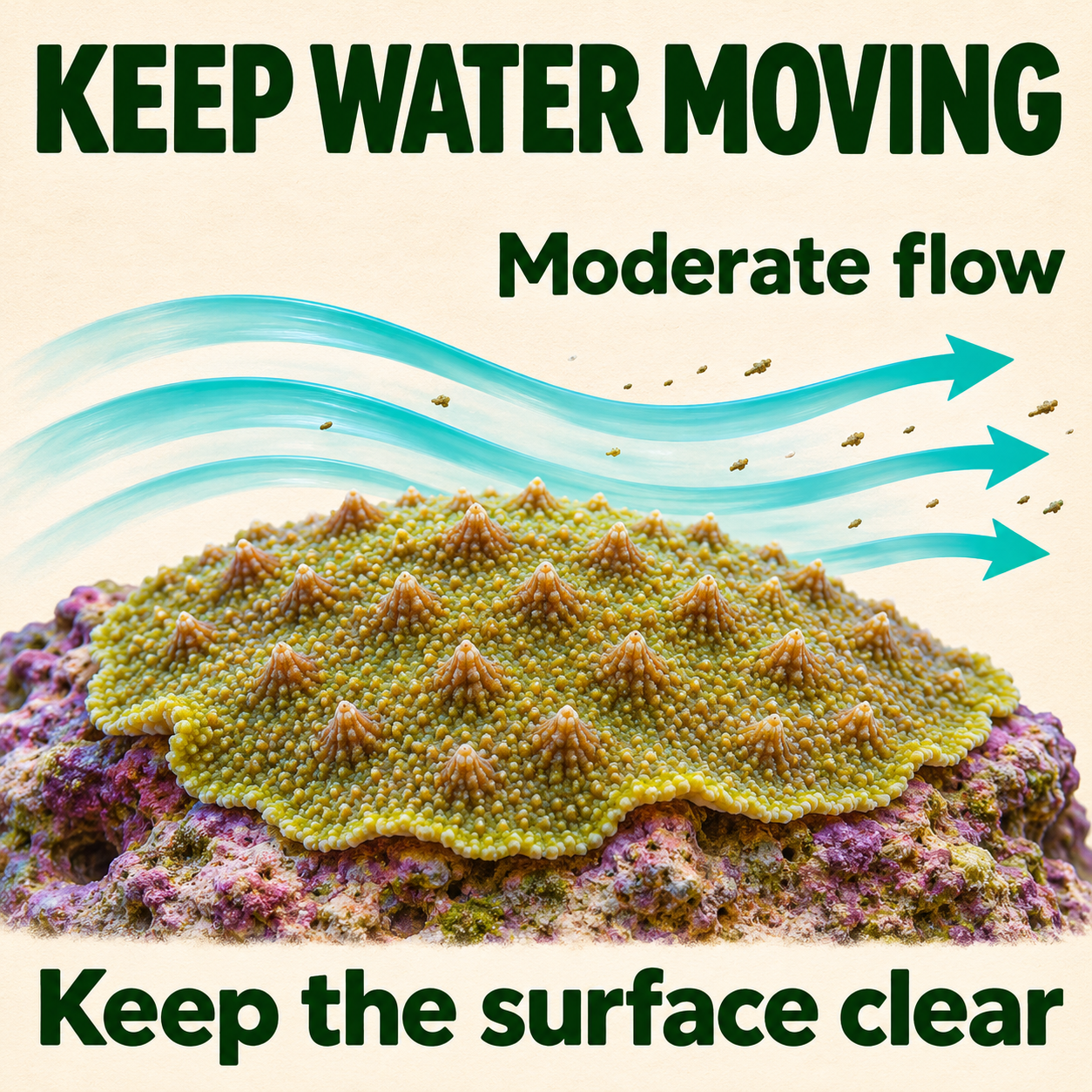
Keep the water moving
5. Sweep, don't blast. Give the colony moderate, shifting flow. Aim for water that moves over the coral instead of a hard jet pointed straight at it.
6. Keep it clean. Check for debris settling on the living surface. Adjust the flow if it keeps collecting there.
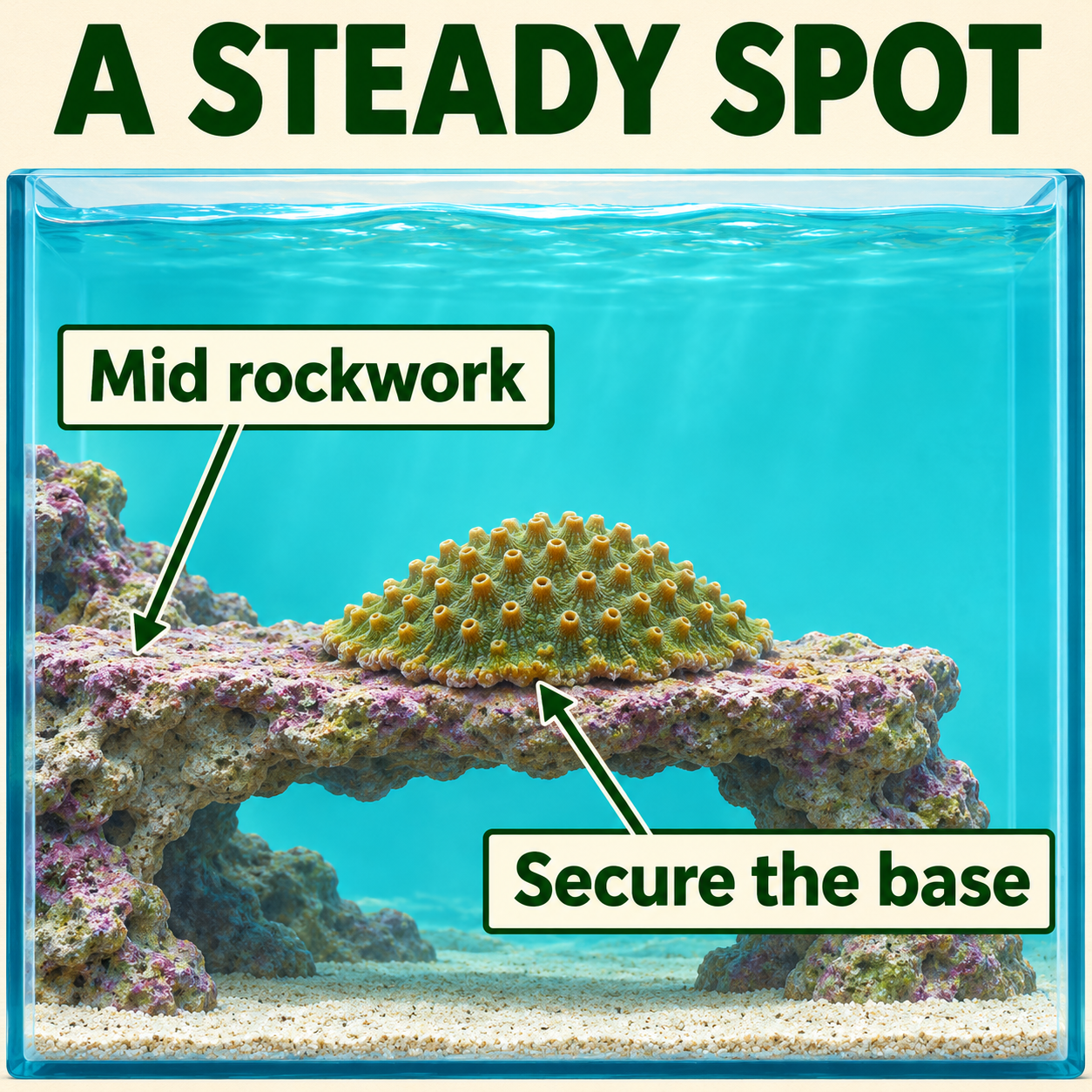
Pick a sturdy spot
7. Rock solid. Secure the frag on stable rock around the middle of the tank. Leave open rock around it so its growing edge has somewhere to go.
8. Give neighbors room. Keep other corals from touching it. A peaceful coral can still be damaged by a neighbor's sting.
Feed the little mouths
9. Light and lunch. This coral gets energy with help from tiny partners living in its tissue. Its polyps can also catch small food from the water.
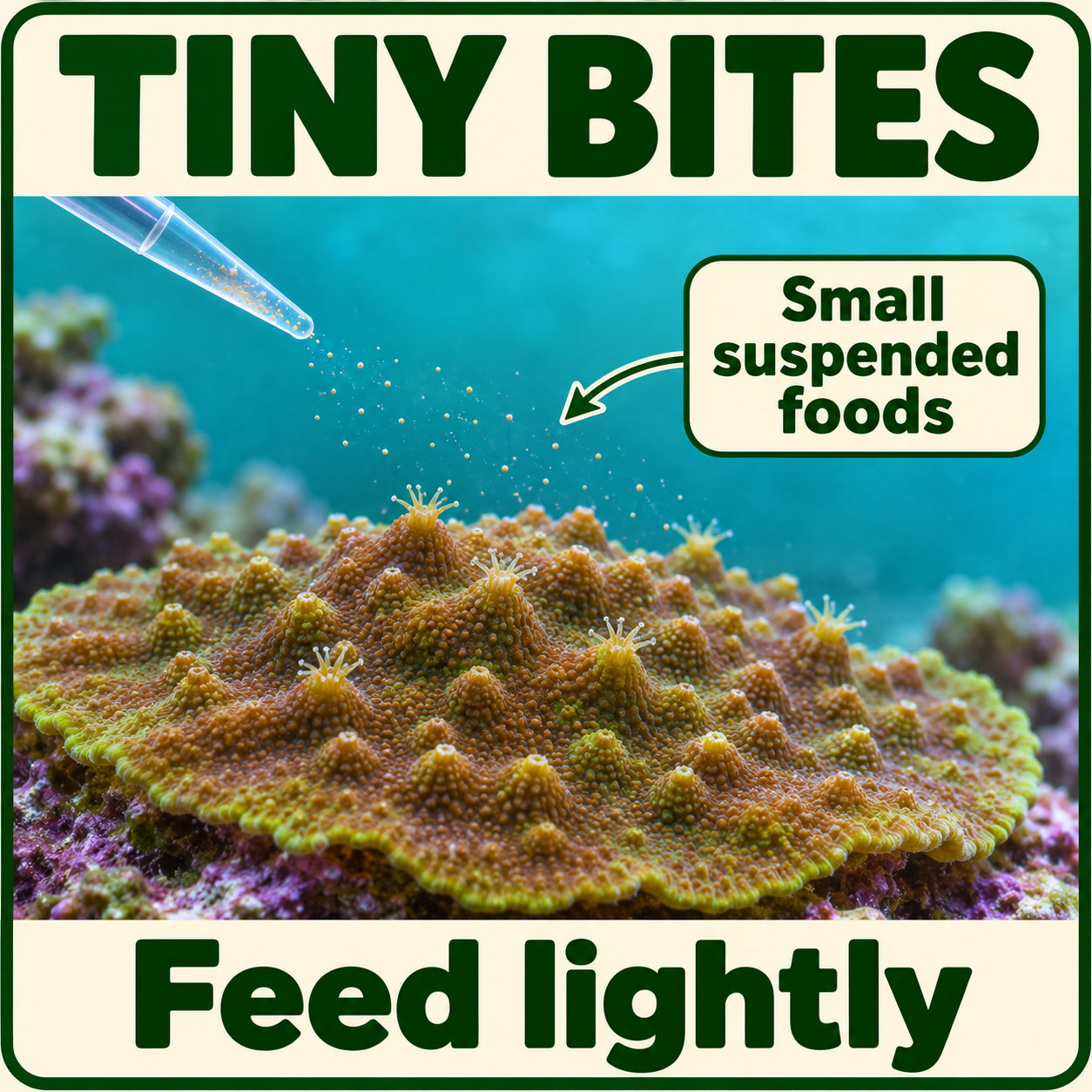
10. Tiny bites. Offer a little fine coral food when the polyps are open. Use a light touch and avoid leaving uneaten food to collect on the colony.
11. Steady wins. Test your water and keep salinity, alkalinity, calcium and temperature stable. A stony coral uses minerals to build its skeleton.
Field notes
12. General Turbinaria reports. Keepers have shared experiences with corals sold as Turbinaria. These reports are not confirmed as Turbinaria stellulata.
13. Growth stories differ. One keeper reports very slow growth over years. Another watched a small colony grow to nearly five inches across in about a year and a half. Your coral's progress is its own story.
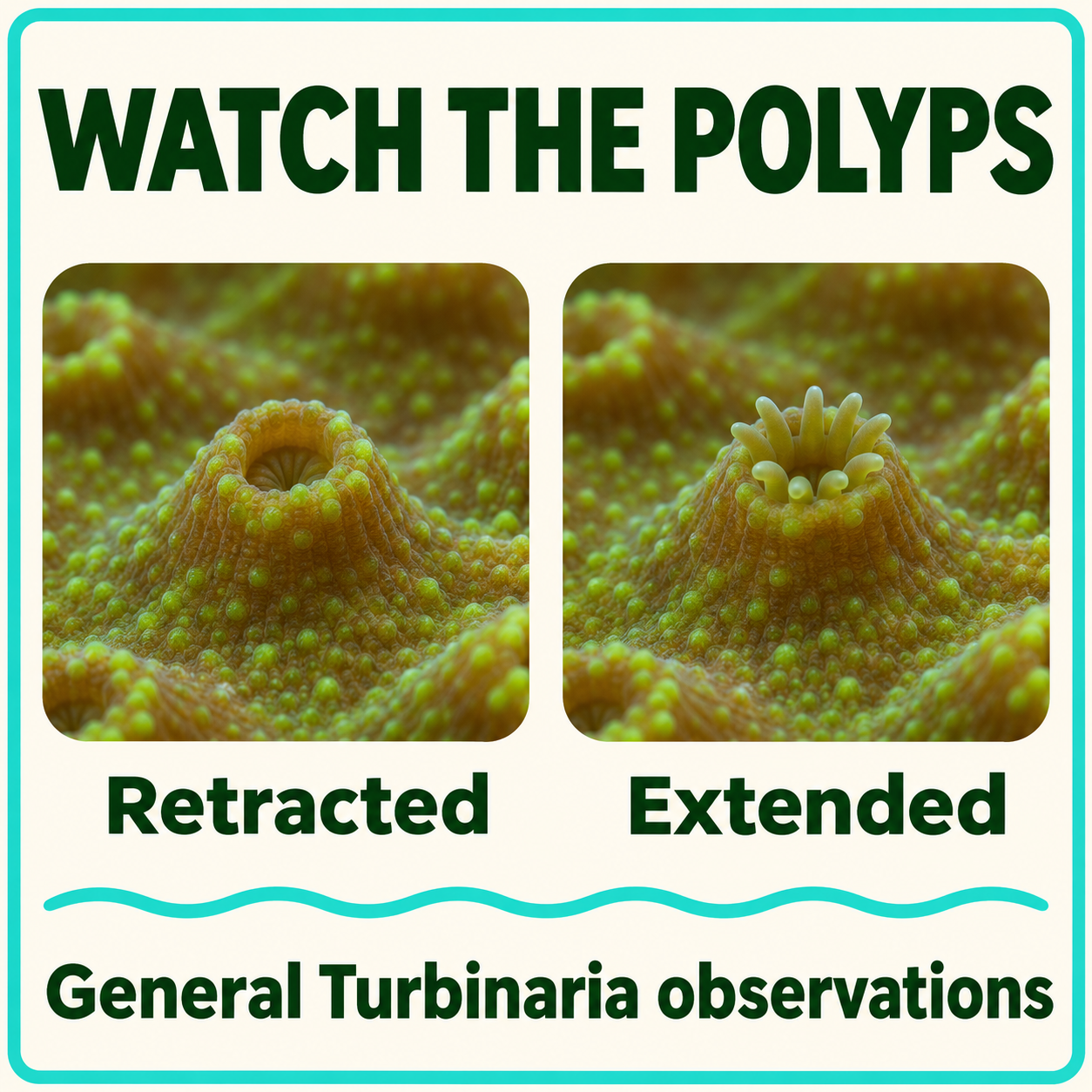
14. Watch the polyps. One keeper saw open polyps and a strong feeding response in turbulent flow. Watch how your own coral responds as it settles in.
Give this rock-hugging colony a steady home, clear water movement and space to spread. Then take a closer look. The tiny neighborhood on its surface is where the fun begins.
Field Notes
Related species

Yellow Scroll Turbinaria
Turbinaria reniformis
Same genus

Disc Coral
Turbinaria peltata
Same genus
Mesenterina Scroll Coral
Turbinaria mesenterina
Same genus

Yellow Scroll Coral
Turbinaria reniformis
Same genus

Finger Porites
Porites cylindrica
Similar care · SPS

Flaming phoenix montipora
Similar care · SPS

Massive Lobe Coral
Porites lobata
Similar care · SPS

Neon Green Montipora Spongodes
Montipora spongodes
Similar care · SPS