Mesenterina Scroll Coral
Turbinaria mesenterina

Ahmed Abdul Rahman for MDC Seamarc Maldives · CC BY-SA 4.0 · source
Care facts
- Care
- Intermediate
- Light
- Medium
- Flow
- Medium
- Place
- Mid
- Space
- Peaceful
- Growth Rate
- Slow
Gallery
Imagine a head of lettuce made of stone. Now give every leaf hundreds of tiny mouths. Mesenterina Scroll Coral, Turbinaria mesenterina, builds a stack of curled plates that can look different from one reef to the next. In a tank, the trick is getting water between the plates and leaving space for the next fold.
History of the coral
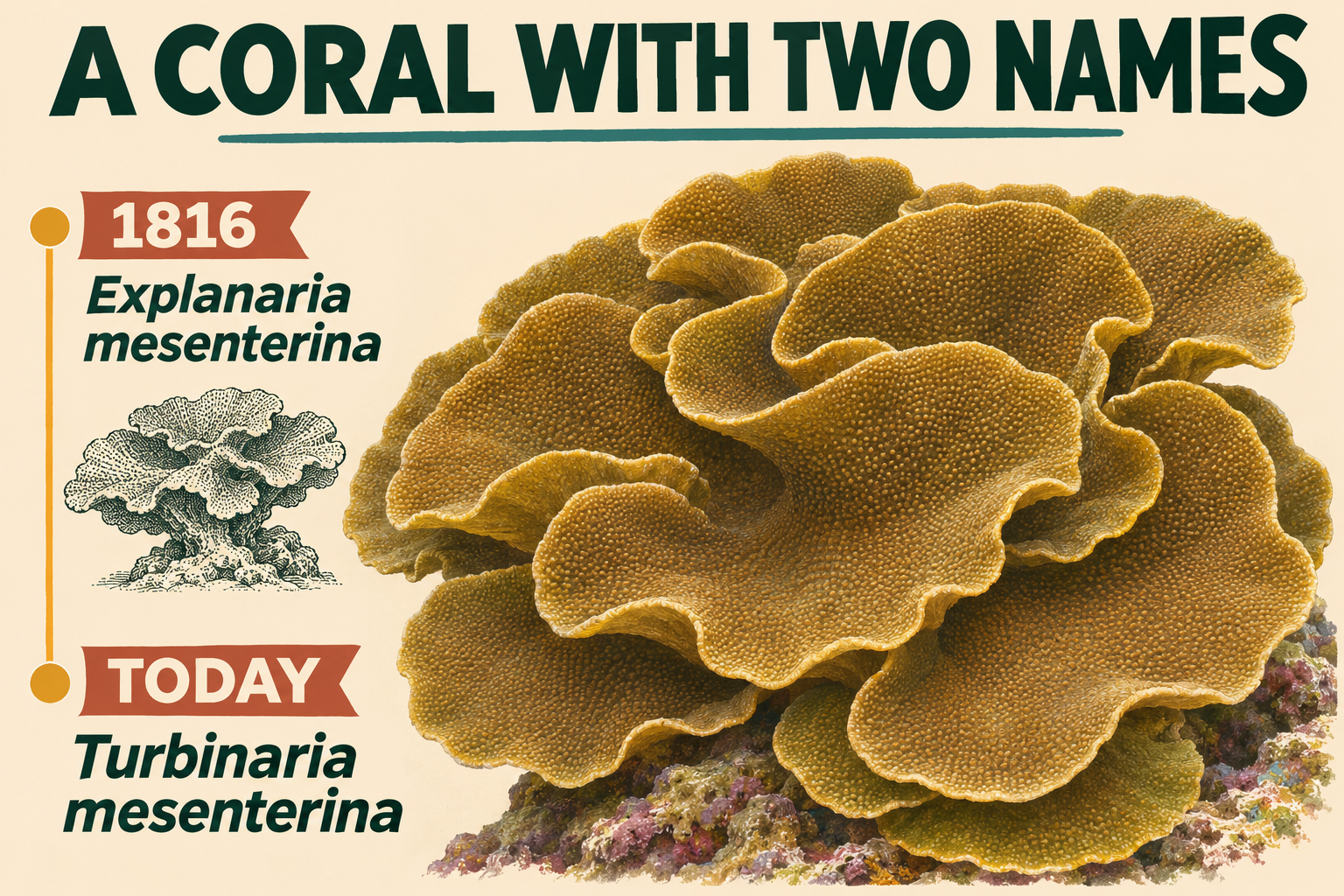
1. Two names, one coral. Jean-Baptiste Lamarck described it in 1816 as Explanaria mesenterina. Today it goes by Turbinaria mesenterina. The nickname scroll coral fits the way the plates curl at their edges.
2. Meet the tiny mouths. The speckles across a plate are little cups in the skeleton. A polyp lives in each cup. Turn your view sideways and look for the polyp cups on the exposed face of each thin sheet. A curly edge alone won’t tell you which scroll coral you have.
How they live in the wild
3. One coral, many shapes. On Indo-Pacific reefs from the Red Sea to French Polynesia, this coral grows in places as different as shallow, cloudy bays and reef slopes. At a turbid reef off Australia, colonies grew tighter, more upright folds in the shallows and spread flatter in dimmer water. Those different shapes help manage how much light reaches the polyps.
4. Built to shed silt. Reefs near shore can get a dusting when waves stir the bottom. A scroll coral can move settled grains off its living surface. That skill helps on a silty reef, but clean water still matters in a tank. In Egypt’s Red Sea, it also grows on current-swept reef slopes around 9 meters deep.

Light and placement
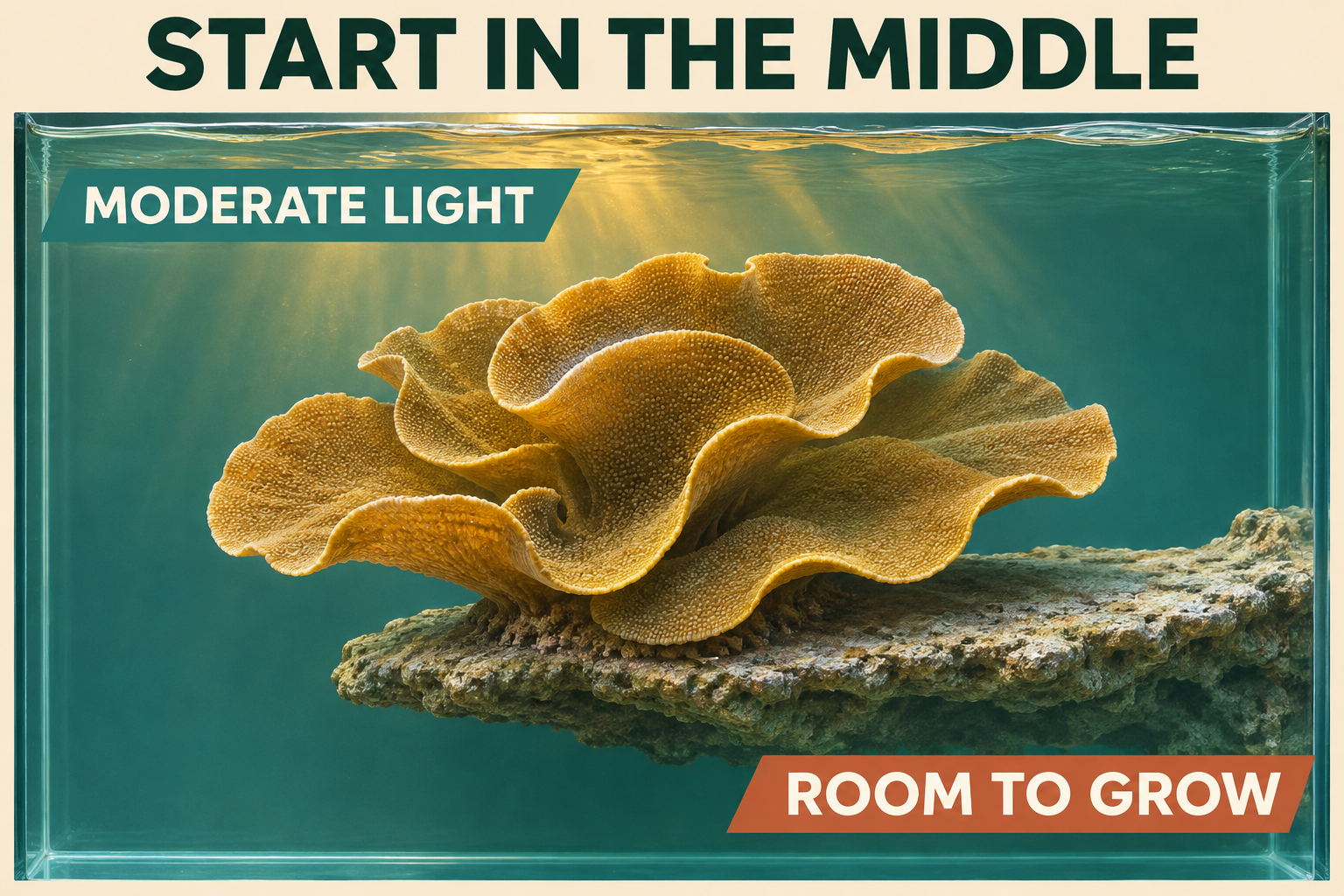
5. Start in the middle. Set the coral on a steady shelf in moderate light. Give a new frag time to adjust before moving it closer to the lamps or turning up the intensity. Choose a spot where you can see into the folds without moving the coral.
6. Leave room for the next plate. Allow space beside the colony and below its rim. As plates spread, they can shade small corals underneath or crowd neighbors beside them. Support the base, not the growing edge.
Flow through the folds
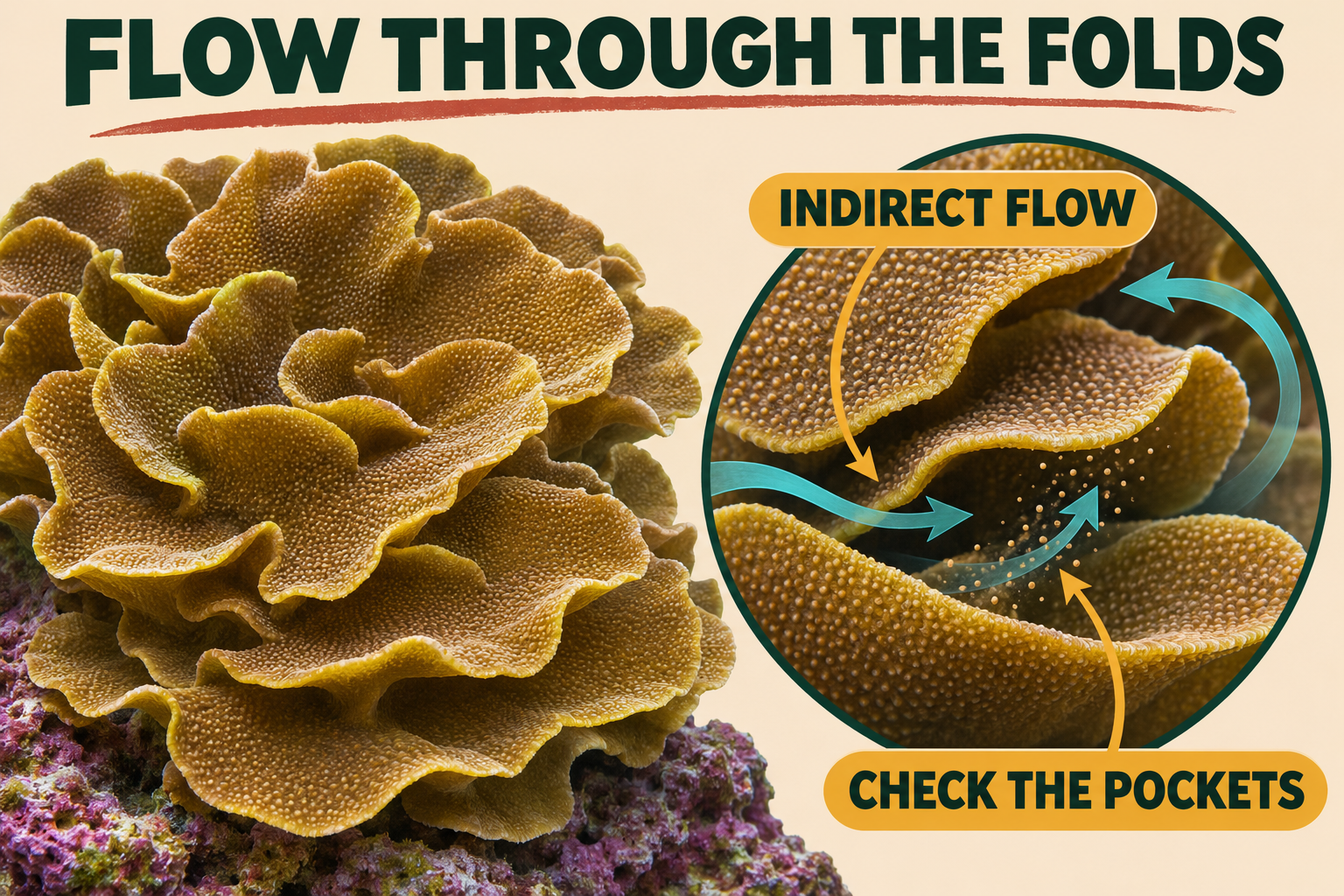
7. Aim the flow past it. Start with medium, indirect movement. Watch a few floating particles to see whether water reaches the inner folds and carries loose debris out. If the same pocket keeps collecting muck, adjust where the flow comes from before turning the pump up.
8. Lift the grit gently. During a water change, use a turkey baster to waft loose bits out of the scroll, then siphon them away. Give the tissue a gentle puff of water. Don’t scrape it or blast it with a pump jet.
Water and feeding
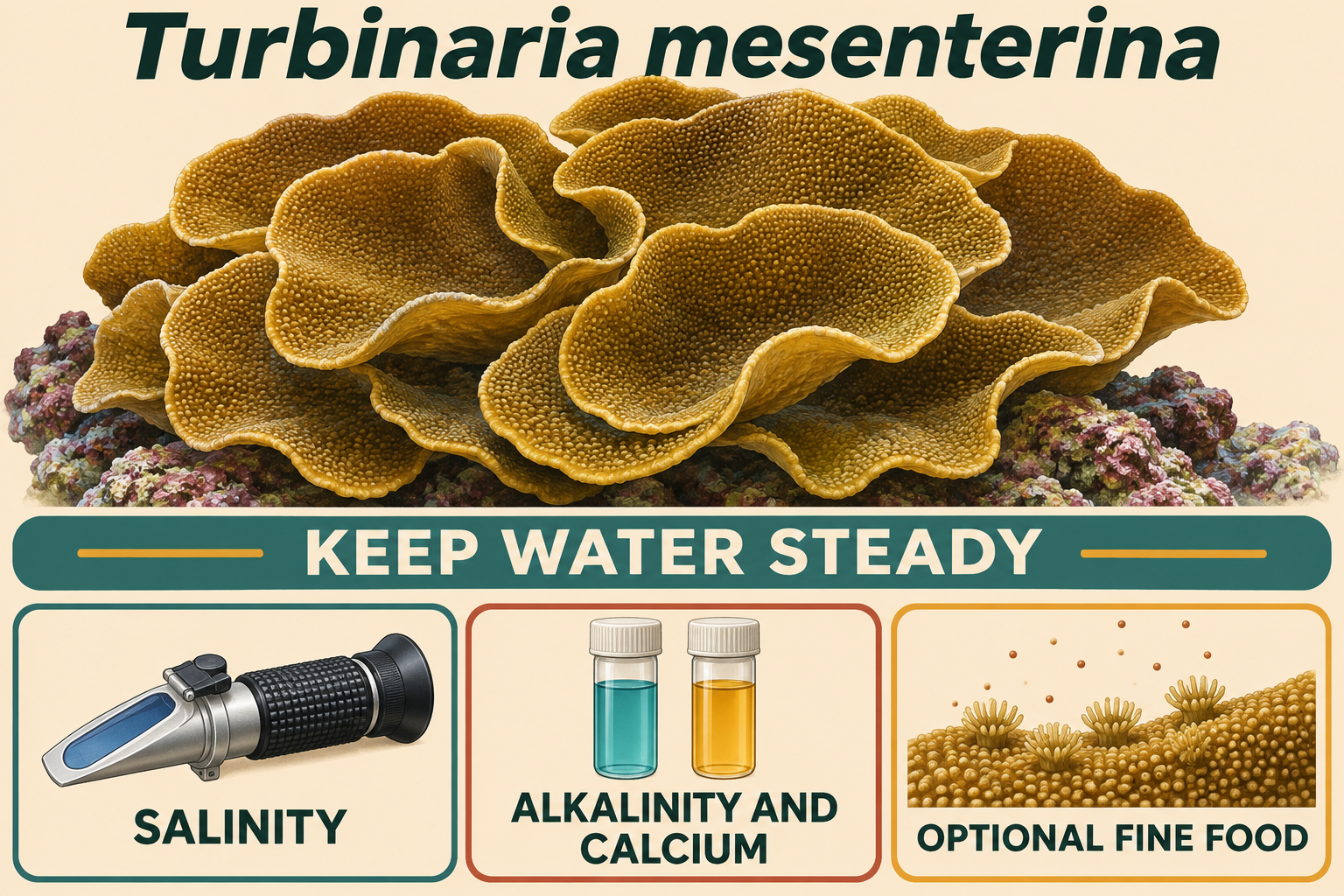
9. Keep the building blocks steady. Test alkalinity and calcium and track how fast the tank uses them. Top off evaporation with fresh water and match new saltwater to the tank before changes. Make small corrections rather than chasing a single reading.
10. Light does much of the work. Algae living in the tissue use light to make food, and the coral can also capture tiny particles. If you offer extra food, start with a small amount of fine suspended reef food. Skip big chunks that can just settle between the plates.
Field notes
11. Read the whole plate. Look for loose debris, a change in color or exposed white skeleton. If a patch is spreading, check for trapped grit or contact with another coral. Then review what changed in light, flow or water chemistry.
12. Take the same photo again. Shoot from the same angle and under the same light every few weeks. A new little curl is easier to spot in side-by-side photos. The same view also helps you see whether a pale patch is growing or holding steady.
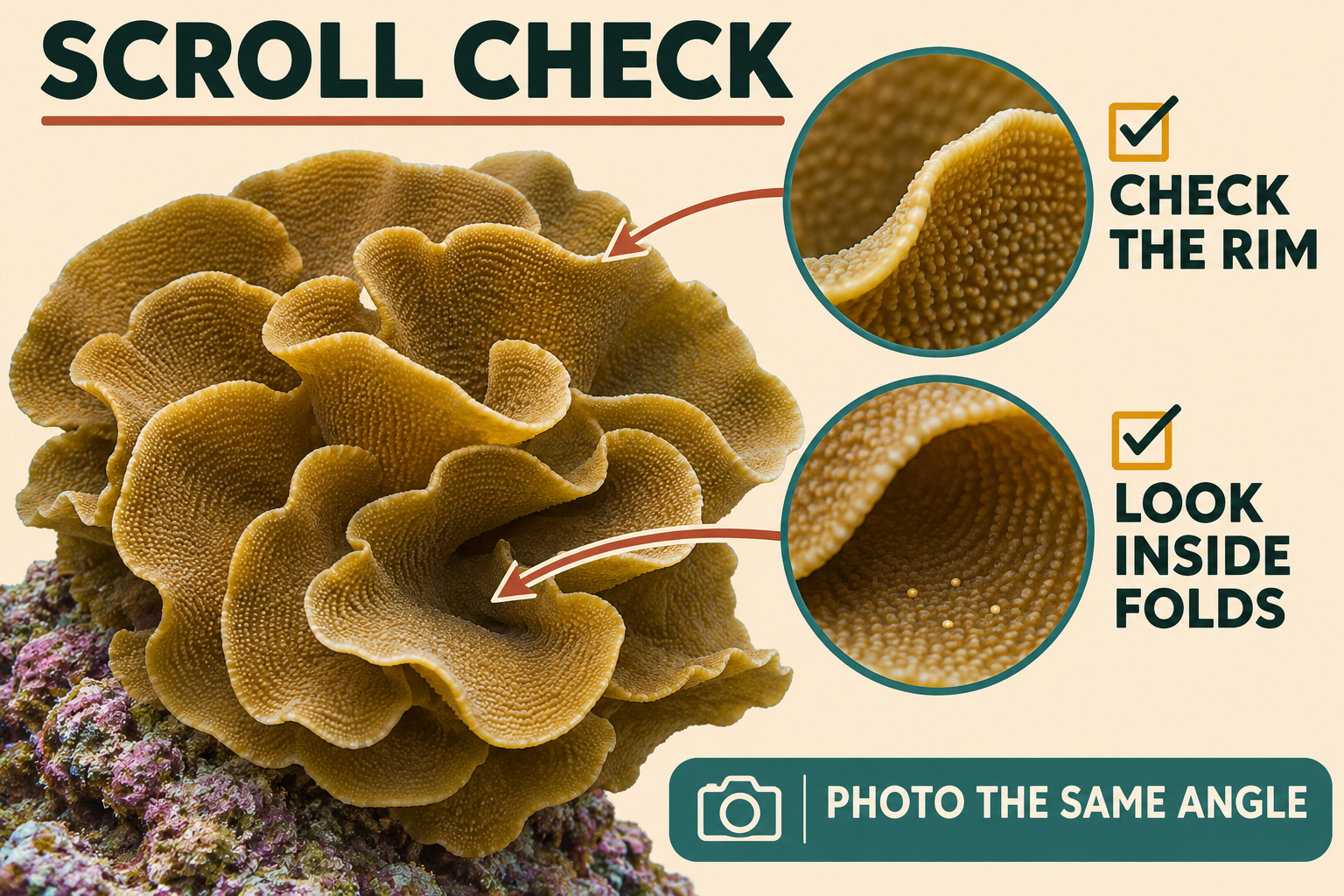
Give this scroll an open shelf and a current that reaches its folds. Then let it grow at its own pace. One day you’ll look from the side and find a new layer you didn’t see from the front.
Field Notes
Related species
Disc Coral
Turbinaria peltata
Same genus

Yellow Scroll Coral
Turbinaria reniformis
Same genus

Turbinaria Stellulata
Turbinaria stellulata
Same genus

Yellow Scroll Turbinaria
Turbinaria reniformis
Same genus

Aequituberculata Montipora
Montipora aequituberculata
Similar care · SPS
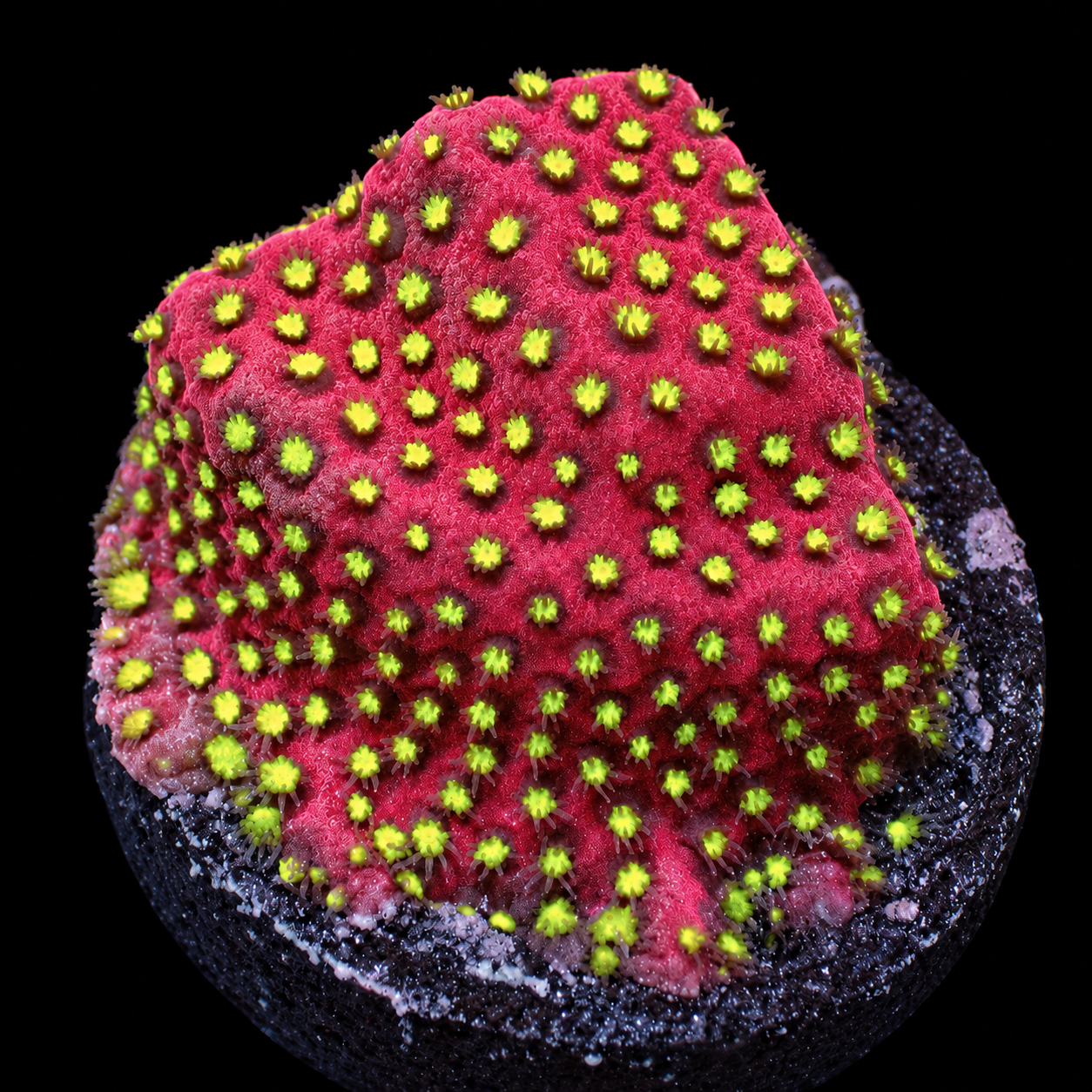
Electric daisy stylocoeniella
Stylocoeniella sp.
Similar care · SPS

Finger Coral
Porites cylindrica
Similar care · SPS

Hump Coral
Porites porites
Similar care · SPS