Yellow Scroll Turbinaria
Turbinaria reniformis
Also known as: Yellow Scroll Coral

Diego Delso · CC BY-SA 4.0 · source
Photo: Diego Delso, [delso.photo](https://delso.photo), [CC BY-SA 4.0](https://creativecommons.org/licenses/by-sa/4.0/), [Wikimedia Commons](https://commons.wikimedia.org/wiki/File:Coral_(Turbinaria_reniformis),_parque_nacional_Ras_Muhammad,_Egipto,_2022-03-28,_DD_132.jpg). Ras Muhammad, Egypt, March 28, 2022.
Care facts
- Care
- Intermediate
- Light
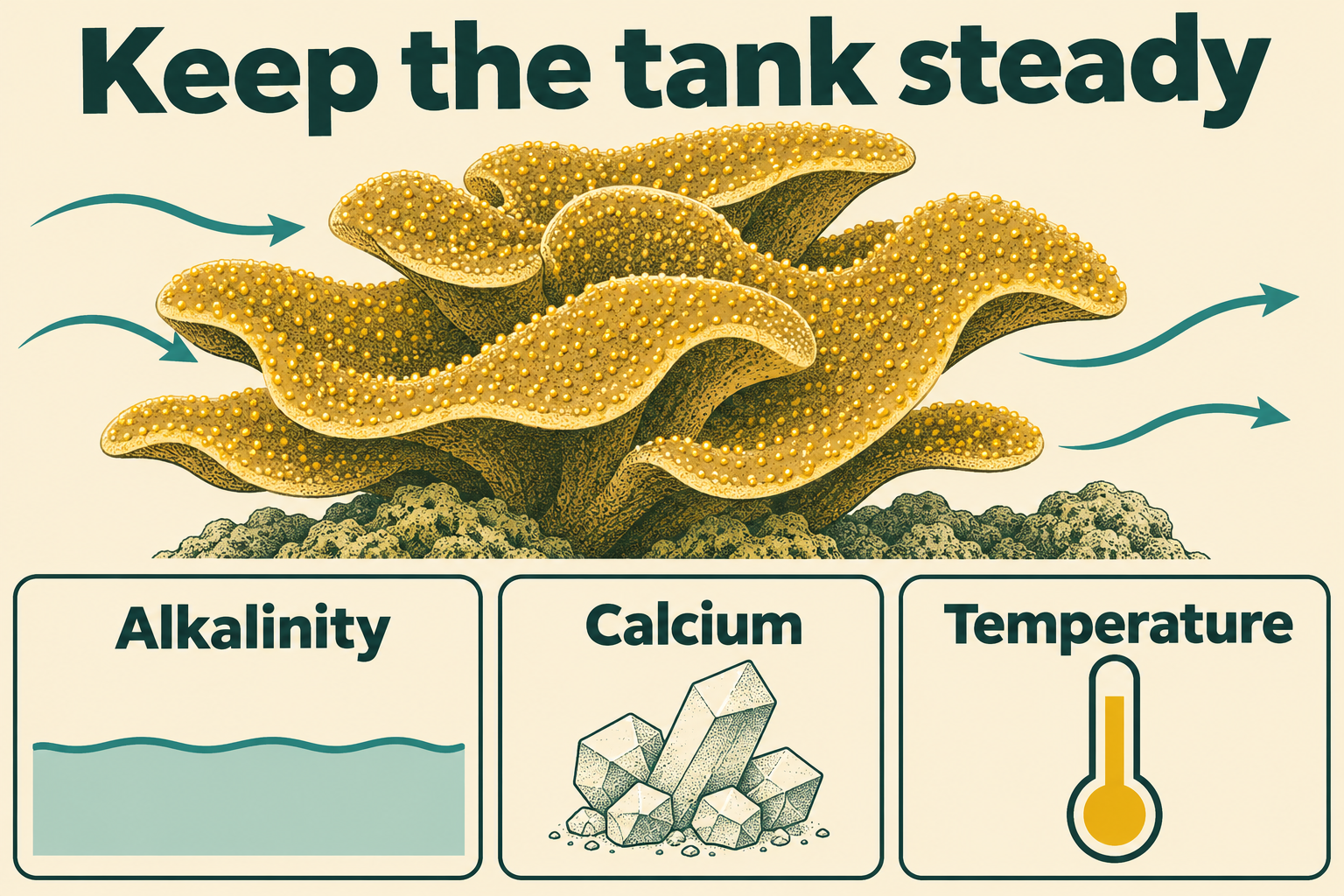
- Medium
- Flow
- Medium
- Place
- Mid
- Space
- Peaceful
- Origin
- Indo-Pacific
- Growth Rate
- Moderate
Gallery
Yellow Scroll Turbinaria grows like a stack of curling chips. Tiny yellow mouths dot its plates, and a fresh rim can glow like a highlighter. Look close between the folds, too. That's where this coral collects the stuff you want to take out.
History of the coral
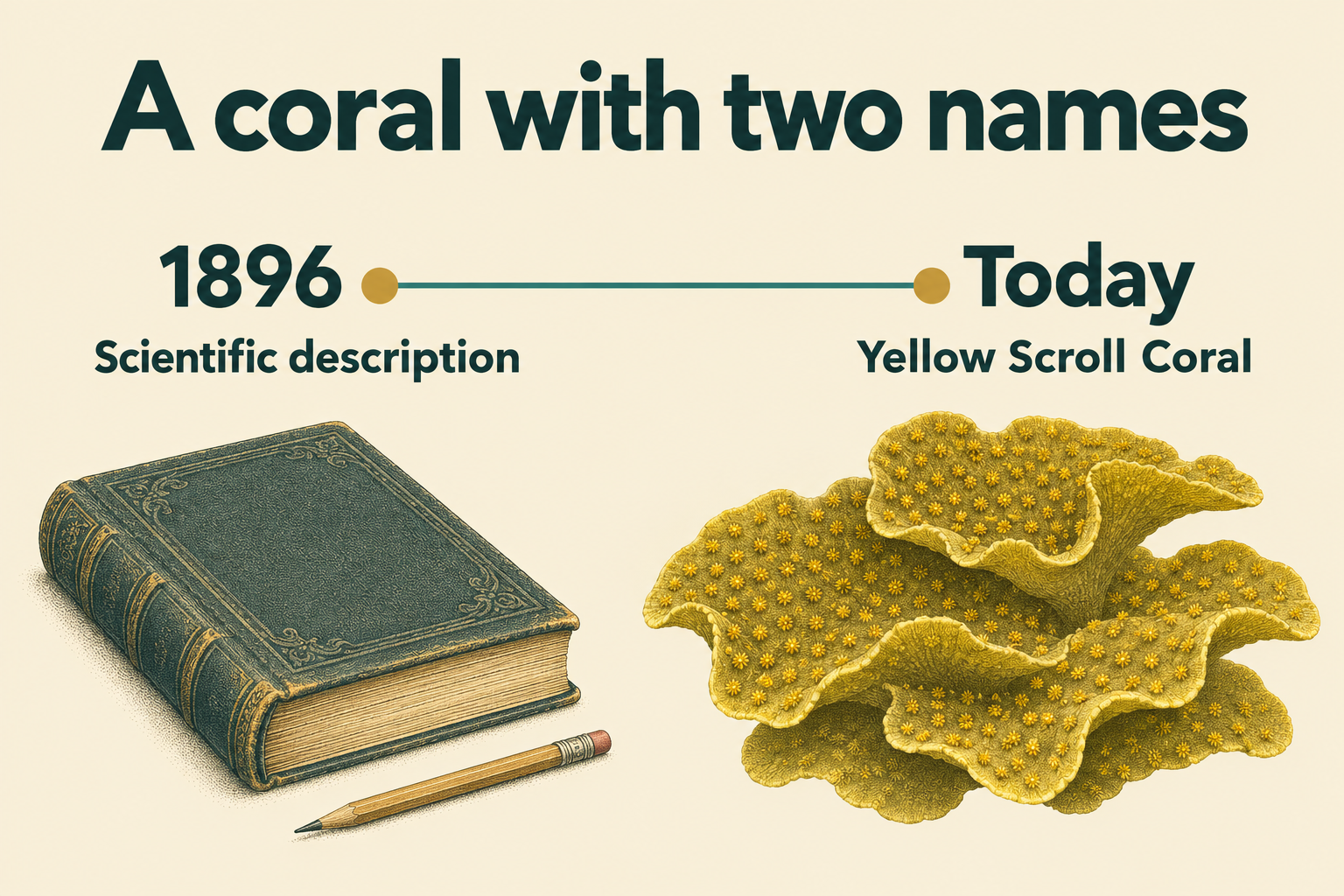
1. A coral shaped like a bean. Henry Bernard described Turbinaria reniformis in 1896 from a specimen from Australia's Palm Islands. The name means kidney-shaped. That fit his specimen's outline, and today's scrolls come in plenty of shapes.
2. Two names, one coral. Yellow Scroll Coral and Yellow Scroll Turbinaria are two names for this coral. Its yellow-green rim and curled shelves give both names away. Look for little cups on the upper faces of the plates.
How they live in the wild
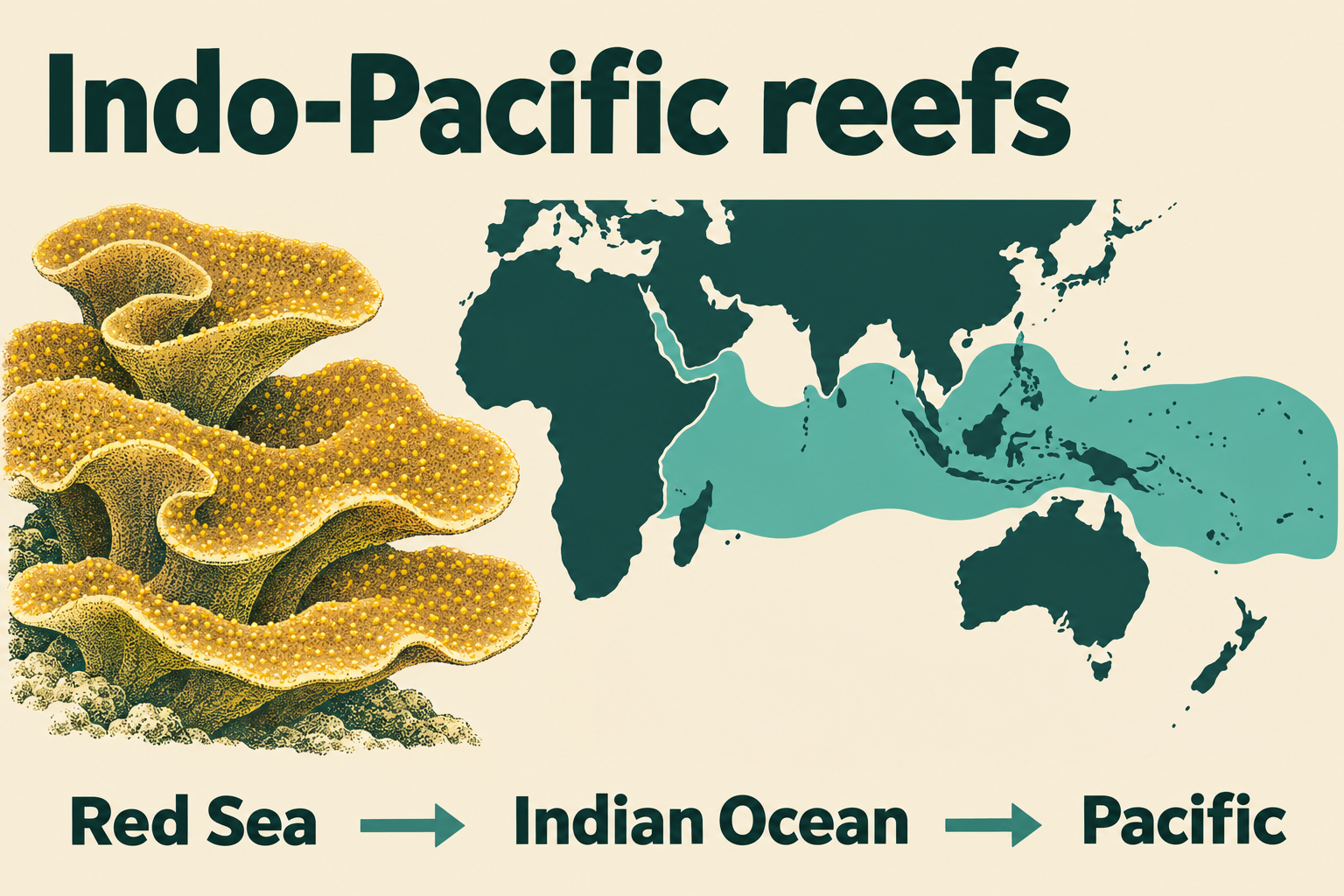
3. An ocean-spanning scroll. This coral lives from the Red Sea and East Africa to islands in the central Pacific. It grows on clear reef slopes and on cloudier inshore reefs, where whole stands can spread across the bottom.
4. Tiny mouths, big teamwork. Algae living inside the tissue turn light into food. The polyps also grab tiny drifting prey. Peek into an open polyp and you'll see why the whole colony looks fuzzy.
Light and placement
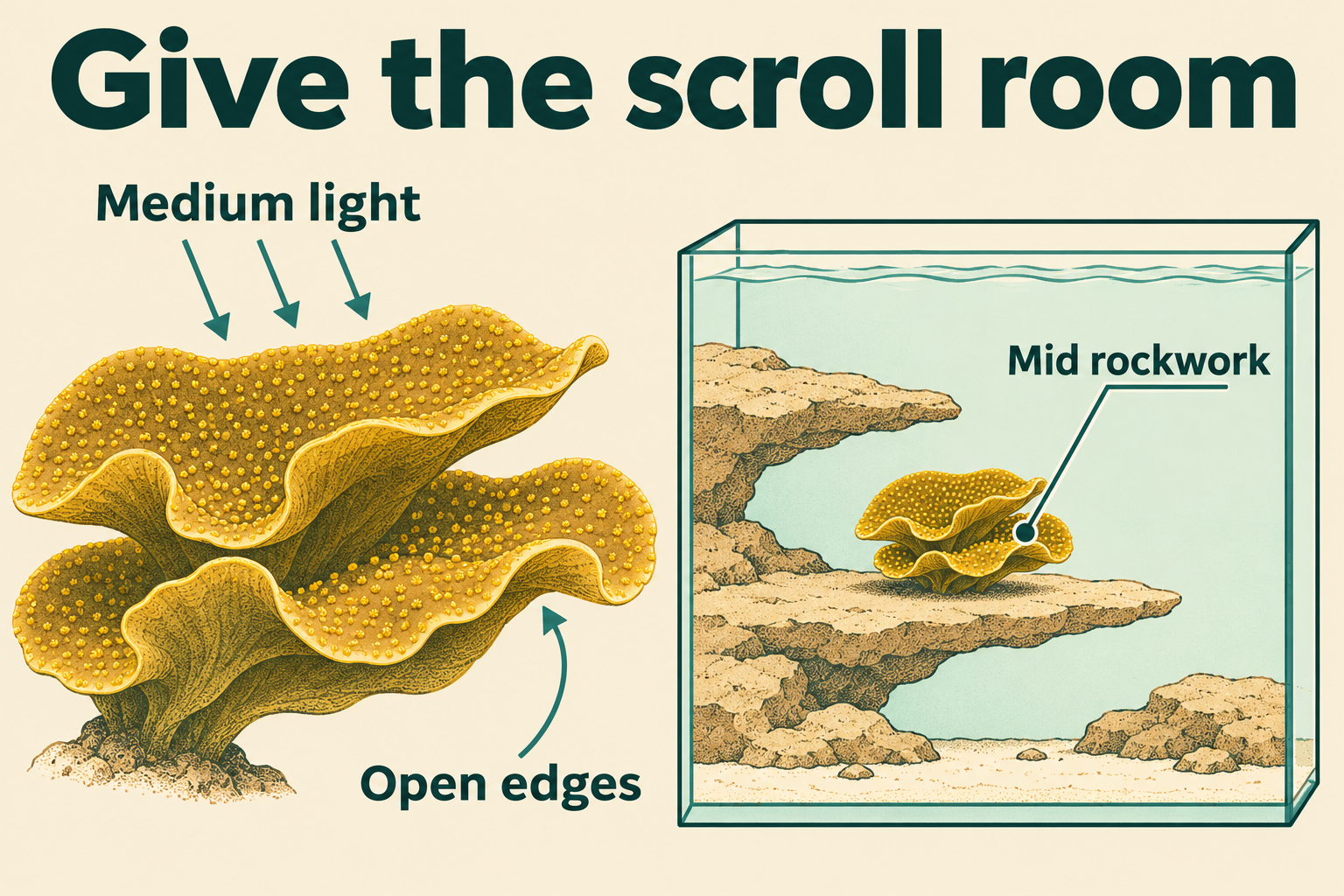
5. Start in the middle. Pick a sturdy shelf with medium light. Give a new piece a gentler start and brighten it in steps. Secure it so snails and fish can't knock it face down.
6. Leave room for the next shelf. The plates spread outward, curl, and can stack up. Leave open water around the rim and keep neighbors out from under it so they don't get shaded. A peaceful coral still needs elbow room.
Flow and feeding
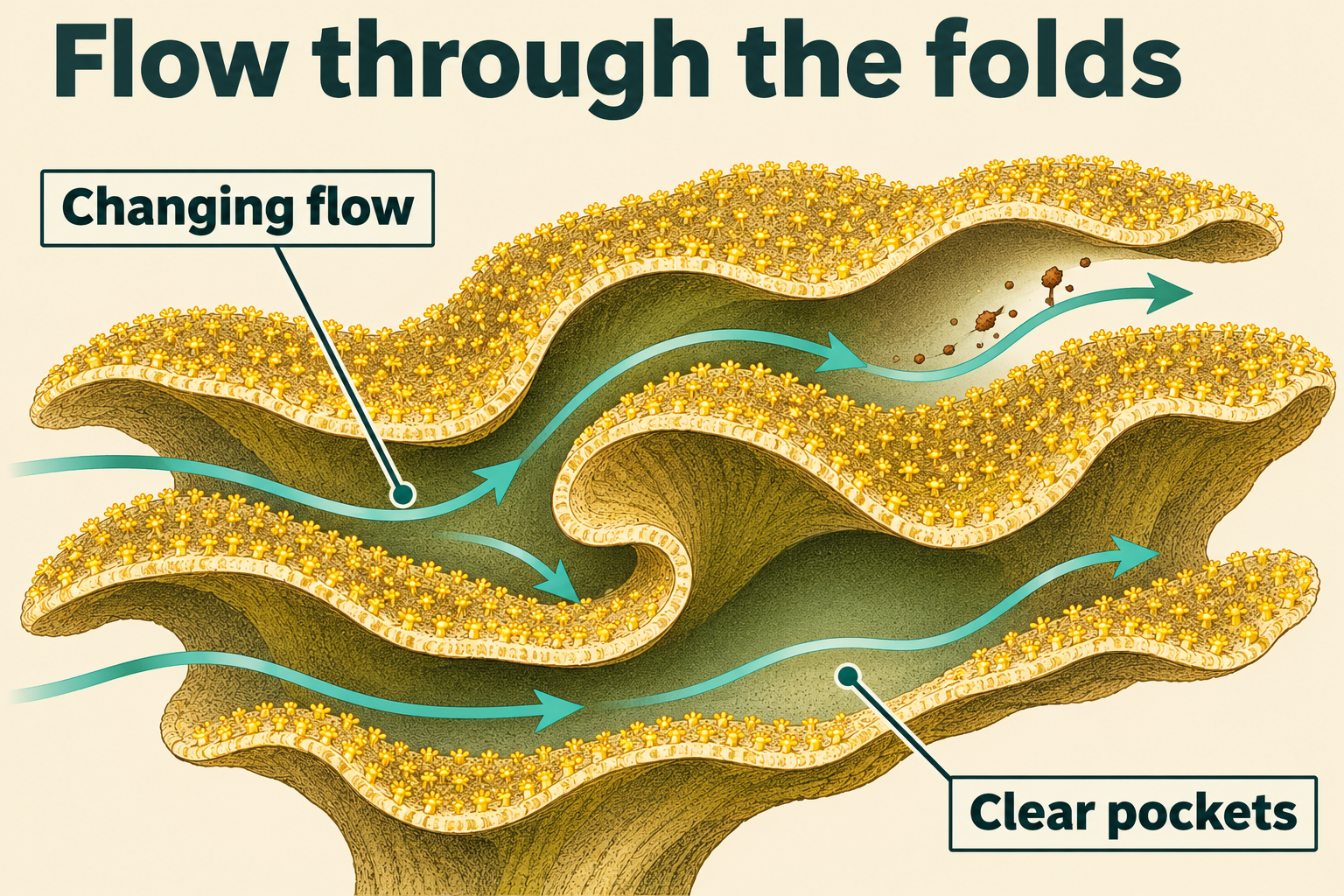
7. Get flow into the folds. Use medium, changing flow that sweeps across the colony from more than one angle. Aim pumps past the coral so water reaches the inside bends without a hard jet. If grit keeps landing in one pocket, change the angle first.
8. Small bites work. When the polyps open, offer a little fine plankton-sized food if you want to feed it. Give the polyps time to grab it. Stop before uneaten food starts settling between the plates.
Keep the water steady
9. Follow your alkalinity trend. Test on a schedule and write down the numbers. Keep alkalinity and calcium steady as the scroll builds its hard skeleton. Make dosing changes in small steps and retest.
10. Check the tank before chasing color. If an edge fades, look for a recent swing in alkalinity, a light increase, or a temperature spike. Check the flow and look for debris on the pale spot. Change one thing at a time so you can see what helps.
Field notes
11. Baste and siphon. During water changes, use a turkey baster to gently puff loose debris out of the folds. Siphon it away while it floats. Debris left packed in a pocket can smother a spot of living tissue, especially in a shaded fold.
12. Look at the same spot next week. Take a photo under the same light. Follow the rim and peer down into the deepest folds. If you see bare skeleton or a patch spreading, check the water and placement promptly.
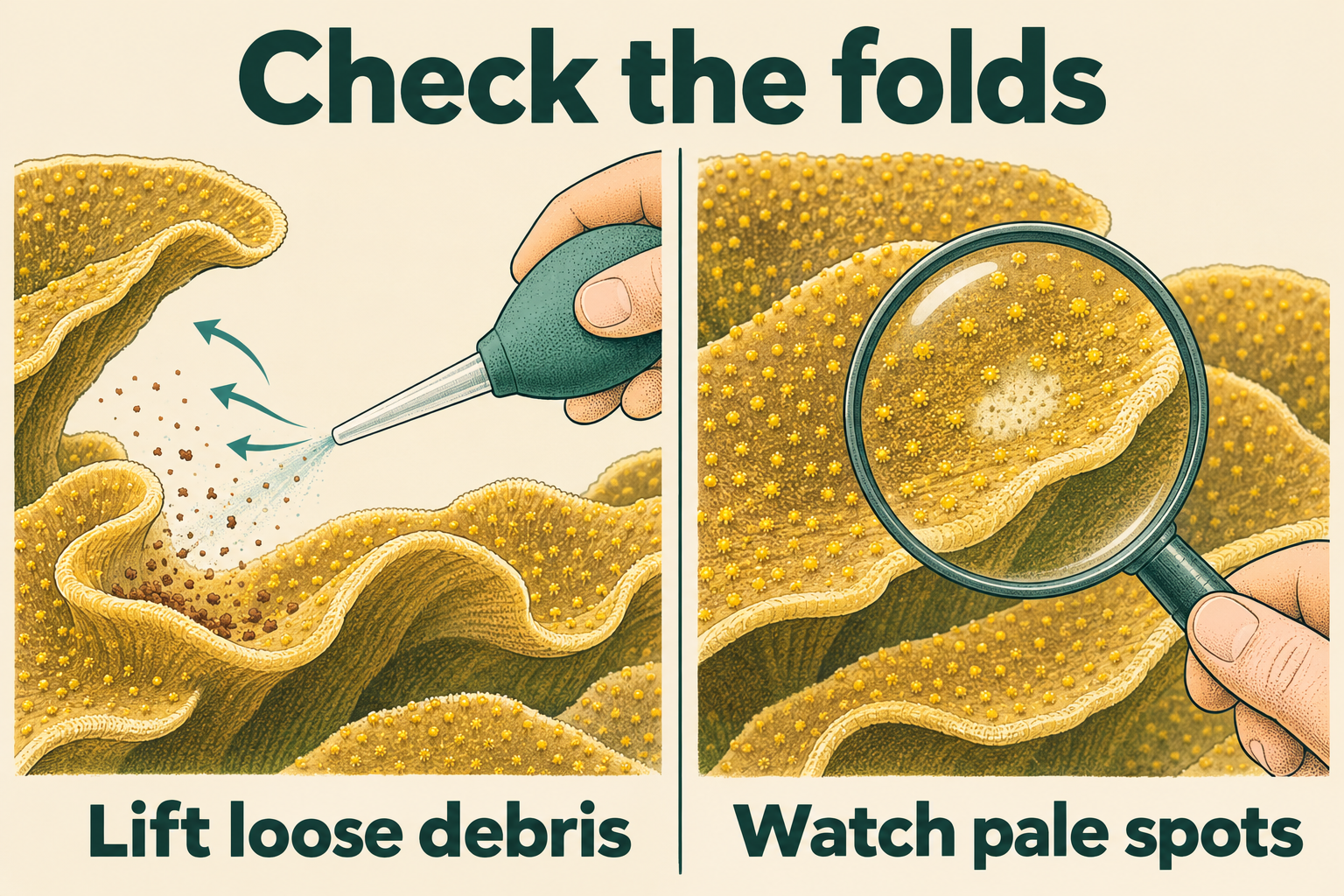
Once the shelves start to curl, you'll spot new bends every time you look. Keep the water moving through them and the chemistry steady. Let the scroll do the fancy part.
Field Notes
Related species

Turbinaria Stellulata
Turbinaria stellulata
Same genus

Disc Coral
Turbinaria peltata
Same genus
Mesenterina Scroll Coral
Turbinaria mesenterina
Same genus

Yellow Scroll Coral
Turbinaria reniformis
Same genus

Finger Porites
Porites cylindrica
Similar care · SPS
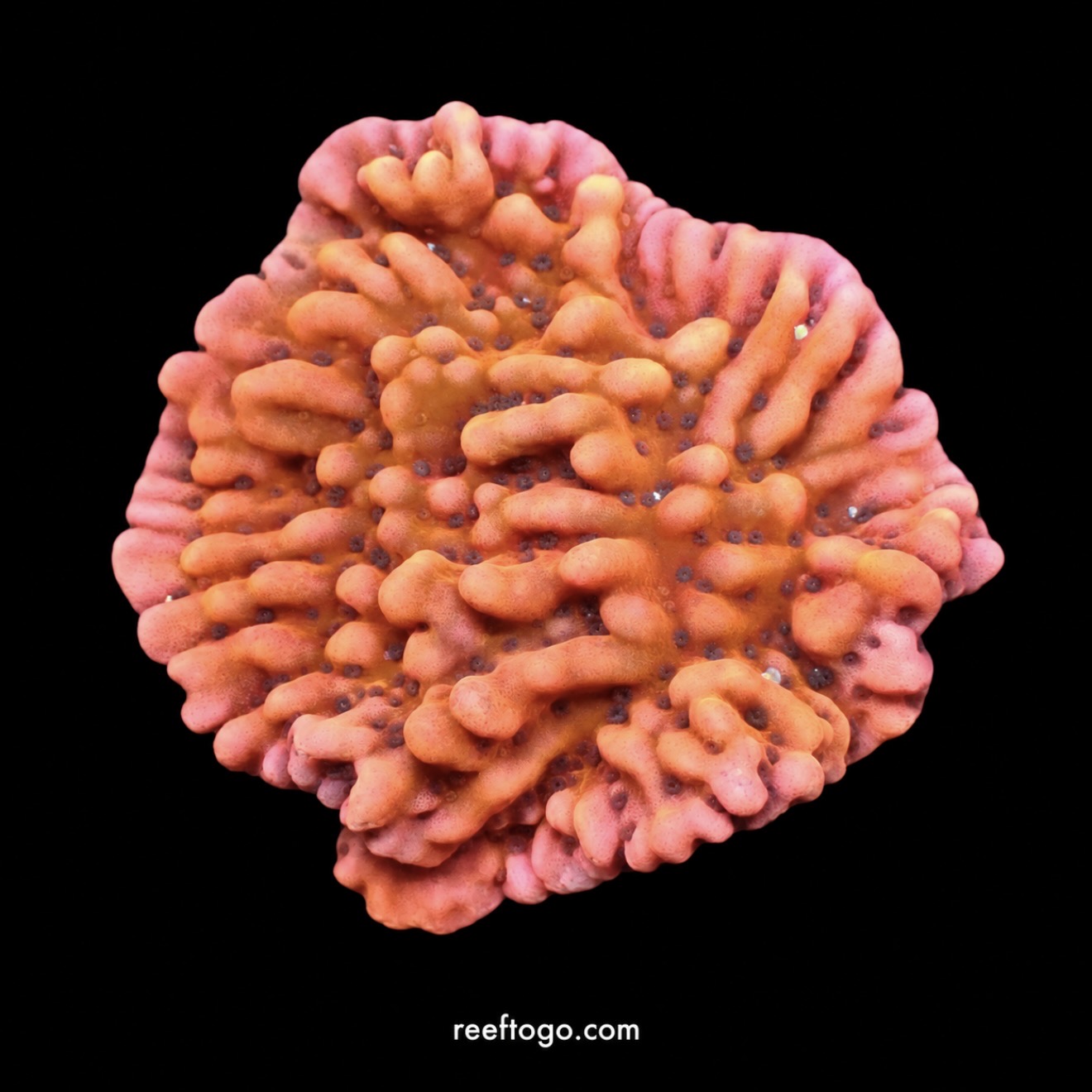
Flaming phoenix montipora
Similar care · SPS

Massive Lobe Coral
Porites lobata
Similar care · SPS

Neon Green Montipora Spongodes
Montipora spongodes
Similar care · SPS