Warty Coral
Pocillopora verrucosa

A. C. Tatarinov · CC BY-SA 3.0 · source
Care facts
- Care
- Intermediate
- Light
- High
- Flow
- High
- Place
- Top
- Space
- Moderate
- Origin
- Indo-Pacific
- Growth Rate
- Moderate
Gallery
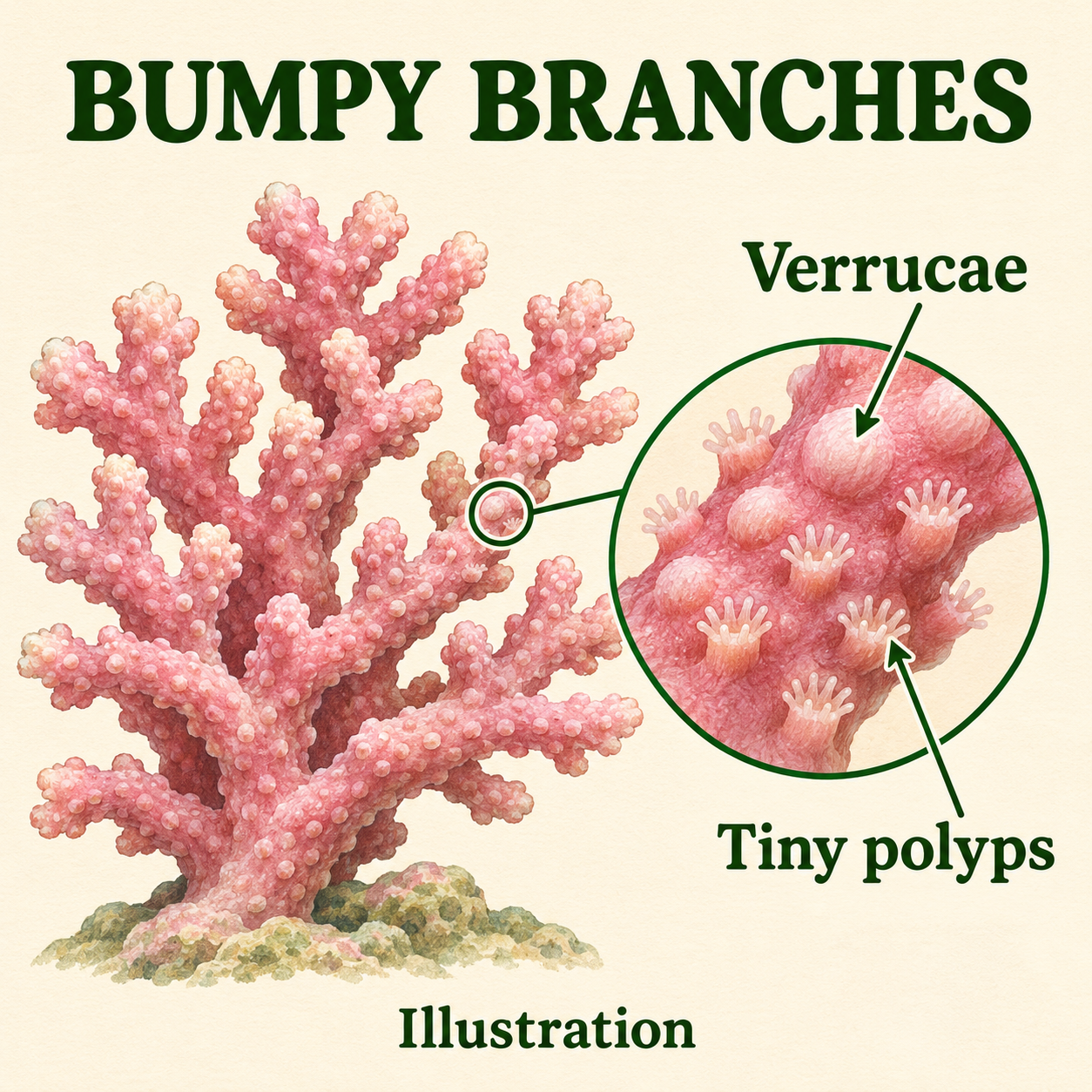
Those little bumps are the giveaway! Warty Coral, Pocillopora verrucosa, builds a bush of branches covered in raised knobs called verrucae. Look closer and the hard-looking branches become a crowd of tiny living polyps. Give this reef builder a bright, roomy home with moving water and a steady routine.
A bush full of tiny builders
1. Bumps, not a disease. Verrucae are part of this coral's skeleton. Upright branches and uneven knobs give the colony its rugged outline. Pink is only one look: wild colonies also come in cream, brown and sometimes blue.
2. Built by the neighbourhood. In wave-washed places, branches tend to be thick and compact. In sheltered water, they become thinner and more open. A small frag grows into the conditions around it.
Bright light, gentle changes
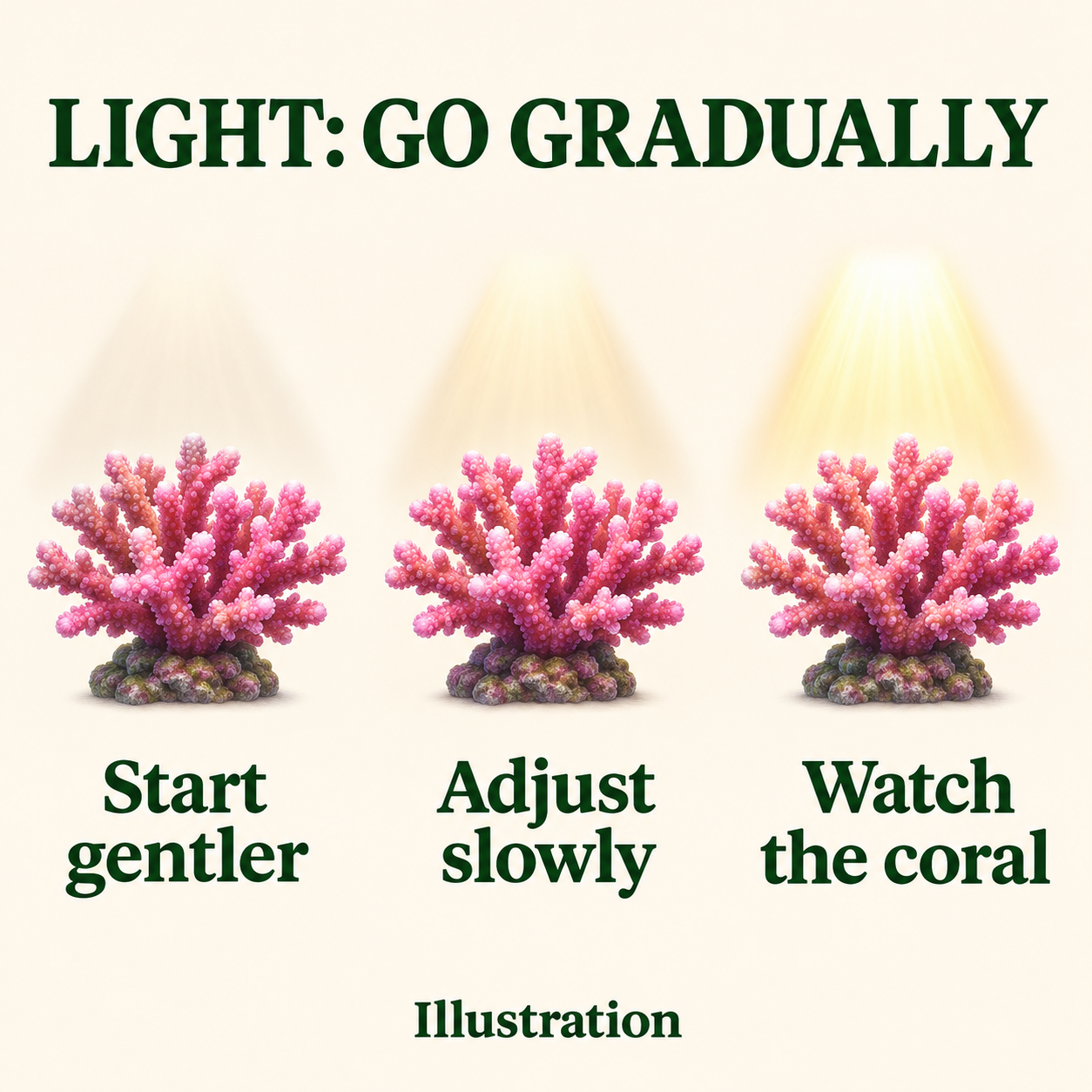
3. Bright does not mean sudden. Give an established colony bright reef lighting. Start a new frag under gentler light, then increase exposure gradually. Do the same after a major lighting change.
4. Pick the light, not just the shelf. Upper rockwork is a useful starting point, not a rule to place every frag directly beneath a lamp. Check the light at the coral and watch its response before moving it again.
Let water reach the whole bush
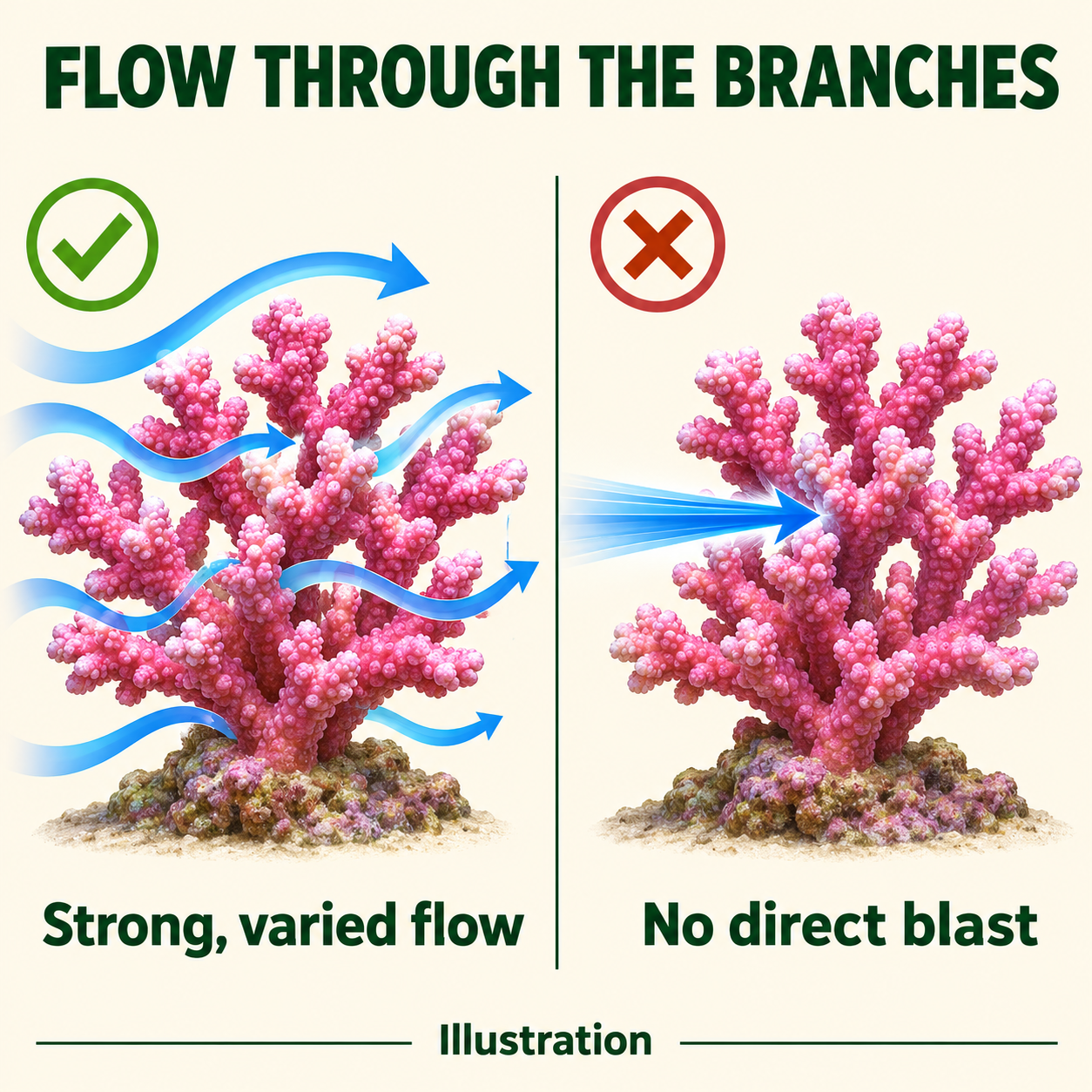
5. Keep the middle moving. Use strong, varied flow that reaches between the branches. A narrow jet hitting one spot is not the goal. Watch where debris settles and adjust the circulation around the colony.
6. Make the mount solid. Fix the base securely to stable rock. Keep the branches clear of nearby rock and leave access for cleaning. Revisit the flow as the colony fills out.
Feed the reef and keep it steady
7. Test before you tweak. Track salinity, temperature and alkalinity. Check calcium and magnesium too. Stony corals use dissolved building materials as they grow, so base any supplementation on measured demand.
8. Small meals, not clouds of waste. Fine suspended coral food can complement the energy supplied by the algae living in the tissue. Feed lightly and keep an eye on nutrients. More food is not a shortcut to a bigger colony.

Give neighbours room
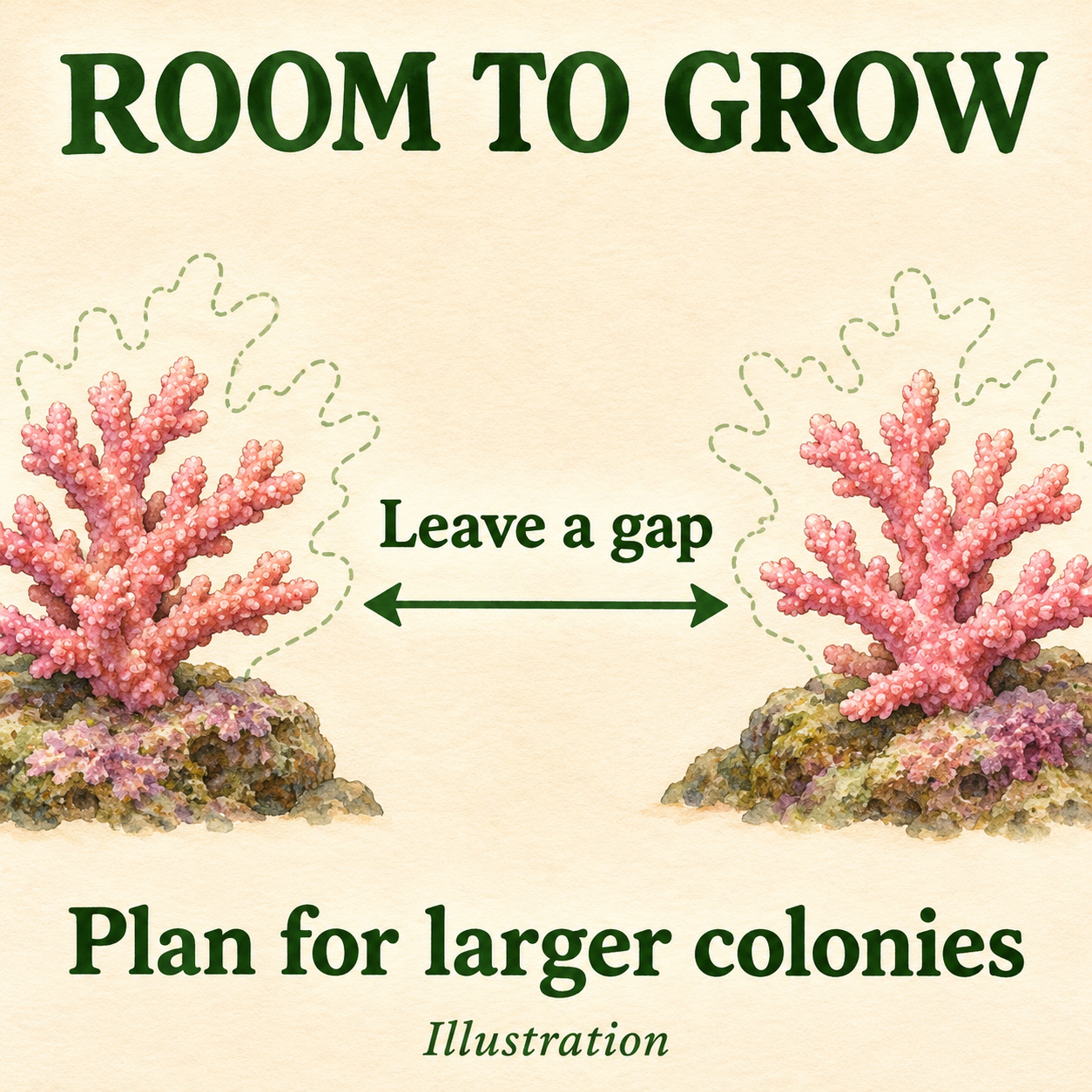
9. Plan for tomorrow's branches. Leave open space around the colony. Keep it beyond the reach of nearby corals and check the gap as both grow. Do not use a single fixed distance as a guarantee against contact or stings.
10. Meet the residents first. Small crabs and shrimp can live among Pocillopora branches. Some partners help remove sediment or defend the coral. Identify a hitchhiker before treating it as a pest. Do not give every colony a blanket freshwater or medication dip.
Field notes: what keepers report
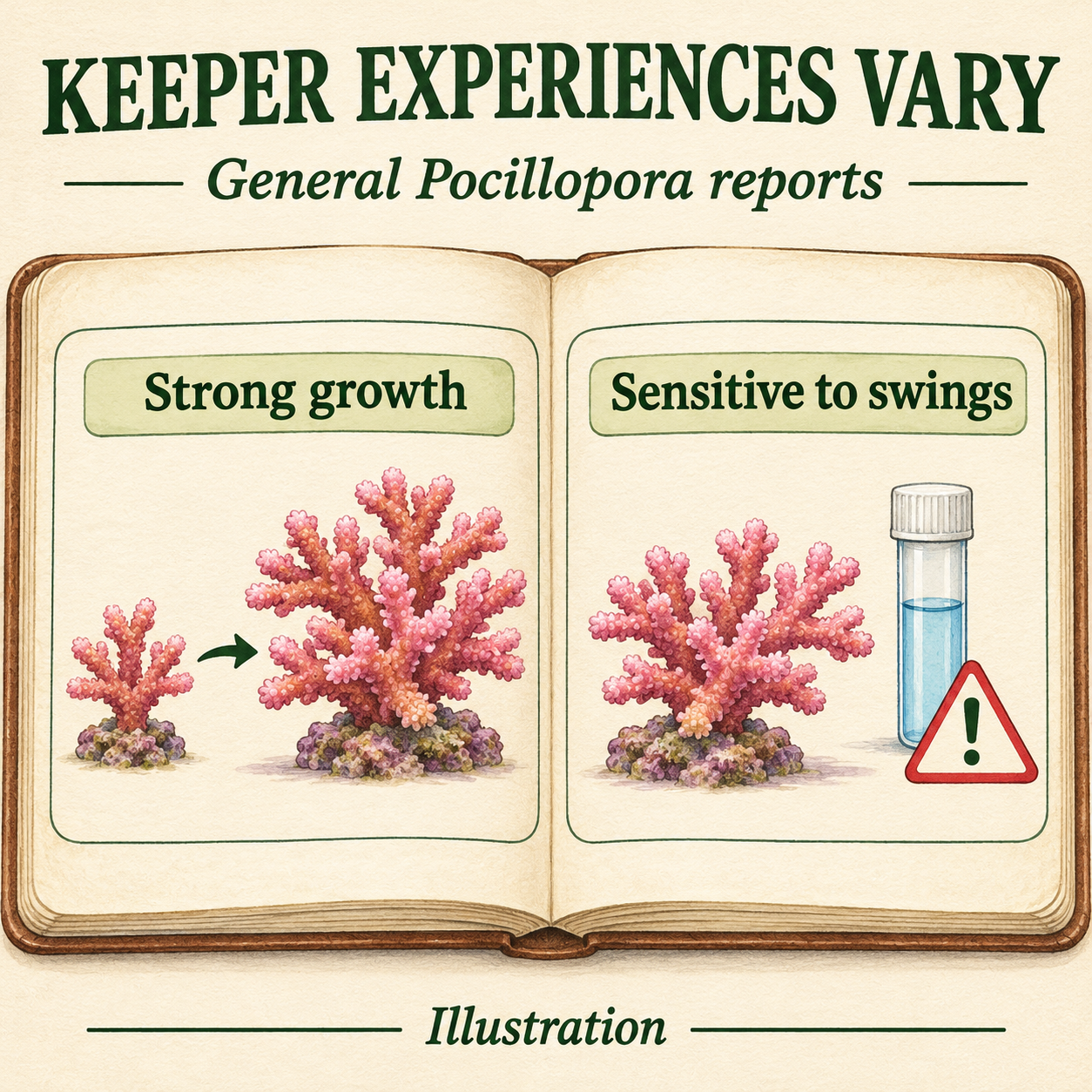
11. General Pocillopora reports: rewarding growth. Keepers describe small frags becoming bushy colonies and finding them more forgiving than Acropora. One keeper reported substantial growth in a small tank over six months.
12. General Pocillopora reports: hardiness has limits. Another keeper found their Pocillopora showed tissue loss while alkalinity drifted, even when other SPS looked fine. Some report new colonies appearing elsewhere; others have not seen that happen. These are genus-level experiences, not verified Warty Coral growth promises.
Let the colony settle, then enjoy the slow reveal of new branch tips and a fuller bush. Bright light, moving water and a dependable routine beat constant tinkering. Leave it room to become the coral you imagined.
Field Notes
Related species

Green poccillopora
Pocillopora sp
Same genus

Poccilopora
Pocillopora sp
Same genus

Cauliflower Coral
Pocillopora damicornis
Same genus
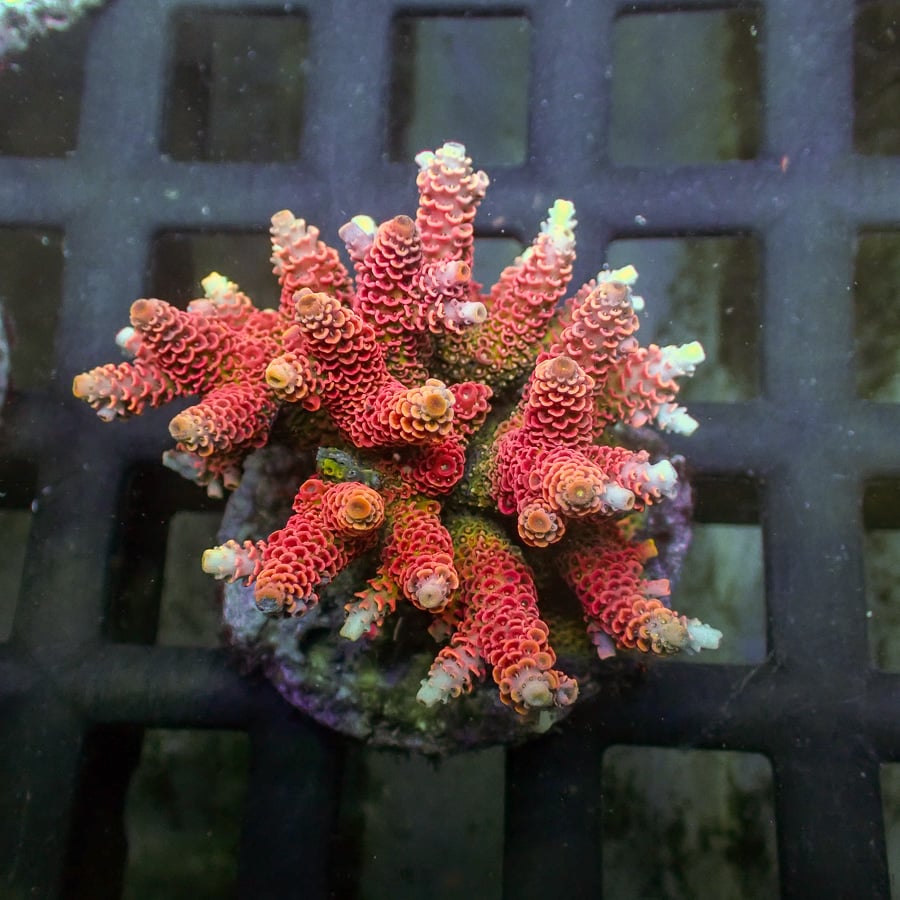
Pink millepora
Acropora millepora
Similar care · SPS
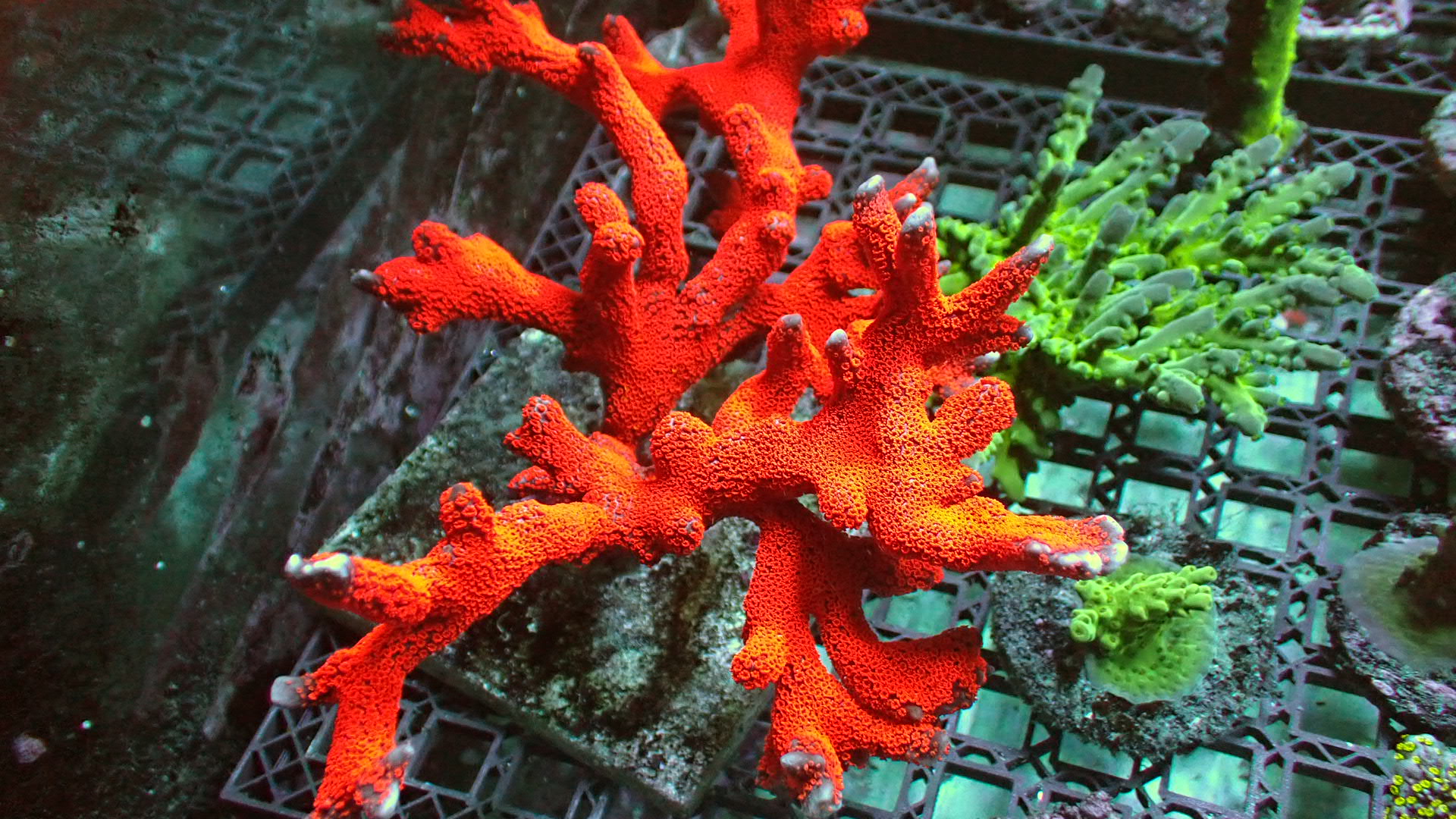
Bubblegum digitata
Montipora digitata
Similar care · SPS

Confused Rainbow Montipora
Montipora sp.
Similar care · SPS

GARF Bonsai Acropora
Acropora valida
Similar care · SPS
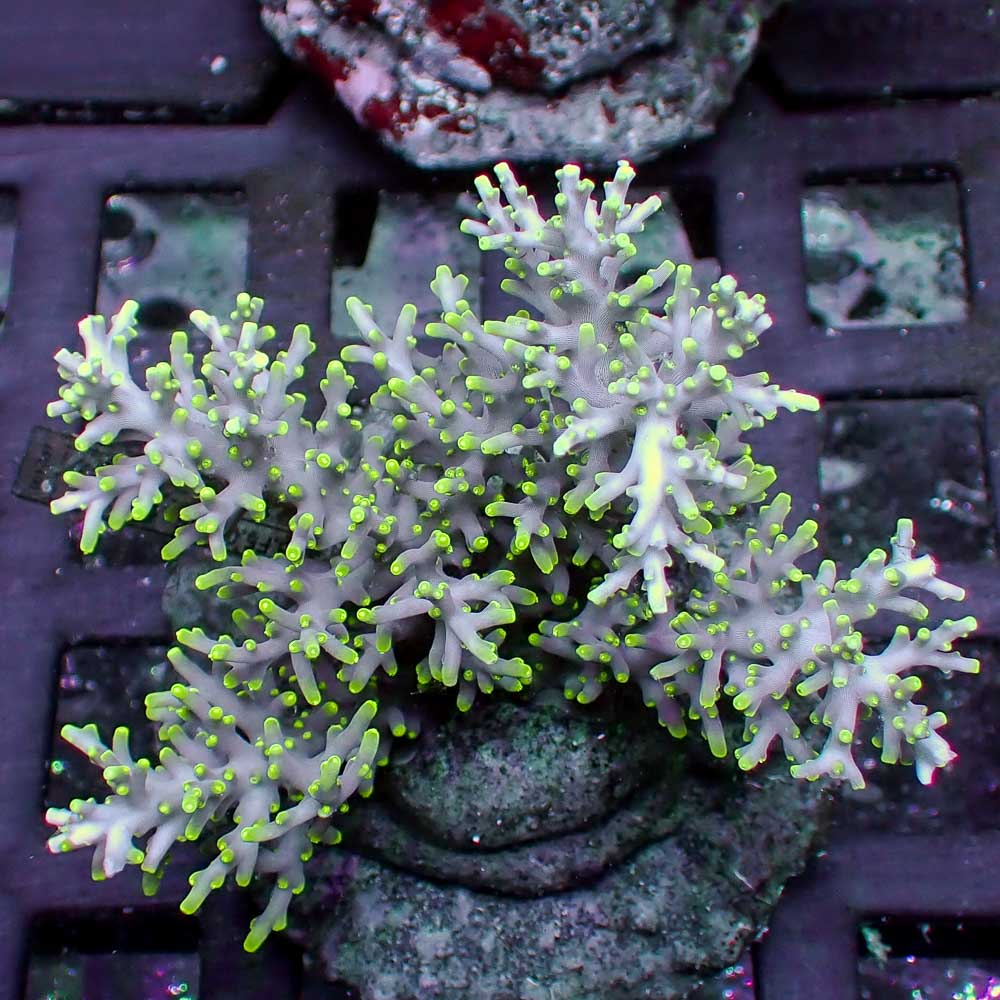
Green tip Acropora subglabra
Acropora subglabra
Similar care · SPS