Cauliflower Coral
Pocillopora damicornis
 ▶ Video
Ahmed Abdul Rahman · CC BY-SA 4.0 · source
Care facts
- Care
- Intermediate
- Light
- Med-High
- Flow
- Med-High
- Place
- Mid
- Space
- Peaceful
- Origin
- Wild Caught - Indo-Pacific
- Growth Rate
- Fast
Gallery
Videos
A cauliflower that builds a reef! Cauliflower Coral packs a lot of life into a bushy shape. Tiny polyps cover its branches, and a small frag can turn into a much bigger space commitment. Give it a stable reef, moving water and room to grow.
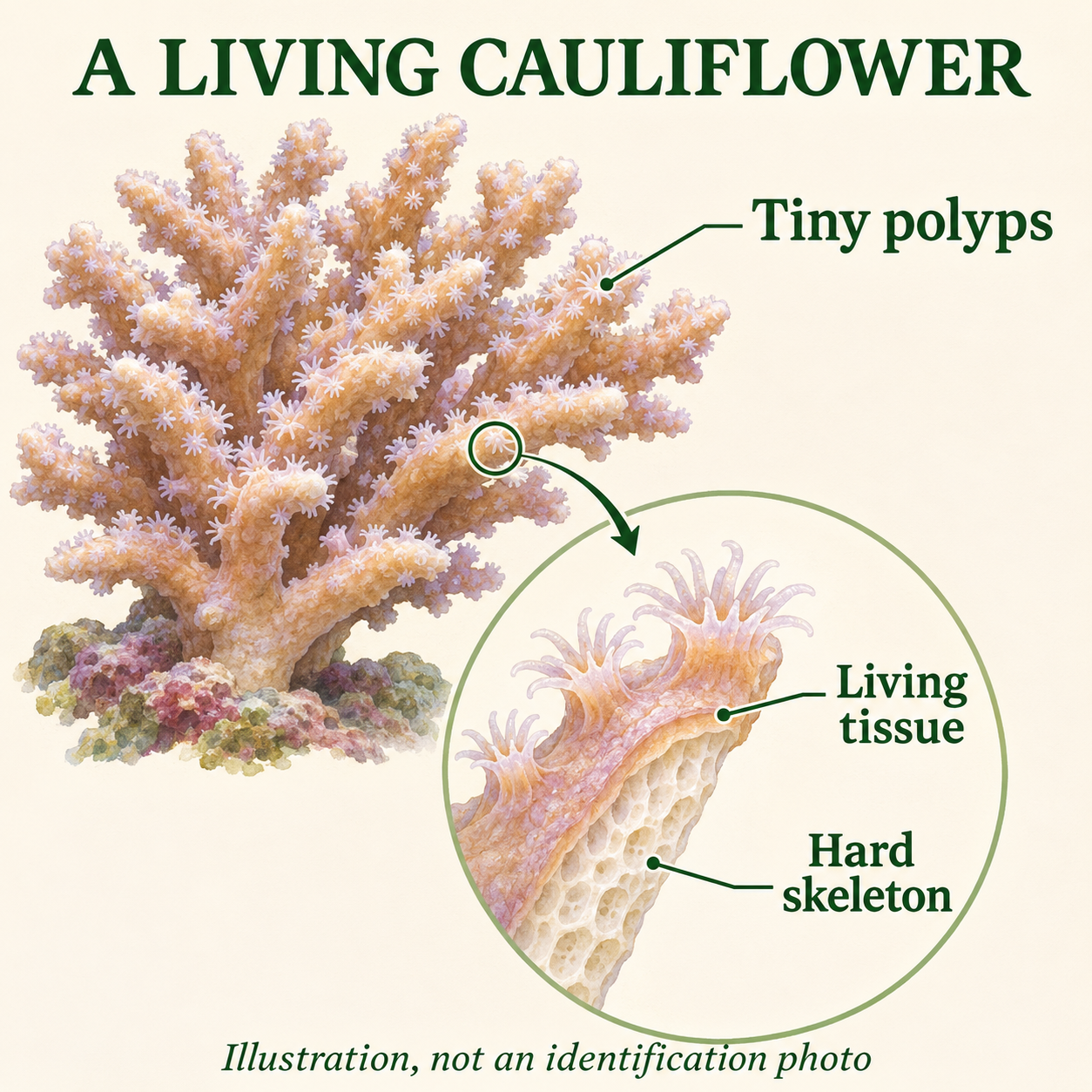
A living cauliflower
1. A bush made of tiny animals! Each fuzzy branch is a hard skeleton covered with living polyps. Together they build a compact, branching colony. Leave open space around this growing structure instead of squeezing a little frag into a permanent gap.
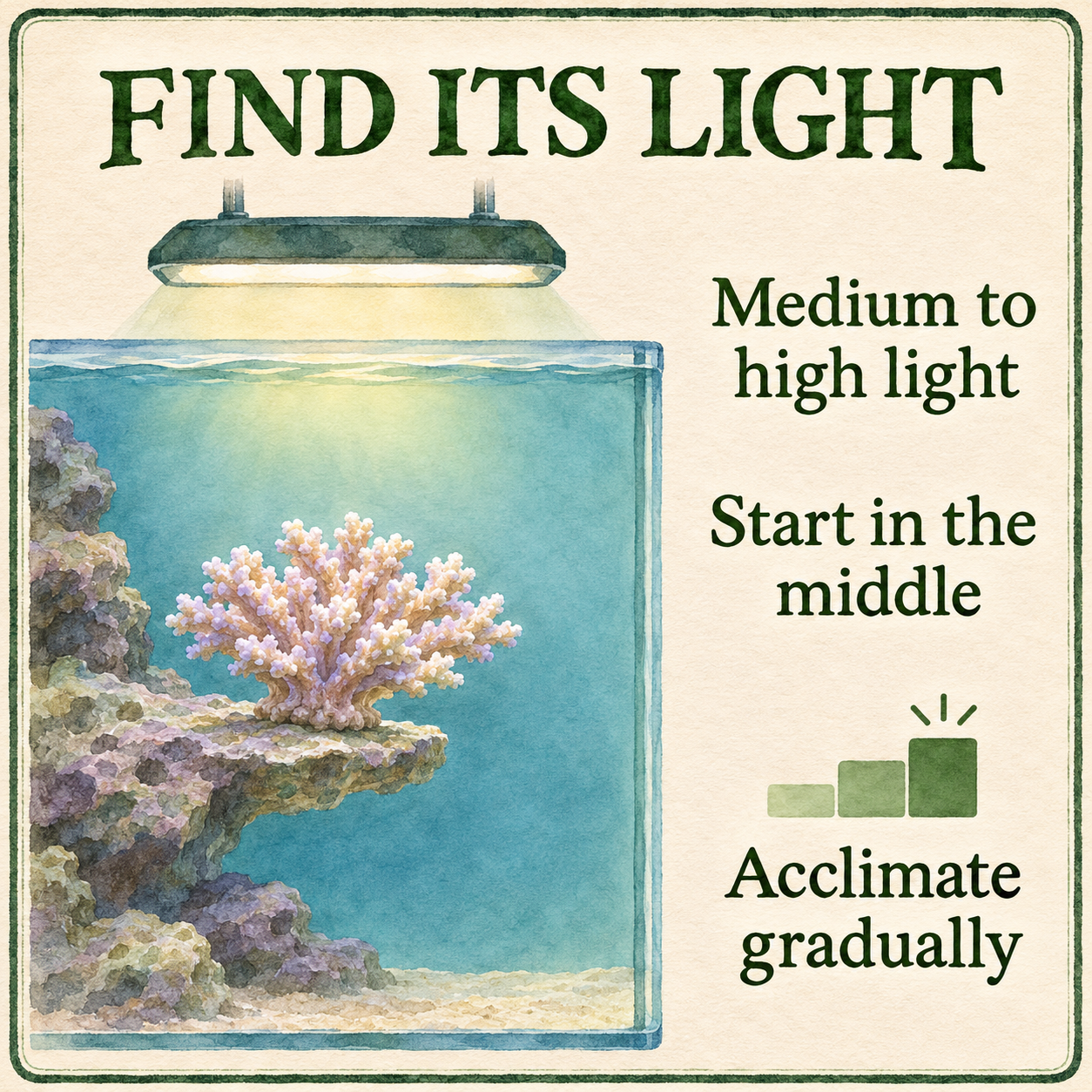
Find its light
2. Start bright, then settle in. Use medium-to-high light and acclimate gradually. Mid rockwork is a useful starting point, not a magic height. Match the light reaching the coral, then move upward only when the setup calls for it. Avoid sudden jumps into a hotspot.
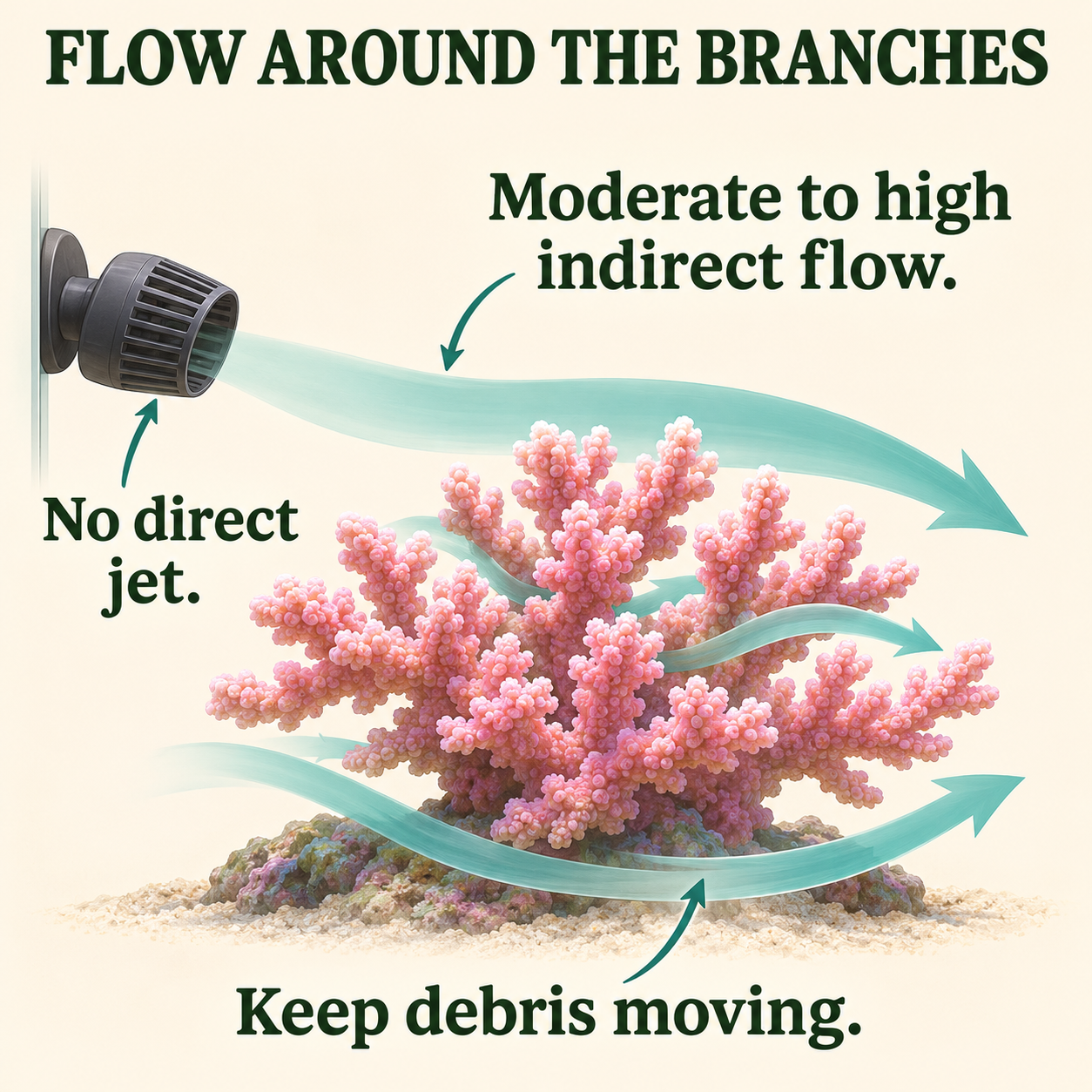
Flow around the branches
3. Make the water weave. Give the colony medium-to-high, indirect flow. Moving water should pass through and around the branches without a hard jet pounding one patch. Watch for settled debris inside a thickening colony. Recheck circulation as it fills out.
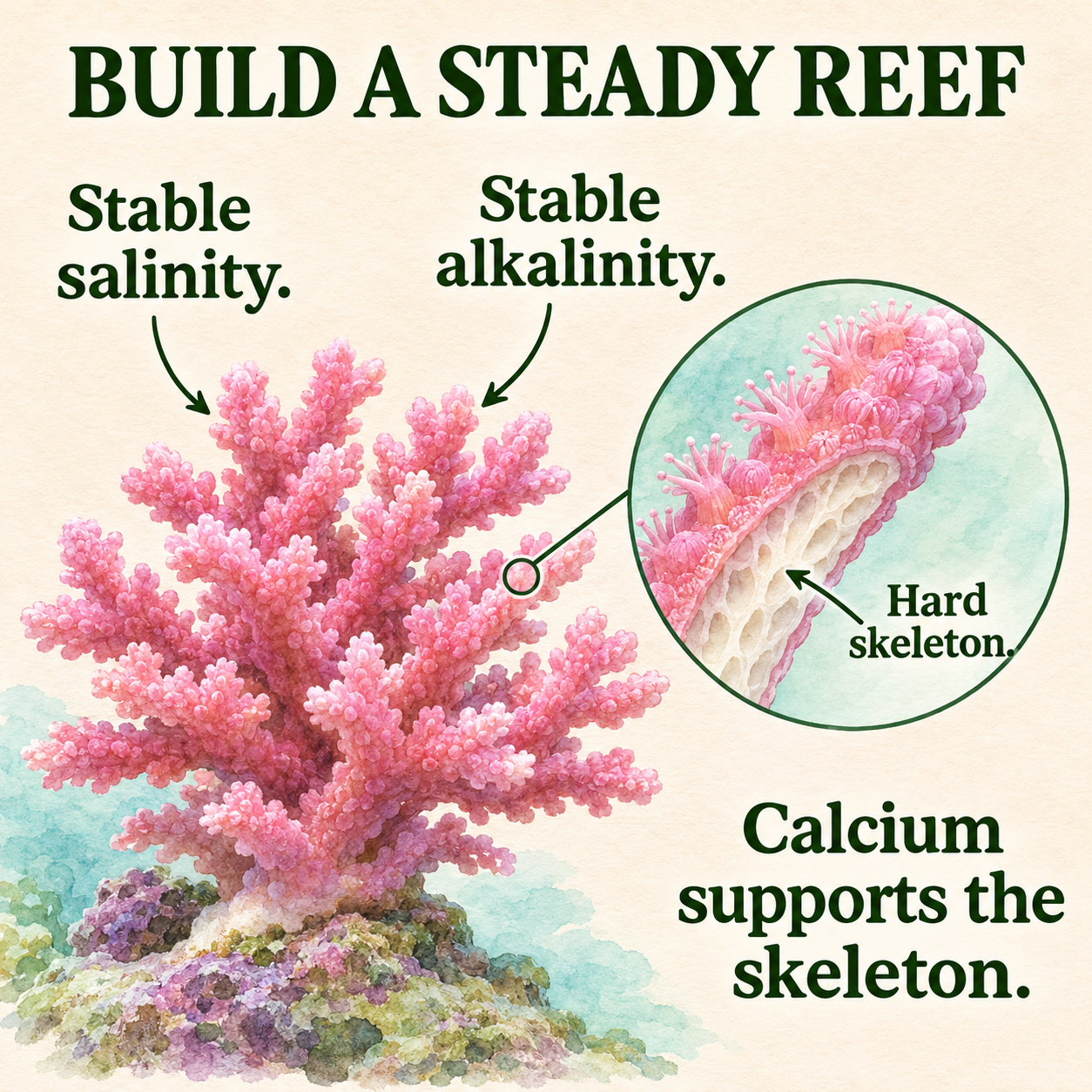
Build a steady reef
4. Steady beats spectacular. Keep salinity and alkalinity steady, and test calcium and magnesium as the skeleton grows. Make changes slowly. Fast growth means leaving room and keeping up with the tank, not promising a new colony by a certain date. Extra food is not a substitute for good light and stable water.
Make space to grow
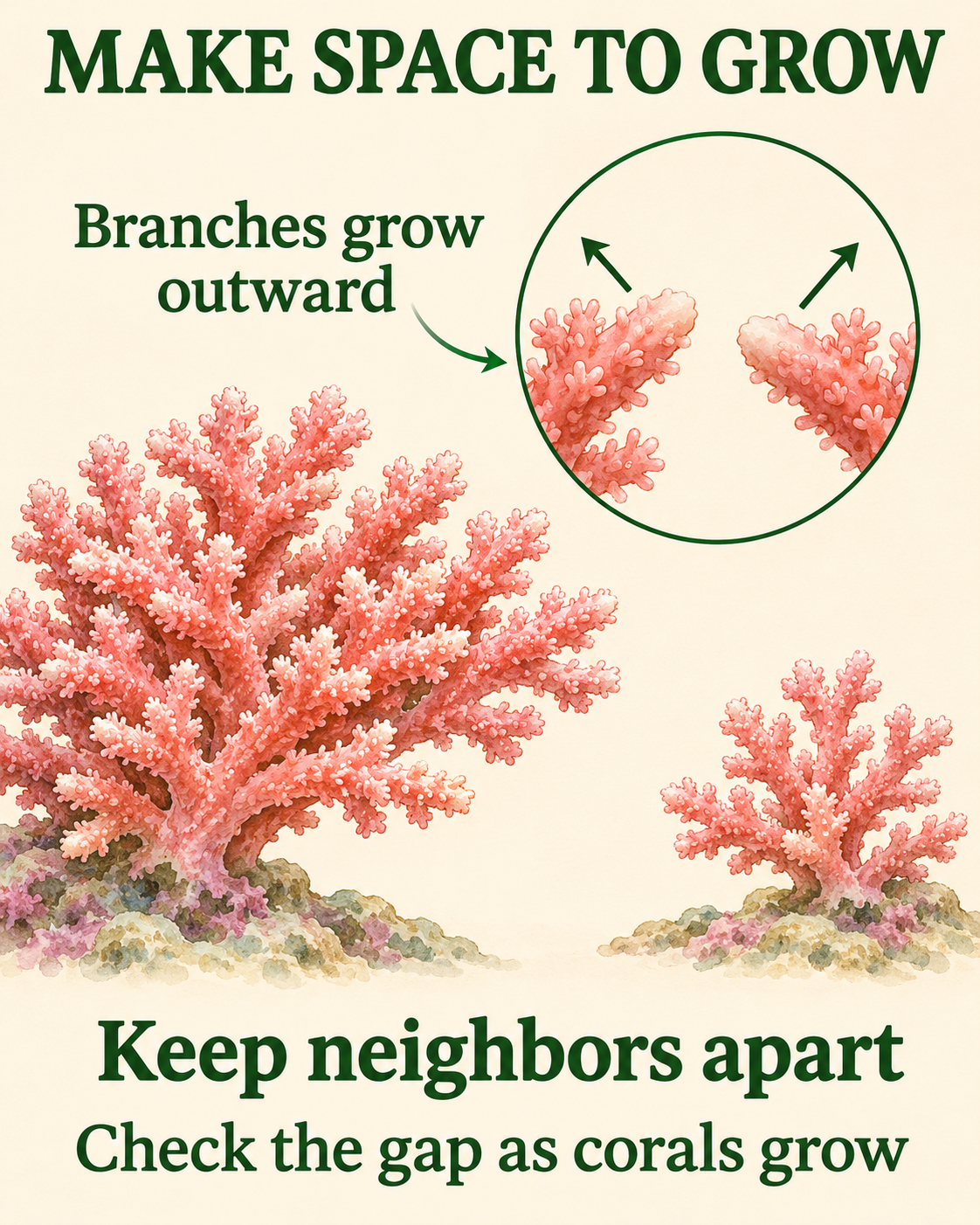
5. No branch-to-branch wrestling. Keep this coral out of contact with its neighbors. Inspect the edges as colonies expand. A peaceful-looking branch can still take part in a damaging contact battle. Check nearby rock for new little colonies and decide early where you want growth to stay.
Field notes — what keepers report
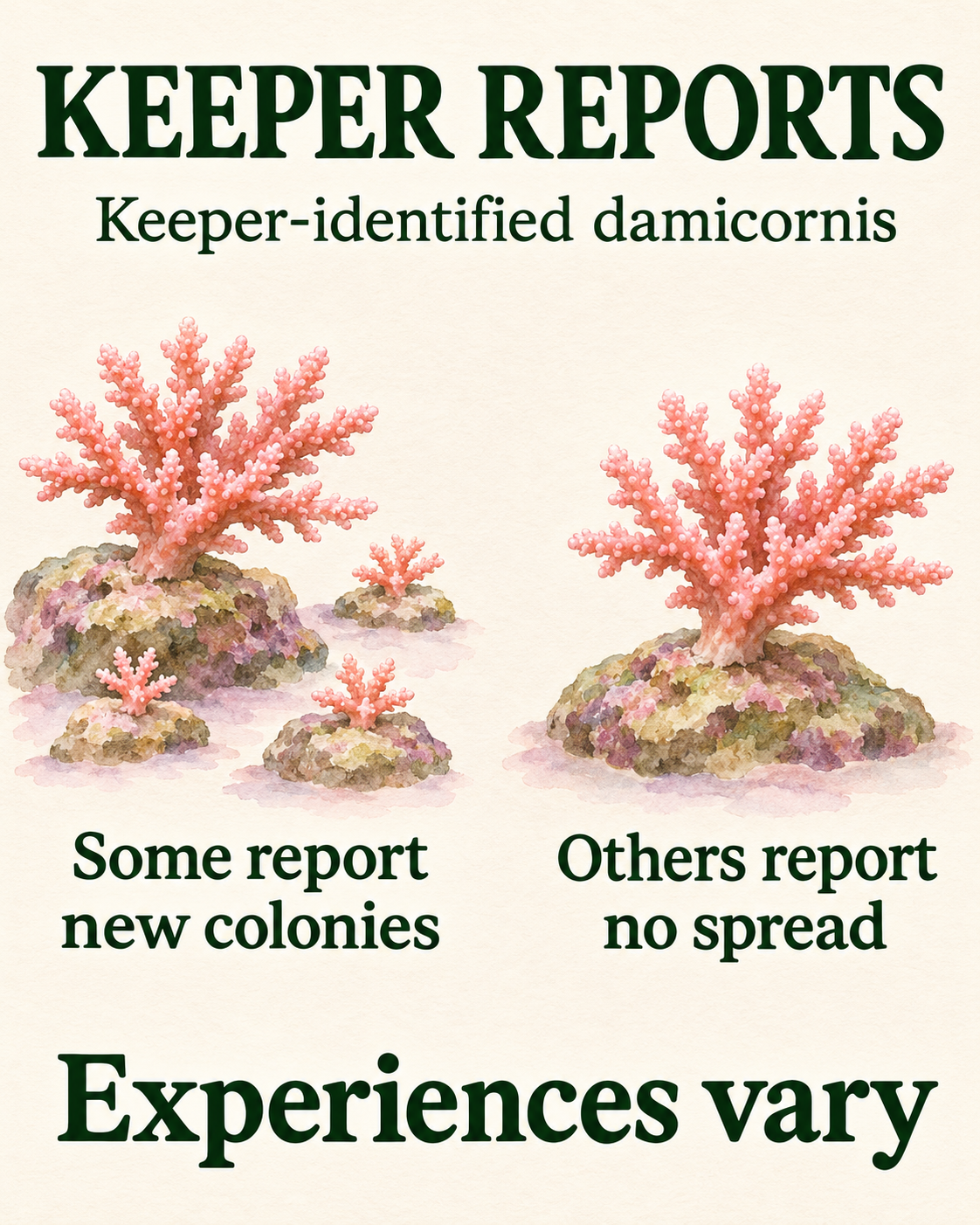
6. Different tanks, different stories. Keeper-identified damicornis reports include new colonies appearing around the tank and damage where corals touched. Other keepers describe three to five years of growth without that spread. General Pocillopora reports also include losing contact battles. Watch your own reef for both spread and damaged neighbors; one keeper's experience is not a timetable for yours.
Think ahead of the branches. Start with a roomy position, acclimate gently and watch how the colony responds. Consistent care and a little space now make a growing reef easier to manage later.
Field Notes
Related species

Green poccillopora
Pocillopora sp
Same genus

Poccilopora
Pocillopora sp
Same genus

Warty Coral
Pocillopora verrucosa
Same genus

Aculeus Acropora
Acropora aculeus
Similar care · SPS

Aequituberculata Montipora
Montipora aequituberculata
Similar care · SPS
Anacropora
Anacropora gracilis
Similar care · SPS
Bubblegum digitata
Montipora digitata
Similar care · SPS

Confused Rainbow Montipora
Montipora sp.
Similar care · SPS