Tubbs blue digitata
Montipora digitata
 ▶ Video
Care facts
- Care
- Intermediate
- Light
- High
- Flow
- Medium-High
- Place
- Mid
- Space
- Peaceful
- Growth Rate
- Moderate
Gallery
Videos
Those green dots are animals. Look between them and you’ll see the blue-violet branches behind the Tubbs Blue name. This little fork of coral can build a whole thicket from one frag.

History
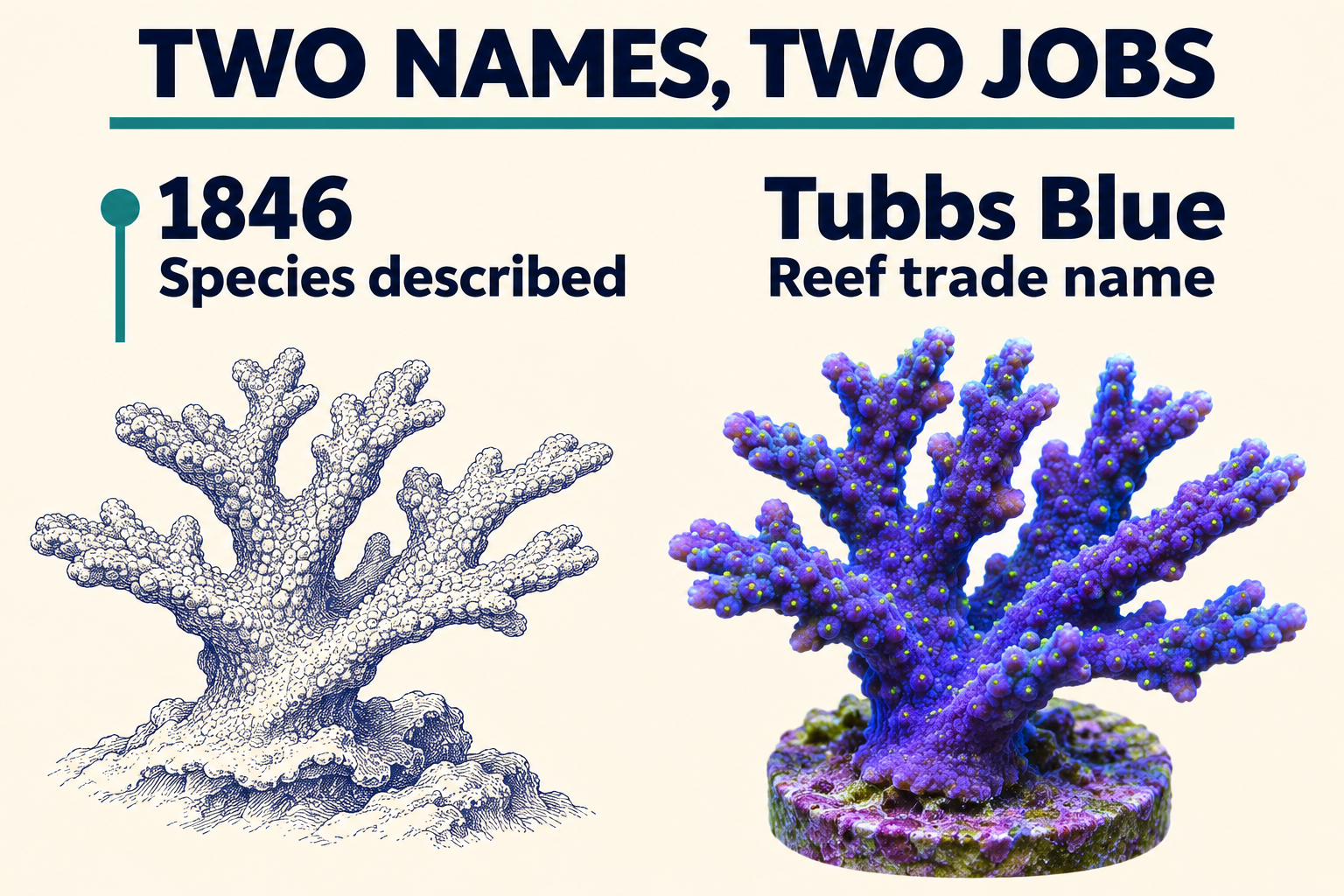
1. A coral with fingers. James Dwight Dana described the species in 1846. Digitata means fingered. Look at those upward forks and the name makes sense.

2. The blue behind the green. Tubbs Blue names this aquarium line. The branches are blue-violet under reef lights, with bright green polyps dotted over the surface. Keep the stock label with your frags.
In the wild
3. Shallow-water specialist. Wild Montipora digitata lives across the Indo-Pacific. It grows on reef flats and in shallow lagoons, including sandy or muddy shallows. Colonies at one Okinawa site sat just 2 meters deep at high tide.
4. Sun and moving water. Shallow flats get strong sunlight, and moving tides can stir them up. Sheltered lagoons have quieter pockets. Tiny algae inside the coral use sunlight to make food.

Light and placement
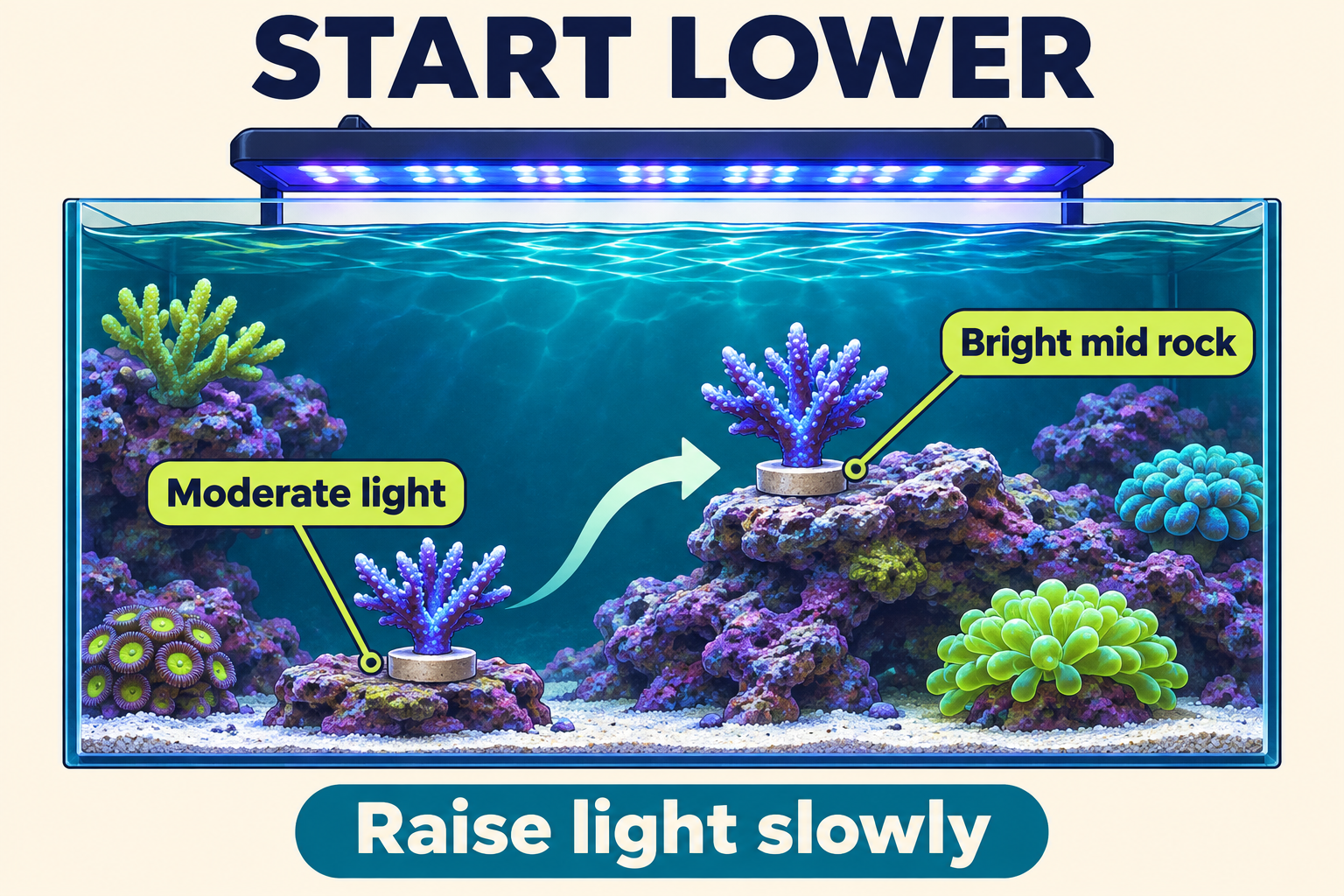
5. Start lower, climb slowly. Set the new frag in moderate light and work up to bright light over a few weeks. Measure light at the frag if you have a PAR meter. If tissue starts to pale after a move, pause the climb.
6. Bright mid rock. Pick an open ledge around mid tank where the branch tips get light. Leave a couple of inches to start, then widen the gap as it grows. Keep other corals out of its shade and off its base.
Flow and water
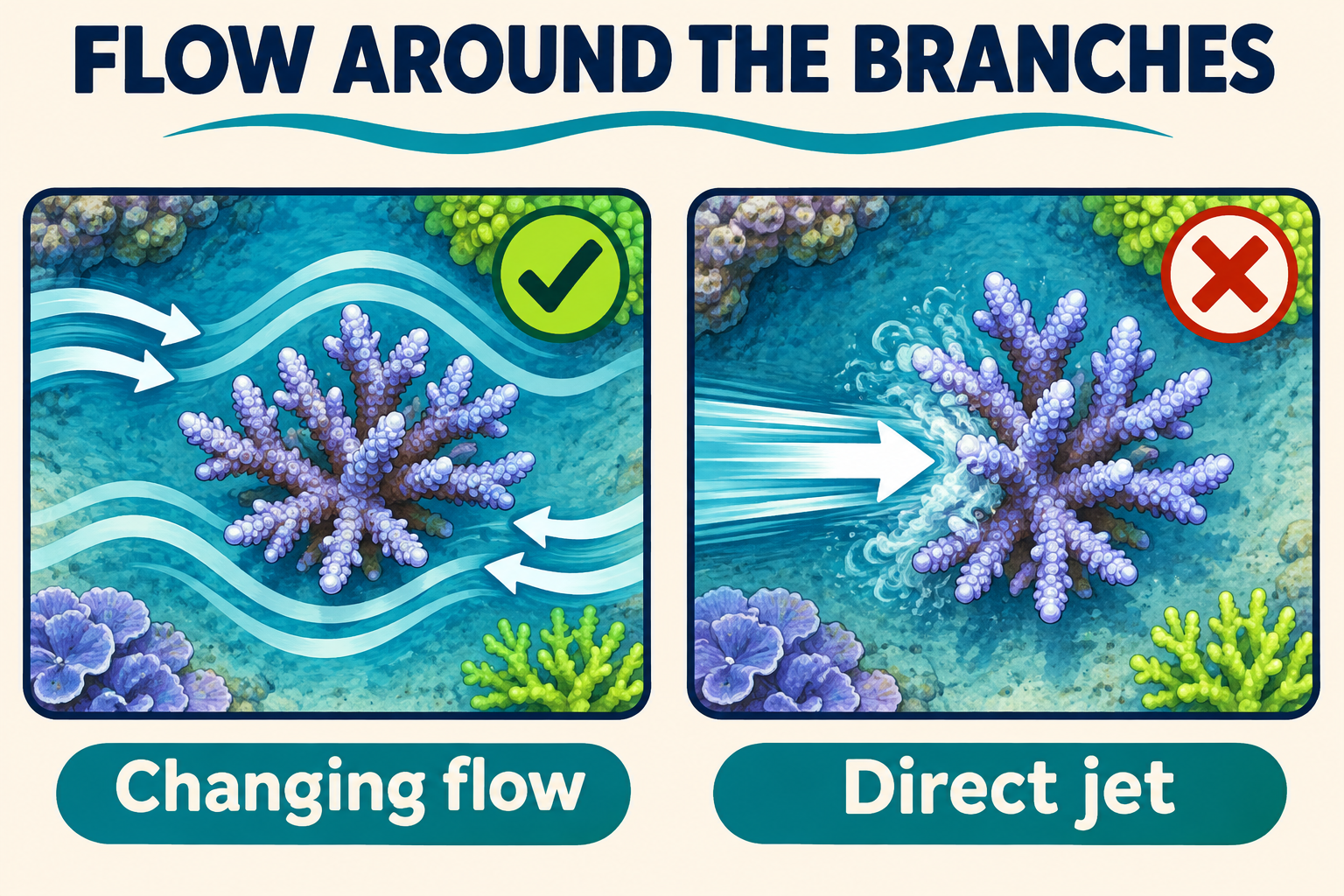
7. Wash around the forks. Give it medium to strong flow that changes direction. Aim pumps past the frag so water reaches the base and clears debris without a hard jet hitting one side.
8. Build steady. Test alkalinity and calcium regularly. Keep salinity and temperature steady as well. Compare readings over time before changing your dosing.
Growth and pests
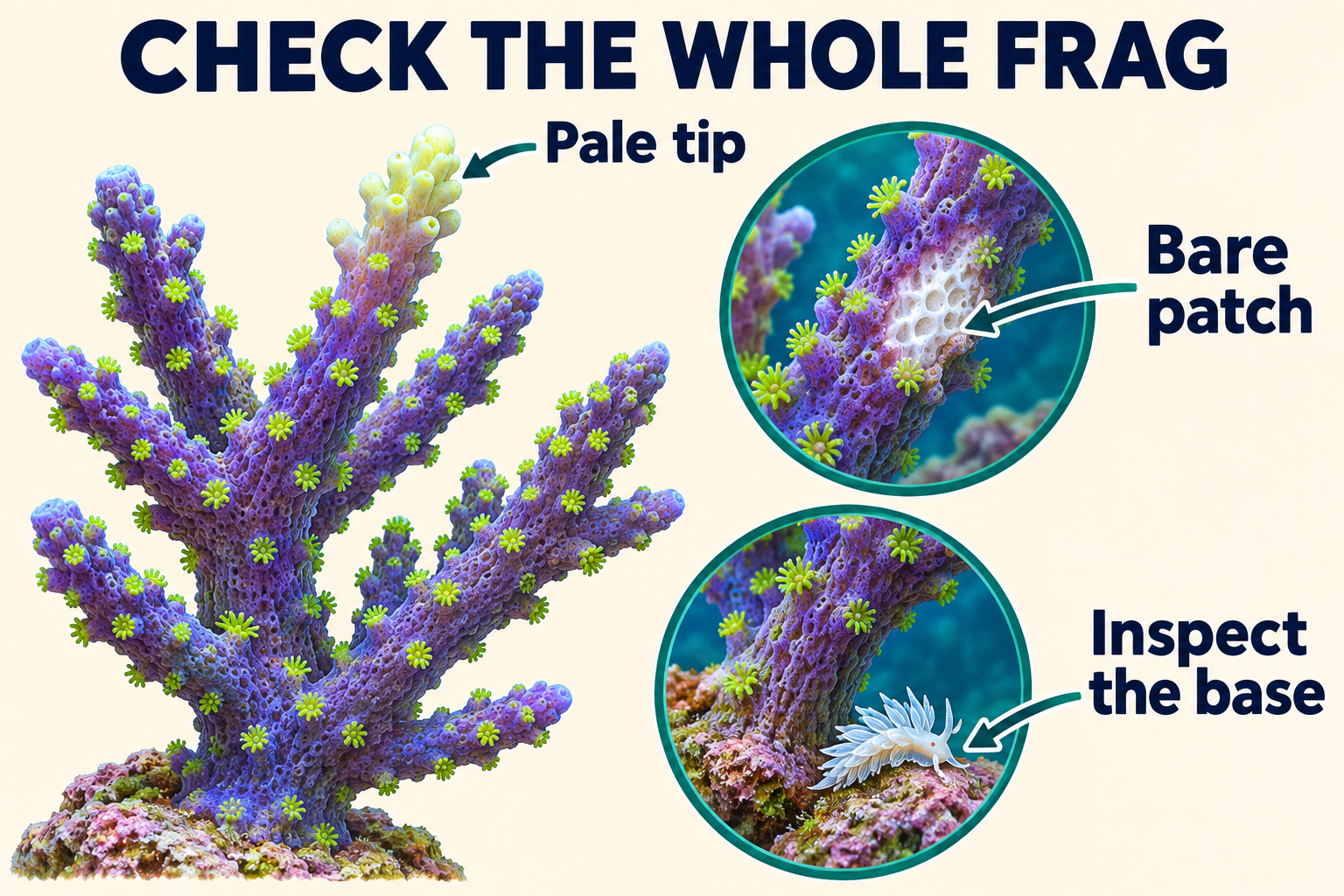
9. Watch the tips and base. Look for new tissue creeping over the plug and branches stretching upward. A pale tip with tissue still on it can be fresh growth. A bare patch that keeps getting bigger needs a closer look.
10. Check underneath after dark. Look for tiny frilly white slugs and their eggs near the base. Montipora-eating nudibranchs can leave bare white patches. Isolate suspicious frags and inspect nearby Montipora before moving anything.
Field notes — what keepers report
11. Blue through whose eyes? In tanks with related blue digitatas, keepers have seen teal, or blue that comes out purple in photos. Take a photo under the same lights each time so you can compare it with last month’s.
12. A slow start or a fast grower? One blue-digi keeper watched the base spread and the branches thicken over four months. Another gave up a colony that outgrew its spot too quickly. Give yours enough room for either pace.
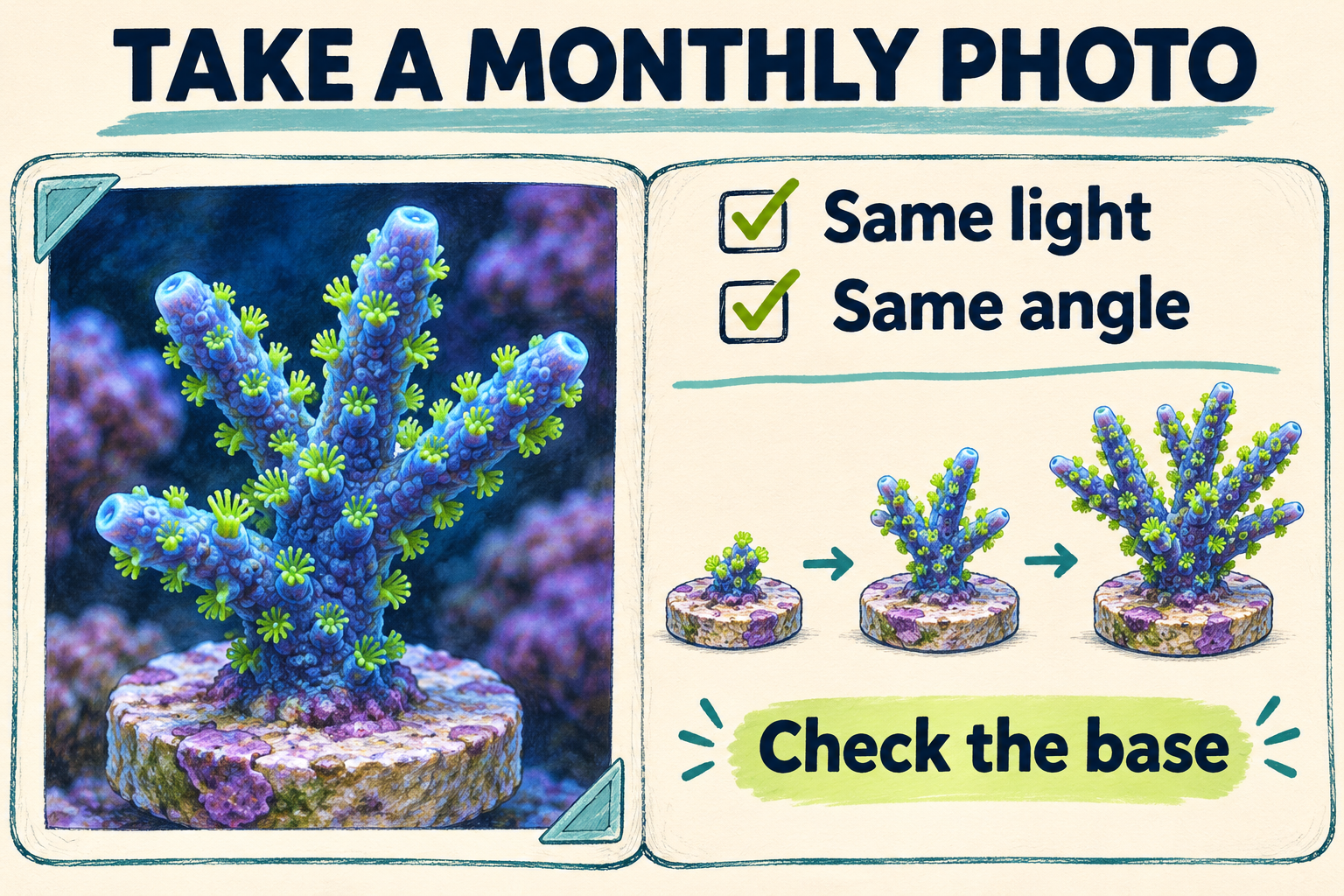
Give your digi a bright spot, water that moves around its branches, and room to spread. Then look down at the plug. The next branch often starts with a little more coral at the base.
Photo: Tin Huynh / ReefToGo.
Field Notes
Related species

Aequituberculata Montipora
Montipora aequituberculata
Same genus

Bubblegum digitata
Montipora digitata
Same genus

Confused Rainbow Montipora
Montipora sp.
Same genus

Leaf Plate Montipora
Montipora capricornis
Same genus

Monasteriata Montipora
Montipora monasteriata
Same genus

Neon Green Montipora Spongodes
Montipora spongodes
Same genus

Orange monti cap
Montipora capricornis
Same genus

Tubbs Stellata Montipora
Montipora stellata
Same genus