Gold hammer
Fimbriaphyllia paraancora
Gallery
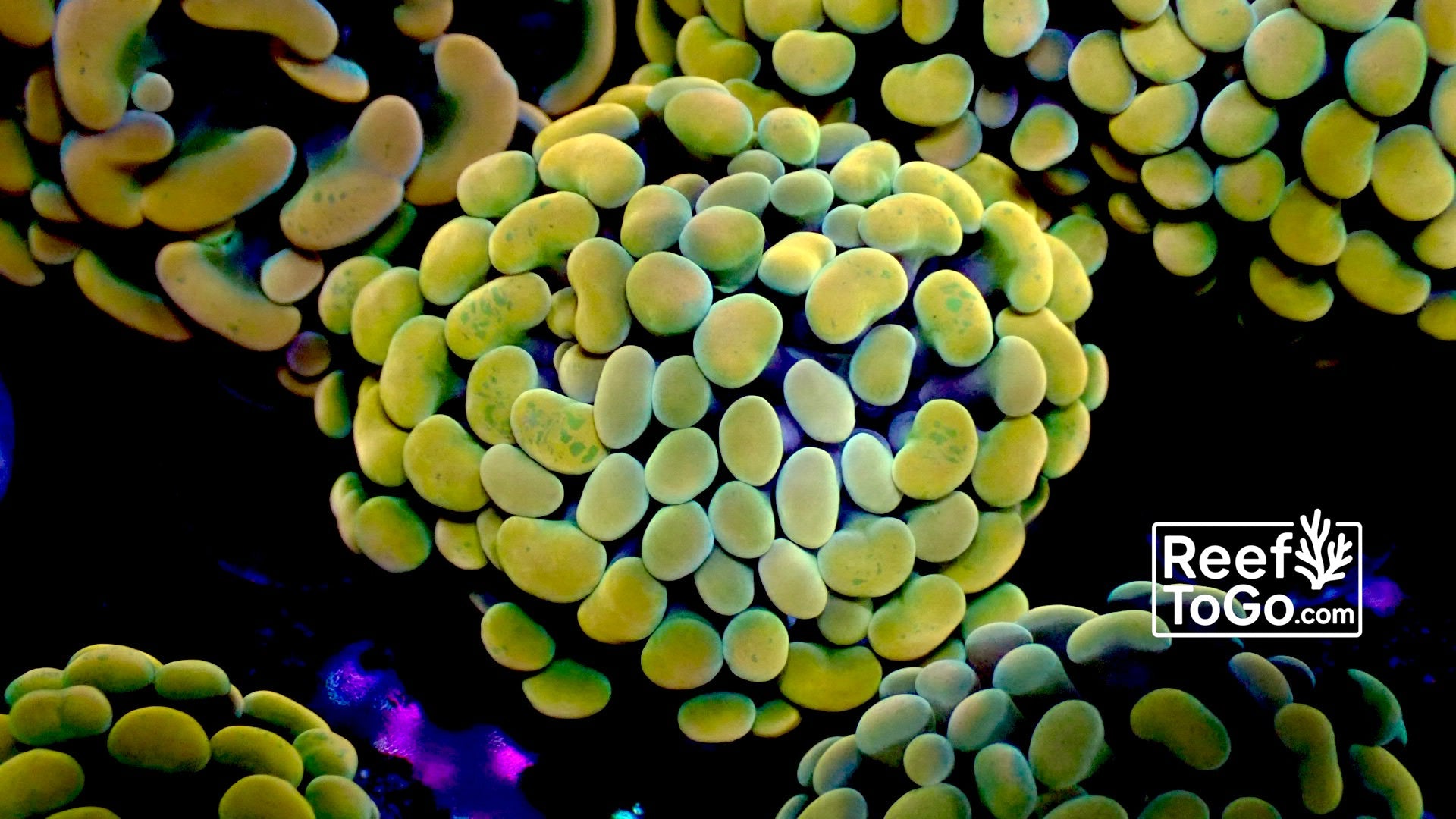
The Gold Hammer is the wall-forming hammer coral dressed in the color every hammer collector chases: tentacles in shades of gold, mustard, and warm yellow, each one ending in the flattened, T-shaped tip that gives hammer corals their name. A colony is a cluster of fleshy heads rising from a branching skeleton, and when the polyps extend in gentle current the whole piece moves like a field of small golden mallets. Under blue light the golds turn luminous.

Hammers of this species, Fimbriaphyllia paraancora, grow on sheltered Indo-Pacific reef slopes, in water calm enough for the long tentacles to extend without tearing. They are colonial animals — each head is one polyp, budding new heads as the skeleton branches — and they defend their space with sweeper tentacles that stretch well past the resting length of the colony after dark. That defense is why this entry rates aggression as moderate: the sting is real even though the coral reads as gentle by day.
Care suits a beginner who gives it room. Place it mid-tank in medium light and medium flow — enough current to keep the tentacles swaying and lifting, never so much that they pin flat or retract. Acclimate to brighter light over a week or two. Keep reef parameters in the standard band: 77–79°F, salinity near 35 ppt, alkalinity 8–10 dKH, calcium 400–450 ppm, with steady alkalinity supporting the slow skeletal growth underneath the tissue.
Growth is slow and happens by budding: a head pinches into two over weeks, and a single-head frag becomes a small colony across a year of good conditions. Feeding is optional — the coral runs well on light — though an occasional offering of mysis or fine LPS food onto the tentacles is taken readily and can speed budding. Leave several inches of clearance on all sides, more in the direction of the current, and check after dark now and then to see the sweepers' true reach. Fragging follows the branching skeleton: cut through bare skeleton below a head, never through living tissue, and let the piece heal in moderate flow.
Field notes — what keepers report
- Sweeper behavior varies so much between colonies that keepers argue about the basics. In one thread, several keepers describe hammers stretching a few tentacles out long and thin on a regular basis, while another keeper with a year-old hammer in a watched living-room tank has never seen it happen and wonders if proximity to other corals is the trigger. A long-time keeper answering a similar question reports never seeing sweepers from any Euphyllia in a year and a half, day or night, while others see them constantly on colonies with plenty of open space.
- Reach is the cautionary tale. One keeper reports a Euphyllia sting killing coral more than eight inches away and wiping out mushroom colonies, SPS, and xenia along the way. In another case, hairy mushrooms placed about five inches from a new hammer, downstream of it, declined fast; the keeper moved everything beyond a foot of separation and still lost one mushroom.
- Grouping hammers with other Euphyllia draws mixed reports. Many keepers run hammers and frogspawn together with no trouble at all, and one reports a large hammer resting against a toadstool leather constantly without harming it. Care writers drawing on keeper reports still warn that the peace has limits, and torches in particular are reported to reduce hammers to bare skeleton when the two are crowded.
- Clownfish sometimes adopt a hammer as a substitute host when no anemone is available, and commensal shrimp and orangutan crabs take up residence too. Keeper-derived care notes flag that hosting behavior can wear on the coral over time.
Field Notes
Related species
Hologram hammer
Fimbriaphyllia paraancora
Same genus

Candygram hammer
Fimbriaphyllia paraancora
Same genus
Frogspawn
Fimbriaphyllia divisa
Same genus
Splatter hammer
Fimbriaphyllia paraancora
Same genus
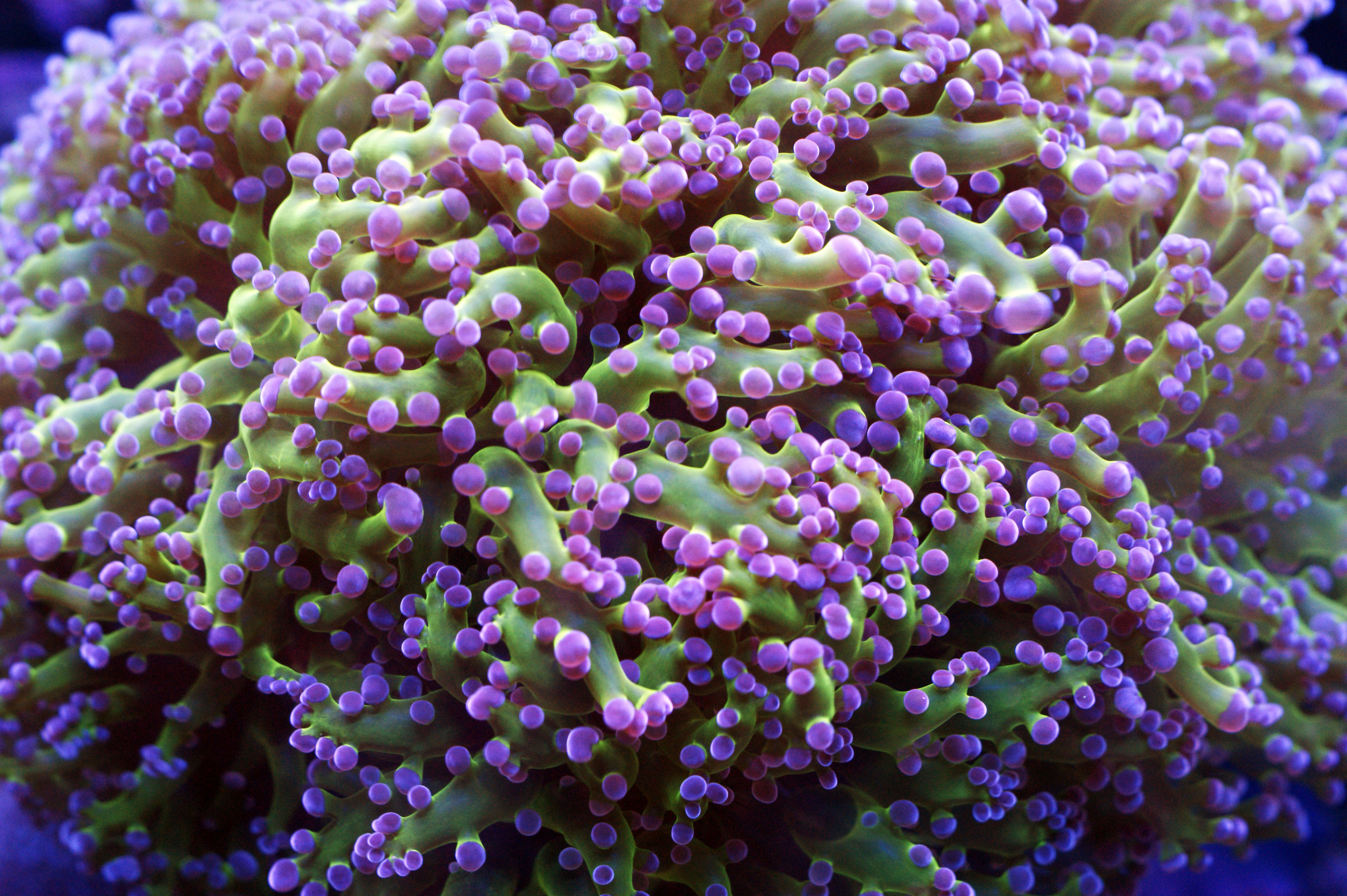
Branching Frogspawn
Fimbriaphyllia paradivisa
Same genus
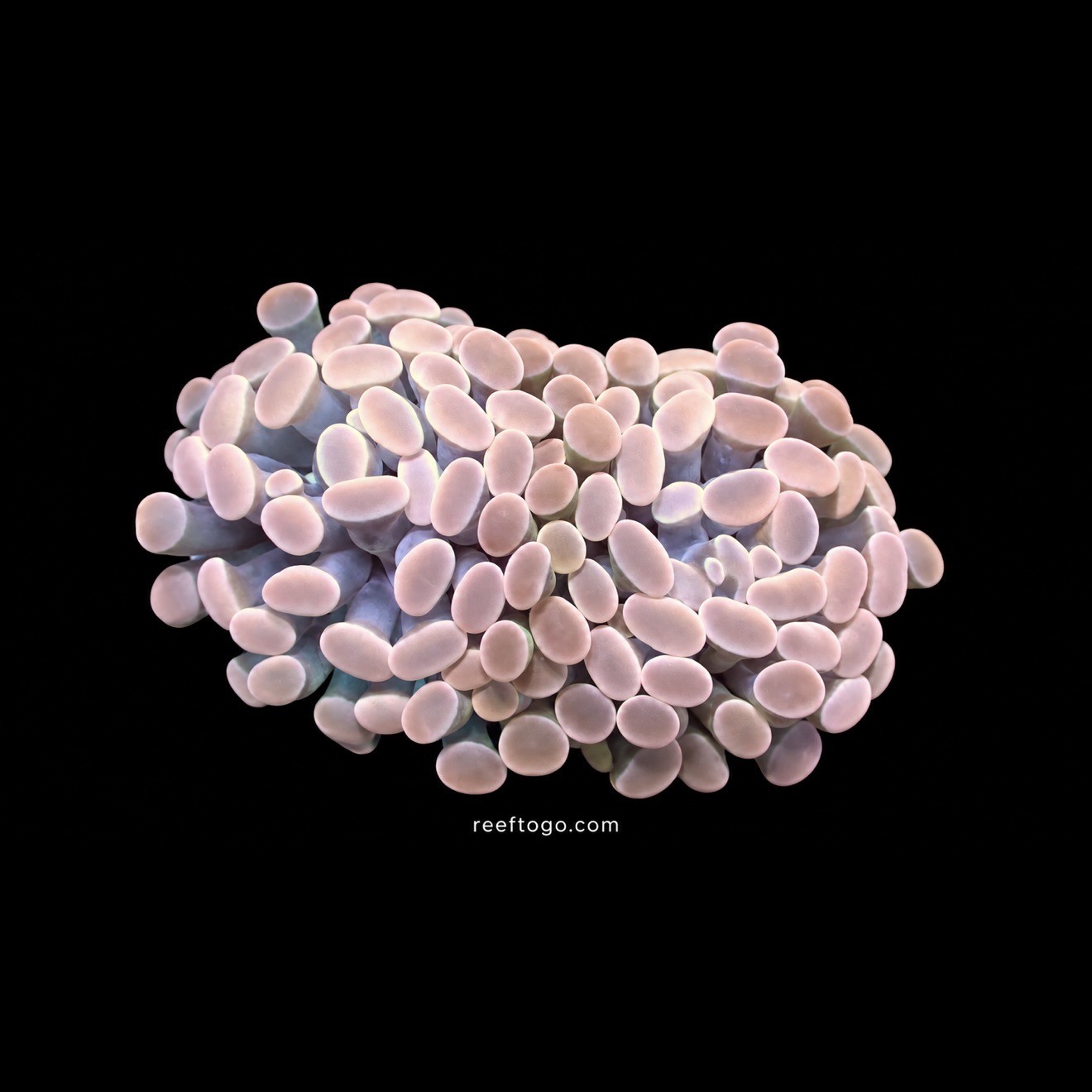
Pink Hammers
Fimbriaphyllia paraancora
Same genus
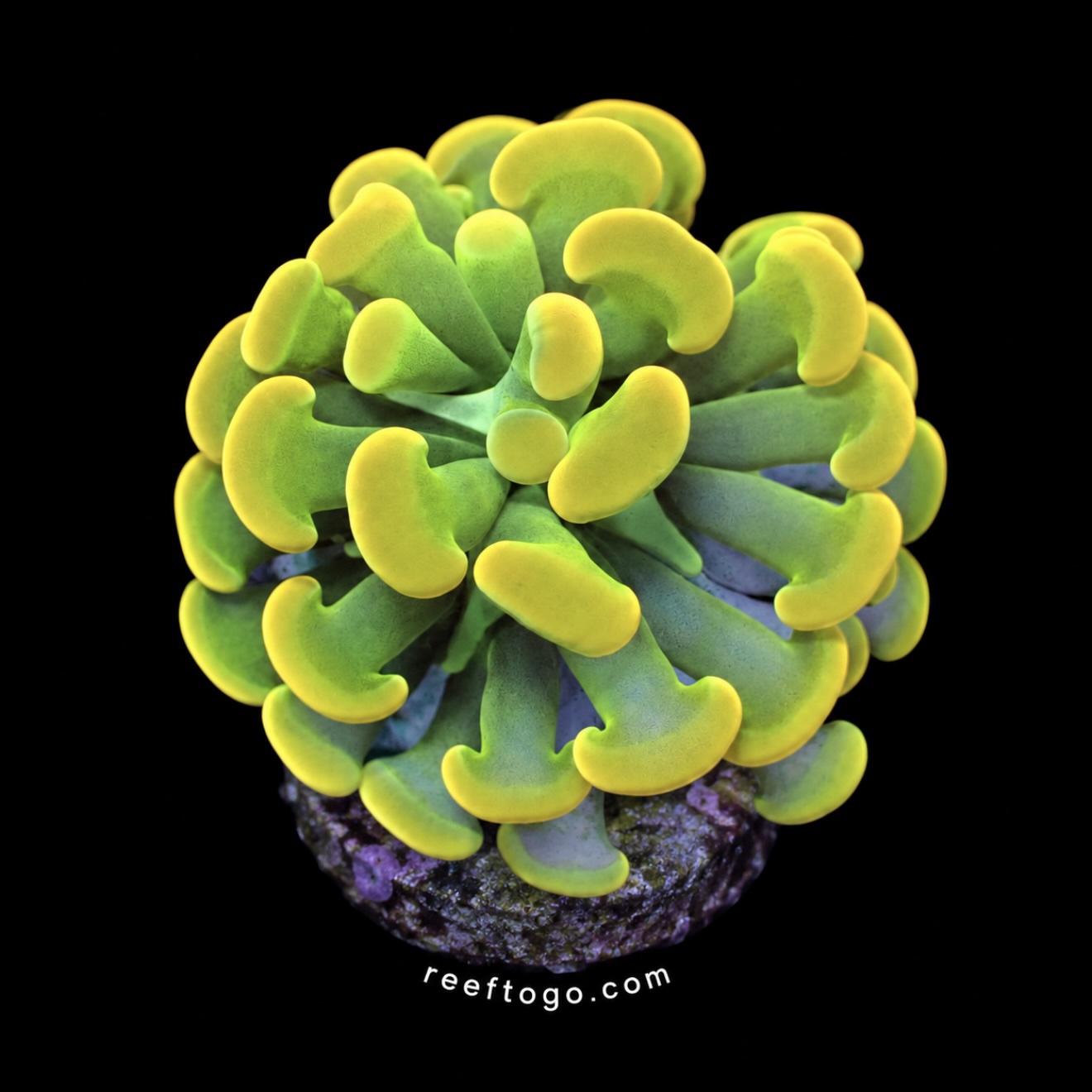
Willy Wonka Hammer
Fimbriaphyllia paraancora
Same genus
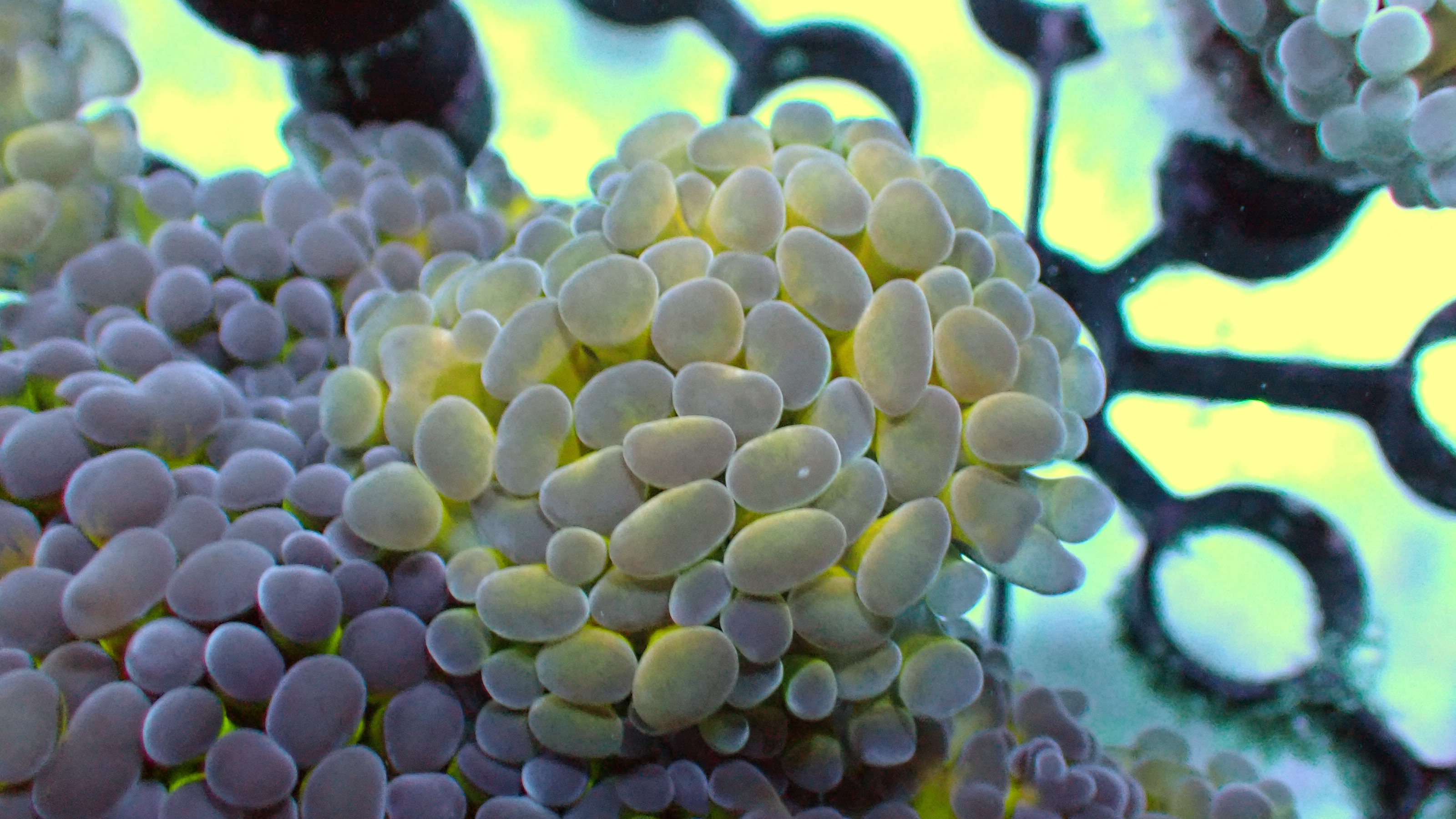
Cloud chaser hammer
Fimbriaphyllia paraancora
Same genus