Honeycomb Coral
Diploastrea heliopora

Nhobgood Nick Hobgood · CC BY-SA 3.0 · source
Photo: Nhobgood Nick Hobgood · [CC BY-SA 3.0](https://creativecommons.org/licenses/by-sa/3.0/) · [Wikimedia Commons](https://commons.wikimedia.org/wiki/File:Helcogramma_striata_(Neon_triplefin)_on_Diploastrea_heliopora_(Hard_coral).jpg)
Gallery
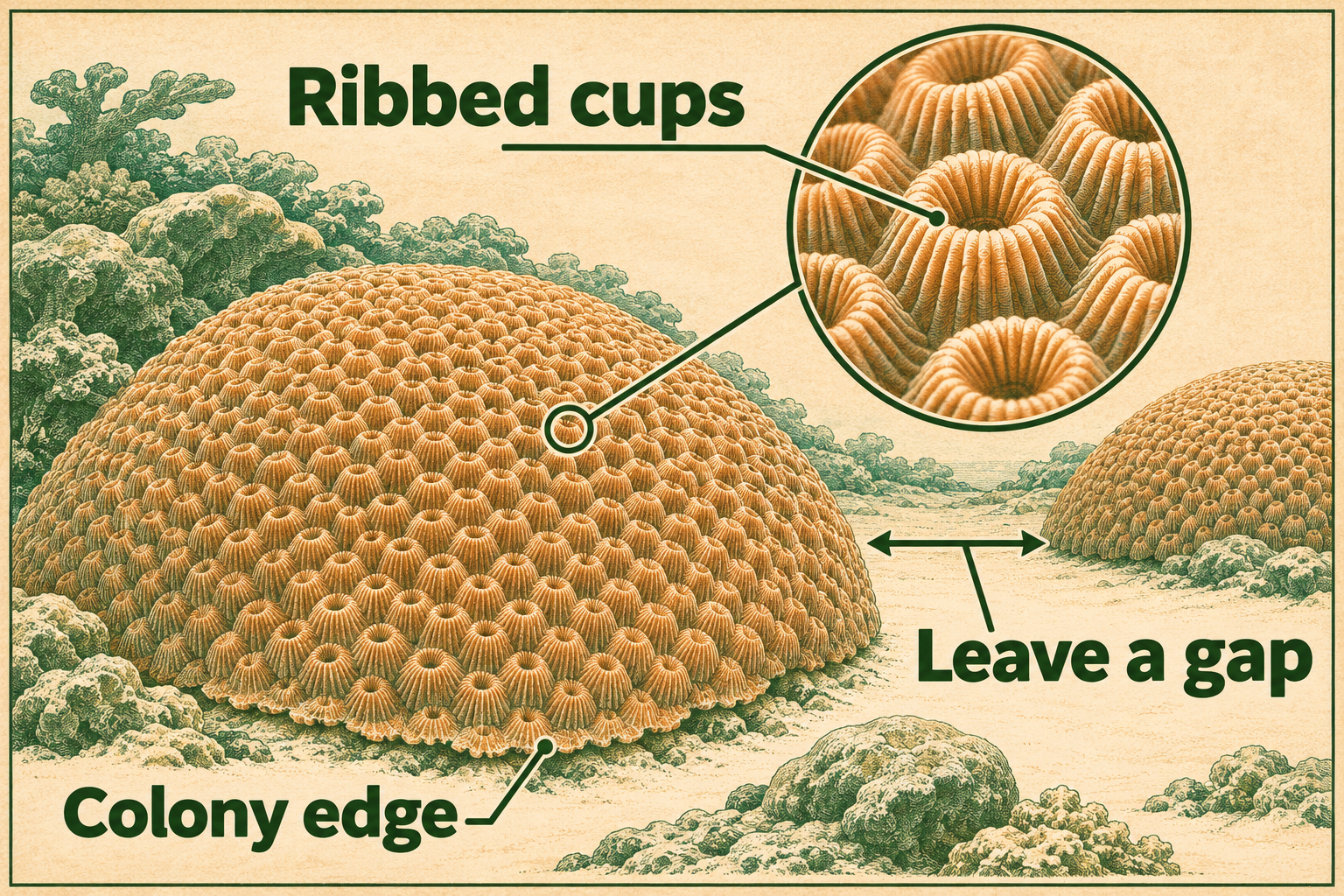
Honeycomb Coral is a dome made of tiny volcanoes. Each ribbed cup is the home of one polyp. Put thousands together and you get a reef mound big enough to give little fish a place to perch.
History of the coral
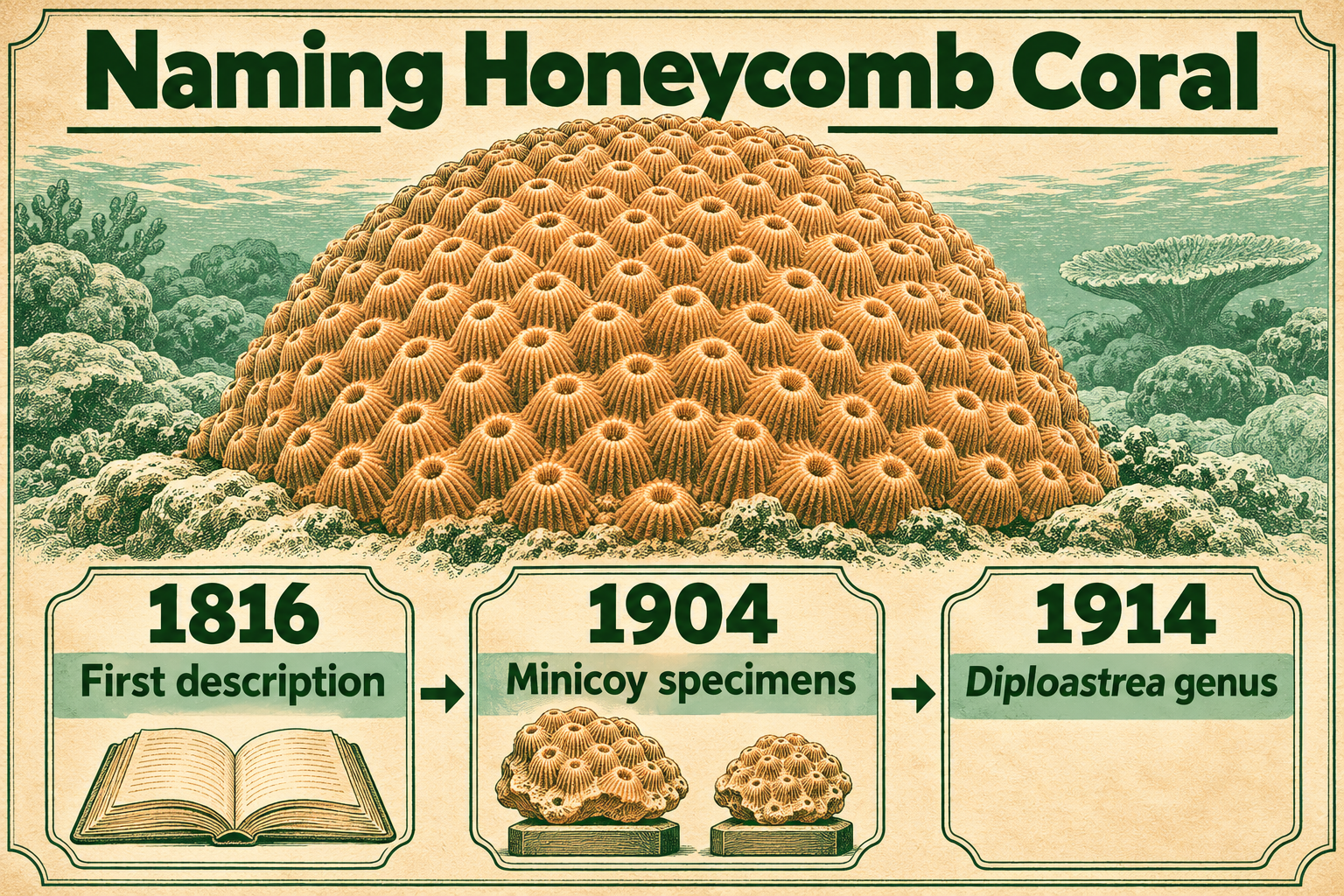
1. The name on the old label. Lamarck first described this coral in 1816 as Astrea heliopora. It has moved to a different genus since then. Today it’s the only living species of Diploastrea.
2. Three corals from a tiny island. Three specimens from Minicoy, in the Indian Ocean, were the basis for the genus named in 1914. Look for those round, ribbed cups to see what makes the colony so distinctive.
How they live in the wild
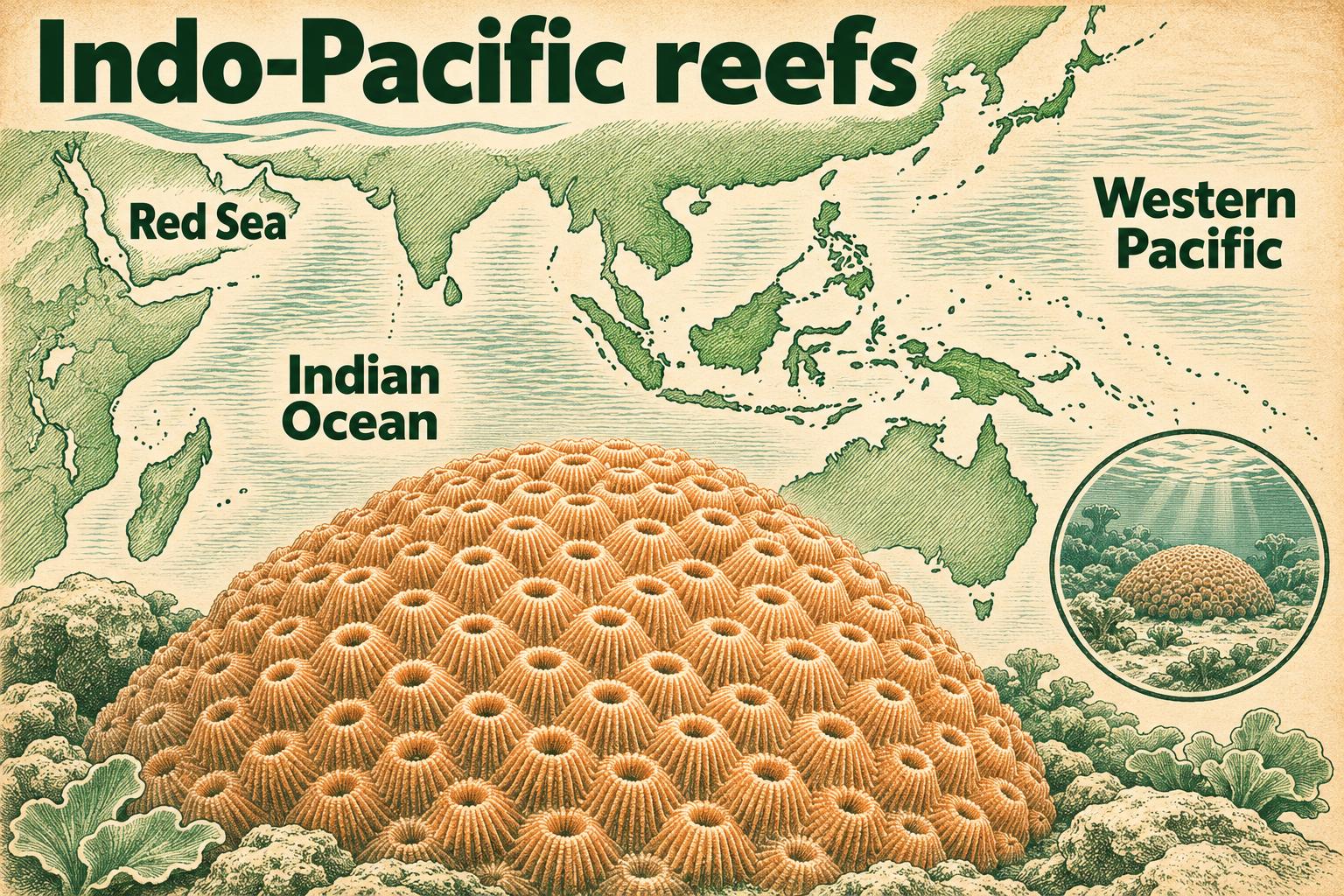
3. A dome on the reef. A big dome can span several meters. Honeycomb Coral grows across the Indo-Pacific, from the Red Sea through the Indian Ocean and into the Pacific. It lives on sheltered and exposed reefs. The biggest domes often grow where the reef has some shelter.
4. Light changes down the slope. Around Singapore, colonies often grow less than 3 meters (10 feet) deep. They also grow on deeper slopes. The shallows get more sun, and swell or currents keep water moving. Tiny algae inside the coral use light to make sugars it can use.
Light, flow and placement
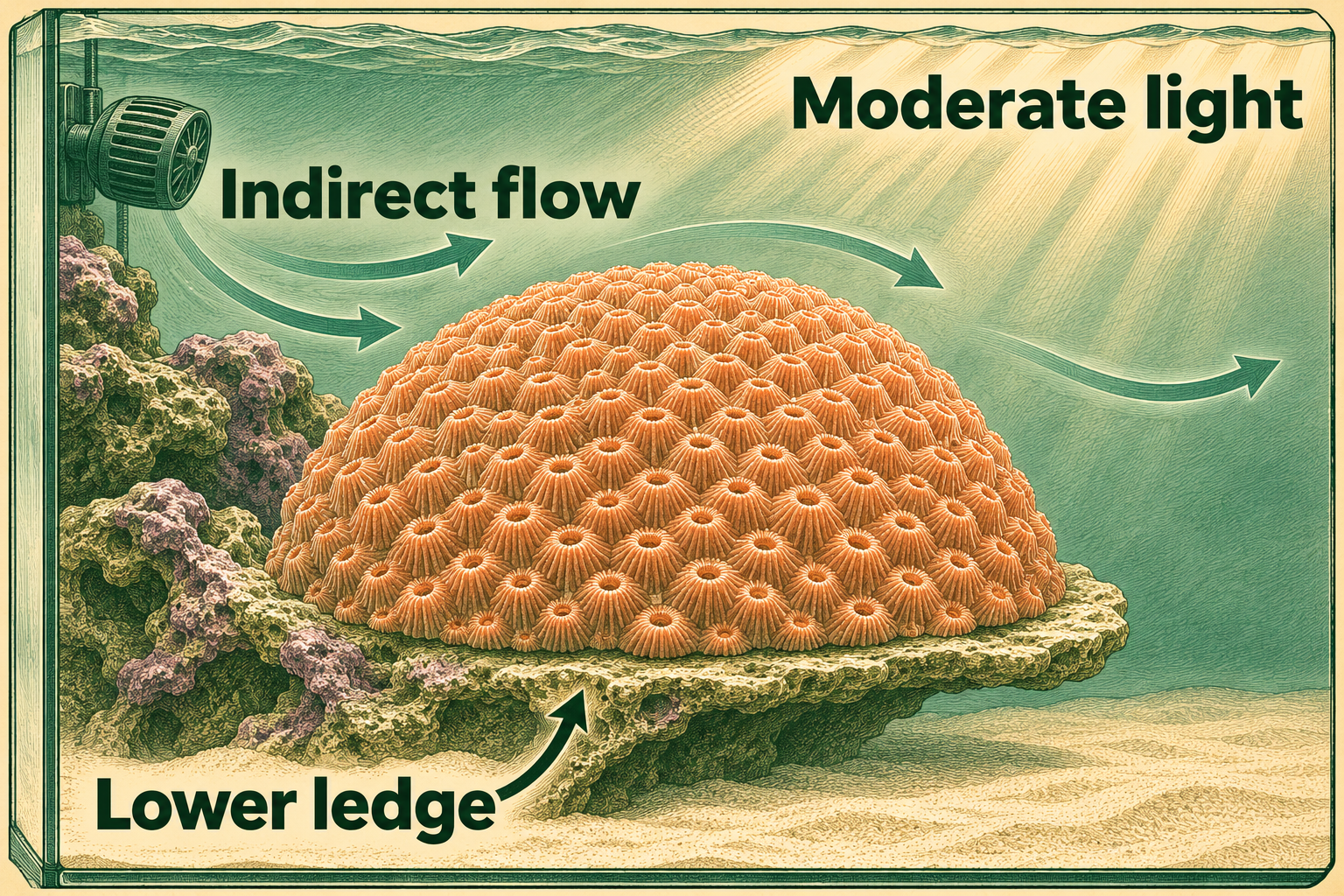
5. Start low on solid rock. Set the coral on a steady ledge near the bottom. Leave it above loose sand and out of deep shade. Start in moderate light and make changes gradually.
6. Give the dome a gentle rinse. Aim for medium, indirect flow. Let the current pass over the dome without blasting it. If sand or debris keeps sitting in the cups, adjust the pump angle.
Water and feeding
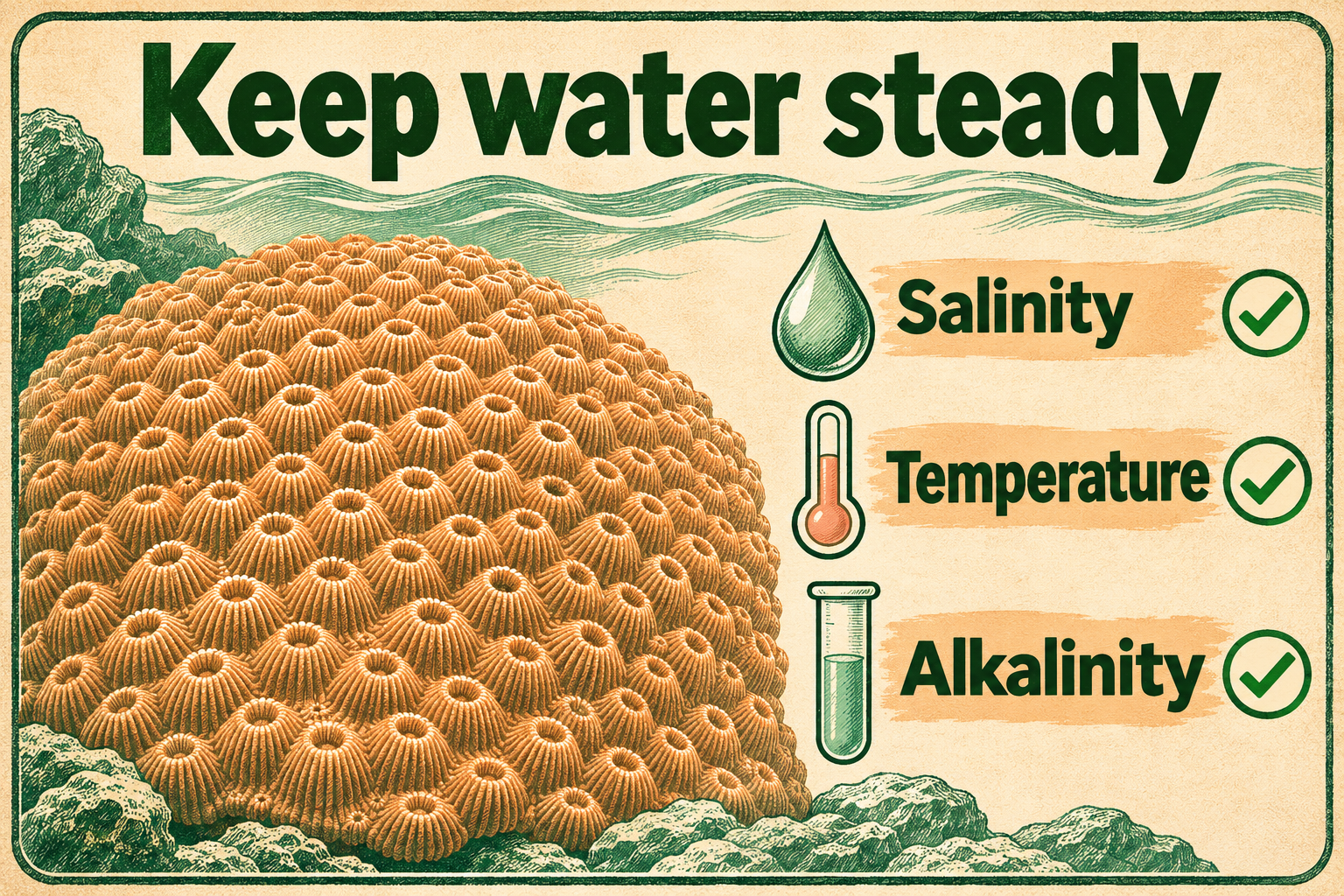
7. Steady water beats quick fixes. Start with an established reef and keep temperature, salinity and alkalinity steady. Track calcium and magnesium as the colony builds its skeleton. Make small corrections and retest.
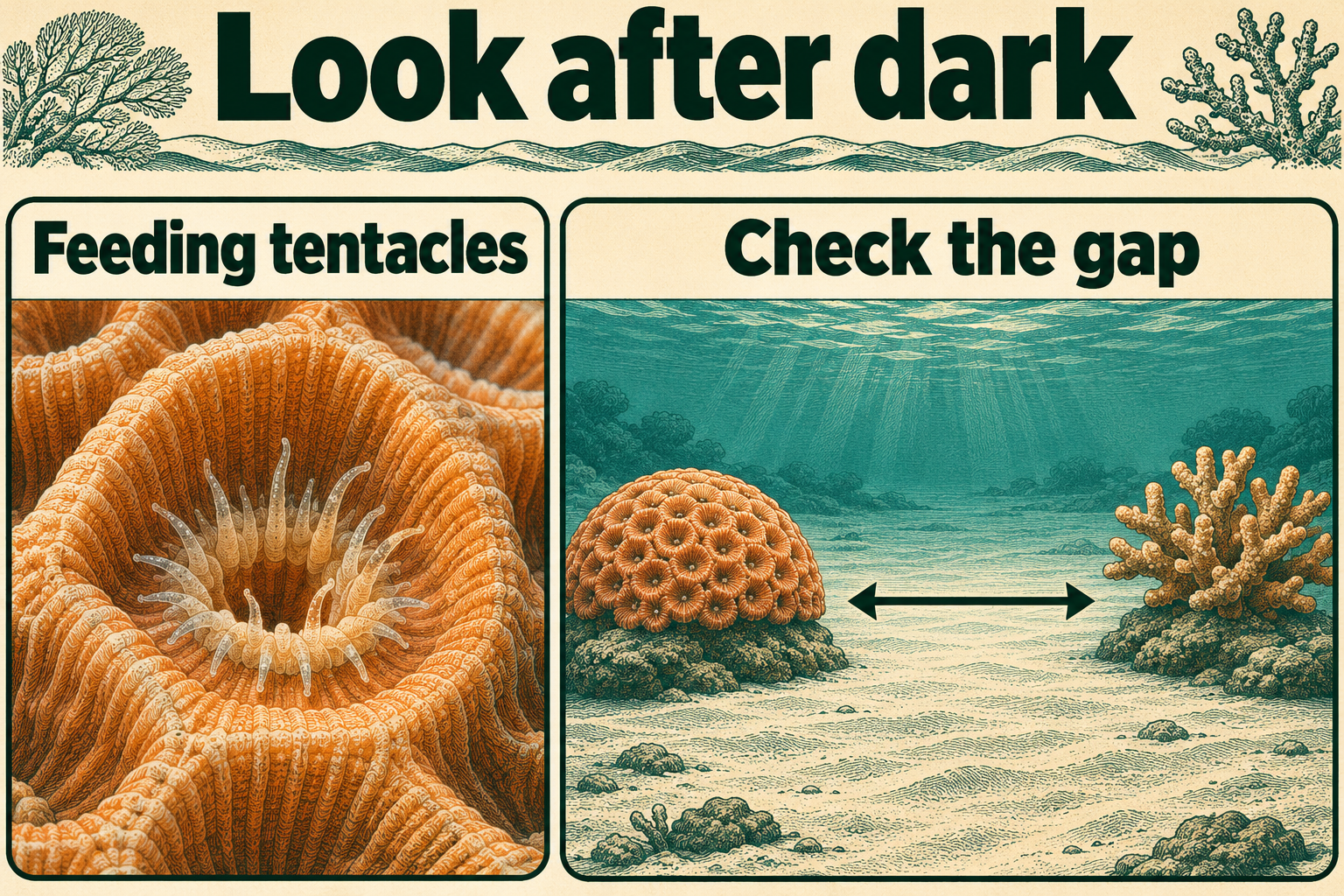
8. Try a tiny bite. Offer a small amount of fine marine food when the feeding tentacles are out. See what the polyps actually catch. Skip big chunks and clear away leftovers.
Growth and neighbors
9. The dome takes its time. Each raised cup has ribs that run toward the center. Look closely at the edges for new cups as the dome spreads. Take a photo from the same angle every few weeks.
10. Keep an open border. Leave space between the dome and neighboring corals. Check the gap after lights out. Move a neighbor farther away if tentacles reach across or tissue gets damaged where they meet.
Field notes — what keepers report
11. Food can ring the dinner bell. One keeper usually saw the feeding tentacles after dark. The scent of crushed krill brought them out during the day, too. Watch a few polyps before offering more food.
12. Nighttime tells you more. One keeper rated their coral peaceful and still warned against close contact. Another saw long tentacles after dark and took them for sweepers. Check your own colony’s reach before setting another coral beside it.
Set your Honeycomb Coral on a steady ledge with room around it. Then take a look after dark. Those little volcanoes have a whole second act.
Field Notes
Related species
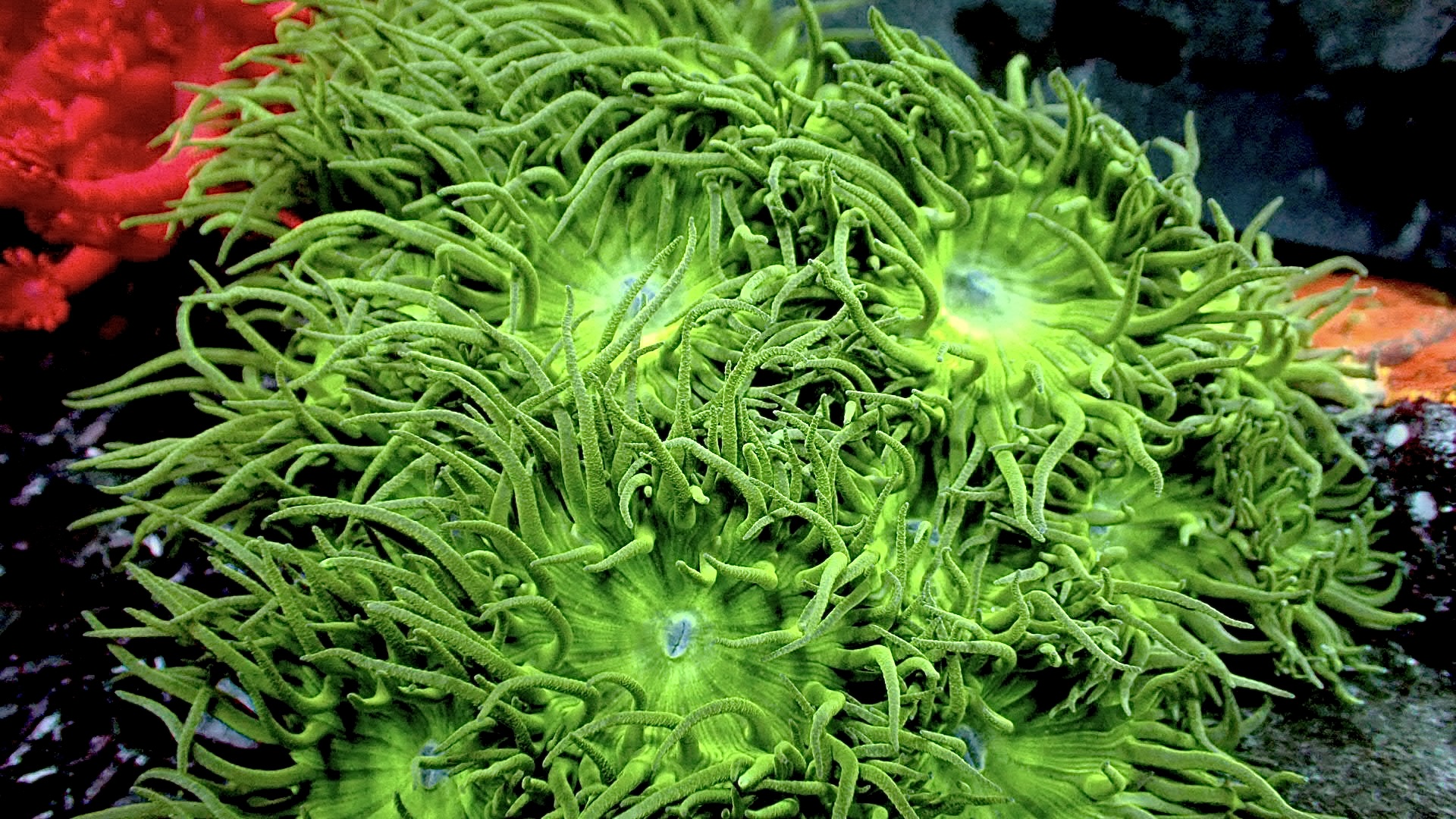
Duncan coral
Duncanopsammia axifuga
Similar care · LPS
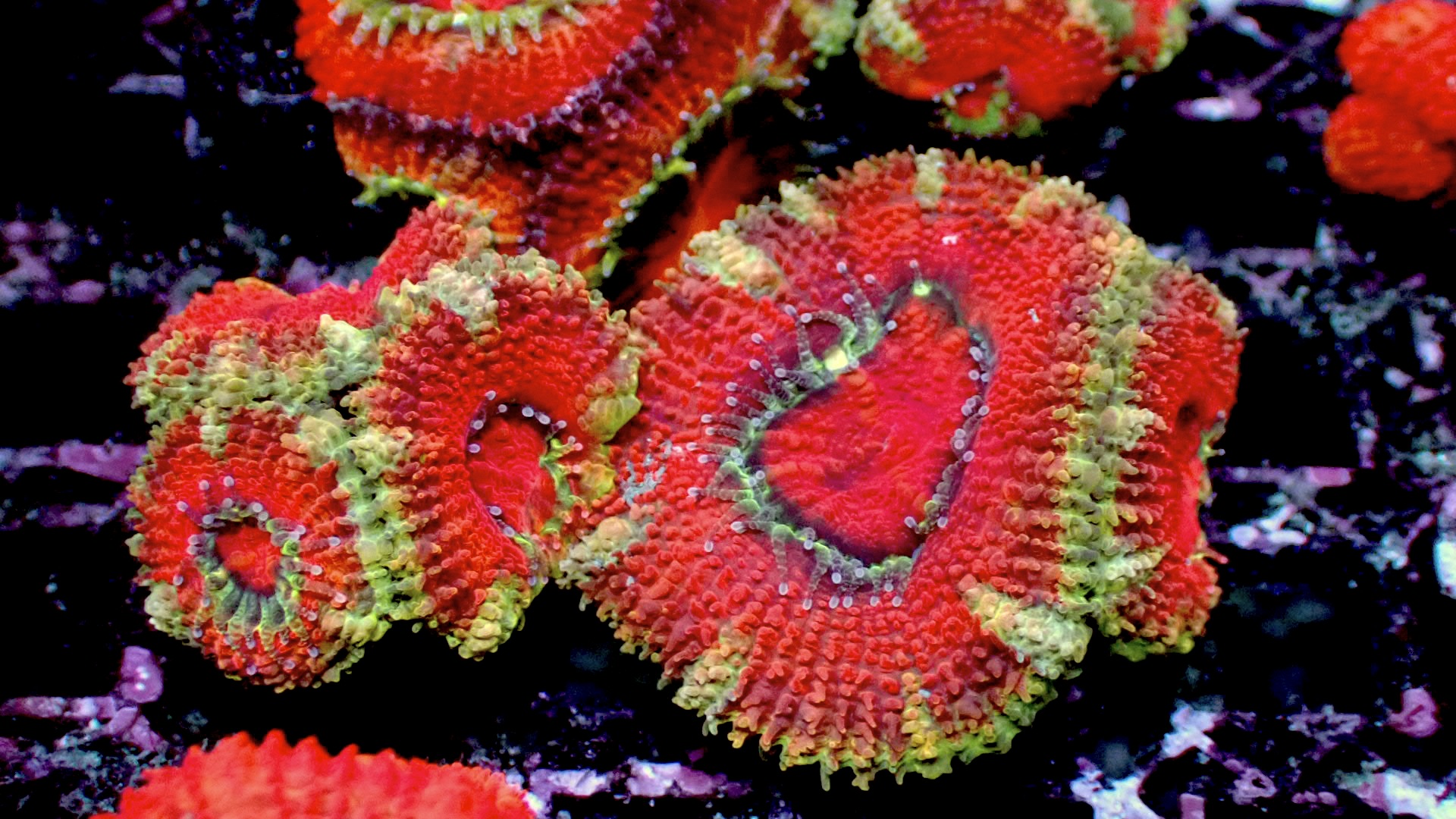
Gold Coast acans
Micromussa lordhowensis
Similar care · LPS
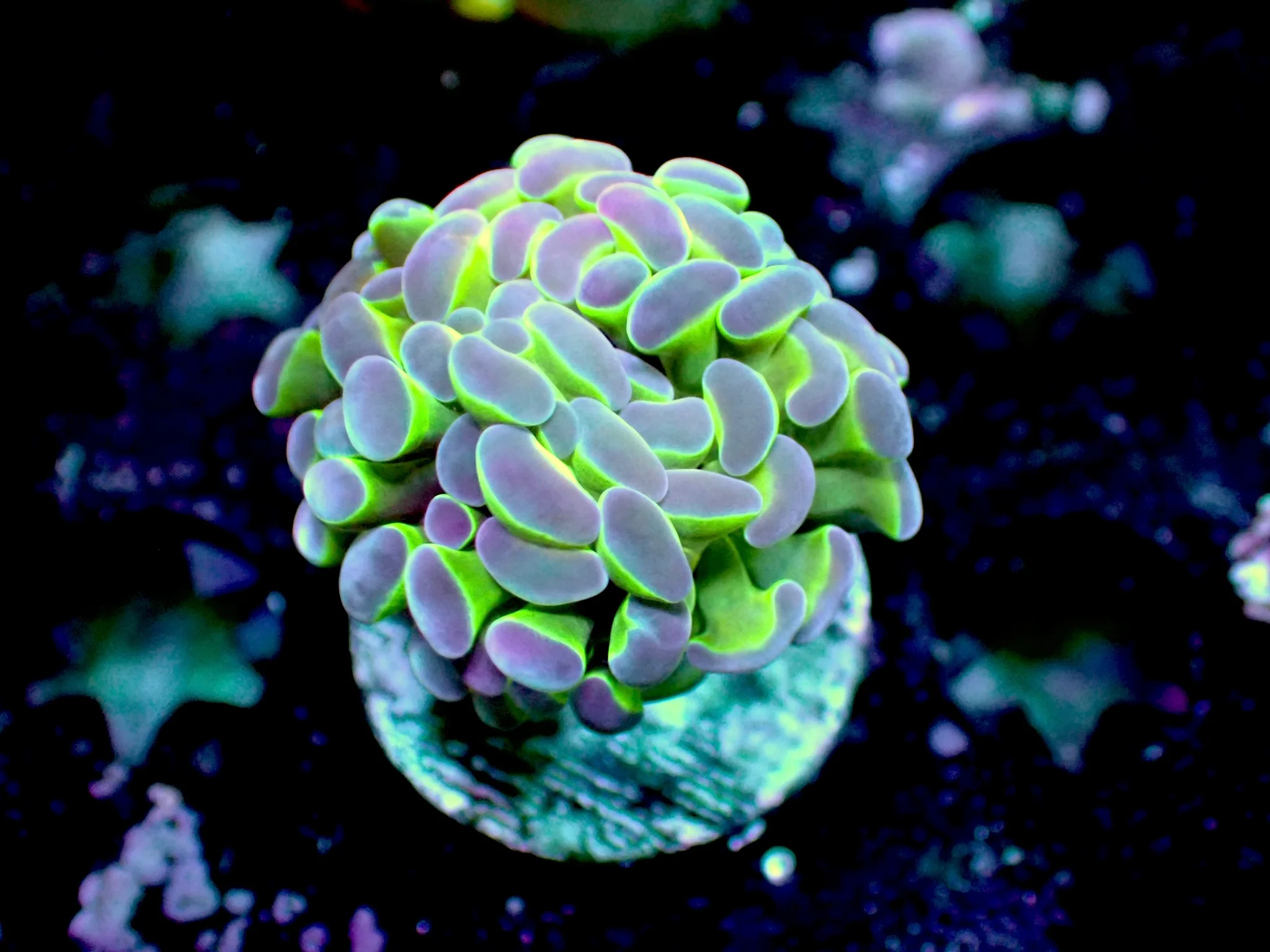
Hologram hammer
Fimbriaphyllia paraancora
Similar care · LPS

Bling bling cyphastrea
Cyphastrea sp
Similar care · LPS

Brain Coral
Platygyra daedalea
Similar care · LPS

Candygram hammer
Fimbriaphyllia paraancora
Similar care · LPS
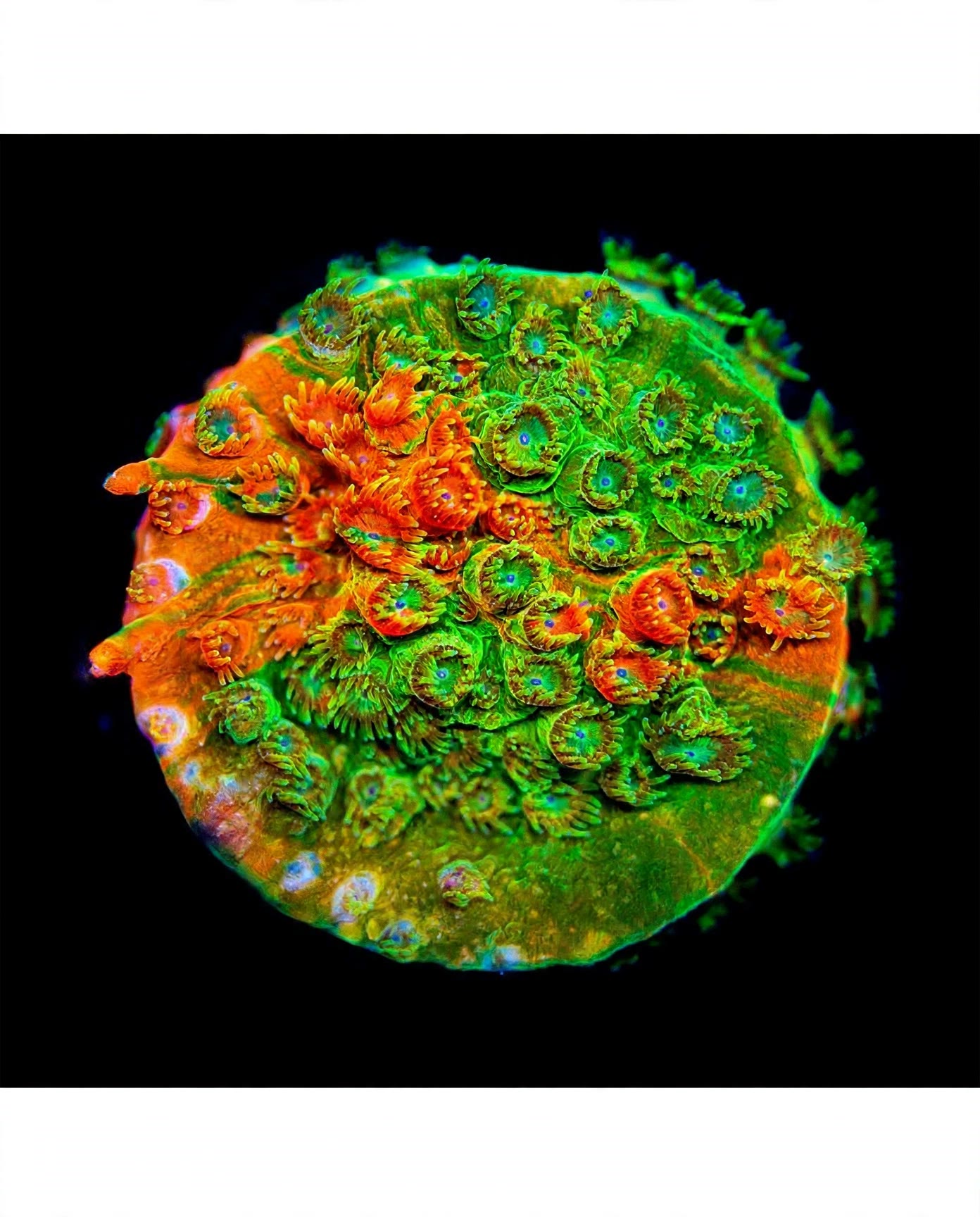
Circuit Breaker Cyphastrea
Similar care · LPS
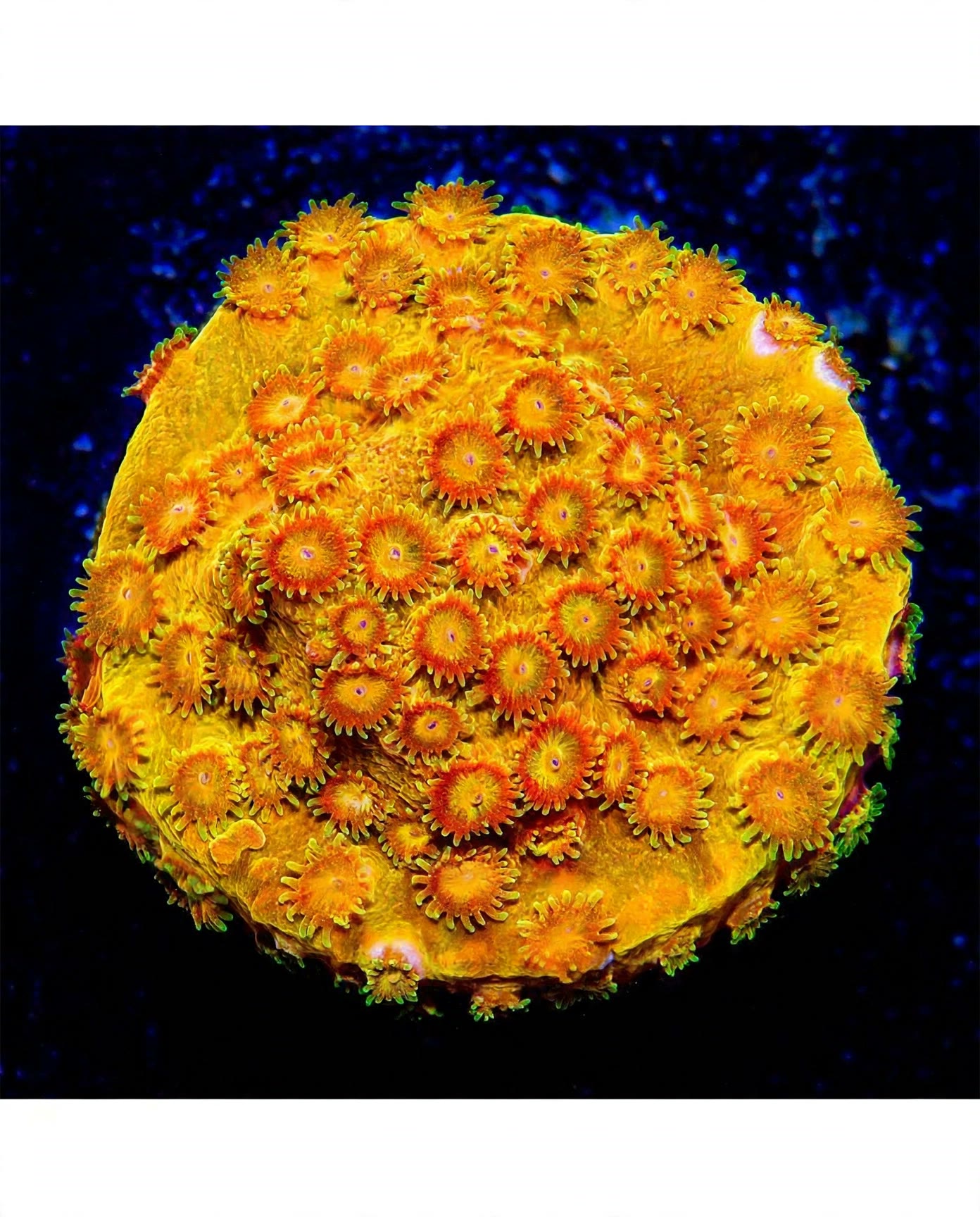
Citrus Burst Cyphastrea
Similar care · LPS