
Milky Way
Palythoa sp.
Also known as: Milky Way PPE, Milky Way PE
Milky Way is a named paly from the People Eater era, and the master strain queue files its check in one line: a dark paly disc flecked with pale stars. The name belongs to the space-named wave in that history. The PE Zoanthid Catalogue, a history thread written by a keeper who handled the early imports, records that many of the speckled and haloed variants arriving after the solid forms took space names, because a close look at them recalled a Hubble telescope shot. Milky Way sits in that naming family beside Variable Stars, Krypton Supernova, Outer Space and Deep Space, and a buyer should read the name as a pattern claim: a dark ground carrying a scatter of pale points, the way a night sky carries stars.
The People Eater part of the background carries its own structural meaning. The catalogue records that the founding polyps were picked out by a bright green slit mouth, and its closing passage holds that the group members share prominent slit mouths even where colour and rim patterns diverge. Its taxonomy passage sorts the umbrella into disc kinds — solid body, halo ring with radial lines reaching halfway in, radial lines running to the centre, and a darkened bulging centre — and it warns that the umbrella probably covers three or four separate species grouped by disc structure. This entry files the strain as Palythoa sp. following the master queue, records AquariumDomain's Zoanthus gigantus filing and the catalogue's Zoanthus gigantea renaming argument as group history, and claims no species for this strain.
The identification check therefore runs on two parts together. The first part is the colour pattern from the queue: a dark disc, read under light close to neutral, flecked with pale points scattered across the face rather than arranged in a ring or a set of rays. A halo ring with radial lines points toward the Variable Star and Krypton forms. Heavy white frosting over a green base points toward Aspen. A green base with a pale dusting points toward Green Stardust People Eater, staged in this database as a separate strain. The second part is the architecture underneath: a larger, paly-sized polyp with a slit mouth, in a mat of the People Eater build. Pattern alone, on a crowded speckled shelf, has misled buyers throughout the era this strain comes from.
Care carries one strain-specific warning, and the entry states it before the family reassurance. A Reef2Reef thread compiling the hardest zoas and palys to keep carries Milky Way PE in its list, alongside Purple People Eater, Armageddon (true), Red People Eater and Green People Eater. In that same thread a keeper wrote that he was glad to see he was not the only one with problems keeping People Eaters, listed a pretty maricultured milky way type among his, and reported that his PE material rarely did well despite trying target feeding regularly, trying no feeding, trying higher nutrients, trying lower nutrients, and trying higher and lower light. He blamed his two melted PPE frags on shipping stress in the same post, and that distinction stays attached to his report: the milky way material sits in his rarely-do-well group, while the shipping explanation belongs to the PPE frags. The care tile steps up to Intermediate on that combined record: a named strain carried on a hard-to-keep list, with a keeper decline report in its file, should not carry the family's beginner tile unqualified.
The same keeper's wider report adds one practical lead, and the entry records it as a lead from one tank. He described a colony that had struggled for nearly a year, slowly losing polyps and mostly closing up, plus a closed and waxy 15-polyp frag, and reported that both perked up after he moved to heavier and more frequent water changes. His own reading was that something depleted was being replenished rather than something harmful being removed, and he left the iodine question open, calling dosing it dated while noting anecdotal evidence and rapid depletion. A second voice in the thread, a keeper who fragged zoas with an iodine dip and shipped two days later with happy receivers, held the opposite practical position on iodine. Both positions stay in the field notes; the entry recommends the water-change lead as the documented first response to a closing colony, and takes no position on iodine dosing.
Water chemistry follows the standard reef shape, and the records read this run agree closely. Reef To Go's standard parameters suit the strain: temperature 77–79 °F, salinity near 35 ppt (about 1.024–1.026), alkalinity 8–10 dKH held steady, calcium 400–450 ppm, with low but detectable nitrate and phosphate. The PE group profile gives 72–79 °F, alkalinity 8–12 dKH and salinity 1.023–1.025, with magnesium, iodine and trace elements as its supplement list. Top Shelf Aquatics gives calcium 380–450 ppm, magnesium 1,250–1,350 ppm, nitrate 5–15 ppm and phosphate under 0.10 ppm for the family. Zoanthids and palys carry no calcium skeleton, so the colony itself makes no dosing demand; stability and steady nutrients do the work, and the strain's own file gives stability a sharper edge than family generalities usually carry.
Light is one place the group record and the family record pull in different directions, and the entry keeps both visible. The PE group profile calls for medium to strong lighting so the symbiotic algae thrive. The family band at Top Shelf Aquatics is 75–150 PAR, with moderate light typically sufficient, some varieties colouring brighter higher, and a slow 2–3 week transition required to avoid bleaching; Whitlyn Aquatics gives the same moderate ground at 50–150 PAR. The working plan that respects both records is to start low in the family band on lower rockwork, climb in small steps, and let the colony's own response arbitrate over weeks. The strain keeper tried higher and lower light inside his decline report, so a light change alone carries no promise for this strain; a colony that stays closed across a careful light range is telling the keeper to look at water next, following his water-change lead.
Flow follows the same split in milder form. The family text calls for moderate, indirect flow that sweeps debris off the mat and leaves the colony open and extended. The PE group profile calls for moderate to strong flow on the same reasoning, feeding the zooxanthellae-driven system with steady exchange. The tile holds Medium from the family record; a colony on a raised island that stays open under stronger random flow is following the group record, and a colony that closes under direct flow is giving the more useful answer for its own tank.
Feeding is a supplement with a real but secondary effect, and this strain's file sharpens that point. The PE group profile states that most People Eater morphs take the majority of their nutrition from photosynthesis and require no supplemental feeding, while keepers chasing higher growth rates have used very fine filter-feeder foods and micro-plankton. Family guidance adds fine-particle foods offered a few times a week, broadcast or wafted over the colony with flow paused for ten to fifteen minutes, supporting colour and growth. Against both records sits the strain keeper's experiment: he tried target feeding regularly and he tried not feeding, and his milky way type rarely did well on either route. Feeding stays in the care plan as family practice; the entry records that feeding changes did not rescue the one documented colony, so a keeper whose colony declines should work through water, light and placement before expecting a feeding change to turn it around.
Placement should plan from day one for a mat-forming colony on its own island rock. The PE group profile makes the containment point in its own terms: these polyps colonise nearby rock and hard surfaces, crowding neighbouring corals as they grow in, so gaps between rocks form the boundary that limits the carpet. Palys win ground by cover rather than by stings, so the neighbour risk is shading and overgrowth, and an island contains the spread to one observable rock. Begin on a low island, walk the colony upward only as its colour and shape ask for more light, and keep the island wherever it lands so the containment survives the move.
Pests and predators deserve a check on any new frag. The family checklist is a night inspection — zoa-eating nudibranchs, sundial snails and tiny zoa spiders near the skirt, egg spirals removed by hand, dips repeated across hatch cycles when finds appear. One voice in the hard-to-keep thread adds a People Eater-specific note: amphipods chowing down on PE material as a favourite midnight snack, with Red People Eaters hit hardest in his experience. Handling follows the family safety rule at full strength: Top Shelf Aquatics and Whitlyn Aquatics both warn that some zoanthids and their Palythoa relatives can carry palytoxin, so gloves and eye protection go on for every handling session, colonies stay away from high heat, and hands and tools are washed thoroughly afterwards. This strain files under Palythoa, the genus both warnings name first, and the standing practice treats every colony as a carrier regardless of which name it carries.
Field notes — what keepers report
- The hard-to-keep listing is the strongest strain-specific evidence this entry has. A Reef2Reef thread titled "Most Hard To Keep Zoa/Paly List" carries, in its compiled list on page 2, "Desert Fox PE, Milky Way PE, Chameleon PE, Pink Elephants, Alien Eyes, Jokers, Most Pinks" in one run, with Purple People Eater, Armageddon (true), Red People Eater and Green People Eater elsewhere in the same list. Inclusion on a keeper-compiled difficulty list is a community verdict rather than a measurement, and the entry presents it as exactly that.
- The maricultured-colony report comes from keeper Ike in the same thread, and its wording matters. He called the material "the pretty maricultured milky way type" — a type description rather than a lineage claim — and placed it among People Eaters that rarely did well for him, after trying target feeding regularly, no feeding, higher nutrients, lower nutrients, and higher and lower light. In the same post he blamed two melted PPE frags on shipping stress; the entry keeps that explanation attached to the PPE frags and does not transfer it to the milky way material.
- The water-change lead also comes from Ike's post, attached to his wider PE struggle rather than to the milky way colony alone. A colony struggling for nearly a year, slowly losing polyps and mostly closed, plus a closed and waxy 15-polyp frag, both perked up after heavier and more frequent water changes. His own interpretation was replenishment of something depleted. The entry records the lead at that strength: one keeper, one system, a clear before-and-after, no identified element.
- The iodine disagreement sits inside the same thread and both sides stay visible. Ike called iodine dosing dated and mostly hooey while conceding anecdotal evidence and rapid depletion, and asked other PE keepers for their experience. Keeper flricordia answered from the other side: daily iodine use with great success on most zoas, frags dipped in iodine healing within a day or two, and receivers reporting polyps open in the bag or soon after placement. The entry takes no dosing position; a keeper choosing either route is following a documented keeper practice from this thread.
- A dissenting voice in the same thread, keeper Christel Mei, held that no type is harder than another given good lighting, water quality, and an understanding of disease treatment. That position stays in the record beside the list itself. The care tile follows the list and the decline report, because a strain file should weight strain-named evidence over a general claim, and the dissent is recorded here so a reader can weigh it too.
- The PE catalogue gives the space-named speckled forms a group history that frames this strain's name. Its narrative places speckled forms after the solid forms in the early import sequence, then a halo-ring wave with speckles, then a run of space names — Creation, Outer Space, Outer Limits, Time Travel, Deep Space, Radio Supernova — because the close-up patterns recalled Hubble telescope shots. The catalogue never names Milky Way in the passages read this run, so this entry uses it for naming context and neighbour separation only, and says so.
- The light record splits, and both sides stay visible. One side is the PE group profile: AquariumDomain calls for medium to high lighting and a middle-to-top placement for the group's founding morph, while advising keepers in the same profile to start lower and move up after acclimation. The other side is the family record: Top Shelf Aquatics works zoanthids at 75–150 PAR and Whitlyn Aquatics at 50–150 PAR, both calling moderate light sufficient, with slow acclimation required before any move higher. The tile follows the family band, and the group push is recorded here as the dissenting range.
- The feeding record carries the strain's own experiment on top of the usual split. The PE group profile holds that most People Eater morphs acquire the majority of their nutrition from photosynthesis and do not require supplemental feeding, with higher growth reported from very fine foods. The family guidance recommends regular fine-particle feeding for colour and growth. The strain keeper tried both feeding and no feeding without a change in outcome — a result that neither side of the general split predicts, recorded here without forcing it into either camp.
- The amphipod note is a group-level predator report from keeper fly guy in the hard-to-keep thread: PE material of any kind had never been a problem for him apart from amphipods chowing down on the polyps as a favourite, especially Red People Eaters, which he flags may simply reflect how many of them he had kept. The entry carries it as a night-inspection lead for People Eater colonies generally, not as a Milky Way-specific pest record.
- The growth record is an absence, recorded rather than filled. No keeper report of Milky Way budding, spreading, or doubling was found in the sources read this run, and no current retail listing or keeper sale for the strain was found either — searches under the full name, the Milky Way PE form and the Milky Way PPE form returned the hard-to-keep thread, the PE catalogue, and family care pages. A PE-era name whose modern trade presence runs through old forum records will mostly move keeper-to-keeper, and this entry sets no growth rate and no price expectation from a neighbour's figures.
Field Notes
Related species

Turbinaria Stellulata
Turbinaria stellulata

Yellow Scroll Turbinaria
Turbinaria reniformis
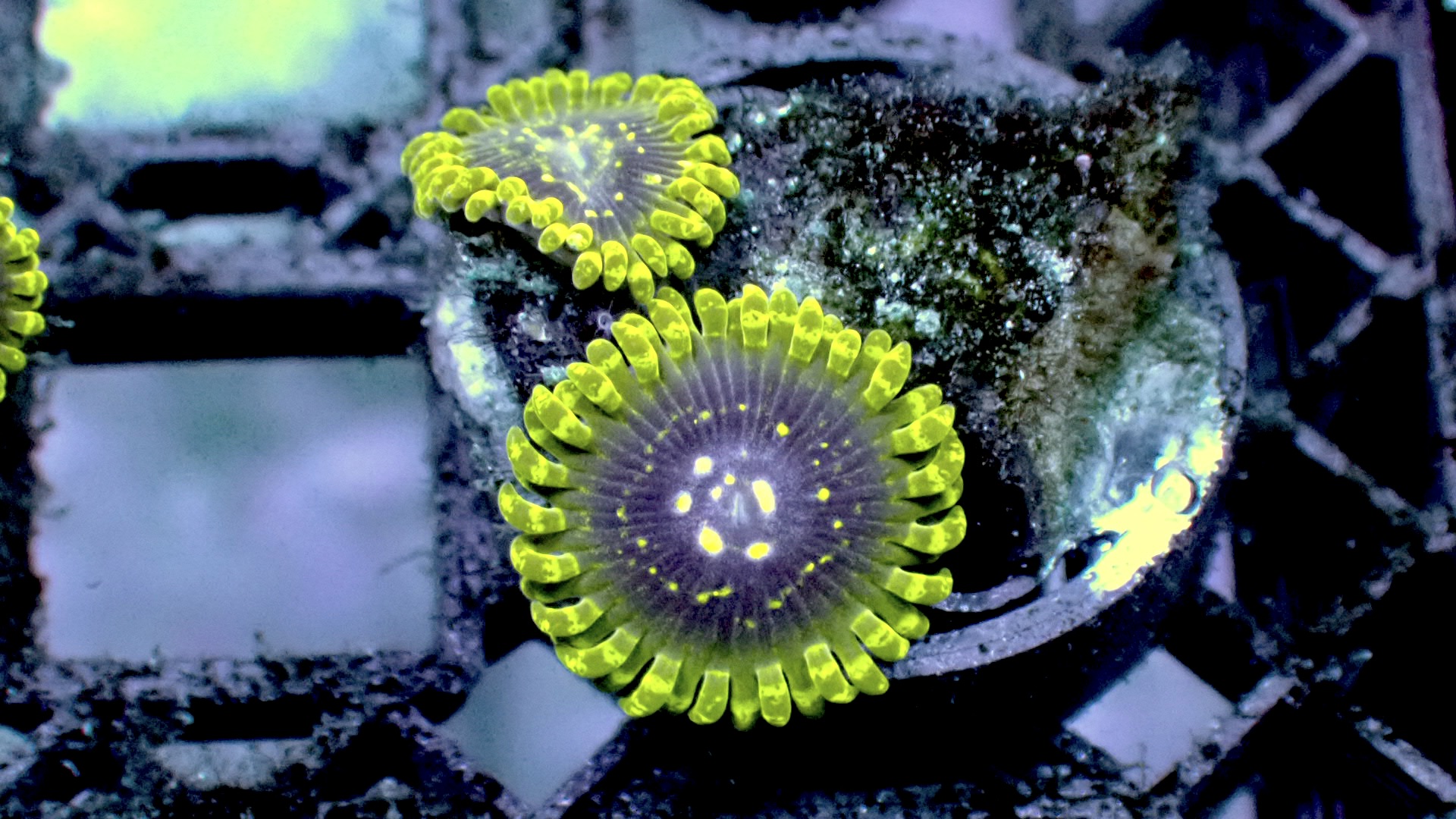
Exosphere zoanthids
Zoanthus sp
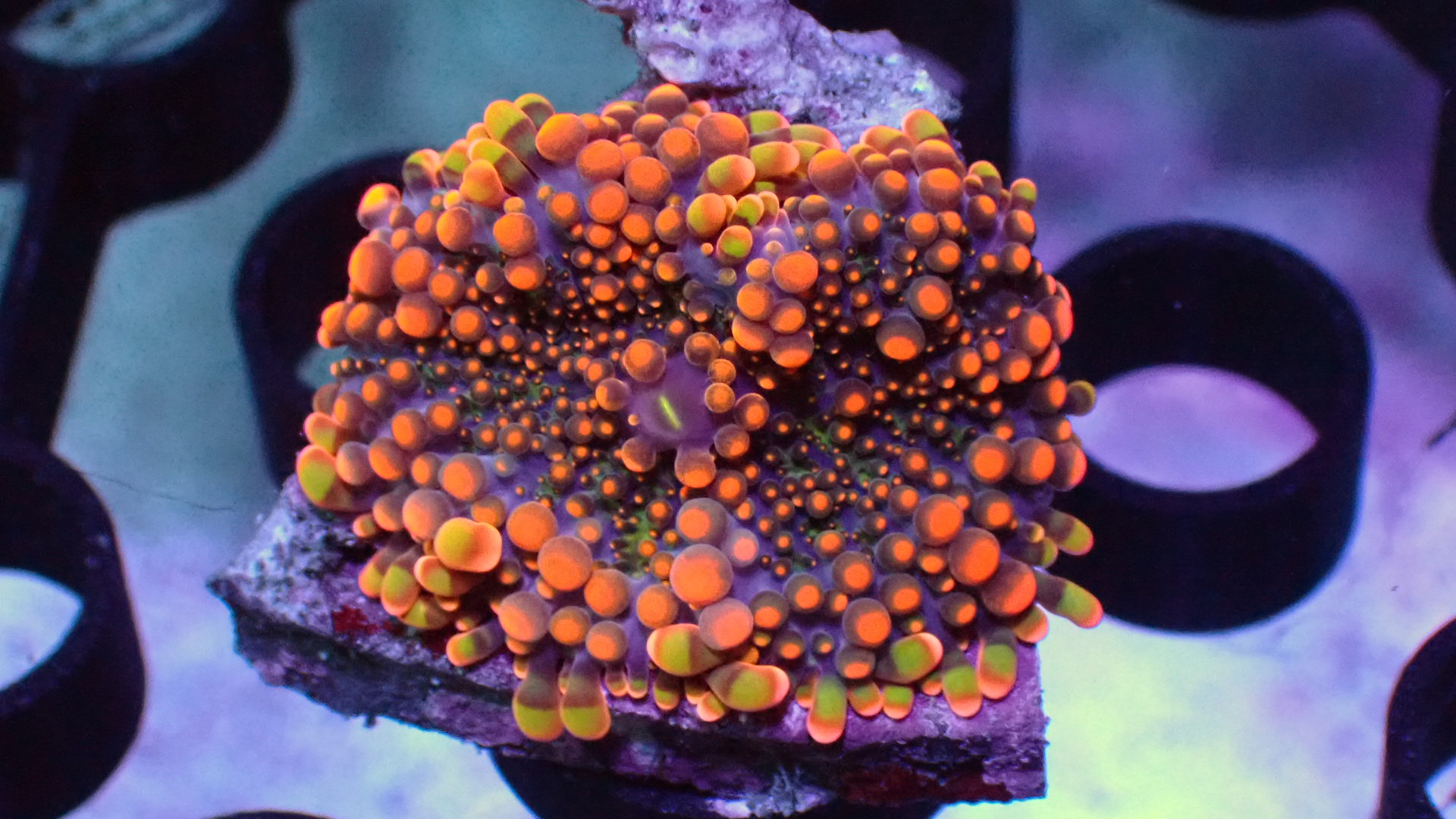
King Kong Yuma mushroom
Ricordea yuma
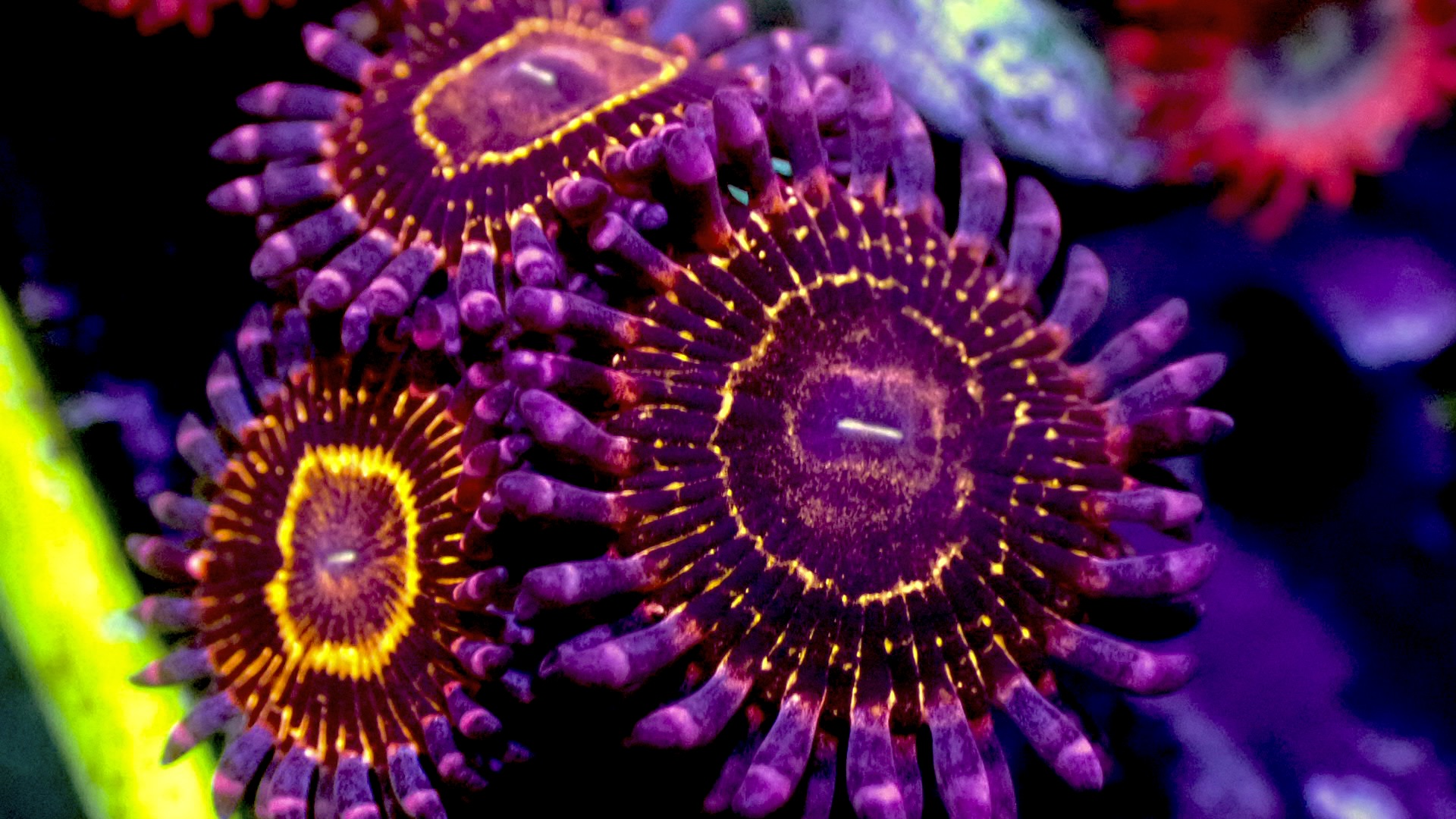
Stratosphere
Zoanthus sp

Brain Maze Coral
Platygyra lamellina

Finger Porites
Porites cylindrica
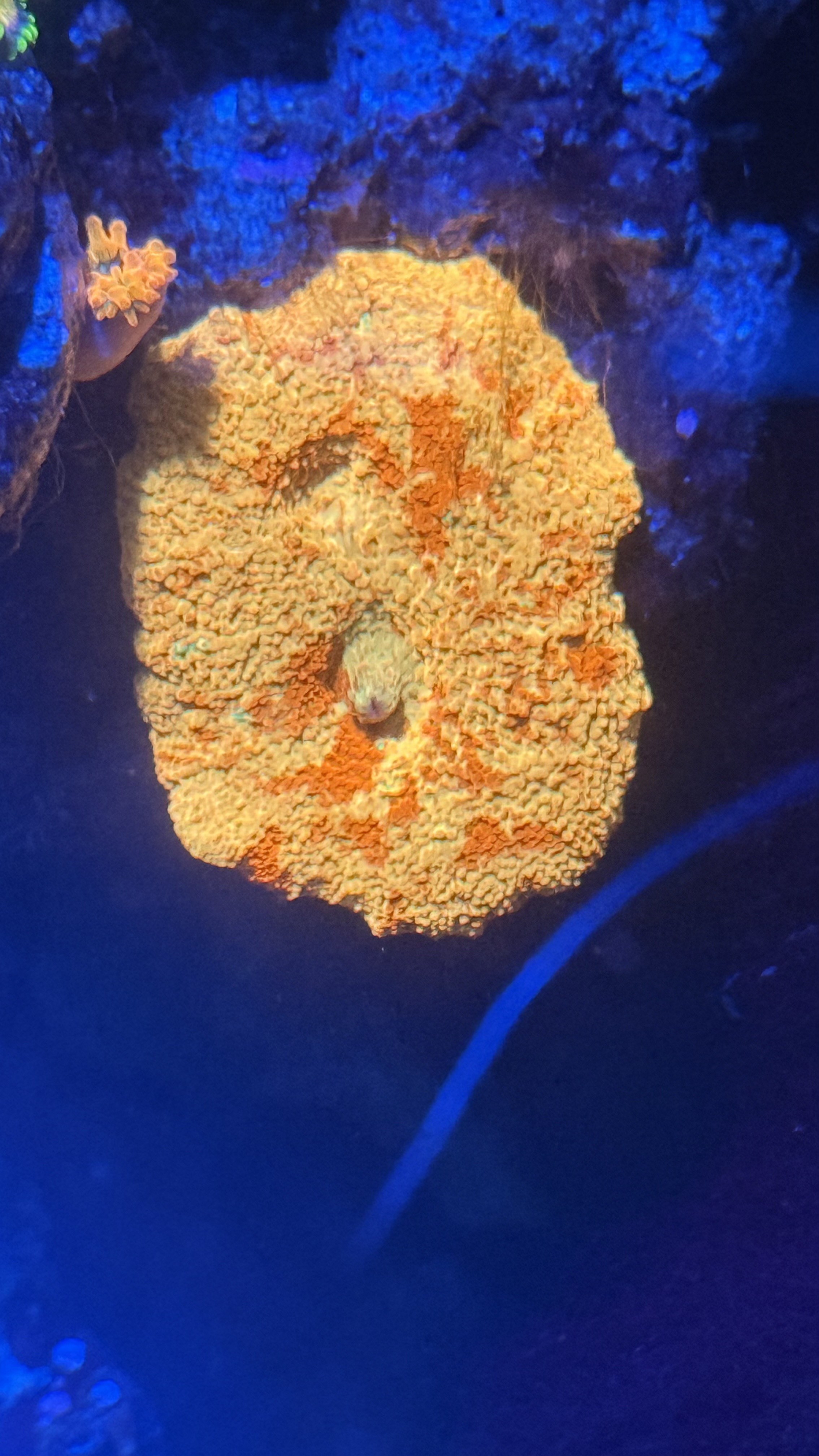
Jawbreaker mushroom
Discosoma sp.
Love this species? No tank needed.
Reef art from the shop — for the wall, not the tank.


Get notified when Reef To Go has Milky Way in stock or up for auction. One email when it's in — no spam.