Devil's Hand Coral
Lobophytum crassum
 ▶ Video
Diego Delso · CC BY-SA 4.0 · source
Photo: Diego Delso, delso.photo, CC BY-SA 4.0, via Wikimedia Commons.
Gallery
Videos
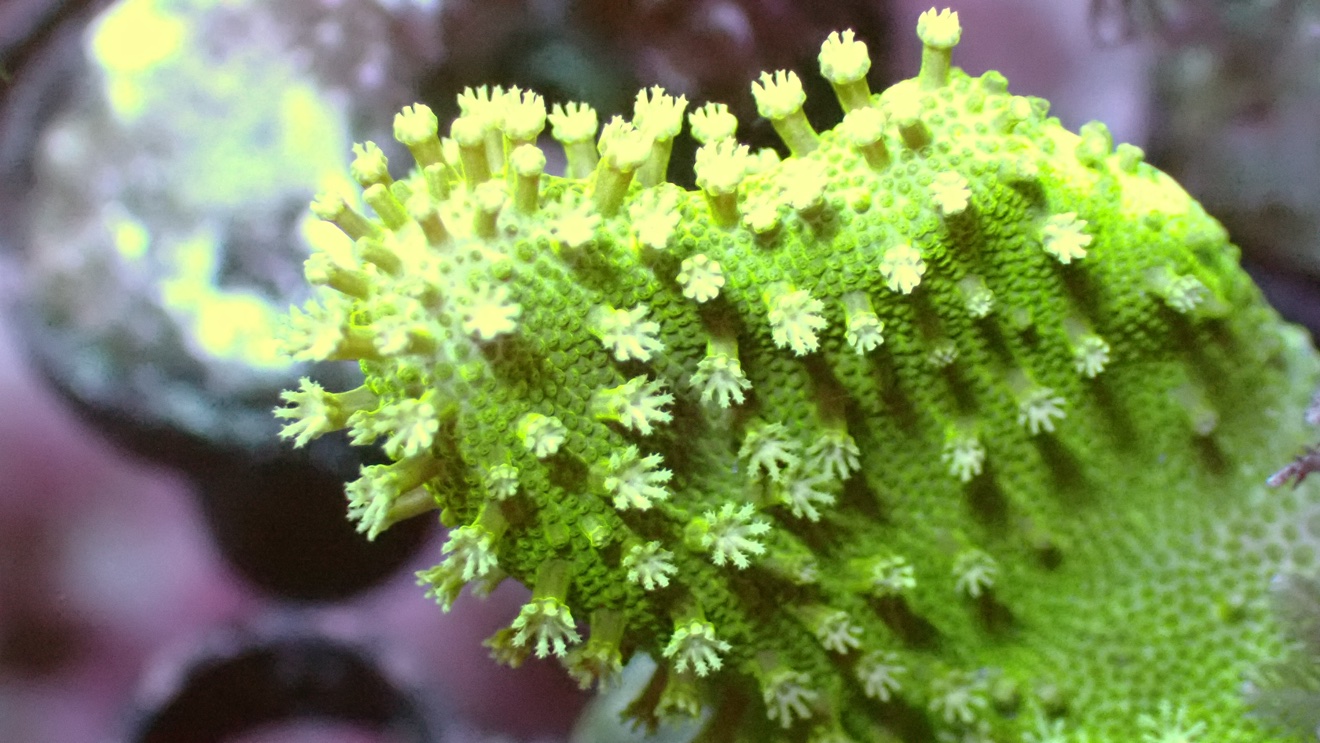
This coral looks like a hand growing out of a rock. Those fingers aren’t reaching for you. They’re fleshy folds covered in tiny polyps, and the whole colony changes shape as they open and close.
A hand made of coral
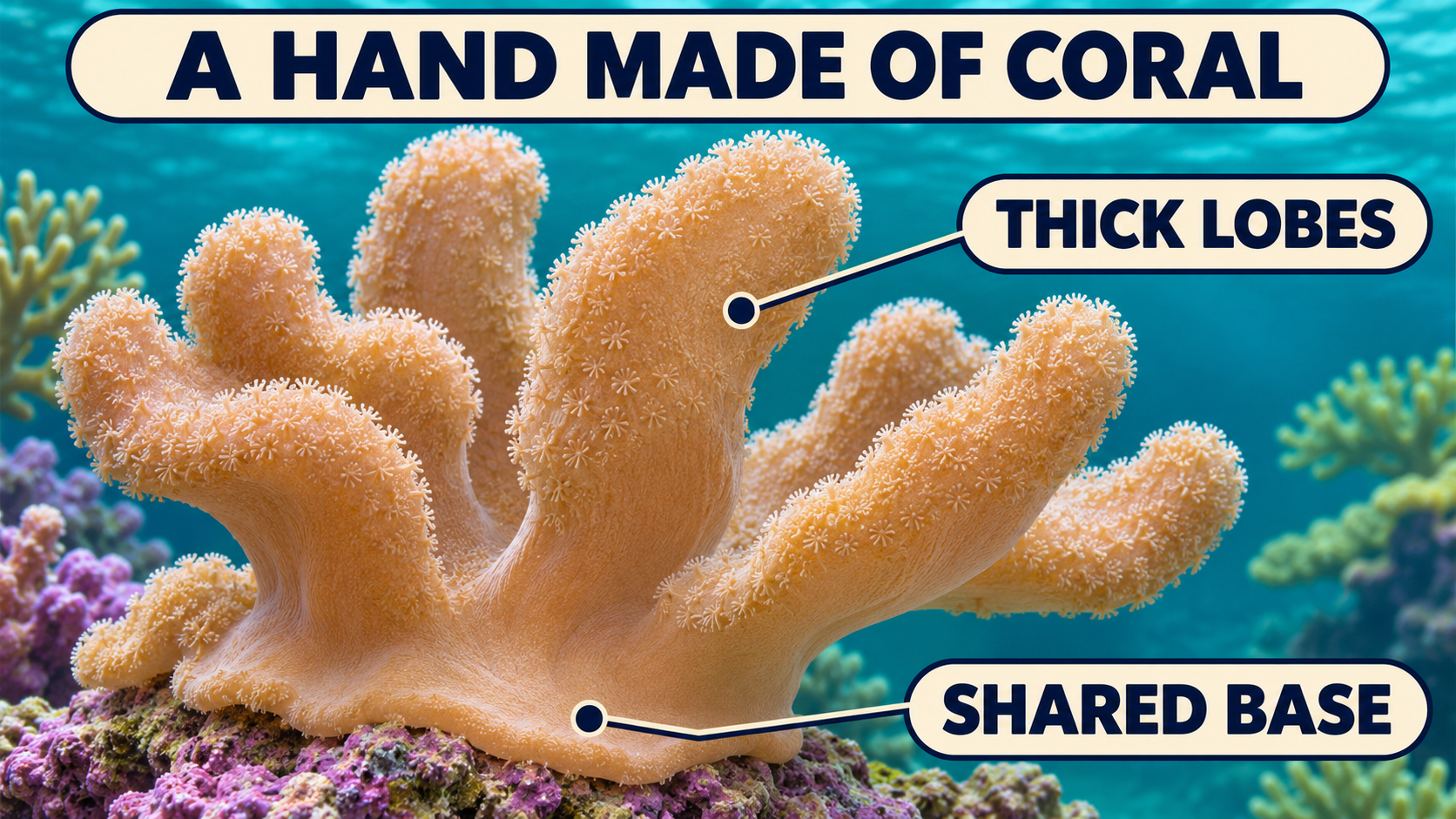
1. Count the fingers, not the corals. The thick lobes all belong to one colony. Look close and you’ll see rows of tiny polyps across the folds.
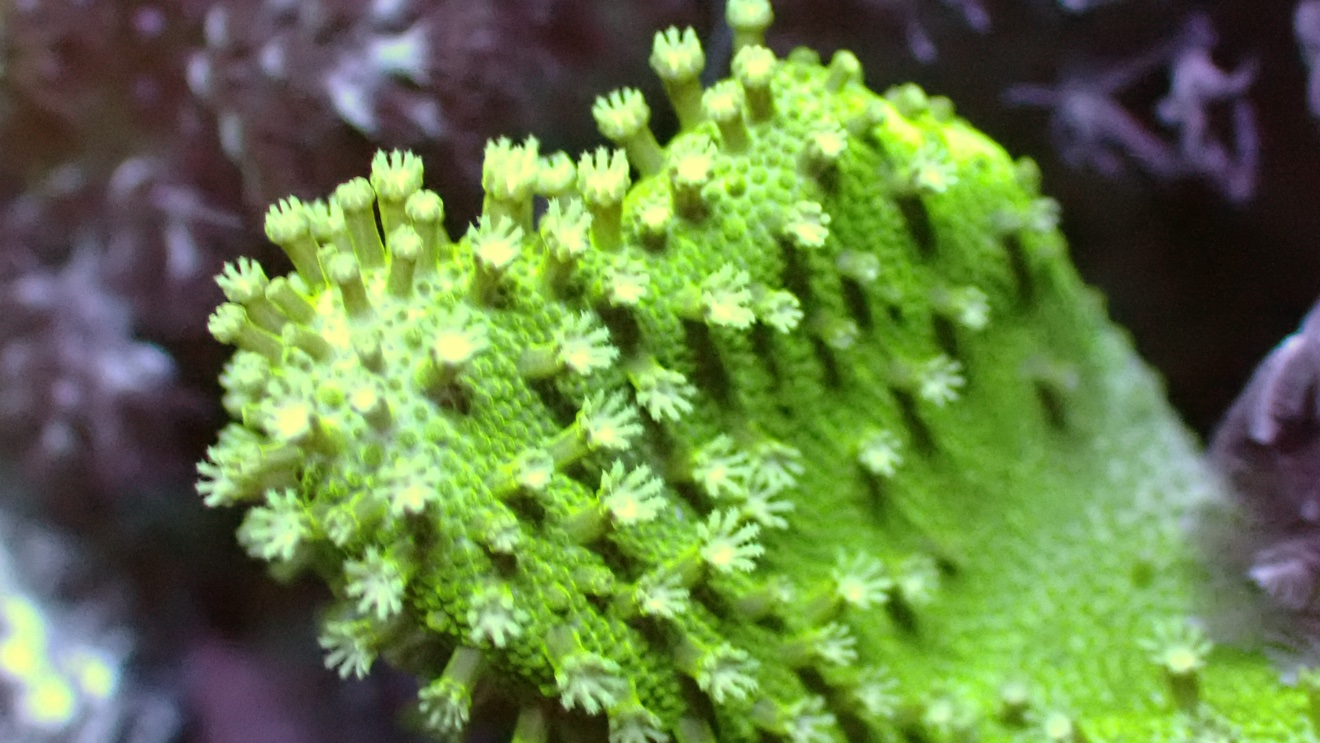
2. Soft doesn’t mean boneless jelly. Its tissue holds tiny mineral pieces that help support those fleshy folds. The shape ranges from a low spread of ridges to lobes that stick up like fingers.
Find its spot
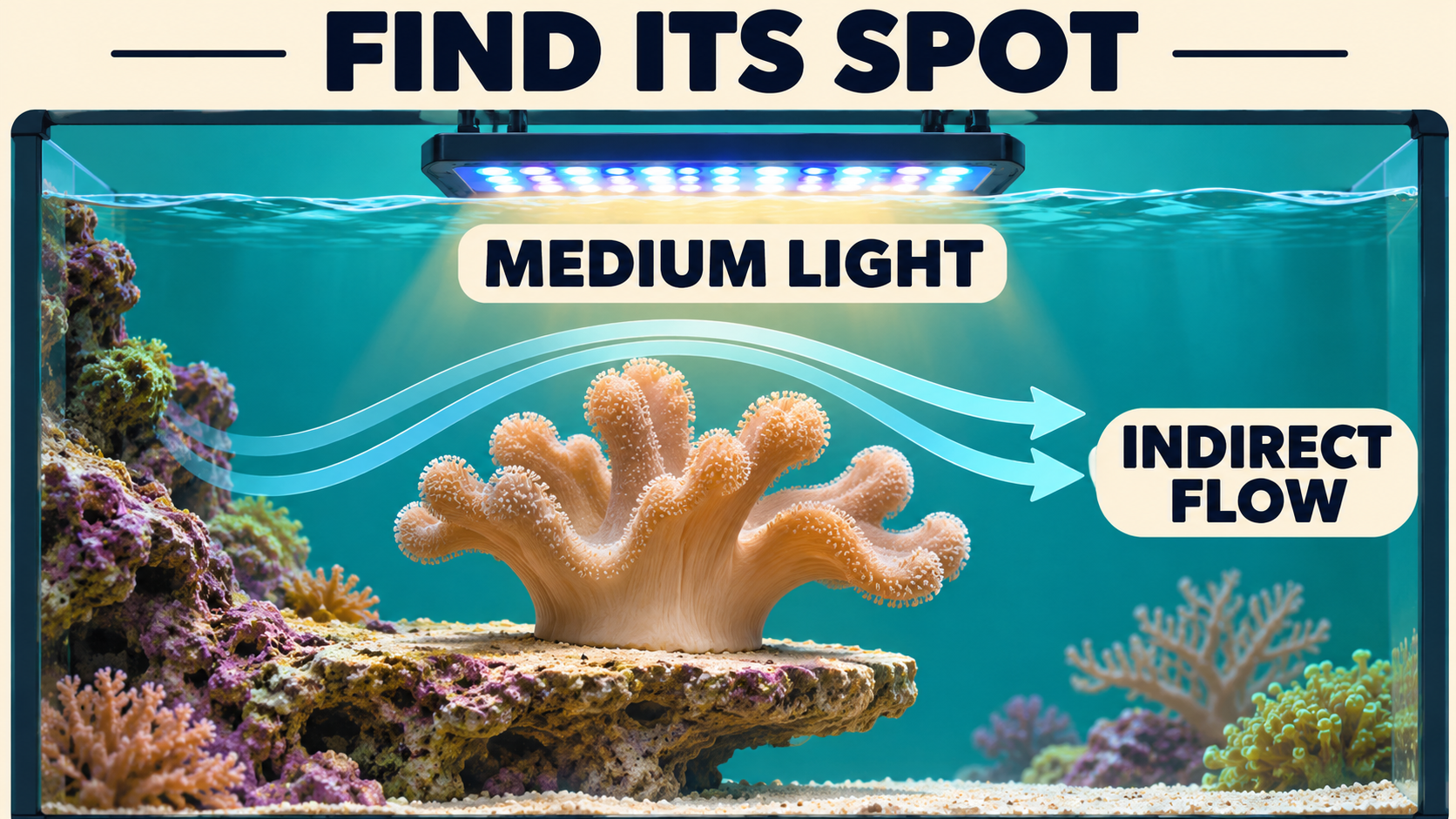
3. Pick a steady ledge. Set it on firm middle rockwork under moderate light. Leave a flat patch where the base can widen without tipping or shading a neighbor.
4. Sweep past it, not into it. Give it moderate, indirect flow that brushes the lobes and carries debris off. If the lobes stay bent over, turn the pump away.
Watch the shed
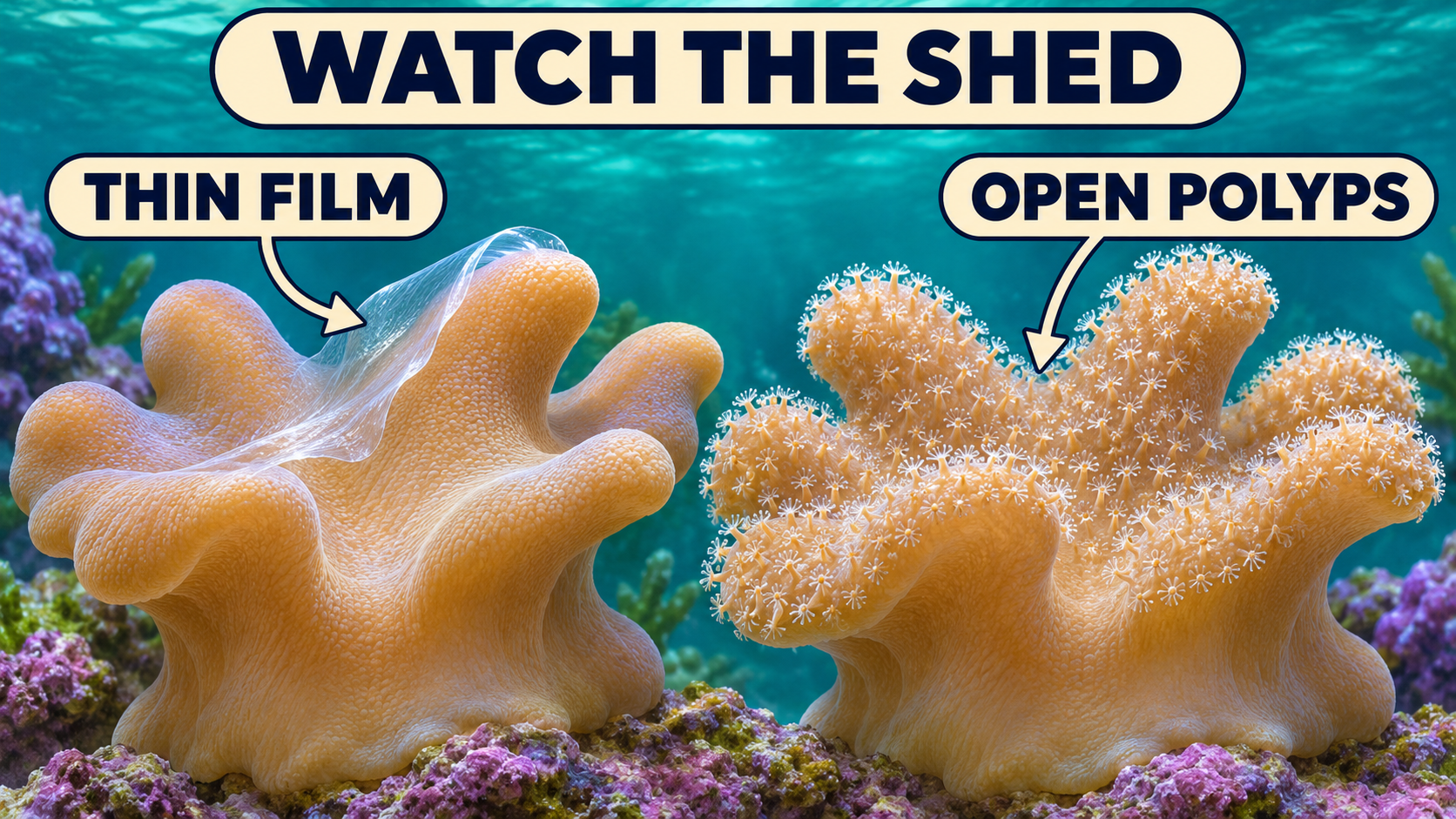
5. A waxy coat can be normal. The polyps tuck in and a thin film forms over the surface. Let the current carry it away rather than peeling it off.
6. Look for actual damage. If a bare spot spreads or tissue breaks down, don’t assume it’s just a shed. Check for trapped debris, contact with another coral, and swings in water conditions.
Give it room
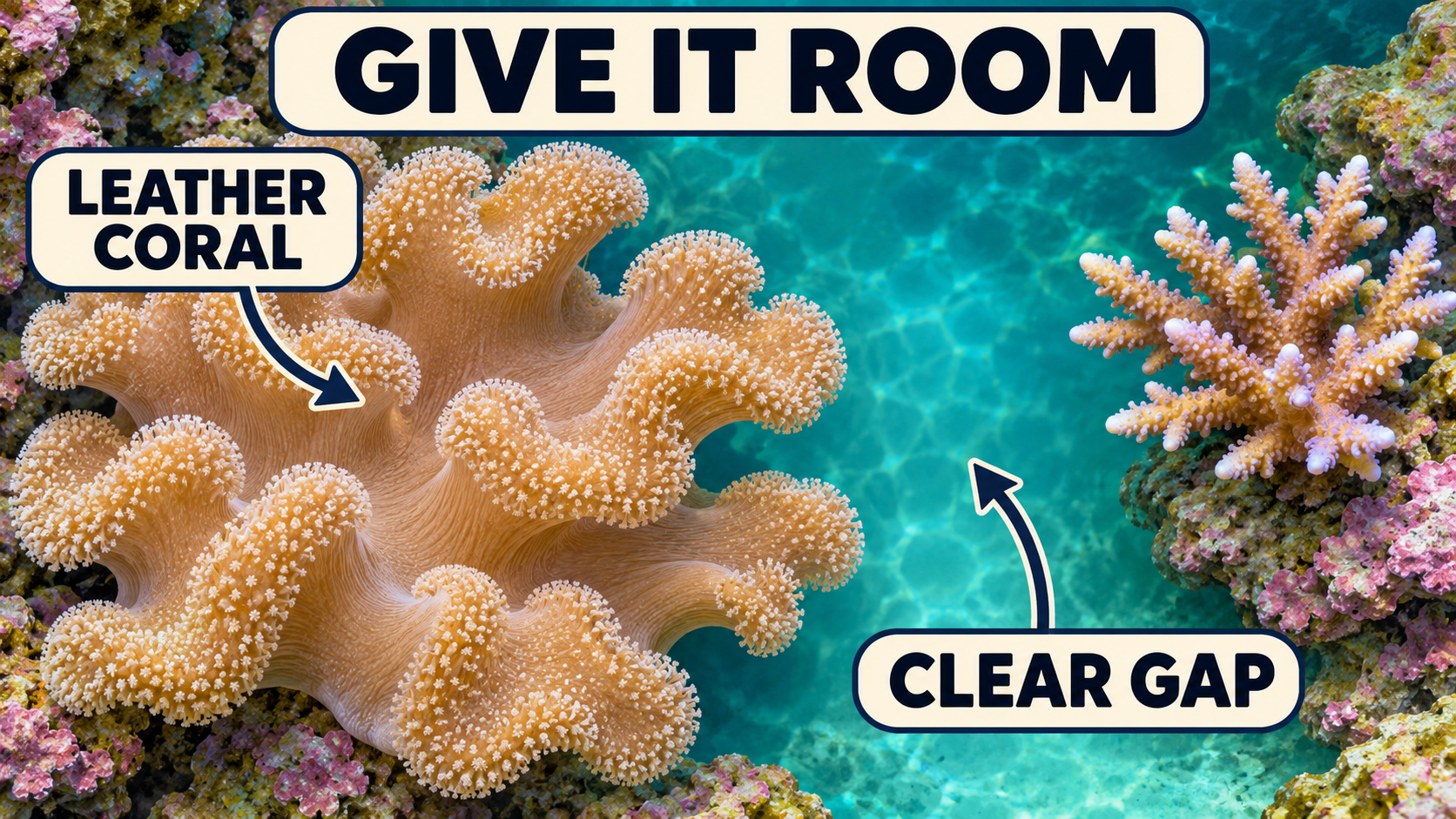
7. Leave room for a wider hand. Keep the growing edge away from other corals, and keep small neighbors out from under the lobes.
8. Space isn’t the whole story. Some leathers can affect nearby stony corals even without touching. Keep up with water changes in a mixed reef, and don’t blame the leather before checking shade, flow, and water quality.
Skip the feeding pipette
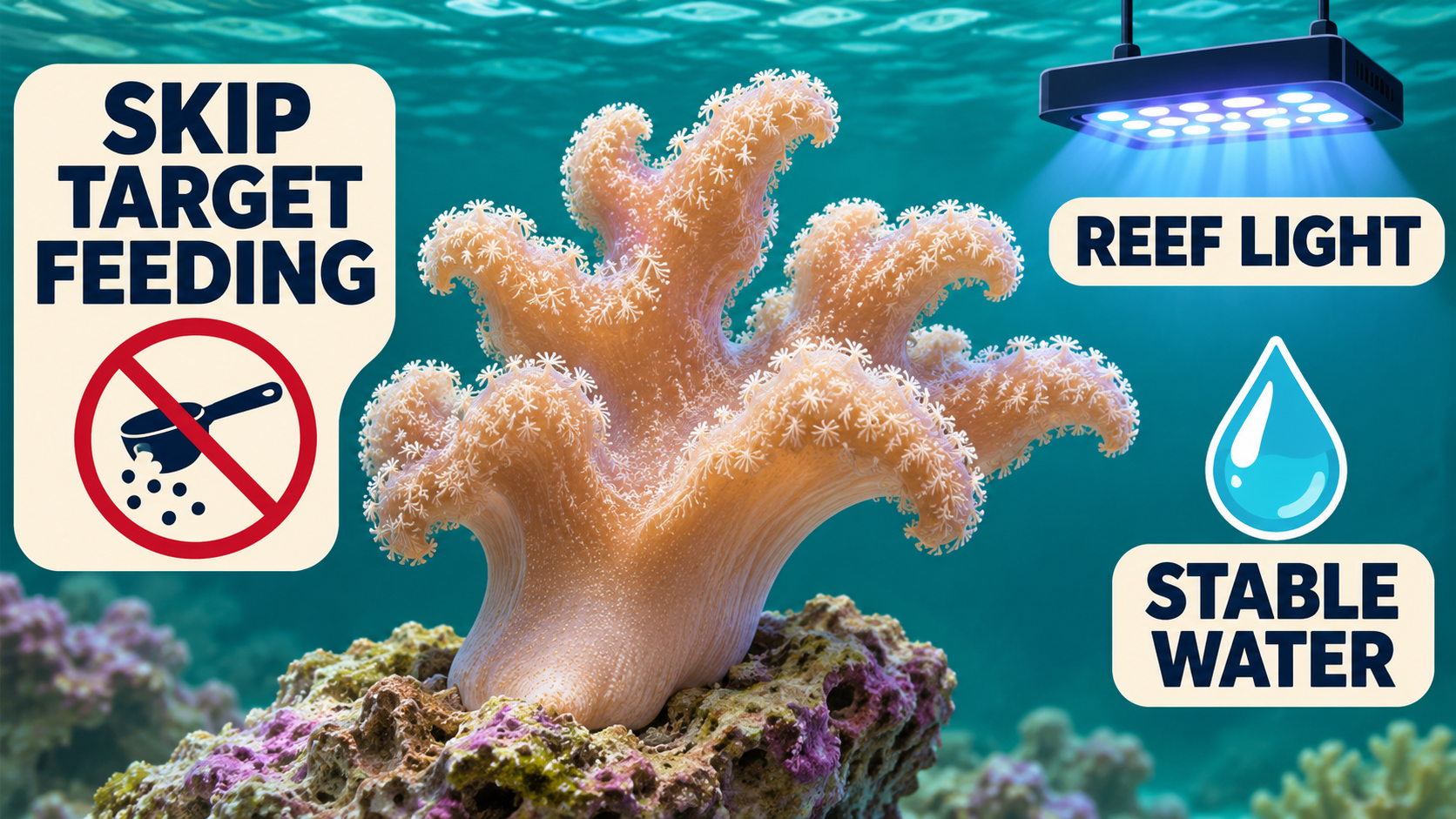
9. Put the light to work. Algae living in the coral share energy they make from light. You don’t need to squirt food onto its polyps.
10. Change one thing at a time. Keep salinity and temperature steady. If the coral stays closed, check current and debris before changing the light or moving it again.
Field notes — what keepers report
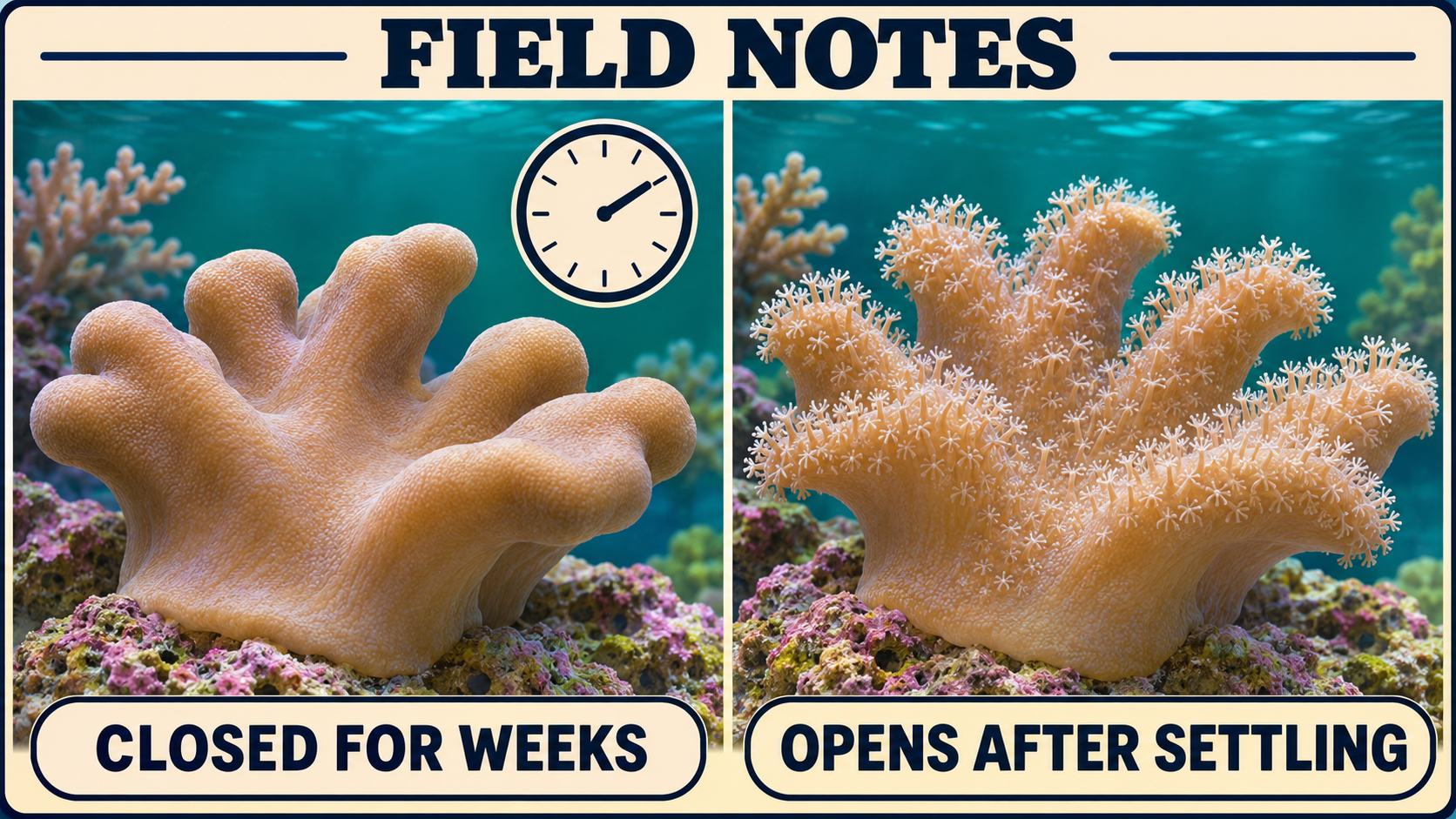
11. Two sheds, still closed. These keepers reported devil’s hand leathers, not specimen-verified L. crassum. One saw two sheds in about three weeks and still hadn’t seen open polyps when they posted.
12. A longer wait, then daily opening. Another keeper’s leather took more than five months to open fully in their tank. It later opened daily under stronger flow. Watch the tissue and track what changes rather than copying that timeline or pump setting.
Give the hand a steady ledge, water that sweeps past its folds, and space to widen. Get to know how it looks when it is open and when it sheds. Then a quiet day won’t send you straight to the pump controls.
Field Notes
Related species

Compactum Leather Coral
Lobophytum compactum
Same genus

Pauciflorum Leather Coral
Lobophytum pauciflorum
Same genus
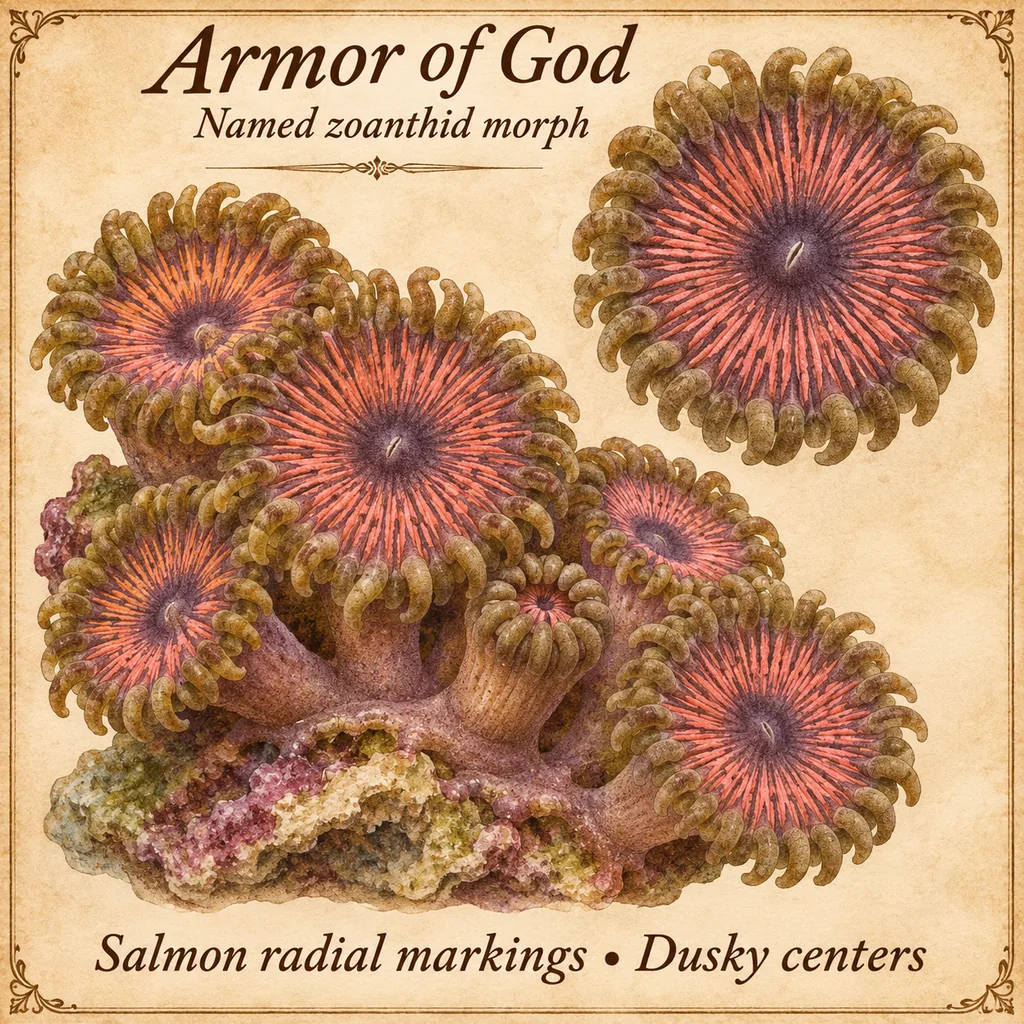
Armor of God
Palythoa sp.
Similar care · Soft
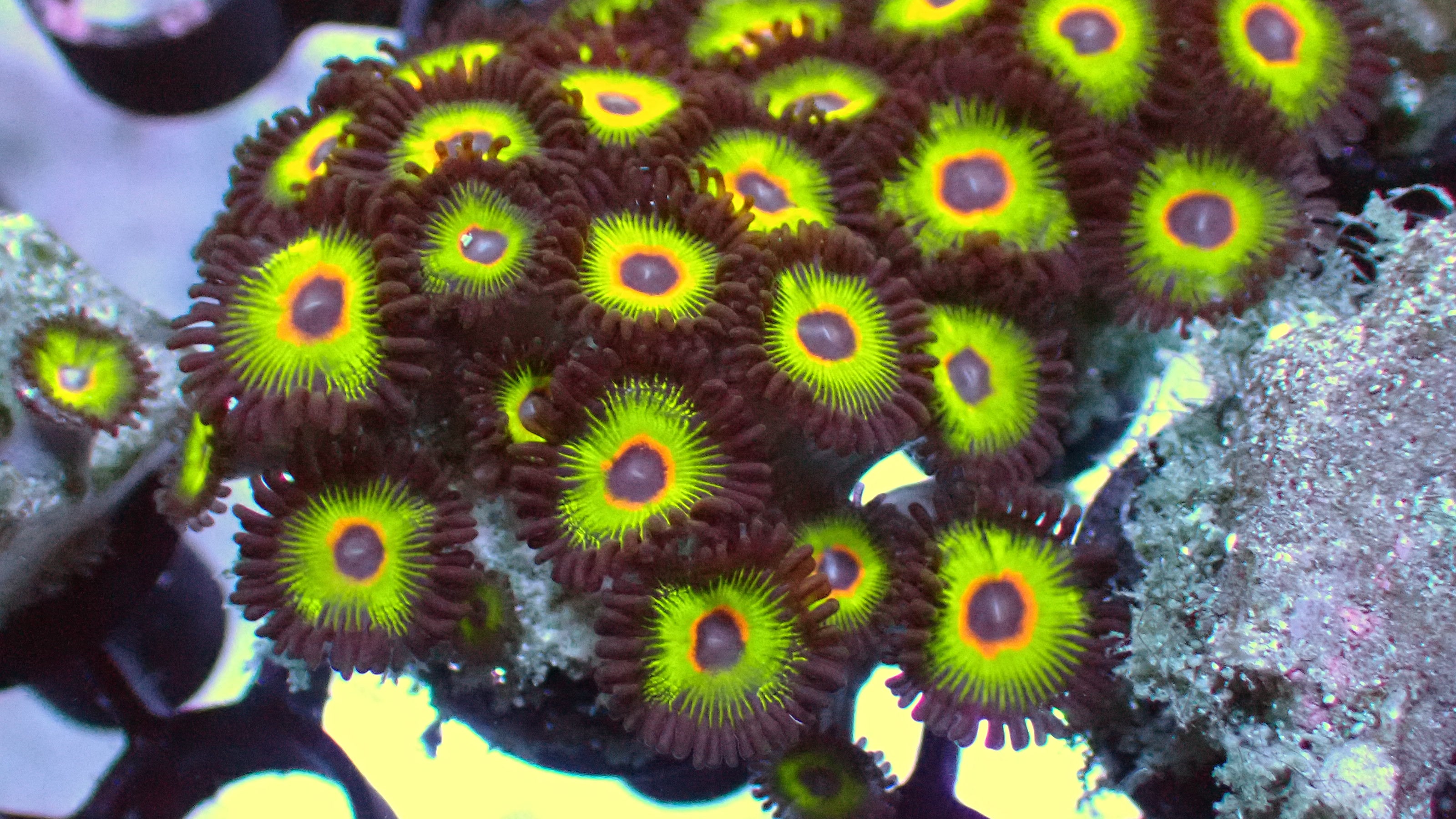
Bob Marley zoas
Zoanthus sp
Similar care · Soft

Cabbage Leather Coral
Sinularia brassica
Similar care · Soft
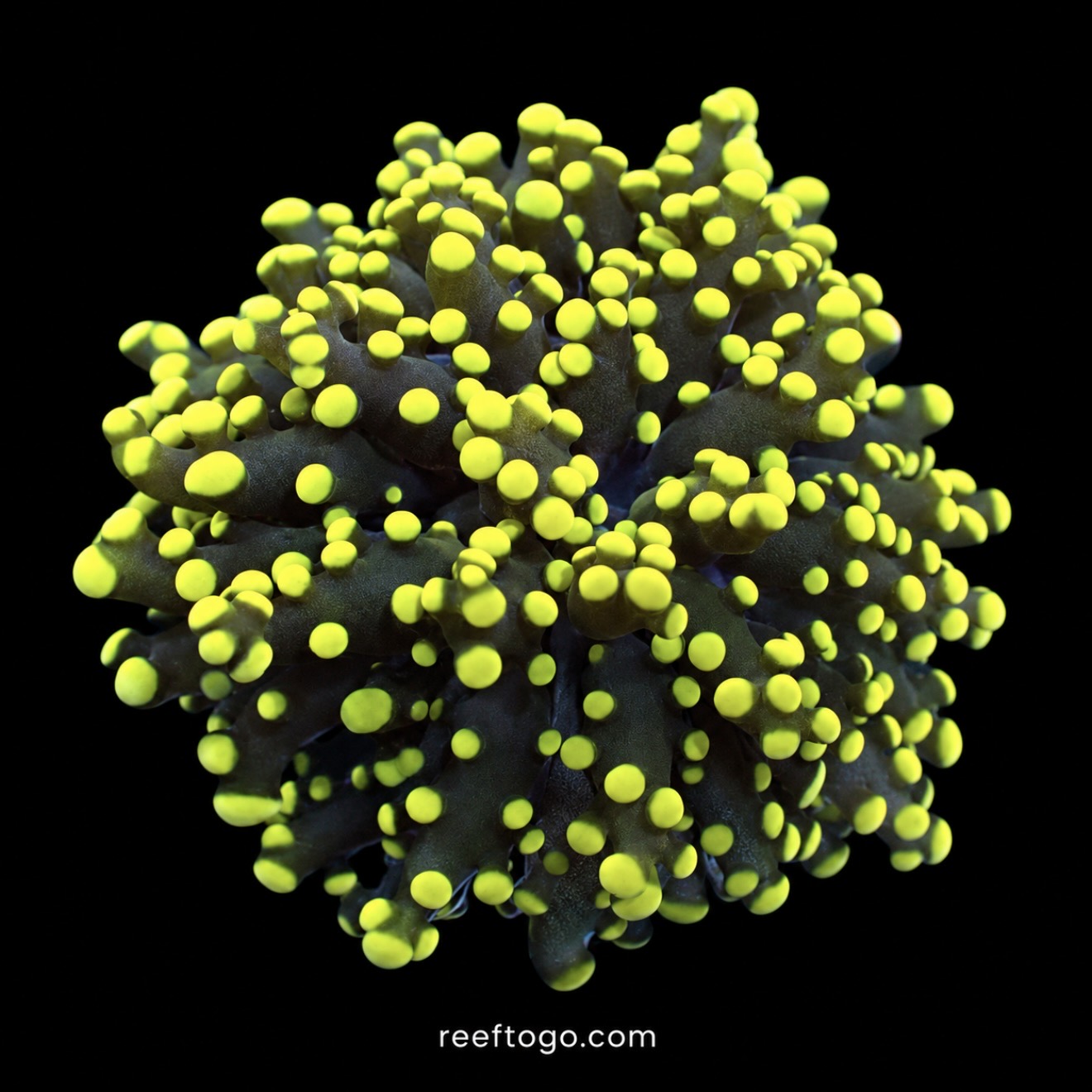
Cloud spark octospawn
Clavularia sp
Similar care · Soft

Corky Sea Finger
Briareum asbestinum
Similar care · Soft

Finger Leather Coral
Sinularia polydactyla
Similar care · Soft