Pauciflorum Leather Coral
Lobophytum pauciflorum

Gallery
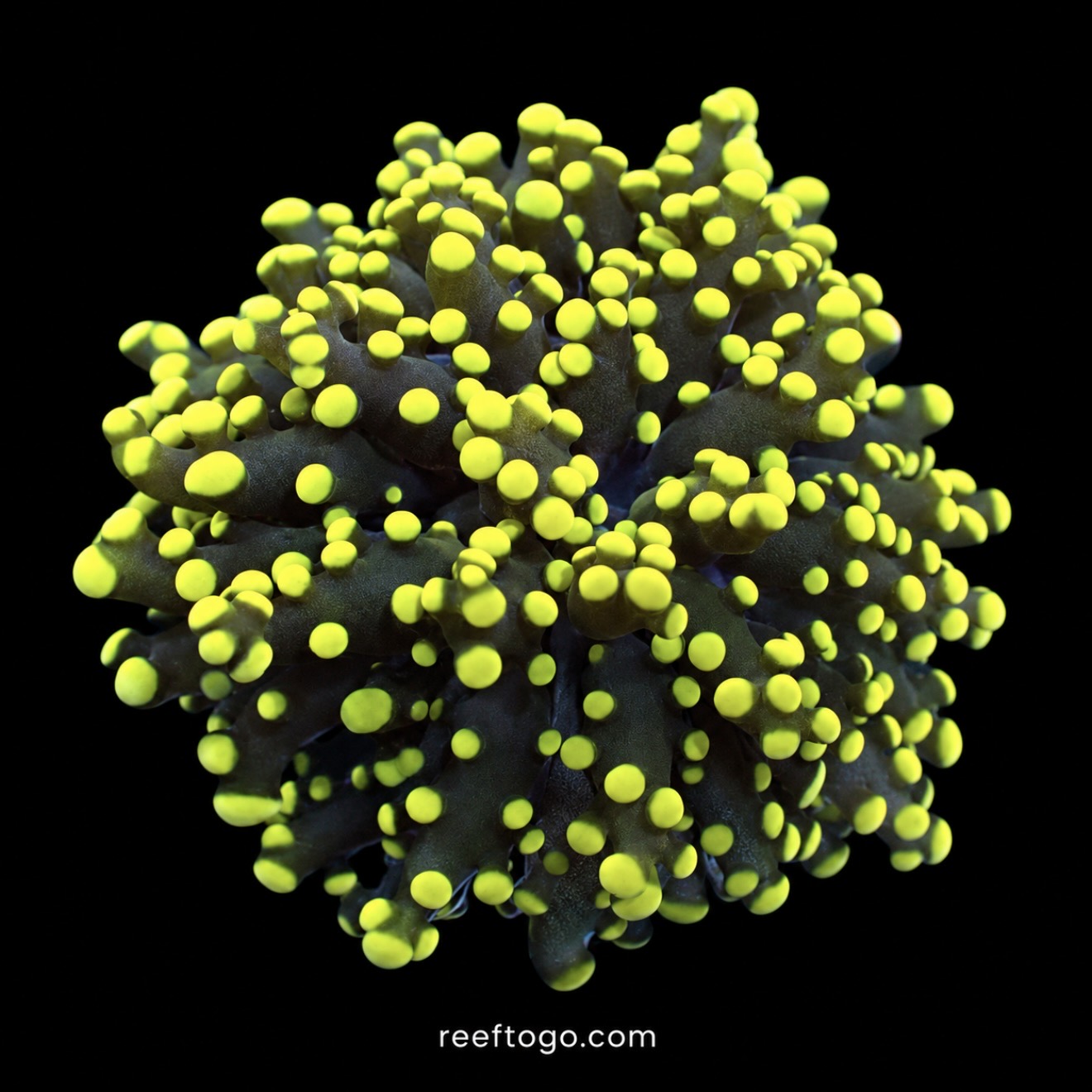
This leather looks like a tiny hand reaching out of the rock. Those fingers are part of one colony, and each finger is covered in tiny polyps. Give the whole colony some room, because it grows sideways too.
A low coral with little fingers
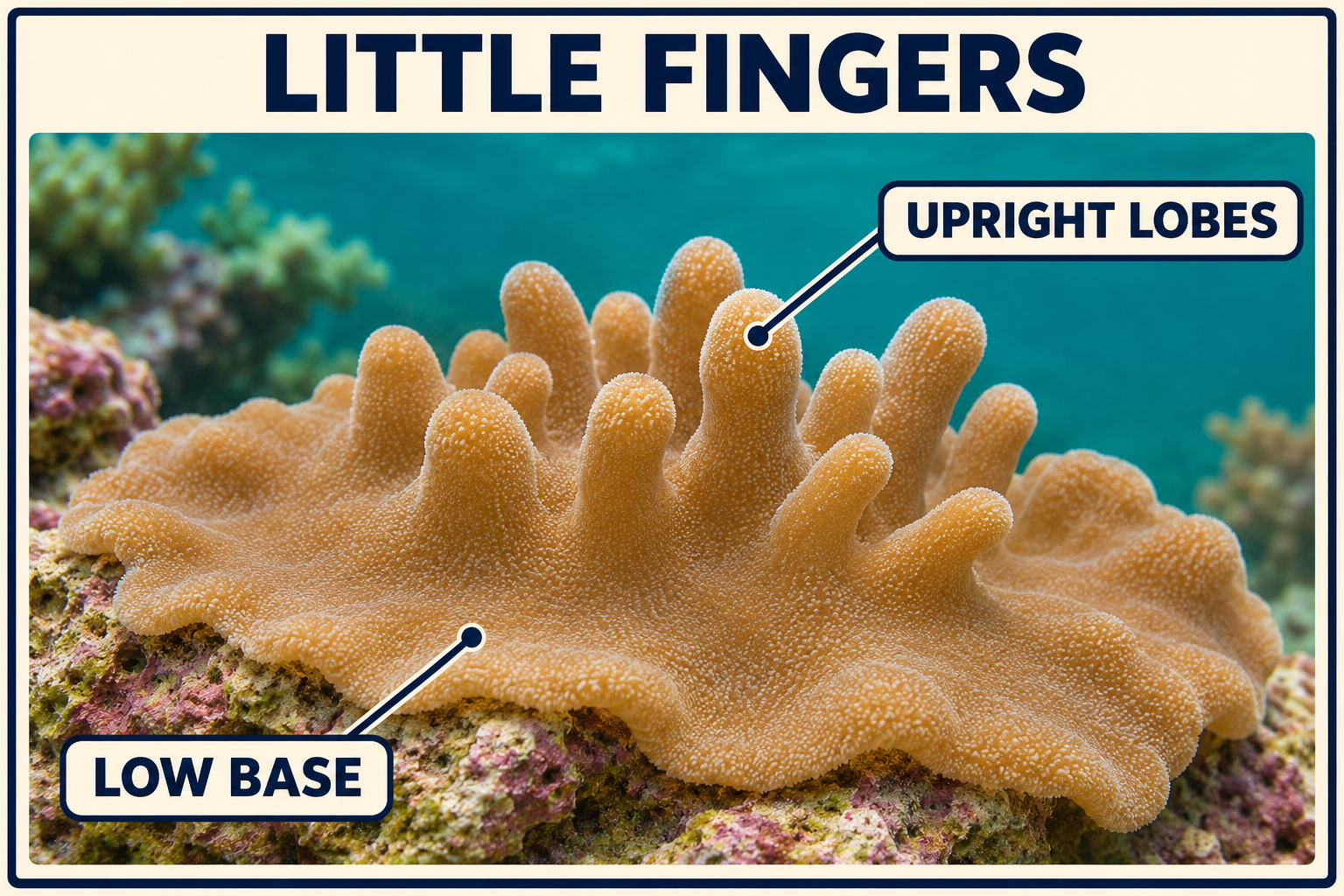
1. A colony, not a single animal. The short lobes stand up like fingers, but they share a low base. Look closely and you’ll see tiny polyps dotting the surface.
2. Flexible armor. This leather has no big stony skeleton. Tiny mineral pieces inside its tissue help support the lobes.
Find the right current
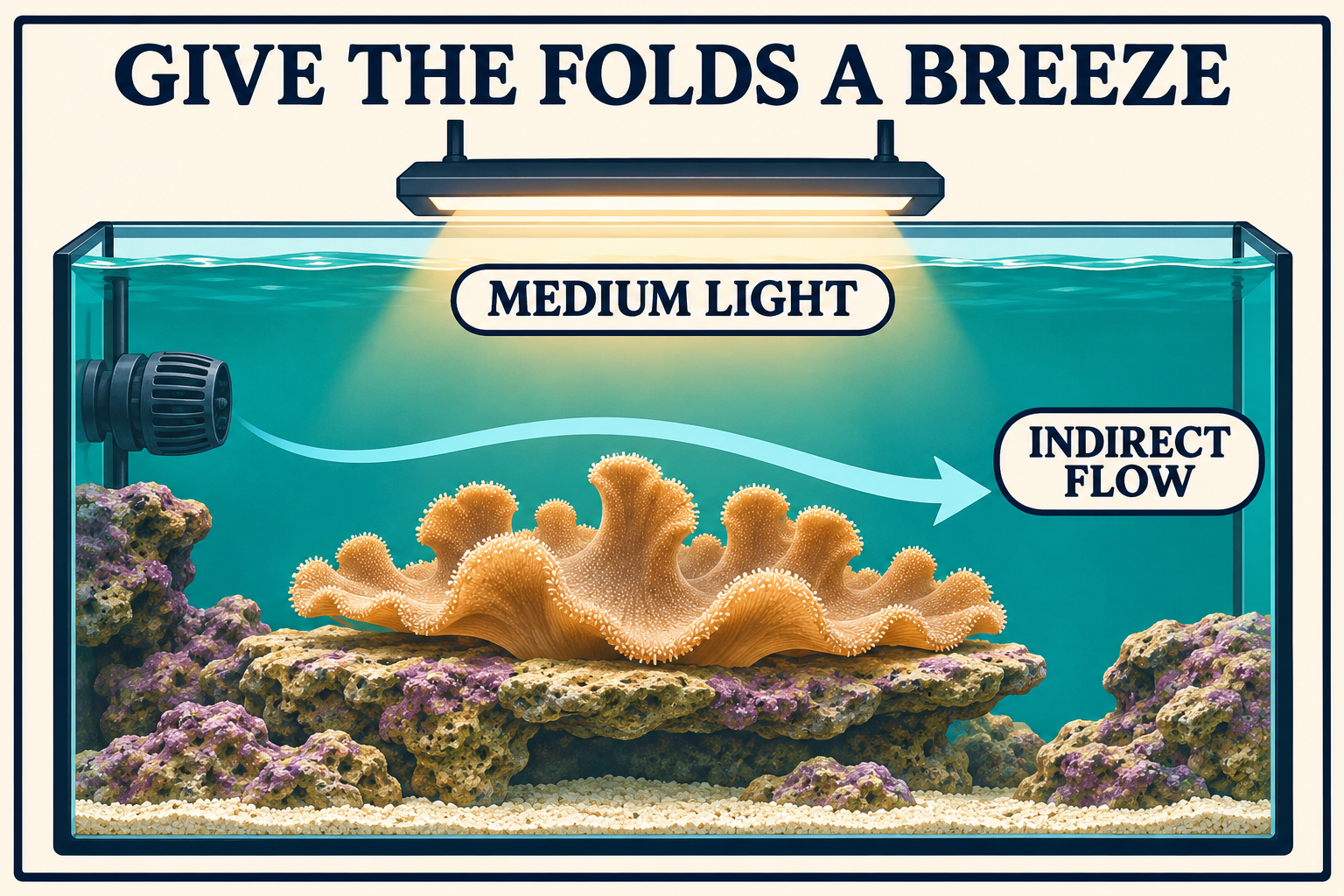
3. Start with a steady spot. Set it on firm mid-level rock under moderate light. Leave space around the base so it can spread without bumping into other corals.
4. Keep the gaps clear. Aim for moderate, indirect flow across the lobes. If debris stays trapped between the fingers, adjust the direction of the current rather than pointing a jet at the coral.
What a shed looks like
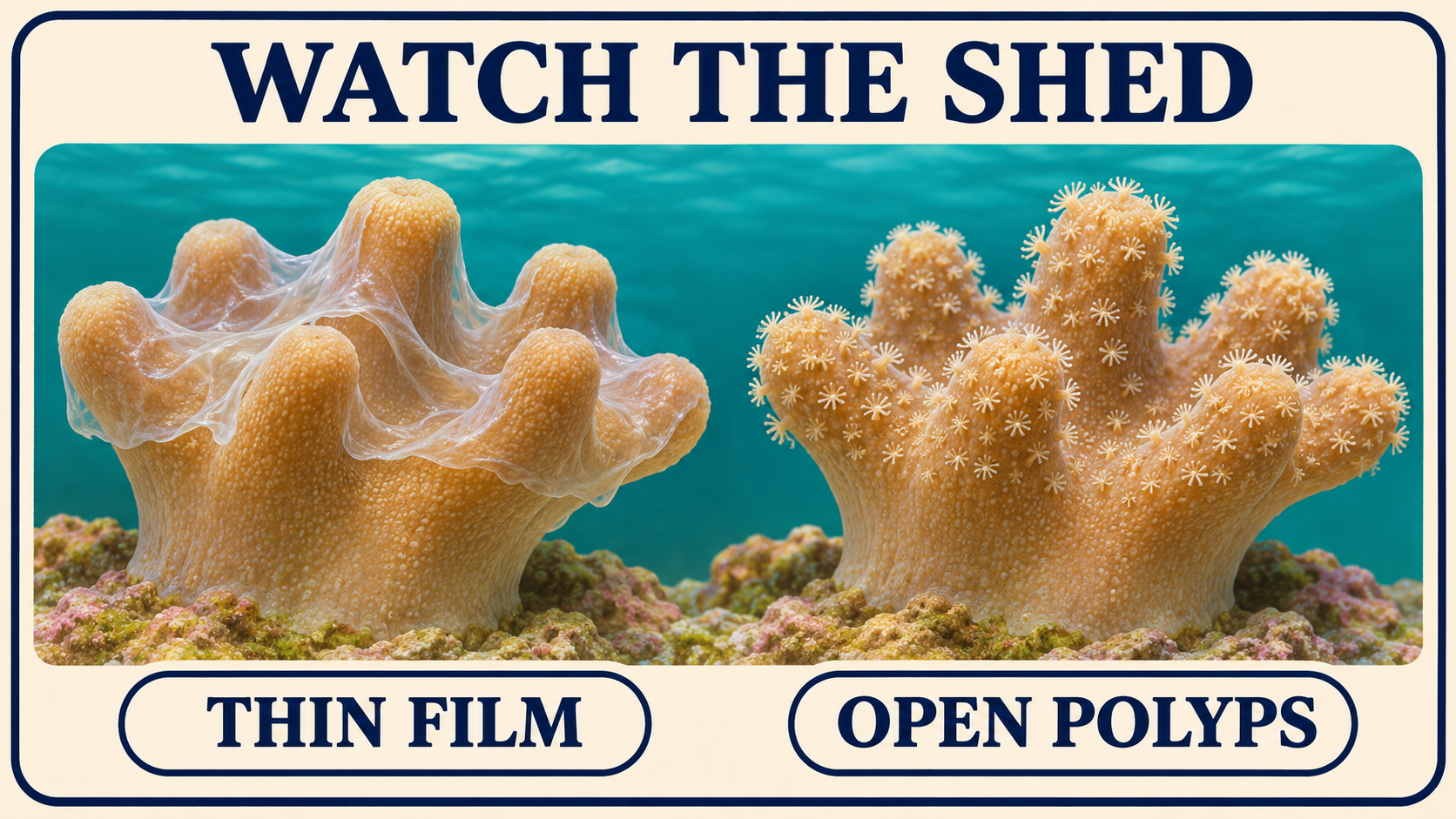
5. A waxy shine is a clue. The polyps can tuck in and a thin film can lift from the surface. Let the current carry it away. Don’t peel it off.
6. Look underneath. A closed coral with a thin film is not the same as a coral losing tissue. If you see bare patches or spreading damage, check water conditions, trapped debris, and contact with neighbors.
Give it room to spread
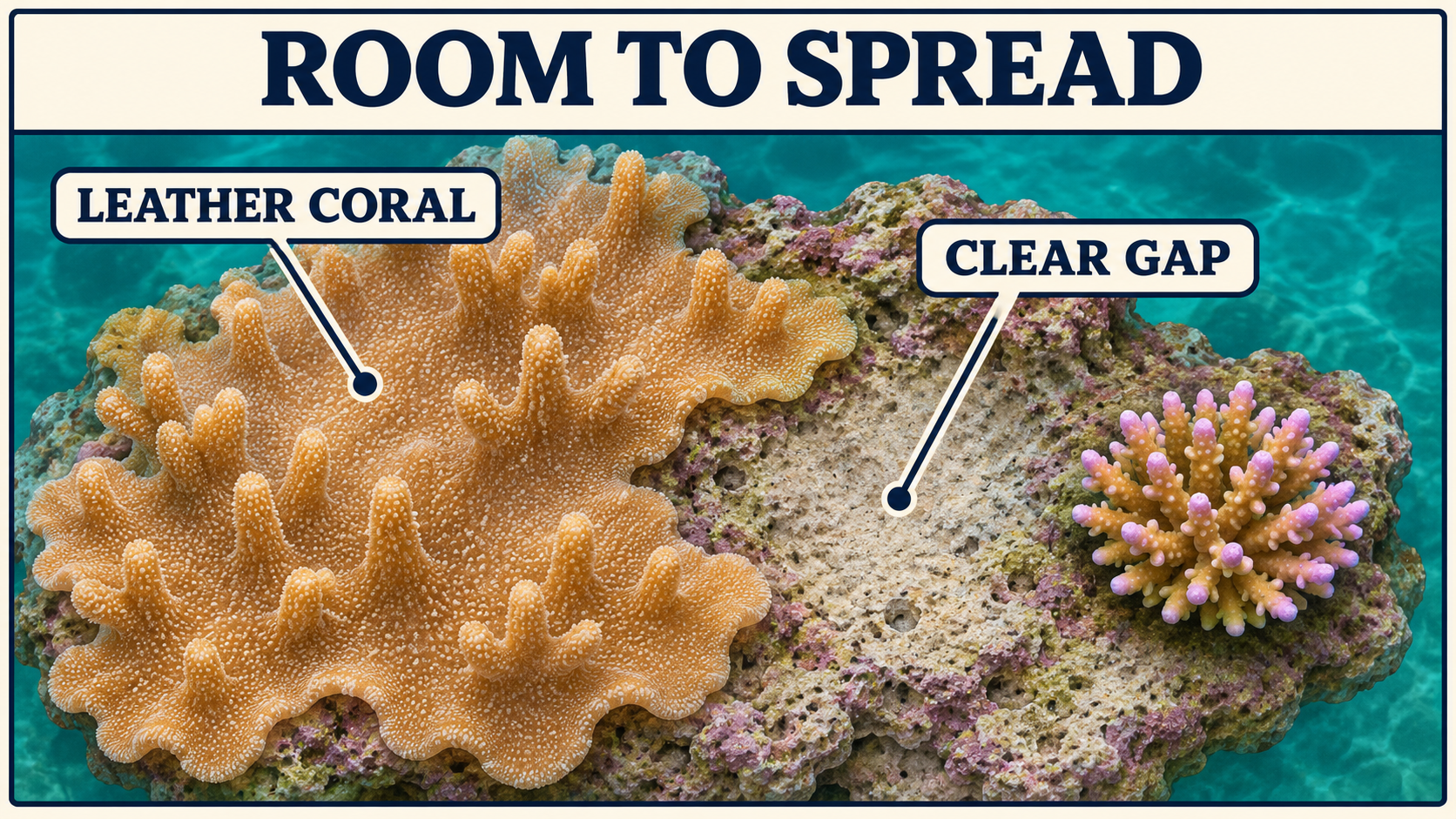
7. Plan for the base to grow. A little frag can widen across its rock. Put it where the growing edge won’t touch a neighbor or shade the coral below.
8. A gap isn’t a filter. Leather corals can affect nearby stony corals without touching. In a mixed reef, keep up with water changes and use fresh activated carbon if you’re concerned about dissolved compounds.
Keep it steady
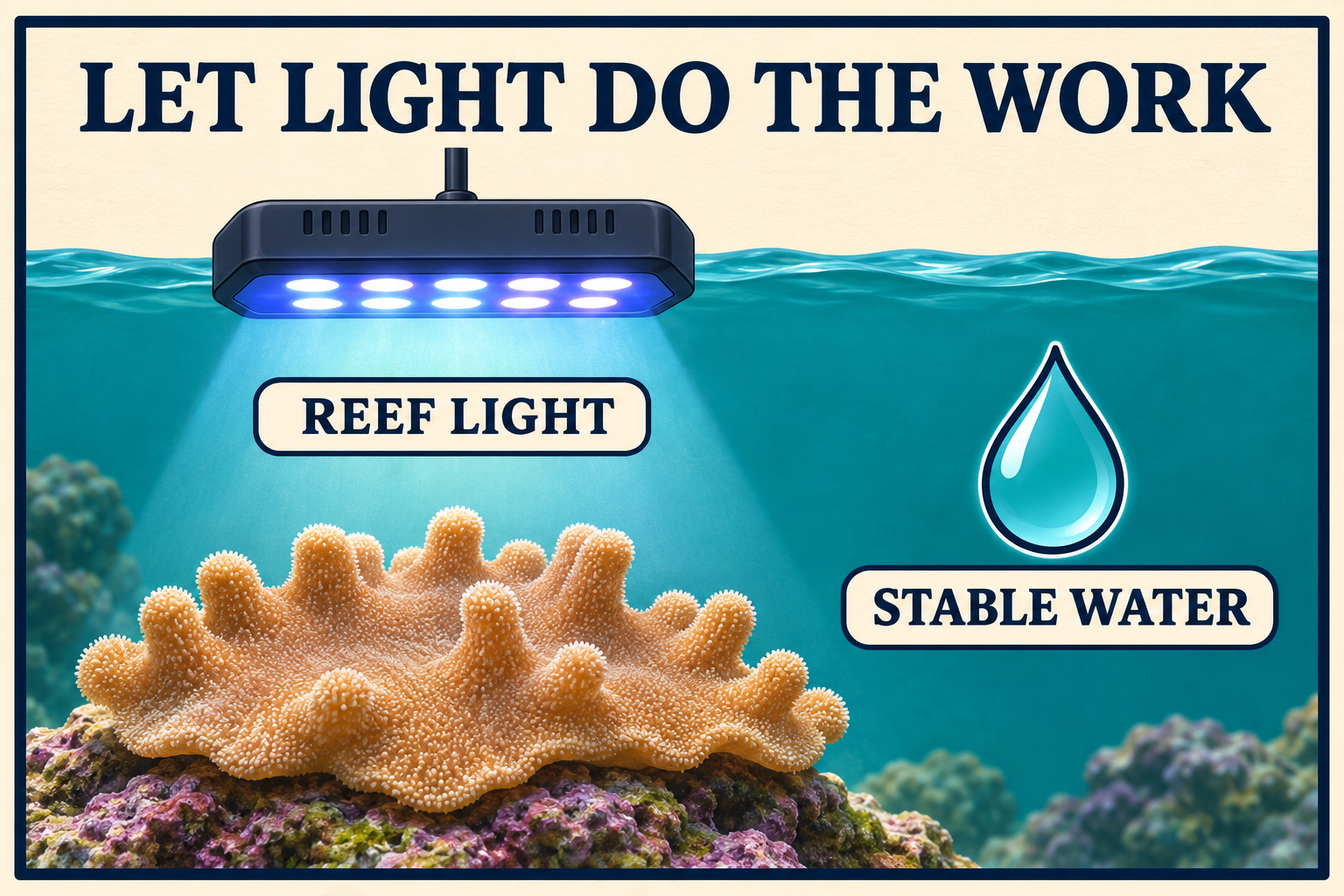
9. Let the light feed its partners. Algae living in the coral use light and share energy with it. Start with steady reef conditions. You don’t need to squirt food onto its polyps.
10. Give the base time to grab. A settled frag attaches to its rock and can grow new polyps along a healing edge. Let it attach before moving it again.
Field notes — what keepers report
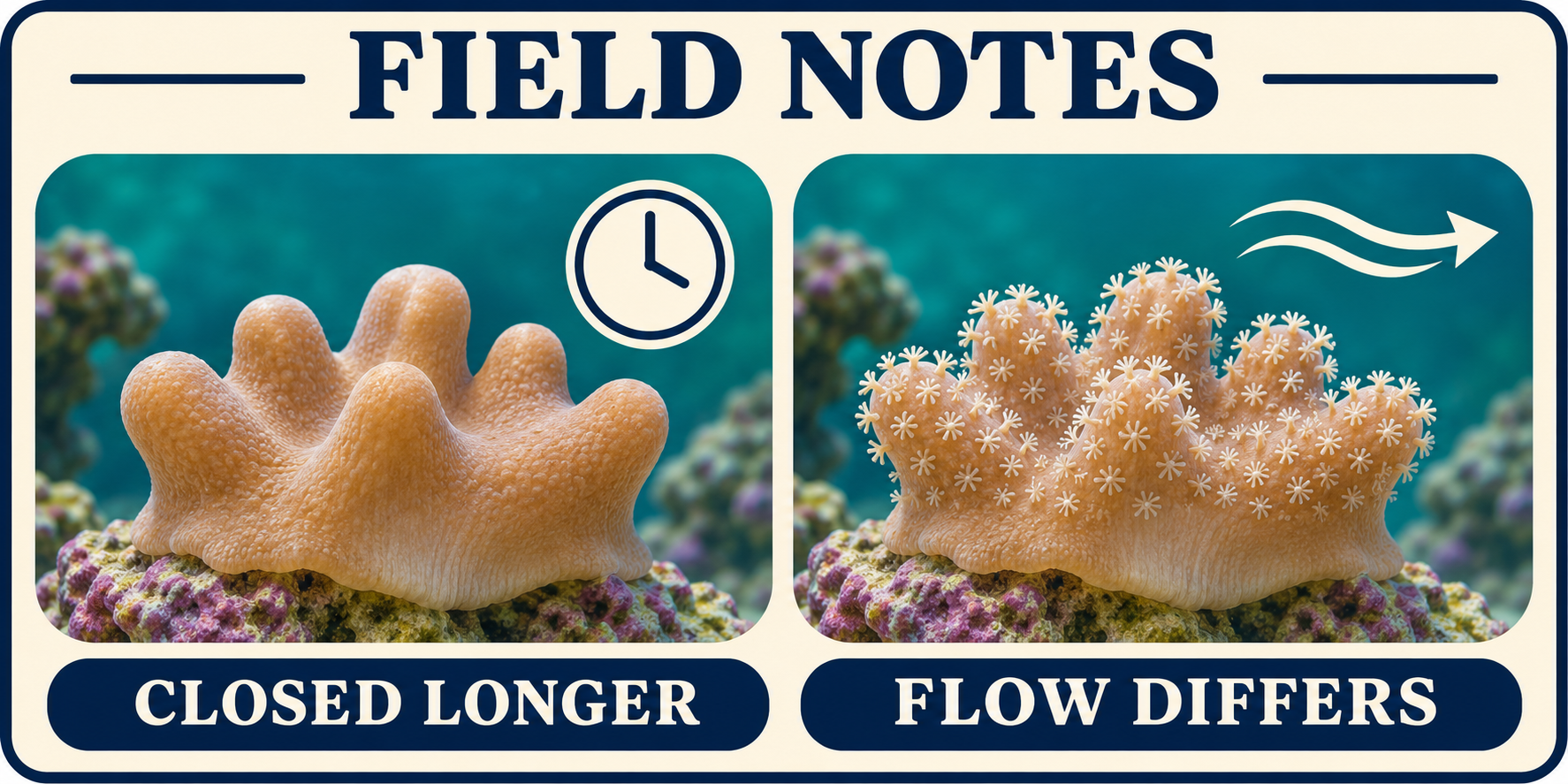
11. Closed doesn’t always mean lost. These are general Lobophytum reports, not confirmed Pauciflorum cases. One keeper saw two sheds in three weeks with no open polyps yet. Another’s leather took months to open fully and later opened daily.
12. Different tanks, different flow. One keeper’s settled leather did well with stronger flow and moderate light. Start with a gentler indirect current and judge by whether the gaps stay clear and the coral opens, not by someone else’s pump setting.
Give your Pauciflorum a steady ledge, water that sweeps between the fingers, and a little room to grow. Learn what it looks like on an ordinary day. Then a shed won’t take you by surprise.
Field Notes
Related species

Compactum Leather Coral
Lobophytum compactum
Same genus

Devil's Hand Coral
Lobophytum crassum
Same genus
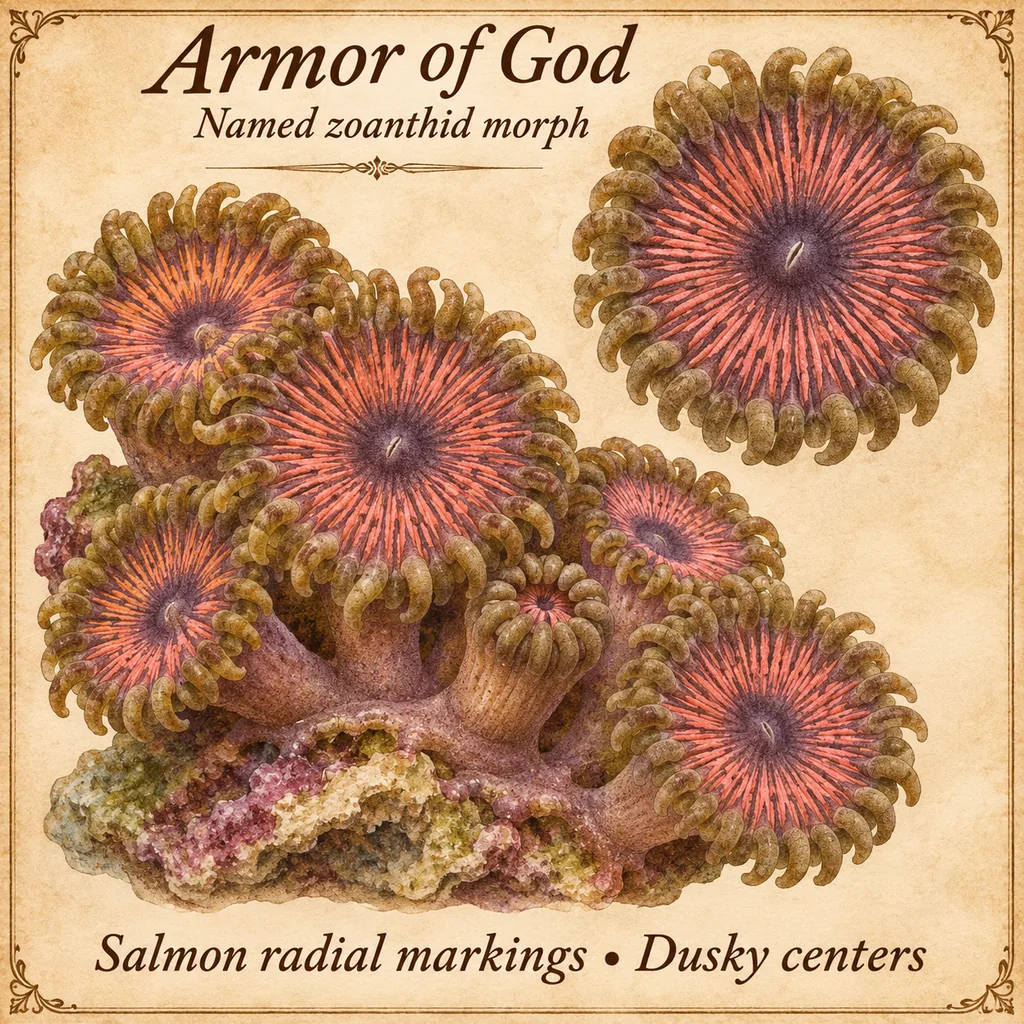
Armor of God
Palythoa sp.
Similar care · Soft
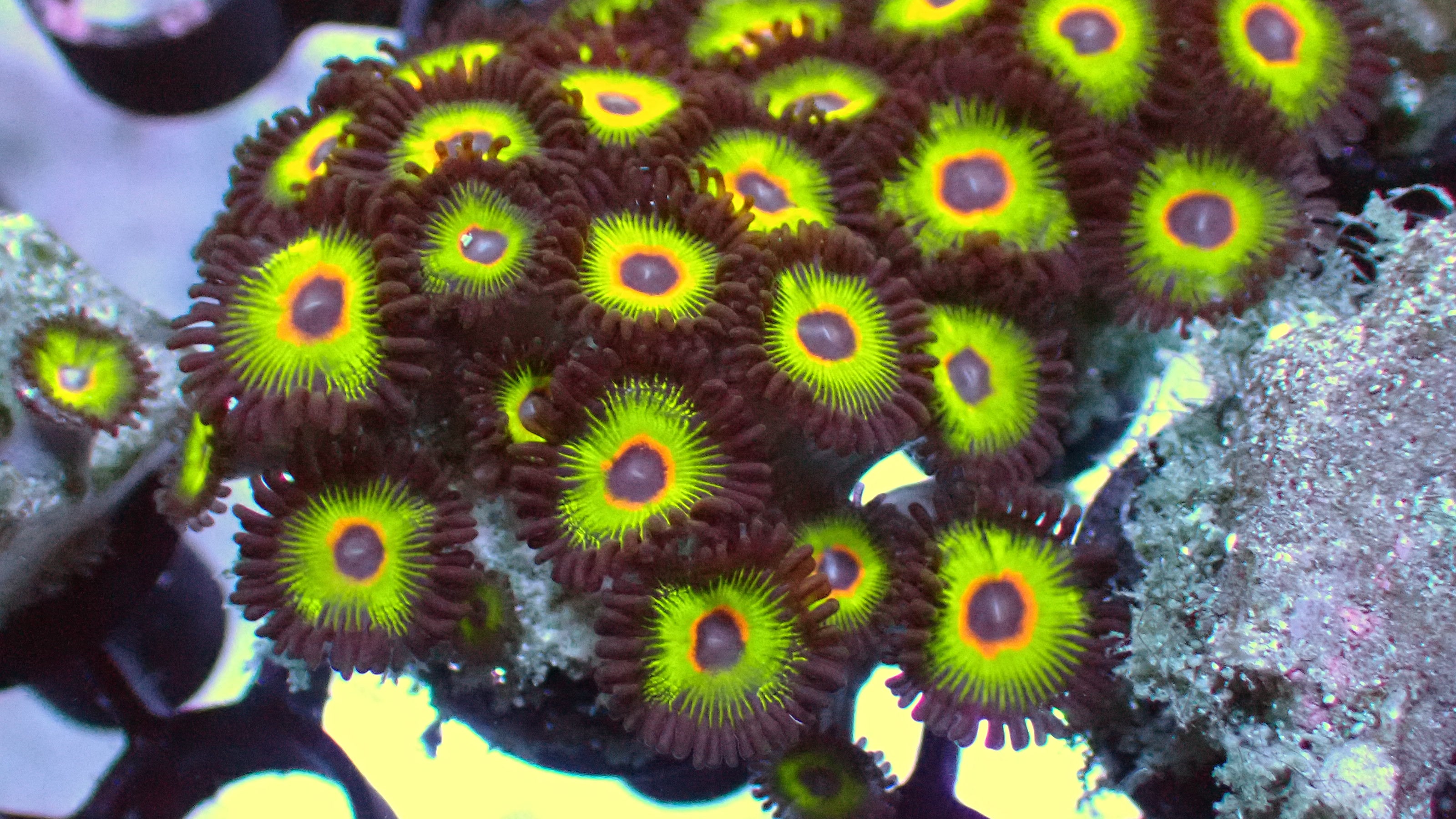
Bob Marley zoas
Zoanthus sp
Similar care · Soft

Cabbage Leather Coral
Sinularia brassica
Similar care · Soft
Cloud spark octospawn
Clavularia sp
Similar care · Soft

Corky Sea Finger
Briareum asbestinum
Similar care · Soft

Finger Leather Coral
Sinularia polydactyla
Similar care · Soft